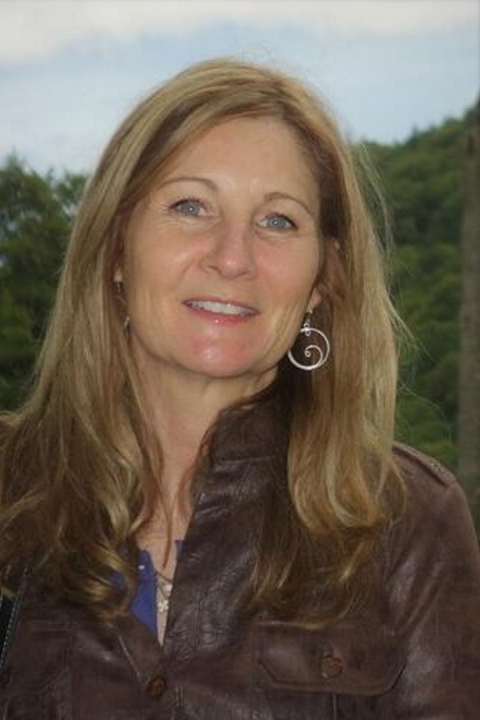
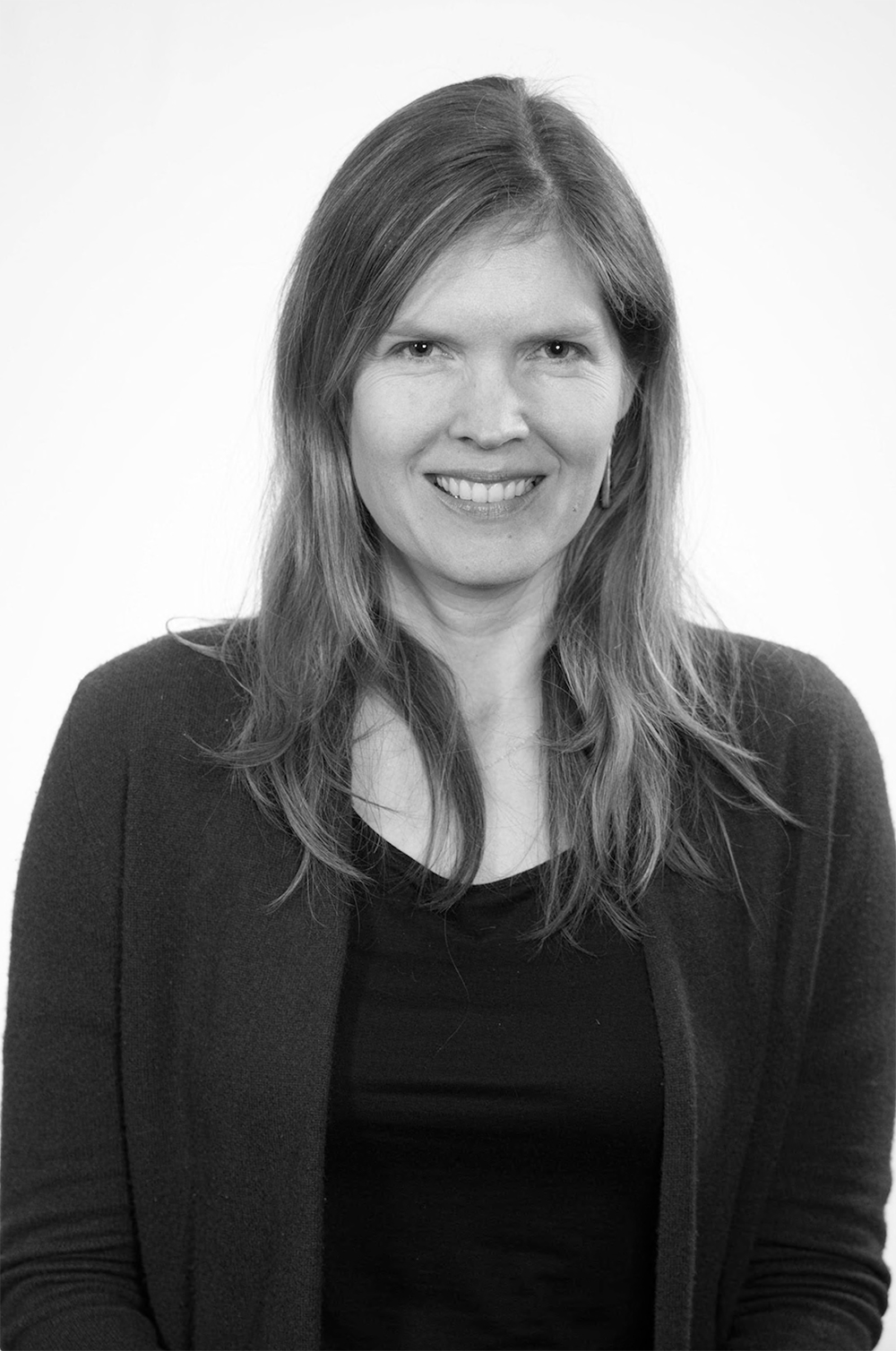
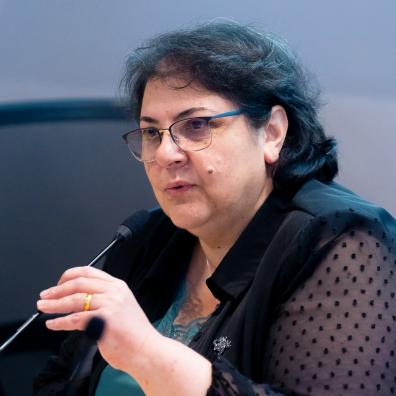
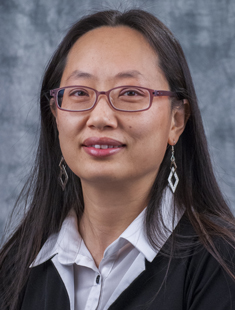
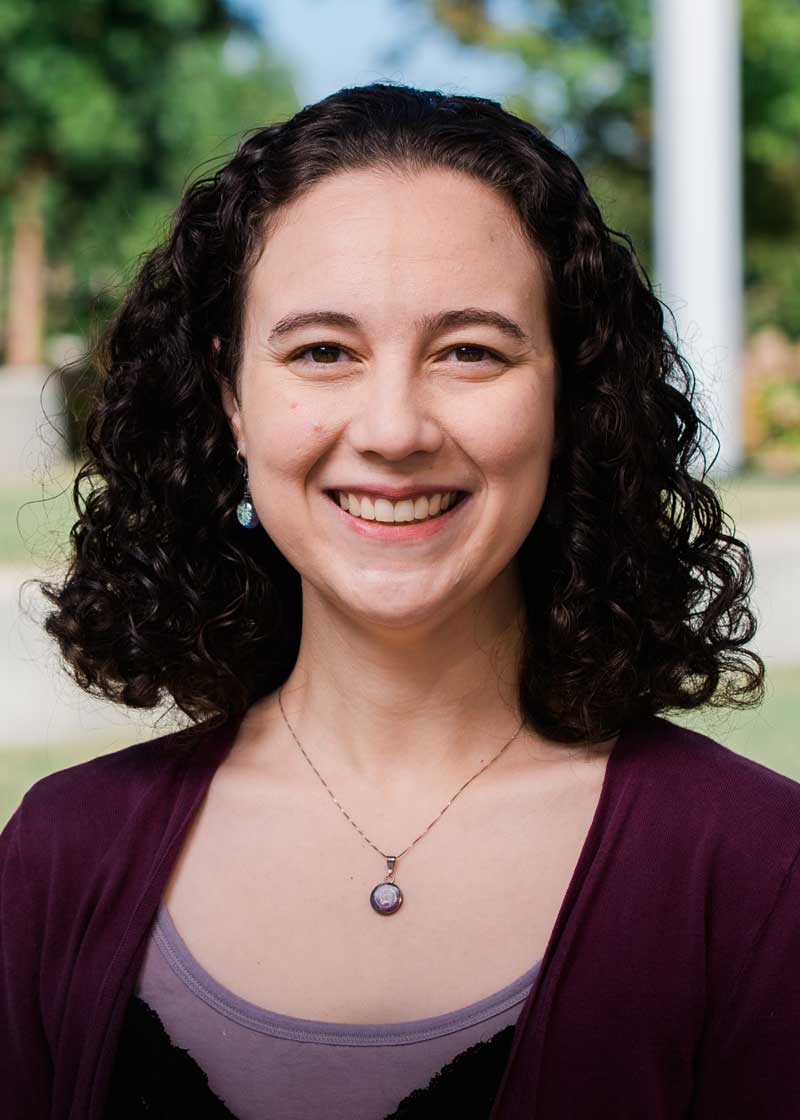
Professor Helen Finch (University of Leeds) is a leading scholar in German Literature , with a focus on Holocaust Studies , Queer Memory , and German-Jewish Cultural Production . Affiliated with the School of Languages, Cultures and Societies and the Centre for Jewish Studies , she co-leads the LCS Queer Area Studies Network and contributes to equality initiatives through the LGBT+ staff network . Research: Holocaust representation in German works, queer identity in postwar literature, transnational memory studies, curriculum design in German studies Awards: Fellow of the Higher Education Academy (2014) Academic Output : Her 15 most recent publications span Holocaust poetics , queer life writing , translation ethics , and Sebaldian intertextuality , with a particular focus on intersections between trauma , identity , and intergenerational testimony . Supervision : Currently guides PhD research on topics including transnational transphobia , queer art practices , and LGBTQ+ cross-cultural representation . Her students explore areas from German exile photography to postcolonial queer narratives .
Katherine Klein is a Professor of Management at the Wharton School of the University of Pennsylvania and an organizational psychologist. Her research focuses on leadership succession, organizational change, diversity and inclusion, and impact investing. She has served as Vice Dean for Social Impact (2012–2022) and currently directs Wharton’s Impact Investing Research Lab. Her work explores: Leadership emergence and social networks Impact investing strategies and performance Multilevel theory in organizational dynamics Diversity’s effects on team conflict and innovation Rwanda’s post-genocide recovery Recent research trends highlight her expertise in team psychological safety, values diversity, and crisis leadership. Awards include multiple Wharton Teaching Excellence Awards and Fellowships from the Academy of Management and Association for Psychological Science. She teaches courses on leadership, social impact, and research methods, including a global module in Rwanda.
Elissa Helms is an Associate Professor and Doctoral Program Director in the Department of Gender Studies at Central European University (CEU), based in Vienna. She is a leading scholar in gender, nationalism, and post-conflict ethnography, with a regional focus on the Balkans, particularly Bosnia-Herzegovina and the former Yugoslavia. Her work critically engages with migration, racialization, borders, and feminist activism in contemporary Europe. Ph.D., Cultural Anthropology, University of Pittsburgh, 2003 MA, Cultural Anthropology, University of Pittsburgh, 1998 BA, International Relations, Bucknell University, 1991 Her research centers on gendered dynamics in post-socialist and post-conflict societies, especially how gender, race, and nationalism intersect in migration and border contexts. She has conducted long-term ethnographic fieldwork in Bosnia-Herzegovina, including in Bihać, focusing on the Balkan Route and local responses to migration. Her work also explores feminist memory, transitional justice, and the politics of victimhood, notably through her influential book Innocence and Victimhood (2013). She co-edited Borders of Desire (2023), examining gender and sexuality at Europe’s eastern edges. Her recent publications reveal a sustained focus on the gendered dimensions of refugee crises, EU border policies, and the racialization of migrants. She critiques dominant narratives that associate victimhood solely with women and children, highlighting how men are also deeply vulnerable in war and displacement. Her scholarship bridges feminist theory, cultural anthropology, and critical migration studies. While no specific scientific awards are mentioned in the provided texts, her work is widely recognized through publications in top journals and participation in major academic projects such as GRACE (Gender and Cultures of Equality). She actively mentors graduate students and welcomes inquiries from prospective MA and PhD candidates in her research areas. Elissa Helms has advised on and contributed to numerous academic events, public lectures, and policy discussions on gender, migration, and human rights. Her current research includes ethnographic work on the Balkan Route and a project on the Women’s Court, a feminist initiative for transitional justice in the post-Yugoslav region. She is deeply engaged in public scholarship, contributing to platforms like Eurozine and FocaalBlog.
Professor Rachel Kerr is a leading scholar in the Department of War Studies at King’s College London, specializing in transitional justice, international criminal law, and the role of art in post-conflict reconciliation. She co-convenes the War Crimes Research Group and leads the Visual and Embodied Methodologies Network , focusing on intersectional gendered violence. Education: PhD and MA in War Studies from King’s College London; BA in International History and Politics from University of Leeds Research: Explores judicial intervention in the ICTY, Sierra Leone Court, and UK war crime allegations in Iraq; current work bridges art with peacebuilding in Bosnia, Canada, and South Africa Teaching: Courses on Conflict, Rights, and Justice; International Law and the Use of Force; War and Genocide Her AHRC-funded research project Art and Reconciliation: Conflict, Culture and Community (2016-2021) produced interdisciplinary insights into creative peacebuilding. She also leads ESRC research on visual methodologies for gendered violence studies. Awards: Elected to International Institute for Strategic Studies (2001) Elected to Royal Institute for International Affairs (2001) Recent publications analyze art’s role in Bosnian reconciliation, digital data in transitional justice, and Canada’s reconciliation processes. She supervises PhD research on topics spanning UK war crimes, post-conflict education, and atrocity prevention.
Sarah Lowe, Ph.D., is an Associate Professor in the Department of Social and Behavioral Sciences at Yale School of Public Health, with secondary appointments in the Department of Psychiatry at Yale School of Medicine and Yale School of Nursing. She is also affiliated with the Yale Institute for Global Health, Yale Stress Center, and Women's Health Research at Yale. Dr. Lowe earned her AB in Psychology from Harvard University (2003), followed by an MA (2008) and PhD (2012) in Clinical Psychology from the University of Massachusetts Boston. She completed a predoctoral fellowship at New York Presbyterian Hospital/Weill Cornell Medical College and a postdoctoral fellowship in the Psychiatric Epidemiology Training program at Columbia University Mailman School of Public Health (2014). Her research program focuses on the long-term mental health consequences of traumatic events across multiple ecological levels, examining how disasters, genocide, and mass violence affect mental health, physical health, social relationships, and economic wellbeing. Dr. Lowe employs diverse methodologies including structural equation modeling, latent growth curve analysis, geospatial modeling, and qualitative analysis. Her work often centers on vulnerable populations including survivors of Hurricane Katrina, Rwandan genocide survivors, people with disabilities, and racial/ethnic minorities. Dr. Lowe's recent publications reveal a strong focus on climate change and mental health, examining how extreme weather events impact psychological wellbeing across different populations. Her research shows evolving trends from disaster-specific studies toward broader investigations of trauma mechanisms and resilience factors across various contexts, with increasing attention to health disparities and social justice issues. Award for Outstanding Contribution to Trauma Psychology by an Early Career Psychologist (American Psychological Association, 2022) Robins/Guze Early Career Award (American Psychopathological Association, 2021) Wendy U. and Thomas C. Naratil Pioneer Award (Yale Women's Health Research Program, 2020) Chancellor's Distinguished Dissertation Award in the Social Sciences (University of Massachusetts Boston, 2013) Faculty Council Award for Research Excellence (Weill Cornell Medical College, 2012) Dr. Lowe serves on the Connecticut Governor's Council on Climate Change and the Scientific Oversight Committee for the Aliso Canyon Disaster Health Research Study. Her grant-funded research supports community-based investigations into trauma and resilience across diverse settings, including collaborations in American Samoa and Rwanda. She serves as an investigator in the WHRY Pilot Project Program, examining women's health issues through a trauma-informed lens. Dr. Lowe leads the Trauma and Mental Health (TMH) Lab at Yale, which employs interdisciplinary approaches to understand trauma responses and resilience mechanisms. Her lab collaborates with community organizations to ensure research addresses real-world needs and translates into practical interventions for trauma-affected populations.
François Robinet serves as a Lecturer in Contemporary History at the University of Versailles Saint-Quentin-en-Yvelines (UVSQ), where he is an elected member of the Council of the Institute of International Cultural Studies. He concurrently directs the Graduate School of Humanities and Heritage Sciences at the University of Paris-Saclay and holds appointments with the Laboratory Center for the Cultural History of Contemporary Societies (CHCSC) and the 22nd section of the CNU. Education: Doctor of History (2012) Robinet's research centers on 20th-21st century cultural and political history, with concentrated expertise in the Rwandan Tutsi Genocide, post-colonial Franco-African memory politics, and media history since 1990. His work critically examines French journalistic coverage of African conflicts, international information manufacturing during wartime, and the cultural history of colonial and post-colonial societies. He employs interdisciplinary approaches bridging media studies, genocide research, and digital humanities to analyze historical narratives and memory construction. His 15 most recent publications (2016-2023) reveal consistent thematic focus on Rwandan genocide documentation, Franco-Rwandan historical accountability, and media's role in shaping political memory. Key trends include digital methodologies for genocide archives, analysis of French state-media interactions during crises, and evolving commemorative practices through digital platforms. The work demonstrates increasing engagement with digital humanities tools while maintaining rigorous historical analysis of colonial legacies. No scientific awards were documented in the source material. Robinet coordinates the international RwandaMAP2020 research network mapping genocide documentation sites and serves as Vice-president of the Association for the Development of Cultural History. He is an active member of the Society for the History of Media (SPHM) and editorial board of Le Temps des Médias , demonstrating significant scholarly leadership beyond traditional academic advising. His institutional presence spans laboratory governance (CHCSC), university administration (UVSQ Board of Directors), and major conference organization including the 2014 Rwanda international conference and 2022 International Communication Association pre-conference on empires in media history.
Jared F. Edgerton is an Assistant Professor at the University of Texas at Dallas, affiliated with the School of Economic, Political and Policy Sciences. His research focuses on how social relations and networks influence conflict dynamics, employing methodologies from network science and machine learning. He holds a Ph.D. (2021) and M.A. (2018) in Political Science from The Ohio State University. Key research interests include terrorism, international security, civil war, and data-driven approaches to conflict analysis. His work spans topics like media effects on violence (e.g., Rwanda's radio impact), extremist recruitment networks (Islamic State), and elite polarization in crises like the COVID-19 pandemic. Methodologically, he combines experimental designs, bipartite network analysis, and geospatial techniques. Notable contributions include analyzing genocide participation in Rwanda, resilience in cooperative state networks, and the socio-technical dimensions of conflict mobilization. His interdisciplinary approach bridges political science, computer science, and security studies. While no scientific awards are explicitly listed, his prolific output reflects sustained scholarly impact. Edgerton has advised no listed students but has engaged in quasi-experimental policy evaluations (e.g., prisoner recidivism programs) and applied geospatial analysis to post-conflict land safety in Cambodia. His research portfolio demonstrates a commitment to both theoretical innovation and real-world conflict mitigation strategies.
Laura Madokoro is an Associate Professor in the Department of History at Carleton University, Faculty of Arts and Social Sciences. Her research centers on migration, refugee history, and humanitarianism, with a focus on settler colonialism, race, and human rights. She leads key research initiatives including The Disaster Lab and Sites of Sanctuary , and is actively involved in public history and policy discourse. Education: PhD in History, University of British Columbia, 2012 MA in History, University of Toronto, 2000 Her research explores the intersections of migration, race, and state power, particularly in Canada and the broader Anglo settler world. She is deeply engaged with settler colonial studies, diaspora formation, and the historical role of humanitarianism. Her work often examines how archives and visual culture reveal emotional and embodied experiences of displacement. Her recent publications span topics such as Eurocentrism in refugee regimes, Japanese Canadian internment, medical exclusion of Chinese migrants, and the politics of sanctuary. Collectively, these works reflect a strong commitment to decolonizing migration history and centering marginalized voices. The articles demonstrate a consistent focus on transnational flows, state surveillance, and the moral dimensions of refuge. Scientific Awards: Association of Asian American Studies’ Best Book in the Social Sciences (2018) Chinese Canadian Historical Society’s Ed Wickberg Prize 2016 Mershon Center Furniss Book Award SSHRC Early Researcher Award (2021) Laura supervises multiple MA and PhD students on topics related to race, migration, and refugee history. She has received funding from SSHRC and the Trudeau Foundation. Her editorial roles include co-director of Histoire Sociale / Social History and membership in the ActiveHistory.ca editorial collective and the Critical Race and Migration Studies Collective . She is currently leading The Disaster Lab , which investigates diasporic disaster citizenship, and is working on a second book, Sanctuary in Pieces , to be published in 2024. Her public engagement includes contributions to The Conversation and advisory roles in community-based historical projects.
Heghnar Zeitlian Watenpaugh is Professor of Art History at the University of California, Davis, where she has been a faculty member since 2005. She is also a Faculty Associate in the Graduate Programs in Cultural Studies, Women and Gender Studies, Performance Studies, Jewish Studies, and Medieval and Early Modern Studies. Her research focuses on the visual cultures of the Middle East, particularly architectural preservation, museums, and cultural heritage. She earned her Ph.D., M.A., and B.A. (summa cum laude) from the University of California, Los Angeles, and an A.A. from Beirut University College. Her research has been supported by prestigious fellowships from the Guggenheim Foundation, the National Endowment for the Humanities, the J. Paul Getty Trust, Fulbright-Hays, and the Social Science Research Council. Watenpaugh’s research spans art and architectural history, cultural heritage, Islamic art, Ottoman urbanism, provenance and restitution, and the intersections of art, conflict, and human rights. Her work often centers on survivor objects—artifacts that endure genocide and displacement—and their role in justice and memory. She has published extensively in journals such as International Journal of Middle East Studies , Journal of the Society of Architectural Historians , and Muqarnas . Her recent publications, including The Missing Pages (2019) and several 2023 articles, reflect a strong trend toward the study of cultural survival, restitution, and the ethical dimensions of museum collections. Her scholarship bridges academic rigor with public engagement, appearing in The New York Times , Newsweek , and The Los Angeles Times , and featured in BBC podcasts. Spiro Kostof Book Award, Society of Architectural Historians (2006) Ömer Lütfi Barkan Article Prize, Ottoman and Turkish Studies Association (2015) Best Article Prize, Syrian Studies Association (2007) Gold Medal in World History, Independent Publisher Book Awards (2020) Book Award, Society for Armenian Studies (2020) Book Award, Ottoman and Turkish Studies Association (2020) Shortlisted, William Saroyan International Prize for Writing (Non-Fiction, 2020) Guggenheim Fellowship NEH Public Scholar Aga Khan Career Development Professor, MIT Watenpaugh has advised numerous scholarly initiatives and served on the boards of the Society of Architectural Historians, Historians of Islamic Art Association, and Syrian Studies Association. She is currently President of the American Research Institute of the South Caucasus. Her teaching includes courses on Islamic art, the Islamic city, arts of the Islamic book, and art, architecture, and human rights. She also leads seminars on visual theory, cultural conflict, and the exhibition of Islamic art. She is affiliated with multiple research centers and collaborates internationally on heritage preservation, particularly in post-conflict zones. Her public scholarship program at UC Davis reflects her commitment to bridging academic and public discourse on cultural heritage.
Eve Zucker is a Lecturer in Anthropology at Yale University, with affiliations at Columbia University’s Weatherhead Center for East Asian Studies, Cornell University’s Southeast Asia Program, and the Center for Khmer Studies (CKS). Her research focuses on mass violence aftermaths, social memory, and digital memorialization, particularly in Cambodia and Southeast Asia. She explores how societies recover from trauma through indigenous practices, rituals, and emerging technologies. Her key work includes Forest of Struggle: Moralities of Remembrance in Upland Cambodia , examining Khmer Rouge aftermaths, and co-editing volumes like Coexistence in the Aftermath of Mass Violence . She leads projects like the Digital Archive of Memorialization of Mass Atrocities (DAMMA), investigating AI’s role in preserving historical memory. Her research bridges anthropology, genocide studies, and digital humanities. Zucker’s interests span moral order reconstruction, virtual memory mediums, and post-conflict ethics. She serves on the boards of the Southeast Asian Council (SEAC) and CKS, advocating for grassroots memory initiatives.
S. Garnett Russell is an Associate Professor of International and Comparative Education at Teachers College, Columbia University, directing the International and Comparative Education Program and the George Clement Bond Center for African Education. Their research focuses on education's role in post-conflict societies, refugee education, human rights, and citizenship formation, often using mixed-methods approaches. Russell holds a PhD from Stanford University and has significant expertise in global education policy and transitional justice. Key research areas include post-genocide Rwanda, South Africa, Colombia, and urban refugee populations. Current projects examine transitional justice education in Colombia, civic identity among immigrant/refugee youth in the U.S., and refugee education policy. Russell has authored/co-authored over 30 peer-reviewed articles, policy briefs, and book chapters, with recent work analyzing language policies, textbook discourses, and human rights education implementation. Awards and recognitions are not explicitly listed, but their work has been supported by grants from Dubai Cares/INEE and the Spencer Foundation. Russell advises students in comparative and international education, focusing on fieldwork methodologies and policy analysis. Their teaching emphasizes global educational inequities and the sociopolitical dimensions of schooling.
Dr. Anna Leyloyan-Yekmalyan is a Senior Lecturer at the National Institute of Oriental Languages and Civilizations (INALCO) specializing in Armenian and Russian art history, with a focus on manuscript studies and cultural heritage preservation. She co-founded the academic platform Monument Watch (2020-2023) and established the independent association Hishatakaran (2023-present) to document Armenian cultural heritage under threat. Teaches Armenian art, Russian medieval art, and heritage studies at INALCO Editorial board member of Matenadarán: Medieval and Early Modern Armenian Studies Organized 15 international conferences on Armenian heritage since 2010 Her research examines Armenian manuscript illumination, Christian iconography in the Caucasus, and the challenges of preserving cultural heritage during conflict. She has published extensively on Vaspurakan book art, including a 2009 monograph on Yovannēs Xizanc’i, and contributed to exhibitions at The Met and The Walters Art Museum. Recent publications (2023-2024) analyze Azerbaijan's destruction of Armenian monuments in Artsakh and propose new frameworks for heritage protection. Her work combines art historical analysis with political advocacy, using conferences and digital platforms to raise awareness about endangered Armenian sites.
Hye-Chung Kum is a Professor in the Department of Health Policy & Management at Texas A&M University, where she pioneers Population Informatics to transform digital data into evidence-based health policy solutions. Her work bridges computer science, public health, and social work to address critical data challenges in healthcare systems. Education: PhD, University of North Carolina at Chapel Hill (UNC-CH), 2004 MSW (Master of Social Work), UNC-CH, School of Social Work, 1998 MS, UNC-CH, Department of Computer Science, 1997 BS, Yonsei University, Seoul, Korea, Department of Computer Science, 1995 Research Vision: Dr. Kum develops privacy-preserving human-computer hybrid systems for cleaning and integrating chaotic real-world data (e.g., EHRs, administrative records). Her Population Informatics framework enables ethical large-scale analysis while addressing data genocide in marginalized communities through innovations like the Secure Decoupled Linkage (SDLink) system. Publication Trends: Recent work (2024-2025) reveals three dominant threads: (1) Mental health service utilization dynamics during/post-pandemic, (2) Racial/ethnic disparities in emergency department use and cancer outcomes, and (3) Ethical data sharing frameworks for vulnerable populations. Her Texas-focused studies on Medicaid payment models and AI-driven record linkage demonstrate practical policy applications. Research Infrastructure: As director of the Population Informatics Lab, she leads cross-disciplinary teams developing Privacy-by-Design tools that balance public health needs with data sovereignty—particularly for American Indian and Alaska Native communities. Her grant-funded work consistently addresses Medicaid transformation and healthcare cost drivers through secondary data analytics.
Claire Greenstein is an Assistant Professor in the Department of Political Science and Public Administration at the University of Alabama at Birmingham. She holds a PhD in Political Science from the University of North Carolina at Chapel Hill (2018), with a focus on comparative politics, transitional justice, and human rights. Her research examines reparations for state-sanctioned abuses and transitional justice mechanisms, drawing on archival work in Germany and elite interviews across five countries. She previously served as a postdoctoral researcher at the Georgia Institute of Technology’s Center for European and Transatlantic Studies (2018–2020). Education: PhD, Political Science, University of North Carolina at Chapel Hill (Dec 2018) MA, Political Science, University of North Carolina at Chapel Hill BA, Political Science & German, Furman University Research interests include transitional justice, reparations, human rights abuses, genocide studies, European politics (especially German politics), and social movements. Her book manuscript, derived from her dissertation, analyzes governmental motivations for reparations post-abuses. She teaches courses such as Transitional Justice, Memory Politics, and Comparative European Government Systems. Her work emphasizes empirical archival and interview-based methodologies, with a focus on historical and contemporary case studies. Recent research explores Romani activism in post-war Germany and the role of sites of memory in victim advocacy.
Brandon Hamber is a Full Professor and holds the John Hume and Thomas P. O’Neill Chair in Peace at Ulster University, based in the School of Applied Social and Policy Sciences within the Faculty of Arts, Humanities & Social Sciences. He is a core member of the International Conflict Research Institute (INCORE) and the Transitional Justice Institute. He also serves as a Visiting Professor at the African Centre for Migration and Society, University of the Witwatersrand, South Africa. His educational background includes: PhD Master of Clinical Psychology, University of the Witwatersrand Bachelor of Arts, University of the Witwatersrand Professor Hamber’s research focuses on peacebuilding, transitional justice, psychosocial trauma, and reconciliation in post-conflict societies. His work spans Northern Ireland, South Africa, Colombia, Bosnia, and other regions affected by political violence. He explores how trauma is transmitted across generations and how urban environments influence conflict and peacebuilding. The analysis of his recent publications reveals a strong thematic focus on youth engagement in peace processes, intergenerational healing, spatial dimensions of conflict, and psychosocial support systems. His work bridges academic research with practical policy and community interventions, emphasizing societal transformation and mental health in post-conflict recovery. His notable scientific awards include: Paul Harris Medal for contributions to peace by Rotary (2013) Top 100: Most influential people in armed violence reduction (Action on Armed Violence Network, 2013/2014) Faculty Senior Distinguished Research Fellowship Award (2019) The Journal of Urban Affairs Best Paper Award (2024) Professor Hamber has advised several PhD researchers and has been actively involved in numerous international peace initiatives. He has secured significant research grants and has contributed to high-impact projects. His external roles include membership on the boards of Healing Through Remembering (Northern Ireland), Impunity Watch (Netherlands), and the British Council’s Society Advisory Group. He also serves on peer review colleges for the Arts and Humanities Research Council and ESRC. He leads and collaborates within multidisciplinary research teams, particularly through INCORE and the Transitional Justice Institute, focusing on policy-relevant research in conflict-affected regions. His work integrates academic rigor with public engagement, as seen in media contributions and curated exhibitions on memory and conflict.