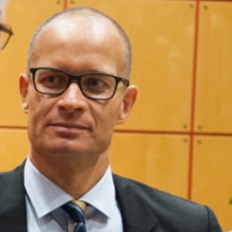
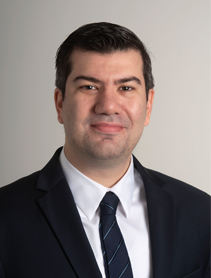
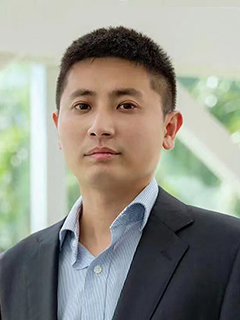
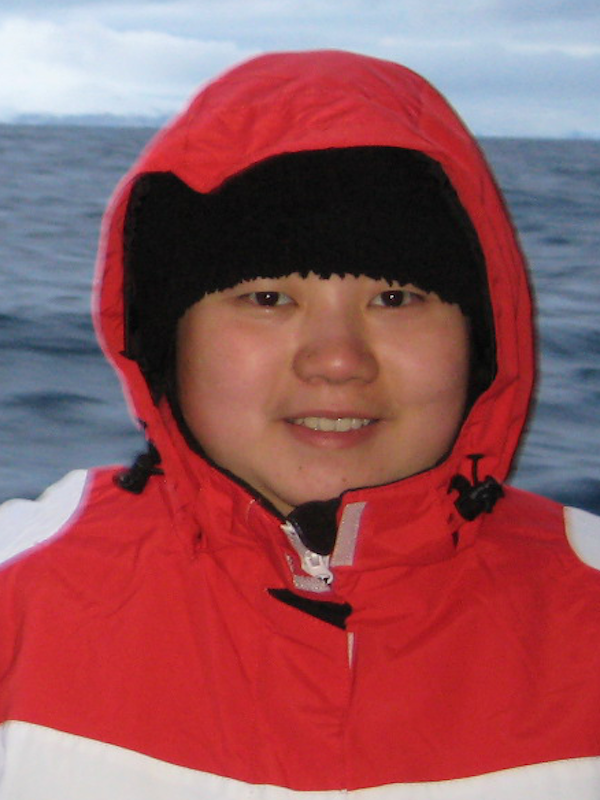
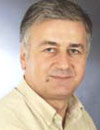
Ewa Batyra is an Affiliate Researcher at the Laboratory of Fertility and Well-Being within the Max Planck Institute for Demographic Research (MPIDR). Her work focuses on global demographic patterns related to fertility, family formation, and socioeconomic disparities. Key Research Areas: Fertility dynamics, child marriage, union formation, and the impact of education on demographic transitions. Geographic Focus: Global South, particularly Sub-Saharan Africa and Latin America. Recent Trends: Batyra's publications analyze post-disaster fertility shifts, unintended pregnancy outcomes, and the role of income inequality in delaying parenthood. She employs cross-national datasets and advanced statistical methods like fixed-effects modeling. Collaborations: Works with institutions such as the University of Pennsylvania (Hans-Peter Kohler), University of Oxford (Tiziana Leone), and Brazilian research teams on fertility forecasting.
Eirik Valseth is an Associate Professor of Scientific Computing at the Norwegian University of Life Sciences (NMBU), Department of Data Science. He holds concurrent roles as a research associate at the Oden Institute, University of Texas at Austin, and an affiliated researcher at Simula Research Laboratory (Department of Numerical Analysis and Scientific Computing). His expertise lies in advanced finite element methods for PDEs with applications in flood modeling and hydropower systems. Current Affiliation: NMBU (Norwegian University of Life Sciences) Secondary Affiliations: Oden Institute (UT Austin), Simula Research Laboratory Research interests span numerical methods for challenging PDE systems, including: Stabilized finite element formulations Hurricane storm surge and riverine flood modeling Hydropower infrastructure analysis Computational mechanics and applied mathematics His recent publications (2024–2025) emphasize flood risk assessment (compound flooding, dam breaks, dredging impacts), advanced numerical methods (isogeometric analysis, stochastic finite elements, graph-grammar algorithms), and environmental applications (pollution transport, pathogen distribution, mosquito population dynamics after hurricanes). Key trends include cross-disciplinary integration of physics-aware machine learning and robust hydrodynamic simulation tools. Valseth's work extends to software development (e.g., WAVEx for spectral wave models, SWEMniCS for coastal circulation) and large-scale modeling frameworks like the ADCIRC unstructured mesh model for US coasts. Collaborative projects involve institutions such as University of Texas at Austin, Simula, and NOAA.
Dr. George O'Mahony serves as Head of Department of Computer Science at Munster Technological University (MTU) and is a CONNECT Associate Investigator with Research Ireland. He leads Ireland's Cyber Range infrastructure development and acts as WorldSkills Ireland Expert for Cybersecurity Skill 54, driving national cybersecurity initiatives through academia-industry collaboration. Education: B.E. in Electrical and Electronic Engineering, University College Cork (UCC) Ph.D. in Electrical and Electronic Engineering, University College Cork (UCC), 2021 His research pioneers cyber resilience frameworks for OT/IoT systems, zero-trust architectures, and machine learning applications in anomaly detection. He develops low-complexity security solutions for resource-constrained edge devices, with emphasis on wireless sensor networks, GPS applications, and penetration testing methodologies. His work bridges theoretical innovation with practical infrastructure implementation. Recent publications reveal accelerating focus on quantum-resistant cryptography, MQTT-ZT secure brokers, and unified cyber resilience models. His scholarly output consistently addresses interference detection in wireless networks while expanding into satellite communications security and AI-driven network customization, reflecting strategic adaptation to emerging cyber threats. Research Leadership: CONNECT: Associate Investigator advancing cyber security research NCF Cyber Shock: Co-Principal Investigator Cyber Explore: Principal Investigator at MTU Cyber Range: National infrastructure lead (mobile/cloud) Horizon Telemetry: Core research team member As STEM advocate and Cyber Futures Academy contributor, O'Mahony shapes cybersecurity education through WorldSkills Ireland engagement and industry-focused cyber range deployments that serve academic, governmental, and commercial sectors.
Dr. David Green is a Senior Research Fellow at the School of Public Health, Faculty of Medicine at Imperial College London, leading the Aerosol Science Team within the Environmental Research Group. His research focuses on aerosol and gas measurement, source apportionment, and health impact studies. Key leadership roles include directing the Centre for Low Emission Construction and contributing to diversity initiatives. His work integrates advanced analytical techniques, such as real-time supersite monitoring in London, to inform public health policies and environmental forecasting systems. Research interests emphasize aerosol composition measurement, development of new techniques, and quantifying emission sources in urban environments. Collaborative projects span agencies like the Environment Agency, EPSRC, and EU initiatives. He supervises PhD students exploring topics such as non-road mobile machinery emissions, satellite-based traffic analysis, and subway air quality. His team’s work bridges environmental science and public health, addressing issues like ultrafine particle exposure, particulate matter on public transport, and policy-driven emission reductions. Key Collaborations: Includes STFC Air Quality Network, High Speed 2, and EU Metrology for Nitrogen Dioxide projects. Advising: Oversees five PhD students and post-doctoral fellows, focusing on environmental engineering and public health applications. Labs/Teams: Leads the Aerosol Science Team and contributes to the MRC Centre for Environment and Health.
Juan C. Vasquez is a Professor at Aalborg University's Faculty of Engineering and Science, Department of Energy Technology, and Co-Director of the Center for Research on Microgrids (CROM). He holds a PhD in Automatic Control from the Technical University of Catalonia and has held academic positions at Aalborg University since 2011. His research focuses on microgrid control, renewable energy integration, power electronics, and smart grids. He has supervised numerous PhD and master’s students and leads projects funded by EU and national grants. Education: BS in Electronics Engineering (Autonomous University of Manizales, Colombia, 2004); PhD in Automatic Control (Technical University of Catalonia, Spain, 2009). Research interests include operation and control strategies for AC/DC microgrids, maritime microgrids, energy management systems, and IoT integration in smart grids. He has authored 648+ publications, including highly cited works, and received awards like the Young Investigator Award (2019) and Clarivate’s Highly Cited Researcher status since 2017. Key projects: EU-DREAM (Digital Services for Energy Transition), NEST (National Research Infrastructure), and ActRes (Resilience in Energy Systems). Collaborations include Virginia Tech and Ritsumeikan University.
Andreas Wladis is an Adjunct Professor at the Department of Biomedical and Clinical Sciences (BKV) at Linköping University , Sweden. He also serves within the Department of Surgery, Orthopaedics and Oncology (KOO) , where his interdisciplinary research bridges clinical surgery with disaster medicine frameworks. His academic mission focuses on strengthening disaster medicine as a formal discipline and developing traumatology as a clinical research field in Sweden. Research Focus : Disaster medicine preparedness and response systems Global surgery accessibility in low-resource and conflict-affected settings Trauma care optimization in non-specialist environments Pandemic response structures and indirect health consequences Humanitarian surgical education and competency development Recent Research Trends emphasize surgical outcomes in resource-limited contexts (e.g., Rwanda, Uganda), trauma triage accuracy in non-trauma hospitals, and pediatric injury patterns in war zones. His 2025 publications include groundbreaking studies on groin hernia repair techniques and war-related pediatric trauma in Ukraine. Professional Affiliations include: Disaster Medicine Center, Linköping University Former Chief Surgeon at the International Committee of the Red Cross (ICRC) (2022-2023) Medical Expert for the European Union (CPCC) (2008-2020) Current adjunct professorship at BKV since 2024
Dr. Jaswinder Lota is a Reader in Engineering at the University of East London , School of Architecture, Computing and Engineering, Department of Engineering & Construction. He is also a Visiting Academic at University College London’s Department of Electronic and Electrical Engineering, and a Chartered Engineer with extensive industry and academic experience. Education: BSc BEng MEng PGCert HE PhD Research Interests: Dr. Lota specializes in signal processing, circuits and systems, wireless communication, and their applications in radar systems (weather/military), low-power sustainable networks beyond 5G/6G (robotics, automation, healthcare), and electronic technologies for hydrogen propulsion. His work integrates AI-driven channel modeling and impulsive noise analysis. Scientific Awards: IEEE CAS Society Certificate of Appreciation (2019) Grants and Collaborations: He has secured significant funding, including a £2.5K International Research Collaboration Award (2016), £2.5K Research Internship Award (2015), £76K Impact Grant (2014), and a £7M MoD-funded project (1999-2004). Collaborators include UCL and NYU. Leadership: Dr. Lota leads the Smart Cities Research group at UEL and contributed to the REF 2021 submission. He has served as Associate Editor for IEEE TCAS I and Guest Editor for multiple IEEE journals.
Osman Kaya is a Professor in the Department of Civil Engineering at Muğla Sıtkı Koçman University's Faculty of Engineering, Turkey. He has extensive experience in structural engineering, earthquake engineering, and composite materials for retrofitting applications. His educational background includes a PhD in Civil Engineering from Boğaziçi University (2010), with prior degrees from Boğaziçi University (MS, 2003) and Pamukkale University (BS, 1998). Education : PhD (Boğaziçi University, 2010), MS (Boğaziçi University, 2003), BS (Pamukkale University, 1998). Dr. Kaya's research focuses on seismic retrofitting of concrete structures using composite materials (CFRP), torsion analysis of reinforced concrete members, structural rehabilitation techniques, and earthquake resilience. His work includes analytical and experimental studies on beam-column joints, full-scale testing of concrete beams, and FRP-based reinforcement systems. His recent publications (2003-2025) emphasize composite retrofitting solutions, epoxy repair methodologies, torsion behavior in concrete beams, and seismic upgrading of existing structures. Key trends include CFRP sheets for shear-deficient joints and columns, chemical epoxy for joint rehabilitation, and full-scale experimental testing. Scientific Awards : Not explicitly mentioned. Dr. Kaya has supervised 6 graduate theses on topics like base isolation systems, torsion testing, and steel fiber applications in concrete. He has led 2 research projects funded by higher education institutions and participated in TÜBİTAK and other initiatives. He teaches advanced courses in structural analysis, reinforced concrete, and composite systems.
Dr. Shuvo Bakar is a Senior Lecturer in the Sydney School of Public Health at the University of Sydney, within the Faculty of Medicine and Health. He holds a PhD in Statistics from the University of Southampton, UK, and has prior experience as an Assistant Professor at Yale University, Lecturer at the Australian National University, and Scientist at Data61 (CSIRO). His research focuses on statistical methods applied to public health challenges, including Bayesian hierarchical modeling, machine learning, spatio-temporal analysis, and their applications in epidemiology, clinical trials, and environmental health. Dr. Bakar's research interests span statistical methodologies such as Bayesian adaptive designs, small area estimation, and spatial risk modeling, alongside applications in child health, infectious diseases, and extreme weather impacts on health. He is an active member of academic communities, including the Royal Statistical Society (RSS Fellow), Statistical Society of Australia, and the Australian Trials Methodology Research Network. His work also involves collaborations on grants totaling millions in funding, addressing topics like climate change impacts on health inequity and cardiovascular disease prevention in remote regions. Education: PhD in Statistics (University of Southampton, UK) Key Research Themes: Obesity, Diabetes, Cardiovascular Disease; Reproductive, Maternal & Child Health Grants/Projects: Includes NHMRC-funded trials on respiratory infections in First Nations children and MRFF grants for cardiovascular risk reduction in regional Australia. Dr. Bakar's contributions extend to editorial roles for Nature Scientific Reports and Discover Public Health , and his research has been published in journals like PloS One , Climatic Change , and Journal of the Royal Statistical Society .
Dr. Hakki Erhan Sevil is an Associate Professor in the Department of Intelligent Systems and Robotics at the University of West Florida, within the Hal Marcus College of Science and Engineering. He holds a Ph.D. in Mechanical Engineering from the University of Texas at Arlington and has extensive research experience in robotics, intelligent systems, and autonomous control. His work spans theoretical and applied domains, focusing on resilient and intelligent robotic systems. Ph.D., Mechanical Engineering, University of Texas at Arlington M.S., Mechanical Engineering, Izmir Institute of Technology B.S., Mechanical Engineering, Izmir Institute of Technology Dr. Sevil's research interests lie at the intersection of robotics, artificial intelligence, and control systems. He specializes in autonomous navigation, fault detection and isolation (FDI), multi-agent coordination, computer vision, and bio-inspired computational methods. His work emphasizes real-world implementation in unmanned and self-sustained systems, particularly in challenging environments. His recent publications and projects highlight a strong trend toward intelligent, resilient, and distributed robotic systems. Themes include entropy-based behavior modeling for UAV swarms, assistive robotics for household tasks, post-disaster damage assessment using aerial vision, and advanced guidance for GPS-denied navigation. These reflect a multidisciplinary approach combining machine learning, control theory, and robotics engineering. 2024 Faculty Excellence in Teaching Award, UWF 2024 Faculty Excellence in Undergraduate Research Mentoring Award, UWF DURIP Grant ($478,000) from ONR (with IHMC) USDA Grant ($728,000) with New Mexico State University US Air Force SBIR/STTR Grant ($110,000) with Catalano Aerospace AFWERX Funding for Distributed Behavior Research Dr. Sevil actively mentors Ph.D. and M.S. students and leads the Sevil Research Group, which has secured multiple internal and external grants from NSF, NASA, ARL, ONR, and USDA. He has served as PI and Co-PI on funded projects and advises student teams that have won national awards. His lab, the Intelligent Systems and Robotics Lab, is highlighted in university communications and national challenges. The group collaborates with IHMC, NMSU, and industry partners, fostering innovation in autonomous systems. The Sevil Research Group operates within the Intelligent Systems and Robotics Lab at UWF, conducting cutting-edge research in autonomous navigation, swarm intelligence, and resilient robotics. The lab collaborates with the Institute for Human and Machine Cognition (IHMC), New Mexico State University, and private aerospace firms. It supports student-led projects, participates in national robotics challenges, and maintains active GitHub repositories for open research dissemination.
Andrew J Whelton is a Professor of Civil and Construction Engineering at Purdue University's College of Engineering, with concurrent appointments in Sustainability Engineering and Environmental Engineering. He serves as Director of the Healthy Plumbing Consortium and Lead for the Center for Plumbing Safety, focusing on water quality, chemical contamination, and public health in building plumbing systems. Professor, Civil and Construction Engineering Professor, Sustainability Engineering Professor, Environmental Engineering Director, Healthy Plumbing Consortium Lead, Center for Plumbing Safety His research spans environmental engineering and public health, with key themes including chemical contamination from plastic pipe degradation, post-disaster water system recovery, wildfire-related water quality impacts, and microbial risks in premise plumbing. Recent work addresses crises like the East Palestine chemical spill and Maui wildfires, while also developing predictive models for water quality and evaluating sustainable infrastructure materials. Scientific awards and recognitions include: Rapid Response Research (RAPID) Grants from NSF for disaster-related studies Environmental Protection Agency (EPA) support for building water quality programs Leadership in interdisciplinary consortia focused on plumbing safety Development of novel tools for water quality monitoring and remediation His publications reveal trends in: Chemical leaching from plastic piping materials Environmental justice in water contamination crises Integration of machine learning for water quality prediction Microbial ecology in stagnant plumbing systems Policy recommendations for disaster response Sustainable material innovation for infrastructure
Han Li is an Associate Professor in the Department of Geography and Sustainable Development at the University of Miami's College of Arts and Sciences. Their research bridges urban geography, sustainable development, and policy analysis, with a focus on climate resilience, pandemic-induced behavioral shifts, and socio-spatial dynamics in urban environments. Affiliation: University of Miami (College of Arts and Sciences), previously associated with Chinese institutions like Shanghai's urban research ecosystem. Research Themes: Climate policy impacts on labor markets, renewable energy adoption in education, pandemic effects on commuting and residential preferences, and cultural/economic drivers of urban transformation. Han's work spans interdisciplinary domains, including urban sustainability , spatial diffusion models , and policy evaluation . Their recent studies highlight: Quantitative analysis of solar PV adoption in U.S. schools amid cost-alleviation policies Geospatial modeling of flood risk counterfactuals in Germany Post-lockdown commuting behavior shifts in Shanghai using phone signal data Evolution of residential preferences for parks and coastal amenities during/after the pandemic Interplay between peer social networks and psychological resilience in migrant children's school adaptation
Dr. Yina Liu is an Assistant Professor in the Department of Oceanography at Texas A&M University, leading the Halo-Carbon Biogeochemistry Lab and serving as R&D Team Lead in the Geochemical and Environmental Research Group (GERG). Her research focuses on organic biogeochemistry, particularly halogenated compounds' roles in environmental processes. She employs advanced mass spectrometry and data science to study contaminant cycling, microbial transformations of oil components, and PFAS distributions. Education includes a Ph.D. in Chemical Oceanography (Texas A&M, 2013), B.S. in Environmental Sciences (UC Irvine, 2006), and postdoctoral work at Woods Hole Oceanographic Institution (2013-2015) and Pacific Northwest National Lab (2015-2017). Research interests span untargeted environmental analysis, halocarbon biogeochemistry, and eco-metabolomics, with emphasis on linking organic matter dynamics to ecological processes. Her lab investigates topics such as microbial degradation of crude oil components, PFAS environmental fate, and halogenated compound identification using novel computational algorithms. Current projects include developing cheminformatics pipelines for tarball fingerprinting and atmospheric particle characterization. She actively mentors students across undergraduate, graduate, and postdoctoral levels through Texas A&M's Oceanography program. Research highlights include groundbreaking work on oil spill bioremediation mechanisms and PFAS contamination in urban watersheds. Her methodologies combine field studies, laboratory experiments, and computational modeling to advance understanding of global carbon and contaminant cycles.
Stavrakakis Ioannis is a Professor at the Department of Informatics and Telecommunications, School of Science, University of Athens, where he has served since 2002. He previously held academic positions at Northeastern University (1994-1999) and University of Vermont (1988-1994). Ph.D., Electrical Engineering (1988), University of Virginia Diploma, Electrical Engineering (1983), Aristotle University of Thessaloniki His research focuses on network resource allocation algorithms , cooperative content dissemination , mobile ad hoc networks , and privacy-aware protocols . He leads the Advanced Networking Research (ANR) Group. Recent publications highlight trends in AI-driven network optimization , edge computing for VR , drone-assisted sensor networks , and privacy in vehicular systems . Key themes include game theory applications, energy-efficient protocols, and distributed learning frameworks. Contact: ioannis@di.uoa.gr
Diana G. Ramirez-Rios is an Assistant Professor at the State University of New York at Buffalo, specializing in Industrial and Systems Engineering within the School of Engineering and Applied Sciences. She holds a Ph.D. in Transportation Engineering from Rensselaer Polytechnic Institute and a B.S./M.S. in Industrial Engineering. Her research focuses on disaster response logistics, urban freight transportation, and supply chain optimization, with an emphasis on policy-driven and empirical approaches. Education: Ph.D. in Transportation Engineering (Rensselaer Polytechnic Institute), B.S./M.S. in Industrial Engineering. Research interests include disaster logistics (e.g., post-disaster healthcare access, facility location models), urban freight systems (e.g., parking policies, emission reduction strategies), and game-theoretic models for supply chain collaboration. She has secured grants such as the NSF RAPID grant (2024) for studying interdependent infrastructure impacts in Puerto Rico and a Natural Hazards Center grant (2021) on healthcare accessibility in disaster zones. Scientific awards include the Karen and Lester Gerhardt Prize (2021), Thomas Archibald Price (2021), and scholarships from WTS International and INFORMS. Her work bridges theoretical models with practical policy solutions, addressing challenges like freight externalities and socially vulnerable communities' recovery needs. Her grants and advising contributions involve interdisciplinary collaborations, with a focus on sustainable urban logistics and humanitarian aid systems. She actively participates in professional councils, such as the INFORMS Sub-Divisions Council and POMS Regional Vice Presidency in the Americas.