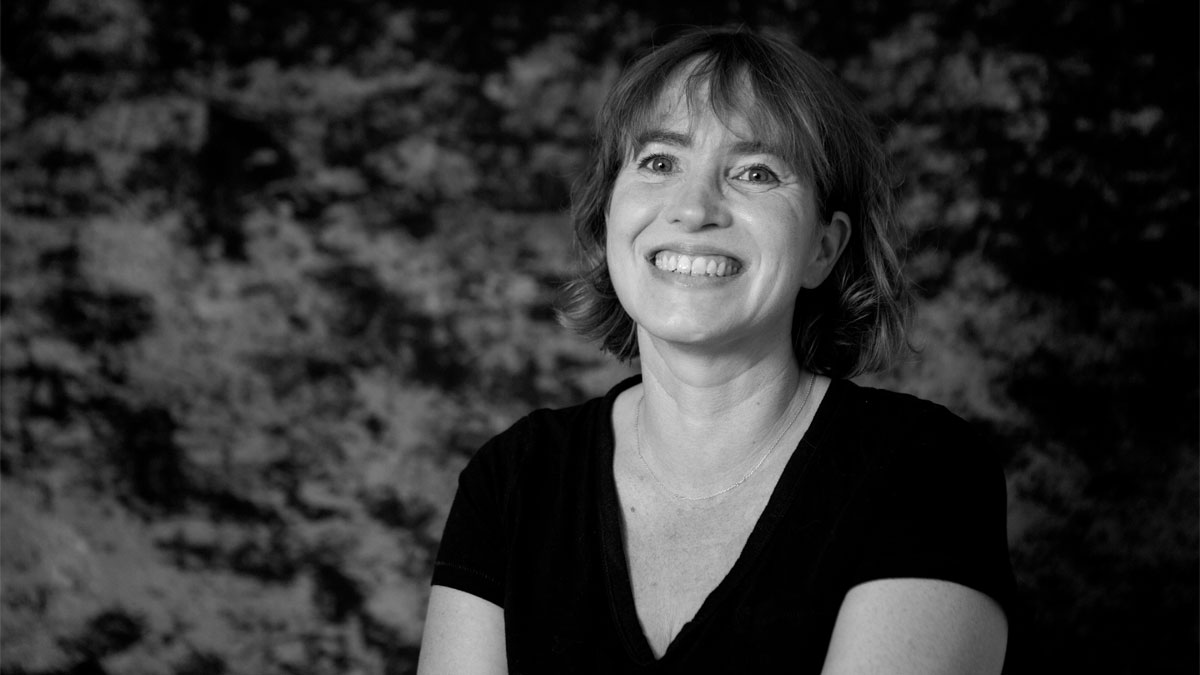
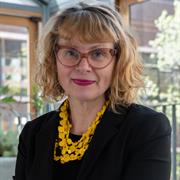
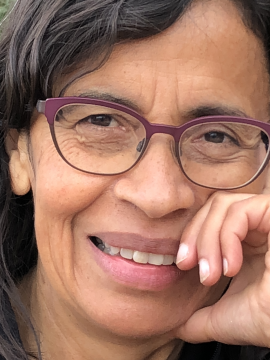
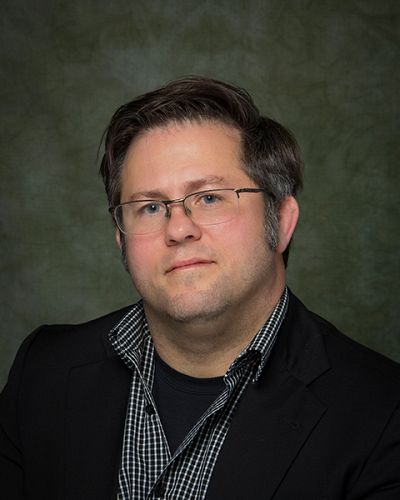
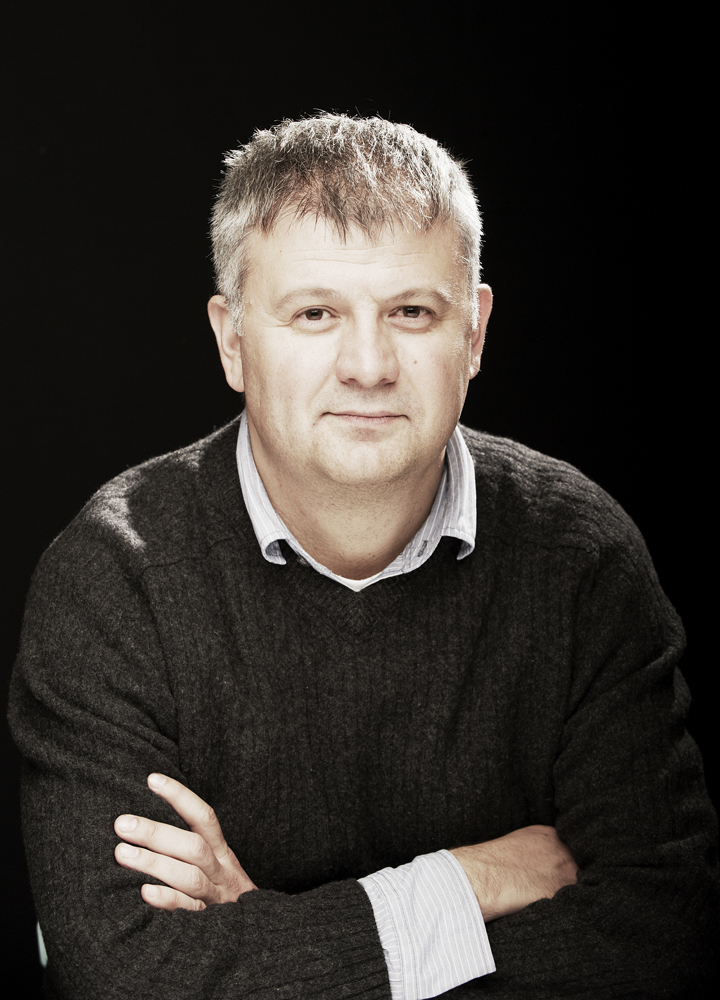
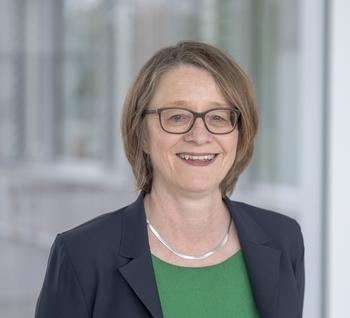
Beth M. Carter is an Assistant Professor of Japanese at Case Western Reserve University, specializing in premodern Japanese literature. Her research focuses on mourning rituals and practices in The Tale of Genji and related texts. Education: B.A., Sarah Lawrence College; M.A., Johns Hopkins University; M.A. and Ph.D., University of Pennsylvania Her work introduces the concept of "mourning poetics," analyzing the interplay between post-death rituals and lament poetry in Japanese literary traditions. Secondary research explores women's voices in historical Japanese texts. Recent publications (2016–2025) examine corporeal expressions of grief, regional symbolism in mourning scenes, and the evolution of ritual practices in classical Japanese narratives. Scientific Awards Fulbright Graduate Research Fellowship (Kyoto, Japan 2013, 2015) Blakemore Freeman Fellowship for Advanced Asian Language Study (Yokohama, Japan 2014) Current affiliations include Department of Japanese, Guilford House 313, and Phone: 216.368.2102.
Przemysław Kordos is a Professor at the University of Warsaw , affiliated with the Faculty of Liberal Arts , where he serves as Coordinator for the Development of the Modern Greek Philology Program . He holds two PhDs in Humanities (2007, 2019) and was awarded the Loukis Papaphilippou Seat of Advancement in Modern Greek scholarship. Education: MA in Ethnology and Cultural Anthropology (University of Warsaw, 2001) MS in Sociology (University of Warsaw, 2002) PhD in Humanities (University of Warsaw, 2007) Second PhD in Humanities (University of Warsaw, 2019) His research interests span: Contemporary Modern Greek and Cypriot literature Polish-Greek cultural relations (philhellenism) Social and ethnographic issues in Greece and Cyprus Travel literature analysis Fantasy literature's cultural implications His scientific work reveals a focus on linguistic assimilation in foreign language learning (via fMRI studies), historical parallels between Polish and Greek independence movements, and critical analyses of Cypriot folk culture's politicization. Key scientific awards include: Loukis Papaphilippou Seat (University of Warsaw) Internships at EKPA and IKY (Greece) Scholarships at IMXA (Greece) and MUNI (Czech Republic) His academic contributions include cataloging 60+ Polish travel accounts to Greece, analyzing the shift from travel literature to tourism discourse, and examining the Hellene-Romios dichotomy's role in modern Greek identity construction.
Bryan K. Hanks is an Associate Professor in the Department of Anthropology at the University of Pittsburgh's Dietrich School of Arts and Sciences. An archaeologist specializing in prehistoric Eurasian societies, his research spans from the Bronze Age steppes of Russia to Neolithic villages in the Balkans and Native American pit house settlements in Idaho. Education: Dr. Hanks earned his Ph.D. from the University of Cambridge in 2003, establishing his foundation in archaeological research. Research Interests: His work focuses on late prehistoric societies , particularly examining mobile pastoralism , early metallurgy , and settlement patterning . His projects integrate geophysical and geochemical methods to understand subsistence strategies, craft production, and social organization across Eurasia and North America. Research Trends: His publications reveal a consistent focus on Bronze Age societies of the Eurasian steppes, with particular attention to mortuary practices , metallurgical developments , and social complexity . Recent work has expanded to include Neolithic European settlements and Native American archaeology in the American West. Collaborations & Training: Dr. Hanks maintains extensive international collaborations with institutions in Russia, Serbia, the UK, and across the US. He is deeply committed to student training , regularly including graduate and undergraduate students in his international field projects and offering local geophysics training in Pittsburgh.
Professor Steven Eastwood is a Professor of Film Practice at Queen Mary University of London (QMUL), leading Film Practice and directing the BLOC arts complex. He holds a PhD from UCL Slade School of Fine Art (2007). His work bridges film, installation, and co-creation with neurodivergent communities, palliative care professionals, and medical educators. Eastwood's research focuses on neurodiversity representation, end-of-life narratives, and fact-fiction hybrid practices. Key works include The Stimming Pool (2024, co-created with Neurocultures Collective), ISLAND (2017, hospice documentary), and Buried Land (2010, Bosnian archaeology film). His ISLAND educational toolkit is used by NHS Trusts for medical training. Awards include Wellcome Trust grants, BFI London Film Festival premieres, and Grierson Award nominations. Academic Leadership: Head of Film Practice, QMUL Centre for Film & Ethics founder Education: BA/PhD from UCL, prior roles at University of East London and SUNY Buffalo Grants: Wellcome Trust, AHRC, Arts Council England, Paul Hamlyn Foundation Labs: BLOC cinema-lab complex with 4K Dolby Atmos facilities Research explores ethical filmmaking in sensitive domains like palliative care and autism advocacy. Recent projects include Autism Through Cinema (2018-2022) and Death and Dying studies through multiscreen installations. Supervision: 6 current PhD students focusing on documentary ethics, neurodiversity, and prison narratives External Examining: Practice-based film PhDs across UK institutions
Robert Sharf is the D.H. Chen Distinguished Professor of Buddhist Studies in the Department of East Asian Languages and Cultures at the University of California, Berkeley . He also serves as Chair of the Numata Center for Buddhist Studies and Head Graduate Advisor for the Group in Buddhist Studies . With a PhD in Buddhist Studies from the University of Michigan (1995), he previously taught at McMaster University (1989-1995) and the University of Michigan (1995-2003). Research Interests: Medieval Chinese Buddhism (especially Chan) Japanese Buddhism Buddhist Art and Archaeology Ritual Studies Buddhist Modernism Philosophical Paradoxes Methodology in Religious Studies Critical Buddhist Discourse Publications & Collaborations: Author of Coming to Terms with Chinese Buddhism: A Reading of the Treasure Store Treatise (2002) Co-editor of Living Images: Japanese Buddhist Icons in Context (2001) Co-author of What Can’t Be Said: Contradiction and Paradox in East Asian Thought (2021) Co-author of How to Lose Yourself: An Ancient Guide to Letting Go (2025) Editor of Chinese translations of his works: Xiafu Chanxue zixuan ji and Xiafu Mijiao Yanjiu zixuan ji (2022) Academic Leadership: Director of the Group in Buddhist Studies Director of Religious Studies Chair of the Center for Buddhist Studies
Professor Mary Lewis is a renowned scholar in bioarchaeology and paleopathology at the University of Reading's Department of Archaeology. Her research focuses on child and adolescent skeletal remains, particularly in understanding growth patterns, disease, and health in past populations. She is the author of influential works such as The Bioarchaeology of Children and co-editor of The Archaeology of Disease . Her academic positions include President of the Paleopathology Association (2023–2025) and convenor of courses like AR1MET (Archaeology Today) and AR3S21 (Biological Anthropology). Her research has pioneered methods for diagnosing diseases like leprosy, tuberculosis, and thalassaemia in skeletal remains. Research Interests: Puberty development, urban/industrial health impacts, non-adult osteology. Teaching: Forensic Archaeology, Biological Anthropology, Archaeology of Death. Key Projects: Studies on medieval pubertal timing, Roman-era child health, and migration patterns via skeletal analysis. Her students explore diverse topics, including child health in ancient Egypt, industrial-era diets, and the effects of famine/plague on childhood. She is a Fellow of the Higher Education Academy and actively supervises over 20 postgraduate researchers.
Saul M. Olyan is the Samuel Ungerleider Jr. Professor of Judaic Studies and Professor of Religious Studies at Brown University. His research focuses on the history, literature, and religion of ancient Israel, with particular emphasis on ritual practices, social inequality, and biblical interpretation. He holds editorial roles for multiple academic series including the Brown Judaic Studies monograph series and the Anchor Yale Bible series. Education: Ph.D. (1985), M.A. (1984), and B.A. (1981) from Harvard University. Awards include NEH Fellowships and membership in the American Academy for Jewish Research. Teaching covers biblical studies, ancient Near Eastern religions, and topics like inequality, disability, and warfare in antiquity. Research interests span ritual violence, disability representation, and social hierarchy in biblical texts. Notable works include Animal Rights and the Hebrew Bible (2023) and Violent Rituals of the Hebrew Bible (2019). His articles explore themes like purity ideology, familial rites, and monotheistic developments in Isaiah. Key contributions include editorial work on Dead Sea Scrolls and interdisciplinary projects like Household and Family Religion in Antiquity . His work bridges textual analysis with social theory, offering innovative insights into ancient Israelite and Near Eastern religious practices.
Distinguished Professor Larissa Hjorth is a digital ethnographer and ARC Future Fellow leading research on mobile media, grief, and ageing at RMIT University's School of Media & Communication. Her work explores intergenerational connection, digital kinship, and loss in the Asia-Pacific. She has directed major initiatives like the Design & Creative Practice ECP Platform and co-founded the Digital Ethnography Research Centre (DERC). With over $8M in grants, she collaborates with ACMI, Intel, and international networks like Aging in Data. She supervises 20+ PhD students and advises global grief research networks. Recent projects include studies on QR codes in public spaces, co-designing ICT strategies for older adults, and digital rituals around death. Research interests span mobile media ethnography, playful urban design, and ethical digital practices. Her ARC Future Fellowship (2023-2027) investigates mobile media mourning rituals, while her Aging in Data project examines older adults' data experiences. Teaching spans 20 years across design, art, and media disciplines. Awards: ARC Future Fellowship, Japan Foundation Fellowship, Asialink Residency Key Collaborations: SSHRC (Canada), Concordia University, DORS (death online network) Labs: DERC, Museum Digital-Social Futures project Grants: 7+ ARC grants, Young and Well CRC, CCI CoE Notable outputs include works on pandemic-era QR code placemaking, WeChat's role in intergenerational care, and co-designed risk strategies for older adults' ICT use. Her creative projects like The Children's Sensorium blend art and mindfulness to support youth well-being.
Pilar Riaño-Alcalá is a Professor at the Social Justice Institute (SJI) within the Faculty of Arts at the University of British Columbia (UBC). She is also a Faculty Associate in the Department of Anthropology at UBC and a Senior Fellow at the Maria Sibylla Merian Center for Advanced Latin American Studies (CALAS). As co-lead of the Transformative Memory International Network, she directs major SSHRC-funded research on memory, violence, and social repair. Her academic and public intellectual work is deeply collaborative with Black and Indigenous communities in Colombia and transnational peace initiatives. Fields of Research: Witnessing and lived experiences of political violence, war, and genocide Landscapes and practices of memory and social repair Ecologies of absence and presence in memory work Epistemic justice and relational methodologies Sound memory, oral history, and social practice art Forced migration and transnational diaspora organizing Her recent publications reveal a consistent focus on transformative memory, especially through the voices of marginalized communities such as the Wayuu and the cantadoras of the Atrato River. Her work bridges academic research with public art, most notably through her two-decade collaboration with artist Suzanne Lacy on The Skin of Memory . The thematic trends in her articles show a deep commitment to decolonial methodologies, community-based knowledge production, and the integration of artistic practices in memory and justice work. Scientific Awards: Senior Fellow, CALAS, 2021 Academic Writing Fellow, Bellagio Center, Rockefeller Foundation, 2019 Faculty Fellow in Residence, Liu Institute for Global Issues, UBC, 2009–2015 Advising and Grants: Riaño-Alcalá has supervised numerous PhD and MA students at UBC, focusing on themes of decolonial solidarity, environmental justice, and memory. She currently leads three major research projects: Transformative Memory: An International Network (SSHRC Partnership Grant), Exhumations and Burial in Colombia , and Sacred Responsibilities to Water: Indigenous Knowledge Exchanges, Canada-Colombia . Her advising reflects a strong commitment to interdisciplinary, community-engaged scholarship, particularly with Indigenous and diasporic communities. Labs and Networks: She co-directs the Transformative Memory International Network, a transnational research collective that fosters collaborative memory practices across Latin America, Canada, and Europe. Her work is deeply embedded in community-university partnerships and public scholarship, including multimedia exhibitions and collaborative publications.
Dr. Francisco Pérez Fernández is a Professor at Camilo José Cela University (UCJC) in both Psychology and Criminology & Security departments, and holds a PhD in Philosophy & Education Sciences from Complutense University of Madrid (1997). He serves as coordinator of Criminology Degrees (2018-present), former Criminology Department Coordinator (2008-2013), and has been Academic Mentor Accreditation holder since 2008. His international collaborations include Evidentia University (Florida, USA) since 2022. PhD in Philosophy & Education Sciences (UCM, 1997) Postgraduate in Cognitive Sciences, Emotion & Stress (UCM) Accredited Academic Mentor (Spanish Mentoring Network) Civil & Commercial Mediator (UCJC) His research focuses on intersections between History of Psychology , Criminal Psychology , and Cultural Criminology , particularly examining: Crime-cultural system interactions Penitentiary system evolution Popular culture's role in criminal narratives Forensic science historical development Collective psychological phenomena Scientific contributions include establishing the Psychological Autopsy as investigative technology and developing the Method VERA behavioral analysis framework. His publications span: 15+ peer-reviewed articles (2019-2024) 6 book chapters on cultural anthropology 2 edited volumes on violence phenomena 1 book on vampire psychology 1 book on Batman's cultural origins Scientific recognition includes: 2015 In Memoriam Prof. Orozco Acquaviva Award 2016 Real Colegio de Médicos de Sevilla Award 2023 SECCIF Gold Insignia As academic leader, he has: Directed 60+ academic committees Mentored numerous doctoral candidates Coordinated postgraduate programs (2015-2016) Co-edited EduPsykhé journal Reviewed for 10+ international publications Current affiliations: Secretary of Spanish Society for the History of Psychology (SEHP, 2016-present) Member of American Psychological Association (APA) Full member of Spanish Society of Criminology and Forensic Sciences (SECCIF) Editor-in-Chief of EduPsykhé. Journal of Psychology and Education
Nathanael Andrade is a Professor in the History Department at Binghamton University within the College of Arts and Sciences. Specializing in Greek and Roman history, with a focus on the Ancient Mediterranean and Late Antiquity, his work explores the Roman Near East, Hellenistic Syria, and cultural interactions in antiquity. Education: PhD in Greek and Roman History from the University of Michigan; BA from Wesleyan University Research Interests span the Roman and later Roman Near East, including topics like religious pluralism , urban economies , and gender dynamics in antiquity. His scholarship interrogates cultural identity, material culture, and the transmission of ideas across the Mediterranean and Indian Ocean networks. Recent Publications (2025–2009) address diverse themes: Pompey's impact on the Levant, economic circularity in Palmyra, enslaved women and children in Roman legal documents, and the interplay of Greek and Syrian identities. These works situate him at the intersection of military history , social archaeology , and comparative religion . Academic Network includes co-authorship with Rubina Raja on Palmyrene economy, editorial contributions to volumes on the Roman Near East, and affiliations with institutions like the University of Michigan and Wesleyan University.
Sinisa Malesevic is a Full Professor of Comparative Historical Sociology at the University College Dublin (UCD) School of Sociology . He also holds the positions of Senior Fellow and Associate Researcher at the Conservatoire National des Arts et Métiers (CNAM) in Paris, France. His career includes visiting and adjunct appointments at institutions such as the Australian Defence College , National University of Ireland, Galway , and the Free University of Brussels (ULB) , where he held the Eric Remacle Chair in Conflict and Peace Studies . Education: BA in Sociology, University of Zagreb MA in Sociology and Politics, Lancaster University PhD in Sociology, University College Cork Malesevic's research interests center on the sociology of war and violence , nationalism , ethnicity , state formation , and sociological theory . His work explores the structural origins of violence , ideological legitimacy , and micro-solidarity dynamics in conflicts, with a focus on Southeastern Europe and comparative historical analysis . His recent articles emphasize the emotional and ideological drivers of violence , visual representations of nationhood , and the endurance of nationalism as a social force. Themes include Balkan conflicts , state-empire transitions , and the psychological dimensions of warfare . Scientific Awards : 2023 American Sociological Association Outstanding Book Award (Peace, War and Social Conflict section) for Why Humans Fight 2023 Robin M. Williams, Jr. Award for Distinguished Contributions to Scholarship, Teaching, and Service 2023 Conflict Research Society Book Award Shortlist 2020 Stein Rokkan Book Award Honorable Mention for Grounded Nationalisms 2018 American Sociological Association Outstanding Book Award for The Rise of Organised Brutality Elected Member of the Royal Irish Academy (2010) Associate Member of the Academy of Sciences and Arts of Bosnia and Herzegovina (2012)
Matt Sakakeeny is the Department Chair and Associate Professor of Music at the Newcomb Department of Music, Tulane University. He holds a Ph.D. in Ethnomusicology from Columbia University (2008). His research examines intersections of music, sound, and structures of inequality, particularly anti-Black racism in New Orleans. Key projects include studies of brass bands, afterschool programs like The Roots of Music, and collaborations on documentaries such as Rudiments . His work bridges ethnomusicology, sound studies, and cultural anthropology, with notable publications including Roll With It: Brass Bands in the Streets of New Orleans (2013) and co-edited volumes like Keywords in Sound (2015). He teaches courses on New Orleans music, sound studies, and the politics of cultural expression. Recipient of fellowships from the National Humanities Center (2023) and Spencer Foundation (2018), Sakakeeny also serves on nonprofit boards and actively engages in community-based research. His recent work critiques liberal frameworks in music studies and explores sonic dimensions of social justice.
Ori Tavor is Senior Lecturer in Chinese Studies and Director of the Master of Arts Program in the Department of East Asian Languages and Civilizations at the University of Pennsylvania's School of Arts & Sciences. His research explores early Chinese religion and thought, with emphasis on ritual practices, ancestor worship, and the relationship between religion and medicine in ancient Chinese society. Research Focus Examines cultural trauma responses through ritual and music, the role of the body in religious contexts, and Confucian utopian visions. His work integrates textual analysis with anthropological approaches to understand therapeutic dimensions of religious practices. Academic Service Serves on the steering committee of the Confucian Traditions Unit at the American Academy of Religion and editorial board of the Journal of the American Academy of Religion.
Prof. Dr. Susanne Gödde is a Professor of Religious Studies at the Free University of Berlin’s Institute for Religious Studies (WE 8) within the Department of History and Cultural Studies. She holds a W3-Professur since 2016 and serves as Principal Investigator in the Graduate College „Normativität, Kritik, Wandel“. Her academic journey includes habilitation at FU Berlin (2006) and professorships at LMU Munich (2008–2016). 1985–1993: Studied Greek Philology, German Studies, and Classical Archaeology at Westfälische Wilhelms-Universität Münster 1999: PhD in Greek Philology from Münster 2006: Habilitation at FU Berlin Her research focuses on Ancient Greek Religion and Literature , Mythology , and its modern reception, with emphasis on tragedy, novels, and ritual practices. Current projects include DFG research groups on aetiological narratives and sacrificial theory. She explores foundation myths , sacrifice as cultural metaphor , and gender in religious contexts . Recent publications analyze themes such as mythological origins (2025), virginity and violence in Greek novels (2025), rituals in tragedy (2023), and narrative contingency (2022). Her work bridges classical philology, religious studies, and cultural theory. Heidelberger Förderpreis für klassisch-philologische Theoriebildung Lise Meitner-Habilitationsstipendium des Landes Nordrhein-Westfalen Promotionsstipendium der Westfälischen Wilhelms-Universität Münster As advisor, she has mentored PhD students Dr. Emrys Schlatter , Dr. Sebastian Zerhoch , and Dr. Stephanie Roberta Graf . Her outreach includes podcasts on ancient asylum, mythological themes, and public lectures on Homeric reception.