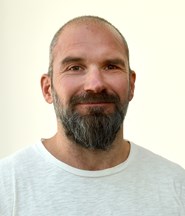
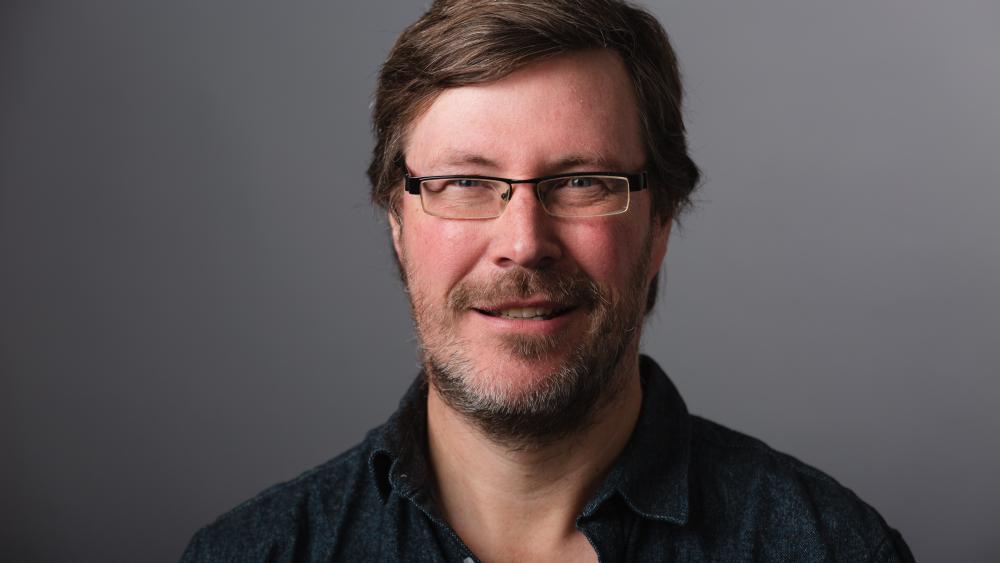
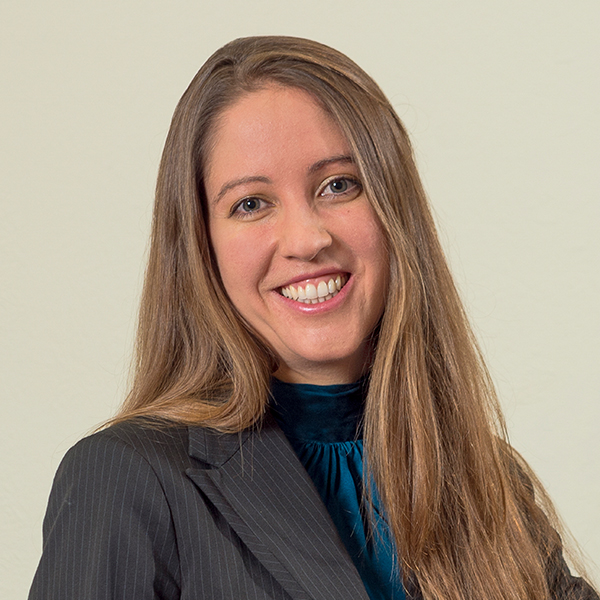
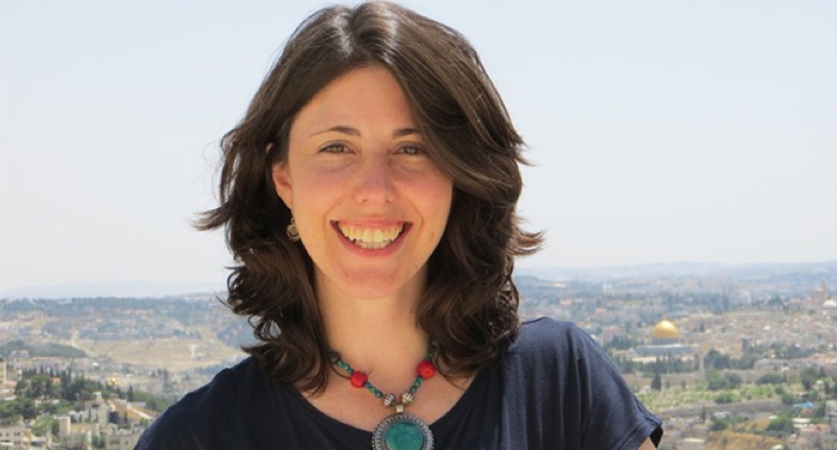
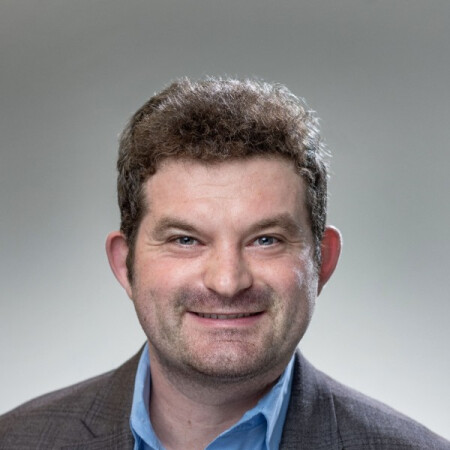
Jan Grimell is an Associate Professor and Senior Lecturer at the Department of Sociology, Umeå University. His research focuses on military chaplaincy, veterans' mental health, and identity formation, combining sociological and religious perspectives. He is affiliated with the research groups Sociology of Organizations, Sociology of Religion, and Sociology of Work. Key research themes include Moral Injury, PTSD, and the transition challenges veterans face when leaving military service. His work explores existential and spiritual dimensions of health, identity reconstruction, and the role of chaplaincy in armed forces and healthcare settings. Recent projects include studies on Ukrainian military chaplaincy during the Russia-Ukraine war, the impact of moral injury among healthcare providers during the pandemic, and the long-term identity struggles of Swedish veterans. His publications span journals like Frontiers in Sociology , Journal of Pastoral Care & Counseling , and Health and Social Care Chaplaincy , with a focus on interdisciplinary approaches linking social psychology, medical sociology, and religious studies.
Professor Phil Clark is a Professor of International Politics at SOAS University of London, specializing in conflict and post-conflict issues with a focus on transitional justice, peacebuilding, and reconciliation after mass atrocity in Rwanda, Uganda, the Democratic Republic of Congo, and Burundi. He holds a DPhil in Politics from the University of Oxford, where he studied as a Rhodes Scholar, and a Bachelor of International Studies from Flinders University. His research focuses on international, national, and community-based responses to mass violence in Central Africa, particularly examining the gacaca community courts in post-genocide Rwanda and the International Criminal Court (ICC). Professor Clark has advised multiple governments (Danish, Sudanese, Swedish, Ugandan, and UK), international organizations (ICC, International Criminal Tribunal for Rwanda), and NGOs (Human Rights Watch, Crisis Group) on conflict issues in Africa. Professor Clark's work spans several key areas including the History, Politics and Law of the African Great Lakes; Transitional Justice Theory and Practice; the Politics of Violence; Community-Based and Customary Law; Conflict Resolution and Reconciliation; the Politics of International Criminal Justice; Peacebuilding, Security and Post-Conflict Reconstruction; and Moral and Political Philosophy. His approach often combines theoretical analysis with practical fieldwork in post-conflict societies. His publications reveal a consistent focus on the tension between international legal frameworks and local justice mechanisms, particularly examining how post-genocide societies navigate complex reconciliation processes. Over time, his work has evolved from documenting specific cases (like the gacaca courts) to analyzing broader patterns of transitional justice and international criminal law across the African continent. Shortlisted for the Raphael Lemkin Award for best book on genocide and mass violence (for "Distant Justice: The Impact of the International Criminal Court on African Politics") Regular contributor to major media outlets including The New York Times, Foreign Affairs, Washington Post, The Guardian, and BBC Frequent media commentator on international news networks including BBC, France 24, Al Jazeera, CNN, and Deutsche Welle Professor Clark has supervised multiple PhD students working on topics related to conflict analysis, women's access to transitional justice, China-Africa relations, and conflict transformation. His current research includes "Intergenerational Justice in Eastern Africa" and "Reframing Justice after Atrocity," which examines justice interactions beyond the linear international-to-national transmission of norms and practices. He has led significant research projects, including serving as technical advisor and co-author of a 2007 UN Office of the High Commissioner for Human Rights project surveying popular perceptions of transitional justice and peacebuilding in northern Uganda. His ongoing work continues to shape academic and policy discussions about justice mechanisms in post-conflict societies.
Don John Omale serves as a Senior Lecturer in Criminology within the College of Business, Law and Social Sciences, focusing on critical issues in Nigerian and African criminal justice systems. His work bridges theoretical frameworks with practical field applications across diverse security and justice contexts. Dr. Omale's research centers on restorative justice mechanisms, police ethics, and conflict resolution in Africa. He extensively examines traditional African dispute resolution models alongside modern criminal justice challenges, with particular emphasis on Nigeria. His studies address farmer-herder conflicts, prison conditions, terrorism countermeasures, and domestic violence in semi-urban settings, consistently advocating for culturally grounded solutions that enhance community trust and institutional accountability. Analysis of his 15 most recent publications (2010-2025) reveals a dominant focus on restorative justice implementation and police accountability in Nigeria. His work demonstrates a methodological shift from theoretical discourse (2005-2011) toward empirical field studies examining practitioner perspectives and community-level impacts, particularly in conflict-affected regions like the Niger Delta and North Central Nigeria. The research consistently connects indigenous African conflict resolution traditions with contemporary security challenges. No scientific awards were documented in available sources Professional activities show no recorded student advising or grant funding in the provided materials, though his extensive publication record suggests active research supervision. His work frequently engages criminal justice professionals and community stakeholders, indicating collaborative field-based approaches to justice reform.
Dr. Christine Ryan is a Senior Lecturer in Politics and Global Studies at the University of Winchester's Department of Social Sciences within the Faculty of Humanities and Social Sciences. She holds a BA from DePaul University (Chicago), an MA from the University of Manchester, and a PhD in Politics from SOAS, University of London (2009). Her expertise spans War and Security, Sub-Saharan Africa, and Antiracism, with a focus on Children and War, Political Sociology of War, and Conflict and Development. Her research examines child soldiers in Sudan, media representations of conflict, and post-conflict societies. She has organized major conferences like the 5th International Children of War Conference (2013) and contributed to publications including Hurst & Co Publishers Ltd and The Round Table . Awards include the 2013 University of Winchester Learning and Teaching Research Funding and 2007 University of London grant. Dr. Ryan has published investigative articles on South Sudan's political developments and has presented widely on topics like Tunisian street children post-Arab Spring. Her work bridges academic research with practical interventions in conflict zones.
Dr. Valerie Hebert is a Professor of History and Interdisciplinary Studies at Lakehead University, specializing in Holocaust photography, genocide studies, transitional justice, and human rights. She joined Lakehead in 2010 and previously held a SSHRC Post-Doctoral Fellowship at York University. Ph.D., University of Toronto (2006) M.A., McGill University (1999) H.B.A., McGill University (1997) Her research intersects 20th-century European history , legal historiography , and visual analysis , with a focus on post-atrocity justice (Nuremberg, Rwanda) and the role of photography in documenting human rights violations. She has presented internationally at conferences in Canada, the U.S., U.K., and Europe. Dr. Hebert has received multiple fellowships, including from the German Historical Institute , US Holocaust Memorial Museum , and Martin Buber Society . Her SSHRC Insight Grant -funded monograph project Five Shots from Sdolbunow examines Holocaust photography.
Mikko Myrskylä is Director at the Max Planck Institute for Demographic Research (MPIDR) and Professor of Social Data Science at the University of Helsinki. Previously, he served as Professor of Demography at the London School of Economics. His academic training includes a PhD in Demography from the University of Pennsylvania and a PhD in Statistics from the University of Helsinki. His research focuses on population health, fertility dynamics, and demographic forecasting. Key areas include: Low fertility determinants through the ERC Synergy project BIOSFER Social inequalities in health via the Max Planck-University of Helsinki Center Labor demography and population aging He leads MPIDR's Laboratory of Population Health, Laboratory of Fertility and Well-Being, and Research Group Labor Demography. Myrskylä's recent publications show strong emphasis on: Fertility trends under economic uncertainty Health disparities across migration/life course stages Family dynamics and aging societies Methodological innovations in demographic analysis Work frequently employs large-scale register data and cross-national comparisons, particularly in Nordic contexts. He leads major collaborative initiatives including: ERC Synergy project BIOSFER (low fertility causes) MaxHel Center (social inequalities in health) with extensive interdisciplinary teams across Europe.
Shakirah Hudani is an Assistant Professor in the Department of City and Regional Planning at the University of North Carolina, with an affiliation in the Department of African, African American, & Diaspora Studies. She holds a PhD in City and Regional Planning from UC Berkeley. Her work centers on African urbanism, post-conflict urban change, and spatial politics in East Africa. Key research focuses include Rwanda's post-genocide urban reconstruction, Nairobi's peripheral development, and Luanda's oil-driven transformations. Her research examines how urban spaces reflect and reshape social dynamics, particularly around memory, identity, and governance. Recent projects analyze commemoration practices in Rwanda, land disputes in Nairobi, and carceral architectures. She critiques master planning processes and explores grassroots urban agency in marginalized communities. Publications span urban studies, critical geography, and postcolonial theory, with a focus on decolonizing urban narratives. Her work bridges academic analysis with practical urban policy debates, emphasizing equity and participatory planning in transitional societies.
Jaremey McMullin is a Senior Lecturer in the School of International Relations at the University of St Andrews, where he conducts research on post-conflict reintegration, youth peacebuilding, and veterans' politics. His work spans academic research, policy advising, and documentary filmmaking, with a focus on Liberia and the United States. Education: PhD in International Relations, University of Oxford (2006) Master of Studies in Forced Migration, University of Oxford (2001) MA in Comparative Ethnic Conflict, Queen's University Belfast (2000) BA in Government (International Relations) and Italian, Georgetown University (1999) His research centers on disarmament, demobilization, and reintegration (DDR), particularly how ex-combatant youth reintegrate through livelihoods like motorcycling in Liberia. He investigates veterans’ return, stigma, and peer support, employing qualitative and ethnographic methods. His 2013 monograph Ex-Combatants and the Post-Conflict State is a key contribution to the field. His recent work explores gendered dynamics in peace processes and youth-led peacebuilding narratives. McMullin’s publications span top journals such as Review of International Studies , Peacebuilding , and Conflict, Security & Development . His recent articles examine masculinities in peace processes, community dialogues in the Mano River Basin, and the role of documentary filmmaking in peace research. He integrates visual media into scholarship, producing acclaimed films like Silkies and Liberia: Legacies of Peace . Scientific Awards and Recognition: Award of Recognition, Close:Up Edinburgh Docufest (2020) Official Selection, Ethnografilm, Paris (2022) Official Selection, Film for Peace, Toronto (2020, 2021) Official Selection, MHSA Film Festival, Colorado (2021) He advises the United Nations on DDR programming, serving on the Research Working Group of the Integrated DDR Training Group. He has led multiple funded projects, including those supported by the Scottish Funding Council. He regularly delivers invited talks and participates in international policy workshops. He supervises graduate research and contributes to public discourse through media engagement and peer review. McMullin is actively involved in research networks and has contributed to public policy impacts, particularly in shaping UN approaches to ex-combatant reintegration. His work supports UN Sustainable Development Goals related to peace, justice, and strong institutions.
Professor Ashley Jackson is a leading scholar in Imperial and Military History at King’s College London and a Visiting Fellow at Kellogg College, Oxford. His career spans academic roles including Director of Research, Vice Dean (Research), and external examiner for multiple universities. Jackson holds fellowships from the Royal Historical Society and Higher Education Academy. He specializes in British imperial history with a focus on wartime contexts, particularly in Africa, the Indian Ocean, and the Middle East. His research emphasizes colonial contributions to global conflicts and their underappreciated roles in World Wars. Educated at New College, Oxford, Jackson has authored over 15 books including The British Empire and the Second World War and Ceylon at War, 1939–1945 . Current projects explore the war’s impact on the British Empire and comparative global wartime experiences. He teaches at the Joint Services Command and Staff College and has lectured widely at military institutions and international forums like the Chalke Valley History Festival. Administratively, Jackson has led research strategy groups, managed doctoral fellowships, and served on peer review panels. His editorial roles include the Journal of African Military History and the Helion book series on South Asian military culture. He co-founded the British Empire at War Research Group and contributes to institutions like the Bodleian Library and the Soldiers of Oxfordshire Museum. His awards include British Academy grants and AHRC funding for collaborative projects. Jackson’s work bridges academia and practice, addressing contemporary security issues in post-conflict regions like Afghanistan and the Sahel. He regularly engages with policymakers on counterinsurgency, humanitarian engagement with armed groups, and climate adaptation in conflict zones.
Ian Gilby is an Associate Professor at the School of Human Evolution and Social Change, Arizona State University. His research focuses on the social behavior, ecology, and cognition of wild chimpanzees, particularly within the context of long-term studies at Gombe National Park, Tanzania. Gilby investigates topics such as cooperative hunting, dominance hierarchies, social bonding, and the influence of ecological factors on primate behavior. His work bridges primatology, evolutionary biology, and conservation science, with a strong emphasis on understanding the adaptive strategies of chimpanzees in complex social environments. Key themes in Gilby’s research include the evolution of cooperation, reproductive strategies, and the ecological drivers of social behavior. He has contributed significantly to studies on chimpanzee aggression, hunting tactics, and the role of vocal communication in group coordination. His findings highlight the intricate relationship between social structure, ecological conditions, and individual success in primate communities. Notably, Gilby is involved in the Gombe Chimpanzee Project, analyzing long-term datasets to address questions about data sharing in conservation science and the impacts of environmental changes on wildlife. While no formal awards or grants are explicitly mentioned in the provided texts, his extensive publication record underscores his expertise in primate behavior and ecology.
Dr. Ceri Oeppen is a Lecturer in Human Geography at the University of Sussex and a Global Fellow of the Peace Research Institute Oslo (PRIO). Her research focuses on migration, conflict, and development, particularly in Afghanistan and among Afghan asylum seekers and refugees. Her current project, Possibilities and Realities of Return Migration (PREMIG) , funded by the Research Council of Norway, examines return migration in Afghanistan, Pakistan, and three other countries. Her work bridges academic research with policy and community engagement, emphasizing displacement economies, returnee integration, and gender dynamics in migration. Her recent publications highlight trends in forced and voluntary migration, reintegration challenges, and displacement economies, with case studies across Afghanistan, Pakistan, Europe, and Africa. She employs interdisciplinary methodologies, linking migration discourse to broader social and policy contexts. Scientific Awards Global Fellow, Peace Research Institute Oslo (PRIO) She has contributed to grants like the PREMIG project and collaborated with institutions such as the Sussex Asia Centre. Her research also explores public scholarship, ethical engagement, and activism in migration studies.
Dr. Terrance Fitzsimmons is an Associate Professor in Leadership at the University of Queensland Business School , with over 35 years as a Chartered Accountant. He serves as Managing Director of the Australian Gender Equality Council (AGEC) and holds advisory/board positions with Women and Leadership Australia and the Abbey Museum of Art and Archaeology . His research applies Pierre Bourdieu's theoretical frameworks to analyze gender inequality through concepts like field , capital , and symbolic violence . Key projects include the 'Filling the Pool' (2015) and 'Employer of Choice for Gender Equality' (2020) reports, addressing systemic workplace disparities. Recent publications focus on gendered leadership progression (2024), maverick-driven organizational change (2025), and Indigenous knowledge integration (2024). Collaborations with Dr. Miriam Yates and Professor Victor Callan examine CEO pathways, boardroom diversity, and pandemic impacts on work-life balance. Dr. Fitzsimmons supervises PhD projects on topics like Indigenous women's leadership and STEM diversity , with current grants including ARC Linkage Projects (2025-2028) for Indigenous environmental rangers' leadership amplification.
Jared F. Edgerton is an Assistant Professor at the University of Texas at Dallas, affiliated with the School of Economic, Political and Policy Sciences. His research focuses on how social relations and networks influence conflict dynamics, employing methodologies from network science and machine learning. He holds a Ph.D. (2021) and M.A. (2018) in Political Science from The Ohio State University. Key research interests include terrorism, international security, civil war, and data-driven approaches to conflict analysis. His work spans topics like media effects on violence (e.g., Rwanda's radio impact), extremist recruitment networks (Islamic State), and elite polarization in crises like the COVID-19 pandemic. Methodologically, he combines experimental designs, bipartite network analysis, and geospatial techniques. Notable contributions include analyzing genocide participation in Rwanda, resilience in cooperative state networks, and the socio-technical dimensions of conflict mobilization. His interdisciplinary approach bridges political science, computer science, and security studies. While no scientific awards are explicitly listed, his prolific output reflects sustained scholarly impact. Edgerton has advised no listed students but has engaged in quasi-experimental policy evaluations (e.g., prisoner recidivism programs) and applied geospatial analysis to post-conflict land safety in Cambodia. His research portfolio demonstrates a commitment to both theoretical innovation and real-world conflict mitigation strategies.
Dr. Rebekka Friedman is an Associate Professor (Reader) in International Relations at King's College London's Department of War Studies, part of the Faculty of Social Science & Public Policy. Her work focuses on peacebuilding, transitional justice, gender studies, and post-conflict recovery. She holds a PhD and MA from LSE and a BA from McGill University. Research interests include gendered legacies of violence, post-conflict reconciliation, and the intersection of care and peacebuilding. Notable projects include an ERC Consolidator grant on 'Relational Harm' (2025–2030) and leadership in the UKRI GCRF Gender, Justice and Security Hub. She explores visual ethnography and participatory methods, including a documentary film on Sri Lanka's post-war recovery. Publications highlight gender dynamics in Sri Lanka and Sierra Leone, transitional justice mechanisms, and parental trauma in conflict zones. Awards include the APSA Women and Politics Best Paper prize (2022). She supervises PhD students on topics like Colombia's peace process and post-conflict education in Sri Lanka. Active in research groups like the Conflict, Security & Development Research Group and the Leverhulme Centre for Research on Slavery in War.
Sjo Soeters is a Lecturer at the Department of Organization Studies, School of Social and Behavioral Sciences, Tilburg University. His research explores the intersection of military operations, organizational behavior, and public-private partnerships, focusing on themes like crisis response, information sharing, and diversity management. Military-Civilian Collaboration Hybrid Organizational Structures Sustainable Development Goals (SDG5, SDG16) His recent work analyzes efficiency in post-crisis outsourcing, coordination in multinational military operations, and competing logics within defense institutions. He has contributed to Defence Studies and received the Research Methods Paper Prize (2021) . Collaborations include scholars at Tilburg University and international institutions. 2021: Efficiency in public-private outsourcing 2020: Adaptive military coordination 2019: Military information sharing