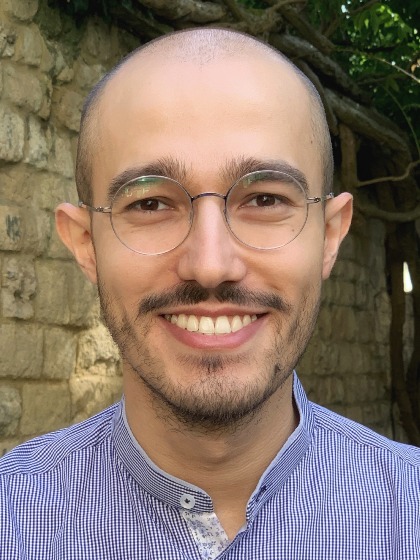
Dr. Ahmet S. Akturk is an Associate Professor of History at Georgia Southern University's College of Arts and Humanities. He holds a B.S. from Middle East Technical University (2004), an M.A. (2006), and a Ph.D. (2013) from the University of Arkansas. His teaching and research focus on Modern Middle Eastern history, Islamic Civilization, and World History since 1500. He specializes in Kurdish nationalism, Ottoman Empire dynamics, and nationalist discourse. His research includes studies on Kurdish identity formation, Bedirkhani family politics, and Kemalist historiography. Current research explores the Bedirkhan family's role in late 19th and early 20th century Kurdish nationalism. He teaches upper-level courses like HIST 3532 (Modern Middle East) and HIST 3250 (The Muslim World to Tamerlane). Publications analyze themes such as Kurdish cultural symbolism, gendered nationalist rhetoric, and mandatory Syria's Kurdish communities. His work bridges Ottoman-era dynamics with modern nation-state frameworks, emphasizing transnational and diasporic dimensions of identity.
Marcella SIMONI is an Associate Professor at the Department of Asian and North African Studies, Ca' Foscari University of Venice. Her research focuses on Middle Eastern history, Israeli-Palestinian conflict dynamics, and Jewish diaspora communities in Asia. She teaches courses on Israeli-Palestinian relations, Baghdadi Jewish histories, and Mediterranean studies. Her recent work includes a curated volume on Gaza’s geopolitical entanglements ( Il Labirinto di Gaza , 2024) and analyses of cinematic representations of the Oslo Accords era. SIMONI’s research bridges historical analysis with contemporary political discourse, emphasizing transnational networks and cultural memory. She actively contributes to academic debates on Middle Eastern conflicts and diasporic identities through publications in journals like Quest and Israel Studies Review . Teaching activities include graduate courses on civil society in Israel/Palestine, Baghdadi Jewish transnational histories, and undergraduate modules on Israeli-Palestinian history. Her work often intersects with sociopolitical themes such as conscientious objection, refugee narratives, and colonial legacies in Asia and the Mediterranean.
Dr Reza Zia-Ebrahimi is an Associate Professor in the Department of History at King’s College London, specializing in the history of nationalism and race. He holds degrees from the University of Geneva, London School of Economics, and the University of Oxford (St Antony's College). His research focuses on racialized nationalism in Iran and intersections between antisemitism, Islamophobia, and conspiracy theories. He has held fellowships from the Swiss National Science Foundation, Oslo Holocaust Centre, and Leverhulme Trust. Education: PhD: University of Oxford MSc: London School of Economics Bachelor’s: University of Geneva His work critically examines European racial thought's influence on Iranian nationalism, particularly theories of Arab invasion and decline. Recent projects include analyzing conspiratorial racialization in antisemitism and Islamophobia, and France’s role in Islamophobia denialism. He co-leads King’s Race Research Network and participates in initiatives like the Activist-in-Residence Scheme. Publications highlight entangled histories of antisemitism and Islamophobia, with key works including Antisémitisme et islamophobie: Une Histoire Croisée (2021) and The Emergence of Iranian Nationalism (2016). His research bridges historical analysis with contemporary societal issues through interdisciplinary collaborations.
Jüri Talvet is an Estonian poet, literary scholar, and Chairing Professor of Comparative/World Literature at the University of Tartu since 1992. His academic career spans decades, including roles as Lecturer and Associate Professor of Comparative Western Literature (1974–1991) and Founder of Spanish Studies at Tartu University (1992/93–). Research Interests include intercultural studies, Baroque poetics, 20th-century literature, Spanish/Latin-American literature, and Estonian poetry. His work bridges European and global literary traditions, emphasizing cultural symbiosis and historical memory. Scientific Awards reflect his transnational impact: the 2015 Order of the County of Alatskivi, 2011 World Culture Council diploma, 2008 Tartu Medal, and multiple Fulbright Scholarships. He received the 1992 Order of Isabel the Catholic for Hispanic activities.
Isaac Campos is a Professor of History at Kalamazoo College, specializing in modern Mexican history, the history of illicit drugs, and transnational phenomena. He holds a Ph.D. from Harvard University (2006) and an A.B. from the University of Michigan (1995). His research examines the historical roots of drug policy, particularly focusing on Mexico's drug prohibition and its global impacts. Notably, his book *Home Grown: Marijuana and the Origins of Mexico’s War on Drugs* (2012) analyzes how marijuana became stigmatized in Mexico from the 16th century to its 1920 prohibition. Campos has conducted research at the National Security Archive, investigating Mexico’s 'dirty war' (1970s), Cuban-Mexican relations, and the War on Drugs since 1969. He teaches courses such as the Latin American History Survey, The Mexican Revolution, and Drugs in the Americas. His work extends beyond academia through *History on Drugs*, a newsletter and podcast that translates scholarly research for broader audiences, and *The Drug Page*, a digital history platform. He has received prestigious awards, including the Best Book Prize from the New England Council of Latin American Studies (2013) and an Honorable Mention for the Bryce Wood Book Award (2013). Campos also established the Margarita Costero Campos Student Travel Award at Kalamazoo College to support student research in Spanish-speaking countries.
Alamin Mazrui is a Professor of Sociolinguistics and Cultural Studies at Rutgers University’s School of Arts and Sciences. His research focuses on the political sociology of language in Africa, African literature in Swahili and English, and the impact of neoliberalism on linguistic landscapes. Mazrui holds a Ph.D. in Linguistics from Stanford University, an M.Ed. in Language Education, and a B.Sc. in Biology from Rutgers University. His current research, Language and the Neoliberal Order: East Africa in a Global Context , examines how World Bank and IMF policies have reshaped language use in countries like Kenya and Tanzania. He has also authored influential works on human rights, including policy reports on media censorship and ethnic violence in Kenya. Mazrui’s academic contributions span translation studies, postcolonial theory, and the intersection of Islam with African identity. Key publications include Cultural Politics of Translation (2016) and Swahili beyond the Boundaries (2007). His collaborative play Sudana won the Jomo Kenyatta Prize for Literature in 2008. Mazrui teaches courses on African literature, cultural politics, and the sociology of language. Research Highlights: Language policy and democracy in Africa Translation as a tool for cultural decolonization Neoliberalism’s influence on multilingualism Mazrui’s work bridges academic scholarship with policy advocacy, addressing issues such as ethnic conflict, human rights, and the legacy of colonial language systems. His interdisciplinary approach reflects a commitment to understanding Africa’s sociocultural dynamics in a globalized world.
Dr Catherine Dewhirst is a Senior Lecturer in History at the University of Southern Queensland , affiliated with the School of Humanities and Communication . She teaches courses such as Global History since 1500, Revolutions and the People's Voice, and Sovereignty, Equality and Racism. Her work intersects with the Centre for Heritage and Culture and the Institute for Resilient Regions , and she served as Queensland representative on the Australasian Centre for Italian Studies from 2009-2022. Education: Diplôme de Civilisation Française, Paris-Sorbonne (1987) BA, UNSW (1986) Graduate Diploma in Education, UNSW (1986) MA, UNSW (1989) PhD, Queensland University of Technology (2004) Her research specializes in Italian migration history and women's autobiographical histories , focusing on migrant press, internment experiences, and gendered narratives. Recent projects explore Italian memories of internment during WWII and Liberal Italy’s relationship with migrant editors. Publications include two co-edited books on migrant press and articles analyzing Italian communities in Australia across the 20th century. She has supervised doctoral research on topics like African participation in Queensland and Indigenous-Greek migrant intersections. Grants: Internal Academic Affairs Collaboration Grant (2024) for Italian Internment Mapping and The Ian Potter Foundation funding (2017) for a conference on migrant press contexts. Labs & Teams: Active in the Centre for Heritage and Culture, Institute for Resilient Regions, and has contributed to the Australian Historical Association as Chief Convenor for the 2019 conference.
Associate Professor Sara C. Motta is a full-time faculty member at Newcastle Business School, University of Newcastle, Australia, where she teaches and researches in Politics and International Relations. A Colombian mestiza scholar-activist, she foregrounds decolonising feminist methodologies, emancipatory pedagogies, and subaltern politics—particularly in Latin America—seeking to co-create knowledge with raced and feminised communities for dignified, restorative futures. Education & Career Path BA (Hons) Philosophy – University of London MSc Politics of Development (Latin America) – London School of Economics PhD Economics & Political Science – University of London (2005) Tutorial Fellow & Lecturer – LSE & University of Nottingham (2005-2013) Senior Lecturer → Associate Professor – University of Newcastle (2013–present) Research Interests Her work spans three interwoven strands: (1) decolonial feminist theory & praxis that re-centres Indigenous, Black and Mestiza knowledges; (2) subaltern politics & social movements across Latin America, analysing landless workers, urban unemployed, feminist peace collectives and solidarity economies; and (3) critical university studies & radical pedagogy , developing participatory, healing-justice-oriented teaching/learning practices inside and against the neoliberal academy. Grants & Funding Leadership Since 2014 she has led or co-led 19 grants worth over AUD $500,000, including: 2025 ADVANCE Equity in Research Fellowship ($20k) 2022 Bennelong Foundation “Healing the Next Generations” ($30k) 2017 Commonwealth HEPP “Improving Indigenous Participation in Business Education” ($200k) 2015-16 CAPES Brazil “Interacciones: Pedagogía, Educación y Movimientos Sociales” ($48k) Supervision & Mentoring She currently supervises seven PhD candidates exploring topics from mad queer poetics to racialised maternal knowledges, climate justice organising, and disability rights, while having successfully graduated fourteen doctorates since 2011. Editorial & Leadership Roles Co-founder & Latin American Editor of Interface: a journal for and about social movements ; advising editor Latin American Perspectives ; founding co-editor Journal of Critical Southern Studies ; Co-Vice President Australian Critical Race & Whiteness Association; Co-Program Chair FTGS-ISA.
Dr. Danielle Lussier is an Indigenous scholar and academic leader, serving as Associate Vice-Principal (Indigenous Initiatives and Reconciliation) at Queen’s University and holding a cross-appointment to the Faculty of Law. She is also affiliated with the Institute of Intergovernmental Relations. A member of the Red River Métis community, her work centers on decolonizing legal education, Indigenous legal pedagogies, and fostering reconciliation in post-secondary institutions. She earned a PhD in Law from the University of Ottawa, where her doctoral research—awarded the Pierre Laberge Thesis Prize—used beadwork to critique racism and sexism in professional legal training. Her research spans Indigenous methodologies, international law, and anti-racist approaches to education. As former Indigenous Learner Advocate at the University of Ottawa’s Faculty of Law (2018–2022), she championed inclusive academic spaces. Her leadership roles emphasize ethical engagement with Indigenous knowledge systems and institutional transformation. Key publications include explorations of Indigenous legal frameworks, beadwork as pedagogical tools, and the ethical imperatives of reconciliation in military and legal education. Recognized for bridging art, law, and community, her work advocates for love and humanity in academia. Awards include the Pierre Laberge Thesis Prize for her groundbreaking doctoral research. Dr. Lussier’s advising and grants focus on creating equitable learning environments. At the Royal Military College of Canada, she indigenizes curricula and addresses colonial legacies. Her cross-appointment to Queen’s Law further amplifies her influence in legal academia. She is a vocal advocate for Métis cultural revitalization and actively contributes to community-building initiatives.
Dr. Dorit Naaman is a Full Professor in the Department of Film and Media at Queen’s University, Canada. She holds cross-appointments in the School of Graduate Studies (Cultural Studies) and the Department of Gender Studies. Her research bridges film theory and practice, focusing on documentary filmmaking, interactive media, and post-colonial cinema, with specialized attention to Israeli and Palestinian contexts. Education: PhD (2000) in Film Studies (Cognition of Film, Film Narratology, Gender and Race in Middle Eastern Cinemas) – University of Alberta MFA (1995) in Filmmaking – Syracuse University BFA (1991) in Film and Television – Tel Aviv University Research Interests: Dr. Naaman’s work explores nationalism, militarism, gender, and representation in cinema, particularly through participatory media projects. Notable projects include Jerusalem, We Are Here (2016), an interactive documentary reclaiming Palestinian narratives, and the Belle Park Project , addressing colonial and environmental histories. She emphasizes collaborative, ethically engaged media practices. Professional Activities: Co-developer of an online tool for participatory media planning (with Elizabeth Miller) Member of Machsom Watch, a human rights organization monitoring checkpoints in Palestine Recipient of grants for research-creation projects Labs/Teams: Involved in interdisciplinary collaborations at Queen’s University, focusing on digital humanities and community-engaged media. Active in the Isabel Bader Centre for the Performing Arts.
Giuseppe Andrea TETI is a Professor at the University of Salerno, specializing in Middle East politics, EU foreign policy, and political theory. His research explores sovereignty, hegemony, and the intersection of international relations with regional dynamics. He has authored and edited numerous publications, including works on the Arab Uprisings, EU policies, and Foucault’s theories. Research interests include the political sociology of the Middle East, EU-Middle East relations, and critical analyses of sovereignty and governance. His work often bridges theoretical frameworks with empirical studies, addressing topics like post-colonial statehood, democratic transitions, and corruption’s impact on regional stability. Recent publications focus on the EU’s post-Arab Uprisings policy failures, sovereignty debates, and the theoretical evolution of confession and avowal in political discourse. He has contributed to edited volumes such as Democratisation against Democracy and co-edited Sovereignty and its Discontents . No scientific awards are listed. His academic activities include teaching, international cooperation programs (e.g., Erasmus+), and collaborations on projects related to Middle Eastern and EU policy studies.
Dr. Gerard Clarke is an Associate Professor in Politics and International Development at Swansea University's School of Social Sciences. With a PhD from SOAS (University of London) and an MSc(Econ) from the London School of Economics, his career spans academia, consultancy for organizations like the World Bank and DFID, and work with NGOs in over 20 countries. His research focuses on: The intersection of politics and international development Civil society organizations and NGOs in Global South contexts Rights-based development approaches Development policy in Southeast Asia (especially the Philippines) Recent publications (2018-2024) demonstrate strong thematic consistency, with 75% focusing on civil society dynamics, NGO governance, and development policy frameworks. Geographically, 60% concentrate on Southeast Asia while 40% analyze global systems. Awards & Recognition: Joint winner of the European Journal of Development Research Prize (2009) Senior Fellow of the Higher Education Academy Supervision & Projects: Actively advises PhD candidates on topics including NGO regulation, land reform, and anti-corruption strategies. Has led research funded by the British Academy, Commonwealth Foundation, and German Research Foundation.
Prof. Julia Kühn holds the Chair in Modern English Literature and Culture at the University of Groningen's Faculty of Arts and serves as Co-Director of the Research Centre for Arts in Society (AiS). Formerly a Professor at the University of Hong Kong (2016-2024), she previously held roles including Associate Dean (Teaching and Learning) and Head of School. Her research focuses on 19th-century British literature, travel writing (particularly China/Hong Kong), gender studies, and Anglo-German cultural relations. Key works include studies on Marie Corelli, colonial writing, and travel theory. She earned Master's degrees from Bonn and Oxford Universities, a PhD from Birkbeck College (London), and a Habilitation from Bamberg University. Her editorial roles include Co-Editor of the Journal of Victorian Culture and the English section of Archiv für das Studium der Neueren Sprachen und Literaturen . She co-founded COEDA, an Asian English Departments network, and contributed to Hong Kong's International Literary Festival and the Asian Literary Prize. Awards include Fellow (2019) and Senior Fellow (2018). Teaching includes courses on Jane Austen, Victorian literature, and Literary London history. Recent publications explore colonial travel narratives, affective realism, and cross-cultural exchanges in 19th-century texts. Her work bridges literary analysis with historical and cultural contexts, emphasizing marginalized voices and transnational connections.
Dr. Karim El Taki is an Assistant Professor in Politics of the Middle East at the University of Groningen’s Faculty of Arts. He previously held positions as a Max Weber Fellow at the European University Institute and a Doctoral Fellow at the Orient-Institut Beirut. His research focuses on regional and global order dynamics, sovereignty, and Middle Eastern politics post-Arab Uprisings. He holds a PhD from the University of Cambridge, a Research Master from Sciences Po Paris, and a Bachelor’s in Social Sciences and Middle Eastern Studies from Sciences Po Paris. His research interests include recognition theory, military politics in the Middle East, media discourse, and lobbying activities. Key projects include a book manuscript on arms deals, news coverage, and lobbying in the Middle East. His articles have been published in journals like Millennium , British Journal of Politics and International Relations , and Middle East Critique . El Taki has taught courses on Middle Eastern politics, international organizations, and conflict studies. He contributes to media commentary on Middle East affairs and supervises a funded PhD project exploring anti-colonial geopolitics in the region.
Violet Showers Johnson is a Professor of History at Texas A&M University, holding concurrent roles as Senior Associate Dean for Faculty Development at Texas A&M University, Qatar, and former Associate Dean in the College of Liberal Arts at Texas A&M’s main campus. She holds a Ph.D. from Boston College (1992), an MA from the University of New Brunswick, and a BA from Fourah Bay College, University of Sierra Leone. Her work bridges African, African American, and diasporic histories with a focus on race, migration, and transnational identities. Education: BA (Honors in History) - Fourah Bay College, MA - University of New Brunswick, Ph.D. - Boston College Her research examines Black immigrant experiences in America, the African diaspora, and post-civil rights era dynamics. Notable works include The Other Black Bostonians (2006) and African & American (2014), analyzing West Indian and African immigrant communities. Her current project explores the intersection of blackness and foreign identity in late 20th-century America. Publications reflect interdisciplinary engagement with civil rights struggles, cultural identity, and transnationalism. She has served in leadership roles at Texas A&M Qatar, directing the Division of Arts and Sciences, and pioneered Africana Studies programs at Agnes Scott College. Her administrative work focuses on faculty development and inclusive academic leadership.