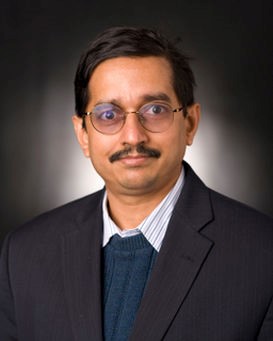
Vijaykrishnan Narayanan is a Professor at the College of Engineering , Pennsylvania State University, with affiliations in both Computer Science & Engineering and Electrical Engineering departments. He co-directs the Microsystems Design Lab and leads the Architecture, Benchmarking, and Circuits Thrust at the DARPA/SRC LEAST Center. Education : Bachelors (1993) from University of Madras; Ph.D. (1998) from University of South Florida His research focuses on Power Aware Computing , Computer Architecture , Embedded Systems , and Emerging Device Integration . Recent work explores steep-slope devices for energy efficiency, nonvolatile processors for ambient energy harvesting, and neuromorphic architectures using hybrid VO₂-MOSFET oscillators. Key article trends span post-CMOS technologies (tunnel FETs, VO₂ devices), low-power design , and bio-inspired signal processing . Scientific Awards : IEEE Fellow, ACM Fellow, IEEE Transactions on VLSI Best Paper, IEEE Micro Best Paper Patents : Dynamically-configurable hardware architecture for audience analytics
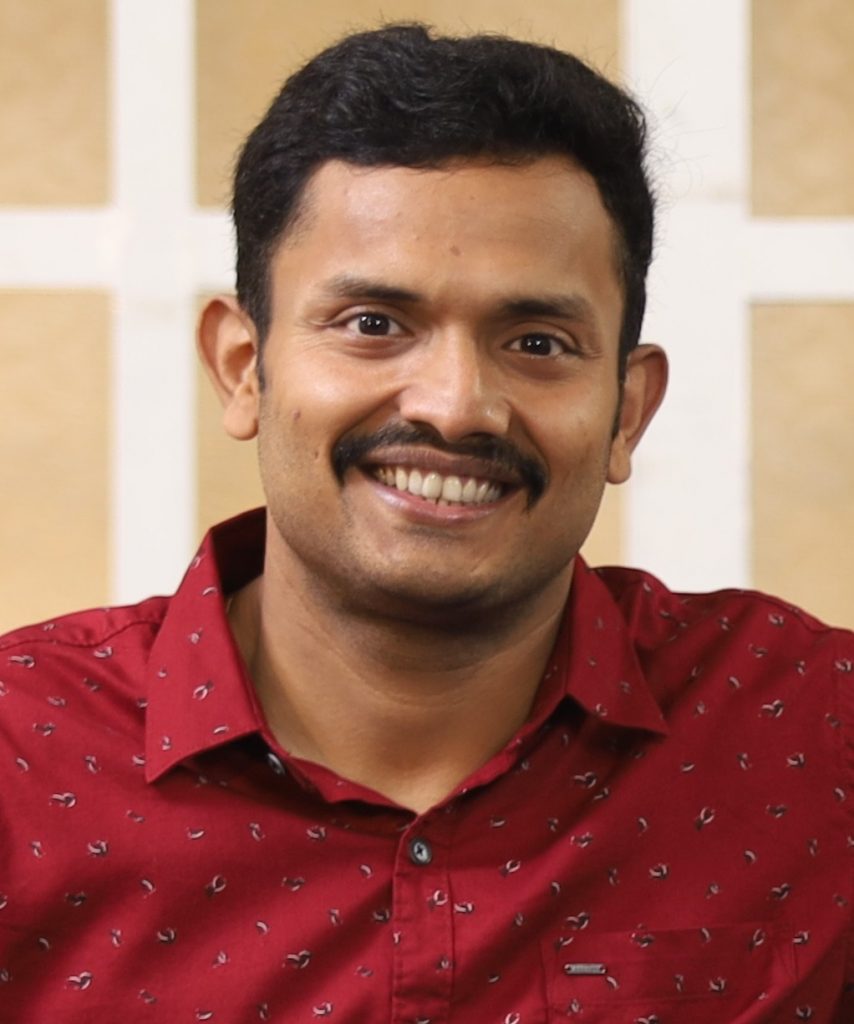
Jayakrishnan M. Purushothama is an Assistant Professor in the Microwave and Antenna Engineering Research Group at Heriot-Watt University's School of Engineering and Physical Sciences since March 2023. Previously, he held roles including Post-Doctoral Researcher (2019–2021) and Ph.D. scholar (2016–2019) at Université Grenoble Alpes, and Research Fellow (2014–2016) at Cochin University of Science and Technology. Education: B.Sc. (Electronics) & M.Sc. (Electronics Science), Mahatma Gandhi University & Cochin University of Science and Technology (2012–2014), both with first rank honours. Ph.D. (RF and Microwave Electronics Engineering), Université Grenoble Alpes (2019). Research interests focus on microwave antennas, beamforming, chipless RFID systems, CBRAM-based RF switches, medical biosensors, and electromagnetic compatibility. His work emphasizes reconfigurable systems, energy efficiency, and non-volatile memory applications in passive devices. Awards include the URSI Young Scientist Award (2020), 4th Prize in URSI Student Competition (2018), and UGC NET/JRF qualification (top 0.6% in 2013). Grants include ERC-funded ScattererID project (2019–2021) developing CBRAM-based RF switches. His lab explores innovations in antenna engineering, RF materials, and wearable electronics. Key contributions include reconfigurable antennas, low-cost RFID tags, and metamaterial-based shielding solutions.
Robert A Weller is a Research Professor of Electrical Engineering at Vanderbilt University's School of Engineering, with Emeritus titles in Physics and Materials Science. His research focuses on radiation effects in semiconductors, simulation of radiation interactions, and ion-beam analytical techniques. He developed the MRED simulation tool, revolutionizing single-event effect studies. Weller holds a Ph.D. in Physics from Caltech and a B.S. in Engineering Physics from the University of Tennessee. His career spans over 40 years, including roles at Yale University and collaborations with institutions like Sandia National Laboratories. He has authored over 240 publications and pioneered advancements in radiation-hardened electronics, earning the R&D 100 Award (2001) and multiple conference accolades. His work bridges astrophysics, materials science, and engineering, addressing challenges in space electronics and semiconductor reliability. Education: Ph.D., Physics, Caltech (1978); B.S., Engineering Physics, University of Tennessee (Undergraduate) Key Contributions: Ion-induced electron emission microscope (R&D 100 Award), MRED simulation code Awards: IEEE Senior Member, APS Fellow, Outstanding Conference Paper Awards (2007, 2013) Weller's research extends to gravitational wave detection and space radiation monitoring via missions like RadFxSat-2. He actively contributes to interdisciplinary initiatives in radiation effects and reliability, emphasizing both theoretical and applied advancements.
Houpeng Chen is a Research Professor at the Chinese Academy of Sciences, specifically affiliated with the School of Microsystem and Information Technology in the Department of Microelectronics. With over two decades of research experience since the early 2000s, Chen has established himself as a leading expert in memory systems and circuit design, particularly in the areas of Phase Change Memory and neuromorphic computing. Chen's research primarily focuses on advanced memory technologies, with particular emphasis on Phase Change Memory (PCM) systems, neuromorphic computing architectures, and analog circuit design for memory applications. His work spans from fundamental circuit design for memory systems to advanced computing architectures that leverage novel memory technologies. A significant portion of his recent work explores in-memory computing paradigms and brain-inspired computing systems, demonstrating a strategic shift toward next-generation computing architectures that address the limitations of traditional von Neumann systems. Analysis of Chen's publication record shows a clear evolution from traditional circuit design toward more innovative memory-based computing architectures. His recent work demonstrates strong expertise in 3D cross-point memory systems, in-memory computing, and neuromorphic hardware implementations. The research shows consistent quality with publications in top-tier IEEE journals and conferences, indicating strong recognition within the semiconductor and memory research community. As evidenced by the authorship patterns in his publications, Chen has successfully mentored numerous graduate students and junior researchers who have gone on to become first authors on significant publications. His collaborative network includes extensive work with Zhitang Song, Qian Wang, and Xi Li, suggesting a well-established research group with strong internal collaboration.
Prof. Vivek Pachauri holds the Chair of Materials for Electrical Engineering I at RWTH Aachen University, leading research at the Institute of Materials for Electrical Engineering. His work bridges materials science and bioelectronics, focusing on graphene-based transducers, silicon nanowires, and metal-organic frameworks (MOFs) for biosensing applications. University: RWTH Aachen University (Germany) Department: Materials for Electrical Engineering Academic Rank: Professor Email: pachauri@iwe1.rwth-aachen.de His research spans nanoscale sensor development , microfluidic platforms , and bioelectronic systems , with applications in disease detection, environmental monitoring, and cellular analysis. Recent work highlights programmable molecular amplification and multi-parametric point-of-care diagnostics. Key trends in his publications include: Advanced 2D materials (graphene oxide, MoS 2 ) Metal-organic frameworks for fluorescence sensing Microfluidic integration of biosensors Plasmonic and Fano resonance-based detection Low-cost cellular assays using organic electronics
Associate Professor Aron Woldeghiorgis is a Senior Lecturer at the School of Electrical Engineering and Telecommunications, University of New South Wales (UNSW), with a PhD in Electrical Engineering from UNSW. His research focuses on Micro-Electro-Mechanical Systems (MEMS) and Micro-Opto-Electro-Mechanical Systems (MOEMS), including silicon-based fabrication techniques, piezoelectric actuation, CMOS-MEMS integration, and flexible sensors. He has published over 90 scientific works and led innovations in on-chip atomic force microscopy, optical interconnects, and LiDAR technology for autonomous vehicles. B.E. (Hons) in Electrical Engineering, Addis Ababa University (AAU) MEngSc in Electronics and Communication, UNSW PhD in Electrical Engineering, UNSW His research interests span Nano/Micro electro-mechanical systems (N/MEMS) for optical switching, silicon photonics, and carbon nanofibers in flexible sensors. Recent articles highlight advancements in electrothermal actuators, low-thermal-budget silicon films, and piezoelectric micro-lens systems. He has secured grants like the 2021 ARC LIEF ($527K) for maskless lithography and 2018 Innovation Connect Grant ($120K) for MEMS tunable diffraction grating. Awards include the 2010 UNSW Inventor of the Year Award for '3D-Optical Interconnect.' He supervises four PhD students and teaches courses in Integrated Circuit Technology and Microsystems . Collaborations include industry partnerships with Baraja Pty Ltd and Sensornomics, along with academic roles in technical committees for APCOT and Transducers conferences.
Dr. Shamim Ara Shawkat is an Assistant Professor in the Department of Electrical and Computer Engineering at Florida International University (FIU), part of the College of Engineering and Computing. She holds a Ph.D. in Electrical Engineering from the University of Tennessee Knoxville (2019), an M.Sc. in Telecommunications from Waseda University (2006), and a B.Sc. in Electrical and Electronic Engineering from Bangladesh University of Engineering and Technology (2002). Prior to FIU, she served as a Post-Doctoral Research Associate at the University of Tennessee and as faculty at BUET for four years. Her research focuses on mixed-signal VLSI circuits, neuromorphic computing hardware, bio-sensor design for lab-on-chip systems, optical detectors in quantum computing, and SoC design. Notable contributions include work on perimeter-gated single-photon avalanche diodes (SPADs) for quantum imaging and biomedical applications. Her publications span over 40 peer-reviewed articles in journals like IEEE Transactions and MDPI Applied Sciences. Education: Ph.D., Electrical Engineering, University of Tennessee, 2019 M.Sc., Telecommunications, Waseda University, 2006 B.Sc., Electrical & Electronic Engineering, BUET, 2002 Awards: Chancellor Citation Award (University of Tennessee, 2017–2019) Chancellor Fellowship (2015–2019) Her work bridges cutting-edge semiconductor devices and biomedical applications, with recent advancements in neuromorphic systems and SPAD-based detectors. Collaborative projects include developing energy-efficient LiDAR sensors and AI-driven SPAD modeling techniques.
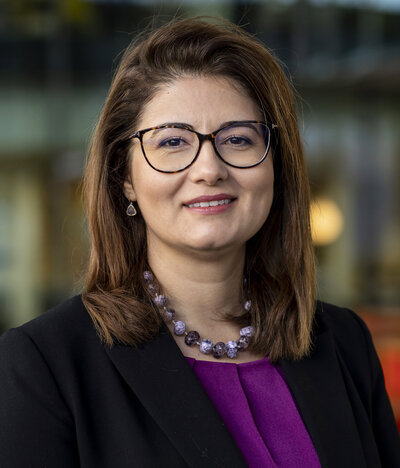
Aida Todri-Sanial is a Full Professor in the Integrated Circuits group of the Electrical Engineering department at Eindhoven University of Technology (TU/e). She leads the NanoComputing Research Lab and is affiliated with the Center for Quantum Materials and Technology Eindhoven (CQMT-E), EAISI, and the Integrated Circuits group. Her research focuses on energy-efficient circuits, novel computing paradigms (e.g., 3D integration, neuromorphic computing, quantum computing), and nanotechnology-driven architectures. Education: PhD in Electrical and Computer Engineering, University of California Santa Barbara (2009) Bardeen Fellow at Fermi National Accelerator Laboratory (2009–2010) Scientist/Research Director at CNRS (2011–2021) Visiting Fellow at the University of Cambridge (2016–2017) Research Interests: Dr. Todri-Sanial’s work integrates physics and electronics to design unconventional computing systems. Key areas include: Physical design optimization for energy efficiency Oscillatory neural networks (ONNs) for edge AI Quantum computing hardware and error mitigation 3D integration and monolithic-3D architectures Nanomaterials (e.g., VO₂, MoS₂) for neuromorphic and sensing applications Awards & Grants: ERC Consolidator Grant THERMODON (2023) NWO AiNed Fellowship (2024) NWO Quantum Technology Grant (2024) CNRS Bronze Medal (2016), IBM Quantum Open Science Prize (2021), and IEEE Distinguished Lecturer (2022) Labs & Teams: Principal Investigator of the NanoComputing Research Lab Lead researcher in EAISI (Eindhoven Artificial Intelligence Systems Institute) Collaborator with global institutions (e.g., IBM, STMicroelectronics)
Hakan Karaağaç is a Professor in the Department of Physics Engineering at Istanbul Technical University's Faculty of Science and Letters. With a distinguished career spanning over a decade at ITU, he progressed from Lecturer (2013-2014) to Assistant Professor (2014), Associate Professor (2014), and ultimately to his current position as Professor. His academic journey includes post-doctoral research at the University of California, Davis (2011-2012), a doctorate from Middle East Technical University (2005-2010), a master's degree from the same institution (2003-2005), and undergraduate studies at Çukurova University (1998-2003). Dr. Karaağaç's research focuses on advanced materials for energy applications, particularly in the areas of Materials Physics , Nanotechnology , and Semiconductors . His work centers on thin film technology, solar cell development, and nanowire applications, with special emphasis on ZnO nanostructures, Cu 2 ZnSnS 4 materials, and graphene-based transparent conductive layers. His fingerprint analysis reveals strong expertise in Thin Films (100%), Solar Cells (76%), Nanowires (65%), and ZnO (48%), among other related fields. The publication trends in Dr. Karaağaç's work demonstrate a clear progression toward increasingly sophisticated solar energy technologies. His most recent articles (2023-2025) focus on cutting-edge applications of nanomaterials in photovoltaics, including selective synthesis of ZnO nanorods on graphene and exploration of graphene's potential in Cu 2 ZnSnS 4 solar cells. Earlier works established foundational research in nanowire photodetection and characterization of thin film materials, showing a consistent trajectory toward solving practical challenges in renewable energy conversion. Dr. Karaağaç has successfully led multiple significant research projects: Fabrication and Characterization of SnS Thin Films for ZnO Nanorods-Based SnS Solar Cells (2024-2025, BAP) Fabrication of Regularly Structured and Passivated ZnO Nanowire-Based Czts Semi-Conductive Solar Cells on Graphene Layers (2021-2024, TUBITAK) Production of Low-Cost and High-Efficiency Transferable Cu 2 ZnSnS 4 -Based 3rd Generation Solar Cells (2017-2019, TUBITAK) Production of ZnO Nanowire-Based 3rd Generation Inorganic Solar Cells (2015-2021, BAP) With an h-index of 16 and 576 citations according to Scopus, his research has made substantial contributions to the fields of materials science and renewable energy. His work continues to evolve with current projects focusing on next-generation solar cell technologies that address efficiency and cost challenges in photovoltaic systems.
Nikhil Shukla is an Associate Professor at the University of Virginia with a joint appointment in Electrical and Computer Engineering and Materials Science and Engineering. His work bridges emerging hardware technologies with computational paradigms for energy-efficient systems. Education: Ph.D. in Electrical Engineering (University of Notre Dame, 2017), BS in Electronics and Telecommunications (University of Mumbai, 2010) His research focuses on emerging solid-state devices for non-Boolean computing, energy-efficient data storage , and integration of novel materials to redefine computing architectures. Key efforts include co-designing devices, circuits, and system-level solutions for Ising machines and dynamical systems solving combinatorial optimization problems. The 15 most recent articles highlight trends in oscillator-based Ising machines for optimization, ferroelectric and phase-transition materials, and hardware acceleration for NP-hard problems like Max-Cut and MaxSAT. Topics span from device physics (e.g., hafnium oxide endurance) to circuit-level implementations (FPGA accelerators, CMOS-compatible designs). Scientific Awards: IEEE TMSCS Best Paper Award (2017), STARnet LEAST Center Best Publication Awards (2015–2017), J.N. TATA and J.R.D TATA Scholarships (2011) Shukla's work at the Computing Hardware Research Lab emphasizes cross-disciplinary approaches, leveraging synchronized oscillators and correlated materials to push beyond CMOS-era limitations.
Dr Arabinda Haldar is Associate Professor of Physics at Indian Institute of Technology Hyderabad. His group pursues experimental and theoretical research in magnonics, microwave magnetics and nanomagnetism, with an emphasis on spintronic and post-CMOS information-processing technologies. Education Ph.D. – Indian Institute of Technology Bombay Research Interests The group operates at the intersection of condensed-matter physics , nanotechnology and microwave engineering . Core themes include: Magnonics & Spin-Wave Computing: Propagation and control of magnons in ultra-thin magnetic multilayers, magnonic waveguides and reconfigurable metamaterials for low-power logic and memory. Microwave Magnetics: Self-biased nanomagnets and ferrite-free thin-film devices for on-chip RF components, radars and wireless communication systems. Nanomagnetism & Spin Dynamics: Spin-orbit phenomena (spin Hall effect, spin pumping, spin-orbit torque), skyrmionics, and ultrafast magnetization dynamics probed by FMR, BLS and ST-FMR techniques. Scientific Awards & Recognition Research Excellence Award – IIT Hyderabad (2024) DAE Young Scientist Research Award (2021) IEEE Senior Member recognition (2022) Ramanujan Fellowship – DST, Government of India (2017) Outstanding Reviewer 2019 – IOP Publishing Early Career Research Award – SERB (2017) Advising & Funding Dr Haldar has mentored 15+ PhD students and numerous Masters and project interns. He is principal investigator on SERB-CRG grants for Brillouin light scattering microscopy and sputtering system for skyrmion research , and co-PI on additional CRG-SERB and NIMS-ICGP programs. Recent graduates include Sudeep (DRDO-MoE), Brahmaranjan, Mahathi and Bibekananda Paikaray. Laboratory & Collaborative Networks The Magnonics & Nanomagnetism Laboratory at IITH houses state-of-the-art facilities: broadband FMR (2–18 GHz), micro-focused Brillouin light scattering, spin-torque ferromagnetic resonance (ST-FMR) and nanofabrication clean-room tools. International collaborations span Durham University (Prof A O Adeyeye), NIMS Japan, IISc Bangalore, DMRL Hyderabad and IIT Bombay.
Giorgio Cristiano is a Post-Doctoral Researcher at ETH Zürich in the Department of Information Technology and Electrical Engineering , affiliated with the Integrated Systems Laboratory . His work focuses on advanced circuit design for Internet of Things (IoT) applications and In-Memory Computing , with a strong emphasis on low-power and CMOS-compatible solutions. His research spans key areas such as: Temperature-stable RC oscillators for IoT nodes High-efficiency DC-DC converters using electromagnetically coupled oscillators Neural recording interface circuits with miniaturized resistors MEMS oscillators for ultra-low power consumption The trends in his publications highlight innovations in energy efficiency (e.g., 1.5pJ/Cycle oscillators), noise reduction (0.4 NEF amplifiers), and biomedical electronics integration. His work often addresses miniaturization and power optimization for wearable and implantable devices. Key institutions involved in his research include: ETH Zürich (primary affiliation) Integrated Systems Laboratory (research group) Collaborations with experts in biomedical engineering and neural networks
Prof. Dr. Andrea Schütze is a full professor at the Department of Microelectronics and Circuit Technology, Technische Universität Dresden. Her research focuses on nanoelectronics, energy-efficient systems, and bio-inspired circuits. She leads the Nanoelectronics and Circuits Group and directs the Dresden Center for Emerging Technologies. Education: PhD in Electrical Engineering, TU Dresden (2007) Diploma in Microelectronics, TU Ilmenau (2003) Research Interests: Andrea Schütze pioneers bio-inspired circuits for neuromorphic computing and develops ultra-low-power mixed-signal systems for IoT. Her work bridges nanoelectronics with biomedical applications, emphasizing energy-efficient architectures and novel device integration techniques. Publications: Recent articles highlight advancements in nanoelectronic devices, neuromorphic circuits, and 3D stacked CMOS integration. Her work frequently addresses emerging technologies like quantum dots and spintronics. Awards: 2018 IEEE Women in Engineering International Leadership Award 2020 German Future Prize Grants & Advising: Current EU Horizon 2020 grant (€4.2M) for bio-inspired computing. Supervises 5 PhD students and 12 master's students in topics ranging from neuromorphic hardware to energy harvesting circuits. Labs & Teams: Leads the TU Dresden Nanoelectronics Lab, collaborating with Fraunhofer Institute for Integrated Circuits (IIS). Active in EU-funded Clean Sky 2 consortium for energy-efficient avionics systems.
Tessa Strain is a Chancellor's Fellow at the University of Edinburgh's Moray House School of Education and Sport, affiliated with the Institute for Sport, Physical Education and Health Sciences (ISPEHS). Her research focuses on epidemiological analysis of physical activity and its health outcomes, leveraging device-based measurement technologies. She holds a PhD from the University of Edinburgh (2014–2017) and previously served as a Post-Doctoral Fellow and Senior Research Associate at the MRC Epidemiology Unit (University of Cambridge). Her expertise spans global physical activity surveillance, policy development, and the application of large-scale cohort studies like UK Biobank. Notable contributions include landmark analyses on global adult activity levels (Lancet Global Health), device-measured activity and mortality risk (Nature Medicine), and pandemic-era activity trends (Lancet Regional Health Europe). She co-chaired a UK CMO expert group on physical activity surveillance and advises the WHO on measurement standards. Research interests emphasize: 1) Quantifying physical activity's role in disease prevention, 2) Methodological advancements in activity measurement, and 3) Addressing health disparities through activity interventions. Her work bridges epidemiology, public health policy, and technological innovation in health monitoring. Grants and collaborations include WHO consultancy work and leadership on major projects like the global physical activity trends analysis (2000–2022). Her lab focuses on translating research into actionable policies to improve population health outcomes.
Dr. Hitten Zaveri is an Associate Professor of Neurology at Yale School of Medicine, serving as Director of the Computational Neurophysiology Laboratory and co-Director of the Yale Clinical Neuroscience Group for Neuroanalytics (YNN). His research focuses on understanding epilepsy mechanisms, developing implantable neurosensors, and advancing seizure prediction technologies. He holds advanced degrees in electrical engineering, biomedical engineering, and neurology. Education: PhD and MSEE from University of Michigan (Bioengineering/Electrical Engineering), with postdoctoral training at Yale University. Key affiliations include the Center for Brain & Mind Health, Epilepsy & Seizures Program, and Neurocritical Care teams. Research Interests: Interdisciplinary work at neuroscience-engineering interface, including seizure network dynamics, real-time brain monitoring systems, and closed-loop therapeutic devices. Active in consortia like IPSERC for post-stroke epilepsy research and collaborative projects with industry partners. Publications: Over 130 peer-reviewed articles focusing on seizure prediction algorithms, neurosensing technologies, and epilepsy pathophysiology. Recent work emphasizes multimodal brain monitoring systems and translational neuroengineering solutions. Labs: Leads Computational Neurophysiology Lab and co-directs BioSense Lab/YNN Group. Current projects include CMOS-based brain nanosensors and seizure onset zone localization techniques.