Manfred Einsiedler is a Professor in the Department of Mathematics at ETH Zurich, Switzerland, with office HG G 64.2 at Rämistrasse 101, 8092 Zurich. He teaches undergraduate and graduate courses including Linear Algebra (HS 2019), Analysis I/II, and Functional Analysis I/II, using his co-authored textbook Functional Analysis, Spectral Theory, and Applications . His research centers on dynamical and equidistribution problems in homogeneous spaces, with focus on closed horocycle orbits, geodesic orbits on the modular surface, and measure rigidity. Key contributions include work on effective equidistribution, entropy methods, and connections between ergodic theory and number theory. He has co-authored foundational texts: Ergodic Theory with a view towards Number Theory and Functional Analysis, Spectral Theory, and Applications in Springer's Graduate Texts in Mathematics series, alongside multiple in-progress volumes on entropy, homogeneous dynamics, and unitary representations. Recent publications explore integer points on spheres, rigidity of invariant measures, and Diophantine approximation on fractals, emphasizing collaborations with Lindenstrauss, Ward, Margulis, and Venkatesh. His work demonstrates consistent focus on homogeneous dynamics with applications to arithmetic problems, particularly through effective methods and measure classification theorems. While no specific awards or student lists are documented in the source, his extensive publication record and textbook authorship establish significant scholarly impact.
Professor Holly Thorpe is a Professor of Sociology in Te Huataki Waiora / School of Health at the University of Waikato, specializing in Sport and Human Movement. She serves as Associate Dean Research in the Division of Health PVC Office and is an internationally recognized sociologist of sport, physical culture and gender whose work has earned prestigious fellowships and awards including Fulbright, Leverhulme, and Royal Society honors. Her educational background includes a PhD from the University of Waikato and Papa Reo Level 1 certification from Te Wananga o Aotearoa, reflecting both academic excellence and cultural engagement with Māori language and knowledge systems. Professor Thorpe's research centers on equity and inclusion in sporting cultures, with particular attention to women's health and wellbeing, sport and gender, and the impact of social media on athletic experiences. She employs critical and feminist theoretical frameworks with expertise in qualitative methods to examine how sport, physical activity, and health intersect in rapidly changing social landscapes. Her work spans gender studies, feminist methodologies, sports science, sociology of health, and digital media studies within sporting contexts, with a strong commitment to community-engaged research. Her extensive publication record reveals consistent thematic focus on contemporary issues including menstruation in sport, digital technologies and athlete experiences, pandemic impacts on wellbeing, and the gendered dimensions of mega-sport events. Her work frequently employs intersectional analysis and collaborates across disciplines to address complex questions about embodiment, identity, and social change in sporting cultures, particularly as they relate to women and marginalized communities. Professor Thorpe's significant scholarly recognition includes: Royal Society Early Career Research Excellence Award for Social Sciences (2018) Fellow of the North American Society for the Sociology of Sport (2018) Royal Society James Cook Fellowship for a two-year project focused on women's wellbeing through and beyond pandemic (2021) She actively supervises students and has secured substantial research funding including the Te Punaha Matatini CORE Research Institute project 'Youth Wellbeing in Uncertain Times: The Voices of Rangatahi from Flood-Effected Tairāwhiti Gisborne' (2023-2025). Professor Thorpe collaborates extensively with international and national sports organizations including the International Olympic Committee, High Performance New Zealand, Sport New Zealand, Skateistan, and Voice in Sport to ensure her research has real-world impact on policy and practice. She serves as Series co-editor for 'New Femininities in Digital, Physical and Sporting Cultures' and maintains active media engagement through The Conversation and other outlets. Professor Thorpe leads several significant research initiatives including 'Reimagining Fields of Play' (2023) and co-organized the 'Gender, Health and Wellbeing Symposium' (2022), demonstrating her commitment to creating spaces for critical dialogue about sport, gender, and health while advancing culturally responsive methodologies that center Indigenous and diverse perspectives.
Karl Henrik Johansson is a Professor at the School of Electrical Engineering and Computer Science, KTH Royal Institute of Technology in Stockholm, Sweden, where he also serves as the Founding Director of Digital Futures. He is a Fellow of both IEEE and the Royal Swedish Academy of Engineering Sciences, and has held leadership positions including Immediate Past President of the European Control Association and IEEE Control Systems Society Vice President Diversity, Outreach & Development. Dr. Johansson earned his MSc in Electrical Engineering and PhD in Automatic Control from Lund University. His academic journey includes visiting positions at prestigious institutions such as UC Berkeley, Caltech, and NTU. His research focuses on networked control systems and cyber-physical systems with applications in transportation, energy, and automation networks. His work investigates fundamental challenges in connecting physical world systems through communication networks, exploring how wireless communication and sensor technology can enhance system robustness, reliability, energy efficiency, and safety. Current research directions include security of cyber-physical systems, distributed optimization, multi-agent systems, and applications to intelligent transportation and energy networks. Analysis of his recent publications reveals a strong focus on distributed optimization algorithms, secure networked control, multi-agent systems, and applications to transportation and energy networks. His work increasingly integrates machine learning techniques with traditional control theory, addressing challenges in privacy-preserving distributed computation, resilient state estimation, and resource allocation in complex networked systems. IEEE Control Systems Society Hendrik W. Bode Lecture Prize (2024) Swedish Research Council Distinguished Professor (2018-2027) Wallenberg Scholar (2009-2026) IFAC Young Author Prize IEEE CSS Distinguished Lecturer (2017-2019) IFAC Outstanding Service Award IEEE Fellow Dr. Johansson has supervised over 100 postdocs and PhD students, with many now holding prominent positions at institutions worldwide. His research has been supported by significant grants including the Swedish Research Council Distinguished Professor Grant (2018-2027), multiple Wallenberg Foundation grants, and numerous EU and national research projects. He has directed major research centers including ACCESS Linnaeus Centre (2009-2016) and Strategic Research Area ICT TNG (2013-2020). His research group operates within the Digital Futures initiative and maintains strong connections with industry partners through projects like the Integrated Transport Research Lab (supported by Scania and Ericsson) and Smart Mobility Lab. The group actively collaborates with international institutions and participates in major EU-funded projects addressing challenges in cyber-physical systems, transportation, and energy networks.
Christian Moormann serves as Director and Full Professor of the Institute of Geotechnics at the University of Stuttgart, where he has held his position since 2010. His leadership extends to national and international geotechnical organizations, including serving as Chairman of the German Geotechnical Society (DGGT) since 2022. His educational background includes a distinguished Diplom in Civil Engineering from Leibniz University Hannover (1989-1994), followed by doctoral studies at TU Darmstadt where he earned his Dr.-Ing. with distinction in 2002 for research on soil-groundwater interaction in deep excavations. He completed his habilitation at TU Darmstadt in 2009 on optimization of geotechnical composite structures. Professor Moormann's research spans the critical intersection of theoretical geomechanics and practical engineering applications. His work focuses on material behavior of semi-solid and variable-strength rocks, numerical methods in geotechnics, and reliability analyses for geotechnical composite structures. He has made significant contributions to deep foundation systems, pile-raft foundations, and the application of geosynthetics in construction. His recent work increasingly addresses sustainable applications including near-surface geothermal energy systems and innovative ground improvement techniques. With over 350 publications throughout his career, Moormann's scholarly output demonstrates consistent focus on practical geotechnical challenges. His publication themes reveal evolving emphasis from fundamental soil mechanics to complex system behavior, with growing attention to sustainability and reliability-based design approaches in geotechnical engineering. Professor Moormann holds numerous leadership positions that reflect his standing in the field: Chairman of the German Geotechnical Society (DGGT) since 2022 Head of the "Earth and Foundation Engineering" section of DGGT since 2018 German Delegate to Eurocode 7 Technical Committee (TC 250/SC 7) Chair of the DIN Standards Committee "Piles" (NABau 005-05-07) Member of the Professional Image Committee of ISSMGE His professional activities extend to significant consulting work through his own firm "Prof. Moormann Geotechnik Consult" established in 2010, and leadership of the PÜZ certification office. Moormann serves as an officially appointed expert for earthworks, foundation engineering, and rock engineering. His work on developing practical engineering standards through multiple DIN committees and Eurocode 7 implementation demonstrates his commitment to bridging academic research with practical engineering applications. The Institute of Geotechnics under Professor Moormann's leadership maintains strong connections with industry through its COMMAS program and extensive field testing capabilities. His team actively participates in developing practical engineering solutions for complex geotechnical challenges, particularly in deep foundation systems, excavation support, and sustainable geotechnical applications including geothermal energy systems.
Oscar Tomico Plasencia is an Associate Professor at the Department of Industrial Design at Eindhoven University of Technology (TU/e), specializing in Design Research Methodologies for Posthuman Sustainability. His research challenges anthropocentric design paradigms by positioning designers within complex ecological systems and exploring collaborations with non-human actors like plants. Education: MSc in Industrial Engineering and PhD cum laude from Polytechnic University of Catalonia (Spain). Prior Roles: Assistant Professor at TU/e (2007–2023), Head of Industrial Design Bachelor’s program at ELISAVA (Spain), Co-director of Design for Emerging Futures Master Program, and Co-editor-in-chief of Temes de Disseny Journal . His research focuses on decentering human agency in design through First-person methodologies for ecological engagement Design practices for multi-species cohabitation Regenerative socio-ecological-technical systems Critical fabulation with non-human stakeholders Temporal analysis of design events Recent publications analyze plant studios as dynamic constituencies (2025), backyard practices for urban sustainability (2025), and nature-entangled methodological repositories (2024). His work emphasizes transparency in experimental design processes and ecological accountability. Scientific Awards & Funding: NSERC Discovery Grant #RGPIN-2023-04600 SSHRC Insight Grant #435-2024-0783 Collaborative projects involve institutions across Spain, Japan, Sweden, and New Zealand. He leads the Making With… research group at TU/e and contributes to the EAISI (Eindhoven Artificial Intelligence Systems Institute).
Professor John L Provis is a leading expert in cement materials science at the University of Sheffield 's School of Chemical, Materials and Biological Engineering. He also holds a Visiting Professor position at Luleå University of Technology's Building Materials division. PhD in Chemical Engineering (University of Melbourne) 2013 RILEM Robert L'Hermite Medal 2015 Honorary Doctorate from Hasselt University Editor-in-Chief of Materials and Structures His research focuses on alkali-activated materials and geopolymer binders for sustainable construction, with key themes in chemical speciation , waste immobilization , and novel cement systems for nuclear applications. Recent publications highlight 15 representative articles spanning topics: Radiation-resistant cementitious matrices Geopolymer synthesis for heavy metal containment Thermodynamic modeling of binder systems Corrosion mechanisms in alkali-activated concretes Low-carbon cement alternatives Microstructural analysis via advanced spectroscopy Scientific Recognition : RILEM Robert L'Hermite Medal recipient Hasselt University Honorary Doctorate Editorial leadership roles in major journals Contact: j.provis@sheffield.ac.uk | Sir Robert Hadfield Building, University of Sheffield
Professor Inderjeet Parmar is a distinguished academic at City St George's, University of London, where he serves as Associate Dean for Research (2023-2026). He is a leading scholar in international relations, political science, and US foreign policy studies with a particular focus on Anglo-American relations, elites, and the role of race and empire in shaping global power structures. Professor Parmar completed his undergraduate studies in Sociology at the London School of Economics and pursued Political Sociology at the University of London. He earned his doctorate from the University of Manchester in political science and international relations. Prior to joining City, University of London in 2012, he taught at the University of Manchester from 1991 to 2012, where he served as Head of the Department of Government from 2006 to 2009. His research interests center on the history, politics and sociology of Anglo-American foreign policy elites over the past century, with particular attention to organizations such as philanthropic foundations, think tanks, policy research institutes, and university foreign affairs institutes. Professor Parmar has authored three books, including Foundations of the American Century: Ford, Carnegie, and Rockefeller Foundations in the Rise of American Power (2012), which critically examines how major American foundations shaped US foreign policy and global power structures. He is currently working on Presidents and Prime Ministers at War: Race, Empire and Elitism in Anglo-American Wars from Korea to the Wars on Terror , a critical analysis of the post-1945 liberal international order. Professor Parmar's scholarly output demonstrates a consistent focus on the intersections of race, empire, and elite power structures in international relations. His recent publications examine the crisis of the US-led world order, Trump's impact on global politics, transnational elite knowledge networks, and the racial dimensions of international relations theory, reflecting his commitment to challenging conventional narratives about American power. He has held significant leadership roles including past president, chair, and vice chair of the British International Studies Association. His scholarly influence extends through prestigious visiting positions at LSE (2019-2022), Oxford's Rothermere American Institute (2019-20), and Princeton University (2013-2014), as well as earlier fellowships at Princeton and Oxford (1998, 1999, 2010). As an educator, Professor Parmar teaches undergraduate courses on US Foreign Policy, Theories of Global Politics, and Foreign Policy Analysis, as well as postgraduate courses on US Foreign Policy. He supervises doctoral students working on topics related to American elite networks, US-Latin American military relations, and the political incorporation of Black America. Professor Parmar is actively engaged with the public through frequent media appearances on Al Jazeera, CNN, BBC, RT, TRT, TalkRadio, and Sputnik. He is also a regular columnist for The Wire, where he provides critical analysis of contemporary political issues from his distinctive scholarly perspective.
Professor Gavan McNally is a distinguished behavioral neuroscientist at the University of New South Wales, where he serves as a Professor in the School of Psychology. He is actively engaged in research on the fundamental behavioral and brain mechanisms for learning and motivation, with applications to clinical conditions such as addictions, anxiety disorders, and mood disorders. McNally holds several prestigious editorial positions, including Editor-in-Chief of Neurobiology of Learning & Memory and Senior Editor of The Journal of Neuroscience. He also serves as President-Elect of the European Behavioral Pharmacology Society and is a Member of the Australian Research Council College of Experts. McNally's research interests span behavioral neuroscience, focusing on how fundamental brain mechanisms apply to clinical conditions. He employs a systems neuroscience approach, combining well-controlled behavioral approaches with optogenetics, chemogenetics, in vivo calcium imaging, and whole brain circuit mapping in both normal and transgenic animals. His work bridges basic science with clinical applications through collaborations with colleagues at University of Sydney, Sydney Local Health District, Monash University, and Turning Point. McNally's research particularly examines the cellular, circuit, and systems level mechanisms underlying learning, motivation, and their dysregulation in disorders like addiction. His laboratory investigates how these mechanisms translate to human conditions, with a strong emphasis on developing new treatments for psychological disorders. His extensive publication record demonstrates a clear trajectory in understanding punishment learning, addiction mechanisms, and the neural circuits underlying motivated behavior. Recent work has increasingly focused on the cognitive pathways to punishment insensitivity, the role of specific neural circuits in addiction, and translational approaches to understanding maladaptive behaviors. McNally's research bridges animal models with human studies, creating a comprehensive understanding of the neural mechanisms that govern learning and motivation, with particular attention to how these processes go awry in addiction and other psychological disorders. 2008 QEII Fellow, Australian Research Council 2009 Association for Psychological Science, International Rising Star 2010 Fellow, Association for Psychological Science 2010 UNSW Faculty of Science Staff Excellence Award for Research and Training 2011 Pavlovian Research Award, The Pavlovian Society 2012 Future Fellow (Level 3), Australian Research Council 2016 D.G. Marquis Behavioral Neuroscience Award, American Psychological Association 2017 Fellow, American Psychological Association 2019 Fellow of the Academy of Social Sciences in Australia 2021 D.G. Marquis Behavioral Neuroscience Award, American Psychological Association 2022 Ross Day Plenary Lecturer, Australasian Brain and Psychological Sciences 2023 European Behavioural Pharmacology Society Plenary Lecturer 2024 Elspeth McLachlan Plenary Lecturer, Australasian Neuroscience Society 2024 D.G. Marquis Behavioral Neuroscience Award, American Psychological Association Professor McNally actively supervises several students including Bixuan Lin, Si Yin Lui, Hannah Machet, Bart Cooley, Kelly Zhuang, and Alexandra Gregory. His current research is supported by significant funding including an Australian Research Council Discovery Project (2024-2026) on "Risky choices: From cells and circuits to computations and behaviour," another Discovery Project (2025-2028) on "Multimodal mapping of punishment learning," and NHMRC grants including a Synergy Grant on "Linking clinical and basic science discovery to find new treatments for alcohol-use disorder" and an Ideas Grant on "Novel pathways to abstinence from alcohol seeking." These projects reflect his commitment to both fundamental neuroscience and translational applications for treating psychological conditions. His teaching responsibilities include PSYC2081 Learning & Physiological Psychology and PSYC3051 Physiological Psychology. McNally's laboratory employs advanced techniques including optogenetics, chemogenetics, in vivo calcium imaging, and whole brain circuit mapping to investigate the neural mechanisms underlying learning, motivation, and their dysregulation in disorders. His team works at the intersection of basic neuroscience and clinical applications, with strong collaborations across multiple institutions to translate fundamental findings into potential treatments for addiction and other psychological disorders. The lab has made significant contributions to understanding the role of brain regions like the ventral pallidum, paraventricular thalamus, and nucleus accumbens in addiction, fear learning, and punishment sensitivity.
Paul Barford serves as Department Chair and Carl de Boor Professor in the Computer Sciences Department at the University of Wisconsin-Madison, where he founded and directs the Wisconsin Advanced Internet Laboratory and participates in the networking research group. Education B.S. in Electrical Engineering, University of Illinois Ph.D. in Computer Science, Boston University Research Focus : His work centers on computer networking and communications , emphasizing Internet data measurement, protocol analysis, and topological structure. He extensively investigates Internet security domains including fraud detection, traffic anomaly identification, malicious attack analysis, and intrusion systems—bridging theoretical frameworks with real-world security challenges. Research Support : Funded by NSF, DHS, ARO, Cisco, and Intel, his projects drive innovation in network infrastructure security and measurement methodologies. Awards & Honors EPSRC Visiting Fellowship Professional Leadership : Served as Program Committee Chair for ACM SIGCOMM (2013), ACM SIGMETRICS (2010), and ACM IMC (2006). Held board positions at National Lambdarail, editorial roles at IEEE/ACM Transactions on Networking, and co-chaired the GENI Instrumentation and Measurement Working Group. Prior industry experience includes founding Nemean Networks (acquired by Qualys) and Mdotlabs (acquired by comScore), where he served as Chief Scientist.
Chenhao Tan serves as an Associate Professor in the Department of Computer Science and the UChicago Data Science Institute at the University of Chicago. His academic journey includes a PhD from Cornell University, followed by a postdoctoral position at the University of Washington, and previous affiliation with the University of Colorado Boulder. Dr. Tan's research focuses on language and social dynamics , human-centered machine learning , and multi-community engagement . He is broadly interested in computational social science, natural language processing, and artificial intelligence. His work explores the paradigm of 'machine-in-the-loop' systems where AI serves as an assistant rather than a replacement for human capabilities, particularly in complex tasks requiring human judgment. His publications demonstrate significant contributions across multiple domains including AI ethics, creative writing assistance, political language analysis, and healthcare applications. His research shows a clear trajectory toward developing AI systems that enhance human capabilities while addressing important ethical considerations in AI deployment. Sloan Research Fellowship Dr. Tan's research program examines how machine learning can be integrated into human workflows to augment human capabilities rather than replace them. His laboratory investigates applications across social media, healthcare, creative writing, and political discourse analysis, with current projects focusing on AI platform moderation, detection of subtle signals in professional communication, and computational analysis of social dynamics.
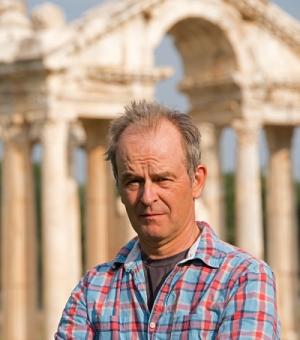
Professor Bert Smith is a distinguished academic at the University of Oxford, serving as a Fellow of Lincoln College. He holds the position of Professor in the Faculty of Classics, with a specialization in Greek Archaeology and Roman Art/Archaeology. His academic journey includes MA, MPhil, and DPhil degrees from Oxford University. Prior to his current role, he was a Harkness Fellow at Princeton University (1983-85) and taught Hellenistic and Roman art at New York University’s Institute of Fine Arts (1986-1995). His research focuses on the art and visual cultures of the ancient Mediterranean, particularly the relationship between visual representation and social/political contexts. As director of the Aphrodisias excavation project since 1991, he has contributed significantly to understanding the archaeology of Greek cities in the Eastern Roman Empire. Key achievements include a British Academy/Philip Leverhulme Fellowship (2007-2008) and leadership in the AHRC-funded 'Last Statues of Antiquity' project (2009-2012), resulting in a collaborative book (2016). Teaching responsibilities include lectures and seminars on Greek and Roman art and archaeology. His publications span over four decades, with notable works on sarcophagi iconography, Aphrodisias excavations, and Hellenistic art. He actively collaborates with institutions like the Oxford Centre for Greek and Roman Antiquity (OCGRA). Current research continues to explore late antiquity art and archaeology through fieldwork and interdisciplinary projects.
Jay Strader is a Professor in the Department of Physics and Astronomy at Michigan State University, where he serves as Graduate Director for the astronomy PhD program and Associate Chair for astronomy. His research focuses on compact objects, particularly black holes and neutron stars in globular clusters, neutron star binaries in Fermi gamma-ray sources, and intermediate-mass black holes. He has received a Packard Fellowship for Science and Engineering and grants from NSF and NASA. His research group includes postdoc Ryan Urquhart, graduate students Thomas Do and Rebecca Kyer, and several undergraduates, with past students like Teresa Panurach (now director of NoVEL Consortium) and Samuel Swihart (NRC fellow at Naval Research Lab). Education: PhD in Astronomy, UC-Santa Cruz/Lick Observatory Awards: Packard Fellowship Collaborations: Member of Rubin Observatory's Stars, Milky Way, and Local Volume science collaboration since 2008 Previous Positions: Hubble Fellow and Menzel Fellow at Harvard-Smithsonian Center for Astrophysics (2007-2012) Program Initiatives: Co-founder of PAREDS program for early research opportunities at MSU His work has been supported by NSF and NASA grants, and he has contributed to studies on black holes in M22, hypervelocity globular clusters around M87, and transitional millisecond pulsars. His group collaborates with Laura Chomiuk and contributes to data catalogs like the M31 globular cluster velocity dispersion database.
Dr. Xiao Zhou is a Research Fellow affiliated with the Professorship for Consumer Behavior at ETH Zurich. His current position began in 2021. Prior to this, he conducted postdoctoral research at the University of Reading (2020-2021) and completed his PhD in Consumer Behavior at the University of Copenhagen (2015-2019). His research focuses on advancing consumer behavior studies through interdisciplinary approaches, combining insights from marketing, behavioral economics, and human motion analysis. Zhou’s work emphasizes understanding decision-making processes and their applications in real-world contexts. Education history includes a PhD in Consumer Behavior from the University of Copenhagen (2015-2019), followed by postdoctoral training at the University of Reading (2020-2021). His academic trajectory reflects a strong foundation in both theoretical and applied research. His research interests span consumer behavior, marketing research methodologies, and behavioral economics. Notably, his recent publications explore cutting-edge technologies in motion capture and computer vision, including real-time human motion tracking and generative models for 3D reconstruction. This reflects a unique intersection of consumer behavior studies with technical advancements in computational methods. Zhou’s research outputs demonstrate expertise in areas such as inertial sensor-based motion analysis, physics-aware tracking systems, and hierarchical modeling techniques. His contributions highlight innovative solutions for challenges in human pose estimation and 3D reconstruction. He is currently based at ETH Zurich’s Department of Consumer Behavior, contributing to both academic research and potential industrial applications of his work.
Thomas Yizhao Hou is the Charles Lee Powell Professor of Applied and Computational Mathematics at the California Institute of Technology, where he has served as a faculty member since 1998 and as Executive Officer of Applied and Computational Mathematics from 2000-2006. His research spans fundamental mathematical problems with significant implications for fluid dynamics and computational science. Hou received his B.S. in Mathematics from South China University of Technology in 1982, followed by an M.S. in 1985 and Ph.D. in 1987 from UCLA under the supervision of Prof. Bjorn Engquist. His academic journey includes positions at the Courant Institute and the Institute for Advanced Study before joining Caltech. Hou's research focuses on multiscale analysis and computation, interfacial problems, stochastic PDEs and uncertainty quantification, and the Millennium Problem concerning global regularity of 3D incompressible Euler and Navier-Stokes equations. His work on adaptive data analysis has led to significant methodological innovations. His research is characterized by the integration of rigorous mathematical analysis with computational approaches to tackle problems that have resisted traditional methods. His recent publications reveal a consistent focus on singularity formation in fluid equations, particularly the Euler and Navier-Stokes equations, with increasing sophistication in analyzing potential blowup scenarios. His work spans theoretical analysis, numerical verification, and the development of innovative mathematical frameworks for multiscale problems. Member of the National Academy of Sciences (2024) William Benter Prize in Applied Mathematics (2024) SIAM Ralph E. Kleinman Prize (2023) SIAM Outstanding Paper Prize (2018) Fellow of the American Mathematical Society (2012) Fellow of the American Academy of Arts and Sciences (2011) Hou has served in significant editorial roles including Founding Editor-in-Chief of the SIAM Journal on Multiscale Modeling and Simulation and Co-Editor-in-Chief of Research in Mathematical Sciences. His professional service includes membership on the SIAM Council and leadership roles at the Institute of Mathematics and its Applications. His research has been supported by numerous grants focusing on multiscale modeling, fluid dynamics, and computational mathematics.
Yingjin Zhang is a Distinguished Professor of Modern Chinese Literature at the University of California San Diego (UCSD), affiliated with the School of Arts and Humanities. He holds a Ph.D. in Comparative Literature from Stanford University (1992). His research focuses on Chinese literature, comparative literature, cinema studies, visual culture, cultural history, and urban studies. Previously, he taught at Indiana University and served as President of the American Association of Chinese Comparative Literature. He has held prestigious fellowships including the Fulbright China Research Fellowship (2003-04) and has been a visiting professor at institutions like the University of Chicago and Nanjing University. Education: Ph.D. in Comparative Literature, Stanford University (1992) M.A., University of Iowa (1987) Research Interests: Zhang’s work interrogates intersections between literature, cinema, and urbanization in modern China. He analyzes how cultural forms like documentary film and urban narratives reflect societal transformations, translocal identities, and global cultural flows. Notable themes include post-disaster epistemologies in Chinese reportage, the politics of space in Jia Zhangke’s films, and the reconfiguration of Shanghai’s cinematic legacy. His scholarship bridges comparative literature methodologies with empirical film and literary analysis. Awards & Fellowships: Fulbright China Research Fellowship (2003-04) National Endowment for the Humanities Summer Fellowship (1999) Outstanding Junior Faculty Award (Indiana University, 1996) Advising & Editorial Roles: Doctoral advisor for scholars now at institutions like Peking University and Texas A&M Editorial board member for journals including Journal of Chinese Cinemas and Prism: Theory and Modern Chinese Literature His transnational research collaborations and editorial work position him as a key figure in global Sinophone studies and Chinese cinema scholarship.