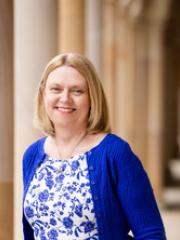
Brent Hayward is a Senior Lecturer at the School of Nursing and Midwifery, Monash University. He is a credentialed mental health nurse, registered disability practitioner, and Fellow of the Australian College of Mental Health Nurses. His career spans 20+ years across nursing, policy development, and disability services. He holds a PhD from the University of Melbourne, focusing on positive behavior support (PBS) implementation in disability services. Research interests include mental health nursing in emerging settings, policy analysis, applied behavior analysis, and behavior management in schools. He has published over 20 peer-reviewed papers and contributed to national policy frameworks, including work with the Victorian Department of Education and NDIS. His teaching focuses on undergraduate nursing education and supervision of postgraduate students. Notable achievements include a 2024 Fellowship award and leadership roles in organizations like PANDDA and the Australian Nursing & Midwifery Federation. He actively collaborates with government bodies and NGOs to advance disability support practices. Current projects include evaluating the National Centre of Excellence in Intellectual Disability Health.
Ceridwen Evans is a Lecturer in Intellectual and Developmental Disabilities at the Tizard Centre, School of Social Sciences, University of Kent. She is actively engaged in teaching and research focused on improving support systems and life outcomes for individuals with intellectual and developmental disabilities (IDD). Her research interests include: Adapting and implementing Active Support in special educational settings Staff training in Active Support and Positive Behavioural Support (PBS) Enhancing employability for young adults with IDD Promoting community living and deinstitutionalisation Utilising both quantitative (e.g., single case experimental designs) and qualitative research methodologies The publications listed could not be retrieved from the provided text, so trends in publication fields cannot be analyzed at this time. Her professional recognitions include: Associate Fellow of the Higher Education Academy Person-centred Active Support (PCAS) trainer SPELL trainer Active Support Interactive Training trainer Ceridwen supervises master’s dissertation projects across several postgraduate programmes, including Autism Studies, IDD, Analysis and Intervention in IDD, ABA, and PBS. While no specific grants are mentioned, her work appears to be practice-oriented with strong implications for policy and training in disability support services. She is affiliated with the Tizard Centre, a leading research and teaching unit focused on intellectual and developmental disabilities, where she contributes to both academic and professional training initiatives.
Claire O'Connor is a Senior Research Fellow at the School of Psychology, UNSW , with conjoint appointments at NeuRA and HammondCare . She is a registered occupational therapist (AHPRA) and holds a PhD in Dementia from the University of Sydney. Research Interests : Translation and implementation of non-pharmacological interventions for dementia Reablement and rehabilitation in community and residential aged care Maximising functional independence and quality of life Positive Behaviour Support (PBS) for frontotemporal dementia Development of assessment tools and clinical guidelines Recent Publications focus on home-based rehabilitation models, reablement implementation, and arts-based interventions for dementia. She has received significant grants including DCRC and NHMRC funding for implementation research. Scientific Awards : NHMRC Dementia Centre for Research Collaboration Capacity Building in Care Research Fellowship (2019–2021) Claire supervises Vincent Poisson (DrPH candidate) and contributes to international dementia guidelines, including the WHO Package of Rehabilitation Interventions . She leads the Reablement in Dementia project and developed the freely available Reablement Handbook and Assessment Guide .
Alinka Fisher is a Senior Lecturer in Disability and Community Inclusion at Flinders University's College of Nursing and Health Sciences. Her work focuses on Positive Behaviour Support (PBS) for individuals with disability, brain injury, and dementia, emphasizing human rights-centered practices and community capacity building. She coordinates Flinders' PBS teaching programs, including the Graduate Certificate in PBS and Bachelor of Disability and Developmental Education. Education: PhD in PBS for adults with brain injury (Flinders University, 2017), BDisRehab with First Class Honours (Flinders, 2011). Awards include the 2020 VPED Education Award and 2019 Vice President's Teaching Excellence Award. Research interests span evidence-based PBS frameworks, workforce development, and family involvement in rehabilitation. She chairs Behaviour Support Practitioners Australia (BSPA) and leads national initiatives like the PBS Community of Practice South Australia. Her work bridges clinical practice, education, and policy, advocating for equitable care through tiered support models and online professional development resources. Professional engagement includes roles in APBSA, DEAI, and leadership in developing the Family-Directed Approach to Brain Injury (FAB-PBS) program. Her contributions advance PBS practices in dementia care, younger-onset dementia support, and neurorehabilitation, with a focus on translating research into practical tools for practitioners and families.
Dr. Anne MacDonald is an Honorary Research Associate at the University of Kent's School of Social Sciences. She concurrently serves as Head of Complex Needs at The Richmond Fellowship Scotland, managing its Positive Behaviour Support (PBS) team for 13 years, and is part-time seconded to the Scottish Government to lead a project addressing out-of-area placements and delayed discharges for individuals with intellectual disabilities and complex needs. Her work focuses on developing sustainable, community-based alternatives and enhancing PBS implementation nationwide. Education: PhD (2016, Tizard Centre, University of Kent) titled 'An evaluation of staff training in positive behaviour support' and MSc in Analysis and Intervention in Learning Disabilities (2004, Tizard Centre). Research interests center on the impact of support interventions, particularly PBS, on individuals with intellectual disabilities. She edits the International Journal of Positive Behavioural Support and has received a BILD Leadership Award. Her Scottish Government project analyzes national data on out-of-area placements and proposes policy recommendations. She has advised on PBS strategies and contributed to advancing evidence-based practices in social care.
Associate Professor Shiralee Poed serves as Director of Higher Degree Research within the School of Education at the University of Queensland. With over 30 years of professional experience spanning Australian state, Catholic, and independent primary, secondary, and special schools, she brings extensive practical knowledge to her academic role. Her work focuses on systems change to address inequities in education, particularly for students with disabilities. Diploma, Brisbane College of Advanced Education Bachelor of Educational Studies, The University of Queensland Masters (Coursework) of Education, Queensland University of Technology Doctor of Philosophy, Griffith University Professor Poed's research centers on positive behaviour support, disability discrimination in education, and systems change in educational contexts. Her expertise encompasses evidence-based interventions for inclusive education, proactive behaviour approaches, reduction of student restraint and seclusion, and elimination of disability discrimination. She has published extensively across journals, books, and conference proceedings, with recent work examining the implementation of Positive Behaviour for Learning frameworks in Australian schools, inclusive education ethics, and disability rights. Her most recent publications demonstrate a clear trend toward examining educational equity, particularly through the lens of behaviour support systems, inclusive practices, and policy implementation. Her work frequently addresses the intersection of disability rights, behaviour management, and educational equity, with a growing focus on Indigenous education and systemic barriers. 2023 International Positive Behaviour Leadership Award for extensive leadership of Positive Behaviour for Learning in Australia and internationally Professor Poed supervises multiple PhD candidates focusing on inclusive education, behaviour support systems, and curriculum adaptation. Her current research is supported by funding from the Queensland Department of Education for projects including 'Equity and Excellence: Behaviour review tools for Queensland State Schools' and 'Getting it right from the start: An early years school intervention to equitably improve student oral language and literacy outcomes.' Her work connects closely with the Parenting and Family Support Centre at the University of Queensland's Faculty of Health, Medicine and Behavioural Sciences, demonstrating her commitment to bridging research, policy, and practice in educational settings.
Dr. Nick Gore is an Honorary Reader in Intellectual & Developmental Disability at the Tizard Centre, within the School of Social Policy, Sociology and Social Research (SSPSSR) at the University of Kent. He is currently co-head of the Tizard Centre, reflecting his leadership in one of the UK's leading research centres in this field. His career began at Tizard in 2007, driven by its mission to improve the lives of people with intellectual and developmental disabilities (IDD) through research and teaching. Dr. Gore is a multifaceted professional, serving as a Reader, Clinical Psychologist, and Board Certified Behaviour Analyst. His research interests are broad and impactful, focusing on: Behaviour that challenges and Positive Behavioural Support (PBS) Emotional wellbeing of staff and family carers Early intervention strategies Alternatives to residential schooling Service frameworks and pathways for individuals with IDD His recent publications reveal a strong trend toward evaluating support programmes (like the E-PAtS initiative), understanding caregiver wellbeing, exploring telehealth applications, and conducting national reviews of PBS implementation. His work often employs qualitative, systematic review, and feasibility trial methodologies, contributing significantly to evidence-based practice in the field. Dr. Gore has received professional recognition through several awards and memberships: Chartered Member of the British Psychological Society Registered with the Health and Care Professions Council (HCPC) Board Certified Behaviour Analyst Core member of the Challenging Behaviour National Strategy Group Founding member of the PBS Academy Trustee to the Challenging Behaviour Foundation He is actively involved in academic mentoring, having supervised several PhD students to successful completion and currently supervising others focusing on PBS, early intervention, and caregiver support. His work is supported by collaborations with NHS services and various national organizations, demonstrating a strong commitment to translating research into practical, real-world applications. Dr. Gore is also a key figure in the Developmental Disabilities ABA Research and Impact Network (SF-DARIN) and has held split posts with the NHS, working directly as a clinical psychologist for both children and adults with IDD. His lab and team work is centered around the Tizard Centre, a renowned hub for interdisciplinary research on learning disabilities and autism.
Dr Erin Leif is a Senior Lecturer in the School of Educational Psychology & Counselling at the Faculty of Education, Monash University. She is a Board Certified Behaviour Analyst (BCBA) and coordinates the Master of Education in Applied Behaviour Analysis program, verified by the Behaviour Analyst Certification Board. She has served as Chief Examiner for key units in the program and co-developed a short course in Positive Behaviour Support. Her research interests focus on: Inclusive education and positive behaviour support Trauma-informed and person-centred care Universal Design for Learning (UDL) in higher education Multi-tiered systems of support (MTSS) Quality of life and functional behavioural assessment Equity and human rights in disability services Dr Leif's recent publications examine mobile behaviour management apps, robotics in autism education, and frameworks for rights-based behaviour support. Her work emphasizes accessibility, inclusion, and student engagement in online learning environments. She has led research projects on UDL implementation and equity-focused disciplinary practices in schools. Her scientific awards include: Dean’s Citation for Outstanding Contribution to Student Learning (2019) Monash Graduate Association’s Lecturer of the Year (2020) Vice Chancellor's Citation for Outstanding Contribution to Student Learning (2020) Dean's Award for Industry and Community Education Programs (2022) Dr Leif actively contributes to professional communities, serves on boards including the Australian Association for Behaviour Analysis and Autism Pathways, and has advised government bodies on anti-bullying and classroom disruption issues. She has organized workshops and webinars on UDL and trauma-informed PBS, demonstrating strong leadership in both academic and community engagement. She is a member of several research networks and has reviewed for prominent journals in psychology, education, and disability studies.
Dr Kate Rachel Gould is a Senior Research Fellow at the Turner Institute for Brain and Mental Health, Monash University. She leads clinically applied research on cognitive, psychiatric, and behavioral changes following acquired brain injury (ABI) through the Monash-Epworth Rehabilitation Research Centre. A scientist-practitioner, she integrates clinical expertise as a practicing Clinical Neuropsychologist with experimental, qualitative, and translational studies. In 2024, she became a Vice Chancellor's Research Talent Accelerator Fellow. Her research focuses on longitudinal psychiatric outcomes post-traumatic brain injury (TBI), Positive Behaviour Support (PBS) interventions, and ABI vulnerability to cybercrime. She established the Positive Behaviour Service at Turner Clinics (2021) and leads the CYBERABILITY project since 2022, including the 2024 CyberAbility Clinic for cyberscam victims. Her work emphasizes consumer co-design, involving lived-experience experts in resource development and podcast creation. 2024: Turner Institute Seed Funding 2021: Turner Institute Strategic Grant 2021: Turner Institute Consumer and Community Involvement Award 2020: Vice Chancellor's Excellence Award 2018: Allen Martin Research Scholarship 2018: ASSBI Early Career Clinical Innovation Award With over $2 million in research funding and 38 peer-reviewed publications (1,490+ citations, h-index=18), Dr Gould mentors 3 doctoral students and supervises allied health trainees. She serves as Honorary Lecturer at the College of Saint Rose (since 2021) and operates a private neuropsychology practice.