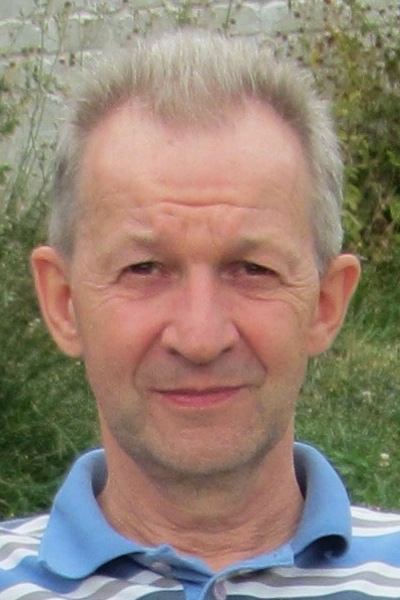
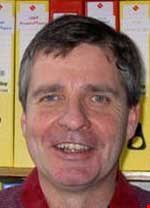
Raphael Hauser is an Associate Professor in Numerical Mathematics at the University of Oxford's Mathematical Institute, Director of Graduate Studies - Teaching, and Tanaka Fellow in Applied Mathematics at Pembroke College. His affiliations include membership in the Data Science, Numerical Analysis, and Mathematical and Computational Finance research groups, as well as a fellowship at the Alan Turing Institute. Education: PhD in Operations Research, Cornell University, Ithaca, USA Dipl. Math. ETH, Swiss Federal Institute of Technology (ETH Zurich), Switzerland Research interests span data science, numerical optimisation, medical imaging, distributed computing, and applied probability/statistics. His work integrates mathematical rigor with practical applications, particularly in optimization algorithms, machine learning theory, and medical imaging technology. Publications focus on optimization theory, stochastic processes, medical imaging systems, and computational finance, with recurring themes in non-convex optimization guarantees, PCA variants, and X-ray tomography innovations. Awards: Oxford University Teaching Award (2007) SIAM Optimization Prize (2005) SIAM Student Paper Prize (2000) Advising includes 15+ DPhil students and 40+ MSc students, with projects in optimization, finance, imaging, and machine learning. Current postdocs and students are affiliated with the Alan Turing Institute and industrial partners like Siemens and Macquarie Group. He leads teams in the Mathematical Institute's research groups and collaborates with the Alan Turing Institute on large-scale data science initiatives.
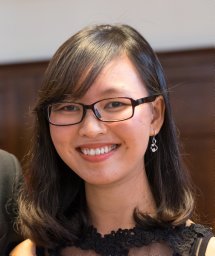
Elina Rönnberg is a Professor and Deputy Head of Department at the Department of Mathematics, Linköping University, where she leads research in discrete optimisation and intelligent decision-making. Her work bridges theoretical method development and real-world applications in sectors such as healthcare, aviation, mining, and transportation. She is actively involved in the Wallenberg AI, Autonomous Systems and Software Program (WASP) and has collaborated with industry leaders like Saab and Scania. Her research focuses on advanced optimisation techniques including Dantzig-Wolfe decomposition, Lagrangian relaxation, column generation, branch-and-price, and logic-based Benders decomposition. She also explores hybrid methods combining mathematical programming with constraint programming and machine learning. Applications span nurse rostering, electric vehicle routing, aircraft arrival scheduling, and underground mine planning. Recent publications highlight a strong trend toward integrating AI and machine learning—particularly graph neural networks—with classical optimisation frameworks to accelerate solution methods. Her work emphasizes practical impact, robustness, and scalability in solving complex scheduling and resource allocation problems. Nurse Rostering with Strategic Planning of Skills for Sick-Leave Robustness (2024) Pricing for the EVRPTW with Piecewise Linear Charging (2024) Speeding Up Logic-Based Benders Decomposition with Graph Neural Networks (2024) Elina supervises several PhD students and has co-supervised doctoral research at international institutions including Makarere University (Uganda) and the University of Exeter (UK). She has contributed to applied projects through student theses in collaboration with Scania and Saab, focusing on electric vehicle routing and search-and-rescue optimisation. She previously served as a Specialist in Optimisation at Saab Aeronautics (2014–2020) and co-founded Schemagi, a scheduling tool aimed at improving quality in healthcare. She teaches courses such as Introduction to Optimization (TAOP07) and Project - Applied Mathematics (TATA62). Her research group, 'Mathematics and algorithms for intelligent decision-making,' operates within the Division of Applied Mathematics (TIMA) at the Department of Mathematics. The team develops decision support tools that enhance efficiency and sustainability in complex systems, particularly under the growing demands of electrification and digitalisation in transport and logistics.
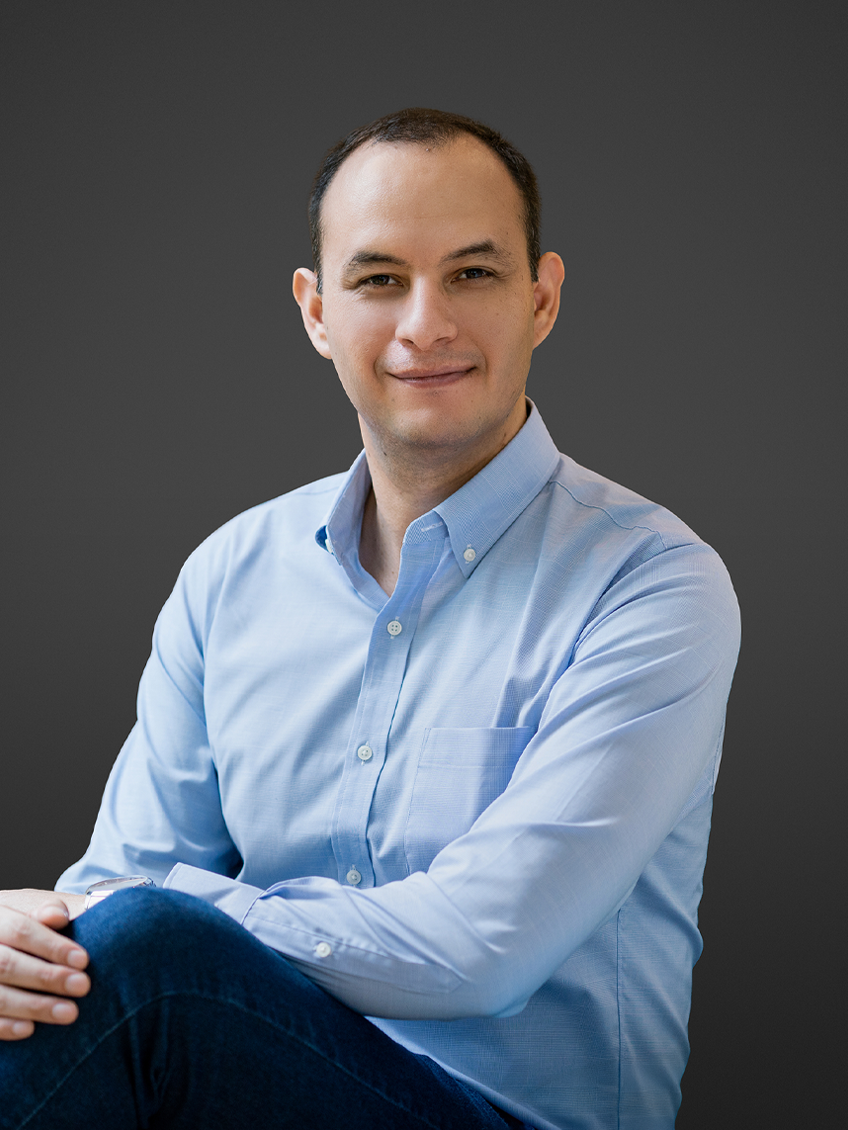
Matteo Brunelli is Associate Professor of “Mathematical Methods of Economics and Actuarial and Financial Sciences” at the University of Trento , Department of Industrial Engineering, and Adjunct Professor (docent) at Lappeenranta University of Technology , Finland. He is nationally habilitated as Full Professor in Italy and has held long-term visiting positions at Berkeley, Turku, Auckland, JAIST and Binghamton. Education: Ph.D. (Doctor of Science) in Information Technologies, Åbo Akademi University, Finland, 2011 – graded Eximia cum laude approbatur M.Sc. in Economics, University of Trento, 2007 – grade 110/110 cum laude B.Sc. in Economics, University of Trento, 2005 Research focus: Brunelli’s work sits at the intersection of multi-criteria decision analysis , operations research and computational optimisation . He develops axiomatic foundations and algorithms for pairwise comparison matrices , consistency indices , the best-worst method and fuzzy preference relations , and applies them to energy planning, sustainable inventory, maintenance scheduling, 3-D printer selection, and blockchain governance. His 2023-2025 articles reveal intensified interest in uncertainty modelling (Dempster-Shafer theory), bi-objective optimisation of inventory and maintenance, and group decision protocols that integrate probabilistic or active-learning components, demonstrating both methodological depth and practical relevance. Scientific awards & grants: Academy of Finland Postdoctoral Researcher grant (€254 670, 2014-2017) Claudio Dematté Research Grant (€19 000, 2008) Teacher of the Year Award, Aalto University (2013 – both Spring & Autumn semesters) Bernard Roy Award 2021 for outstanding contribution to Multiple Criteria Decision Aiding (under-40 category) Supervision & funding: While specific doctoral students are not listed, Brunelli currently supervises graduate theses at Trento and has continuously held competitive national grants. His Academy of Finland project “Consistency of valued preference relations for decision analytics methods” financed three years of full-time research and international collaboration. Editorial & community roles: He serves on the editorial boards of International Journal of General Systems and Mathematical and Computational Applications , and acts as area editor for Journal of Multi-Criteria Decision Analysis , positioning him among the key gatekeepers of the MCDA community.
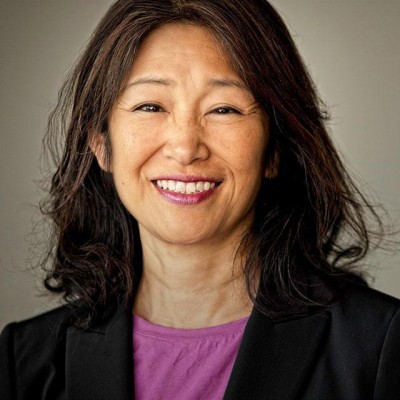
Pierre Flener is a Professor at the Department of Information Technology, Division of Computing Science at Uppsala University. He leads the Optimisation Group and is a member of the Centre for Interdisciplinary Mathematics. His work focuses on constraint programming and discrete optimization, addressing complex scheduling, routing, and resource allocation challenges. Flener is an Officer of the Order of Merit of Luxembourg and co-founder of NordConsNet, the Nordic Network for Constraint Programming researchers. Research Interests: Flener’s research spans constraint programming, combinatorial optimization, and algorithm design. He develops models and tools for automated decision-making in domains like air traffic management, sensor networks, and industrial robotics. His work emphasizes practical applications, leveraging constraint satisfaction techniques to solve real-world puzzles such as vehicle routing and personnel allocation. Key Contributions: Flener has authored over 100 publications on constraint solving, symmetry breaking, and CP-based approaches to industrial problems. Notable projects include airspace sectorization optimization, energy-efficient sensor networks, and financial portfolio design. He has led initiatives like Auto-Tabling for MiniZinc and collaborated on CP applications in bioinformatics and image processing. Labs & Teams: He heads the Optimisation Group at Uppsala, fostering research in CP and its applications. NordConsNet, co-founded by Flener, connects Nordic researchers and practitioners in constraint technology.
Alan Sutherland is a Professor of Economics at the University of St Andrews' Business School. He specializes in international macroeconomics, monetary economics, and financial market integration. His research focuses on the macroeconomic implications of exchange rate policies, monetary policy regimes, and cross-country financial linkages. He leads projects funded by the Economic & Social Research Council, including 'The Macroeconomics of Financial Globalisation' (2011-2015) and 'Monetary Policy Welfare and International Financial Markets' (2006-2007). Research Interests: International macroeconomic policy design Exchange rate determination Financial market integration effects Numerical methods for macroeconomic modeling His recent work emphasizes the role of international financial flows in transmitting economic shocks between countries. He has developed influential solution methods for analyzing multi-country general equilibrium models. Key contributions include frameworks for understanding optimal monetary policy under incomplete financial markets and asymmetric information conditions. Scientific Recognition: 2013 Fellow of the Royal Society of Edinburgh Recipient of 2 ESRC-funded research grants
Sigrid Källblad Nordin is an Associate Professor at KTH Royal Institute of Technology, affiliated with the Department of Mathematics (Division of Probability, Mathematical Physics, and Statistics). Her research focuses on Mathematical Finance, Probability Theory, and Stochastic Analysis, with an emphasis on measure-valued processes, martingale optimal transport, and model uncertainty. She holds a DPhil from the University of Oxford (2014). Her work bridges theoretical advancements in stochastic control, optimization, and financial applications. Recent research includes Bayesian optimal adaptive control, robust option pricing, and dynamically consistent investment strategies under uncertainty. She teaches courses such as Financial Mathematics and Financial Derivatives, and supervises PhD students Linn Engström and Chaorui Wang. Publications span journals like Annals of Applied Probability , Finance and Stochastics , and SIAM Journal on Control and Optimization , reflecting contributions to optimal transport, stochastic processes, and financial modeling. She is currently hiring a new PhD student and welcomes inquiries about master thesis supervision.
Nguyen Dang is a Lecturer at the School of Computer Science, University of St Andrews, actively supervising PhD students and teaching AI-related modules including Artificial Intelligence (CS3105), Artificial Intelligence Practice (CS5011), Machine Learning (CS5014), and Uncertainty in Artificial Intelligence (CS5016). He leads the Centre for Interdisciplinary Research in Computational Algebra and maintains an active research profile with numerous publications in top conferences. University of St Andrews, School of Computer Science Lecturer (equivalent to assistant professor) Supervising PhD students including Tai Nguyen Teaching multiple AI and Machine Learning courses Dr. Dang's research focuses on the intersection of machine learning and optimization, particularly automated algorithm configuration and design. His work centers on leveraging machine learning techniques to automate the development of optimization algorithms, with special emphasis on deep reinforcement learning for Dynamic Algorithm Configuration and integrating machine learning into constraint programming. His research has significant applications across various domains, especially in automated constraint modeling. The publications reflect strong activity in combinatorial optimization, algorithm selection, and benchmark instance generation. His recent publications demonstrate consistent output in top venues including Artificial Intelligence Journal, GECCO, FOGA, and CP conferences, with notable achievements including Best Paper Awards at GECCO'2025 and GECCO'2022. The research spans theoretical foundations of parameter control, practical applications in constraint programming, and innovative approaches to algorithm configuration. Best paper award at GECCO'2025 Best paper award at GECCO'2022 Nomination for best paper award at FOGA'2023 Best paper award at GECCO'2017 Dr. Dang holds a Leverhulme Early Career Fellowship (2020-2023) worth £90,000 for his project on constraint-based automated generation of synthetic benchmark instances. He has secured additional funding including EPSRC High Performance Computing grants totaling over 2.2 million CPU hours and a COST Action grant. His research group actively develops tools and frameworks for automated algorithm configuration and benchmark instance generation, with several open-source datasets available on GitHub. He is involved with multiple research groups including the Centre for Interdisciplinary Research in Computational Algebra and collaborates extensively with researchers at University of St Andrews and internationally, including at Université de Paris I Panthéon-Sorbonne where he conducted visiting research.
Francisco Benita is an Adjunct Lecturer at the Engineering Systems and Design (ESD) Pillar of Singapore University of Technology and Design (SUTD). He holds a PhD in Engineering Sciences from Monterrey Tech (2016) and an MSc in Industrial Economics from Universidad Autónoma de Nuevo León (2012). Prior to SUTD, he was a postdoctoral fellow at SUTD’s Architecture and Sustainable Design Pillar and a Senior Advisor at the ITESM-BMGI Lean Six Sigma Program. His research focuses on urban systems, optimization, data science, and their intersections with economics and public policy. Key areas include transportation networks, spatial livability indices, and pandemic impacts on urban environments. Benita’s interdisciplinary work spans fields like sustainable urban design, carbon emissions modeling, and global trade dynamics. Recent publications highlight trends in transportation innovation (e.g., ride-sharing impacts, aircraft routing frameworks), climate-resilient urban planning (e.g., walkway thermal comfort), and pandemic analysis. His projects often integrate quantitative methods with real-world data, emphasizing actionable insights for policymakers and urban planners. Though no scientific awards are explicitly mentioned, his extensive international collaborations—including research visits to TU Berlin, Vrije Universiteit Brussel, and Supélec—reflect his global academic engagement. Students and grants are not listed in the provided texts. Benita’s work is anchored in labs/teams within SUTD’s ESD Pillar, though specific lab affiliations are not detailed. His research bridges theoretical optimization with practical urban challenges, contributing to both academic discourse and applied solutions in smart cities.
Christophe Mues is a Professor of Data Science and Information Systems at the University of Southampton's School of Management, within the Department of Decision Analytics and Risk. His research focuses on credit scoring, consumer credit risk modeling, and applications of predictive analytics, including machine learning techniques for credit risk assessment. He leads the Information Systems & Business Analytics section and supervises multiple PhD students in Business Studies and Management. His work spans advanced statistical methods for predicting Probability of Default (PD), Loss Given Default (LGD), and loan profitability. He is actively involved in the academic community, serving on the organizing committee for the Credit Scoring and Credit Control conference. His teaching includes topics in information systems and business analytics. Contact: C.Mues@soton.ac.uk. Research Interests: Credit Scoring and Consumer Credit Risk Modelling Predictive Analytics in Finance Machine Learning Applications (Deep Learning, Graph Neural Networks) Non-Traditional Data Integration Credit Model Transparency and Fairness Debt Collection Optimization PhD Supervision: Currently guiding four students in Business Studies & Mngt: Kameswara Rao Korangi, Sarthak Gurnani, Pablo Casas, and Nora Agyei-Ababio. Professional Activities: Leads research groups and contributes to international conferences. His work bridges academic research with practical financial risk solutions, emphasizing ethical AI and regulatory compliance in credit modeling. Biography: Holds a PhD in Applied Economics from KU Leuven (Belgium). Joined the University of Southampton in 2004, advancing from researcher to his current leadership role in Decision Analytics and Risk.
Dimitrios Gkamas is a Lecturer in Finance at the ICMA Centre, Henley Business School, University of Reading. He holds a PhD from Manchester Business School and an MSc from the ICMA Centre, with a focus on quantitative finance and risk management. Research interests: His work centers on capital markets, investment portfolio management, derivatives, and portfolio optimization strategies. He bridges theoretical finance with practical industry applications. Professional background: With over 25 years in financial services, he has held roles at institutions like BNP Paribas, Citi, and Towers Watson. He founded Ameru Financial Limited, a consultancy specializing in asset-liability management and derivatives strategies. Teaching: He serves as Convenor of the MSc Investment Portfolio Management Module (Module Code: ICM340), covering investment styles and optimal portfolio construction techniques.
Naoko Ellis is a Professor in the Department of Chemical and Biological Engineering at the University of British Columbia, Faculty of Applied Science. Her work bridges advanced multiphase reaction engineering with pressing sustainability challenges, focusing on fluidized-bed technologies for CO₂ capture, biomass valorisation, and clean energy production. Research Interests Multiphase reaction engineering & fluidized beds CO₂ capture via calcium looping and chemical looping combustion Biomass gasification, pyrolysis, and tar mitigation Bio-oil upgrading and biochar engineering for environmental applications Engineering education innovation for sustainability literacy Recent publications (2020-2024) reveal an integrated approach combining rigorous reactor modeling, novel catalyst development, and educational scholarship. Energy and environmental engineering dominate the portfolio, with emerging use of machine-learning tools for process optimisation and extensive exploration of biochar and bauxite-residue valorisation. Scientific Recognition Guest editor for memorial special issues honouring Prof. John R. Grace (Canadian Journal of Chemical Engineering, Powder Technology, 2023-2024) Invited prefatory contributions on chemical engineering education (Canadian Journal of Chemical Engineering, 2024) Advising & Grant Landscape No specific student names or funding details were provided in the supplied text; however, the breadth of collaborative publications and education-focused papers indicates active supervision of graduate researchers and leadership in curriculum-development grants. Labs & Teams Operates within the multiphase reaction engineering laboratory environment at UBC Chemical and Biological Engineering, leveraging pilot-scale fluidized-bed facilities and advanced analytical instrumentation for thermochemical conversion studies.
Dr. Cormac Lucas is a Senior Lecturer in the Department of Mathematics at Brunel University London, affiliated with the College of Engineering, Design and Physical Sciences. His work bridges mathematical optimization with practical applications in finance and operations management. Lucas specializes in Mathematical Optimisation Stochastic Optimisation Asset and Liability Management (ALM) Risk Analytics Portfolio Optimization Supply Chain Planning Under Uncertainty His research combines theoretical advancements with industrial projects, such as US Coast Guard Cutter Scheduling, Insight Investment's ALM, and Unilever's Natural Oil Buying Policy. Recent publications (2013–2024) highlight his focus on Portfolio Rebalancing with Transaction Costs Scenario Generation for Stochastic Programming Heuristic Algorithms for Cardinality Constraints Queuing Systems with Standby Servers Robust Supply Chain Planning Financial Derivative Modeling These works utilize methods like Variable Neighbourhood Search, Differential Evolution, and Lagrangian Relaxation. Email: cormac.lucas@brunel.ac.uk
Salman Nazir is Professor at the University of South-Eastern Norway (USN) , Faculty of Technology, Natural Sciences and Maritime Sciences, Department of Maritime Operations. He heads the Training and Assessment Research Group (TARG) and is Scientific Leader of the national Centre of Excellence in Maritime Simulator Training and Assessment (COAST). Since 2019 he has held the rank of Professor, after serving as Associate Professor from 2015 and earlier post-doctoral and lecturer roles in Norway, Italy, South Korea and Pakistan. Education PhD in Industrial Chemistry and Chemical Engineering ( cum laude ), Politecnico di Milano, Italy, 2011–2013 MSc in Chemical Engineering (Process System Engineering), Hanyang University, South Korea, 2007–2009 BSc in Chemical Engineering, Bahauddin Zakariya University, Pakistan, 2002–2006 Research Interests Prof. Nazir’s work sits at the intersection of Human Factors, Safety and Simulation Technology . He investigates how immersive virtual- and augmented-reality simulators, novel training syllabi and evidence-based performance indices can enhance operator competence and safety in complex maritime and process-industry systems. Concepts such as Distributed Situation Awareness , multi-criteria decision making , accident analysis and learning process optimisation are central to his multidisciplinary agenda, which actively involves cognitive scientists, computer scientists, maritime practitioners and industrial stakeholders. Research Trends & Article Overview Across more than 80 peer-reviewed outputs, a clear trajectory emerges: early focus on process-industry training simulators and KPI development evolved into maritime-centric studies on simulator fidelity, VR-based education, and human-automation interaction in autonomous shipping. Recent work (2019–2021) emphasises systematic reviews and comparative European studies, validating VR-headset efficacy, performance-assessment frameworks, and sociotechnical implications of increased automation. Honours & Awards COAST designated one of 12 national Centres of Excellence in Education (SFU) by DIKU, Norway Coordinator/Leader, EU Horizon 2020 project ENHANCE (multi-million NOK) 400 000 NOK MARKOM 2020 Workshop grant PhD cum laude , Politecnico di Milano Young-researcher grants, Politecnico di Milano (2011 & 2013) Merit scholarships, Hanyang University & Korean Government Advising & Grant Portfolio Prof. Nazir currently supervises 6 master students and 1 PhD candidate in “Automated Performance Assessment in Maritime Operations”, while co-supervising additional PhD students at Liverpool John Moores University. He has successfully graduated 3 master and 6 bachelor students . External funding includes EU Horizon 2020, Norwegian SFU scheme, MARKOM 2020, Maritime Technology and Innovation (MTDI) and multiple Italian national grants. Labs & Collaborative Networks He leads TARG at USN, acts as Scientific Leader of COAST , and collaborates with leading international scholars such as Prof. Zaili Yang (Liverpool John Moores), Prof. Annette Kluge (University of Duisburg-Essen), Prof. Davide Manca (Politecnico di Milano) and Prof. Paulo Carvalho (UFRJ, Brazil). These partnerships span computer science, cognitive psychology, maritime logistics and safety engineering, ensuring a truly interdisciplinary research ecosystem.
Dr. Catherine Lou is an Associate Professor in supply chain and logistics at Victoria University Business School, part of the College of Arts, Business, Law, Education & IT. She serves as Discipline Leader for Transformative Research in Policy, Economy and Business at the Institute for Sustainable Industries & Liveable Cities, and is the Global Head of the WiLAT Capacity Building Centre. Her academic journey began at Victoria University where she completed her PhD in Supply Chain Optimisation in 2015, after which she joined as a lecturer. Dr. Lou's educational background includes: PhD in Supply Chain Optimisation, Victoria University (2015) Graduate Certificate in Tertiary Education, Victoria University (2018) MSc, BUAA, China (2010) Dr. Lou's research spans multiple interdisciplinary areas with a strong emphasis on quantitative approaches including optimisation modelling, statistics, and advanced data analysis. Her primary research areas include Supply Chain Management (focusing on sustainability, operations management, and risk management), Green Tourism and Visitor Economy, Leadership and Diversity initiatives, International Education, and Business Information Systems. Her work consistently integrates quantitative methods to address complex challenges in sustainable development and supply chain optimization, with particular attention to practical applications that benefit industry and society. Dr. Lou's publication portfolio demonstrates a clear trajectory toward increasingly interdisciplinary research that bridges supply chain management with sustainability, social justice, and wellbeing. Her recent work shows a growing emphasis on regional disparities in green manufacturing, social procurement systems, and the intersection of international student experiences with mental health. The thematic evolution of her research reflects a deepening commitment to addressing complex societal challenges through supply chain innovation, with publications appearing in D1 (top 5%) and Q1 journals across multiple disciplines. Dr. Lou has received numerous prestigious awards recognizing her contributions to academia and professional practice: International Student of the Year - Postgraduate by Victoria State (2013) VU Outstanding Student Alumni Award (2015) Young Professional of the Year award by the Chartered Institute of Logistics and Transport in Australia (2018) Excellence in Women's Leadership (Supply Chain Education) Award at the IEOM conference (2024) As an active researcher and mentor, Dr. Lou has secured over $$1.3$$ million in competitive research funding from diverse sources including international foundations, national and state government agencies, philanthropic organizations, and industry partners. She currently supervises multiple PhD students across various topics including AI adoption in SMEs, ESG activities, environmental sustainability in sports, and insurtech innovation. Her leadership extends to significant roles in professional organizations, particularly as Australia Chairperson and Global Vice Chairperson for Women in Logistics and Transport (WiLAT), where she champions initiatives that foster diversity and inclusion worldwide. Dr. Lou plays a pivotal role in the WiLAT Capacity Building Centre, leading global initiatives that develop leadership capabilities and promote gender diversity in the logistics and transport sector. Her work bridges academic research with practical industry applications, creating meaningful impact across multiple sectors including tourism, infrastructure, and international education, with alignment to UN Sustainable Development Goals including Partnerships for the Goals, Good Health and Well Being, Industry Innovation and Infrastructure, and Sustainable Cities and Communities.
Carl Driesener is an Associate Professor and Senior Marketing Scientist at the Ehrenberg-Bass Institute for Marketing Science, where he has worked for over 15 years. He leads the Institute’s in-house tracking capabilities and conducts bespoke market research across industries including packaged goods, financial services, IT, telecommunications, real estate, and the wine market in China. His research focuses on buyer behaviour, market modelling, and internet research, with a strong emphasis on empirical generalisations in marketing. Carl’s research interests centre on buyer behaviour , brand equity , mental availability , and the application of the NBD-Dirichlet model and Duplication of Purchase analysis. He investigates how brands compete, grow, and decline using rigorous empirical methods. His work explores brand image measurement, consumer loyalty, and the impact of media and nostalgia on purchasing decisions. He has made significant contributions to understanding how consumers perceive country-of-origin effects, particularly in the Chinese wine market. His recent publications (2018–2023) reflect a strong trend in cross-cultural consumer behaviour , marketing analytics , and empirical modelling . Themes include mental availability, brand loyalty across categories, ageism in branding, and the use of advanced statistical models like the Poisson log-normal and Dirichlet. His work frequently applies marketing laws to digital and cultural contexts, including music consumption and social media integration. Scientific Awards: Best Paper Award, International Symposium on Marketing (2007) Carl has not publicly listed advisees, but his extensive collaboration with leading marketing scientists such as Byron Sharp, Jenni Romaniuk, and Zorka Anesbury suggests active mentorship and team-based research. He has contributed to major projects on brand loyalty, market structure, and consumer repertoire analysis. While no specific grants are listed, his ongoing publication output and leadership in large-scale research initiatives indicate sustained funding and institutional support. He is a key contributor to the Ehrenberg-Bass Institute’s mission of advancing evidence-based marketing science. Carl is involved in a research team focused on marketing science , brand tracking , and consumer data analytics at the Ehrenberg-Bass Institute. This team applies mathematical models to real-world marketing problems, working with global clients and publishing in top academic journals. Their work is foundational to modern brand management and category growth strategies.