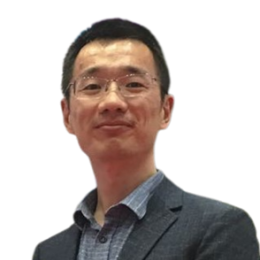
Dr. Rajesh Bera is a Research Fellow at ICFO's Functional Optoelectronic Nanomaterials group specializing in quantum-confined nanostructures. His research examines ultrafast carrier dynamics, excitonic properties, and optoelectronic applications of nanomaterials including quantum dots, nanoplatelets, and hybrid nanostructures. Current investigations focus on intraband transitions in doped nanocrystals, orientation-dependent excitonic behavior in 2D materials, and charge transfer mechanisms in heterostructure devices. Work bridges fundamental photophysics with applications in photodetection, sensing, and energy conversion. Recent publications demonstrate expertise in time-resolved spectroscopy of quantum materials, nanomaterial synthesis via colloidal chemistry, and rational design of optoelectronic devices. Continually develops novel characterization methods to probe ultrafast processes at nanoscale interfaces.
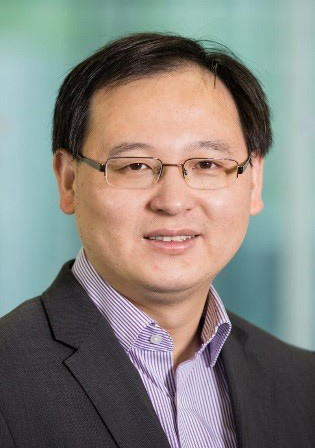
Jenny Y. Yang is a Professor in the Department of Chemistry at the University of California, Irvine. Her research focuses on the development of inorganic electrocatalysts for chemical fuel generation and utilization, emphasizing bio-inspired secondary coordination sphere effects and thermochemical property optimization. Institution: University of California, Irvine Department: Chemistry Research Interests: Oxygen activation mechanisms Hydrogen production and oxidation Carbon dioxide reduction for fuel synthesis Thermochemical property effects on catalysis Secondary coordination sphere engineering Electrochemical carbon capture systems Scientific Trends: Recent work spans from 2023–2025, covering CO2-to-methane conversion, quantum dot hybrid systems for hydrogen evolution, and computational approaches to CO2 capture agent design. Articles highlight interdisciplinary methods combining inorganic chemistry, electrochemistry, and sustainability-focused engineering. Contact: Office: 4080 ISEB | Phone: 949-824-1533 | Email: j.yang@uci.edu
Professor K.W. Hipps is a Regents Professor of Chemistry and Materials Science and Engineering at Washington State University (WSU). He holds multiple fellowships, including those from the American Chemical Society, American Physical Society, and American Association for the Advancement of Science. His research focuses on surfaces, interfaces, and nanotechnology, utilizing advanced techniques like Scanning Tunneling Microscopy (STM), Transmission Electron Microscopy (TEM), and spectroscopy. His work explores molecular-scale processes, including surface diffusion, electron transfer, and nanoparticle properties. Education: Ph.D. in Chemical Physics from WSU (1978), followed by a postdoc at the University of Michigan. He has authored over 180 publications and received numerous awards, including the Sahlin Eminent Faculty Award and WSU Distinguished Faculty Award. Research Interests: Surface chemistry, nanotechnology, materials characterization, and molecular dynamics. His lab studies interfaces, thin films, and supramolecular assemblies using STM and spectroscopic methods. Scientific Contributions: His STM images have featured on journal covers, and his work on cobalt and copper phthalocyanines demonstrated chemical selectivity in molecular imaging. Students in his group gain expertise in microscopy, spectroscopy, and materials synthesis.
Dr. Michael J. Katz is a Professor in the Department of Chemistry at Memorial University in St. John's, Newfoundland and Labrador, Canada. He leads an active research group focused on porous materials, particularly metal-organic frameworks (MOFs), with applications in gas storage, chemical separation, and catalysis. His work is well-recognized in the field of materials chemistry, with numerous publications in high-impact journals spanning from 2005 to 2025. Dr. Katz's primary research interests lie in the synthesis, properties, and applications of porous materials. His work specifically focuses on: Metal-Organic Frameworks (MOFs) design and synthesis Gas storage technologies, particularly low-pressure methane storage Chemical separation processes including removal of harmful molecules from air Catalysis using porous materials Adsorption properties of various porous frameworks Environmental applications of porous materials Analysis of Dr. Katz's publication record from 2017-2025 reveals a strong emphasis on zirconium-based MOFs, particularly the UiO-66 family. His research spans fundamental characterization techniques like NMR spectroscopy to practical applications in carbon capture, gas separation, and environmental remediation. A notable trend is the increasing focus on real-world implementation of MOFs, including biochar-based materials for CO 2 capture and frameworks for air pollutant removal such as nitrous acid. His work demonstrates a progression from fundamental materials science toward practical environmental applications. Dr. Katz actively supervises graduate students and postdoctoral researchers in his research group. His laboratory at Memorial University is equipped for the synthesis and characterization of novel porous materials, with particular expertise in metal-organic framework development. His research is supported by various grants that enable the exploration of structure-property relationships in porous materials and their practical applications.
Jonathan Baugh is a Professor in the Department of Chemistry at the University of Waterloo, serving as Director of the Quantum Information Graduate Program. His research focuses on quantum devices, nanoelectronics, and molecular electronics with affiliations at the Institute for Quantum Computing and Waterloo Institute for Nanotechnology. He leads the Baugh Research Lab, exploring quantum control, semiconductor spin qubits, and superconducting hybrid systems. Research interests include quantum information processing, nanoscale charge transport, and the development of next-generation photonic sources. His work bridges quantum physics and materials science, with recent breakthroughs in dopant-free semiconductors and single-molecule transistors. Publications emphasize scalable quantum architectures, noise mitigation in quantum control, and phase-coherent molecular electronics. Current projects involve cryogenic CMOS device modeling and topological quantum computing in silicon-based systems. No awards are explicitly listed, though his work has been highlighted in invited reviews and special sessions on quantum systems. Advising focuses on graduate students in quantum nanotechnology and condensed matter physics. His lab collaborates on integrated quantum networks and III-V/Si nanowire photodetectors. Labs/Teams: Baugh Research Lab (Quantum Nanoelectronics Group), Institute for Quantum Computing (IQC), Waterloo Institute for Nanotechnology (WIN).
Prof. Dr. Andreas Hirsch is a Professor in the Department of Chemistry and Pharmacy at Friedrich-Alexander University Erlangen-Nürnberg (FAU) . His research focuses on organic chemistry , graphene functionalization , carbon nanomaterials , and molecular solar thermal systems , with significant contributions to 2D material engineering and supramolecular chemistry . Chair of Organic Chemistry II (FAU Erlangen-Nürnberg) ResearchGate: Profile Google Scholar: Profile His work spans graphene patterning via laser writing , black phosphorus stabilization using perylenediimides , and covalent functionalization of 2D materials like MoS 2 and carbon nanotubes . Recent studies include non-covalent passivation of BP nanosheets and electroswitchable catalysis for solar thermal energy storage . His scientific awards include the Second Place Poster Award (2023) and Robert C. Haddon Research Award (2021) . Collaborative projects highlight smart nanoparticle systems for radiation therapy and environmental remediation applications.
Dr. Sonja Pullen is a Visiting Professor at the University of Amsterdam's Faculty of Science, affiliated with the Van 't Hoff Institute for Molecular Sciences. Her research focuses on photocatalysis, coordination chemistry, and supramolecular systems, with particular emphasis on developing sustainable energy conversion technologies. Key areas include molecular catalyst design, confined-space catalysis, and light-driven chemical transformations. Her work integrates advanced spectroscopic techniques (e.g., ultrafast spectroscopy) to study catalytic mechanisms, particularly in systems like diiron complexes and metal-organic frameworks (MOFs). Recent projects explore oxygen-tolerant catalysts, substrate-binding effects in photocatalytic dehalogenation, and the role of hydrogen bonding in catalytic activity. She also investigates functional materials such as coordination cages for artificial photosynthesis. Dr. Pullen’s publications highlight breakthroughs in catalyst stability, reaction selectivity, and energy-efficient processes. Her interdisciplinary approach bridges organic/inorganic chemistry, materials science, and renewable energy applications. Current trends in her work emphasize environmental sustainability and scalable photocatalytic systems for hydrogen production and CO2 conversion. Her lab at the Van 't Hoff Institute collaborates widely on topics like molecular encapsulation, MOF functionalization, and bioinspired catalysts. Ongoing projects aim to enhance photocatalytic efficiency through structural design and confinement strategies.
Jindal Shah is a Professor and holds the Anadarko Petroleum Chair in Chemical Engineering at Oklahoma State University, where he also serves as the Graduate Program Director. He is affiliated with the Department of Chemical Engineering within the College of Engineering at Oklahoma State University. Dr. Shah received his educational training from prestigious institutions worldwide. He earned his Ph.D. in Chemical Engineering from the University of Notre Dame in 2005, followed by an M.S. in Environmental Engineering from the University of Cincinnati in 1999, and completed his undergraduate education with a B.Tech. in Chemical Engineering from the Indian Institute of Technology (IIT) Bombay in 1996. Dr. Shah's research focuses on the application of molecular simulation methodologies to understand molecular-level interactions that give rise to macroscopic phenomena. His primary research interests include Monte Carlo and Molecular Dynamics Simulations, Phase Equilibria, Ionic liquids, and Dye-sensitized solar cells. A significant portion of his work centers on designing novel biodegradable ionic liquids with properties suitable for chemical processes, with applications in next-generation batteries and carbon capture. He also investigates molecular-level interactions responsible for device efficiency in dye-sensitized solar cells to rationally design novel dye molecules. Additionally, Dr. Shah employs data science and machine learning techniques to correlate properties of ionic liquids and generate new molecules with desired properties. An analysis of Dr. Shah's recent publications reveals a strong focus on ionic liquids and their applications in energy storage and carbon capture technologies. His work consistently bridges fundamental molecular-level understanding with practical applications, particularly in developing electrolytes for batteries and CO2 capture systems. A notable trend is the integration of machine learning techniques with traditional molecular simulation methods to accelerate materials discovery and optimization. His research demonstrates a progression from fundamental molecular simulations toward applied technologies with significant environmental impact, particularly in climate action (SDG 13) and affordable clean energy (SDG 7). Dr. Shah has secured substantial research funding from multiple prestigious sources including the National Science Foundation, U.S. Department of Energy, National Aeronautics and Space Administration, and industry partners. His funded projects include 'Collaborative Research: Cyber Training-Implementation, Medium, Establishing Sustainable Ecosystem for Computational Molecular Science Training & Education' (NSF), 'Ionic Liquids for Direct Air Capture of CO2 using Electric-Field-Mediated Moisture Gradient Process' (DOE), and 'CAREER: Computation-Enabled Rational Design of Cytochrome P450 for Ionic Liquid Biodegradation' (NSF). These grants support his research in computational molecular science, CO2 capture technologies, and the development of biodegradable ionic liquids. As an educator, Dr. Shah has been actively involved in teaching graduate courses including Principles of Chemical Engineering Thermodynamics, Doctoral Thesis supervision, and specialized courses such as Machine Learning for Chemical Processes and Introduction to Chemical Process Analytics. His teaching philosophy integrates cutting-edge research with educational practice, preparing students for the computational challenges of modern chemical engineering. He has also mentored numerous doctoral students through their dissertation research, contributing to the development of the next generation of chemical engineers and computational scientists.
Yu Xia is a Post Doc at the Department of Chemistry, Stockholm University, Sweden. He is affiliated with the Tom Willhammar Research Group, focusing on advanced electron microscopy and diffraction techniques for structural characterization of materials. PhD (2019–2023) from a joint program between the University of Birmingham (UK) and the Southern University of Science and Technology (China). Research emphasizes fabrication of metallic nanoparticles with non-equilibrium structures and shapes using gas-phase condensation and thermal shock methods. Specializes in scanning transmission electron microscopy (STEM), in-situ heating experiments, and electron energy loss spectroscopy (EELS) for nanoparticle analysis. Current work prioritizes 4DSTEM imaging for electron beam-sensitive materials and Python-based post-processing of electron microscopy datasets. Yu Xia's research spans Materials Science , Nanotechnology , and Electrocatalysis , with applications in photocatalytic hydrogen evolution , graphene composites , and advanced electron microscopy techniques . His work often integrates computational image processing with structural characterization to optimize material properties. Publications highlight innovations in heterostructure engineering , metallic alloy catalysts , and electron beam-sensitive material imaging . No scientific awards are explicitly mentioned in the provided text. Yu Xia's technical expertise includes Python scripting for image analysis, in-situ electron microscopy , and multifunctional graphene-based materials .
Dr. Yu Zhong is an Assistant Professor in the Department of Materials Science and Engineering at Cornell University's College of Engineering, where he leads the Yu Zhong Group. His research laboratory focuses on the design and synthesis of novel soft materials and nanomaterials for applications in electronics, energy, healthcare, and sustainability. As a principal investigator, he oversees a dynamic research team comprising postdoctoral associates, graduate students, and undergraduate researchers working on cutting-edge materials science projects. Dr. Zhong received his educational training at prestigious institutions, earning his B.S. in Chemistry from the University of Science and Technology of China (USTC) in 2011, followed by a Ph.D. in Chemistry from Columbia University in 2017 under the supervision of Prof. Colin Nuckolls. His doctoral research centered on designing contorted molecules for electronic and energy applications including organic solar cells, photodetectors, and gas sensors. He then conducted postdoctoral research at the University of Chicago in Prof. Jiwoong Park's group, where he worked on the design and synthesis of 2D polymers for ultrathin electronic circuits and energy conversion. Dr. Zhong's research program spans three primary directions: (1) the bottom-up synthesis of ultrathin nanoporous membranes using techniques like laminar assembly polymerization (LAP) for applications in water desalination, nanofiltration, and gas separation; (2) the study of transport behaviors in hybrid organic-inorganic 2D heterostructures created through layer-by-layer assembly for use in optical, electronic, and thermal management devices; and (3) the development of mixed ionic-electronic materials for bio-inspired and bioelectronic devices. His group employs advanced synthesis methods including organic/polymer synthesis, supramolecular and reticular chemistry, and 2D materials characterization to explore novel scientific phenomena and technological applications. An analysis of Dr. Zhong's recent publications reveals a strong focus on the synthesis and characterization of 2D polymers and organic-inorganic hybrid materials. His work bridges fundamental materials science with practical applications in energy conversion, electronics, and separation technologies. A notable trend is his development of innovative synthesis techniques like laminar assembly polymerization that enable precise control over material structure at the molecular level, leading to breakthroughs in areas such as lithium-ion transport, osmotic power generation, and ultra-narrowband photodetection. Dr. Zhong's scientific achievements have been recognized with several prestigious awards: Pegram Award for Meritorious Graduate Research, Columbia University (2016) Camille and Henry Dreyfus Postdoctoral Fellowship, Dreyfus Foundation (2016) Arun Guthikonda Memorial Fellowship, Columbia University (2015) Jack Miller Award for Excellence in Teaching, Columbia University (2014) As an advisor, Dr. Zhong mentors a diverse group of researchers including postdoctoral associate Qiyi Fang, multiple Ph.D. students (Yuhe Zhang, Kaushik Chivukula, William Xie), M.S. students, and undergraduate researchers. His group has secured funding for research on soft and nanomaterials, with projects spanning organic electronics, 2D materials synthesis, and biomimetic membranes. Dr. Zhong actively seeks motivated graduate students and postdoctoral fellows to join his research team, emphasizing the importance of interdisciplinary collaboration in advancing materials science. The Yu Zhong Group operates state-of-the-art laboratories in Bard Hall at Cornell University, equipped for organic synthesis, materials characterization, and device fabrication. The research team works collaboratively across disciplines, partnering with experts in physics, chemistry, and engineering to tackle complex challenges in materials science. Current projects focus on developing novel synthesis methodologies and exploring structure-property relationships in soft materials to enable next-generation electronic, energy, and healthcare technologies.
Joel Rosenthal is Professor and Chair of the Department of Chemistry and Biochemistry at the University of Delaware, where he also serves as Associate Dean for Research and Graduate Affairs in the College of Arts and Sciences. His group integrates inorganic synthesis, electrochemistry, and photochemistry to create functional materials and catalysts for energy, environmental, and biomedical challenges. Education & Training B.S. with Honors, New York University (2001) Ph.D., Massachusetts Institute of Technology (2007) NIH Postdoctoral Fellow, MIT (2007-2010) Research Directions The Rosenthal Research Lab pursues four intertwined themes: Environmental & energy sustainability via CO₂ reduction and solar-to-fuel conversion. Design of catalytic platforms for small-molecule up-conversion. Light-activated therapeutics targeting cancer and other diseases. Electrosynthetic routes to advanced inorganic materials and coordination complexes. To tackle these goals, the group synthesizes non-traditional tetrapyrroles, porous inorganic frameworks, and metal alloys, then interrogates them with electrochemical, spectroscopic, and ultrafast methods in collaboration with colleagues across UD, other universities, and National Laboratories. Recent Publication Trends Between 2021-2025 the group has published extensively on (i) selective electrochemical CO₂ reduction using bismuth, tin, and alloy catalysts, (ii) structure–function relationships in palladium and ruthenium tetrapyrrole complexes for singlet-oxygen generation, and (iii) new metal–organic framework (MOF) electrosyntheses. The work bridges fundamental mechanistic insights with practical device demonstrations, including 3-D-printed flow cells and solar-powered reactors. Scientific Awards & Honors While specific awards are not enumerated in the provided text, Prof. Rosenthal has garnered recognition through sustained federal funding, invited colloquia, and extensive peer-reviewed publication records. Students, Collaborators & Infrastructure The group actively recruits graduate students, post-docs, and undergraduates interested in interdisciplinary research. Trainees gain expertise spanning chemical synthesis, electrochemical cell design, ultrafast spectroscopy, computational modeling, and biological assays through partnerships both on campus and at national user facilities. The lab maintains state-of-the-art instrumentation for electrochemistry, photochemistry, and materials characterization, and communicates its latest findings via Twitter @rosenthal_lab .
Prof. Dr. Ulrich Kleinekathöfer is a Full Professor of Theoretical Physics at Constructor University (formerly Jacobs University Bremen) in the School of Science. His research focuses on computational physics and biophysics, particularly on light-harvesting complexes, membrane transport, and quantum dynamics in biological systems. He leads the Computational Physics and Biophysics research group and coordinates the MSCA Doctoral Training Network "PhotoCaM". His educational background includes: PhD from Max-Planck-Institut für Strömungsforschung, Göttingen (1996) Diploma in Physics from Universität Göttingen (1993) Habilitation in Physics from Technische Universität Chemnitz (2002) Prof. Kleinekathöfer's research spans multiple areas of computational biophysics and theoretical physics. His primary interests include excitation energy transfer in light-harvesting complexes , molecular transport through membrane channels and nanopores , and quantum dynamics in open systems . His group develops and applies advanced computational methods including molecular dynamics simulations, quantum chemistry calculations, and machine learning approaches to study these phenomena. A significant portion of his work focuses on photosynthetic systems, particularly how energy is transferred and converted in natural light-harvesting complexes, with implications for renewable energy technologies. His recent publications demonstrate a strong trend toward integrating machine learning with traditional computational methods, particularly in the fields of quantum chemistry and molecular dynamics. There's a clear focus on multifidelity approaches that balance computational efficiency with accuracy. His work spans from fundamental quantum dynamics to applied research on antibiotic transport mechanisms, showing remarkable breadth while maintaining depth in computational methodology development. His notable recognition includes: Tan Chin Tuan Exchange Fellowship, NTU Singapore (2019) Prof. Kleinekathöfer has supervised numerous PhD students and postdoctoral researchers, with a current group comprising several PhD candidates and research associates. His research is supported by multiple funding sources including the Deutsche Forschungsgemeinschaft (DFG), European Union through MSCA Doctoral Network PhotoCaM, and previously through the Innovative Medicines Initiative "Translocation" and Marie Curie Training Program "Translocation". His collaborative network spans internationally, with partnerships at institutions in Germany, USA, Greece, and Switzerland. The Computational Physics and Biophysics Group operates within Constructor University's research infrastructure, utilizing high-performance computing resources for their simulations. The group maintains active collaborations with experimental groups to validate and inform their computational models, creating a strong interdisciplinary research environment focused on understanding fundamental biophysical processes at the molecular level.
Gregor Kieslich is a Research Professor at the Technical University of Munich's School of Natural Sciences, Department of Chemistry. His laboratory explores molecular and solid-state chemistry at the Catalysis Research Centre. Research focuses on structure-property relationships in functional materials including metal-organic frameworks, molecular perovskites, and hybrid systems. The group develops design principles for advanced materials with tailored electronic, mechanical, and ionic transport properties through crystal engineering approaches. Recent publications emphasize materials for energy applications, with consistent focus on structural dynamics under external stimuli. Articles frequently investigate ion transport mechanisms, framework flexibility, and defect engineering using computational and experimental methods. No specific awards or laboratory details are documented in the provided information.
Xinliang Feng is a W3 Chair Professor at Dresden University of Technology, where he heads the Chair of Molecular Functional Materials. He also holds an Adjunct Chair Professorship at Shanghai Jiao Tong University, China. Previously, he served as a Distinguished Group Leader at the Max Planck Institute for Polymer Research in Mainz, Germany (2012-2014), and as a Group Leader at the same institute (2007-2012). His educational background includes a Bachelor's degree in Analytic Chemistry (2001), a Master's degree in Organic Chemistry (2004), and a PhD from the Max Planck Institute for Polymer Research (2008). Feng's research focuses on the frontier areas of nanomaterials science, particularly on 2D nanomaterials and low-dimensional nanostructures for energy applications. His work spans from fundamental organic synthesis to applied energy technologies. Key research areas include: Bottom-up synthesis of carbon nanostructures and graphene nanoribbons 2D polymers and supramolecular polymers with tailored properties Mesoporous covalent-bonding organic frameworks for energy storage Organic synthetic methodology in aromatic coupling reactions 2D carbon-rich conjugated polymers for electronic and optoelectronic applications His extensive publication record includes over 436 journal papers with significant impact, featuring publications in top-tier journals including Nature (3 papers), Science (1 paper), Nature Materials (2 papers), and numerous papers in Advanced Materials, Angewandte Chemie, and Journal of the American Chemical Society. His work has garnered over 34,797 citations in Web of Science (H-index ≥88) and over 44,959 citations in Google Scholar (H-index ≥101). Feng has received numerous prestigious awards recognizing his contributions to materials science and chemistry: Member of the German National Academy of Sciences (Leopoldina, 2024) Member of the Academia Europaea (2019) Fellow of the European Academy of Sciences (2019) EU-40 Materials Prize (2018) ERC Consolidator Grant Award (2018) Multiple years as a Highly Cited Researcher (2014-2018) ERC Starting Grant Award (2012) IUPAC Prize for Young Chemists (2009) He serves on the international/editorial advisory boards of 12 international journals and has organized or co-organized 30 symposia, workshops, and conferences. As the Head of the ESF Young Research Group "Graphene Center Dresden" and Working Package Leader for the EU GRAPHENE FLAGSHIP project, he plays a significant role in European materials research initiatives.
Professor Denis O'Carroll is Deputy Head of the School of Civil and Environmental Engineering at the University of New South Wales (UNSW) and Managing Director of the Water Research Laboratory (WRL). His research focuses on environmental engineering challenges, particularly in water resource management and contaminant remediation. His primary research interests include: Development of nanoscale materials for environmental restoration PFAS contamination assessment and treatment technologies Groundwater remediation and contaminant transport modeling Green infrastructure performance evaluation Fate and transport of emerging contaminants in aquatic systems Electrochemical degradation of persistent pollutants Bioremediation and microbial transformation processes Professor O'Carroll's recent publications demonstrate a strong focus on PFAS research, with multiple studies examining global contamination patterns, degradation mechanisms, and innovative treatment technologies. His work also shows consistent attention to nanomaterial applications for environmental remediation, particularly sulfidated zerovalent iron systems for chlorinated solvent treatment. The research spans laboratory studies to field-scale validations. As Managing Director of the Water Research Laboratory, Professor O'Carroll leads significant research initiatives addressing water quality challenges. His laboratory conducts both fundamental research and applied studies with direct relevance to environmental policy and remediation practice.