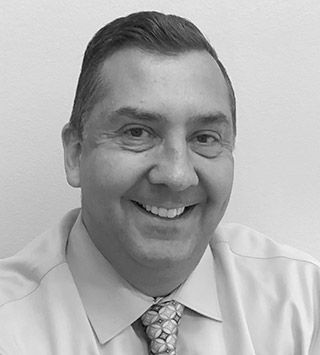
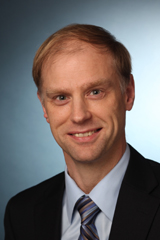
Jean Lachaud is a researcher at the Institute of Mechanics and Engineering (I2M) affiliated with the TREFLE - Transfers, Fluids and Energy department at the University of Bordeaux. His work focuses on thermal and mechanical behavior of porous and reactive materials, particularly in high-temperature environments. Research Interests : Porous media physics, pyrolysis modeling, thermal protection systems, acoustic wave propagation, multiscale simulations. Projects : Involved in ANR, PEPR, and European initiatives related to energy efficiency, material durability, and environmental engineering. His recent publications emphasize thermal non-equilibrium models , biomass pyrolysis , and ablative material response for aerospace applications. He develops computational tools like PATO and integrates experimental data with numerical simulations to study gasification, oxidation, and heat transfer phenomena. Contact : jean.lachaud@u-bordeaux.fr
Dr. Wenming Yang is an Associate Professor at the Department of Mechanical Engineering, National University of Singapore (NUS). He has been with NUS since 2000, progressing from Research Fellow to Assistant Professor in 2011 and Associate Professor since 2017. His research focuses on combustion technologies across multiple scales and applications. Current research areas include internal combustion engines using biofuels, emulsion fuels, and natural gas Development of high-efficiency, low-emission boilers (grate biomass, pulverized coal, CFB, incinerators) Design of micro thermophotovoltaic power generators Active collaboration in computational modeling and experimental validation Dr. Yang's recent publications (2003-2015) primarily address combustion optimization, emissions control, and microscale energy systems. His work spans fundamental chemical kinetics to applied engine modeling, with a strong emphasis on sustainability and alternative fuels. Scientific Recognition Dean’s Chair Professor (2020) – NUS College of Engineering Academic Contributions Teaches Energy Conversion Process (ME3221), Internal Combustion Engine (ME4227), and Air-Conditioning and Building Automation (ME5204) Leads the GSTPG Lab, focusing on combustion innovation and energy systems Actively seeks Ph.D. candidates for research in IC engines, WTE plants, and biomass boiler technologies
Praveen Linga is a Professor in the Department of Chemical and Biomolecular Engineering at the National University of Singapore (NUS) , where he has served since 2010. He held leadership roles as Vice Dean (Industry-Relation, Innovation & Enterprise) and Vice Dean (Communications & Outreach) at NUS's College of Design and Engineering . Dr. Linga co-leads the Centre for Energy Research & Technology (CERT) at NUS and maintains visiting professorships at institutions in India, China, and Thailand. His research focuses on clathrate hydrates for clean energy storage , CO₂ capture , and environmental stewardship , aligning with UN Sustainable Development Goals 6, 7, and 13. The Linga Lab combines fundamental and applied studies to optimize hydrate formation/dissociation kinetics and explore energy recovery from natural gas hydrates. Recent publications highlight innovations in CO₂ hydrate kinetics using amino acid promoters, methane storage in seawater systems, and hydrogen hydrate stability analysis. His work appears in leading journals like Energy & Fuels , Applied Energy , and Chemical Engineering Journal , with over 200 peer-reviewed papers and significant citation impact (h-index 77). Dr. Linga is recognized as a Highly Cited Researcher (Clarivate, 2018-2024), NRF Investigator (S$3.5M grant), and recipient of multiple Best Paper Awards from Applied Energy and Advances in Applied Energy . He serves as Executive Editor of Energy & Fuels and sits on editorial boards of 12 journals. Linga Lab's work has been featured in global media (Chemistry World, Science et Vie) and recognized by Research.com as #9 in Singapore's engineering scientists. His research bridges chemical engineering fundamentals with large-scale energy applications, particularly in hydrate-based CO₂ sequestration and unconventional gas storage.
Alessandro Casasso is an Associate Professor at the Department of Environment, Land and Infrastructure Engineering (DIATI) at Polytechnic University of Turin , and a member of the FULL Interdepartmental Center - Future Urban Legacy Lab . He teaches in the PhD program Civil and Environmental Engineering and collaborates in various degree programs including Civil and Building Engineering , Engineering and Management , and Environmental and Land Engineering . Research Interests : Groundwater modeling, Managed Aquifer Recharge (MAR), Shallow geothermal energy, Environmental remediation, and sustainable water-energy systems. Research Trends from his recent articles highlight advancements in Groundwater-Surface Water Interaction , Nanoscale Remediation , and Geothermal Energy Utilization . His work addresses Uncertainty Quantification in Heterogeneous Aquifers , Techno-Economic Analysis of Energy Systems , and Contaminant Transport Modeling . Collaborative projects focus on Climate Action (SDG 13) , Clean Water (SDG 6) , and Affordable Energy (SDG 7) . Students : Supervises PhD candidate Maria Adele Taramasso in Civil and Environmental Engineering. Collaborates on courses like Nanotechnologies for Contaminated Site Remediation , Particle Transport in Porous Media , and Environmental Agro-Engineering . Skills include expertise in PE8_3 Civil Engineering , PE8_11 Environmental Sustainability , and ERC Sector CEAR-02/A (Sanitary and Environmental Engineering). His Scientific Branch aligns with Area 0008 - Civil Engineering and Architecture.
Professor Vahid Joekar-Niasar is a faculty member in the Department of Subsurface Engineering and Porous Media Physics at the University of Manchester. He holds academic affiliations with Energy Manchester, Sustainable Futures, Dalton Nuclear Institute, and Manchester Environmental Research Institute. His research focuses on subsurface energy systems, multiphase flow in porous media, and electrochemical energy devices. Key areas include carbon capture and storage (CCS), hydrogen storage, geothermal energy, and PEM fuel cells. Education: PhD in Engineering (details not explicitly stated) Research interests integrate computational modeling at pore-scale and multiscale levels, with applications to CO2 sequestration, geothermal systems, and electrochemical devices. His work addresses UN Sustainable Development Goals related to clean energy and climate action. Recent studies explore hydrogen injection dynamics, calcite-brine interactions in enhanced oil recovery, and non-Newtonian fluid transport in porous media. Notable awards include the Young Researcher InterPore-Fraunhofer Award (2011) and FSE Best Supervisor Award (2024). He leads projects on subsurface energy storage and has supervised 11 research projects. Collaborations span global institutions with focuses on two-phase flow, wettability, and pore-scale physics. Labs/Teams: Direct characterization of transport in unsaturated porous media, interdisciplinary porous media research at Stuttgart University.
Amir Jahanbakhsh is a Research Fellow and Programme Manager at the Research Centre for Carbon Solutions (RCCS) within Heriot-Watt University's School of Engineering & Physical Sciences. His academic role includes supervising PhD and postgraduate students. He holds a PhD in reservoir engineering from Heriot-Watt University and has over a decade of industry experience in subsurface energy applications. His research focuses on carbon capture and storage (CCS), geo-energy, hydrogen storage, and techno-economic analysis (TEA) of energy systems. Education: PhD in Reservoir Engineering, Heriot-Watt University. Research Interests: Amir’s work spans carbon mineralisation in basalts, CO₂ transportation, and novel materials for CO₂ capture. He leads large multinational projects like MILEPOST (ERC), Low Carbon Jet Fuel (EPSRC), and USorb-DAC (RMI). His expertise aligns with UN SDGs related to affordable and clean energy (SDG 7), climate action (SDG 13), and industry innovation (SDG 9). Recent Research Trends: His publications address salt precipitation mitigation in CO₂ storage, gas hydrate applications for CCS, and hydrogen storage in sandstones. He also explores computational models (e.g., OpenFOAM) for subsurface fluid dynamics and wettability effects on multiphase flow. Awards & Grants: No specific awards listed, but leads major funded projects including EPSRC and ERC grants. His work emphasizes interdisciplinary collaboration across energy, materials science, and environmental engineering. Labs & Teams: Active in RCCS, focusing on carbon solutions, and collaborates on microfluidic device fabrication for porous media studies. Supervises research contributing to datasets on fluid displacement and subsurface transport.
Mohammad Sedaghat is an Industry Fellow at the Gas and Energy Transition Research Centre at The University of Queensland. His research focuses on petroleum engineering, reservoir characterization, and energy transition technologies, with particular expertise in fluid flow mechanisms, carbon capture and storage, and enhanced resource recovery methods. Research Interests: Sedaghat's work spans geomechanics, reservoir simulation, and environmental sustainability in energy systems. Primary domains include: Fluid dynamics in fractured reservoirs and coal seams Hydraulic fracturing and permeability enhancement techniques CO₂ sequestration and injectivity modeling Wettability alteration and chemical flooding for oil recovery Mine methane emission mitigation strategies Publication Trends: Recent articles demonstrate a strong focus on numerical modeling of subsurface processes, with recurring themes in carbon storage optimization, unconventional resource recovery, and geomechanical influences on fluid flow. Computational studies frequently employ advanced simulation platforms to address challenges in energy transition and fossil fuel extraction. Collaborations: Actively collaborates on industry and research projects including the University of Queensland Surat Deep Aquifer Appraisal Project (UQ-SDAAP), investigating multiphase flow behavior and managed aquifer recharge systems.
Hamidreza M. Nick is a Senior Researcher in GeoEnergy Engineering at the Technical University of Denmark (DTU), affiliated with the Danish Offshore Technology Centre and the Laboratory for Off-Shore Production Sciences. He is actively engaged in cutting-edge research on subsurface energy systems, including CO₂ storage, geothermal energy, hydrogen storage, and coupled thermo-hydro-mechanical-chemical (THMC) processes in porous and fractured geological formations. His research interests span a broad range of topics in subsurface engineering, including fluid flow in porous and fractured media, reactive transport, geomechanics of chalk reservoirs, numerical modeling using finite element methods, microbial processes in underground reservoirs, and the application of machine learning to reservoir simulation. His work contributes significantly to global efforts in climate change mitigation and sustainable energy solutions, aligning with several UN Sustainable Development Goals. The trends in his recent publications (2021–2025) reflect a strong focus on CO₂ sequestration in depleted reservoirs, particularly chalk fields, with emphasis on mechanical integrity, chemical interactions, and coupled simulations. He also explores emerging areas such as in situ hydrogen generation, microbial impacts on storage integrity, and deep learning applications for sparse data environments in reservoir modeling. Hamidreza M. Nick actively supervises multiple PhD students and leads research on key projects related to subsurface fluid dynamics, clogging phenomena, and reservoir simulation. His collaborative network includes researchers across Europe and beyond, and he regularly presents at major international conferences such as EAGE. Scientific Contributions and Supervision: Supervises PhD projects on bio-chemical clogging, subsurface fluid leaks, coupled flow, and formation damage. Active contributor to 297 publications and 23 research projects. Develops advanced numerical models for CO₂ and hydrogen storage, integrating physical, chemical, and biological processes. Engaged in field-scale modeling and validation using real-world data from North Sea reservoirs. Laboratories and Research Groups: He is a key member of the Laboratory for Off-Shore Production Sciences and the Danish Offshore Technology Centre at DTU, where he conducts experimental and computational research on offshore and subsurface energy systems.
Prof. Dr. Jürgen Schumacher is Professor at the ZHAW School of Engineering and heads the research focus Electrochemical Cells & Energy Systems . Stationed in Winterthur, Switzerland, he spearheads numerous national and European projects aimed at advancing electrochemical energy conversion and storage technologies. Research Interests His work integrates multiscale modeling with experimental validation to address critical challenges in: Redox flow batteries – organic and hydrogen–bromine chemistries, membrane optimization, and system-level performance models. Proton exchange membrane fuel cells (PEMFC) – two-phase transport, water management, durability under heavy-duty cycles, and degradation coupling. Photoelectrochemical devices – band-structure engineering, optical and carrier-transport modeling for solar water splitting and dye-sensitized solar cells. Porous electrode theory – upscaling from pore-scale to macroscopic descriptions, Monte-Carlo and continuum approaches. Publication Trends Since 2014, his peer-reviewed output has concentrated on physics-based modeling frameworks that bridge electrochemical kinetics, transport phenomena, and material microstructure. Journal of Power Sources and Electrochimica Acta host the majority of his recent articles, reflecting a clear focus on flow batteries and PEMFC durability . A noticeable trend is the coupling of performance and degradation models , enabling predictive lifetime assessment. Ongoing Projects High-throughput screening & synthesis of active materials for flow batteries – Project leader. Robust PEMFC MEAs for heavy-duty applications – Project leader. Doctoral network on micro-process engineering for electrosynthesis – Project leader. Labs & Teams At ZHAW, Prof. Schumacher directs an interdisciplinary team combining electrochemical engineers , numerical modelers , and material scientists . The group operates state-of-the-art facilities for in-situ diagnostics , micro-computed tomography , and high-performance computing clusters dedicated to large-scale simulations of complete cells and stacks.
Professor Panos Papanastasiou is affiliated with the Department of Civil and Environmental Engineering at the University of Cyprus, within the School of Engineering. He has held significant administrative roles including founding President of his department, Dean of the School of Engineering, and founding Director of the Master's Program in Natural Gas Engineering. PhD in Civil Engineering, University of Minnesota (1990) MS in Civil Engineering, University of Minnesota (1986) BSc in Civil Engineering, National Technical University of Athens (1984) His research focuses on geomechanics across petroleum engineering, energy transition, and environmental applications. Key areas include hydraulic fracturing , wellbore stability , sand production , and CO2 geological storage . He also investigates green hydrogen storage , photovoltaic cracking , and offshore pipeline dynamics . Recent publications highlight his leadership in hydraulic fracturing modeling (2025), green hydrogen integration (2024), and geomechanical analysis of faulted reservoirs (2025). His work spans computational mechanics, energy systems, and environmental risk assessment. Scientific Recognition : Top 2% scientist worldwide in Geoscience, Energy and Engineering (Stanford University ranking)
Dr. Philip Marmet is a Researcher and Lecturer at the Institute of Computational Physics (ICP) within the School of Engineering at Zurich University of Applied Sciences (ZHAW). His work focuses on Multiphysics and Multiscale simulations, characterization and stochastic modeling of microstructures, with particular expertise in solid oxide fuel cell electrode design. His educational background includes a PhD in Physics/Modeling and Simulation from the University of Fribourg (2019-2023), an MSc in Physics/Soft Matter Theory from the same institution (2013-2016), and an MSc in Engineering from Bern University of Applied Sciences (2011-2013). PhD in Physics / Modeling and Simulation, Solid Oxide Fuel Cells, University of Fribourg (2019-2023) MSc in Physics / Soft Matter Theory, University of Fribourg (2013-2016) MSc in Engineering BFH / Industrial Technologies, Bern University of Applied Sciences (2011-2013) BSc in Mechanical Engineering / Mechatronics, Bern University of Applied Sciences (2003-2007) Dr. Marmet's research spans Multiphysics Simulation, Multiscale Modeling, Microstructure Characterization, and Digital Materials Design. His work bridges theoretical modeling with experimental validation to optimize materials for energy applications. He has developed specialized methodologies for virtual microstructure variation and optimization of porous materials, particularly for solid oxide fuel cells and aerosol filters. His publication record shows a clear progression toward increasingly sophisticated multiscale modeling approaches, with recent work focusing on stochastic microstructure modeling using pluri-Gaussian methods. His research demonstrates strong integration of computational techniques (including GeoDict, Comsol Multiphysics, ANSYS, OpenFOAM, and Matlab/Simulink) with experimental validation. Best graduation results of 2013 "Gold", Master of Science in Engineering Dr. Marmet supervises student projects and lectures Analysis 1 and 2 for bachelor courses. His research has received funding from the Swiss Federal Office of Energy (SFOE) and Eurostars program. He has developed practical software tools including the Python app for stochastic microstructure modeling of SOC electrodes and the Characterization-app for standardized microstructure analysis, demonstrating his commitment to translating research into practical engineering solutions. His work is organized around the Digital Materials Design workflow, connecting virtual microstructure generation, automated characterization, and multiphysics simulation to enable data-driven optimization of energy materials without extensive experimental iteration.
Jeffrey M. Zalc is an Adjunct Professor in the Department of Chemical and Biological Engineering at Illinois Institute of Technology (Illinois Tech), affiliated with the Armour College of Engineering. He has been teaching courses on chemical plant design, process simulation, and energy-economics interrelationships since 2015. Zalc holds a B.S. (1995, Magna Cum Laude), M.S. (1998), and Ph.D. (2000) in Chemical Engineering from Rutgers University, followed by postdoctoral research at the University of California, Berkeley (2003–2004). His research focuses on process modeling for refining operations, computational fluid dynamics (CFD) in mixing systems, catalysis for fuel processing, and advancing chemical engineering education. He is a licensed professional engineer in Illinois and a Principal Engineer at bp’s Solutions group, where he develops detailed refining process models for optimization and decision-making. Zalc has been recognized with the Hamid Arastoopour Excellence in Teaching Award (2021–2022 and 2024–2025) and was elected a Fellow of the American Institute of Chemical Engineers (2022). His work bridges academia and industry, emphasizing practical applications of fluid dynamics, catalysis, and sustainable energy systems.
Belen Levenfeld Laredo is Full Professor at Universidad Carlos III de Madrid in the Department of Materials Science and Engineering and Chemical Engineering. Her research focuses on advanced materials for energy storage including solid-state batteries, fuel cells, and electrochemical devices. Key research areas: Solid-state and hybrid electrolytes for lithium/sodium batteries Ceramic processing techniques for battery electrodes Polymer membranes for fuel cells and flow batteries Advanced manufacturing of energy materials Publications demonstrate strong focus on materials processing innovations (60% cover powder extrusion molding and 3D printing techniques) and electrochemical characterization (40% employ in-situ synchrotron studies). Recent work develops high-capacity electrodes through ceramic processing and hybrid electrolyte systems. Leads research in materials synthesis and processing group, supervising doctoral students in battery materials development. Research funded by multiple Spanish national grants including projects on solid-state batteries and fuel cell membranes.
Dr. Bianca Capra is a Senior Lecturer at Queensland University of Technology's Faculty of Engineering, specializing in scramjet propulsion , hypersonic aerodynamics , and natural ventilation in buildings . Her research bridges aerospace engineering and sustainable architectural design through advanced School of Mechanical, Medical & Process Engineering collaborations. Research Focus: Hypersonic flow modeling, combustion enhancement, building energy optimization Key Collaborators: Professor Russell Boyce, Associate Professor Veronica Garcia Hansen, Dr. Robin Drogemuller Methodologies: Computational fluid dynamics, experimental validation, thermal comfort analysis Her publications demonstrate expertise in porous fuel injection systems , oxygen enrichment applications , and natural ventilation heuristics for high-rise structures. Notable works include SCRAMSPACE project contributions and radical-farming scramjet combustion studies . While no formal awards are documented, her 15+ peer-reviewed publications since 2005 establish significant academic impact.
Professor Ralf Deiterding is a leading expert in Numerical Methods for Fluid Dynamics at the School of Engineering, University of Southampton . He also holds an Adjunct Associate Professor position at the Department of Mathematics, University of Tennessee - Knoxville . His work focuses on high-resolution computational methods for fluid-structure interaction, detonation waves, hypersonic flows, and adaptive mesh refinement. Education: PhD in Technical University Cottbus (2003), Diploma in Technical University Clausthal (1998) Research Interests span innovative numerical algorithms for compressible flows, rotating detonation engines , transpiration cooling , and magnetohydrodynamic solvers . He develops AMROC and Virtual Test Facility software frameworks for large-scale simulations. Scientific Contributions include parallel adaptive mesh refinement techniques for detonation physics, lattice Boltzmann methods for aerodynamics, and multi-physics simulations of hypersonic boundary layers. His publications emphasize detonation propulsion , shock-turbulence interaction , and parallel computing . Awards: ParCFD 2015 Best Paper Award Collaborations involve EPSRC-funded projects on hypersonic aerothermodynamics and atmospheric dispersion , with teams at Oak Ridge National Lab and DLR Göttingen. He supervises PhD students in computational fluid dynamics and contributes to space weather forecasting via MHD solvers.