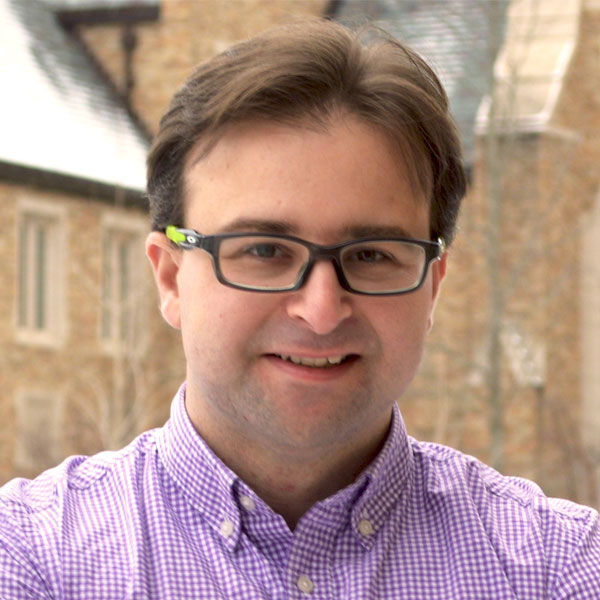
Ali Ghahremaninezhad is a Professor in the Department of Civil, Architectural, and Environmental Engineering at the University of Miami's College of Engineering. His research focuses on sustainable cementitious materials, self-healing concrete, and green additives like hydrogels and biochar. Current research explores molecular-level interactions between surfactants and cement microstructure to enhance durability. Key areas include carbonation curing, freeze-thaw resistance, and organic coatings for marine carbonate minerals. Recent publications highlight his work on using biochar for internal curing, hydrogels for crack repair, and triblock copolymers to reduce autogenous shrinkage. His studies integrate experimental methods (TGA, FTIR, SEM) and predictive modeling. Findings demonstrate improved mechanical strength and reduced water sorption in modified cement systems. Applications span marine carbon cycle understanding and sustainable construction practices.
Dr. Liudas Tumonis is a Senior Researcher at the Institute of Chemical Physics , Vilnius University, with extensive experience in electric propulsion for small satellites , inertial navigation systems , and finite/discrete element methods . He has led projects such as the LituanicaSat-2 satellite development and contributes to the TRACOFUNAT and TORTILAC initiatives under ESA-Lithuania collaborations. Key research areas: Space propulsion, Structural mechanics, Fluidics Active in science communication via Cafe Scientifique and national media Teaches Fundamentals of Aerospace Technologies and mechanics exercises His recent publications focus on satellite propulsion systems , particle impact modeling , and structural vibration analysis , with applications in aerospace and mechanical engineering. He specializes in hybridizing computational methods (finite/discrete element) with experimental validation for material behavior under extreme conditions. Dr. Tumonis has supervised student theses on topics like nano-satellite rocket engines and MEMS-based navigation systems , while contributing to open-source projects like FreeCAD translation. He remains actively involved in science outreach, including TV and radio appearances discussing Mars exploration and lunar missions.
Associate Professor Abdulaziz Kaya has served at Gaziantep University's Faculty of Engineering in the Department of Metallurgy and Materials Engineering since 2012. He earned his PhD in 2009 from Virginia Polytechnic Institute (USA) after completing undergraduate studies at Koç University (Turkey) from 1997-2002. Research Focus: Polymer Science and Surface Chemistry Adsorption Processes for Dye Removal Hydrogen Generation from Aluminum Waste Polysaccharide Self-Assembly on Cellulose Scientific Contributions: - Authored 11 peer-reviewed articles in journals like Cellulose , Biomacromolecules , and Biomass Conversion and Biorefinery - Published two book chapters on plastic additives (2023) and cellulosic surface modeling (2009) - Led four national research projects, including dye removal technologies and hydrogen production - Supervised four graduate theses on topics including walnut shell biosorbents and hydrogen generation Awards: 2014 First Prize in Protective & Military Textiles (Uludağ Textile Exporters' Association)
Prof. Marc van Zandvoort is a Professor at the Institute for Molecular Cardiovascular Research (IMCAR), specializing in advanced microscopy applications for cardiovascular and tissue engineering research. His work bridges molecular imaging, cellular dynamics, and clinical pathology through interdisciplinary collaborations. His primary research focuses on cardiovascular microvasculature, tissue engineering maturation, and cellular death mechanisms. He employs multiphoton microscopy, two-photon endoscopy, and super-resolution techniques to investigate placental pathologies in preeclampsia, atherosclerotic plaque microvasculature, mitochondrial networks, and cerebrovascular glycocalyx integrity. Key methodologies include quantitative imaging of nuclear morphology, 3D structural analysis, and biomaterial characterization for drug delivery systems. Analysis of his 2023-2025 publications reveals dominant themes in cardiovascular imaging (68%), placental/obstetric research (20%), and neural applications (12%). Technical innovations center on multiphoton imaging for tissue engineering maturation (32%), hydrogel-based biomaterials (24%), and mitochondrial dynamics in cell death pathways (16%), with strong cross-disciplinary links to obstetrics, cardiology, and nanomedicine. Scientific Awards: None mentioned in the provided text. Information on student advising, research grants, and educational background was not provided in the available text. Prof. van Zandvoort leads microscopy-focused research within IMCAR, utilizing two-photon endoscopy systems and multiphoton imaging platforms. His collaborative network spans 17 institutions across Europe, with frequent co-authorship on projects involving tissue-engineered heart valves, placental microvasculature quantification, and super-resolution pathology profiling.
Joseph W. Freeman, Ph.D., is a Professor and Graduate Program Director in the Department of Biomedical Engineering at Rutgers University. He directs the Musculoskeletal Tissue Regeneration (MoTR) Laboratory, which specializes in tissue engineering approaches for musculoskeletal repair, cancer biology, and collagen molecular modeling. His research bridges biomaterials development, scaffold design, and regenerative medicine for clinical applications. Education: • Ph.D. in Biomedical Engineering from Rutgers University and the University of Medicine and Dentistry of New Jersey (2003) • B.S.E. in Chemical Engineering from Princeton University Research Focus: Dr. Freeman's work spans musculoskeletal tissue regeneration, tumor engineering, and biomolecular mechanics. Key areas include: Design of 3D-printed and electrospun scaffolds for bone, ligament, and muscle regeneration Molecular modeling of collagen structural dynamics and mineralization Development of tumor microenvironment models for cancer therapy testing Innovations in hydrogel-based actuating materials for tissue repair Awards & Honors: Ford Foundation Fellow NIH Training Program Fellow Invited Speaker at Materials Research Society (MRS) Meeting Johnson & Johnson Graduate Fellow New Jersey Center-Whitaker for Biomaterials Fellow Featured in Rutgers Biomedical Engineering Brochure Teaching & Advising: As Graduate Program Director, he has taught biomechanics, physiology, and tissue engineering courses including Quantitative Physiology and Fundamentals of Tissue Function. His lab focuses on mentoring graduate researchers in scaffold design and regenerative engineering.
Ilie-Cosmin Stancu is a researcher at Hasselt University's Biomedical Research Institute within the Faculty of Medicine. His work bridges biomaterials science and neuroscience, with significant contributions to both tissue engineering and neurodegenerative disease research. His research interests focus on Biomaterials for Tissue Engineering , particularly 3D printing of scaffolds for bone and cartilage regeneration, and the development of novel hydrogels with specific biological functionalities. He also maintains a strong research program in Neurodegeneration and Alzheimer's Disease , investigating molecular mechanisms of tau pathology and amyloid-beta dynamics. Analysis of his publication record reveals a clear trend toward increasingly sophisticated biomaterial designs with dual functionality - serving both structural tissue engineering purposes and specific biological modulation. His neuroscience work demonstrates expertise in preclinical models of Alzheimer's disease, with particular focus on the ATN framework (Amyloid, Tau, Neurodegeneration). 11+ publications with significant citation impact (1,387+ citations) Collaborates across multiple European institutions Active research in both biomaterials and neuroscience fields
Félicie Théron is an active Associate Professor at IMT Atlantique's Department of Energy Systems and Environment, where she has been conducting research since 2011. She is affiliated with the GEPEA research unit, specifically within the Ecotechnologies research area, and is part of Jack Legrand's research laboratory. Her academic journey began with Chemical Engineering studies at INP Lorraine, followed by a doctorate in Process Engineering from INP Toulouse completed in 2009. Professor Théron's research focuses on the complex interactions between airflow dynamics and particulate matter in ventilation systems. Her work bridges environmental engineering and fluid mechanics with practical applications for improving air filtration technologies and indoor air quality. She specializes in studying particle resuspension from duct walls during transient airflow conditions, particularly during fan acceleration phases that represent real-world system startups. Her research methodology combines sophisticated experimental techniques with computational modeling. She employs hot-wire anemometry for precise flow measurements, develops advanced image analysis protocols for tracking particle behavior, and utilizes computational fluid dynamics to simulate complex airflow patterns. Her publications reveal a consistent research trajectory with increasing sophistication in both experimental design and theoretical modeling. Professor Théron has developed innovative approaches for characterizing fibrous media properties, including permeability prediction models that account for bimodal fiber distributions and the Klinkenberg effect. Her recent work extends into smart filtration technologies, with research on electrospun sensory membranes for real-time detection of HVAC filter clogging. This progression demonstrates her ability to translate fundamental research into practical engineering applications that address energy efficiency concerns in building systems. Her publication record shows consistent productivity with 31 documented publications spanning from 2009 to 2025. The research topics evolve from fundamental fluid dynamics and process engineering toward increasingly specialized applications in environmental engineering and air quality control. Her work maintains strong connections to both theoretical modeling and practical implementation, with particular attention to transient phenomena that are often overlooked in traditional HVAC system design. Professor Théron collaborates extensively with researchers across multiple French institutions, particularly within the GEPEA research unit. Her work demonstrates the integration of multiple disciplines including fluid mechanics, materials science, environmental engineering, and sensor technology to address complex problems in air quality management and energy-efficient ventilation systems.
Cristina Isabel Amador Hierro serves as Associate Professor in the Department of Biology within the Faculty of Science at the University of Copenhagen. Her research is centered in the Microbiology section, where she investigates complex microbial communities with a focus on biofilm dynamics and interspecies interactions. Her primary research interests span Microbiology , Biofilm Research , and Environmental Microbiology , with specific emphasis on microbial ecology in wastewater systems and marine environments. Hierro employs advanced methodologies including fluorescence imaging, genomic analysis, and computational modeling to unravel biofilm formation mechanisms and interspecies communication. Recent publications demonstrate significant contributions to understanding biofilm matrix components , multispecies coexistence , and antifouling strategies . Her work frequently appears in high-impact journals such as Applied and Environmental Microbiology and npj Biofilms and Microbiomes , with several 2025 publications currently in press. Hierro maintains active collaborations with leading researchers including Morten Burmølle, Helle L. Røder, and Liubov Maccario, forming a robust research network focused on environmental microbiology. Her team utilizes cutting-edge approaches including biomimetic surfaces and high-throughput screening to address biofouling and biofilm-related challenges. Based at Universitetsparken 15 in Copenhagen, her laboratory contributes to both fundamental microbial ecology research and applied solutions for wastewater treatment and marine industry applications.
Jonathan D. Aubertin is a Professor in the Department of Construction Engineering at École de technologie supérieure (ÉTS). He holds a B.Eng. from McGill University and a Ph.D. from Queen's University. His office is located at A-1599 on campus, and he can be contacted via jonathan.aubertin@etsmtl.ca. His research spans three primary domains: Sensors, Networks and Connectivity Infrastructure and Built Environment Intelligent and Autonomous Systems with specialized expertise in rock mechanics, geohazards, blasting optimization, and remote sensing applications for geosciences. Recent publications (2013-2025) demonstrate strong focus on: LiDAR-based geotechnical characterization Blast crater mechanics in mining Rock slope stability analysis Time-dependent behavior of salt mines showing consistent innovation in field measurement techniques. Awards and Honors: 2022 Doug Stead PhD Thesis Award (Canadian Rock Mechanics Association) 2023 50 Grads, 50 Years (Champlain College – St-Lambert) He leads substantial research advising with 26+ graduate students working on geotechnical projects. As a core member of the LG4 Laboratory, he contributes to geomechanical testing services and equipment management for rock/soil analysis.
Dr. Rhea Verbeke is a researcher affiliated with the University of Mainz , focusing on polymer chemistry and membrane technology. She contributes to the synthesis and characterization of advanced materials for water desalination and separation processes in harsh conditions. Research Focus: Membrane technology for selective separations, interfacial polyether synthesis, and sustainable materials development. Collaborations: Active in interdisciplinary projects with Prof. Holger Frey's group and international teams. Scientific Contributions include innovative approaches to chlorine-resistant membranes, solvent-free synthesis, and MOF integration in thin films. Her work bridges material science and environmental engineering, particularly in water purification systems. Contact: Email: verbekrh@uni-mainz.de Office: +49 (0)6131 39 26139 Lab: +49 (0)6131 39 26273
Natalja Genina serves as Associate Professor in the Department of Pharmacy at the University of Copenhagen, specializing in personalized pharmaceutical manufacturing and drug delivery innovation. Her work bridges cutting-edge production technologies with healthcare system integration. Her educational foundation includes: Ph.D. in Pharmaceutical Technology from University of Helsinki (2010) M.Sc. in Pharmacy from University of Tartu (2006) Research centers on developing personalized dosage forms through printing technologies, non-destructive quality control systems, and digital platforms for on-demand drug production in pharmacies, industries, or homes. She investigates regulatory and societal impacts through interdisciplinary collaboration with Social and Clinical Pharmacy researchers, focusing on patient-oriented products and controlled drug delivery systems. Recent publications (2024-2025) demonstrate dominant trends in 3D pharmaceutical printing, particularly binder jetting and fused deposition modeling for patient-tailored products. Key themes include microstructure analysis of printed tablets, stability of antidepressant formulations, near-infrared/Raman imaging for quality assessment, and QR-encoded smart dosage systems - reflecting convergence of material science, precision medicine, and digital health. She mentors MSc and PhD students through problem-based learning and research integration, with many MSc students publishing papers before graduation. Her teaching philosophy emphasizes student ownership of ideas and active critical thinking through case studies and collaborative problem-solving. Leading the Pharmaceuticals, processes and products research group, she maintains international collaborations focused on translating personalized medicine concepts into practical healthcare solutions while addressing regulatory and distribution challenges.
Simon Thiele is a prominent researcher at Forschungszentrum Jülich GmbH in Germany, focusing on electrochemical energy conversion systems for hydrogen technologies. His work spans both fundamental materials science and practical engineering applications in fuel cells and electrolyzers. His research interests center on membrane science , electrocatalysis , and electrode engineering for proton exchange membrane systems. Thiele investigates novel hydrocarbon-based ionomers as alternatives to conventional perfluorinated membranes, develops catalyst systems with reduced precious metal content, and optimizes electrode structures for improved performance. His work addresses critical challenges in hydrogen production via water electrolysis , fuel cell operation , and liquid organic hydrogen carrier systems . Analysis of his recent publication trends shows a strong focus on iridium reduction strategies for electrolyzers, advanced membrane development , and scalable manufacturing techniques . His work bridges fundamental materials science with practical engineering considerations, with particular attention to the relationship between material properties, electrode structure, and electrochemical performance. Thiele's scientific contributions have been recognized through a substantial citation record, with over 6,487 citations and an h-index of 48 according to Scopus data. His publications appear consistently in high-impact journals across electrochemistry, materials science, and chemical engineering disciplines. His research group likely focuses on experimental development and characterization of electrochemical materials and components, with strong emphasis on practical applicability and scalability. The work involves sophisticated materials synthesis, electrochemical testing, and advanced characterization techniques including tomography and spectroscopy. Current projects appear to address the critical challenges of cost reduction, durability improvement, and performance enhancement for hydrogen technologies, with particular attention to membrane development, catalyst optimization, and manufacturing process innovation.
Albert Cerrone serves as a Research Assistant Professor in the Department of Civil & Environmental Engineering & Earth Sciences at the University of Notre Dame's College of Engineering and holds a concurrent appointment as Senior Research Fellow at the Oden Institute, University of Texas at Austin. His work bridges academic research and industrial applications through Digital Twin technologies. Dr. Cerrone earned his PhD in 2014 from Cornell University under Tony Ingraffea, specializing in multiscale modeling of microcrack nucleation in superalloys. Prior to Notre Dame, he conducted durability research on ceramic matrix composites at GE Research's Lifing Technologies Laboratory. His research integrates machine learning with computational mechanics to advance Digital Twin frameworks across geospatio-temporal domains and materials systems. Key applications include probabilistic storm surge forecasting using high-fidelity hydrodynamics models, durability assessment of additively manufactured metals, and ultrasound-mediated biofilm disruption for inflammatory disease therapies. He employs transformer networks for real-time hydrodynamic error correction and develops geometric modeling tools for viral and biofilm structures. Recent publications demonstrate a clear trajectory toward operationalizing Digital Twin concepts, with increasing emphasis on machine learning integration for coastal inundation modeling and cross-disciplinary materials characterization. His work spans fundamental mechanics to deployable operational systems like NOAA's STOFS-2D-Global. Dr. Cerrone actively collaborates with NASA Langley on additive manufacturing projects and contributes to cystic fibrosis treatment research with Trinity College Dublin. His laboratory work includes computational modeling using ABAQUS, DREAM.3D, and custom Python frameworks for mesh generation and geometric reconstruction. Developed Polycrystal Volume Mesher for microstructure meshing Created Virion to Shell code for virus geometric modeling Teaches Solid Mechanics, Statics, and Engineering Programming
Åsa Kassman Rudolphi is an Associate Professor and Head of the Department of Materials Science at Uppsala University's Faculty of Science and Technology since January 2020. Previously, in 2019, she served as Head of the Department of Engineering Sciences. Her work is centered at the Ångström Laboratory, a prominent research facility at Uppsala University focused on advanced materials and technology development. Dr. Kassman Rudolphi holds a TeknD (Doctor of Technology) degree and is an Associate Professor in Engineering Physics with a specialization in Materials Science. Her academic leadership extends across multiple organizational units including the Intendant's Organization at the Ångström Laboratory and Department of Materials Science Administration and Service. Her research focuses on tribology, examining friction and wear mechanisms from a materials science perspective. Dr. Kassman Rudolphi leads projects investigating polymeric materials and sintered steels for tribological applications, electrical contact materials, and grease-lubricated contacts. She employs advanced techniques including scanning electron microscopy, energy dispersive x-ray spectroscopy, and cross-section analysis to understand material behavior under various conditions. Her work bridges fundamental materials science with practical engineering applications in electrical contacts, clutch systems, and bearing materials. Analysis of Dr. Kassman Rudolphi's publication record reveals consistent contributions to understanding material performance in tribological systems. Her research spans polymer composites, sintered metals, and electrical contact materials, with particular attention to how surface properties, lubrication, and material composition affect performance. Recent work has examined PTFE effects on polymer composites, crack propagation in sintered steels, and advanced lubrication mechanisms using novel grease formulations. Dr. Kassman Rudolphi serves as the main supervisor for two doctoral students, guiding the next generation of materials scientists. Her leadership extends beyond research to departmental administration, where she oversees academic programs and research initiatives within the Department of Materials Science. Based at the Ångström Laboratory, Dr. Kassman Rudolphi is part of a vibrant research community focused on advanced materials, energy technologies, and nanotechnology. The laboratory provides state-of-the-art facilities for materials characterization and testing, supporting her research on friction, wear, and material performance in various applications.