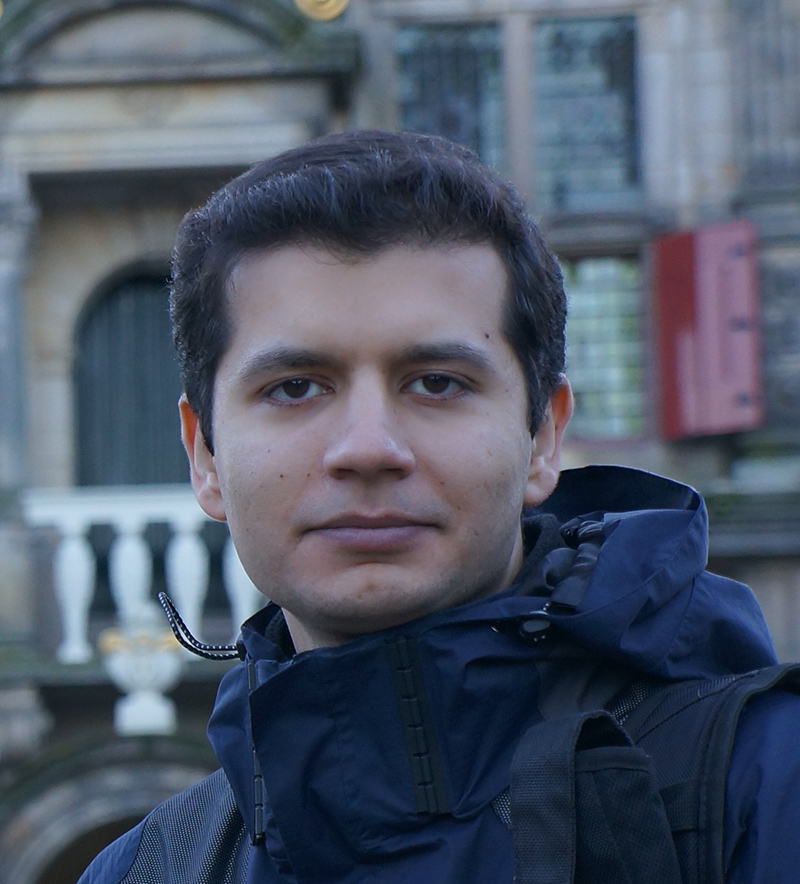
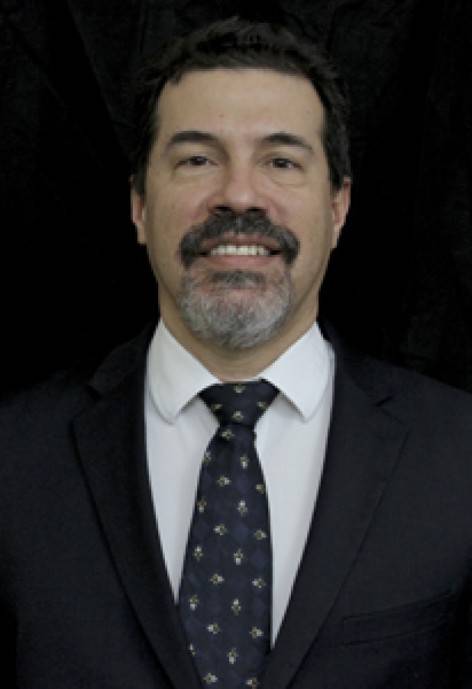
Hadi Hajibeygi is a Professor of Geo-Energy Solid and Fluid Mechanics at Delft University of Technology, leading subsurface storage research and multiscale modeling initiatives. He serves as the Subsurface Storage Theme Lead (2016–present) and Energi Simulation Chair holder (2022–present), with a focus on underground hydrogen storage, CO2 sequestration, and geothermal energy systems. His research integrates multiphase flow in porous media , multiscale simulation , and geomechanical stability , supported by NWO-Vidi and Interpore awards. He leads the DARSim and ADMIRE projects, developing frameworks like Adaptive Dynamic Multiscale Integration and pEDFM-U for fractured reservoirs. Key awards include: Interpore Award for Porous Media Research (2021) NWO-Vidi Laureate (2019) Interpore Rosette (2017) ETH Zurich PhD Medal (2012) TU Delft Innovative Teaching Talent (2018) His teaching portfolio spans Dynamics of Solids and Fluids , Numerical Methods for Subsurface Simulation , and Multiscale Modeling , while advising a team of postdocs and PhD candidates on projects spanning induced seismicity, microbial interactions, and fractured reservoir mechanics.
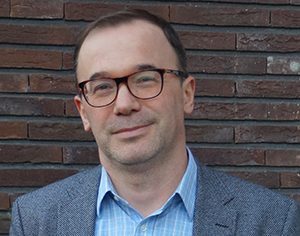
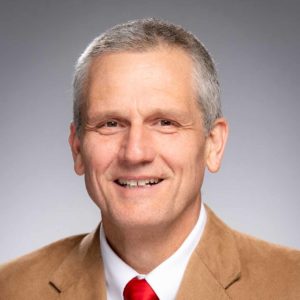
Denis Voskov is an Associate Professor at Delft University of Technology (Faculty of Civil Engineering and Geosciences, Department of Geoscience & Engineering). He also holds an Adjunct Professor position at Stanford University (Department of Energy Resources Engineering, USA). His academic career spans roles as Senior Researcher (2007-2015) and Research Associate (2005-2007) at Stanford, CTO of Rock Flow Dynamic (2005-2008), and engineering positions in oil companies and research institutions in Russia (2000-2005). Current: Head of Reservoir Engineering Section (2024-present) Current: Associate Professor at TU Delft (2015-present) Current: Adjunct Professor at Stanford University (2016-present) Voskov specializes in modeling complex subsurface systems , focusing on reactive flow and transport in altering porous media, scale translation for physical processes, high-performance computing for forward/inverse problems, thermal/geothermal process simulation, CO2 sequestration, and nonlinear solver analysis. His work bridges computational methods (finite volume frameworks, augmented flash calculations, operator-based linearization) with energy transition applications like geological carbon storage and geothermal resource management. Key trends in his recent publications (2024-2025) include: advanced CO2 storage mechanisms (capillary pinning, halite precipitation), multiphysics simulation frameworks (thermal-hydro-mechanical-compositional models), data assimilation for geothermal reservoirs, physics-informed neural networks for subsurface problems, and open-source tools like DARTS-well. Topics frequently intersect with energy transition, reservoir heterogeneity, and numerical robustness. Voskov's lab and team activities center on subsurface energy systems at TU Delft, including the campus geothermal project for direct-use heating and digital twin development for geothermal reservoirs. He collaborates internationally, particularly with Stanford University, and leads initiatives in GPU-based Monte Carlo simulations for uncertainty quantification.
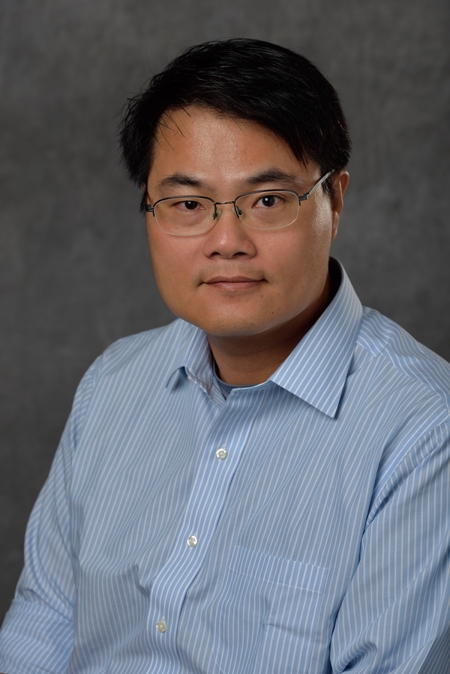
FAN Dian is a Research Assistant Professor at the School of Environmental Science and Engineering, Southern University of Science and Technology (SUSTech). He obtained his Ph.D. in Petroleum Engineering from Texas Tech University in 2018 and a B.E. in Petroleum Engineering from Chengdu University of Technology in 2013. His research focuses on fluid and particle transport in geological porous media through multi-scale numerical simulations, with applications in shale oil/gas extraction, CO₂ sequestration, microplastic removal, and environmental tracer recovery. Key methodologies include lattice Boltzmann simulations and statistical mechanical modeling. Dr. Fan's publications demonstrate strong emphasis on: 1) Fundamental transport phenomena in porous media, 2) Advanced simulation techniques (LBM/CFD-DEM), and 3) Applied petroleum engineering solutions. Recent works show increasing focus on environmental applications and non-spherical particle dynamics. Awards: Pengcheng Peacock Plan Specially-Hired Talent (2023) Research Funding: Principal Investigator: National Natural Science Foundation of China project on shale media deformation (2023-2025) Participant: EU Horizon 2020 projects Science 4 Clean Energy (€9.7M) and ShaleXenvironmenT (€3.4M) He maintains international collaborations through visiting positions at Helmholtz Institute Erlangen-Nurnberg and previously held research/teaching roles at University College London.
Jean-Baptiste Colliat is a Full Professor at Polytech Lille , Lille University, specialized in Numerical Simulation of Materials and Structures within Civil Engineering. His work bridges computational mechanics with practical applications in concrete durability, geothermal systems, and biomedical simulations. Develops Enriched Finite Element Methods for heterogeneous materials Focuses on Uncertainty Quantification in multi-scale systems Key applications: Nuclear Waste Containment , Rockfill Stability , and Obstetric Biomechanics Recent research trends include 3D fracture network modeling, stress-permeability coupling in porous media, and stochastic analysis of material heterogeneity. His work integrates X-ray Micro-CT , DEM , and Multiscale Homogenization techniques. Professor Colliat leads computational frameworks for Embedded Finite Element Methods and Excursion Set Theory applications. He actively collaborates with LaMcube (Laboratoire de Mécanique Multi-physique Multiéchelle) on problems ranging from microstructural evolution to large-scale infrastructure failure.
Farid Tariq is a Visiting Researcher in the Department of Earth Science & Engineering at Imperial College London's Faculty of Engineering. His work focuses on multiscale imaging and modeling of electrochemical devices, particularly fuel cells and batteries, to optimize their performance through structural insights. Affiliation 1: Electrochemical Science and Engineering Affiliation 2: Energy Materials Affiliation 3: Mechanics of Materials His research bridges 3D imaging techniques (e.g., tomography) with electrochemical modeling, addressing challenges in energy storage systems. He explores nanoscale-microscale structure-property relationships in electrodes, aiming to enhance fuel cell and battery durability for sustainable energy applications. Key trends in his publications include 3D multiscale tomography , electrochemical degradation analysis , and multi-physics modeling of energy systems. His work spans materials engineering, electrochemistry, and advanced characterization. Scientific Awards : David West Prize (2006), RMS Poster Prize (2007), PG Poster Prize (2009), RDC Prize (2008), AMS Young Engineer/Scientist Prize (2006 & 2010), FEI Company grants. Farid is a member of the Institute of Materials, Minerals and Mining (IOM3) and The Electrochemical Society (ECS), contributing to electrochemical and materials science communities.
Tobias Gebäck is an Associate Professor at Chalmers University of Technology's Applied Mathematics and Statistics department, affiliated with the SuMo Biomaterials research center. His work focuses on mathematical modeling and numerical methods for mass transport in soft porous materials , with applications in drug delivery systems and absorbent product development . He also investigates charged particle transport mechanisms relevant to cancer radiation therapy . Key research areas: mathematical modeling, numerical methods, transport in porous media, radiation therapy applications Active collaborations: SuMo Biomaterials research center Recent publications emphasize stochastic modeling of 3D structures , Lattice Boltzmann simulations for transport phenomena in complex materials, and multi-scale diffusion analysis of bio-based systems. This work connects fundamental mathematics with industrial applications in pharmaceutical and consumer product development.
Hui-Chia Yu is an Associate Professor in the Department of Computational Mathematics, Science and Engineering at Michigan State University. Their research focuses on computational modeling of electrochemical systems, particularly battery electrodes, using advanced numerical methods like the smoothed boundary method and phase-field simulations. Recent work involves simulating electrode microstructures to analyze electrochemical impedance, phase transformations, and transport dynamics. Applications include optimizing battery performance and understanding wetting behavior in ceramic-metal interfaces. Scientific awards: None listed. Contact: hcy@msu.edu
Ignacia Echeverria Riesco is an Assistant Professor in the Department of Bioengineering and Therapeutic Sciences at the University of California San Francisco (UCSF), where she leads research at the intersection of structural biology and computational modeling. Her work focuses on integrative modeling of protein assemblies using in vivo , in situ , and solution data, with particular emphasis on host-pathogen interactions in HIV and structural dynamics of the nuclear pore complex. Research Themes : Structural diversity of protein complexes, genetic interaction data for structural modeling, host-pathogen interface analysis Methodologies : Integrative Modeling Platform (IMP), cross-linking mass spectrometry, molecular dynamics simulation Key Collaborations : Structural Biology and Computational Biology groups at UCSF, including partnerships with the Sali Lab and Krogan Lab Her publications (2011–2025) span structural characterization of HIV complexes, nuclear pore architecture, and transporter protein mechanisms. Recent work on SARS-CoV-2 host remodeling and yeast nuclear pore adaptations demonstrates her lab's methodological versatility in tackling heterogeneous biological systems.
Jose Eugenio Lopez Periago is a full-time researcher at the University of Vigo , affiliated with the Faculty of Sciences and the Department of Plant Biology and Soil Sciences . His work focuses on soil chemistry, environmental toxicology, and agroecology, particularly in vineyard soils and pesticide transport. Education: PhD in Environmental Science from the University of Santiago de Compostela (1993), thesis on groundwater contamination by cattle manure in Terra Chá under Dr. Francisco Díaz-Fierros Viqueira. Research Interests: His studies address copper dynamics in agricultural soils, pesticide transport mechanisms, soil structure analysis via computed tomography, and sustainable soil management practices. Key themes include heavy metal pollution, bioremediation, and soil ecosystem services. Article Trends: Recent publications emphasize Tenebrio molitor applications, allelopathic biomass for weed control, 3D-printed soil scaffolds, and soil pore network characterization. His work bridges environmental science , materials engineering , and agricultural sustainability . Labs & Teams: Affiliated with the Institute of Agroecology and Food , focusing on soil health and agrochemical impacts. Collaborates with researchers like P. Pérez-Rodríguez, M. Paradelo, and D. Soto-Gómez on interdisciplinary projects.
Vladimir Alvarado is a Professor and Interim Department Head at the Department of Chemical and Biomedical Engineering , University of Wyoming . His research focuses on Enhanced Oil Recovery (EOR) and transport in porous media , integrating data mining, analytical simulations, and experimental techniques. Education : Ph.D. in Chemical Engineering (University of Minnesota, 1996), Master in Exploration and Production (IFP School, 2002), B.S. in Physics (Universidad Central de Venezuela, 1987) Key research areas include CO2 sequestration , shale geomechanics , and nanoparticle applications in oil recovery . Recent publications highlight advancements in NMR methods for fluid characterization, stimulation fluid impacts on shale , and dynamic interfacial phenomena relevant to EOR and carbon storage. His work combines pore-scale modeling with reservoir simulation to optimize fluid recovery strategies.
Merlin L. Bruening is the Donald and Susan Rice Professor of Engineering and a full Professor in the Department of Chemical and Biomolecular Engineering at the University of Notre Dame . Leading the Bruening Lab , he oversees a multidisciplinary team of six graduate students, two postdocs, and two undergraduates. Education & Career Postdoc , NIH Fellow, Texas A&M University, 1995–1997 PhD in Chemistry, Weizmann Institute of Science, 1990–1995 MS in Chemistry, Brigham Young University, 1989–1990 BS in Chemical Engineering, Magna Cum Laude , Brigham Young University, 1983–1989 Assistant → Associate → Full Professor , Michigan State University (1997–2016) Full Professor , University of Notre Dame (2016–present) Research Interests The Bruening group develops functional thin films and membranes for: Protein purification via high-capacity affinity membranes. Ion separations using electrodialysis and counter-flow electromigration for battery, rare-earth, and salt recycling applications. Controlled proteolysis with enzyme-immobilized membranes to accelerate mass-spectrometry workflows for antibody characterization and glycosylation analysis. Microfluidic integration of membranes for point-of-care quantitation of therapeutic monoclonal antibodies in serum. Publication Trends Recent publications (2022–2025) emphasize electrically driven membrane processes for critical mineral recovery, rapid quantitation of therapeutic antibodies , and environmental contaminant detection (PFAS, opioids). The work spans analytical chemistry, membrane science, biopharmaceutical analytics, and environmental engineering , reflecting a commitment to both fundamental transport phenomena and translational applications. Awards & Honors Benedetti-Pichler Award, American Microchemical Society (2016) MSU Innovation of the Year (2015) MSU College of Natural Science Distinguished Faculty Award (2014) Society for Electroanalytical Chemistry Young Investigator Award (2000) Notre Dame College of Engineering Outstanding Teacher (2025) Funding & Collaborations Current research is supported by the U.S. Department of Energy (DE-SC0017618) , the National Science Foundation (CHE-1903967, 1916601, RAPID-IIP-2031090), and the NIH (1R21AG062144 with Prof. Amanda Hummon, OSU). These grants enable collaborative efforts in electrodialysis, membrane-based proteomics, and tissue imaging . Group & Alumni The lab has graduated >30 PhD and MS students and >35 undergraduates who now hold positions in industry (Dow, Janssen, Abbott, Intel) and academia worldwide. Active students include Chao Tang, Joshua Berwanger, Hui Yin Tan, and Dong Ding , among others.
William Likos is a Professor in the Department of Civil & Environmental Engineering at the University of Wisconsin-Madison. He specializes in unsaturated soil mechanics and has made significant contributions to the understanding of expansive clays, soil characterization, and the use of recycled materials in geotechnical applications. Education: PhD (2000) – Colorado School of Mines MS (1996) – Tulane University BS (1994) – Tulane University Research Interests: His research spans a wide range of topics in geotechnical and environmental engineering, with a primary focus on unsaturated soil mechanics. This includes laboratory and field investigation of soil hydraulic, mechanical, and thermal behavior, pore-scale imaging, and the beneficial reuse of industrial by-products and recycled materials. He also explores expansive soil behavior and its implications for infrastructure. Publications Overview: His recent publications (2023–2025) reflect a strong emphasis on unsaturated soil mechanics, environmental geotechnics, and sustainable infrastructure. Topics include soil freezing behavior, recycled materials in MSE walls, expansive soil classification, and pore-scale modeling of soil properties. These works highlight his interdisciplinary approach combining laboratory experimentation, theoretical modeling, and field validation. Awards and Honors: Vilas Associates Award (2024) Editor’s Choice Award, ASCE (2024) Superior Paper Award, WM2024 (2024) Best Paper Award, Transportation Research Board (2023) Norman Medal, ASCE (2014, 2007) Walter L. Huber Civil Engineering Research Prize (2014) Arthur Casagrande Award, ASCE (2005) And over 15 other national and institutional honors Teaching and Advising: He teaches undergraduate and graduate courses including Soil Mechanics, Slope Stability, and Unsaturated Soil Geoengineering. He also advises master's and PhD students through research seminars and thesis supervision. Labs and Teams: While specific lab names are not mentioned, his research heavily involves advanced soil characterization, pore-scale imaging, and field instrumentation, likely supported by UW-Madison’s geotechnical and environmental engineering labs.
Eric Vincens is a University Professor in Civil Engineering at École Centrale de Lyon , where he has worked since 2004. He serves as Director of the Solid Mechanics - Mechanical Engineering - Civil Engineering department and co-heads the Ecological Transition & Territories option in engineering training. His academic background includes graduation from ENS Paris-Saclay , an agrégé in civil engineering, and a PhD from École Centrale de Lyon (1999) . Research Interests focus on: Soil and geotechnical structure behavior Sustainability of large strategic structures (dams, bridges) Vernacular construction with low environmental impact (raw earth, dry stone) Adaptive modeling approaches for filtration processes Publications Analysis : His work spans granular material filtration mechanisms , concrete modification with industrial byproducts , and seismic behavior of dry stone structures . Recent studies (2024-2025) emphasize: Comparative analysis of dry/wet filtration models Micro-mechanical characterization of void spaces Seismic stability of traditional masonry constructions Digital image correlation for material property determination
Dr. Lukas Keller is a Researcher at the Zurich University of Applied Sciences (ZHAW), School of Engineering, within the Department of ICP Multiphysics Modeling and Imaging. He leads multiple projects focused on clay rock characterization, including ongoing work on fracture sealing in clay rock and completed studies on gas transport mechanisms in clay materials. His research centers on the geophysical and mechanical properties of clay formations, particularly Opalinus Clay. Key interests include 3D microstructure analysis using X-ray computed tomography (XCT), hydromechanical behavior of fractures, permeability modeling, and pore-scale simulations. His work bridges experimental data with computational approaches to understand fluid flow, elastic properties, and transport phenomena in geological materials. Keller's publications (2014-2023) demonstrate consistent focus on clay microstructure, digital rock physics, and multiscale modeling. Recent articles explore pore geometry effects on rock elasticity, anisotropy in shale mechanics, and advanced tomography techniques. His research provides critical insights for applications in nuclear waste containment and geotechnical engineering.
Hadi Mohammadigoushki is an Associate Professor in the Department of Chemical and Biomedical Engineering at the FAMU-FSU College of Engineering. He also serves as NMR Staff at the National High Magnetic Field Laboratory as an affiliate. His research group, founded in August 2016, focuses on the intersection of Chemical Engineering, Mechanical Engineering, Material Science and Physics. Dr. Mohammadigoushki received his BS-MS from Amirkabir University of Technology in 2009, followed by a Ph.D. in Chemical Engineering from the University of British Columbia, Canada in 2014. He completed his postdoctoral training at UC Berkeley in 2016 before joining the FAMU-FSU College of Engineering faculty. His research primarily centers on soft matter physics and complex fluid dynamics , with specific expertise in rheology, flow-induced instabilities, locomotion in complex environments, NMR spectroscopy, and interfacial science. His laboratory combines experimental and theoretical approaches including Rheometry, Digital Particle Image Velocimetry, Particle Tracking Velocimetry, Fluorescence Microscopy, NMR diffusometry, and MR Velocimetry to investigate the connection between molecular and macroscale properties of soft materials. His work has significant applications in energy, oil & gas, and biotechnology sectors. Analysis of Dr. Mohammadigoushki's recent publications reveals a strong focus on understanding the behavior of complex fluids, particularly wormlike micellar solutions and yield stress fluids. His research spans fundamental investigations of shear banding phenomena, locomotion dynamics in non-Newtonian fluids, and advanced characterization techniques using NMR spectroscopy. There's a clear progression toward increasingly complex systems and applications, including biological interfaces and magnetic field effects on fluid behavior. 2021: Nominated for Outstanding Teaching Award, Florida State University 2020: CAREER award, National Science Foundation 2017: Young Faculty Award, Florida State University 2013: John Grace Graduate Award, University of British Columbia, Canada Dr. Mohammadigoushki has mentored numerous students at various levels, including current PhD candidates, undergraduate researchers, and past students who have gone on to successful careers in academia and industry. His research group actively participates in outreach programs to encourage female and underrepresented students to pursue STEM fields, including the Florida Young Scholar Program, Family STEM nights, and laboratory visits for middle and high school students. The Mohammadigoushki Research Group operates state-of-the-art facilities for studying soft matter and complex fluids, with particular emphasis on rheological characterization and flow visualization techniques. The group maintains strong collaborations with the National High Magnetic Field Laboratory and other research institutions, enabling cutting-edge investigations at the interface of multiple scientific disciplines.