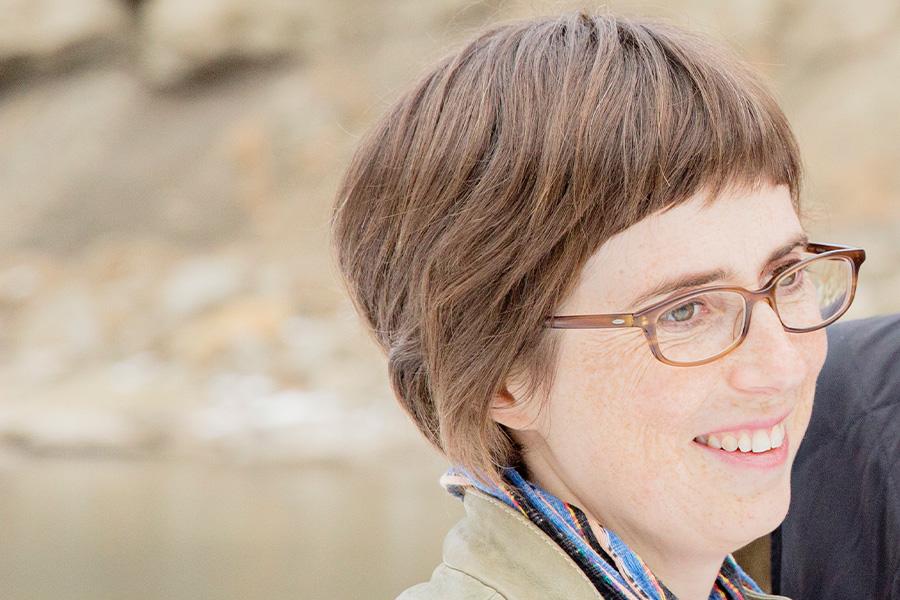
Olivia Wilkins is an Associate Professor in Biological Sciences at the University of Manitoba, affiliated with the Faculty of Science. Her research focuses on climate-resilient crops, gene regulatory networks, and plant-microbe interactions. She leads the Olivia Wilkins Lab, exploring topics like single-cell sequencing, post-translational modifications, and plant inoculant interactions. Her work bridges fundamental biology with applied agricultural challenges. Research interests include: Development of crops resistant to climate change impacts Prediction and manipulation of gene regulatory networks Single-cell resolution analysis of plant tissues Metabolic adaptations under hypoxia and drought Engineering plant-microbe symbioses for improved productivity Recent work emphasizes spatially resolved genomics in rice, circadian rhythm responses to drought in poplar, and leveraging lactic acid bacteria for agricultural benefits. She has pioneered the use of host-induced gene silencing (HIGS) to combat fungal pathogens in Brassica crops. Current projects aim to translate single-cell insights into climate change resilience strategies for staple crops. Her lab collaborates on cannabis genomics initiatives, exploring genetic and environmental factors affecting crop yield. Training efforts include developing bioinformatics curricula for plant researchers.
Jim Mattsson is a Professor in the Department of Biological Sciences at Simon Fraser University (SFU), specializing in Plant Functional Genomics. His research focuses on mitigating climate change impacts on crops and forest trees, including improving drought tolerance in rice, poplars, and western redcedar. He leads studies on genetic mechanisms underlying vein formation in rice and metabolite production in conifers for defense against herbivores and pathogens. Education: BSc, Uppsala University, Sweden PhD, Uppsala University, Sweden Research Interests: C4 photosynthesis engineering in rice Vein patterning and auxin signaling Climate-resilient forest tree varieties Monoterpenoid and diterpenoid biosynthesis in conifers Heartwood rot resistance mechanisms Publications: Over 25 peer-reviewed articles, including work on auxin response factors in rice, drought-resistant poplar hybrids, and thujone biosynthesis in western redcedar. Recent studies explore biological responses to salmon-derived nutrients in coastal ecosystems and micropropagation techniques for valuable timber species. Advising & Grants: Advises graduate students on plant genetics and molecular biology projects. Active in securing grants for tree improvement and climate resilience research. Labs & Collaborations: Leads a lab focused on plant functional genomics and collaborates with forest geneticists to identify drought-tolerant tree variants. Research extends to reforestation strategies for yellow cedar decline in Alaskan/BC coastal regions.
Dr. Keith Adams is Professor in the Department of Botany at the University of British Columbia, where his research bridges molecular genetics, genomics, and evolutionary biology. His laboratory investigates genome evolution, transcriptomic regulation, and functional diversification following gene duplication events, with emphasis on polyploid systems. Research explores: Expression pattern divergence and alternative splicing evolution in duplicated genes Functional reconfiguration following whole-genome duplication (polyploidy) Subcellular relocalization dynamics and regulatory network rewiring Stress-responsive transcriptome plasticity in crops (Brassica, wheat) Model systems include Brassica napus (canola), Arabidopsis, Populus trichocarpa, and Cannabis sativa. Recent work examines copy number variants in natural Populus populations, alternative splicing in drug-type Cannabis cultivars, and subgenome dominance in Brassica-pathogen interactions. His group employs RNA-seq, comparative genomics, and molecular techniques to decode evolutionary mechanisms shaping gene function.
Dr. Ihsan Ullah , affiliated with the University of Reading , is a researcher with expertise spanning plant virology, genetics, and environmental science. His work focuses on plant-pathogen interactions, metal isotope fractionation, and bioremediation strategies. Research Themes : Plant virology (CaMMV, CYVBV), metal homeostasis (Cd, Zn), and mycorrhizal symbiosis Methodologies : Molecular diagnostics, bioinformatics, stable isotope analysis, transgenic organism development Ecosystems : Tropical crops (cacao), temperate agriculture (wheat), phytoremediation plants (Populus, Pongamia) Publication Trends His 2025 work on Cacao Mild Mosaic Virus expands host range knowledge, while 2024 studies address nutrient-metal interactions in cacao. 2023 contributions include viral discovery (polerovirus) and zinc isotope analysis corrections. Earlier work (2022-2020) covers Pongamia sustainability, transgenic crop development, and mycorrhizal symbiosis in metal partitioning.
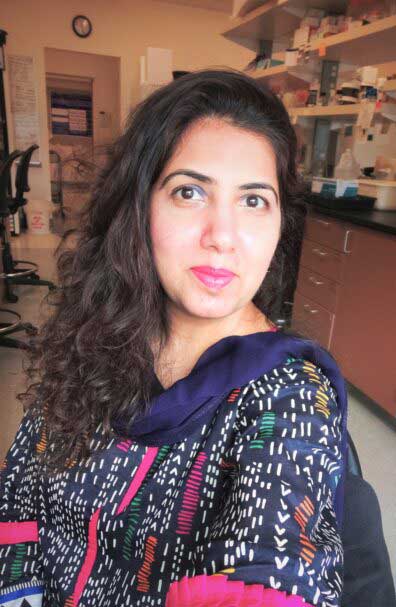
Hira Kamal serves as a Postdoctoral Research Associate in the Department of Plant Pathology at Washington State University's College of Agricultural, Human, and Natural Resource Sciences, working under Supervisor Kiwamu Tanaka. Her research integrates molecular biology, virology, and computational approaches to investigate plant-pathogen interactions, with emphasis on viral and fungal diseases affecting economically significant crops like potato and cotton. Education: Ph.D. in Biotechnology, Pakistan Institute of Engineering & Applied Sciences (PIEAS), National Institute for Biotechnology and Genetic Engineering (NIBGE) campus, Faisalabad, Pakistan (2020) MS in Biotechnology, PIEAS at NIBGE campus, Faisalabad, Pakistan (2013) B.S. in Bioinformatics, Government College University Faisalabad (GCUF), Pakistan (2010) F.Sc (Pre-Medical), Shiblee College for Women Madina town, Faisalabad, Pakistan (2005) Matriculation (Science), Dar-e-Arqam School, Faisalabad, Pakistan (2003) Dr. Kamal's research centers on molecular plant-microbe interactions, particularly viral pathogenesis mechanisms and host defense responses. She investigates antagonistic relationships between pathogens like potato mop-top virus and Sclerotinia sclerotiorum with their host plants, employing systems biology approaches to map infection stages. Her work bridges experimental virology with computational modeling to design antiviral strategies, focusing on viral protein functions (e.g., coat proteins, triple gene block proteins) and host susceptibility factors. This dual methodology enables comprehensive analysis of starch metabolism in pathogen development and viral effector interactions with host signaling pathways. Analysis of her publication record reveals consistent focus on molecular virology and computational biology, with strong emphasis on crop-pathogen systems. Her work spans viral protein characterization, host-pathogen interface mapping, and diagnostic tool development, demonstrating technical versatility across wet-lab and in silico methodologies. Key thematic threads include geminivirus-betasatellite interactions, soilborne pathogen mechanisms, and translational applications for disease management in potato, cotton, and barley systems. Scientific recognition: International Research Support Initiative Program Scholarship (2017) Indigenous Ph.D Fellowship for 5,000 scholars (2014-2017) Dr. Kamal conducts research in Plant Sciences Building laboratories (rooms 215 & 235) at Washington State University, utilizing molecular, biochemical, and computational infrastructure to investigate plant-pathogen dynamics. Her collaborative work involves cross-institutional teams studying viral evolution, host resistance mechanisms, and diagnostic applications, with particular attention to pathogens impacting agricultural productivity in both developed and developing regions.
Kabir Peay is a Professor in the Department of Biology and Department of Earth System Science at Stanford University, where he serves as Director of the Earth Systems Program and Senior Fellow at the Woods Institute for the Environment. He holds a PhD from UC Berkeley (2008), a MESc from Yale School of Forestry (2003), and a BA from UC Santa Barbara (1997). His research focuses on ecological processes structuring natural communities, with emphasis on fungal roles in nutrient cycling and plant-microbe symbiosis. Key interests include mycorrhizal ecology, microbial dispersal, and climate change impacts on forest microbiomes. Peay's investigations span root-scale symbiosis to continental-scale biogeography of fungi, aiming to build a 'roots-to-biomes' understanding of terrestrial ecosystems. His recent work (2023–2024) examines climate-driven mismatches in tree-fungal distributions, soil food web dynamics, and functional traits of ectomycorrhizal communities under environmental stress. Honors include: Fellow, American Academy of Microbiology (2025) Fellow, Canadian Institute for Advanced Research (2023–2026) Buller Medal, International Mycological Association (2018) Alexopolous Prize, Mycological Society of America (2017) He advises doctoral students on topics ranging from microbial ecology to ecosystem resilience and leads the Peay Lab, which investigates links between microbial biodiversity and ecosystem function.
Dr. Rajinikanth Mohan serves as an Assistant Professor in the Biology Department at Mercyhurst University. He teaches majors courses in Microbiology and Biochemistry, non-majors Microbiology, and graduate-level Microbiology & Genetics for the Physician Assistant Studies program while mentoring 12 undergraduate researchers. Research Focus: His work explores plant immunity mechanisms, microbial applications in sustainable agriculture, and bioremediation. Recent publications highlight research on NPR1 protein dynamics, microbiome-assisted crop protection, xenobiotic degradation, and plant-pathogen interactions, with a particular emphasis on molecular signaling and ecological applications.
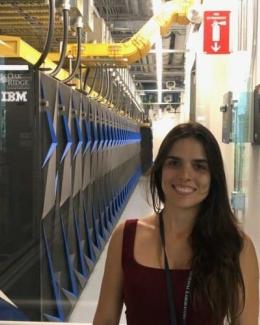
Erica Teixeira Prates is a Computational Systems Biologist at Oak Ridge National Laboratory (ORNL), working within the Biological and Environmental Systems Science Directorate's Biosciences Division. She leads computational research in the Computational and Predictive Biology Group and Biocomputing and Information Section, focusing on integrating molecular dynamics simulations with multi-omics data to study protein structure-function relationships. Her research spans three major domains: Bioenergy (CBI projects on plant-microbe interfaces and cellulose biosynthesis) Plant-Microbe Interactions (modeling receptor-ligand pairing in Populus systems) Viral Pathogenesis (SARS-CoV-2 protease mechanisms and antiviral strategies) She develops computational protocols for proteome-wide modeling, virtual screening, and enhanced sampling techniques to bridge molecular biophysics with systems-level biological traits. Publication analysis reveals consistent focus on structural bioinformatics (47% of articles), with growing emphasis on AI-driven approaches since 2020. Her work connects quantum biology with CRISPR optimization, metabolite-GWAS networks in plants, and opioid addiction genetics through meta-multiomics integration. Professional contributions include key projects: Plant-Microbe Interfaces (PMI) initiative for bioenergy crops COVID-19 research on NEMO cleavage and bradykinin storms Development of explainable AI models for viral mutation tracking