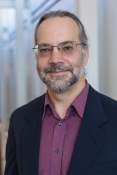
Dr. Maria O'Connell is a Professor of English in the School of Languages and Literature at Wayland Baptist University, located in Plainview, Texas. She specializes in American and World Literature, with a focus on interdisciplinary research areas including social systems theory, gender studies, translation studies, and ecofeminism. Her work explores social constructions of persons and environment in Western/Southwestern American literature. Her recent projects include analyzing mothers as heroes in weird literature and examining feminist approaches in sci-fi. Notable publications include Breaking Borders and Breaking Bad (2016) and Of Judges and Fairybook Beasts (2016). Current research investigates feminist reinterpretations of women’s roles through weird science fiction. Dr. O’Connell’s academic interests span Cormac McCarthy’s exploration of nature and violence, translation theory, and the intersection of gender with environmental narratives. She teaches at all levels, from freshman to graduate courses, emphasizing interdisciplinary perspectives. Her work bridges literary analysis with ecological, social, and gender-based frameworks.
Anthony J. Gaughan serves as Professor of Law and Kern Family Chair in Law at Drake University Law School in Des Moines, Iowa, and is also a Senior Fellow in the Election Law Program at Ohio State University's Michael E. Moritz College of Law. His academic career is dedicated to the study of election law, constitutional law, and legal history, with special expertise in campaign finance regulation, voting rights, and the historical development of American electoral systems. Professor Gaughan's research examines critical challenges to American democracy including political polarization, voter suppression tactics, and the impact of technological changes on electoral processes. His scholarly work spans from Colonial and Revolutionary America through the Civil War era to contemporary election controversies, providing crucial historical context for understanding current electoral challenges. His research often reveals how historical patterns of electoral conflict and reform repeat and evolve in modern contexts, particularly regarding campaign finance regulation and voting rights protections. His extensive publication record demonstrates a consistent analytical approach that connects historical patterns with contemporary election law issues. Gaughan's work frequently appears in prominent law journals, showing his significant influence in the field of election law. His scholarship addresses both theoretical constitutional questions and practical election administration challenges, bridging academic analysis with real-world electoral concerns. While specific details about his teaching methodology are not provided in the available information, his position as a named chair holder (Kern Family Chair in Law) indicates recognition of his scholarly contributions and teaching excellence. His affiliation with Ohio State University's Election Law Program suggests active engagement with the broader election law academic community.
Melani McAlister is Professor of American Studies and International Affairs at the George Washington University, where she has been a faculty member since 1996. Her research and teaching focus on transnational U.S. history, religion and politics, media and cultural history, and U.S. engagements with the Middle East and Africa. She is a leading scholar in the cultural dimensions of American foreign relations and evangelical internationalism. Education: PhD in American Studies, Brown University, 1996 BA in International Affairs, University of North Carolina-Chapel Hill, 1984 (Morehead Scholar) Her research interests include: Transnational U.S. History and Global Visions Religion and Politics, particularly Evangelical Christianity U.S.-Middle East and U.S.-Africa Cultural Encounters Media, Popular Culture, and Digital Humanities Humanitarianism and Affective Politics in the Cold War Postcolonial and Decolonial Solidarity Movements McAlister’s recent publications reveal a sustained engagement with the cultural history of American foreign policy, the global circulation of religious and artistic expressions, and the emotional and moral frameworks shaping U.S. internationalism. Her work spans books, edited volumes, journal articles, and public scholarship in major outlets like The New York Times and The Atlantic. She has pioneered digital humanities projects such as Remembering Biafra and the GWU Covid and Culture Project , demonstrating a commitment to public and collaborative scholarship. Scientific Awards and Fellowships: Harvard-Radcliffe Fellow (2023–24) NEH Fellowship Fellow, Davis Center for Historical Studies, Princeton Faculty Fellow, Annenberg School, University of Pennsylvania Fellow, Center for the Study of Religion, Princeton Morehead Scholar, UNC-Chapel Hill Advising and Grants: While no direct student advisees are listed, McAlister has supervised graduate students through GWU’s American Studies PhD program and offers detailed advice on graduate education. She has led grant-funded projects including the NEH-supported Remembering Biafra and has received institutional and national fellowships supporting her research. She co-edits major scholarly volumes and serves on editorial boards of American Historical Review , Modern American History , and Diplomatic History . Labs and Research Teams: McAlister directs digital history initiatives and collaborative research projects. She led the Remembering Biafra project, which involved a major conference and digital archive. She also co-edited a special issue of American Quarterly titled From Anarchy to Chaos: Generations of Empire , assembling a broad scholarly team. Her current work on The Art of Solidarity involves transnational cultural case studies and builds on collaborative networks in American Studies.
Dr Gareth Evans-Jones is a Lecturer in Religious Studies at Bangor University, affiliated with the School of History, Law and Social Sciences. He completed his BA, MA, and PhD at Bangor, with AHRC-funded research on Welsh religious responses to 19th-century American slavery. He teaches across philosophy, religion, ethics, and literature, and is co-director of the National Centre for Religious Education in Wales. Bachelor of Arts in Welsh and Religious Studies, Bangor University (2012) MA in Welsh and Creative Writing, Bangor University PhD in Religious Studies (AHRC-funded), joint supervision by School of Philosophy and Religion and School of Welsh His research spans biblical studies, religion and literature, ethics, slavery, Judaism, Christianity, Zionism, and Welsh diasporic identity. He explores how religion shapes ethical discourse in historical and contemporary contexts, particularly in relation to slavery, ecology, and national identity. His creative work intersects with his academic interests, especially in Holocaust representation and queer narratives. His recent publications include books on Welsh responses to slavery, LGBTQ+ anthologies, and Holocaust fiction. His scholarly and creative output frequently engages with themes of exile, identity, morality, and interfaith dialogue, often rooted in Welsh cultural and religious history. Literature Wales Book of the Year (Creative Nonfiction) – 2023 AmGen National Eisteddfod Playwright Medal – 2021 Conwy County National Eisteddfod Playwright Medal – 2019 British Society of Authors Grant – 2021 Welsh Medium Education Award – 2019 AHRC Scholarship – 2014 He supervises MA/MRes and PhD students in religious studies, philosophy, literature, and slavery. He is actively involved in public engagement, including school outreach, media appearances, and festival events. As co-director of the National Centre for Religious Education in Wales, he works to strengthen RE in schools. He serves as Personal Tutor and holds administrative roles in communications and civic mission within his school. He is associated with several academic and civic organizations, including the Council of Christians and Jews, the Higher Education Academy, and Bangor University’s Senate. He is also co-editor of the academic journal Ysgrifau Beirniadol [Critical Essays].
Mark Applebaum, the Leland and Edith Smith Professor at Stanford University, is a composer, performer, and educator renowned for his work in electroacoustic music, sound sculpture design, and experimental notation. He has received prestigious awards including the 2025 American Academy of Arts and Letters Award in Music and Stanford’s Gores Award for Teaching Excellence. Applebaum directs the Stanford Improvisation Collective and has held administrative roles including Associate Professor and Faculty Scholar. Ph.D. in Music Composition (1996), University of California, San Diego M.A. in Music Composition (1992), University of California, San Diego B.A. in Music (1989), Carleton College His research spans electroacoustic composition, sound sculpture design, and interdisciplinary collaborations with neural artists and architects. He explores the metaphysics of musical notation and pedagogical frameworks for contemporary composition. Applebaum’s publication history from 2000–2012 reveals a focus on sound-art intersections, improvisation, and innovative educational practices. Key venues for his work include the Kennedy Center, Darmstadt New Music Courses, and ICMC. Recipient of the 2025 American Academy of Arts and Letters Award in Music 2005 EMS Prize (Electronic Music Stockholm) for 8-channel tape work 2003 Stanford Walter J. Gores Award for Teaching Excellence 2004 SEAMUS Award for Best Use of Technology 1997 Stephen Albert Award from American Music Center As an advisor (2000–Present), he mentors undergraduate and graduate composers. His leadership roles include chairing Stanford’s Committee on Undergraduate Admissions and Financial Aid and serving on faculty senates. He has produced recordings with institutions like Sonic Circuits and Music from Stanford series. Applebaum directs the Stanford Improvisation Collective, a laboratory for experimental performance practices, and has designed kinetic sound sculptures exhibited at venues including the Essl Museum and NIME at IRCAM.
Wendy Cadge is the 10th President and Professor of Sociology at Bryn Mawr College, a leading scholar in the sociology of religion, spirituality, and chaplaincy. She assumed the presidency in July 2024 and actively contributes to both academic and institutional leadership. Her affiliations include the Department of Sociology within the School of Arts and Sciences at Bryn Mawr, and she previously served in prominent roles at Brandeis University, including Dean of the Graduate School of Arts and Sciences. President, Bryn Mawr College (2024–present) Professor of Sociology, Bryn Mawr College Barbara Mandel Professor of Humanistic Social Sciences, Brandeis University (former) Dean of the Graduate School of Arts and Sciences, Brandeis University (2021–2024) Wendy Cadge’s research focuses on religion in public institutions, particularly spiritual care, religious diversity, chaplaincy, and the moral dimensions of healthcare. She is known for her ethnographic approach and public intellectual engagement. Her work bridges academic scholarship with real-world applications in healthcare, education, and maritime settings. She has launched influential initiatives such as the Chaplaincy Innovation Lab and the Transforming Chaplaincy Project. The recent articles and publications attributed to her reflect a strong and evolving interest in the role of chaplaincy in modern society, religious innovation, and spiritual infrastructure. Themes include the expansion of chaplaincy beyond traditional hospital settings (e.g., in schools and seafaring), spiritual care for the nonreligious, and responses to societal challenges like loneliness. Her work demonstrates interdisciplinary collaboration and a commitment to making religious and spiritual research accessible to broader audiences. Her scientific awards and honors include the Thomas A. King Faculty Award, the Dean of Arts and Sciences Mentoring Award, and the Michael Walzer '56 Award for Excellence in Teaching. She has received major funding from foundations such as the Robert Wood Johnson Foundation, the John Templeton Foundation, and the Henry Luce Foundation. Thomas A. King Faculty Award Dean of Arts and Sciences Mentoring Award Michael Walzer '56 Award for Excellence in Teaching Wendy Cadge advises and mentors students and early-career scholars, though specific student names are not listed in the provided texts. She has raised over $8 million in research and teaching grants, supporting collaborative projects and student research. She leads initiatives such as the strategic visioning process at Bryn Mawr, the 'Teaching on Innovation in the Liberal Arts' committee, and the '100 Thousand Billion Bryn Mawrs' workshop, which explore the future of liberal education. She founded and leads the Chaplaincy Innovation Lab, a collaborative space bringing together chaplains, educators, and social scientists. She also co-directed the Transforming Chaplaincy Project. These teams focus on advancing research, training, and public understanding of spiritual care across diverse settings.
Carina Rasse is a post-doctoral researcher at the Institute for English and American Studies, University of Klagenfurt, Austria. She holds a PhD in Cognitive Linguistics and is actively engaged in research on metaphor, poetic language, and embodied cognition in literary understanding. Her academic profile highlights her role in both research and teaching within the Faculty of Humanities. Her research focuses on the cognitive mechanisms underlying metaphor comprehension, particularly in poetry and literary texts. She investigates how readers process figurative language, engage in embodied simulation, and derive meaning from metaphors in fictional narratives. Her work bridges cognitive science, linguistics, and literary studies, contributing to interdisciplinary understandings of language and thought. The recent publications reflect a strong trend in cognitive poetics, exploring metaphor in poetry, song lyrics, and novels. Her studies often employ psycholinguistic methods to examine implicit and explicit awareness of conceptual metaphors. She has also contributed review articles and conference presentations that critically engage with narrative absorption, environmental justice in literature, and the role of metaphor in aesthetic appreciation. Carina Rasse has collaborated with prominent scholars such as Francesca Citron and Raymond W. Gibbs. Her academic journey includes an MA thesis on media convergence and a dissertation on poetic metaphors, supervised by Prof. Alexander Onysko and Prof. Ray Gibbs. While no formal awards are listed, her consistent publication record and international conference participation indicate active scholarly engagement. She does not appear to have a formal lab or research team mentioned in the text, but her work is situated within the broader cognitive linguistics and literary semantics communities. She is affiliated with research networks such as RaAM (Researching and Applying Metaphor) and presents at major international conferences.
Amanda Curtis is the Dean of the School of Business and Professional Studies and an Associate Professor of Sports Management at Lake Erie College. She holds a Ph.D. in Health and Sport Studies from the University of Iowa, an M.S.Ed. in Sport Science & Wellness Education from the University of Akron, and a B.A. in Physical Education and English from Albion College. Ph.D., Health and Sport Studies, University of Iowa M.S. Ed., Sport Science and Coaching, University of Akron B.A., Physical Education, English, Albion College Her research centers on gender, physicality, and representation in sport, with a strong emphasis on sport history and sociology. Key themes include the integration of women in military academies, media portrayals of female athletes, and the cultural narratives surrounding sport, nationalism, and identity. She teaches courses such as Gender, Sexuality and Sport; History of Sport in America; Sport Sociology; and Sport Communication. The majority of her scholarly contributions are peer-reviewed conference presentations delivered at prominent venues like the North American Society for Sport History (NASSH) and the North American Society for the Sociology of Sport (NASSS). Her work spans topics including gender dynamics in military training, Disney’s portrayal of sport heroines, and the role of sport in wartime efforts, reflecting a cohesive focus on gender, power, and cultural representation in athletic contexts. She has been recognized for her teaching excellence with the Ohio Magazine Excellence in Education award and the LEC Tibby for Faculty Member of the Year. Ohio Magazine Excellence in Education award LEC Tibby for Faculty Member of the Year Dr. Curtis is actively involved in academic service and professional organizations, including the North American Society for Sport History (NASSH) and the North American Society for the Sociology of Sport (NASSS). While no formal advising or grant activities are detailed, her leadership as Dean and active conference participation indicate a strong commitment to academic mentorship and scholarly engagement. She contributes to shaping sport studies curriculum and fostering interdisciplinary learning at Lake Erie College.
Alexandra Pesch is a Senior Research Fellow at the Centre for Baltic and Scandinavian Archaeology (ZBSA) and Associate Professor at the Christian-Albrechts-University of Kiel, Faculty of Philosophy, affiliated with the Institute of Prehistory and Early History and the Institute of Scandinavian Studies, Frisian Studies and General Linguistics. She holds a venia legendi in Prehistoric and Early History Archaeology and Old Norse Philology and was appointed as an extraordinary professor in 2020. Her research focuses on archaeological imagery, particularly the interpretation of Germanic and Viking visual culture from the first millennium AD. She specializes in gold bracteates, gold neck collars (guldhalskragar), gold foil figures (guldgubbar), picture stones, and runestones, analyzing their symbolic meanings and role in elite communication and religious practices. Her interdisciplinary approach integrates archaeological evidence with Old Norse textual sources and philology. The trends in her recent publications reveal a sustained focus on the iconography and symbolism of Migration Period art, particularly goldwork. She investigates the continuity of Germanic artistic traditions into the early medieval period, the function of divine and elite imagery, and the social mechanisms behind artistic production. Her work often challenges popular misconceptions, such as the so-called 'Viking compass' (Vegvisir), and critically examines the modern reception and misuse of ancient symbols. Oscar Montelius Medal by Svenska Fornminnesföreningen, October 2016 Alexandra Pesch has supervised numerous research projects and workshops, often in collaboration with international scholars. She is a member of several academic boards, including the Scientific Advisory Board of the DFG Specialized Information Service Northern Europe and the Monument Council of the State of Schleswig-Holstein. She has not received specific grant mentions in the text but her long-term employment and project leadership imply sustained funding. She has edited multiple conference volumes and contributed extensively to academic discourse. She leads research at the ZBSA, particularly within the thematic area of 'Mensch und Artefakt' (Human and Artefact), and has continued the scholarly legacy of Karl Hauck on bracteate research. Her work is central to the Johanna Mestorf Academy at CAU Kiel, and she is involved in the Schleswig Section of the Schleswig-Holstein University Society and the International Saxon Symposium.
Robert Trent Vinson is Director & Chair of the Carter G. Woodson Institute for African American & African Studies at the University of Virginia and a Research Associate at Stellenbosch University in South Africa. He is a leading scholar in African and African Diaspora history, with a focus on transnational connections between southern Africa, the Americas, and the Caribbean. His academic leadership includes directing a major research institute and contributing to national conversations on race, history, and institutional memory. Education: Ph.D. in African History, Howard University His research centers on 19th and 20th-century African and African Diaspora history, particularly examining how ideas of Black liberation, racial identity, and political movements circulated transnationally. He explores how African Americans influenced anti-apartheid thought in South Africa and how African leaders like Albert Luthuli shaped global civil rights discourse. His work bridges archival research with cultural analysis, emphasizing the interconnectedness of African and African-descended communities across continents. The recent publications reflect a consistent engagement with transnational Black histories, documentary sources, and the politics of memory. His scholarly output spans biographies of key African leaders, analyses of liberation ideologies, and investigations into cultural representations of African identities in the West. The trend highlights a deep commitment to uncovering marginalized narratives and fostering academic dialogue across national boundaries. Professional Leadership: President, Association for the Study of the Worldwide African Diaspora (ASWAD) Board Member, African Studies Association Editorial Board, Michigan State University Press Editorial Board, Safundi: The Journal of South African and American Studies Vinson has played a pivotal role in academic advising and institutional scholarship, particularly through his leadership of the Lemon Project at William & Mary, which investigated the university's historical ties to slavery and segregation. His work supports graduate research, public history initiatives, and collaborative scholarship. While specific grants are not listed, his book contracts with academic presses and leadership in major scholarly organizations indicate sustained research funding and institutional support. He is affiliated with the Carter G. Woodson Institute, a leading center for African American and African studies, which hosts fellows, sponsors lectures, and produces critical scholarship on race, history, and culture. The institute functions as a hub for interdisciplinary research and dialogue, amplifying voices from across the African world.
Dr. Wendy Roy is the Bateman Professor of English at the University of Saskatchewan, specializing in Canadian literature with a focus on gender, culture, and apocalyptic/dystopian narratives. Her research explores Canadian women's writing, particularly through SSHRC-funded projects like *Women of the Apocalypse* and *The Next Instalment*. She holds academic leadership roles, including past presidency of the Association for Canadian and Quebec Literatures and advisory board membership for *Studies in Canadian Literature*. Roy has authored books such as *The Next Instalment* (2019) and *Maps of Difference* (2005), and co-edited *Listening Up, Writing Down* (2012). She has received multiple teaching awards, including the 2016 Provost's Award for Outstanding Teaching. Her work bridges literary analysis, cultural studies, and pedagogical innovation, emphasizing interdisciplinary collaboration and graduate mentorship. Research Interests: Her studies center on apocalyptic/dystopian fiction, serial narratives, travel writing, and feminist literary analysis. Recent projects investigate Canadian women’s responses to global crises through speculative fiction. She also examines adaptations of classic texts like *Anne of Green Gables* and explores intersections of oral, written, and visual cultural forms. Publications: Over 20 peer-reviewed articles and book chapters, including analyses of Margaret Atwood, Carol Shields, and L.M. Montgomery. Upcoming publications include *ReVisions: Speculating in Literature and Film in Canada* (2025), a collection examining speculative Canadian narratives. Teaching & Mentorship: Teaches courses in Canadian literature, fiction, and drama. Supervised numerous MA and PhD students on topics like dystopian novels, Indigenous presence in modernist fiction, and comic book nationalism. Mentorship includes international scholars and collaborative projects, such as the 20/21 Vision conference. Honors: Finalist for Saskatchewan Book Awards and Literary Encyclopedia prizes. Active in professional organizations, fostering academic discourse and public engagement through conferences and edited volumes.
Zalman Rothschild is a Professor at Yeshiva University, holding a JD from Harvard Law School (magna cum laude) and a PhD in Religion from New York University. His research focuses on First Amendment law, anti-discrimination frameworks, and intersections between law and religion. He previously served as a Bigelow Fellow at the University of Chicago Law School, a law clerk to Judge Jane Roth on the US Court of Appeals for the Third Circuit, and practiced litigation at Paul, Weiss. Education: Harvard Law School (JD), New York University (PhD in Religion) His scholarship bridges legal theory and religious practice, addressing themes like religious equality, free exercise boundaries, and sovereignty in legal systems. Recent work engages with Hasidic legal thought and vaccine mandate exemptions. Featured in Columbia Law Review , Georgetown Law Journal , and popular media like The Atlantic and New York Times , his writing combines academic rigor with public relevance. In 2023, he received the Harold Berman Award for Excellence in Scholarship from the Association of American Law Schools. Professional Recognition: Harold Berman Award (2023), Litigator of the Week (The American Lawyer) Rothschild’s advisory roles and grants are not explicitly detailed in the text, though his litigation experience informs his academic work. His research often critiques legal frameworks governing religious practices, particularly in minority communities.
Nicole Stamant is the Fuller E. Callaway Professor of English at Agnes Scott College, where she has been a faculty member since 2011. She served as chair of the English department from 2018–2019 and 2020–2022, demonstrating leadership and deep engagement with her academic community. Her academic background includes a BA in English/Creative Writing and French from Sweet Briar College, and an MA and PhD in English from Texas A&M University, along with a Graduate Certificate in Women's and Gender Studies. Dr. Stamant's research focuses on life writing, memoir, and self-representation, particularly in the contexts of race, gender, ethnicity, and sexuality. She is especially interested in historically marginalized voices and literary forms. Her scholarship spans American literature, ethnic American literature, queer studies, and feminist theory, with a current project on hospitality in culinary memoir. Her recent publications reflect a strong trend in narrative activism, identity, and the politics of autobiography. She has written extensively on serial memoir, racial belonging, and the intersections of food, gender, and narrative. Her work appears in leading journals such as ARIEL , MELUS , a/b: Auto/Biography Studies , and South Atlantic Review . Vulcan Materials Company Teaching Excellence Award (2018) Fuller E. Callaway Professorial Chair (2022) She is the managing editor of a/b: Auto/Biography Studies and has served as first vice president of the South Atlantic Modern Language Association (SAMLA). She has advised on numerous academic panels, moderated literary events such as the Decatur Book Festival, and participated in public conversations on #MeToo and feminist storytelling. Her teaching and scholarship emphasize mentorship, student growth, and the transformative power of narrative. Dr. Stamant is actively involved in the academic and literary community through her editorial work, public engagements, and leadership roles, contributing significantly to the fields of life writing and feminist literary studies.
Anne Lisbeth Byberg is an Associate Professor at Oslo Metropolitan University, affiliated with the Centre for Senior Citizen Staff. Her academic work lies at the intersection of history, book culture, and educational development, with a strong focus on historical literacy and reading practices in Norway. Position: Associate Professor Institution: Oslo Metropolitan University Department: Centre for Senior Citizen Staff Email: anbyb5466@oslomet.no Her research centers on the history of the book, reading skills, and 18th-century cultural history, particularly in the context of Norwegian society. She explores how books functioned as channels of knowledge, how literacy developed among peasants and women, and the evolution of public libraries. Her work combines social, cultural, and educational history, often analyzing private book collections, state reforms, and reading habits across social classes. The 15 most recent publications reflect a consistent trajectory in the history of reading and print culture in Norway. They span from the 18th century to early 20th-century library reforms, with keywords including book history, literacy, public libraries, and cultural dissemination. Subfields reveal deep engagement with peasant reading, women’s access to books, state influence on collections, and the commercialization of knowledge. Her work is interdisciplinary, bridging history, library science, and cultural studies. Anne Lisbeth Byberg has contributed significantly to academic and public discourse through 11 scientific publications, 1 research report, and 26 dissemination works. She has presented at Nordic and international conferences, including SHARP and Nordic library research forums, demonstrating national and regional scholarly engagement. She has not listed any formal students or doctoral advisees in the available materials, nor are specific grants or awards mentioned. However, her sustained publication record suggests active research and likely involvement in funded projects. Her work appears in academic presses such as Universitetsforlaget and Scandinavian Academic Press, as well as in journals like Historisk tidsskrift and Heimen . Byberg’s research contributes to understanding how knowledge was accessed and shared in historical Norway, particularly among non-elite populations. Her focus on book auctions, private libraries, and educational reforms highlights the democratization of reading and the role of institutions in shaping public literacy.
Jayson Beaster-Jones is a Professor of Music in the Global Arts Studies Program at the University of California, Merced, within the School of Social Sciences, Humanities and Arts. He holds a Ph.D. and M.A. in Anthropology from the University of Chicago and a B.A. in Music and Anthropology from Whitman College. Education: Ph.D. in Anthropology, University of Chicago (2007) M.A. in Anthropology, University of Chicago (2000) B.A. in Music and Anthropology, Whitman College (1995) Beaster-Jones is an ethnomusicologist specializing in the music industry of India, with particular expertise in Bollywood film songs, Indian musics, and the commodification of music. His interdisciplinary research bridges anthropology and music studies, examining how music functions within cultural, economic, and social contexts through extensive ethnographic work in North India. His scholarship incorporates linguistic anthropology, semiotics, and intellectual property studies to understand music's valuation, circulation, and experiential dimensions in contemporary India, with publications spanning historical analyses of 70 years of Bollywood to contemporary studies of music retail and digital distribution. His scholarly publications reveal a consistent focus on the cosmopolitan nature of Indian popular music and its mediation of diverse cultural influences. Recent work has expanded to include community-engaged research projects in Merced County examining local soundscapes and the relationship between music, memory, and aging, demonstrating his commitment to connecting academic research with community contexts. Scientific Awards: Lise Waxer Prize of the Popular Music Section of the Society for Ethnomusicology (2008) for the paper 'Indexing the Past, Selling the Future' Beaster-Jones has secured substantial research funding including grants from the Fulbright-Hays DDRA, Thomas J. Watson Foundation, and Glasscock Center for Humanities Research. He currently co-directs the Gateway to Merced Project, a community-engaged oral history initiative, and runs Music Memory Hours in Merced. In 2025, he and Patricia Vergara received a three-year Multicampus Research Program Initiative grant for their project on Merced County soundscapes in the era of climate change, funded by UC Humanities Research Institute, Luce Family Foundation, California Arts Council, and UC Merced's Center for the Humanities. He actively involves student cohorts from UC Merced's UROC-H Program in these research initiatives. Beaster-Jones leads the G Street Revolution faculty ensemble and co-produces the 'What's Your Problem Podcast' with Paul Gibbons, further demonstrating his commitment to public scholarship and community engagement beyond traditional academic boundaries.