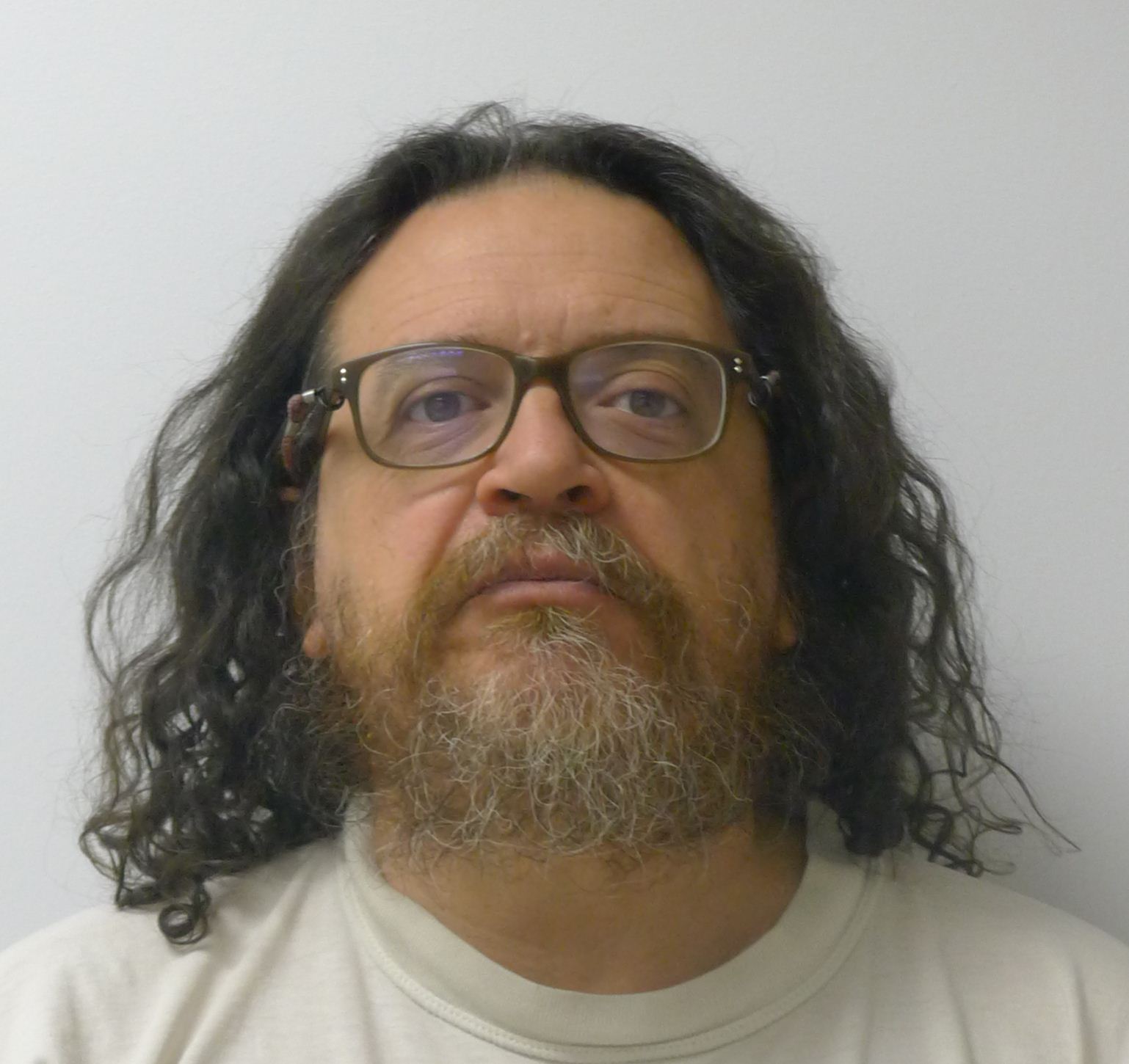
James Bremer is a Professor in the Department of Mathematics and holds a cross-appointment in the Department of Computer and Mathematical Sciences at the University of Toronto's Scarborough campus. His research focuses on developing efficient numerical algorithms for solving elliptic boundary value problems, integral equations, and special function transforms.
Professor Daniel Panario is a faculty member at Carleton University's School of Mathematics and Statistics. He holds the rank of Professor and specializes in areas such as Finite Fields, Combinatorics, and Cryptography. His research focuses on the analysis of algorithms, computational number theory, and applications in cryptography and coding theory. Education: PhD in Computer Science from the University of Toronto, postdoctoral research at the University of Waterloo, and further academic roles at institutions in Brazil and Uruguay. His expertise spans theoretical and applied mathematics, with contributions to discrete mathematics and algorithmic research. Research Interests: Finite Fields and their applications, combinatorics, cryptography, coding theory, and computational algebra. He has supervised numerous students and postdoctoral researchers, contributing to over 200 publications and holding editorial roles in top journals. Grants and Editorial Work: Editor for journals like Applicable Algebra in Engineering and Cryptography and Communications. He has organized international conferences and workshops, advancing the field of finite fields and discrete mathematics. Labs/Teams: Active member of the Ottawa-Carleton Discrete Mathematics Group, collaborating on combinatorial and algebraic research projects.
Thomas Stoll is a tenured Professor at the Faculty of Science and Technology , University of Lorraine, Nancy, France. He leads research in Analytic and Combinatorial Number Theory , focusing on Diophantine equations , digital expansions , and sum-of-digits functions . He is affiliated with the IECL (Institut Élie Cartan de Lorraine) and has coordinated ANR-FWF research projects like MuDeRa and ArithRand .
Vladimir Rokhlin is the Arthur K. Watson Professor of Computer Science at Yale University, with additional appointments in Applied & Computational Mathematics and Mathematics. His research focuses on fast deterministic and randomized algorithms for computational mathematics, numerical harmonic analysis, and numerical linear algebra. He holds a Ph.D. from Rice University and an M.S. from the University of Vilnius. Key research interests include the development of efficient algorithms for solving integral equations, prolate spheroidal wave functions, and high-accuracy numerical methods. His work has led to breakthroughs in fast multipole methods and low-rank matrix approximations. Rokhlin has been recognized with prestigious awards such as the 2001 Leroy P. Steele Prize, membership in the National Academies of Sciences and Engineering, and the 2014 William Benter Prize. His recent publications emphasize advancements in quadrature formulas, scattering problems, and spectral methods for partial differential equations. His contributions bridge theoretical mathematics and computational science, with applications in electromagnetics, signal processing, and engineering. Current efforts include optimizing algorithms for complex geometries and improving the efficiency of numerical linear algebra techniques.
Richard J. Caron is a Professor at the University of Windsor's College of Engineering, specializing in operational research and mathematical optimization. He has supervised students including Nooshin Nekoiemehr, Qiqi Zhang, and Anqi Chen. His team won the first practice prize at the national conference of the Canadian Operational Research Society. His research focuses on mathematical programming, constraint analysis, and optimization algorithms. Recent publications examine simplex algorithms, matrix inequalities, and probabilistic methods for extreme point identification. Dr. Caron's awards include the First Practice Prize from the Canadian Operational Research Society for developing cargo optimization tools for Air Canada. His work demonstrates consistent contributions to optimization theory and computational mathematics throughout his career.
Prof. Dusan M. Milosevic is a Full Professor at the Department of Mathematics within the Faculty of Electronic Engineering of the University of Niš, Serbia. He holds a PhD in Mathematics from the Faculty of Natural Sciences and Mathematics in Niš (2005), a Master's degree in Mathematics from the Faculty of Electronic Engineering (1992), and a Bachelor's degree in Computer Engineering from the same institution (1988). His academic career includes significant contributions to computational mathematics, numerical methods, and interdisciplinary applications in renewable energy and environmental modeling. Research interests span numerical analysis of polynomial zeros, fuzzy logic systems, and sustainable development strategies. He has authored/co-authored over 33 papers in impact-factor journals and multiple textbooks, including "Numerical Solution of Nonlinear Equations" and "Mathematics 4" . Current research focuses on energy projects, smart city modeling, and industrial building reuse. He participates in one national and international research projects. His work bridges theoretical mathematics with practical applications, evident in studies like spectral reflectance modeling for agriculture and adjustable models for renewable energy systems in Serbia. Academic leadership includes textbook development for engineering education and contributions to validated numerical computations.
Ross Bowden is a Lecturer in Cryptography at the School of Computer Science, University of Bristol. His research focuses on mathematical foundations of cryptography, including endomorphism, hash functions, polynomial systems, and graph theory. He is affiliated with the Bristol Doctoral College. Research interests: His work intersects computer science and mathematics, particularly in cryptographic hash functions, polynomial equation systems, and supersingular isogeny graphs. His recent publications address open problems in these domains. Publications: Active in advancing cryptographic algorithms and mathematical structures, with contributions to supersingular isogeny graphs and polynomial-based cryptographic challenges. Contact: Email ross.bowden@bristol.ac.uk or rb15152@bristol.ac.uk .
Hajime Kaneko is an Associate Professor at the Department of Mathematics, Faculty of Pure and Applied Sciences, University of Tsukuba . His research focuses on Uniform Distribution Theory , Diophantine Approximation , and Transcendental Number Theory , with a particular emphasis on the behavior of number sequences in beta expansions and geometric progressions involving algebraic numbers. Key research topics include Markoff-Lagrange Spectrum , Sturmian Type Numbers , and Digit Exchange Properties in numerical systems. He has actively participated in and organized seminars such as DARF (Diophantine Analysis and Related Fields) and the 2024 Workshop on Number Theory and Ergodic Theory at Kanazawa University. His recent publications highlight collaborations with prominent mathematicians like Shigeki Akiyama , Thomas Stoll , and Wolfgang Steiner . Notably, his work on the Markoff-Lagrange Spectrum (2024) and binary digits of algebraic numbers (2023) has advanced the understanding of digit patterns and their connections to Diophantine equations. He also contributes to the study of rotational beta expansions and irrationality exponents through symbolic dynamics and Padé approximations.
Lozko Bozhinov Milev serves as an Associate Professor at the Faculty of Mathematics and Informatics, Sofia University St. Kliment Ohridski, specializing in numerical methods and algorithms with primary focus on approximation theory and polynomial inequalities. His academic role involves theoretical research and computational analysis within mathematical frameworks. His core research interests include Numerical Analysis, Approximation Theory, and Mathematical Analysis, with specific expertise in Markov-type inequalities, extreme points in polynomial spaces, and weighted polynomial systems. Analysis of his 15 most recent publications (2006-2014) reveals a persistent concentration on theoretical and computational aspects of polynomial approximation—particularly for oscillating polynomials and exponential systems under Hermite/Laguerre weights. Key recurring themes include the monotonicity of zeros, interlacing properties of Tchebysheff systems, and numerical computation of Markov factors, demonstrating consistent methodological rigor. No scientific awards or honors were documented in the source material. Similarly, no information regarding student advisement, research grants, laboratory affiliations, or collaborative teams was provided, despite detailed publication records spanning two decades.
Lidija Z. Rančić serves as a full Professor in the Department of Mathematics at the Faculty of Electronic Engineering, University of Nis, Serbia. She has held progressively senior academic positions at this institution since 2006, culminating in her promotion to full Professor in 2016 within the Mathematics discipline. Her academic credentials include: Bachelor of Science in Mathematics (1988, Faculty of Philosophy, University of Nis) Master of Science in Mathematics (1995, Faculty of Philosophy, University of Nis) PhD in Mathematics (2005, Faculty of Natural Sciences and Mathematics, University of Nis) Rančić's research centers on advanced numerical methods for solving nonlinear equations, with particular expertise in root-finding algorithms and polynomial zero approximation. Her work emphasizes convergence properties, algorithmic efficiency, and the development of simultaneous and derivative-free methods. She investigates both theoretical foundations and practical implementations of iterative processes, contributing significantly to computational mathematics through rigorous analysis of convergence behavior and error estimation in complex systems. Her methodologies have applications across scientific computing and engineering disciplines requiring high-precision numerical solutions. Her publication record demonstrates consistent contributions to top-tier computational mathematics journals, with 16 papers in Impact Factor journals. The research trajectory shows increasing sophistication in handling nonlinear systems, evolving from basic root-finding methods toward advanced simultaneous approximation techniques with accelerated convergence properties for analytic functions and polynomials. Professor Rančić currently leads research activities within the Ministry of Science and Technological Development project "Construction and analysis of efficient algorithms for solving nonlinear equations" (2011-present), which focuses on developing novel algorithms with proven convergence guarantees for challenging nonlinear problems. While specific grant amounts aren't disclosed, this sustained government-funded research indicates significant national recognition of her expertise in computational mathematics. As a core faculty member in the Department of Mathematics, she contributes to both foundational mathematics education for engineering students and specialized advanced coursework in numerical analysis, though specific teaching assignments aren't detailed in available materials.
Јована С. Џунић is an Associate Professor in the Mathematics Department at the Faculty of Electronic Engineering, University of Niš. Appointed to this rank in 2023, she previously served as Assistant Professor (2002) and Docent (2013). Her academic foundation includes a PhD (2012) and Master's degree from the University of Niš's Faculty of Science and Mathematics. Her research focuses on Numerical Analysis and Computational Mathematics , specializing in root-finding algorithms for nonlinear equations and polynomial zero approximation. Key contributions include developing optimal multipoint iterative methods, transformations for root-solvers, and efficient inclusion techniques for polynomial zeros. Her work emphasizes computational efficiency, convergence acceleration, and numerical stability. Analysis of her publications reveals strong trends in iterative method optimization (2012-2018), with increasing focus on methods with memory and simultaneous approximation techniques. Her research bridges theoretical numerical analysis with practical computational applications, particularly in engineering contexts. She serves as a reviewer for top-tier journals including Applied Mathematics and Computation and Journal of Computational and Applied Mathematics , and as a monograph reviewer for Elsevier. She is an active member of professional societies: American Mathematical Society (AMS), Society for Industrial and Applied Mathematics (SIAM), and IEEE. Dr. Џунић led a Ministry-funded project (2018) innovating applied mathematics curricula aligned with ICT trends. She has presented at international conferences including Computational Methods in Applied Mathematics (Berlin, 2012) and the Serbian Mathematical Congress (2018).
Professor Figen Locksmith is a faculty member in the Department of Mathematics at the Faculty of Arts and Sciences, Igdir University, Turkey. She holds a doctorate from Universitaet Göttingen and has maintained active research contributions since the 1990s in complex dynamics and fractal geometry. Her educational background includes: Doctorate in Mathematical Institute, Universitaet Göttingen (1999-2002), thesis: The Dynamics of Relaxed Newton's Method on the Exponential Functions and its Fractals Degree in Faculty of Science/Department of Mathematics, Gazi University (1994-1997), thesis: Prolongation of hypersurfaces into tangent bundles Licence in Faculty of Science/Department of Mathematics, Gazi University (1985-1992), thesis: 22222 Her research centers on complex dynamical systems, particularly the geometric properties of Newton's method iterations on rational and exponential functions. Key investigations include the structure of Julia sets (including checkerboard patterns), finiteness of basin areas, and applications of iterated function systems to distribution modeling. This work bridges pure mathematics with computational analysis through rigorous theoretical frameworks. Publication trends from 2004-2014 reveal consistent focus on fractal geometry in dynamical systems, with increasing emphasis on statistical applications of iterated function systems. Her articles demonstrate methodological evolution from foundational studies of relaxed Newton's method to broader explorations of rational map dynamics and distribution estimation. No scientific awards are documented in the provided materials. Professor Locksmith served as principal investigator for the TÜBİTAK project Changes in the Movements of Exponential Transformations and Newton's Method , securing competitive research funding. While no formal advisees are listed, her conference presentations indicate active mentorship through academic collaborations. Laboratory facilities or dedicated research teams are not specified in available records.
Professor Gary McGuire is a Full Professor in the School of Mathematics and Statistics at University College Dublin (UCD), specializing in discrete mathematics, number theory, algebraic geometry, and cryptography. He holds a PhD from the California Institute of Technology and has been a central figure in advancing research in finite fields and their applications. BSc, University College Dublin MSc, University College Dublin PhD, California Institute of Technology His research focuses on algebraic structures over finite fields, including Galois theory, permutation polynomials, error-correcting codes, and quantum codes. He has made significant contributions to the understanding of supersingular curves, L-polynomials, and lattice-based cryptanalysis. His work spans theoretical advances and practical applications in cryptography and computational mathematics. The recent publications reflect a strong trend in algebraic and computational number theory, with emphasis on Galois groups of linearized polynomials, quantum code construction, and discrete logarithm algorithms. His work often involves deep connections between algebraic geometry and coding theory, particularly in the construction of MDS and quantum codes from generalized monomial-Cartesian and algebraic geometry codes. Notable scientific awards and recognitions include: Best Paper Award at CRYPTO 2013 Invited Speaker at the 12th International Conference on Finite Fields (2015) Invited Speaker at the 25th British Combinatorial Conference (2015) Invited Session Speaker at the AAAS Annual Meeting (2014) Speaker at multiple international workshops on finite fields, cryptography, and polynomials Professor McGuire actively supervises PhD students and has coordinated key modules such as Galois Theory, Cryptography, and Numbers & Functions. He has secured research grants, including one on the simulation of photo-electronic excitation in nanofilms. His most famous contribution is the proof that no 16-clue Sudoku puzzle exists, achieved through a novel hitting set enumeration algorithm. He is a principal investigator in computational and theoretical mathematics with ongoing collaborations across Europe. He is a member of research teams focused on finite field applications, cryptographic protocols, and algebraic coding theory. His lab-like collaborative environment involves work with postdocs and researchers on projects related to discrete logarithm computation, polynomial factorization, and quantum code design.
Jovana S. Dzunić is an Associate Professor in the Department of Mathematics at the Faculty of Electronics, University of Niš, Serbia. She has been actively contributing to the field of numerical analysis and computational mathematics since earning her PhD in 2012. Education: Doctorate in Mathematics, Faculty of Natural Sciences and Mathematics, University of Niš (2012) Master's and Graduate Degree in Mathematics, Faculty of Natural Sciences and Mathematics, University of Niš (2001) Her research focuses on numerical methods for solving nonlinear equations , iterative algorithms , and polynomial root-finding . She specializes in developing and analyzing multipoint methods, including those with memory and optimal efficiency. Her work often involves Hermite interpolation, matrix methods, and convergence analysis. The recent publications highlight a consistent focus on iterative root-solvers , simultaneous methods for polynomial zeros , and efficiency optimization in numerical algorithms. These works span journals in applied mathematics, computational mathematics, and numerical analysis, reflecting strong theoretical and computational rigor. Scientific Service and Recognition: Reviewer for top journals: Applied Mathematics and Computation , Journal of Computational and Applied Mathematics , Calcolo , Applicable Analysis and Discrete Mathematics , and Mathematical Reviews Reviewer for Elsevier scientific monographs Active participant in international conferences including the European Congress on Numerical Mathematics and Computational Methods in Applied Mathematics Professional Memberships: American Mathematical Society (AMS) Society for Industrial and Applied Mathematics (SIAM) IEEE Mathematical Association of America (MAA) European Mathematical Society (EMS) She led a nationally funded project in 2018 titled Innovation of a group of subjects in applied mathematics in accordance with trends in information and communication technologies , supported by the Ministry of Education, Science and Technological Development of Serbia. She has published 25 papers in journals with impact factors and contributed significantly to the advancement of numerical iterative methods. She is actively involved in academic service, research, and curriculum development, and continues to be a key contributor in her field.
Dr. Zhao Chen serves as an Associate Professor in the Department of Mathematics within the School of Arts and Sciences at New York City College of Technology, City University of New York (CUNY). He holds a Ph.D. in Mathematics from the CUNY Graduate Center (2000) and teaches a comprehensive range of courses from developmental mathematics (MAT063) to advanced topics including cryptography research projects in upper-level classes. His scholarly work centers on symbolic and numerical computations, with deep specialization in structured matrix algorithms, displacement structures, and efficient polynomial root-finding methods. Chen's research bridges theoretical mathematics and practical computational applications, consistently focusing on accelerating solutions for linear systems and matrix operations through innovative preprocessing techniques and displacement-based frameworks. Analysis of his publication history (1998-2011) reveals sustained contributions to structured matrix theory, particularly Cauchy-like and Toeplitz systems. His work demonstrates progressive refinement from foundational displacement structures to practical algorithmic implementations, predominantly published in numerical analysis journals and high-performance computing conferences. Key themes include recursive factorization methods, operator theory applications, and polynomial division approximations. Chen actively contributes to educational infrastructure through co-development of campus-wide software systems: the MMT scheduling tool (with Alexander Rozenblyum), Advisement Registrations Schedule (with Rozenblyum, Sandie Han, and Henry Africk), and Random Generating Exams software (with multiple collaborators). These projects showcase his commitment to integrating computational research with institutional service while supporting student learning through applied cryptography projects.