Matthew Green is a tenured Professor in the Department of Chemical Engineering at Arizona State University , where he has been since 2014. He serves as Director of the Center for Negative Carbon Emissions and Associate Director of the Biodesign Center for Sustainable Macromolecular Materials and Manufacturing . Director, Center for Negative Carbon Emissions Associate Director, Biodesign Center for Sustainable Macromolecular Materials and Manufacturing Research Focus : Design of ion-containing polymers for water purification , CO2 capture , and nanocomposites , with emphasis on electrostatic interactions, microstructure control, and stimuli-responsive materials. Key thrusts include membrane technology , epoxy thermosets , nanoparticle templating , and electrospun fibers . Publication Trends : Recent work spans zwitterionic polymers for anti-scaling membranes, phosphonium-based DAC systems , silica nanocomposites , and biomaterials for immunotherapy , reflecting interdisciplinary expertise in polymer chemistry , environmental engineering , and materials science . Awards & Grants : 2019 NSF CAREER Award 2018 NASA Early Career Faculty Award 2022 Sloan Foundation Grant DOE DAC Pre-Commercial Technology Prize (2023) Multiple DURIP grants Email : mdgreen8@asu.edu
Kumar Varoon Agrawal is an Associate Professor at École Polytechnique Fédérale de Lausanne (EPFL), holding the Gaznat Chair for Advanced Separations. He is affiliated with the School of Basic Sciences (SB), the Institute of Chemical Sciences and Engineering (ISIC), and the Laboratory of Advanced Separations (LAS) in Sion, Switzerland. Additionally, he contributes to the Swiss Doctoral School in Chemical and Bioengineering (SCGC) and serves as Vice President of the Confédération des Chimistes et des Génie Chimique (CCE). Research Focus: Material Chemistry & Engineering at the Ångström scale for high-performance inorganic and hybrid membranes, emphasizing energy-efficient molecular separations. Teaching: Courses include Fundamentals of separation processes , Diffusion and mass transfer , and Chemical engineering product design . Scientific Contributions: His 15 most recent publications (2025-2020) span topics like graphene pore engineering , 2D material synthesis , carbon capture , and gas separation membranes , with keywords such as Nanotechnology , Materials Science , and Molecular Transport . Subfields include Atomic-Scale Pores , Membrane Stability , and Industrial Scalability . Students and Collaborations: He advises 10 current PhD students and has mentored 9 past PhD candidates in areas like graphene membranes , ion separation , and MOF films . He is an Academic Referent for the EPFL Carbon Team and a committee member for the EDCH Doctoral Program in Chemistry and Chemical Engineering.
Dr. Robert O’Connor is an Assistant Professor at the School of Physical Sciences, Dublin City University (DCU) , specializing in interface chemistry and thin film characterization. His work bridges semiconductor physics and energy harvesting technologies , with a focus on materials like high-κ dielectrics and III-V substrates. BSc in Applied Physics (2001), DCU PhD in Semiconductor Physics (2005), DCU His research employs X-ray photoelectron spectroscopy (XPS) and atomic layer deposition (ALD) to study material interfaces in devices such as MOSFETs and photoelectrochemical systems . He leads a 4-year SFI-funded project on solar water splitting for hydrogen fuel and collaborates with Trinity College Dublin (SPOKE project) and IMEC, Belgium on area-selective deposition techniques. His lab utilizes a state-of-the-art integrated ALD-XPS tool . His scientific awards include the Marie Curie Intra-European Fellowship , Irish Research Council EMBARK Fellowship , and SFI TIDA Award . Publications span high-κ dielectrics , self-assembled monolayers , and block copolymer lithography , with recent work on graphene oxide heterostructures and recyclability in additive manufacturing . He supervises 5 postgraduate students and teaches modules like Final Year Project (PS451) and Solid State Physics I (PS204) . Collaborations include institutions such as IMEC and Trinity College Dublin , with tools like the integrated ALD-XPS system at DCU.
Dr. G.K. Knopf is a Professor in the Department of Mechanical & Materials Engineering at Western University, Canada. He holds a Ph.D. (1991), M.Sc. (1987), and B.E. (1984) from the University of Saskatchewan. His work bridges product design, advanced manufacturing, and bio-inspired technologies. Research Focus: Dr. Knopf’s research spans 3D shape reconstruction , laser microfabrication , micro-optics , and bioelectronic imaging arrays . Recent projects emphasize light-driven actuators , flexible electronics , and graphene-based inks for printing circuits on unconventional substrates like silk and paper. Publications: Over 150 peer-reviewed works, including two edited CRC Press volumes ( Smart Biosensor Technology , Optical Nano and Micro Actuator Technology ). Key contributions involve non-lithographic fabrication , bacteriorhodopsin photodetectors , and self-organizing feature maps for data visualization. Awards/Patents: Co-inventor of two U.S. patents (6,542,249 for 3D surface measurement; 7,573,024 for bioelectronic imaging arrays). Teaching: Leads graduate courses in Medical Device Design and Optomechatronic Systems , as well as undergraduate Mechatronics and Medical Device Development courses.
Anna Salvati is an Associate Professor specializing in nanomedicine and drug delivery systems. Her research focuses on nanoparticle-cell interactions, biomolecular corona formation, and the physicochemical properties governing nanomaterial behavior in biological environments. Key research themes include cellular uptake mechanisms, toxicity of nanomaterials, and nanoparticle targeting strategies. Recent publications highlight her work on nanoparticle stability, membrane interactions, and environmental impacts of microplastics. Her studies integrate multiomics approaches, advanced imaging, and interlaboratory validation to address challenges in nanomedicine design and safety testing. Current projects explore the role of high-density lipoproteins in nanoparticle functionality and the modulation of drug release kinetics through material engineering.
Dr. Alamgir Karim is the Dow Chair and Welch Foundation Professor at the University of Houston, leading the International Polymer & Soft Matter Center (IPSMC) and the Doctoral Materials Program. His research focuses on polymer nanotechnology, thin films, and interfaces for energy, sustainability, and health applications. He holds a Ph.D. in Physics from Northwestern University and a B.S. from St. Stephen's College, Delhi. Key contributions include polymer nanocomposites, block copolymer thin films, and graphene oxide membranes for desalination. He is a Fellow of the American Physical Society and AAAS, and a Keck Foundation Award recipient. Research interests span polymer nanotechnology, dielectric materials, and sustainable nanocomposites. Recent work explores MXene-based biomedical composites, CO₂ capture membranes, and high-energy-density dielectrics. His lab develops functional materials for energy storage, environmental remediation, and biomedicine. Education: Ph.D., Physics (Northwestern University, 1991); B.S., Physics (St. Stephen's College, 1985) Leadership: Director of IPSMC; former Goodyear Chair Professor at University of Akron Awards: AAAS Fellowship, APS Fellowship, Keck Foundation Award Advances in block copolymer self-assembly and nanocomposite design have enabled scalable filtration membranes and high-performance dielectrics. His group collaborates on protocell models and sustainable materials processing.
Orlando Rojas is a Professor at the University of British Columbia (UBC), holding joint appointments in the Departments of Chemical and Biological Engineering, Chemistry, and Wood Science. He leads the Biobased Colloids and Materials (BiCMat) research group and directs the Bioproducts Institute . His research focuses on sustainable development through renewable materials, including nanopolysaccharides, bacterial nanocellulose, lignins, and multiphase systems. Rojas has advised over 50 PhD students and 40+ MS students, with a h-index of 90 (Google Scholar). Key Roles/Positions : Canada Excellence Research Chair in Renewable Materials Adjunct Professor at NC State University (USA) and Dalian Polytechnic University (China) Director of FinnCERES Flagship (Finland) Research Interests : Development of bio-based materials for energy, healthcare, and environmental applications. Key areas include nanocellulose functionalization, lignin valorization, and bioinspired materials. His work integrates colloidal science, multiphase systems, and sustainable manufacturing. Grants & Awards : ERC Advanced Grant and Horizon H2020 funding 2013 ACS Fellow, 2015 Tappi Nanotechnology Award First Latin-American recipient of the Anselme Payen Award (ACS) Labs & Collaborations : Active partnerships with Aalto University (Finland) and institutions globally. Leads the BiCMat group spanning UBC and FinnCERES, focusing on bio-based materials and sustainable technologies.
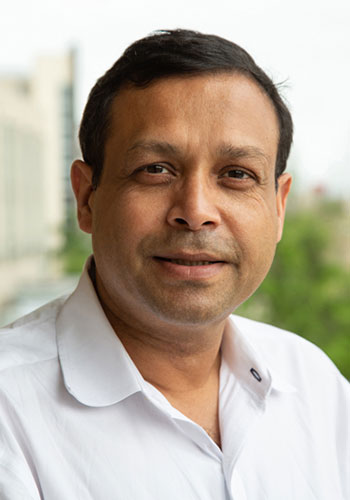
Dr. Rajendra Kurapati is an Assistant Professor at the School of Chemistry , Indian Institute of Science Education and Research Thiruvananthapuram (IISER TVM) . His research focuses on biodegradable 2D materials for biomedical applications, addressing nanomaterial biopersistence issues through enzymatic degradation studies. He leads the Biomaterials Lab and collaborates with institutions across France, Ireland, Portugal, and the UK. Born in Andhra Pradesh, India B.Sc. & M.Sc. in Chemistry (Acharya Nagarjuna University, University of Hyderabad) Ph.D. in Materials Engineering (Indian Institute of Science, 2014) Postdoc: CNRS Strasbourg (2014-2017), CÚRAM Galway (2018-2020) His research explores 2D material-biopolymer hybrids for drug/gene delivery , nanotheranostics , and antimicrobial coatings . Key article trends include: Graphene/MoS2 biodegradation by human enzymes Antibacterial coatings for medical implants Microplastics' environmental impact Lipid nanoparticles for mRNA vaccines ZnO quantum dots for bioimaging Polymer multilayer drug delivery systems Major scientific awards : DBT Ramalingaswami Fellowship (INR 40 lakhs over 5 years) SERB Start-up Grant (32 lakhs over 2 years) SERB Special Grant (45 lakhs over 3 years) DBT Mission Innovation Grant (18 lakhs over 6 months) His academic contributions span 15+ high-impact publications in journals like Advanced Materials , Nanoscale , and Chemical Communications , covering topics from graphene biodegradation to antimicrobial coatings and bioimaging . 10+ alumni students have graduated from his lab, with placements at institutions including University of Strasbourg and Dublin City University.
Douglas A. Loy is a full Professor at the University of Arizona with joint appointments in the Department of Materials Science and Engineering and the Department of Chemistry and Biochemistry, and additional affiliations with the BIO5 Institute and the School of Mining and Mineral Resources. A fifth-generation Arizonan, he earned his BS in Chemistry from the University of Arizona (1983), MS in Chemistry from Northern Arizona University (1986), and PhD in Organic Chemistry from the University of California, Irvine (1991). Before returning to academia he spent 14 years at Sandia National Laboratories and then led the Polymer and Nanomaterials Synthesis Team at Los Alamos National Laboratory. Research Interests Sol-gel & polysilsesquioxane chemistry: fundamental studies and unconventional routes to hybrid organic-inorganic materials. Tetrazine polymer chemistry: synthesis, click modification, and application in antioxidant foams and UV-stable sunscreens. 3-D printing of glasses & ceramics: additive manufacturing of micro-optics, multi-refractive-index glass objects, and transparent devices using silica and silsesquioxane resins. Energy & biomaterials: new materials for energy storage, polymer-ceramic bone scaffolds, and smart packaging films. Across more than 70 recent publications (2012-2025), the dominant themes are advanced additive manufacturing of specialty glasses and ceramics, design of photochemically stable sunscreen systems, and development of multifunctional polymer-ceramic composites for biomedical and energy applications. The work integrates molecular-level organic synthesis with macro-scale materials processing, enabling applications ranging from holographic micro-optics to lunar in-situ resource utilization. Scientific Awards & Recognition While specific honors are not listed in the provided text, Loy is described as a “distinguished member of technical staff” at Sandia National Laboratories, indicating prior recognition for his research achievements. Funding & Collaborative Teams At the University of Arizona his group pursues federally and industrially funded projects spanning NSF, DOE, and NASA programs, particularly in advanced manufacturing and energy materials. He collaborates closely with the BIO5 Institute for biomedical applications and with the School of Mining and Mineral Resources for resource-based materials research. No explicit student lists are included in the text. Laboratory & Facilities Loy’s laboratories are located in Mines and Metallurgy 338B at the University of Arizona, equipped for sol-gel synthesis, polymer processing, and state-of-the-art 3-D printing instrumentation including multi-photon lithography systems for micro-optics fabrication.
Prof. Dr. rer. nat. Lothar Elling is a University Professor and director at the Helmholtz Institute for Biomedical Engineering, RWTH Aachen University, Germany. His research focuses on biomaterials, glycoengineering, and enzymatic synthesis of carbohydrates and glycoconjugates. Institution: RWTH Aachen University Research Unit: Helmholtz Institute for Biomedical Engineering Academic Rank: Full Professor Prof. Elling's research interests include: Glycoengineering of biomaterials Enzymatic synthesis of glycans Glycosyltransferase immobilization Glycan-protein interactions Biocatalytic cascade reactions Biomedical applications of glycomaterials His recent publications demonstrate strong expertise in: - Automated enzymatic glycan synthesis - Multi-enzyme cascade systems for nucleotide sugar production - Glycosyltransferase engineering - Galectin-targeted glycomaterials - Microgel-based biosensors
Georg Fantner is an Associate Professor at the Swiss Federal Institute of Technology Lausanne (EPFL) with dual appointments in the School of Engineering (STI) within the Institute of Bioengineering and the School of Life Sciences (SV) for teaching. He directs the Laboratory for Bio- and Nano-Instrumentation (LBNI) and holds leadership roles including President of the Open Science Strategic Committee and the Association des Professeurs de l'EPFL. Research Focus: Bioinstrumentation, Nanotechnology, Scanning Probe Microscopy, and Metrology Teaching: Structural Mechanics for Life Sciences, Metrology, and Metrology Practicals His research pioneers advanced instrumentation for nanoscale characterization, emphasizing data-driven approaches to enhance microscopy techniques. Recent work integrates deep learning with scanning probe microscopy for real-time biological imaging and develops novel MEMS devices for fluid-compatible nanoscale manipulation. Key innovations include hermetically sealed sample chambers for pathogen studies and deterministic nanotopography engineering. Professor Fantner actively mentors 7 current PhD students and has supervised 14 graduates. His laboratory fosters interdisciplinary collaboration across engineering, physics, and life sciences to advance nanoscale measurement technologies and instrumentation development.
Virginia Davis is the Dr. Daniel F. and Josephine Breeden Professor in the Department of Chemical Engineering at Auburn University's College of Engineering. She holds a Ph.D. in Chemical and Biomolecular Engineering from Rice University, and M.S. and B.S. degrees in Chemical Engineering from Tulane University. Research Focus: Self-assembly of nanomaterials, rheology, lyotropic liquid crystals, additive manufacturing, polymers, nanocomposites, and biosensors Key Projects: USDA-funded agricultural outreach, NSF grant for MXene dispersion studies, Alabama STEM Council member Her recent publications explore cellulose nanocrystals, MXene 3D printing, and sustainable polymer recycling. Davis has received multiple honors including the Breeden Professorship, AIChE Fellowship, and Auburn University Faculty Awards for research and mentorship. Research Trends: Dominated by bio-based nanomaterials (cellulose nanocrystals, MXenes), with applications in additive manufacturing, environmental remediation (PFAS adsorption), biosensors (carbofuran detection, cancer biomarkers), and agricultural delivery systems. Scientific Awards Auburn University Faculty Awards (2023, 2025) AIChE Fellow (2023) Dr. Daniel F. and Josephine Breeden Professorship Davis leads outreach initiatives like the Tomorrow’s Community Innovators camp and collaborates with interdisciplinary teams on plastic recycling innovations. Her work emphasizes both fundamental material science and practical applications addressing environmental and agricultural challenges.
Prof. Paul V. Braun is the Grainger Distinguished Chair in Engineering and Professor of Materials Science and Engineering, Chemistry, Mechanical Sciences and Engineering, Chemical and Biomolecular Engineering at the University of Illinois Urbana-Champaign. He is also a part-time faculty member at the Beckman Institute. His research focuses on synthesizing materials with unique optical, electrochemical, thermal, and mechanical properties through nano/mesoscale architectures. Education: B.S. (Cornell University), Ph.D. (Materials Science and Engineering, University of Illinois). Postdoctoral work at Bell Labs (1999–present at UIUC). Research Interests : Electrochemical energy storage (batteries) Polymers and self-assembly Photonics and advanced optics Self-healing materials Control of heat and matter transport Recent articles explore battery recycling, hydrogel thermal conductivity, additive manufacturing for heat transfer, and silicon anode analysis. His work spans materials synthesis, characterization, and applications in energy and photonics. Awards : AAAS Fellow (2020) NAI Fellow (2022) Grainger Award for Translational Research (2023-24) MRS Fellow (2018) Advising & Grants : Braun has co-authored ~350 publications, holds multiple patents, and co-founded four companies. His labs include the Materials Research Laboratory and Beckman Institute.
Prof. Peter Müller-Buschbaum is a Full Professor and Head of the Chair of Functional Materials at the Physics Department of the Technical University of Munich (TUM). He has held this position since April 2018 and also served as Scientific Director of the Research Neutron Source Heinz Maier-Leibnitz (FRM-II) and the Heinz Maier-Leibnitz Center (MLZ) from 2018 to 2023. His leadership extends to multiple roles including Core Member of the Integrated Research Institute Munich Institute of Integrated Materials, Energy and Process Engineering (MEP) since 2021, and Head of the Renewable Energies Network (NRG) at MEP. Full Professor (W3), Head of the Chair of Functional Materials at TUM School of Natural Sciences (since 04/2018) Deputy Editor of "ACS Applied Materials & Interfaces" (since 01/2024) Supervising Professor "Electronics Laboratory" at TUM School of Natural Sciences (since 11/2023) Member of TUM Sustainability Board (since 05/2023) Core Member of MEP Institute (since 10/2021) Head of Renewable Energies Network at MEP (since 10/2021) Prof. Müller-Buschbaum's research spans energy materials for photovoltaics and battery technologies, smart responsive materials that adapt to environmental stimuli, and nanocomposite materials with tailored properties. His group employs advanced scattering techniques to characterize materials at the nanoscale, providing insights into structure-property relationships critical for developing next-generation energy technologies. His extensive publication record demonstrates particular expertise in perovskite solar cells, lithium-ion battery technologies, and polymer-based functional materials, with recent work focusing on improving device stability and efficiency while understanding fundamental degradation mechanisms. His publications reveal a strong emphasis on energy conversion and storage technologies, with particular attention to interfacial engineering in both photovoltaic and battery systems. The research shows sophisticated integration of materials synthesis, advanced characterization, and device engineering to address critical challenges in renewable energy technologies. His work bridges fundamental science with practical applications through collaborations with major international research facilities. Scientific Service and Recognition Member of the Council of the Cluster of Excellence "ORIGINS" (since 01/2019) Spokesperson of the Chemical Physics and Polymer Physics Association of DPG (03/2021-10/2022) Member of the European Spallation Source Scientific Advisory Panel (since 03/2011) German representative at the European Polymer Federation for polymer physics (since 03/2011) Chairman of the Keylab "TUM.solar" in the Bavarian research project "Solar Technologies Go Hybrid" (since 03/2012) Prof. Müller-Buschbaum actively contributes to academic community through editorial work, having served as Associate Editor (2012-2022), Executive Editor (2023), and currently Deputy Editor (2024-present) of "ACS Applied Materials & Interfaces". He maintains strong international collaborations with synchrotron and neutron facilities worldwide, reflecting his expertise in advanced materials characterization techniques essential for cutting-edge materials research.
Dr. Joshua Brinkerhoff is an Associate Professor in Mechanical Engineering at the University of British Columbia Okanagan Campus. He serves as the Associate Director for Research & Industrial Partnerships in the School of Engineering and leads the UBC-Okanagan Computational Fluid Dynamics Laboratory. His research spans computational fluid dynamics, turbomachinery, multiphase flows, hydrogen safety, wind energy, and biofluid mechanics. He teaches courses in mechanics of materials, alternative energy systems, turbulence, computational fluid dynamics, and aircraft design. PhD, Aerospace Engineering (Carleton University, Ottawa, ON) BEng, Aerospace Engineering (Carleton University) Dr. Brinkerhoff’s research interests include: Computational Fluid Dynamics (CFD) for laminar-to-turbulent transition and instability analysis Wind energy systems and turbine aerodynamics Hydrogen storage and safety protocols for transportation Biofluid mechanics for respiratory diseases and aneurysm modeling Multiphase flows in industrial and environmental contexts His publications focus on CFD simulations for: Aerosol dispersion and mitigation in indoor environments Wind farm interactions and atmospheric gravity waves Cavitation and phase transitions in cryogenic and LNG systems Heat transfer optimization in industrial and thermal systems Instability dynamics in buoyancy-driven and swept flows Turbulent structures in fluidized beds and reactors Dr. Brinkerhoff has no listed scientific awards in the provided data but has extensive contributions to renewable energy, hydrogen safety, and medical fluid dynamics. His laboratory develops open-source tools like TOSCA for large-eddy simulations and investigates practical applications in urban air quality, dental aerosol control, and turbine wake modeling.