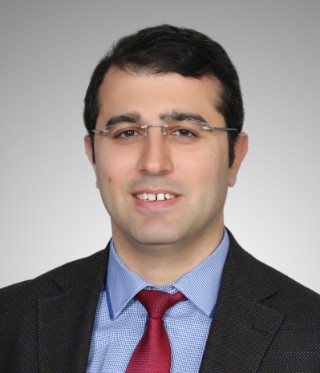
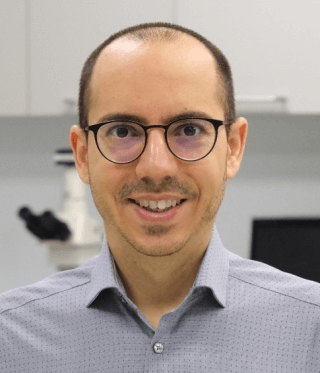
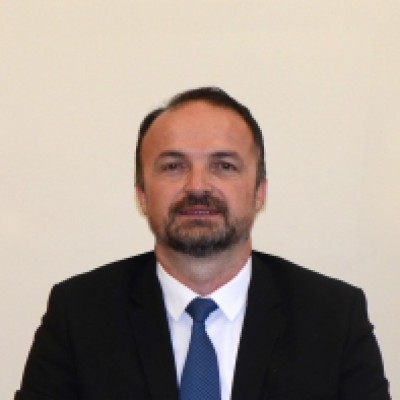
Alper Gürarslan is an Associate Professor in the Department of Textile Engineering at Istanbul Technical University. His research focuses on sustainable and functional textiles, biomaterials, nanomaterials, and biomedical applications. He leads several projects on electronic textiles, wound dressings, and eco-friendly materials. Key collaborations involve combining natural fibers with advanced materials. University: Istanbul Technical University Department: Department of Textile Engineering Research interests include nanowire-coated alginate films, poplar fiber composites, and smart textiles for wearable electronics. He has published extensively on topics like thermal insulation properties of nonwovens and antibacterial material integration. Notable projects include 'Regenerated Cotton for Electronic Textiles' (EU-funded) and 'Productive Catalytic Living Materials' (TÜBİTAK). He has received awards for contributions to flexible electronics and sustainable textile materials. Awards: Flexible and Wearable Electronics (2018), Smart Textiles from Sustainable Materials (2021) Current projects span biobased membranes, high-efficiency filtration systems, and medical textile applications. His work emphasizes sustainability and interdisciplinary innovation.
Umut Aydemir is an Associate Professor at the Department of Chemistry, Koç University , where he also serves as Director of KUBAM (Koç University Boron Application and Research Center) . His research focuses on Boron-Based High-Tech Materials, 2D Materials, Electrocatalysis, Thermoelectric Energy Harvesting , and Hydrogen Storage . PhD in Chemistry (2012), Dresden University of Technology MSc in Materials Science and Engineering (2006), Koç University BSc in Chemistry and Physics (2004), Koç University Umut’s work addresses structure-property relationships in advanced materials, with a particular emphasis on boron-containing compounds , MXenes , and thermoelectric systems . His recent publications highlight innovations in electrocatalytic water splitting , hydrogen storage materials , and sustainable coating technologies . His research trends include: Development of metal diborides for water splitting Engineering MXene/polymer composites for corrosion resistance Novel approaches to thermoelectric materials like MgAgSb and Zintl phases Designing hydrogenated borophene for environmental applications Awarded the 2024 Koç University College of Science Outstanding Faculty Award and 2019 TÜBA Young Scientist Award , Umut leads high-impact projects in materials science. He advises graduate students in Nanocatalysis and Advanced Material Synthesis and contributes to interdisciplinary initiatives at KUBAM.
Mine Uysal is a Researcher at Yıldız Technical University, Faculty of Mechanical Engineering, Department of Mechanical Engineering. Her academic journey includes a BSc (2005), MSc (2010), and PhD (2015) in Mechanical Engineering from Pamukkale University and Yıldız Technical University, respectively. She began postdoctoral research at the University of Kentucky (College of Engineering) in 2017. PhD, Mechanical Engineering (2015, Yıldız Technical University) MSc, Mechanical Engineering (2010, Pamukkale University) BSc, Mechanical Engineering (2005, Pamukkale University) Her research focuses on advanced materials behaviors, including functionally graded materials, polymers, adhesively bonded joints, and finite element modeling for engineering systems. Key areas include composite structures, thermal/mechanical loading effects, and sustainable manufacturing techniques like nanofluid-assisted machining. Scientific contributions include 15 recent articles spanning topics such as delamination analysis in bonded beams, sustainable machining optimization, buckling behavior of graded polymers, and fracture mechanics in composite materials. Her work integrates finite element methods with experimental validation for adhesive joints and sandwich structures. Collaborative projects include research funded by The Scientific and Technological Research Council of Turkey (TUBITAK) and international postdoctoral work at the University of Kentucky.
Prof. Dr. Saim Özkar is a distinguished Professor in the Department of Chemistry at Middle East Technical University (METU), Ankara, Turkey. He earned his BS (1972) and MSc (1972) from the Technical University of Istanbul and his PhD (1976) from the Technical University of Munich, Germany. His career includes roles as Assistant Professor (1979–1982), Associate Professor (1982–1988), and full Professor (1988–present) at METU, with visiting positions at the University of Toronto and Colorado State University. His research focuses on homogeneous and heterogeneous catalysis , transition metal nanoparticles , hydrogen storage materials , and organometallic chemistry . Key areas include catalytic hydrogen release from solid-state storage systems and nanoparticle synthesis for sustainable energy solutions. Özkar has published extensively on nanocatalysts for hydrogen generation, with recent work emphasizing ruthenium, rhodium, and nickel nanoparticles. His articles consistently explore catalytic efficiency, stability, and applications in green energy. Awards & Grants: Science Prize, Scientific and Technical Research Council of Turkey (1996) Permanent Member, Turkish Academy of Sciences (1996) Fulbright Scholarship (2000), Volkswagen Foundation Grants (1982–1984, 1992–1994), NATO Research Grant (1981–1983) He has mentored students including Prof. Dr. Yalçın Tonbul and Dr. Joydev Manna. His lab specializes in advanced nanocatalyst design and collaborates with international institutions like Colorado State University.
Dr. Yusuf AYAN is a Lecturer in the Department of Mechatronics Engineering at Karabük University's Faculty of Technology, Turkey, since 2022. He holds a PhD (2022) and Master's degree (2017) in Manufacturing Engineering from Karabük University, alongside a BSc (2012) in Mechanical Engineering from Kocaeli University. Education: PhD, Manufacturing Engineering, Karabük University (2022) MSc, Manufacturing Engineering, Karabük University (2017) BSc, Mechanical Engineering, Kocaeli University (2012) His research focuses on Welding Technologies , Metallic Materials , and Additive Manufacturing , with over 103 citations and an h-index of 5. Notable projects include TÜBA/TÜBİTAK-funded research on wire arc additive manufacturing (2023-2025) and functionally graded material development (2020-2024). His publications span journals like Materials Chemistry and Physics , Journal of Materials Engineering and Performance , and Materials Today Communications , emphasizing WAAM process optimization, fatigue properties, and multi-material fabrication. Collaborators include Nizamettin Kahraman (24 joint works, 2018-2024) and researchers such as Kenan Kaan Yetil and Ercan Çağlar.
A. Levent Demirel is a Professor in the Faculty of Chemistry at Koç University, Istanbul, with his office located in SCI 211. His research focuses on interfacial phenomena and nanomaterials, particularly in functional coatings and self-assembly systems, and he can be contacted via ldemirel@ku.edu.tr. His academic credentials include: PhD in Physics from Illinois University (1996) Master's in Physics from Illinois University (1991) B.Sc. in Electrical Engineering and Physics (Double Major) from Boğaziçi University (1989) Prof. Demirel's work centers on structure-property relationships in nanostructured materials, with emphasis on solid/liquid interfaces and surface chemistry. His investigations into polymer physical chemistry and interfacial phenomena drive innovations in functional coatings through self-assembly techniques, contributing to advanced materials science with practical applications in surface engineering and nanotechnology. His significant contributions have been recognized through prestigious awards: Werner von Siemens Excellence Award (2003) Distinguished Young Scholar Award from the Turkish Academy of Sciences (2001) TÜBA Outstanding Young Scientists Award (1999) While specific details about his graduate students and research grants are not provided in the source material, his leadership in chemistry research is evident through his sustained focus on interfacial science. The available information does not indicate involvement with specific laboratories or research teams beyond his core departmental affiliation.
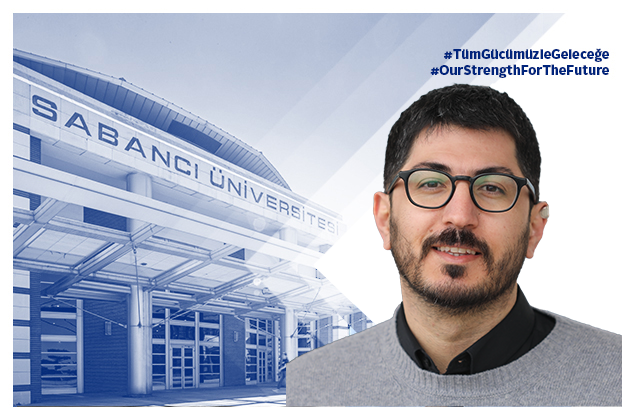
Dr. Morteza Ghorbani is a researcher and faculty member at Sabancı University's Faculty of Engineering and Natural Sciences (FENS), specializing in fluid mechanics and environmental engineering. He leads the AquaCav project, a collaborative effort with Oxford Brookes University, focused on developing sustainable water treatment solutions using hydrodynamic and acoustic cavitation. His research addresses global challenges such as PFAS pollution and wastewater management, with applications in biomedical devices and energy-efficient technologies. Key collaborations include projects funded by the International Science Partnership Fund (ISPF), leveraging his expertise in microfluidic systems and cavitation dynamics. Dr. Ghorbani's work combines experimental and numerical methods to optimize cavitation-based processes for environmental and biomedical applications. His contributions span from fundamental fluid dynamics studies to applied technologies like flexible cystoscopes and clot-on-a-chip platforms. Scientific achievements include the ISPF Research Collaboration Grant (2024) and advancements in PFAS removal, graphene exfoliation, and microalgae cultivation. His research group at Sabancı University explores interdisciplinary solutions at the intersection of engineering, nanotechnology, and sustainability.
Dr. Filiz Kara is a Lecturer in the Department of Industrial Engineering at Başkent University, specializing in surface chemistry, nanotechnology, and polymer science. Her research focuses on antibacterial material development, polymer surface modification, and biomedical applications of functionalized polymers. Key research trends include: Green synthesis of silver nanoparticles for antibacterial coatings Surface modification of polyurethane films with chitosan and heparin Development of biodegradable polyurethanes for medical applications Creation of polyelectrolyte scaffolds for wound dressings
Prof. Dr. Fatma Arslan is a Professor in the Department of Mineral Processing Engineering at Istanbul Technical University (ITU). She holds a PhD from Columbia University. Her research focuses on metallic minerals, industrial raw materials, and chemical-biological recovery techniques. She has held significant administrative roles, including Head of Department (2000–present), Dean (2012–2016), and Director of Research and Application Center (2013–2017). Her work emphasizes sustainable mineral processing, with contributions to flotation, leaching, and recycling of metals from secondary sources. She has authored over 35 publications and led projects on metal recovery from electronic waste and copper refining slags. Key research areas include hydrometallurgical processes, ion flotation, and environmental remediation. Prof. Arslan has advised numerous students and collaborates internationally on mineral processing innovations. Education: PhD in Metallurgical Engineering from Columbia University (1987–1991); License in Metallurgical and Materials Engineering from ITU (1977–1982). Research Interests: Flotation, leaching, cyanidation, metal recovery from waste, and sustainable mineral processing. Her recent work explores HPGR preprocessing for gold ore cyanidation and ion flotation for metal recovery. She has pioneered methods for recycling metals from printed circuit boards and copper slags. Prof. Arslan also contributes to UN Sustainable Development Goals related to resource efficiency and environmental protection.
Dr. Nebahat Aral is a Lecturer in the Department of Materials Science and Nanotechnology Engineering at Yeditepe University's Faculty of Engineering. Her research focuses on Textile Science and Engineering, Nanotechnology, and Radiation Shielding Materials. She has contributed to advancements in coated fabrics for X-ray protection, nanofiber development, and sustainable composites. Education: PhD (2016) in Textile Engineering, Istanbul Technical University - Thesis: Design of an Alternative Textile Material to Lead Aprons Master's (2009) in Textile Engineering, Istanbul Technical University - Thesis: Investigation of Performance Properties of Composites Made from Textile Waste BSc (2006) in Textile Engineering, Uludağ University Research Trends: Recent publications highlight her work on essential oil-infused coaxial nanofibers, biodegradable food packaging films, and ionizing radiation protection using bismuth oxide and pomegranate peel powder. Her studies bridge Textile Engineering with Nanotechnology and Environmental Sustainability. Grants and Projects: She has secured funding through TÜBİTAK projects (1004, 3501, 2219) and institutional grants, focusing on radiation shielding, biodegradable composites, and medical textiles. Leadership: Dr. Aral has served as Deputy Head of Department at Yeditepe University and Program Coordinator at Istanbul Kavram Vocational School and Istanbul Gelisim University. Patents: Co-inventor of a patent for X-ray shielding textile materials with nano-powder with Istanbul Technical University.
Ali Kılıç is an Associate Professor at the Department of Textile Engineering, Istanbul Technical University. His research focuses on nanofiber materials, air filtration technologies, and composite materials. He leads multiple projects on high-performance air filters, wound dressings, and sustainable materials. Key research areas include solution-blown nanofibers, biodegradable composites, and electrostatic filtration mechanisms. Education: Unspecified in available texts. Research Interests: Nanofiber fabrication, polymer composites, biomaterials, and sustainable filtration systems. Recent work emphasizes enhancing filtration efficiency through layered nanofiber structures and developing eco-friendly materials. His team has produced innovative solutions for aerosol filtration, biomedical scaffolds, and energy storage applications. Projects (Selected): Cellofil: Cellulose-based air filters (TUBITAK-funded). Bionanofiber Gun for wound dressings (TUSEB-funded). Optimization of nanofiber wound dressings (BAP-funded). Awards: Received prizes including ITU Publication Incentive (2023), Newton Katip Çelebi Fund (2015), and 3rd Furniture R&D Project Competition (2015). Lab/Labs: Active in nanofiber production and characterization labs at ITU, focusing on textiles and material innovation.
Sermet DEMİR is an Assistant Professor at the Faculty of Engineering , Department of Mechanical Engineering , Doğuş University. His work focuses on additive manufacturing, orthotic device design, and mechanical property optimization of composite materials. He teaches courses such as Experimental Engineering, Manufacturing Technology, and Computer-Aided Design. Education : BSc and MSc in Mechanical Engineering from Marmara University; PhD in Mechanical Engineering from Marmara University (2018). Research Interests center on biomedical devices, 3D printing, and structural analysis. His publications often employ the Taguchi method, Response Surface Methodology (RSM), and Quality Function Deployment (QFD) for design optimization. Recent works explore triply periodic minimal surface (TPMS) metamaterials, war bow mechanics, and adhesive joint performance. Scientific Awards are not explicitly mentioned in the text. His projects are sponsored by Doğuş University Scientific Research Projects Coordination Unit (grants 2021–22-D1-B02).
Hüsnü Dal is a Professor at Middle East Technical University (METU) in Ankara, Turkey, specializing in computational mechanics of materials. His research bridges engineering and biomedical applications through advanced computational modeling techniques. Education: Bachelor's Degree, Middle East Technical University, 2001 Master's Degree, University of Stuttgart, 2005 PhD, Dresden University of Technology, 2011 Research Focus: Prof. Dal's work centers on computational micromechanics, multiscale and multifield problems, and materials theory. He investigates fracture in multiphysics media with applications in lithium-ion batteries and tissue mechanics, developing novel constitutive models for complex material behaviors under extreme conditions. His research integrates thermomechanical coupling, viscoplasticity, and data-driven approaches to solve engineering challenges in both synthetic polymers and biological systems. Publication Trends: Recent publications (2023-2025) reveal a dominant focus on data-driven constitutive modeling and phase-field fracture methods. His work spans rubber mechanics, polymeric foams, biological tissues, and battery materials, characterized by strong interdisciplinary connections between materials science, biomechanics, and computational engineering. Key themes include anisotropic hyperelasticity, thermo-viscoplastic fracture, and spatial property variations in additively manufactured materials.
Sezer Özerinç is an Associate Professor at the Department of Materials Science and Engineering at Middle East Technical University (METU) in Ankara, Turkey. His research focuses on additive manufacturing, advanced materials, and nanomechanical characterization, with expertise in polymer composites, nanostructured metals, and wear-resistant coatings. B.Sc., METU, 2008 M.Sc., METU, 2010 Ph.D., University of Illinois at Urbana-Champaign, 2015 His work integrates cutting-edge techniques such as 3D printing for novel polymers and high-entropy alloys, emphasizing practical applications in materials science. His research interests span across nanotechnology, materials processing, and mechanical characterization, contributing to advancements in both academic and industrial sectors.
Prof. Dr. Hasan Göçmez is a Professor in the Department of Materials Science and Engineering at Dumlupinar University's Faculty of Engineering. With over two decades of academic experience, he has established himself as a leading researcher in ceramic materials and nanotechnology. His career spans multiple prestigious institutions including Rutgers University and Stevens Institute of Technology, where he served as a Research Assistant and Post-Doc respectively before joining Dumlupinar University in 2003. Dr. Göçmez earned his Bachelor's degree in Metallurgical and Materials Engineering from Middle East Technical University (1989-1994). His academic journey progressed from Research Assistant (1995-2002) to Assistant Professor (2003-2006), Associate Professor (2006-2011), and finally to Professor (2011-present) at Dumlupinar University. He has also held significant administrative roles including Institute Director (2012-2018), Deputy Institute Director (2009-2012), and Deputy Head of Department (2005-2011). Dr. Göçmez's research interests span multiple areas of materials science with a particular focus on advanced ceramics and nanomaterials. His work encompasses: Ceramic Materials: Zirconia-based ceramics, boron compounds, and perovskite structures Energy Applications: Battery technologies, supercapacitors, and solar cell materials Sustainable Materials: Waste recycling in composite production and eco-friendly manufacturing processes Nanostructured Materials: Nanopowder synthesis, nanocomposites, and surface engineering Advanced Processing Techniques: Spark plasma sintering, hydrothermal synthesis, and citrate gel methods His extensive publication record spanning over two decades demonstrates a consistent focus on materials characterization and development. Dr. Göçmez has made significant contributions to the understanding of zirconia ceramics, perovskite materials for energy applications, and sustainable composite manufacturing. His work bridges fundamental materials science with practical industrial applications, particularly in the automotive and energy sectors. Dr. Göçmez has received several notable awards including the Micro Enterprise Productivity Project Award from the Ministry of Science, Industry and Technology (2016), a JSPS fellowship (2006), and the YLS scholarship from the Higher Education Board (1995). As an active researcher, Dr. Göçmez has led numerous projects funded by various institutions, focusing on advanced materials development for energy storage, structural applications, and sustainable manufacturing. His editorial work for the Journal of the Ceramic Society of Japan demonstrates his standing in the international ceramics community.