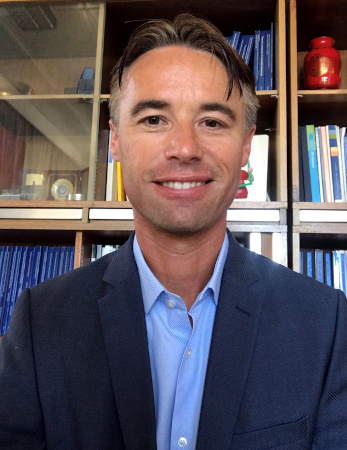
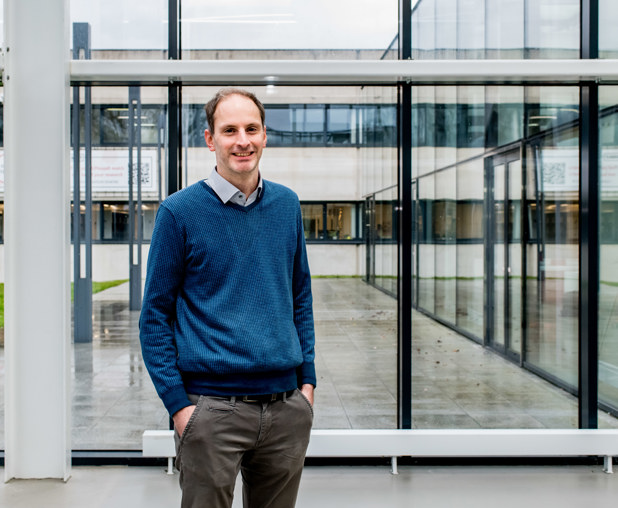
Zhanwei Wang is an Unpaid employee at the Department of Applied Mechanics and the Federated labs AI and Robotics at Vrije Universiteit Brussel. His research focuses on soft robotics, self-healing materials, fluid dynamics, and vacuum technology. He holds a PhD in Mechanical Engineering from VUB (2024), focusing on encoding physical intelligence into soft robotics via smart materials and continuum mechanics. Prior degrees include a Master's in Chemical Process Equipment (Northeastern University, China, 2020) and a Bachelor's in Process Equipment and Control Engineering (Northeastern University, China, 2017). His work emphasizes interdisciplinary innovation in robotics, sustainability, and material science. Key Research Areas: Self-healing robots, 3D printing for robotics, fluid dynamics in soft systems. Recent Collaborations: Peer reviews for Sensors Journal, IEEE Robotics & Automation Letters, and the 2025 IEEE/RSJ IROS conference. His publications explore adaptive robotic systems, sensor integration, and sustainable material solutions. He participated in the IMEC ITF World 2024 conference and contributed to media discussions on self-locking suction cups for robots.
Peter Van Puyvelde is a Full Professor at KU Leuven's Faculty of Engineering Sciences, where he leads research at the Soft Matter, Rheology and Technology (SMaRT) unit within the Department of Chemical Engineering. He is an active member of the Applied Rheology and Plastics Processing Division and the Leuven.AM Institute for Additive Manufacturing. His academic responsibilities include membership in the Faculty Council of Engineering Sciences and departmental committees. His core research focuses on: Polymer processing and complex fluid dynamics In-situ characterization of flow-microstructure relationships Flow-induced crystallization phenomena Development of sustainable polymer materials Additive manufacturing technologies Professor Van Puyvelde's recent publications (2023-2025) demonstrate strong emphasis on sustainable polymer systems including lignin-based materials, humins valorization, bioplastics, and green additives. His work frequently employs advanced characterization techniques like fast-scanning calorimetry and synchrotron X-ray scattering to study crystallization kinetics and microstructure development in complex polymer systems. He currently supervises PhD students working on nanofiltration membranes and reinforced polymer parts. His extensive research portfolio includes leadership roles in multiple ongoing projects: Polylactic acid bioplastics development (Co-promoter) Lignin-based flame retardants (Co-promoter) Humins valorization for functional polymers (Co-promoter) Ionic liquids for enhanced oil recovery (Promoter) Competition between crystallization and crosslinking (Promoter) Additive manufacturing of polymer composites (Co-promoter)
Pedro Fardim is a Professor at the KU Leuven , affiliated with the Faculty of Engineering Sciences, Department of Chemical Engineering , and leads the Chemical and Biochemical Reactor Technology and Safety (CREaS) division. He also serves as President of EPNOE (European Polysaccharide Network of Excellence) and is a member of multiple institutes including KU Leuven Brain Institute (LBI) , Institute for Single Cell Omics (LISCO) , and Institute for Micro- and Nano-scale Integration (LIMNI) . PhD in Chemistry, State University of Campinas (UNICAMP), Brazil Habilitation in Chemical Engineering, Åbo Akademi University, Finland Pedro’s research focuses on topochemical engineering —mimicking natural bioassembly processes in trees and microorganisms to create sustainable materials and biofabrication technologies . His work spans drug delivery , regenerative medicine , biopolymer engineering , and green chemistry , with applications in pharmaceuticals , cosmetics , and energy . Recent projects include hydrogels for wearable sensors , biohybrid materials for bone tissue engineering , and lignin valorization using hydrotropic solvents. His scientific awards include Fellowships from the Royal Society of Chemistry and the International Academy of Wood Science , along with membership in the American Chemical Society . He teaches Chemical Engineering for Human Health , Biochemical Process Engineering , and Biopolymer-based Sustainable Technologies .
An Verberckmoes is an Associate Professor at Ghent University in the Faculty of Engineering and Architecture, specifically within the Department of Materials, Textiles and Chemical Engineering. She is affiliated with multiple research units including the Biomolecules Center for Sustainable Chemistry, ChemTech Materials, and the Industrial Catalysis and Adsorption Technology group. Her research expertise centers on heterogeneous catalysis with a strong focus on sustainable chemical processes. Dr. Verberckmoes specializes in catalyst synthesis, particularly zeolite-based catalysts for bio-alcohol conversion and lignin valorization. Her work bridges fundamental catalyst design with practical applications in biomass conversion, aiming to develop more efficient and environmentally friendly processes for producing renewable chemicals and materials. Analysis of her recent publications (2024-2025) reveals a dominant research trajectory focused on lignin depolymerization technologies, with particular emphasis on catalytic approaches using noble and non-noble metals. She has made significant contributions to understanding reaction mechanisms in zeolite catalysis, especially for dehydration reactions of bio-alcohols to valuable chemicals like butadiene. Her work often combines experimental approaches with kinetic modeling to optimize both catalyst performance and process conditions. Dr. Verberckmoes collaborates extensively within Ghent University and with external partners on projects related to sustainable chemistry and biomass conversion. Her research group appears to focus on developing integrated approaches that combine catalyst design, process engineering, and advanced analytical techniques to advance lignin valorization and sustainable chemical production.
Koenraad Muylaert is a Full Professor at the Faculty of Science, KU Leuven, and head of the Biology department at KU Leuven Kulak. His research focuses on microalgae ecology and phytoplankton physiology , with applications in eutrophication studies , wastewater treatment , and biofuel production . Based in Kortrijk, Belgium, he works with international teams in Ecuador, Qatar, and Belgium. Current projects on mountain lake eutrophication and urban aquatic systems Specializes in nano-material flocculation and omega-3 fatty acid production from microalgae Research Trends from his recent articles show emphasis on: Microalgae harvesting innovations (cellulose nanocrystals, PDMAEMA polymers) Comparative processing techniques (DAF vs sedimentation, drying methods) Biotechnological applications in flavor chemistry and microbiome interactions Laboratory operates at KU Leuven's Kortrijk campus, with strong collaborations in environmental engineering and food science . His work bridges fundamental ecological research with industrial biotechnology for sustainable solutions.
Prof. Xing Yang is a Professor at KU Leuven's Institute for Sustainable Metals and Minerals (ISM2), leading the Process Engineering for Sustainable Systems (ProcESS) research group. His work focuses on developing membrane-based technologies for sustainable resource recovery and environmental protection, with strong emphasis on metallurgical and wastewater applications. His research centers on advanced membrane engineering for separation processes, particularly membrane distillation, electrodialysis, and solvent extraction-based systems. Key interests include designing stimuli-responsive membranes, optimizing ion-selective transport, and developing energy-efficient processes for metal recovery from end-of-life batteries and industrial waste streams. His work bridges materials science, chemical engineering, and environmental sustainability to address critical resource scarcity challenges. Analysis of his 15 most recent publications (2024-2025) reveals a dominant focus on lithium and transition metal recovery through electro-driven membrane processes. He pioneers innovations in membrane architecture – including macrocycle-based channels, zwitterionic coatings, and PVDF modifications – to achieve unprecedented selectivity in complex matrices. His research consistently targets industrial applicability, with demonstrated applications in battery recycling, wastewater valorization, and CO 2 capture systems. The ProcESS research group operates within KU Leuven's Institute for Sustainable Metals and Minerals, collaborating across metallurgy, environmental engineering, and materials science disciplines. Their work integrates experimental membrane fabrication with process modeling to develop scalable solutions for circular economy implementation in resource-intensive industries.
Heidi Ottevaere is a Professor at the Faculty of Engineering of the Vrije Universiteit Brussel (VUB) since October 1, 2009. She serves as the head of the Instrumentation and Metrology platform at the Photonics Innovation Center and leads the 'biophotonics' research unit of the Brussels Photonics Team (B-PHOT), which is chaired by Prof. Hugo Thienpont. Her work focuses on the design, fabrication, and characterization of photonic components and systems for diverse applications in medical diagnostics, environmental monitoring, and industrial processes. Dr. Ottevaere earned her Electrotechnical Engineering degree with majors in Photonics from Vrije Universiteit Brussel in 1997 and completed her PhD in Applied Sciences at the same institution in 2003. Her doctoral research focused on 'Refractive microlenses and micro-optical structures for multi-parameter sensing: a touch of micro-photonics.' Professor Ottevaere's research spans multiple cutting-edge areas of photonics with particular emphasis on biophotonics, micro-optics, and optical metrology . Her work bridges fundamental science with practical applications, developing novel photonic components and systems that address real-world challenges. She has pioneered research in miniaturized optical systems for medical diagnostics, environmental monitoring, and industrial applications. Her current research focuses on advancing lab-on-a-chip technologies, microfluidic optical sensors, and novel optical fiber systems for biomedical applications. She has developed microminiaturized, integrated plastic detection units for absorbance and laser-induced fluorescence measurements in microfluidic channels, enabling portable, robust, and disposable diagnostic systems. Her recent publications demonstrate a strong trend toward integrated optical sensing systems with applications in medical diagnostics and environmental monitoring. There's a clear progression from fundamental optical component design to complete system integration, with increasing emphasis on artificial intelligence for data analysis and computational imaging techniques. Her work bridges photonics with biomedical engineering, materials science, and data science, reflecting the interdisciplinary nature of modern photonics research. Dr. Ottevaere has been recognized with several prestigious awards: Best Application award (2008) Educational award - Bronze (2019) MOC09 Contribution Award Winners (2009) As an educator and mentor, Professor Ottevaere has promoted 9 PhD students and supervised numerous master's theses. She has secured substantial research funding from diverse sources including the Fund for Scientific Research Flanders (FWO), the Institute for the Promotion of Innovation by Science and Technology in Flanders (IWT), and multiple European Framework Programs. Her current portfolio includes projects on miniaturized biosensors for drinking water screening, precision manufacturing, and photonics education initiatives in Uzbekistan. She has coordinated multiple strategic research and networking projects with regional, national, and international funding bodies. Professor Ottevaere leads the biophotonics research unit within the Brussels Photonics Team (B-PHOT), one of Europe's leading photonics research groups. Her team includes researchers working on optical metrology, micro-optics fabrication, and biophotonic applications. She collaborates extensively with industry partners including Melexis, Umicore, and Anteryon, as well as academic institutions across Europe through various EU-funded projects. She has been instrumental in developing the interuniversity engineering curriculum 'Master in Photonics' which received the EC Erasmus Mundus quality label in 2006, and continues to be the driving force behind photonics education at VUB.
Kevin Van Geem is a full professor at Ghent University's Faculty of Engineering and Architecture, leading the Laboratory for Chemical Technology (LCT) and directing the Center of Sustainable Chemistry. His research focuses on thermochemical reaction engineering, transitioning fossil-based processes to renewable feedstocks, and integrating machine learning with chemical analysis. Director of Ghent University's pilot plants for steam cracking and chemical recycling Author of over 400 publications and founder of a spin-off company Specializes in kinetic modeling, process intensification, and sustainable chemistry His work spans chemical recycling, olefin production, and advanced analytical techniques for complex hydrocarbon mixtures. Recent articles highlight AI-driven catalysis, pyrolysis of polymers, and plasma-assisted CO2 utilization. Scientific awards include: Fulbright Research Scholar He bridges academia and industry through patented technologies and collaborative pilot-scale projects.
Lien Smeesters is a postdoctoral researcher at the Department of Applied Physics and Photonics, Vrije Universiteit Brussel (VUB). Her work focuses on advancing optical technologies for applications in climate monitoring, food safety, and industrial photonics. She is part of Brussels Photonics, a research group specializing in optical design and engineering. Her research interests include spectroscopy, LiDAR systems, space-based imaging, and the development of novel optical devices. Notably, she contributed to projects like the GRADΞD SBO initiative aimed at additive manufacturing process control. She has presented at international conferences such as SPIE Photonics Europe and organized events like the Belgian Photonics Online Meetup 2022. Education: Master's and PhD in Applied Physics and Photonics (VUB). Her awards include the Best Student Paper Award (2014), Photonics21 Student Innovation Award (2017), and EO Educational Award Finalist (2016). She has supervised master’s theses on topics like optical design for climate monitoring and tunable lenses in camera systems. Her lab work involves collaborations on projects such as wide-field-of-view cameras for Earth radiation monitoring and polymer lightguide fabrication.
Prof. Keikhosro Karimi is a Professor in the Department of Bio-engineering Sciences at Vrije Universiteit Brussel. His research focuses on sustainable biorefinery systems, waste valorization, and biofuel production. Key areas include biomass pretreatment, bioenergy optimization, and circular economy strategies for industrial and agricultural residues. Research Projects STEP-Chem (2025–2029): Technological strategies for a sustainable chemical industry. IPSU 2024: Smart biorefinery concepts for municipal biowaste valorization in Europe. Research Interests Prof. Karimi’s work integrates advanced pretreatment technologies, machine learning optimization, and life cycle assessment to address sustainability challenges in bioenergy systems. He explores innovative approaches for converting lignocellulosic biomass, marine macroalgae, and food industry byproducts into biofuels, biochemicals, and high-value materials. Recent Contributions Recent studies highlight breakthroughs in ultrasound-assisted biomass processing , fish waste biorefining , and blockchain-enabled food waste management . His work emphasizes scalability, economic viability, and environmental impact mitigation in bioprocess design. Grants & Collaborations Active collaborations include EU-funded initiatives and industry partnerships focused on bio-based economies. Ongoing projects aim to harmonize technological, socio-economic, and environmental dimensions of sustainable chemical production.
Hubert Rahier is a Professor at the Vrije Universiteit Brussel (VUB), specializing in Materials Engineering. His expertise spans Thermal Analysis, non-traditional cements, geopolymers, and self-healing polymers. He holds a Chemical Engineering degree from VUB (1988) and has led numerous projects on sustainable materials, including the RECONSTRUCT initiative for circular low-carbon construction. His research emphasizes alkali-activated materials, biomineralization in concrete, and eco-friendly composites. Recent work includes studies on potassium silicate mortars, fungi-mediated self-healing concrete, and diffusion-controlled self-healing polymers. He has supervised over 40 students and received awards such as the 2023 Outstanding Research Award. Active in interdisciplinary collaborations, he contributes to projects addressing decarbonization and material durability. Key areas of focus include circular economy applications, carbon-reducing construction practices, and innovative material synthesis. His labs explore biomineralization mechanisms, composite reinforcement, and low-temperature ceramic processing.
Jo Van Caneghem is an Associate Professor at the Department of Materials Engineering within the Faculty of Engineering Technology at KU Leuven. He serves as contact person for the Sustainable Materials Processing and Recycling (SeMPeR) research group at Group T Leuven Campus, focusing on waste valorization through material flow analysis, life cycle assessment, and thermal treatment processes. His research spans chemical characterization of waste streams for critical raw material recovery, partitioning behavior of elements in thermal processes, and fate of micro-pollutants in waste treatment systems. He develops methodologies for environmental impact assessment of industrial processes with emphasis on end-of-life treatment technologies and resource recovery pathways. Recent publications demonstrate strong integration of experimental waste processing studies with sustainability metrics, particularly in recycling complex waste streams like wind turbine blades, poultry manure ash, and coffee residues. His work consistently bridges chemical engineering fundamentals with circular economy applications through life cycle thinking. Dr. Van Caneghem actively secures research funding and mentors students: Project Leadership: Promotor for 'Thermochemical processing of complex waste streams' and 'Process data models for Waste-to-Energy'; Co-promotor for 'UPscaling biogenic waste conversion' and 'Mechanochemical-Hydrometallurgical Recycling of Spent DeNox Catalysts' Academic Supervision: Co-supervisor for PhD candidate Y. Zhang on fiberglass composite waste recycling He leads the SeMPeR research group which operates advanced facilities for waste characterization and thermal treatment testing at KU Leuven's Group T Leuven Campus, driving innovation in sustainable materials processing for the circular economy.
Koen Vandewal is Full Professor and Chair of Physics at Hasselt University (Belgium), where he leads the Organic Optoelectronics research group. He obtained his PhD in Physics at Hasselt University in 2009, followed by postdoctoral positions at Linköping University (Sweden) and Stanford University (USA). Before joining Hasselt in 2018, he held an endowed professorship at TU Dresden (Germany). His research solves fundamental questions in organic, hybrid and molecular electronics for applications in devices like OLEDs, solar cells, and sensors. Key research themes include: Organic photovoltaic physics and material stability Light-matter interactions in optical microcavities Nanoscale assembly of donor-acceptor systems Advanced characterization of quantum dot photophysics Recent publications focus on overcoming efficiency limits in transparent photovoltaics, understanding excitonic disorder in organic semiconductors, and developing printed sustainable transistors. He has supervised numerous PhD students through the OOE research group.
Niko Van den Brande is a Researcher in Sustainable Materials Engineering at the Faculty of Engineering, Vrije Universiteit Brussel (VUB), Brussels, Belgium. His research focuses on polymer chemistry, sustainable materials development, and advanced material characterization techniques. With an h-index of 21 and over 1074 citations, he has established himself as a significant contributor to materials science. His research interests span polymer chemistry, sustainable materials engineering, self-healing polymers, Diels-Alder reactions, lignin-based thermosets, organic electronics, thermal analysis, and crystallization phenomena. His work bridges fundamental chemical principles with practical applications in sustainable material design and engineering. Van den Brande's recent publications demonstrate a strong focus on dynamic polymer networks, self-healing mechanisms, and sustainable material systems. His research integrates computational modeling, experimental synthesis, and advanced characterization techniques to develop next-generation materials with applications in soft robotics, organic electronics, and circular economy systems. Scientific Awards: 18th Annual meeting of the Belgian Polymer Group, BPG-2011 Poster Prize (2011) ChemCYS 2012 prize for the best oral presentation in Polymer Chemistry (2012) Solvay Award (2010) TAWN Thermal Analysis Award (2012) Van den Brande actively participates in numerous research projects including FWOSBO63 (MycoMatters), HERC65 (X-Ray Approach), OZR4285 (Microbe Cultivation Infrastructure), FWOTM1156 (Self-Healing Networks), and FWOSBO54 (Lignin-based Thermosets). His collaborative work spans multiple institutions and involves interdisciplinary teams focusing on sustainable material solutions. His research group collaborates extensively within the Belgian Polymer Group and participates in international conferences, demonstrating strong engagement with the global materials science community. Current projects indicate active work in mycelium-based materials, fungal engineered living materials, and sustainable polymer networks for various applications.
Philippe Snauwaert is a researcher at the Research Institute in Didactic and Education at the University of Namur (UNamur), where he has been actively involved in educational research since the 1980s. His work spans chemistry education, semiotics in science, teacher training, and student orientation to higher education. He holds a Doctor of Science degree from UNamur and continues to lead and contribute to significant research projects. Doctor of Science, University of Namur, 1992 His research interests lie at the intersection of science education and linguistic-semiotic analysis, particularly in how students interpret chemical symbols and solve stoichiometry problems. He investigates the evolution of chemical language and the use of visual tools like slowmation to teach dynamic chemical processes. His work also extends to reflective teaching practices and collaborative training for educators. The recent publications and projects highlight a strong trend toward improving science education through innovative didactic methods, teacher development, and curriculum analysis. His work increasingly integrates interdisciplinary approaches, especially in animal welfare education and educational transitions from secondary to higher education. Philippe Snauwaert has not received any explicitly mentioned scientific awards in the provided text. He has supervised or collaborated on research with several scholars and students, though specific advisees are not listed. He has been involved in multiple research grants and projects, including continuous training initiatives and university certificate programs in animal welfare. His leadership roles in projects like CUBEA and Salle des Pros demonstrate sustained engagement in educational innovation and professional development. He is actively involved in research teams such as the Department of Education and Technology and collaborates within networks focused on science didactics, including ARDiST. His work is often conducted in collaboration with researchers like Dehon J., Biemar S., Pondeville S., and Diederich C.