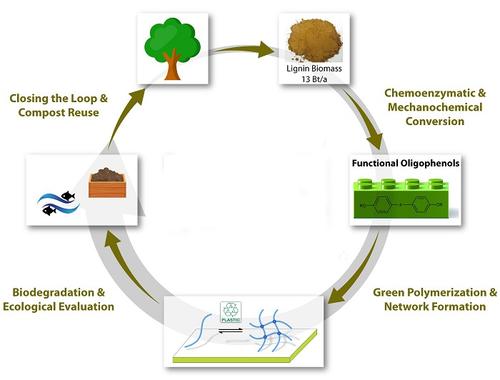
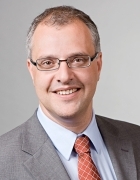
Rainer Haag is a Professor at the Department of Chemistry, Freie Universität Berlin, leading the Haag Group in the Institute of Chemistry and Biochemistry. His research focuses on biodegradable and sustainable materials, dynamic hydrogels, and polymeric nanosystems for biomedical applications. Department of Chemistry, Freie Universität Berlin Member of SFB 1449: Dynamic Hydrogels at Biointerfaces Collaborator in the StemGel startup project Co-founder of CSR|Berlin interdisciplinary research institute Research Interests: Development of stimuli-responsive polymers, multivalent virus inhibitors, and functional biointerfaces. Key projects include: Antiviral coatings using heteromultivalent polymers Thermoresponsive hydrogels for stem cell expansion Graphene derivatives for bacterial capture and disinfection Lignin upcycling for sustainable resin materials Supramolecular nanosystems for drug delivery Publication Trends highlight interdisciplinary work in polymer chemistry, nanotechnology, and biomedical applications. Recent articles focus on: 2D polyglycerols for virus interactions Redox-responsive nanogels Mucus-inspired adhesive hydrogels Tumor-targeting micelles Bacterial disinfection using graphene composites Labs & Collaborations include the Polymeric and Supramolecular Nanosystems subgroup, the Dynamic Hydrogels and Biointerfaces team, and partnerships with MIT in developing bioinspired adhesives. His group contributes to DFG-funded SFB 1449 and CSR|Berlin initiatives.
Prof. Andreas Bausch holds the Heinz Nixdorf Endowed Chair of Cell Biophysics at the Technical University of Munich (TUM) within the TUM School of Natural Sciences . His research focuses on cellular biophysics , particularly the mechanical properties of cytoskeletal networks and self-organization mechanisms in biological systems, with applications in biomimetic materials and organoid modeling. Research Areas : Cytoskeletal mechanics, active matter systems, organoid morphogenesis, integrin signaling, synthetic cell models Techniques : Microrheology, in vitro reconstitution, microfluidics, advanced imaging His work has produced over 100 publications in Nature, Science, PNAS , and Physical Review Letters , with recent emphasis on pancreatic cancer organoids and artificial cell membranes . Key findings include: Discovery of topological excitations governing endothelial cell ordering Elucidation of PIP2/PIP3 regulation in integrin phase separation Development of 3D patterned organoid systems for drug screening Major awards include: ERC Synergy Grant (2018) ERC Advanced Grant (2012) ERC Starting Grant (2011) Berlin-Brandenburg Academy of Sciences Prize (2014) He serves as founding director of the Center for Functional Protein Assemblies (CPA) since 2015 and teaches biomechanics , biophysics , and protein assemblies at TUM. His lab investigates both fundamental biophysical principles and their medical applications in cancer and cardiovascular systems.
Prof. Dr. rer. nat. Lothar Elling is a University Professor and director at the Helmholtz Institute for Biomedical Engineering, RWTH Aachen University, Germany. His research focuses on biomaterials, glycoengineering, and enzymatic synthesis of carbohydrates and glycoconjugates. Institution: RWTH Aachen University Research Unit: Helmholtz Institute for Biomedical Engineering Academic Rank: Full Professor Prof. Elling's research interests include: Glycoengineering of biomaterials Enzymatic synthesis of glycans Glycosyltransferase immobilization Glycan-protein interactions Biocatalytic cascade reactions Biomedical applications of glycomaterials His recent publications demonstrate strong expertise in: - Automated enzymatic glycan synthesis - Multi-enzyme cascade systems for nucleotide sugar production - Glycosyltransferase engineering - Galectin-targeted glycomaterials - Microgel-based biosensors
Prof. Walter Richtering is a Universitätsprofessor at RWTH Aachen University, affiliated with JARA-SOFT and the Institute of Physical Chemistry (IPC). His research focuses on soft matter physics, colloids, and polymer chemistry with emphasis on microgels, nanogels, and their applications in biomaterials and materials science. He leads the 'Physical Chemistry of Solids' group and contributes to the CRC 985 (Functional Microgels and Microgel Systems). Key interests include quantifying softness in colloids, interfacial phenomena, and developing educational tools like AFM-based microgel experiments for undergraduate labs. Position: Professor of Physical Chemistry Affiliations: JARA-SOFT, IPC RWTH Aachen, CRC 985 Research Groups: Physical Chemistry of Solids, Polymers and Colloids His work explores structure-property relationships in soft materials, including phase behavior under non-equilibrium conditions, thermoresponsive systems, and catalytic microgel applications. Recent studies address microgel mechanics, anisotropic architectures, and filtration technologies.
Prof. Dr. Christian Mayer is a Professor in Physical Chemistry at the Faculty of Chemistry, University of Duisburg-Essen. He serves as Head of the working group focusing on origin of life research, nanocapsules, and NMR spectroscopy techniques. His research group is located at Universitätsstraße 5, D-45141 Essen, Germany, with contact information including phone number +49 201 183-2570. Prof. Mayer's research interests primarily focus on the origin of life in deep tectonic fault zones of the first continental fragments, where he collaborates with Prof. Dr. Ulrich Schreiber from the Faculty of Biology and Prof. Dr. Oliver Schmitz from Applied Analytical Chemistry. His work investigates how vesicle formation occurs in tectonic fault systems through cyclic phase transitions of carbon dioxide, creating ideal conditions for molecular evolution. He specializes in pulsed field gradient NMR (PFG-NMR), high-resolution NMR, and solid-state NMR techniques to characterize nanoscale systems including nanocapsules, vesicles, and microemulsions. His recent publication trends reveal a strong interdisciplinary focus spanning physical chemistry, prebiotic chemistry, and astrobiology. The articles demonstrate increasing integration of computational methods with experimental approaches, particularly in analyzing molecular structures and dynamics. His research has evolved from fundamental studies of nanocapsule systems to broader investigations of protocell formation mechanisms under early Earth conditions, with recent work extending to astrobiological contexts including potential life formation on Titan. Prof. Mayer has established significant collaborations across multiple disciplines, particularly with geologists and biologists, to investigate the physical chemical processes that could have led to the emergence of life. His work bridges fundamental physical chemistry with practical applications in nanomedicine, particularly in developing artificial oxygen carriers based on nanocapsule technology. His laboratory utilizes high-pressure facilities to simulate early Earth crust conditions, with a particular focus on supercritical CO 2 environments. The working group combines experimental approaches with theoretical modeling to understand vesicle formation processes and their implications for the origin of cellular life.
Dr. Salih Veziroglu is a post-doctoral researcher and subgroup leader at the Chair for Multicomponent Materials at Kiel University, under Prof. Franz Faupel. His research focuses on functional metal-oxide micro-/nanostructures, including thin films and particles, for applications in energy, self-cleaning surfaces, and sensing technologies. Notably, he has pioneered photocatalytic methods to create conductive metal patterns on titanium dioxide substrates, mimicking axon growth and enabling advanced biomedical and electronic systems. Veziroglu earned his doctoral degree in Materials Science from Kiel University in 2020, supported by Federal State Funding. His work integrates nanomaterial synthesis, surface functionalization, and interdisciplinary applications. Key areas include 3D porous cerium oxide networks for catalysis, superhydrophobic coatings, and biomedical materials like algae-incorporated polylactide acid patches for tissue engineering. His research highlights include strain-invariant all-organic conductors developed with Prof. Adelung's team, and novel methods for gold deposition on titanium dioxide using light-driven processes. These innovations address challenges in energy storage, environmental remediation, and medical device coatings. Veziroglu’s subgroup actively explores gas-phase synthesis techniques, plasma treatments for biofilm decontamination, and material design for high-performance applications. Publications span topics like additive manufacturing of titanium alloys, photocatalytic nanoparticle synthesis, and biomedical coatings. His work emphasizes practical solutions for sustainability and healthcare, driven by advanced material chemistry.
Prof. Laura Na Liu is a Professor and Director at the 2nd Physics Institute, University of Stuttgart, with a dual affiliation at the Max Planck Institute for Solid State Research. Her research bridges nanophotonics, DNA nanotechnology, and plasmonics, focusing on dynamic systems for biomedical applications, optical metamaterials, and synthetic biology. Key contributions include DNA-templated plasmonic architectures, reconfigurable metasurfaces, and synthetic cell components using DNA nanotechnology. Academic training includes advanced work in physics and materials science, with a career spanning leading institutions. Research interests emphasize the interplay between nanoscale structures and optical/chemical functionalities. Recent publications highlight innovations in programmable nanomaterials, real-time molecular tracking, and high-performance holography systems. Her work integrates experimental and theoretical approaches, addressing challenges in biophotonics, nanoelectronics, and smart materials. Awards and recognitions are listed in institutional records, while her lab actively collaborates with industry on applied photonics solutions.
Prof. Dirk Schneider is a Full Professor (W3) of Biochemistry at Johannes Gutenberg University Mainz since 2010, with previous appointments at the University of Freiburg (2003-2009) and postdoctoral training at Yale University. His research spans membrane biochemistry, biophysics, and transmembrane protein folding/assembly, focusing on thylakoid membrane biogenesis and protein-lipid interactions in cyanobacteria and chloroplasts. Current roles: Full Professor, University Mainz Previous roles: Assistant Professor (W1), University of Freiburg Education: PhD (summa cum laude) from Ruhr-University Bochum His research interests include: Membrane protein folding and stability ESCRT-III/Vipp1/PspA family structural dynamics ABC transporter activity regulation (e.g., BmrA) Protein-lipid interaction mechanisms Thylakoid membrane remodeling Comparative membrane biology between prokaryotes and eukaryotes Development of spectroscopic and computational methods Recent publications reveal trends in bacterial membrane remodeling (SynDLP, PspA), lipid effects on transporter activity (BmrA), and IM30/Vipp1-mediated membrane fusion. His work combines structural biology, biophysics, and functional assays to elucidate membrane dynamics. Awarded the Dr. Heinrich Kost Award (2001) and Leopoldina Fellowship (2001) , he has held leadership roles including Study Section Speaker (2010-2014) , Director of Institute of Pharmacy and Biochemistry (2013-2015) , and Dean of Faculty of Chemistry (2015-2020) . His scientific advisory roles include editorial board memberships and study section leadership.
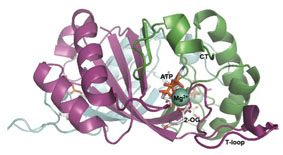
Karl Forchhammer is a full Professor at the University of Tübingen , chairing the Department of Microbiology/Organismic Interactions within the Interfaculty Institute of Microbiology and Infection Medicine Tübingen (IMIT) . He received his education at Ludwig-Maximilians-Universität München, earning a Doctorate in Microbiology with a thesis on selenocysteine biosynthesis in Escherichia coli , for which he received the VAAM Promotionspreis in 1992. His academic career includes a postdoctoral fellowship at the Institut Pasteur and associate professorship at the Justus-Liebig-Universität Giessen (1999-2007). Current Roles: Chair of Microbiology/Organismic Interactions, University of Tübingen Editor for FEBS Journal Scientific Advisory Board member, Max Planck Institute for Terrestrial Microbiology DFG panel member (Microbiology, Virology, Immunology) His research focuses on: PII Signal Transduction Proteins : Molecular mechanisms of 2-oxoglutarate sensing, ATP/ADP binding dynamics, and regulatory roles in carbon-nitrogen balance across bacteria, archaea, and chloroplasts. Nitrogen Starvation Response : Molecular basis of chlorosis in Synechocystis and Synechococcus species, including nblA gene regulation and sodium bioenergetics during dormancy. Metabolic Engineering Applications : Development of FRET sensors for metabolite detection and optimization of polyhydroxybutyrate (PHB) production in cyanobacteria. Carbon Regulation Systems : Structural analysis of SbtB redox-sensitive loops, c-di-AMP signaling in diurnal metabolism, and PirC-mediated phosphoglycerate mutase inhibition. Technological Innovations : Creation of SCAGE method for cyanobacterial transport and development of magnetic bead immunoassays for SARS-CoV-2 detection. Scientific contributions include: Discovery of plant kingdom's first glutamine sensory mechanism through PII evolution Elucidation of PII-NAGK functional conservation over 1.2 billion years Identification of 2-oxoglutarate binding site in PII proteins Demonstration of sodium bioenergetics' critical role in cyanobacterial developmental transitions Development of metabolite FRET sensors for real-time metabolic monitoring Establishment of PHB production platforms without nitrogen starvation His lab has trained 15+ PhD students and 3+ PostDocs, with collaborations spanning microbial biotechnology, structural biology, and environmental systems. Recent publications highlight: 2025 work on natural microbial community-enhanced bioplastic production 2024 structural studies of PII-regulated enzymes 2023-2024 investigations into glycogen metabolism and redox regulation 2022-2023 studies on c-di-AMP signaling and toxin-antitoxin systems
Dr. Wolfgang Hübner is a Researcher at the Faculty of Physics at University of Bielefeld, Germany, affiliated with the Biomolecular Photonics Group. His work focuses on advanced optical imaging techniques applied to cellular and molecular structures. He maintains an active research program as evidenced by numerous publications from 2023-2025. His research interests center on photonics, biophotonics, optical microscopy, super-resolution imaging techniques, cellular biophysics, and molecular imaging. Dr. Hübner's work bridges physics and biology, developing and applying cutting-edge microscopy methods to address biological questions at the nanoscale level. His recent publications demonstrate a strong focus on super-resolution microscopy techniques, particularly structured illumination microscopy, fluorescence lifetime imaging, and correlative imaging approaches. His research investigates cellular structures like liver sinusoidal endothelial cells, dystroglycan mutants, and mitochondrial dynamics, revealing how advanced optical methods can visualize biological processes at unprecedented resolution. Dr. Hübner's research shows consistent development in both methodological advances in optical imaging and biological applications. His work spans from fundamental optical engineering to biomedical applications, demonstrating interdisciplinary expertise across physics, engineering, and cell biology.
Professor Friedrich Simmel (*1970) holds the Chair of Physics of Synthetic Biosystems at the Technical University of Munich (TUM) within the TUM School of Natural Sciences, Department of Bioscience. His research laboratory is located at Am Coulombwall 4a in Garching near Munich, where he leads a vibrant research group focused on the physics of synthetic biological systems. Professor Simmel's research interests center on bionanotechnology, particularly artificial molecular machines and nanostructures made from DNA molecules, as well as the design of artificial biochemical control circuits. His work bridges physics, chemistry, and biology to create novel synthetic biosystems with programmable functions. Key research areas include DNA origami, DNA nanotechnology, synthetic gene circuits, and biomimetic systems. His recent publications demonstrate a strong trend toward increasingly complex DNA-based nanodevices with applications in biosensing, nanomedicine, and synthetic biology. The research shows progression from fundamental DNA nanostructure design to functional systems with practical applications in diagnostics and biocomputation. His group has pioneered approaches for creating DNA-based nanorobots, synthetic membrane channels, and programmable biochemical oscillators. ERC Advanced Grant (2015) Human frontier science program (HFSP) young investigator award (2006) Emmy Noether Young Researcher of the German Research Foundation (2002) acatech - the German Academy of Science and Engineering (2013) Professor Simmel actively mentors numerous students and junior researchers, as evidenced by the many co-instructors listed on his practical courses. His research has been supported by prestigious grants including the ERC Advanced Grant. His laboratory maintains strong collaborations across disciplines, working with researchers in microfluidics, synthetic biology, and biomedical engineering. The group operates within TUM's advanced infrastructure for biophysics and nanotechnology, including facilities for electron microscopy, NMR spectroscopy, and X-ray crystallography.
Naoki Shida is an Associate Professor in the Department of Functional Creation at the Graduate School of Engineering, Yokohama National University. He also holds a concurrent position as a JST PRESTO Researcher. His academic journey began with a BS from Yokohama National University, followed by MS and PhD degrees from Tokyo Institute of Technology, where he specialized in bipolar electrochemistry. He has held postdoctoral positions at Tokyo University of Agriculture and Technology, California Institute of Technology, and worked as a specially appointed assistant professor before joining Yokohama National University. Dr. Shida's educational background includes: BS, Yokohama National University, School of Engineering (2011) MS, Tokyo Institute of Technology, Graduate School of Science and Engineering (2013) PhD, Tokyo Institute of Technology, Graduate School of Science and Engineering (2016) Dr. Shida's research focuses on organic electrosynthesis and electrocatalysis, with particular expertise in flow electrochemistry, bipolar electrochemistry, and polymer electrochemistry. His work bridges fundamental electrochemical principles with practical applications in sustainable chemistry. His research group develops innovative electrochemical methodologies for organic synthesis, with emphasis on green and sustainable approaches that minimize waste and energy consumption. The team specializes in designing novel electrochemical reactors, particularly flow microreactors and membrane-based systems, to enable efficient and selective transformations. Analysis of Dr. Shida's recent publications reveals a strong focus on electrocatalytic hydrogenation processes, particularly for nitrogen-containing heterocycles like pyridines and quinolines. His work also explores the development of novel electrochemical methodologies for C-C and C-N bond formation, as well as the creation of advanced electrochemical reactors using solid polymer electrolytes. A significant portion of his research addresses the fundamental understanding of electrolyte effects on electrochemical reactions, aiming to develop rational design principles for electrolyte systems. Dr. Shida has received numerous prestigious awards recognizing his contributions to electrochemistry, including: Young Scientists Award from the Minister of Education, Culture, Sports, Science and Technology Electrochemical Society Business Creation Pitch Contest Grand Prize Progress Award from the Chemical Society of Japan Electrochemical Society Progress Award Sano Prize Electrochemical Society Best Paper Award As a mentor and researcher, Dr. Shida leads multiple significant research projects funded by the Japan Society for the Promotion of Science, including grants for developing innovative molecular transformation processes based on solid polymer electrolyte electrolysis technology and green catalytic reactions using electrochemically generated main group element radical cations. His collaborative work spans multiple institutions and disciplines, reflecting the interdisciplinary nature of modern electrochemistry research. Dr. Shida's laboratory at Yokohama National University focuses on developing next-generation electrified organic synthesis methods, with particular attention to reactor design, catalyst development, and fundamental mechanistic understanding of electrochemical transformations. The group actively collaborates with researchers across Japan and internationally to advance the field of electrochemical synthesis.
Torsten John is an Assistant Professor of Physical Chemistry at the School of Science, Constructor University Bremen gGmbH, Germany. His research bridges biophysical chemistry and computational chemistry to engineer biomolecular systems for biomedical applications. PhD in Chemistry (2020) from Leipzig University (summa cum laude) Postdoctoral experience at Max Planck Institute, MIT, and Leibniz Institute of Surface Engineering Research focuses on biomolecular self-assembly and membrane interactions , with implications for antimicrobial strategies , nanomedicine , and neurodegenerative diseases . Articles show interdisciplinary work combining experimental and theoretical approaches . Publications include high-impact journals like Advanced Functional Materials and Nucleic Acids Research . His group develops bionanomaterials using peptide nanofibrils and DNA origami, with applications in viral particle isolation and exciton transport . Collaborations span institutions in Germany, USA, and Australia. Teaching includes Physical Chemistry (CO-440) and Physical Chemistry Lab (CO-446-B) .
Prof. Dr. Andreas Janshoff is a Full Professor (W3) of Biophysical Chemistry at the Institute of Physical Chemistry, Georg-August-University Göttingen (since 2008). He previously served as Dean of the Faculty of Chemistry in Göttingen (2013–2015). His research focuses on membrane biophysics, cell mechanics, sensor design, and single-molecule force spectroscopy. Key contributions include studies on actin cortices, cellular adhesion dynamics, and viscoelastic properties of biological systems. Education: 1987–1989: Biology studies at University of Münster 1989–1994: Chemistry studies at University of Münster (with honors) 1994–1997: PhD in Biochemistry under Prof. H.-J. Galla 1999–2001: Habilitation in Biochemistry at University of Münster Research Interests: His work integrates experimental biophysics with advanced microscopy and nanoindentation techniques to explore cell mechanics, membrane dynamics, and biomaterial interactions. Recent studies emphasize actin network rheology, collective cell migration, and protein-mediated tissue fluidity. Publications: Recent work highlights include studies on cytosolic actin isoforms’ mechanical roles (Nature Communications 2023), differential adhesion in cocultures (PNAS 2023), and vimentin viscoelasticity (Science Advances 2018). Themes emphasize quantitative biophysical analysis of cellular and molecular systems. Labs/Teams: Affiliated with the Göttingen Graduate Center for Neuroscience (GGNB), focusing on Physics of Biological and Complex Systems and Biomolecules: Structure-Function-Dynamics .
Dr. Dietmar Schlosser is a Group Leader in Environmental Mycology at the Department of Applied Microbial Ecology within the Helmholtz Center for Environmental Research - UFZ since 2005. His research program focuses on fungal biodegradation of environmental pollutants, particularly synthetic polymers, micro-pollutants, and recalcitrant organic compounds. Education : Diploma in Biology (1990), Friedrich Schiller University Jena PhD in Technical Microbiology (1993), Friedrich Schiller University Jena His research integrates ecological principles with applied biotechnology , emphasizing fungal biochemistry, physiology, and enzymology. Key projects include: TapNature (2021-2027): Exploiting natural fungal systems for bioeconomy FINEST Microplastics (2022-2027): Sustainable materials management PUreValue (2024-2027): Polyurethane biodegradation for upcycling CLEANER (2023-2026): Water cycle resilience in cities Article trends reveal expertise in mycoremediation , lignocellulose valorization , and fungal attack on synthetic polymers , with recent work spanning environmental engineering, microbiology, and biochemical monitoring techniques. He maintains active collaborations with institutions across Europe and contributes to sustainable technology development through his leadership in Environmental Mycology .