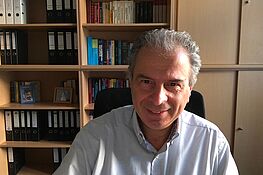
Univ.-Prof. Christos N. Likos is a world-leading researcher at the University of Vienna , holding the chair in Multiscale Computational Physics since 2010. Affiliated with the Faculty of Physics and directing the Computational and Soft Matter Physics group, he bridges scales from microscopic to macroscopic in soft matter systems. Education: Dipl.-Ing. in Electrical Engineering (NTUA Athens), M.Sc. & Ph.D. in Physics (Cornell University) Honors: Fellow of the Royal Society of Chemistry (2013), University of Vienna Teaching Award (2025), Outstanding Referee Award (2009) His research in Soft Condensed Matter focuses on polymers, colloids, and biomolecular systems through coarse-graining , density functional theory , and Monte Carlo simulations . Key collaborations include institutions in Rome, Heraklion, San Sebastian, and Princeton. His work reveals principles of self-organization, non-equilibrium phenomena, and responsive material design with applications in cosmetics, nanotechnology, and biophysics. Recent publications highlight active matter , topological polymers , and electric field-responsive microgels . The group trains 18 current students (Ph.D., M.Sc., B.Sc.) and maintains partnerships with experimental teams across Europe. As Associate Editor of Soft Matter and member of Journal of Colloid and Interface Science Open editorial board, he shapes scientific discourse in his field. Teaching excellence is a hallmark, with courses on Advanced Statistical Physics and Soft Matter Principles . His group website details ongoing projects, while lab facilities in Vienna's Kolingasse campus enable interdisciplinary research.
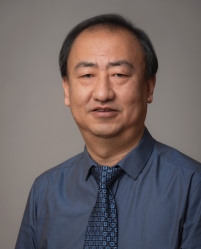
Professor Hongbin Li is a Professor and Canada Research Chair in the Department of Chemistry at the University of British Columbia. His research program focuses on single molecule biophysical chemistry, biomaterials, and protein engineering. He leads an active research group investigating the mechanical properties and conformational dynamics of elastic proteins using advanced single molecule techniques. Professor Li received his B.Sc in Polymer Engineering from Tianjin University, China in 1993. He earned his Ph.D. in Polymer Chemistry and Physics from Jilin University, China in 1998 under the supervision of Profs. Jiacong Shen, Xi Zhang and Hermann E. Gaub. During his doctoral studies, he was a visiting PhD student at Ludwig-Maximilians-Universität München, Germany (1996-1997) working with Prof. Hermann E. Gaub. Following his Ph.D., he completed a Research Fellowship at Mayo Medical Center, USA (1999-2002) with Prof. Julio M. Fernandez. Professor Li's research program centers on understanding the mechanical properties and conformational dynamics of elastic proteins at the single molecule level. His laboratory combines protein engineering with single molecule atomic force microscopy (AFM) and computational approaches to rationally design and engineer proteins with tailored mechanical properties. Using AFM as their primary tool, his team directly manipulates proteins one molecule at a time to measure mechanical properties and monitor folding/unfolding trajectories in real time. His research spans four main directions: (1) Protein Mechanics and Engineering, where they design proteins with specific mechanical properties; (2) Single Protein Folding/Unfolding Dynamics, investigating folding mechanisms at the single molecule level; (3) Protein-based Biomaterials, designing biomaterials with tailored mechanical properties for biomedical applications; and (4) Polymer physical chemistry using single molecule AFM. His work bridges fundamental protein mechanics with practical applications in biomaterials design. Professor Li has received numerous prestigious awards recognizing his contributions to biophysical chemistry and protein engineering: 2020: AAAS Fellow (the American Association for the Advancement of Science) 2012: Changjiang Guest Chair Professorship (Jilin University, China) 2011: JILA Visiting Fellowship (JILA and University of Colorado, Boulder) 2011: Alexander von Humboldt Fellowship (Technical University of Munich, Germany) 2010: JILA Distinguished Short-term Visiting Fellow 2010: Charles McDowell Award for Research (UBC) 2006: Michael Smith Foundation for Health Research Career Investigator Award 2005: Peter Wall Institute for Advanced Studies Early Career Award (UBC) Professor Li has mentored numerous graduate students and postdoctoral fellows throughout his career at UBC. His research has been supported by multiple grants, including his Canada Research Chair position which he has held continuously since 2004. His work bridges chemistry, physics, and biology, attracting funding from diverse sources including the Natural Sciences and Engineering Research Council of Canada (NSERC), the Michael Smith Foundation for Health Research, and international collaborations. His laboratory maintains strong connections with research groups worldwide, particularly in China and Germany, reflecting his international research profile. Professor Li leads an active research group within the Department of Chemistry at UBC that combines expertise in protein engineering, single molecule biophysics, and biomaterials science. His laboratory is equipped with state-of-the-art atomic force microscopes and optical trapping systems, enabling cutting-edge single molecule studies. The group maintains close collaborations with researchers in the Michael Smith Laboratories and other interdisciplinary centers at UBC, fostering a highly collaborative research environment focused on understanding protein mechanics and developing novel protein-based materials.
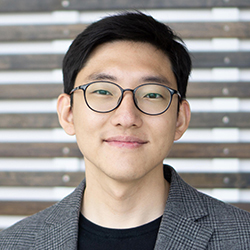
Junsoo Kim is an Assistant Professor of Mechanical Engineering at Northwestern University, leading the Soft Matter Mechanics Lab . His research focuses on understanding mechanics in soft materials, identifying theoretical limits of their properties, and designing molecular structures for applications in robotics, biomedical devices, and polymer pollution solutions. He holds a PhD from Harvard University and undergraduate/graduate degrees from Seoul National University. Research Interests : The lab investigates soft materials' mechanical behavior, with emphasis on hydrogels, polymer networks, and fatigue resistance. Key applications include biomedical devices and sustainable materials. Recent work has explored hydrogel elasticity, fracture mechanics in polymers, and chemical pumps for energy systems. Awards : 2023 Hanwha Non-Tenure Faculty Award Kavli Frontiers of Science Fellow (2023) Scialog Fellow (2023) Teaching : Undergraduate: Solid Mechanics, Thermodynamics Graduate: Fracture Mechanics, Soft Materials His publications span Nature , Science , and Advanced Materials , addressing topics like fatigue-resistant polymers and hydrogel design. The lab emphasizes translational research bridging fundamental science and engineering applications.
Yuecheng Zhou is an Assistant Professor at the University of Illinois, affiliated with the departments of Materials Science and Engineering, Bioengineering, the Materials Research Lab, and the Beckman Institute for Advanced Science and Technology. His research focuses on polymer dynamics, liquid-liquid phase separation, and electrochromic materials for biomedical applications. Zhou’s work bridges fundamental polymer science with practical applications in biomedicine and material design. His research interests include studying single polymer dynamics under various flow conditions, developing optical recording techniques for bioelectric potentials using electrochromic materials, and investigating the rheological behavior of complex polymer solutions. He has contributed significantly to understanding the dynamics of ring-linear polymer blends and the role of molecular architecture in non-equilibrium systems. Zhou’s recent publications highlight advancements in label-free optical detection of cellular signals, liquid-liquid phase separation in synthetic biosystems, and theoretical insights into viscoelastic hysteresis using fluctuation theorems. These studies underscore his interdisciplinary approach, combining experimental and computational methods to address challenges in materials science and biophysics. His work is supported by affiliations with leading research institutes at the University of Illinois, enabling collaborative projects across engineering, physics, and biology. Zhou’s research has implications for developing novel materials for biomedical diagnostics, energy storage, and advanced sensor technologies.
Russell Thompson is an Associate Professor at the University of Waterloo, affiliated with the Waterloo Institute for Nanotechnology. His research focuses on theoretical physics, with expertise in self-consistent field theory, density functional theory, quantum foundations, and atomic physics. He holds a Doctorate in Theoretical Physics and Applied Mathematics from the University of Western Ontario (1998), complemented by a BSc (Honours Physics) from the University of Ottawa (1994) and an MSc in Physics from the University of Regina (1994). Thompson teaches advanced courses such as NANO 600 (Introduction to Nanotechnology), NE 216/217 (Advanced Calculus and Numerical Methods), and PHYS 234 (Quantum Physics 1). His recent publications (2020–2025) explore quantum foundations, polymer physics, and materials science, with a focus on integrating theoretical frameworks like DFT and SCFT into nanotechnology applications. His articles highlight advancements in quantum entanglement visualization, polymer foaming models, and atomic shell structure predictions. He has no listed scientific awards or grants in the provided data but remains active in interdisciplinary research at the intersection of quantum theory and polymer science.
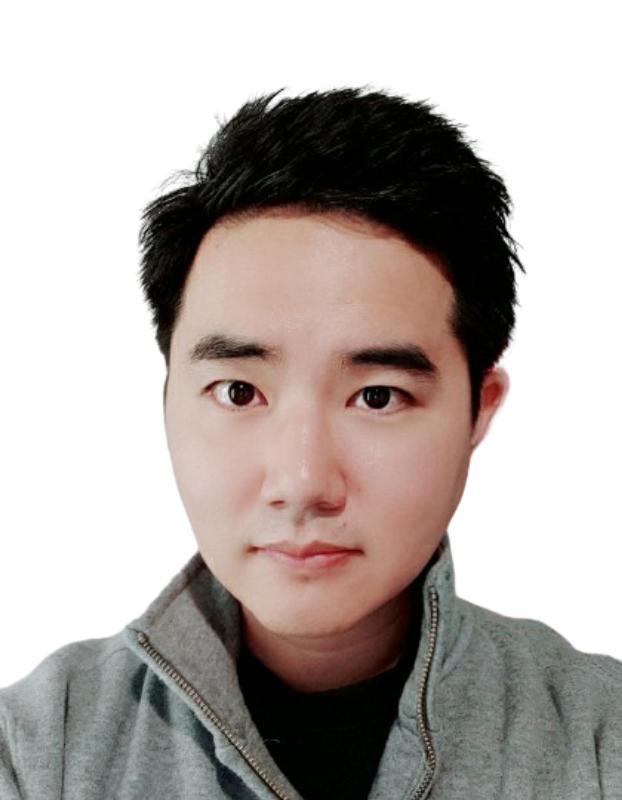
Dr. Seunghwan Shin is a postdoctoral researcher at ETH Zurich's Department of Mechanical and Process Engineering, affiliated with the Institute of Fluid Dynamics and working within Prof. Filippo Coletti’s group . His research spans fluid dynamics, polymer science, and biophysics, with a focus on multiphase flows, shear-banding in entangled polymers, and bacterial motility in complex fluids. Bachelor’s Degree : Chemical & Biological Engineering from Seoul National University (minor in Economics) PhD : Chemical Engineering at the University of Minnesota under Prof. Xiang Cheng and Prof. Kevin D. Dorfman His work explores turbulent suspensions , polymer microstructure , and active matter systems , combining experimental and rheological approaches. Publications emphasize quasi-2D turbulence , shear-banding , and colloidal media interactions in both synthetic and biological systems. The 15 most recent articles highlight trends in non-Newtonian fluid behavior , DNA-polymer dynamics , and enhanced motility mechanisms , with subfields spanning viscoelastic flows , microscale transport , and active colloids . He is part of the Coletti Group at ETH Zurich, advancing research on fluid dynamics and complex media.
Kevin T. Turner is the John Henry Towne Department Chair and Professor of Mechanical Engineering and Applied Mechanics at the University of Pennsylvania's School of Engineering and Applied Science, with a secondary affiliation in Materials Science and Engineering. He leads the Turner Research Group, which investigates mechanics, materials, and manufacturing challenges, specializing in micro/nano-systems, adhesion, fracture mechanics, and advanced manufacturing. His research focuses on three primary thrusts: Materials with programmable mechanical properties (e.g., electroadhesives for robotics) Fracture and adhesion in structured/heterogeneous materials Printed and flexible sensors (including biodegradable cellulose-based variants) Key projects include tunable adhesion surfaces, architected materials for damage tolerance, and additive manufacturing stress control. Turner's recent publications (2022-2023) demonstrate a strong emphasis on adhesion mechanics, robotics applications, and nanomaterial design. Trends include bio-inspired structures, machine learning optimization, and interdisciplinary approaches bridging mechanics with biomedicine and agriculture. Computational methods like physics-informed neural networks are increasingly utilized for material property analysis. He directs an active research laboratory developing novel sensor technologies and materials systems, collaborating widely across engineering and applied science disciplines.
Artur Widera is a Professor in the Department of Physics at the University of Kaiserslautern, leading the Individual Quantum Systems research group. His experimental work focuses on quantum physics with single atoms, photons, solid-state defects, and ultracold quantum gases, operating advanced laboratories for quantum simulation and sensing. Research spans ultracold quantum gases in disordered potentials (Anderson localization, BEC-BCS crossover), quantum transport in fermionic systems, and solid-state quantum sensing using nitrogen-vacancy centers. Key projects include dipole oscillations in disordered traps, quantum engine cycles, and nanodiamond-based magnetometry. The group develops instrumentation like fiber-tip endoscopes and polymer waveguides for quantum control. Recent publications (2019–2024) reveal strong emphasis on disorder-induced phenomena in quantum gases, superfluid dynamics, and quantum sensor engineering. Trends show increasing integration of quantum simulation with solid-state systems, particularly using NV centers for metrology, and exploration of non-equilibrium thermodynamics in atomic ensembles. Prof. Widera actively supervises students across all academic levels, with recent theses covering entangled photon generation, quantum gas dynamics in speckle potentials, and NV-center integration into photonic chips. Group members operate experimental setups for ultracold atoms (Rb, Cs BECs) and quantum optics, utilizing facilities like the Nano Structuring Center for nanofabrication. The research group maintains two primary laboratories: one for ultracold quantum gases (featuring MOTs, optical lattices, and disorder potentials) and another for solid-state quantum systems (with nanodiamond manipulation, microwave control, and waveguide fabrication). Collaborations with theoretical physicists drive studies on localization, superdiffusion, and quantum phase transitions.
Prof. Dr. Jens-Uwe Sommer holds dual appointments as Bereichsdirektor of the Polymer Theory Department at the Leibniz Institute of Polymer Research Dresden (IPF) and Professor of Polymer Theory within the Faculty of Mathematics and Natural Sciences at Technische Universität Dresden. His academic profile bridges theoretical physics and polymer science through rigorous statistical mechanical approaches to complex soft matter systems. His research spans soft condensed matter theory, polymer physics, and statistical thermodynamics with emphasis on topological network structures, polymer crystallization mechanisms, and interfacial phenomena. Key investigations include entanglement effects in polymer crystallization, nanoparticle-membrane interactions, and the design of responsive polymer brush coatings. His methodological toolkit combines Monte Carlo simulations with theoretical modeling to decode fundamental principles governing polymer dynamics across multiple scales. Analysis of his publication record (1995-2014) reveals consistent focus on polymer network topology, crystallization physics, and surface-mediated phenomena. His work demonstrates increasing sophistication in connecting molecular-scale interactions to macroscopic material properties, particularly in bimodal networks and nanostructured polymer systems. The progression from fundamental chain statistics to applied smart materials design highlights his integrative research philosophy. As an educator, Sommer teaches advanced courses including 'Theoretical Polymer Physics' and 'Emergent Properties From Non-Equilibrium Physics' at TU Dresden. He leads the Polymer Theory group at IPF, fostering collaboration between theoretical and experimental researchers to advance polymer science through computational-experimental synergy. His leadership in the 2003 edited volume 'Polymer Crystallization: Observations, Concepts and Interpretations' underscores his disciplinary influence.
R Bharath Venkatesh is a Postdoctoral Scholar at the University of California, Santa Barbara (UCSB), affiliated with the Robert Mehrabian College of Engineering. His research focuses on polymer dynamics in catalytic upcycling processes, interfacial phenomena in nanoparticle packings, and advanced material fabrication techniques like LeCaRI. Research Interests: Polymer dynamics under mechanical and chemical stress Nanoconfinement effects on molecular mobility Catalytic upcycling of polyolefins Capillary-driven polymer infiltration Thermal management via polymer-nanoparticle interfaces Recent Article Trends: Venkatesh's work bridges polymer physics and sustainable materials engineering. His studies explore shear-induced scission, nanopore-mediated catalysis, and moisture-responsive systems, with applications in plastics recycling, water condensation, and soft material design. Laboratory: Venkatesh works in the Rachel Segalman Lab, which investigates energy-efficient material systems and advanced characterization tools.
Thomas Murphy is an Affiliate Professor at the University of Maryland, leading the Photonics Research Lab. His work focuses on integrated optics, nanophotonic devices, nonlinear dynamics, and terahertz photonics. Key research goals include advancing optical communication and sensor systems through novel device designs and techniques. Students under his advisement include Dr. Trisha Chakraborty (PhD 2025) and Dr. Evan Dowling (PhD 2024). His lab has produced notable contributions in graphene-based photodetectors, aluminum nitride electrooptic sensing, and terahertz antenna technology. Recent publications emphasize metal-free microwave receivers and cryogenic optical couplers. Research trends highlight interdisciplinary approaches combining plasmonics, nonlinear optics, and quantum materials. Applications span high-speed communications, remote sensing, and astronomical instrumentation. No specific awards are listed, but his work has been featured in journals like Optica . His lab collaborates on advanced photonics systems, including 3D fiber-to-chip couplers and ultra-broadband detectors. Ongoing projects involve synthetic optical spaces and entropy-driven photon counting systems.
Prof. Vlassopoulos Dimitris is a prominent academic affiliated with the University of Crete (Department of Materials Science & Technology) and the Foundation for Research & Technology - Hellas (FORTH), Institute of Electronic Structure & Laser. His career spans over three decades, with roles including Professor (2007–present), Associate Professor (2002–2007), and Adjunct Professor at the University of Crete. He holds a Ph.D. in Chemical Engineering from Princeton University (1990) and has held positions at Mobil Research & Development Corporation (1990–1991) and Metelco S.A. (1983–1984). Education: Diploma in Chemical Engineering, National Technical University of Athens (1983) M.A. in Chemical Engineering, Princeton University (1986) Ph.D. in Chemical Engineering, Princeton University (1990) Research Interests: His work focuses on molecular rheology, branched/ring polymers, soft colloids, nonlinear rheometry, and interfacial viscoelasticity. Key areas include polymer network dynamics, colloidal gels, and supramolecular assemblies. His contributions bridge fundamental rheology and applications in materials science. Awards: FORTH Prize for Basic Research (2009) Society of Rheology Publication Award (2011) Weissenberg Award (2015) E.C. Bingham Medal (2019) Advising & Grants: While student names are not listed, his research has been supported by grants from institutions like FORTH. His work often involves interdisciplinary collaborations, such as developing 3D bioprinting methods and exploring hagfish slime mechanics. Labs/Teams: Active in FORTH's Institute of Electronic Structure & Laser and collaborates with international groups on projects like supramolecular polymer networks and nanocomposite rheology.
Alison C. Dunn is an Associate Professor in the Department of Mechanical Science and Engineering at the University of Illinois at Urbana-Champaign. She holds a PhD, MS, and BS in Mechanical Engineering from the University of Florida (2013, 2006, 2004). Her research focuses on tribology, biomechanics, and soft materials, particularly in frictional adaptations in insects and hydrogel-based materials. Dunn leads the Materials Tribology Laboratory and has been recognized with awards including the Engineering Council Award for Excellence in Advising (2017, 2020) and the STLE Early Career Award (2019). She teaches courses such as ME 371 (Mechanical Design II) and ME 472 (Introduction to Tribology). Education: PhD Mechanical Engineering, University of Florida (2013) MS Mechanical Engineering, University of Florida (2006) BS Mechanical Engineering, University of Florida (2004) Research Interests: Dunn explores frictional morphological adaptations in insects, soft matter tribology, and wear mechanisms in materials. Her work includes developing novel instrumentation for in situ friction testing and studying hydrogel lubrication in biological systems. Scientific Awards: University of Illinois Engineering Council Award for Excellence in Advising (2020, 2017) STLE Early Career Award (2019) ASME Award for Contributions to Tribology (2019) Advising & Grants: Dunn is noted for her excellence in mentoring, as highlighted by her advising awards. Her research is supported by grants focused on tribological systems and biomaterials. She collaborates on projects such as the TMS Frontiers award-winning work on tribology of soft materials. Labs & Teams: Directs the Materials Tribology Laboratory, advancing interdisciplinary tribology research in mechanical engineering and materials science.
Thomas E. Murphy is a Professor and Keystone Professor in the Department of Electrical and Computer Engineering at the University of Maryland, College of Engineering. He serves as the Director of the Institute for Research in Electronics and Applied Physics (IREAP) and Associate Chair for Research and Faculty Affairs. His research focuses on nonlinear and ultrafast optics, terahertz photonics, plasmonics, and optoelectronic materials. Notable honors include Fellow of the Optical Society of America and multiple teaching/research awards from the Clark School of Engineering. Education: Ph.D. (MIT, 2001), M.S. (MIT, 1997), B.A./B.S.E.E. (Rice University, 1994). His work spans experimental and theoretical studies in photonics, including graphene-based devices, THz technology, and nonlinear optical phenomena. Active in interdisciplinary projects, he leads the Photonics Research Laboratory and collaborates with institutions like MIT Lincoln Laboratory. Research Highlights: Innovations in terahertz detectors, plasmonic structures, and ultrafast optical systems. Recent articles emphasize nonlinear optics in 2D materials, THz sensing, and microwave photonics applications. Awards: 2020-21 Distinguished Scholar-Teacher OSA Fellow (2016) NSF CAREER Award (2006) Grants & Labs: Leads IREAP and directs the Photonics Research Lab. His funding includes DARPA, NSF, and industry partnerships. Research activities involve laser-matter interactions, optoelectronic device fabrication, and advanced sensing technologies.
Marino Arroyo is a Professor at the Universitat Politècnica de Catalunya (UPC), affiliated with the Research Center in Numerical Methods in Applied Science and Engineering (LaCàN). He is also associated with CIMNE and the Institute of Bioengineering of Catalunya (IBEC). His work focuses on computational and theoretical modeling of biological systems, particularly epithelial mechanics, active matter, and biomembranes. He holds the Icrea Academia Award, recognizing his contributions to mechanobiology and soft matter physics. Education: PhD in Mechanical Engineering, Northwestern University (2003) BS/MS in Civil Engineering, UPC Postdoc at Caltech with Michael Ortiz (2003-2004) Research Interests: Combines mathematical modeling, mechanics, and computations to study small-scale material behavior and biological systems. Current focus includes cell/tissue mechanobiology, active living materials, and bio-inspired materials. Key themes are nonlinear mechanics of 2D materials (graphene, biomembranes), continuum mechanics, and molecular-to-continuum modeling. Recent Article Trends: Focuses on multiscale epithelial mechanics, active gels, hydraulic fracture in biological systems, and mechanochemical feedback in cellular membranes. Recent work includes modeling curved epithelial shells, nematic patterns in cytoskeletal layers, and shape-programmable living surfaces. Scientific Awards: Icrea Academia Awardee Advising & Grants: Supervised over 20 PhD students, many of whom hold prestigious postdocs or academic positions. Collaborates with experimental groups (e.g., Xavier Trepat, Danijela Vignjevic). Current projects include NIH-funded studies on epithelial mechanics and ERC grants for computational modeling. Labs/Teams: Leads LaCàN's biomaterials group, integrating computational mechanics with experimental biology. Active in interdisciplinary collaborations across UPC, IBEC, and international institutions.