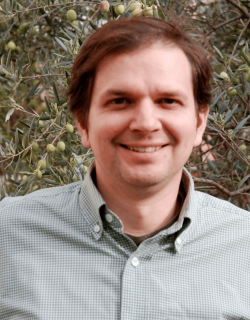
Dr. Hüsnü Aydemir serves as a Lecturer in the Textile Technology Department at Bingöl University's Technical Sciences Vocational School since 2009, holding a Doctorate in Textile Engineering from Erciyes University (2021). His academic journey includes a Licence (2004) and Master's (2013) from Pamukkale and Erciyes Universities respectively, preceded by 5 years of industry experience in textile production management. His research spans Textile Engineering with specialization in nanofiber technology (electrospinning for medical masks), radiation shielding textiles (barite-doped yarns), acoustic textiles (sound absorption properties), and industrial quality control systems . Recent publications (2021–2022) reveal intensified focus on pandemic-related filtration applications and radiation protection materials, demonstrating responsiveness to emerging industry needs. Scientific contributions include: 12 publications (2014–2022) across journals like The Journal of The Textile Institute and Radiation Physics and Chemistry Three completed research projects: nanofiber mask development (Bingöl, 2022), sound-absorbing nonwovens (Erciyes, 2020), and curtain fabric acoustics (Erciyes, 2013) Industry-integrated teaching covering Textile Cost Calculation, Weaving/Knitting Techniques, and Textile Product Inspection Dr. Aydemir maintains active collaborations with researchers at Erciyes University, particularly on electrospinning and quality control projects. His vocational school position emphasizes practical skill development, with research directly addressing textile manufacturing challenges observed during his pre-academic industry career.
Paweł Kłosowski is a Professor at the Department of Building Mechanics, Gdańsk University of Technology. His primary contact email is klosow@pg.edu.pl . Research Focus: Building Mechanics: Analysis of structural integrity in traditional and modern materials. Biomechanics: 3D-printed bone substitutes and surgical graft performance. Materials Science: Durability of engineered fabrics under environmental stress. Textile Engineering: PTFE and polyester fabric behavior under cyclic freezing/water exposure. Structural Engineering: Numerical modeling of load-bearing joints in log construction. Recent publications (2023-2025) demonstrate his interdisciplinary approach, combining experimental testing with computational modeling. Key themes include orthopedic biomechanics (ACL grafts, 3D-printed bone), traditional carpentry joint analysis, and degradation mechanisms in industrial textiles under extreme conditions. His work emphasizes practical applications in construction and medical materials.
Dr. Arthur J. Ragauskas is the Governor's Chair in Biorefining at the University of Tennessee with a joint appointment in the UT Institute of Agriculture's Department of Forestry, Wildlife, and Fisheries. He also serves in the Biosciences Division at Oak Ridge National Laboratory. His research focuses on sustainable biorefining, developing innovative applications for renewable biopolymers in biofuels, biopower, and bio-based materials. Research interests span: Advanced biomass conversion technologies Lignin valorization and functionalization Green chemistry and sustainable processing Development of biobased materials and composites Catalytic biofuel production systems Recent publications (2024-2025) demonstrate strong focus on lignin modification, sustainable aviation fuels, deep eutectic solvents for biomass processing, and nanocellulose applications. This work advances biorefinery efficiency and circular bioeconomy concepts through innovative material design and process optimization. Major scientific awards: TAPPI Gunnar Nicholson Gold Medal (2014) ACS Award for Affordable Green Chemistry (2014) Fulbright Distinguished Chair in Alternative Energy (2008-2009) AAAS Fellow (2012) International Academy of Wood Science Fellow (2003) Dr. Ragauskas leads an active research group including graduate students, postdoctoral fellows, and visiting scientists. His program receives funding from NSF, DOE, USDA, DOD, and industry partners, supporting cutting-edge biorefinery research and technology development for sustainable bioresources.
Frédéric Beisson is a CNRS Research Director and Deputy Team Leader at the Biosciences and Biotechnologies Institute of Aix-Marseille (BIAM), affiliated with Aix-Marseille University. His research focuses on lipid biochemistry, specializing in hydrocarbon biosynthesis in microalgae and fatty acid metabolism in plants. Education: Doctorate in Enzymatic Lipolysis (1999, Aix-Marseille University) DEA in Biochemistry (1995, Aix-Marseille University) Master's in Biochemistry (1993, Aix-Marseille University) Research Focus: Dr. Beisson investigates membrane lipid dynamics, photodecarboxylase mechanisms, and metabolic engineering of polyfunctional fatty acids. His work bridges enzymology, plant physiology, and algal biotechnology, with emphasis on sustainable bio-compound production. Publication Trends: Recent work (2021) demonstrates concentrated focus on photoenzyme mechanisms in lipid metabolism, particularly fatty acid photodecarboxylases in algae/plants, combining structural biochemistry with evolutionary analysis. Awards: Anton Lang Award for Outstanding Research Associate (2007) Team Leadership: Heads the Enzymes and Biocatalyzed Membrane Processes (EBMP) team at BIAM, coordinating research on biocatalytic applications of lipid-modifying enzymes.
Sonia Sassi is a Lecturer at Paul Sabatier University (UPS) in Toulouse, France, affiliated with the IUT de Toulouse and the Mechanical Systems and Microsystems Modeling group (MS2M) at Espace Clément Ader research center. Her work bridges academic research and industrial applications in composite materials engineering. Her research focuses on dynamic mechanical properties of polymeric adhesives and composite joints under various strain rates, with expertise in thermomechanical behavior analysis and structural health monitoring using electrical impedance techniques. She investigates bio-based materials for sustainable packaging and logistics, strain-rate effects on composite joints, and in-situ heat dissipation monitoring during dynamic compression loading. Her experimental approach frequently employs split Hopkinson pressure bar systems for high-strain-rate characterization. Dr. Sassi's recent publications (2023-2025) demonstrate strong continuity in composite material characterization, with increasing emphasis on sustainable applications while maintaining core expertise in dynamic material behavior. Her work shows consistent collaboration with researchers including Mostapha Tarfaoui and Hamza Ben Yahia across multiple high-impact composite journals. As part of the Mechanical Systems and Microsystems Modeling group (MS2M), she contributes to Espace Clément Ader's mission of advancing mechanical engineering research through experimental and modeling approaches. The group provides specialized facilities for dynamic testing and multi-physical characterization of advanced materials.
Giang Nguyen is an Associate Professor at the Faculty of Civil Engineering, University of Žilina (Slovakia) and holds a concurrent position at the Faculty of Materials, Civil and Environment Engineering, University of Bielsko-Biala (Poland). His academic tenure began in 1998 at Žilina and expanded to Bielsko-Biala in 2013. He previously served as Guest Researcher at Silesian University of Technology during 2005-2006. His educational background includes: PhD in Engineering (1994) from Department of Geotechnics and Geodesy, University of Žilina MSc in Engineering (1989) from Faculty of Operation and Economy of Transport and Communication, University of Žilina Dr. Nguyen's research program focuses on: Advanced soil laboratory testing methodologies and uncertainty analysis Geosynthetics applications for erosion control and slope stabilization Foundation design in complex soil conditions Sustainable reuse of industrial waste (textiles, plastics) in civil engineering Soil improvement techniques using synthetic and recycled fibres His work bridges theoretical geomechanics with practical solutions for infrastructure challenges. His recent publications demonstrate strong focus on soil reinforcement mechanisms, erosion mitigation using geotextiles, and reliability improvements in geotechnical testing. Research consistently addresses sustainability through waste material repurposing and optimization of civil engineering materials. He actively contributes to international research collaborations, particularly with Polish institutions, and has participated in projects developing innovative applications for textile waste in civil engineering contexts.
Andrzej Gawlowski is a Professor at the University of Bielsko-Biala, Faculty of Materials, Civil and Environmental Engineering, with continuous employment since June 1991. His academic trajectory spans over three decades, establishing him as a specialist in advanced textile applications for engineering and medical challenges. His educational foundation includes: Master of Science in Textile Engineering (Lodz University of Technology, Bielsko-Biala Branch, 1991) PhD in Textile Engineering and Environmental Protection (Lodz University of Technology, Bielsko-Biala Branch, 2001) Professor title awarded by Lodz University of Technology (2019) Professor Gawlowski's research centers on the structural modification of synthetic fibers for enhanced functionality, particularly flame retardancy through nanoclay and inorganic treatments. His environmental engineering contributions focus on innovative geotextiles using wool and recycled materials for erosion control in slope stabilization and drainage systems. Biomedical applications form a significant secondary stream, examining textile interactions with human tissue in burn injuries and placental analysis using spectroscopic methods. This interdisciplinary approach creates tangible links between textile science and real-world engineering/medical problems. Analysis of his 31 publications (2016-2020) reveals consistent output with growing emphasis on sustainability. Recent works increasingly feature natural fibers like wool in geotextiles, advanced characterization techniques (FT Raman, SAXS), and biomedical collaborations. The research demonstrates strong continuity in flame retardancy studies while expanding into environmental applications and medical diagnostics, reflecting adaptive scholarship that bridges traditional textile engineering with contemporary sustainability and health challenges.
Dr. Christiane Nawrath is a researcher at the Department of Plant Molecular Biology (DBMV) within the Faculty of Biology and Medicine at the University of Lausanne. She leads an active research laboratory focusing on plant molecular biology, specifically investigating plant cuticle structure and function. Her research centers on the structure and function of cutin, the structural polyester of the plant cuticle, and other polyester modifications of plant cell walls. Her laboratory studies epidermal cells of plants, including characteristic nanoridges formed by the cuticle as evidenced by scanning electron micrographs of Arabidopsis petals. Dr. Nawrath maintains an active research program within the Department of Plant Molecular Biology, which comprises 9 laboratories studying various aspects of plant biology. Her work contributes to fundamental understanding of plant surface properties and their biological significance. Dr. Nawrath is based at the Biophore Building on the UNIL Sorge campus in Lausanne, Switzerland, where she conducts her research and supervises laboratory activities.
Dr. Kuppuswamy Arumugam is an Associate Professor in the Department of Chemistry at Wright State University. His research integrates organometallic chemistry, catalysis, materials science, and biology to develop novel therapeutic agents and advanced materials. Previously, he served as an Assistant Professor at St. Bonaventure University following postdoctoral research at The University of Texas at Austin. Education Doctorate of Philosophy in Chemistry – Tulane University Post Doctoral Research Associate – The University of Texas at Austin Master of Science – Pondicherry University Research Focus Dr. Arumugam's research spans three core areas: (1) Cancer Therapeutic Agents focusing on redox-active gold(I)-NHC complexes for targeted tumor treatment and in vivo validation; (2) Functional Hybrid Materials developing tetrathiafulvalene-fused NHC ligands for tunable organometallic polymers with applications in photophysics and redox systems; and (3) Precision Cyclic Polyesters utilizing NHC-catalyzed zwitterionic polymerization for biomedical and material innovations. His recent publications (2016-2024) predominantly explore gold/silver/cobalt complexes with N-heterocyclic carbenes, emphasizing anticancer mechanisms, electrochemical properties, and polymer synthesis. Key themes include redox modulation, structural characterization, and therapeutic applications. Funding & Leadership NIH-NCI grant for "Dual Targeting Redox-active Gold(I) Therapeutics" (2018) Army Research Office STIR grant for electrochemical polymer control (2016) ACS-PRF funding for polymer microstructure research (2018) WSRI-IRAD award for hybrid metallopolymers (2019) He leads the Arumugam Lab, mentoring graduate and undergraduate researchers in synthetic chemistry and biomedical applications. Recent student achievements include ACS poster awards and thesis defenses.
Dongming Xie is an Associate Professor in the Department of Chemical Engineering at the Francis College of Engineering, University of Massachusetts Lowell. He also has an affiliation with the Center for Pathogen Research & Training (CPRT). Prior to joining UMass Lowell in 2016, Dr. Xie was a principal scientist at DuPont from 2006-2016, where he led the fermentation engineering team to commercialize the omega-3 project, resulting in two new commercial products for the company. Dr. Xie's educational background includes: Postdoc (2006), Michigan State University Postdoc (2002), Tsinghua University Ph.D. in Biochemical Engineering (2000), Chinese Academy of Sciences - Beijing, China B.S. in Chemical Engineering (1992), East China University of Science & Technology - Shanghai, China Dr. Xie's research focuses on metabolic engineering, bioprocess engineering, and continuous biomanufacturing. His lab, the Bio manufacturing Science and Engineering Lab (BioSEL), aims to build biomanufacturing platforms for sustainable production of high-value products from renewable and economical feedstocks. His research spans three main areas: (1) metabolic engineering of the non-conventional yeast Yarrowia lipolytica for high-value products such as wax esters, carotenoids, and omega-3 fatty acids; (2) biodegradation and bioconversion of plastic wastes; and (3) fundamental science and engineering to achieve successful biomanufacturing at large scale. His work integrates advanced science and engineering tools including synthetic biology, fermentation engineering, bioprocess integration and intensification, and bioprocess modeling, optimization, and control strategies. Dr. Xie's recent publications demonstrate a strong focus on sustainable biomanufacturing solutions, particularly in converting waste materials into valuable products. His research shows significant trends toward addressing environmental challenges through biotechnology, with particular emphasis on plastic waste recycling and sustainable production of omega-3 fatty acids. The interdisciplinary nature of his work bridges biochemical engineering, environmental science, and industrial biotechnology. Dr. Xie has received several prestigious awards: Teaching Excellence Award (2020), University of Massachusetts Lowell DuPont Bolton/Carothers Innovative Science Award (2014) DuPont Accomplishment Award (2008) Tsinghua University Distinguished Postdoc Award (2002) Dr. Xie actively mentors students at all levels, from undergraduate to PhD candidates. His research is supported by multiple grants from NSF, DOE, NIH, and industry partners. He has successfully secured funding for projects including "A New Yeast Biomanufacturing Platform for Making High-Value Products from Oils and Fats," "Bioconversion of Heterogeneous Polyester Wastes to High-Value Chemical Products," and "Integrated Continuous Biopharmaceutical Manufacturing Utilizing Robust In-Line NIR Mediated Control." Dr. Xie leads the Bio manufacturing Science and Engineering Lab (BioSEL), which is part of the Massachusetts Biomanufacturing Center at UMass Lowell. The lab is equipped with state-of-the-art bioreactors ranging from 1.3L to 200L, advanced analytical equipment, and downstream purification systems. The lab collaborates with four principal investigators and is well-maintained by technical staff for continuous research and training activities.