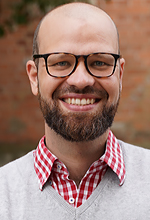
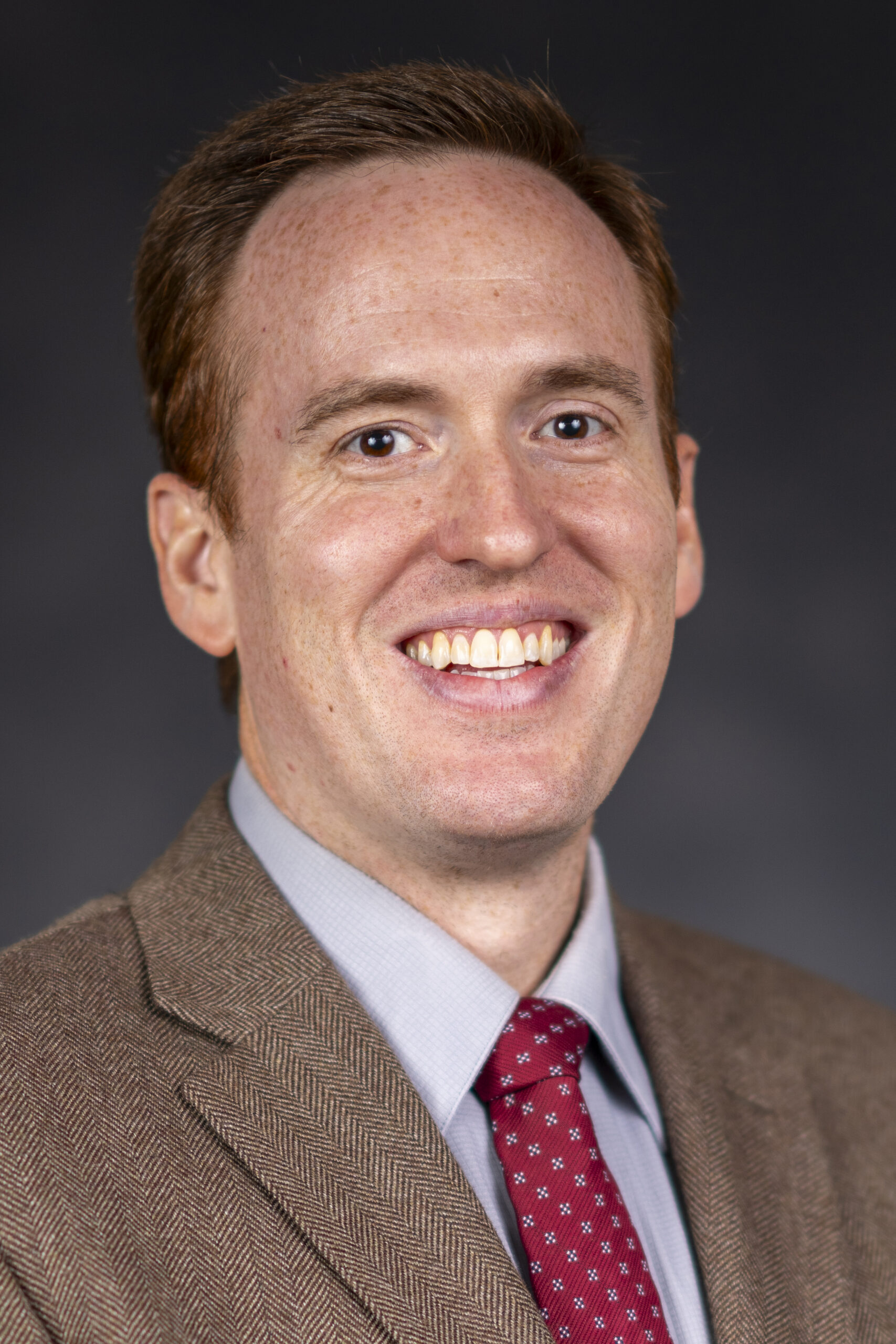
Stefan Gänzle serves as Head of Department at the Department of Political Science and Management, University of Agder. His research focuses on European Union political systems, international relations, regional integration, global governance, and multilevel policy dynamics. Current affiliation: Department of Political Science and Management, University of Agder Previous academic roles: Assistant Professor at University of British Columbia (2004–2008), Research Fellow at University of Jena (1999–2004) Research Interests EU political system and international relations Comparative regionalism in European and African contexts Global governance and multilevel policy frameworks EU external action and macro-regional strategies Recent Project : Rethinking Co-Creation of Digital and Environmental Policy in Multilevel Governance (RECODE-MLG) Research Groups : CeDiT (Centre for Digital Transformation), European integration and transnational governance
Professor Angelika Krehl serves as Professor for Economics, regional and sectoral structural policy and Director of the NIERS Institute (Lower Rhine Institute for Regional and Structural Research) at Niederrhein University of Applied Sciences since 2020. Her academic leadership spans regional economics, urban spatial structure analysis, and sustainability research within the Department of Economics. Her research focuses on theoretical foundations and empirical analysis methods of urban spatial structures, regional economics, economic geography, and GIS-based regional research with emphasis on sustainability aspects. Key methodologies include polycentricity measurement, density pattern analysis, and integrated spatial modeling using remote sensing data. Her work bridges urban morphology with economic development processes. Recent publications reveal strong trends in polycentric urban systems analysis, corporate regional responsibility frameworks, and sustainable land use economics. Over 70% of her recent work examines German metropolitan regions through morphological polycentricity lenses, with increasing focus on sustainability transitions and social innovation mechanisms since 2020. Methodological innovation in GIS integration and spatial metrics development characterizes her publication trajectory. Professor Krehl leads multiple major research initiatives including RediStar (diversity-sensitive startup funding), AUFBRUCH (sustainable bioeconomy transformation), R(h)einTex (textile recycling innovation), and R³ (corporate regional responsibility). Her institutional leadership extends to directing NIERS Institute and serving on the university's Advisory Board for Research and Transfer. As Director of NIERS Institute, she oversees collaborative research teams focused on regional structural policy, with particular emphasis on lignite phase-out governance, sustainable learning projects, and regional innovation ecosystems. Her work integrates academic research with practical policy implementation through close partnerships with regional stakeholders.
Benoît Dupont is a Full Professor at the School of Criminology, Faculty of Arts and Sciences, Université de Montréal. He holds the Canada Research Chair in Cybersecurity and directs the Centre de Criminologie Comparée (CICC). His research focuses on the co-evolution of technology and crime, cybersecurity resilience, and international cybercrime governance. He leads major initiatives such as the Smart Cybersecurity Network (SERENE-RISC), fostering interdisciplinary collaboration between academia, industry, and law enforcement. Education: Ph.D. in Political Science from the Université des Sciences Sociales de Toulouse 1 (2001). Academic roles include Director of the Cybersecurity Resilience Lab (LC2) and membership in various research networks like CÉRIUM and CICC. Research interests span cybercrime ecosystems, digital trust mechanisms, and the impact of technology on policing strategies. Notable contributions include studies on dark web operations, cyber-resilience practices, and polycentric governance frameworks for cyber threats. Key awards include the Prix Beccaria (2011) for criminological research and the Francopol Prize (2010) for combating cybercrime. He has supervised over 20 graduate students, many of whom focus on cybercrime prevention and digital forensics. Grants and partnerships include funding from NSERC, SSHRC, and the Canadian Cyber Threat Exchange. He collaborates internationally, including with Griffith University’s Centre of Excellence for Policing and Security in Australia. Labs/Teams: Directs the CICC and co-leads the Human-Centric Cybersecurity Partnership, emphasizing interdisciplinary cyber-resilience solutions.
Dr. Wolfgang Haupt is a researcher and Head of the Research Group 'Politics and Planning' at the Leibniz-Institut für Raumbezogene Sozialforschung (IRS) since December 2023. He holds a PhD in urban studies from the Gran Sasso Science Institute and Sant'Anna School of Advanced Studies and has a background in geography from Technische Universität Dresden. He is currently completing his habilitation at the Chair of Regional Planning, Brandenburg University of Technology Cottbus-Senftenberg, where he also teaches. His research focuses on urban climate governance, resilience, policy learning between cities, and institutional change. His research expertise spans urban climate governance, climate change adaptation and mitigation, urban resilience, policy diffusion, transnational municipal networks, cultural heritage in urban development, and institutional change. He has led and contributed to numerous research projects on local climate policy, city-to-city learning, and transformation pathways in German and European cities. His work emphasizes the role of smaller and structurally disadvantaged municipalities in climate action, challenging dominant narratives focused on large, well-resourced cities. The most recent publications reflect a strong trend in analyzing climate governance in medium-sized and smaller cities, the impact of social movements like Fridays for Future, the role of disruptive events (e.g., Tesla Gigafactory) in institutional change, and comparative studies of climate policy in European forerunner cities. His research increasingly integrates interdisciplinary and transdisciplinary approaches, examining the intersection of climate, migration, and infrastructure policies. Lead Project: Conflicts in Planning: Major Projects and their Potential for Institutional Change (2022–2025) Third-party funded project: Unlikely Climate Pioneers: Local Governments’ Net Zero Actions in Left Behind Places in the UK and Germany (2024–2026) Third-party funded project: Im Dialog mit Expert*innen aus der kommunalen Praxis: Was können wir aus der Migrations- und Klimakrise lernen? (2024–2025) Cross-departmental project: Disruption and Spatial Development (2022–2025) Habilitation project: Forerunner, Follower and Laggards: Governance of Climate Change in German Cities (2022–2025) Dr. Haupt regularly supervises and collaborates with early-career researchers and contributes to academic and public discourse through teaching, conference presentations, and expert policy dialogues. He is actively involved in transdisciplinary research, engaging with municipal practitioners and policymakers to bridge research and practice in urban planning and climate governance. He leads multiple research teams focusing on climate governance, institutional change, and urban resilience.
Stefan Schmid is a Professor of International Management and Strategic Management at ESCP Business School's Berlin Campus. His research focuses on multinational corporation structures, subsidiary roles, corporate governance, and internationalization strategies. University: ESCP Business School, Berlin Campus Department: International Management and Strategic Management Academic Rank: Professor Professor Schmid's work examines foreign subsidiaries as centers of competence, international corporate governance, and strategic standardization versus adaptation. His case studies span industries like automotive, retail, and consumer goods, analyzing companies such as Audi, Adidas, and Lidl. He has co-edited the "mir-Edition" series since 2008. Recent article trends highlight his expertise in cross-border acquisitions, subsidiary performance evaluation, and global retail expansion strategies. His research often integrates network theory and stakeholder management perspectives. Key students include Katharina Kretschmer (subsidiary performance), Tobias Dauth (top management internationalization), and Philipp Grosche (value chain coordination). He has supervised dissertations on service offshoring, subsidiary relationships, and international market strategies.
Wenzheng Li is a Visiting Lecturer in the Department of City and Regional Planning at Cornell University’s College of Architecture, Art, and Planning. He earned his Ph.D. in City and Regional Planning from Cornell in August 2024, following a Master’s in Regional Planning from the same institution and a Bachelor’s in Remote Sensing from China University of Geosciences. His research centers on regional-scale land use planning, sustainable urban forms, polycentric development, and environmental sustainability, with applications in Germany, China, and Sub-Saharan Africa. He employs GIS, remote sensing, spatial econometrics, and urban data analytics to investigate urban dynamics and planning policy impacts. His recent publications and conference presentations focus on topics such as the urban heat island effect, polycentric development, and regional equity. These works reveal consistent trends in analyzing spatial configurations for sustainability and equity, particularly through quantitative modeling and cross-national comparisons. C.V. Starr Fellowship, the Einaudi Center of Cornell University, 2023 Li teaches courses in GIS, urban data science, and quantitative methods, emphasizing the integration of machine learning and GeoAI with planning theory. His professional experience includes work on equitable transportation solutions in Tompkins County. He has not advised any students yet, and no grant details beyond the fellowship are mentioned. He is actively involved in research projects on sustainable urban forms in Sub-Saharan Africa, regional governance in China and the U.S., and environmental amenity valuation, reflecting a strong interdisciplinary and global approach to urban and regional planning challenges.
Mark Lubell is a Professor of Environmental Science and Policy at the University of California, Davis, and Director of the Center for Environmental Policy and Behavior. His work focuses on cooperation problems and decision-making in environmental, agricultural, and public policy contexts, particularly addressing the Tragedy of the Commons. He applies social science theory to provide actionable policy recommendations for real-world governance challenges. Dr. Lubell’s research emphasizes polycentric governance systems, climate adaptation, and the intersection of environmental science with policy implementation. He explores how institutions and networks influence environmental decision-making, with a focus on California’s agricultural and water management systems. His recent work examines barriers to sustainable practices, collective action dynamics, and the role of knowledge in governance reform. Notable research areas include sea-level rise adaptation strategies in the San Francisco Bay Area, sustainable nitrogen management practices, and the governance of invasive species. Lubell’s studies often highlight the importance of institutional design and interdependence among actors in achieving environmental and social objectives. His academic contributions span over two decades, with recent publications addressing topics like climate change education equity, unintended consequences of policy communication tools, and the role of technical advisors in agricultural sustainability. Lubell’s work bridges theoretical frameworks with practical applications, aiming to enhance resilience in socio-ecological systems through improved governance structures.
Aleksander Godhe is a Research Associate in Dispute Resolution at King’s College London’s Dickson Poon School of Law, affiliated with the Centre of Construction Law & Dispute Resolution since 2022. He holds visiting roles at Stockholm University’s Stockholm Centre for Commercial Law and co-founded the Young Investment Treaty Forum at the British Institute of International and Comparative Law. His research focuses on construction law, international arbitration, and anti-corruption in EU policy. Godhe studied International Business Law (LLM, LSE) and Law with European Law (LLB, Nottingham), with a year abroad at the University of Vienna. His work includes empirical studies on UK construction adjudication, contributions to Law Commission consultations on arbitration reform, and publications on investor-state dispute settlement. Key interests include harmonizing adjudication systems, evidence exclusion in arbitration, and corruption mitigation in international trade. He serves as a tribunal secretary and consultant in arbitrations under DIAC, LCIA, and ICSID rules. Godhe’s recent publications (2023–2025) address topics like EU strategic autonomy and anti-corruption, construction arbitration trends, and evidence rules in international disputes. He co-authored reports advocating for diversity in adjudication panels and transparency reforms. His work bridges legal theory and practice, engaging with practitioners through high-profile taskforces and policy responses. Awarded an Associate Fellowship by the Higher Education Academy, Godhe is a member of The Society of Construction Law and Swedish Arbitration Association. His interdisciplinary approach combines legal analysis with policy advocacy, reflecting his dual academic and consulting roles.
Francesca Pia Vantaggiato is a Senior Lecturer in Public Policy at King's College London, affiliated with the School of Politics & Economics and the Department of Political Economy. Her research focuses on collective action problems, bureaucratic politics, and environmental/energy policy within multilevel governance systems. She holds a PhD in Political Science from the University of East Anglia and previously worked at the Florence School of Regulation (European University Institute) and the Centre for Competition Policy. Research Interests: Environmental Policy and Climate Adaptation Energy Policy and Regulatory Networks Polycentric Governance and Policy Subsystems Bureaucratic Dynamics and EU Institutions Recent Work Themes: Her publications analyze governance challenges in climate adaptation (e.g., sea-level rise), EU regulatory networks, and the interplay between institutional structures and policy outcomes. Key topics include porous bureaucracies, functional differentiation in governance networks, and scale dependencies in climate policy. Labs/Teams: She contributes to interdisciplinary groups like the Quantitative Political Economy Research Group , King's Climate Research Hub , and Public Policy and Regulation Research Group .
Dr. Zheng Stefanie Chai is a Lecturer in Business Management at York St John University's London Campus. She holds a PhD from the University of Edinburgh, an MSc from Bayes Business School, and a BSc from Lancaster University. Her research focuses on social innovation, governance of civil society organizations, and crisis management. She has explored topics such as civil society responses to crises like the 2020 pandemic and the governance dynamics of urban commons. Her work has been published in venues like the European Group for Organizational Studies. Chai teaches social innovation, social enterprise, and broader business disciplines at both undergraduate and postgraduate levels. She employs qualitative research methods and systems thinking in her studies. Her academic background includes teaching assistant roles at the University of Edinburgh during her PhD and current lecturer responsibilities in the MBA program at York St John. She collaborates on projects examining civil society governance structures and polycentric frameworks. Chai is a Fellow of the Higher Education Academy (FHEA).
J. B. Ruhl serves as the David Daniels Allen Distinguished Chair in Law at Vanderbilt University School of Law, where he has established himself as a leading scholar at the intersection of environmental law, climate policy, and complexity theory. His interdisciplinary work bridges legal doctrine with ecological and systems science, focusing on adaptive governance frameworks for 21st-century environmental challenges. Ruhl's research centers on transforming environmental law to address climate change through innovative frameworks like ecosystem services integration , adaptive management , and complexity theory . His scholarship demonstrates how legal systems can evolve to manage nonstationary environments, particularly through reimagining regulatory approaches for climate adaptation infrastructure, endangered species protections, and sustainable development. Key contributions include foundational work on legal complexity metrics and the application of panarchy theory to environmental governance. Analysis of his recent publications reveals a pronounced shift toward climate disruption law , with increasing focus on 4°C scenarios, Green New Deal implementation challenges, and pandemic-environmental system interactions. His work consistently identifies structural barriers in existing environmental statutes while proposing concrete administrative reforms - particularly regarding permitting systems, regulatory flexibility, and cross-agency coordination. The trajectory shows growing emphasis on practical implementation frameworks rather than theoretical critiques. Ruhl maintains extensive collaborative networks across environmental law, with frequent co-authorship with scholars like James Salzman, Robin Craig, and Keith Hirokawa. His work appears in premier journals including Vanderbilt Law Review , Environmental Law , and Stanford Environmental Law Journal , demonstrating sustained influence in both legal and environmental policy circles. Current research increasingly engages with computational legal studies and systemic risk modeling, reflecting his pioneering integration of complexity science into legal scholarship.
Christoph Bernhardt is a Senior Researcher and former director of the research focus “Contemporary History and Archives” at the Leibniz Institute for Research on Society and Space (IRS) in Erkner. He is also an adjunct professor of modern and contemporary history at the Institute of History within the Faculty of Philosophy at Humboldt University of Berlin. His academic affiliations reflect a strong commitment to interdisciplinary urban and environmental history, particularly focusing on the built environment in the German Democratic Republic (DDR) and broader European contexts. Leibniz Institute for Research on Society and Space (IRS), Erkner: Senior Researcher, former Director (until April 2023), Deputy Director (2019–2022) Humboldt University of Berlin: Adjunct Professor, Institute of History, Faculty of Philosophy Member of the Sustainability Steering Group of the Leibniz Association and the Sustainable University Commission of Humboldt University Christoph Bernhardt’s research centers on European urban and environmental history, with a particular emphasis on Berlin, socialist urban planning in the DDR, Cold War architecture, and transnational urban development. His work critically examines the interplay between political power, spatial governance, and environmental change. He has explored topics such as the “autogerechte Stadt” (car-friendly city), polycentric governance along the Upper Rhine, and the role of urban spaces in totalitarian regimes. His methodological approach often bridges historical analysis with digital humanities, as seen in his work on 3D reconstructions of Nazi-era forced housing and digital archiving of architectural collections. An analysis of his most recent publications reveals a consistent focus on the political dimensions of urban space across different historical periods—from imperial Berlin and Nazi Germany to the DDR and Cold War transnational networks. His work increasingly engages with transnational and comparative frameworks, especially in environmental governance and socialist architecture, highlighting entanglements between East and West, Europe and Asia. He frequently collaborates on edited volumes and special journal issues, demonstrating a leadership role in shaping scholarly discourse in urban history. Christoph Bernhardt is actively involved in academic service and sustainability initiatives. He has served as co-editor of the journal Moderne Stadtgeschichte and the book series Beiträge zur Stadtgeschichte und Urbanisierungsforschung . He was a co-applicant for the DFG Research Training Group “Cultural and Technical Values of Historic Buildings” and a principal investigator in the Leibniz Research Network “Value of the Past”. He has also contributed to numerous third-party funded projects on urban transformation, Cold War planning, and historical governance. His leadership roles in academic commissions and editorial boards underscore his influence in the field. Co-editor, Moderne Stadtgeschichte Co-editor, Beiträge zur Stadtgeschichte und Urbanisierungsforschung (Franz Steiner Verlag) Full member, Historical Commission of Berlin Former board member, Society for Urban History and Urbanization Research (GSU, 2000–2022) Former member, International Committee of the European Association for Urban History (EAUH, 2018–2024) Bernhardt leads and participates in several major research projects, including “Crafting Entanglements: Afro-Asian Pasts of the Global Cold War” (2023–2026), “Urban Authenticity: Creating, Contesting, and Visualising the Built Heritage in European Cities Since the 1970s (UrbAuth)”, and studies on urban planning in Nazi Germany and the DDR. His work often involves interdisciplinary collaboration, especially in digital reconstruction, cartographic analysis, and transnational historical networks.
Dr. Oliver Roider is a researcher at the Institute of Transport Studies , part of the University of Natural Resources and Life Sciences, Vienna (BOKU) . With a career spanning over two decades, he specializes in transport modeling, mobility behavior analysis, and sustainable transport policy development. Education : PhD from BOKU (2012), Civil Engineering degree from BOKU (1987-1994) Key Affiliations : Institute of Transport Studies (BOKU), University of Applied Sciences Technikum Wien (2005-2021) His research focuses on transport models , mobility behavior , and public transport optimization , with particular emphasis on transport economics and rural mobility solutions . He has led numerous projects analyzing the impact of mobility hubs , sustainable transport policies , and autonomous vehicle integration in rural areas. Recent publications examine shared micromobility adoption , mobility hub deployment , and stakeholder governance in transport initiatives . His work has been supported by diverse funders including the European Commission , FFG , and City of Vienna . Scientific Awards : 2012 Anerkennungspreis für Dissertationen from Austrian Road & Rail Research Society As an active member of academic committees, he has served in Austrian Society for Transport Science and contributed to QUALIVERMO quality guidelines . He has organized international conferences like IATBR 2024 and presented at key events in Edinburgh, Brussels, and Washington DC.
Dr. Michiel van Meeteren is an Assistant Professor in Human Geography and Spatial Planning at Utrecht University's Faculty of Geosciences. His research focuses on the historical and contemporary evolution of geographic thought, urban systems, and interdisciplinary approaches in geography. He holds a PhD and specializes in bridging social sciences, natural sciences, and humanities through geographical perspectives. Research interests include the future of geography as an interdisciplinary field, digital transformation in urban studies, and the role of geography in addressing climate change, technological development, and urbanization. His work emphasizes overcoming internal boundaries between human and physical geography to address global challenges. Publications (2019-2022) explore topics like global labor division, digital transformation in services, urban centrality theories, and historical analyses of Dutch applied geography. His recent work highlights urban network analysis and the advanced producer services complex in financial geographies. Scientific Awards: RSAI Best Dissertation in Regional Science (2016) Teaching involves courses on global urban transformations, research design, and key thinkers in geography. He advises on master thesis proposals and contributes to initiatives like PtS - Transforming Cities.
Connor Clark is an Assistant Professor in the Department of Hospitality, Hotel Management and Tourism at Texas A&M University’s College of Agriculture & Life Sciences. He holds a B.A. from Brigham Young University, an M.Sc. from Thunderbird School of Global Management, and a Ph.D. in Community Resources and Development (Tourism Management emphasis) from Arizona State University. His research focuses on sustainable tourism development, cross-border tourism dynamics, community resilience, and the intersection of natural resource management with tourism in Latin America and the U.S.-Mexico border region. Dr. Clark has taught courses ranging from event planning to international tourism and has conducted funded research on ecological restoration and tourism in transboundary ecosystems. Dr. Clark’s professional experience includes prior academic roles at Georgia Southern University and consulting work in Peru to empower small businesses. His awards include the Best Qualitative Paper Award at the 2022 Travel and Tourism Research Association Conference and the Dr. Mark and Mrs. Judy Searle Graduate Scholarship. He is affiliated with Texas A&M AgriLife, contributing to interdisciplinary efforts in agricultural and environmental sciences. His research emphasizes innovative methodologies like photo-elicitation and scenario planning to address tourism challenges, particularly in militarized border regions and post-pandemic contexts. He explores how technology impacts millennial travel experiences and how gamification can enhance cultural tourism engagement. Dr. Clark’s work bridges academic research and practical applications, such as using PPGIS tools for stakeholder engagement in tourism planning and advocating for polycentric governance models in natural resource management.