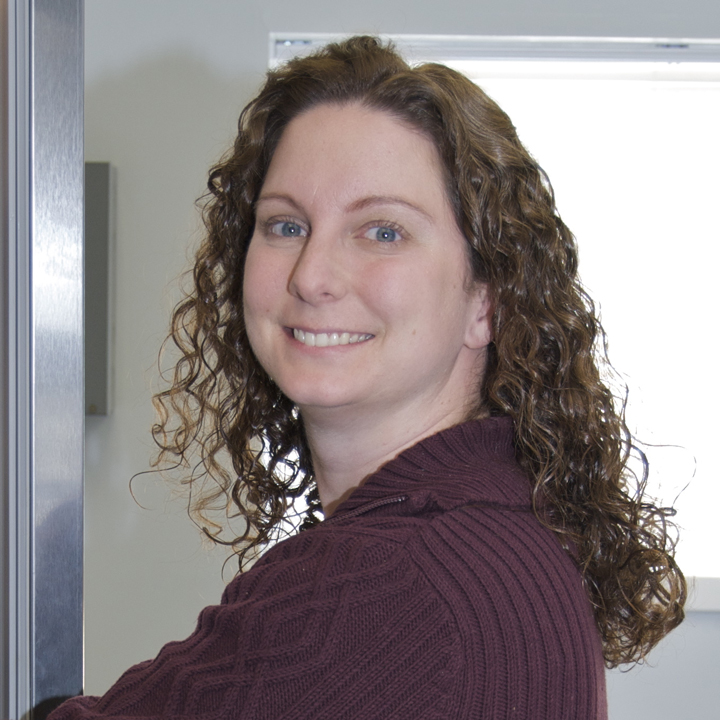
Jennifer F. Biddle is the Mary A.S. Lighthipe Professor of Marine Studies at the University of Delaware's School of Marine Science & Policy. Her research focuses on microbial ecology of marine systems, deep biosphere life, benthic archaea and bacteria, and geobiology. She leads the Biddle Lab, which explores subsurface microbial processes and their impacts on global biogeochemical cycles. Ph.D., Biochemistry and Molecular Biology, Pennsylvania State University (2006) B.S. with Honors, Biotechnology, Rutgers University (1999) Her work spans topics such as Microbial diversity in deep marine sediments Methane cycling in coastal and open ocean environments Interactions between marine organisms and their microbiomes Biogeochemical processes in extreme environments Recent metagenomic studies from her lab reveal conserved microbial functions across tropical reef fish guts and dynamic archaeal-bacterial communities in Atlantic Ocean sediments. The Biddle Lab maintains active engagement with scientific communities through social media platforms like Twitter and Facebook, emphasizing outreach and collaborative science.
Dr. María Yanotti serves as a Senior Lecturer in Economics at the Tasmanian School of Business and Economics (TSBE) within the University of Tasmania. Her academic appointment is based at the Rivers Edge Building, Inveresk campus in Launceston, Tasmania. With a specialization in housing finance, banking, and household economics, Dr. Yanotti has established herself as an expert in mortgage markets and residential property investment, frequently sought for media commentary on these subjects. Dr. Yanotti's research interests span housing finance, mortgage markets, residential property investment, banking economics, and household financial decision-making. Her work frequently examines the intersection of financial systems and housing markets, with particular attention to Australian market dynamics. She has published extensively on mortgage choice determinants, financial inclusion, and the relationship between housing finance systems and economic outcomes. Her research methodology often combines economic theory with sophisticated statistical analysis to address practical questions in housing finance. Analysis of Dr. Yanotti's publication record reveals a strong focus on housing economics and mortgage markets, with significant contributions to understanding residential investment patterns, mortgage choice determinants, and housing finance systems. Her research spans both theoretical and applied economics, with numerous publications in leading domestic and international journals. She has also expanded her research interests to include environmental economics topics such as marine plastic pollution valuation and climate change impacts, demonstrating interdisciplinary reach while maintaining her core expertise in housing finance. Dr. Yanotti has received research funding from the Australian Housing and Urban Research Institute (AHURI) and is affiliated with the Economic Society of Australia and the Women in Economics Network. Her work on residential property investment, particularly the phenomenon of investors favoring properties near their own residence, has received significant attention in both academic and policy circles. At the University of Tasmania, Dr. Yanotti teaches across multiple economics and finance subjects including microeconomics, statistics and quantitative methods, economics for managers, finance for managers, and data analysis for managers. Her teaching reflects her research expertise, connecting theoretical economic concepts with practical applications in housing and financial markets.
Camelia E. Hostinar is an Associate Professor in the Department of Psychology at the University of California, Davis. She is affiliated with the Center for Mind and Brain and the Center for Poverty and Inequality Research. Her research focuses on how social environments influence health through stress-response systems, particularly linking early-life stress to long-term disease trajectories and protective processes. Ph.D., University of Minnesota, Institute of Child Development (2013) M.A., Child Psychology, University of Minnesota (2010) B.S., Psychology, Towson University (2008) Dr. Hostinar's research spans childhood poverty, early-life adversity, and their impacts on physical and mental health. She integrates endocrine, immune, genetic, and behavioral measures to study stress buffering mechanisms and self-regulatory skill development. Her recent work also addresses environmental health risks like air pollution and pandemic-related stress. Recent publications show interdisciplinary trends combining developmental science, neuroimmunology, public health, and machine learning. Key topics include social buffering of stress, neuroinflammation, childhood adversity biomarkers, policy-relevant environmental research, and pandemic-induced developmental disruptions. 2024 Lab Safety Award, UC Davis 2022-2025 Dean’s Faculty Fellow 2023 Distinguished Undergraduate Teaching Award 2022 Boyd McCandless Award 2019 SRCD Early Career Contributions 2015 APS Rising Star Award 2014 NIH F32 Postdoctoral Fellowship As director of the Social Environment and Stress (SES) Lab, she mentors graduate students in studying social-environmental influences on health. Her teaching includes developmental psychology, health psychology, and research methods courses.
Theodoros Zachariadis is a Professor and Interim Director of the Energy, Environment and Water Research Center (EEWRC) and the Science and Technology Driven Policy and Innovation Research Centre (STeDI-RC) at The Cyprus Institute. He previously served as Dean of the Faculty of Geotechnical Sciences and Environmental Management at the Cyprus University of Technology (2015–2020), and as Assistant/Associate Professor there (2009–2020). His expertise spans energy and environmental policy, climate change mitigation, and environmental taxation. He holds a Doctorate in Mechanical Engineering from Aristotle University of Thessaloniki. **Research Interests:** Techno-economic analysis of energy, environmental, and transport policies; environmental taxation; climate policy integration with Sustainable Development Goals (SDGs); decarbonization strategies; and green tax reforms. His work emphasizes cost-effective climate policies and equitable transitions. **Awards:** 2009 Research Prize of Cyprus (Republic of Cyprus) and 2019 Environmental Prize (President of Cyprus). He has been ranked in the top 2% of globally cited academics in Energy (2020s). **Affiliations:** Vice Chair of the Scientific Committee of the European Environment Agency, Manager of SDSN Europe, Leadership Council member of SDSN Cyprus, and former Visiting Professor at Aarhus University. He advises on EU climate policies and sustainable development. **Grants & Projects:** Extensive research on Cyprus’ energy policies, EU climate frameworks, and decarbonization pathways. Key outputs include analyses of the EU’s 'Fit for 55' package, green recovery strategies post-pandemic, and cross-border energy cooperation in the Eastern Mediterranean. **Labs/Teams:** Leads research teams at EEWRC and STeDI-RC focusing on policy design, climate adaptation, and techno-economic modeling. Collaborates with international networks like Green Budget Europe and the Journal *Energy Economics* (associate editor).
Professor Dinos Arcoumanis FREng is a distinguished academic at City, University of London, where he has served as Professor since 2000. He previously held academic positions at Imperial College London from 1988-2000, progressing from Lecturer to Reader and ultimately to Professor of Internal Combustion Engines. At City University, he has held significant leadership roles including Head of the Aeronautical, Civil and Mechanical Engineering Department, Dean of the School of Engineering & Mathematical Sciences, Pro-Vice-Chancellor for Research and International Links, and Deputy Vice-Chancellor (Research & International) until August 2014. He remains actively involved in research and academic leadership, currently serving as Director of the International Institute of Cavitation Research and Coordinator of the World Cities World Class (WC2) University Network. Professor Arcoumanis holds undergraduate and graduate degrees in Physics, Engineering and Mechanical Engineering from the Aristotelian University of Thessaloniki, Greece (1973), the University of California at Irvine, USA (1980), and the Imperial College of Science, Technology and Medicine, London (1984), respectively. His primary research focuses on internal combustion engines, with specific expertise in combustion, exhaust emissions, and engine lubrication. Professor Arcoumanis has pioneered the application of laser diagnostics and computational fluid dynamics to study internal combustion engines, with particular interest in automotive fuels including renewable and alternative fuels. His work bridges fundamental fluid mechanics with practical engine applications, addressing critical environmental engineering challenges in the transportation sector. His recent research has expanded into cavitation phenomena, fuel cell technology, and the development of sustainable propulsion systems for future transportation needs. Professor Arcoumanis's extensive publication record demonstrates a clear evolution in research focus, beginning with fundamental studies of diesel engine combustion and progressing toward advanced fuel injection systems, alternative fuels, and environmental sustainability. His work consistently bridges theoretical fluid mechanics with practical engine applications, with recent emphasis on cavitation phenomena in fuel systems and the integration of renewable energy technologies with traditional combustion systems. The interdisciplinary nature of his research connects mechanical engineering principles with environmental science, materials science, and energy systems engineering. Professor Arcoumanis has received numerous prestigious awards and honors throughout his career: 1991 Dugald Clerk Prize of IMechE 1995 and 1998 Arch T. Colwell Merit Award of the Society of Automotive Engineers Elected Fellow of the Royal Academy of Engineering (FREng) in 2001 Honorary doctorate from St. Petersburg State Polytechnic University of Russia (2009) Professor Arcoumanis has made significant contributions to academic leadership and professional service. He founded the International Journal of Engine Research (JER) in 1999 and serves as its Editor for Europe. He has coordinated the World Cities World Class (WC2) University Network since 2010, which brings together international institutions in major cities to address research challenges in transport, global health, business, and cultural industries. He has also served as a consultant to Brussels (DG17) and Bechtel Ltd. on the Auto-oil II European Programme (1998-2000), and was appointed Ambassador-at-Large of the Hellenic Republic for Energy Policy and New Technologies in September 2012. His research has been supported by various funding bodies including the Lloyd's Register Educational Trust, which funds the International Institute of Cavitation Research that he directs. Professor Arcoumanis leads the International Institute of Cavitation Research, a partnership between City University London, Loughborough University, and Delft University of the Netherlands. He has established collaborative research teams focused on engine combustion, fuel injection systems, and alternative propulsion technologies. His research group has developed advanced experimental facilities for studying fuel spray dynamics, combustion processes, and cavitation phenomena in engine systems. These teams regularly collaborate with automotive industry partners and international research institutions to address cutting-edge challenges in engine technology and sustainable transportation.
Myriam M.A.H. Cloodt serves as an Associate Professor of Open Innovation and Entrepreneurship at the Department of Innovation, Technology Entrepreneurship & Marketing (ITEM) within the School of Industrial Engineering at Eindhoven University of Technology (TU/e). She is also affiliated with EAISI High Tech Systems as a University Researcher. Her academic career spans over two decades, with a continuous focus on understanding innovation processes in complex business environments. Dr. Cloodt earned her MSc in Business Economics from Maastricht University in 1997. After working as a lecturer for two years, she began her PhD research at the Department of Organization & Strategy, completing her dissertation at METEOR (Maastricht University) on measuring innovative performance of high-tech companies after mergers and acquisitions. She joined Eindhoven University of Technology in July 2004 as a researcher at the School of Technology Management, becoming Assistant Professor in June 2006, and was promoted to Associate Professor of Open Innovation and Entrepreneurship in August 2017. Her research focuses on open innovation, corporate entrepreneurship, and strategic management, with particular interest in corporate venturing, strategic technology alliances, mergers and acquisitions, network analysis, and value constellations within innovation ecosystems. Dr. Cloodt's work bridges academic theory and practical application, as evidenced by her participation in industry projects for companies and innovation ecosystems like the High Tech Campus Eindhoven. Her publications span prestigious journals including Research Policy, Journal of Product Innovation Management, and Technological Forecasting and Social Change, as well as book chapters for Oxford University Press. Analysis of her recent publications reveals a strong trajectory toward circular economy applications, particularly in plastics innovation, alongside continued work on innovation ecosystems, science parks, and military innovation contexts. Her research demonstrates methodological diversity, employing network analysis, case studies, and stated choice experiments to investigate complex innovation phenomena across different sectors and organizational contexts. Best Paper Award - Mature PhD Student at the ESU European University Network on Entrepreneurship Conference (2021) Dr. Cloodt actively supervises graduate students and has contributed to numerous research projects, including C-PlaNeT (Circular Plastics Network for training), SEE-V-Lab, and the Brabant Center of Entrepreneurship. Her professional engagements extend to developing publications for organizations such as Adviesraad voor het Wetenschaps- en Technologiebeleid (AWT) and Het Financieele Dagblad. In teaching, she contributes to the BSc program in Industrial Engineering & Management Science, the MSc program in Innovation Management, and the Certificate program in Technology Entrepreneurship & Management. Her work aligns with UN Sustainable Development Goals, particularly through contributions to circular economy research and sustainable innovation practices. Dr. Cloodt maintains active collaborations with industry partners and participates in significant academic conferences including the Annual World Open Innovation Conference where she serves on program committees.
Professor Henny Osbahr is a faculty member at the University of Reading, specializing in climate change adaptation, agricultural sustainability, and gender dynamics in rural development. Her work focuses on understanding how farmers perceive and adapt to climate variability, with a particular emphasis on Africa and South Asia. She has collaborated extensively on projects addressing soil fertility, groundwater management, and the socio-cultural dimensions of agricultural practices. Her research interests span environmental policy, participatory methodologies, and the empowerment of marginalized groups through sustainable farming practices. Notable contributions include studies on Zero Budget Natural Farming in India and the role of cultural beliefs in shaping climate responses in Ghana. Recent articles highlight her focus on biodegradable agricultural materials' environmental impacts, gender equity in sugarcane farming, and youth perspectives in Philippine agriculture. She has authored reports on groundwater resilience in Burkina Faso and co-developed the RAINWATCH climate monitoring system, demonstrating practical applications of her research in development contexts. Professor Osbahr's interdisciplinary approach integrates quantitative analysis with qualitative insights from farming communities, ensuring her work bridges academic research and actionable policy recommendations.
Don Butler is a Professor at the ANU College of Law, Governance and Policy within the ANU Law School. He holds a BSc (hons 1) and PhD from the University of Queensland. His research focuses on climate change mitigation, carbon sequestration, biodiversity conservation, and environmental policy. He leads projects addressing carbon offset integrity, forest regeneration, and policy reform. His work spans savanna ecosystems, forest management, and the impacts of climate policy on land-use practices. Education: BSc (hons 1) and PhD (University of Queensland). Research Interests: Climate Change, Carbon Offsets, Biodiversity Conservation, Environmental Policy, Vegetation Dynamics, and Sustainable Agriculture. Collaborations include analyses of carbon projects in Australia, policy evaluations for the Clean Energy Regulator, and studies on groundwater-vegetation interactions. Projects: Includes developing improved carbon accounting methods for native regrowth, analyzing the National Stewardship Trading Platform, and investigating maladaptation risks in savanna carbon projects. His work emphasizes policy integrity and ecological outcomes. Advocacy and Grants: Focuses on policy reforms to enhance carbon market integrity and biodiversity co-benefits. Engages with government agencies and NGOs to shape climate and land management policies. Labs/Teams: Collaborates with the ANU Climate Change Institute and interdisciplinary teams on carbon offset methodologies and environmental governance.
Duc Duy (Louis) Nguyen serves as Professor in Finance at Durham University Business School, where he joined in 2021 after previously holding positions as Associate Professor of Finance at King's College London and Assistant Professor in Banking and Finance at the University of St Andrews. His academic journey includes a PhD in Finance from the University of Edinburgh, an MSc (Distinction) in Accounting, Finance, and Management from the University of Bristol, and a BSc (Hons) in Computing from the National University of Singapore. Nguyen's research spans empirical corporate finance, banking, climate finance, and household finance, with publications in top-tier journals including Review of Financial Studies , Management Science , Journal of Financial and Quantitative Analysis , and Review of Finance . His work has been featured in prominent media outlets such as Forbes , Harvard Business Review , BBC , and the Boston Globe , and has influenced policy discussions with citations by the U.S. Senate Committee on Banking and the United Nations Environment Programme. His research portfolio demonstrates evolving interests from traditional banking and corporate governance topics toward increasingly important areas like climate finance and social finance. Nguyen has established productive collaborations with researchers including Jens Hagendorff, Vathunyoo Sila, and Ivan Lim, resulting in numerous high-impact publications. David Hume Publication Prize (2015) 2025 Vietnam International Conference in Finance Best Paper Award Best Registered Report on Politics and Corporate Power, Review of Corporate Finance Studies Semi-finalist, 2018 FMA Europe Best Paper Award Finalist, 2019 FMA Asia/Pacific Best Paper Award Finalist, 2015 FMA European Best Paper Award As an active contributor to the academic community, Nguyen serves as Associate Editor for the European Journal of Finance and the British Accounting Review . He regularly presents at international conferences and meetings organized by central banks, governments, and international organizations, including the Federal Reserve Banks of New York and St Louis. His research has been funded by prestigious organizations including the British Academy/Leverhulme Trust and the Carnegie UK Trust. Nguyen currently supervises PhD students Bingzhi Zhang and Jing Wei, continuing his commitment to developing the next generation of finance scholars.
Sohail Ahmad is a Senior Lecturer in Town Planning and Programme Leader of the BSc (Hons) Town Planning Programme at the School of Computing, Engineering and Physical Sciences, University of the West of Scotland. He holds a PhD in City Planning from Seoul National University and is a Chartered Member of the Royal Town Planning Institute (MRTPI), Fellow of the Higher Education Academy (FHEA), and Fellow of the Royal Geographical Society (FRGS). His career includes roles at the University of York (Lecturer in Sustainable Cities), University of Glasgow (contributor to SHLC and CaCHE research initiatives), and postdoctoral fellowships at the Mercator Research Institute on Global Commons and Climate Change (Berlin) and UNU-IAS (Tokyo). He previously served as an Assistant Professor at Vijayawada’s School of Planning and Architecture. Research focuses on four themes: climate change mitigation in cities (e.g., heat pumps in Scotland), housing inequality in Indian subcontinent cities, urbanisation impacts on well-being, and neighbourhood governance in Asia/Africa. Over 35 peer-reviewed articles and book chapters highlight his work, funded by organisations like the Japan Society for the Promotion of Science and Scottish Funding Council. Teaching emphasizes student-centred learning with problem-based approaches. Current research directions include heating/cooling strategies for Global North/South cities. Collaborations target housing developers, energy companies, and think tanks like ICLEI and C40. He serves as External Examiner at Heriot-Watt University (2023–2027).
Catherine Peters is the George J. Magee Professor of Geosciences and Geological Engineering, and Professor of Civil and Environmental Engineering at Princeton University. She serves as Director of the Program in Geological Engineering and holds associated faculty roles in the High Meadows Environmental Institute (HMEI), Princeton Institute for the Science and Technology of Materials (PRISM), and the Andlinger Center for Energy and the Environment. Her work focuses on environmental chemistry, geochemical reactions, and subsurface energy technologies, including carbon sequestration, geothermal energy, and shale gas extraction. Education: PhD (Joint degree in Civil Engineering and Engineering & Public Policy), Carnegie Mellon University, 1992 MS in Civil Engineering, Carnegie Mellon University, 1987 BSE in Chemical Engineering, University of Michigan, 1985 Research Interests: Dr. Peters explores environmental challenges of subsurface energy systems through experimental, imaging, and modeling approaches. Key areas include CO2 storage in saline aquifers, geochemical reaction kinetics, and remediation of organic pollutants. Her lab uses synchrotron-based techniques and reactive transport simulations to study processes at nanometer to basin scales. She emphasizes collaborative research with national labs and universities. Recent Article Trends: Her publications (2023-2025) highlight advancements in carbon mineralization, hydrogen storage security, microbial geochemical interactions, and multi-scale material characterization. These works bridge environmental engineering, geochemistry, and data science to address decarbonization challenges. Awards & Leadership: Fellow, Association of Environmental Engineering and Science Professors (AEESP) since 2016 2012 EPA P3 Award for the 'Power-in-a-Box TM' sustainable design project Princeton Commendation List for Outstanding Teaching Grants & Collaborations: Funded by NSF, DOE, and EPA, her projects address subsurface energy systems and climate mitigation. She collaborates with national labs via synchrotron facilities and leads initiatives like the Grand Challenges Program. Courses taught include environmental engineering, statistical methods, and geochemical kinetics modeling. Labs & Teams: Affiliated with HMEI, PRISM, and the Andlinger Center, she integrates interdisciplinary teams to advance sustainable energy and environmental solutions. Her group’s work often intersects with global sustainability and equity goals.
Dr. Pao-chen Tang is an Assistant Professor in Film Studies at the University of Sydney, affiliated with the School of Arts and Social Sciences. He holds a Joint PhD in Cinema and Media Studies & East Asian Languages and Civilizations from the University of Chicago. His research focuses on the intersection of film aesthetics and ecopolitics, particularly in East Asian cinema, exploring animism, nonhuman agency, and environmental humanities. Education: PhD (University of Chicago), Joint PhD in Cinema and Media Studies & East Asian Languages and Civilizations. Research Interests: Ecocinema, animal studies, transnational cinema, film production culture, health humanities, and East Asian media. Current projects include studies on neo-industrialization in Chinese cinema and the aesthetics of technology in genres like martial arts and sci-fi. Recent Articles: Recent works include Producing a Future on a Wandering Earth (2023), analyzing the sci-fi film The Wandering Earth , and Cinema Wears the Mask (2023), exploring animism in French documentary. His 2025 book The Animist Imagination in East Asian Cinema theorizes animist filmmaking modes. Awards: Includes the Nexus Asia Travel Grant (2025), Overseas Pioneers Grants (2024), and multiple fellowships. Shortlisted for the Screen Award (2024) and BAFTSS Best Journal Article (2024). Teaching & Grants: Teaches courses like FILM1000 and supervises Chenlei Xiao. Grants include the USyd-NTU Ignition Grant (2024) and Franke Institute Dissertation Fellowship (2019). Labs/Teams: Member of the China Studies Centre and Sydney Environment Institute, collaborating on interdisciplinary projects.
Dr. Saer Samanipour is a Visiting Professor at the Van 't Hoff Institute for Molecular Sciences, part of the Faculty of Science at the University of Amsterdam. His research focuses on advanced analytical techniques for environmental and biomedical applications, with a strong emphasis on non-targeted analysis, mass spectrometry, and machine learning integration. He leads efforts in developing open-source tools like GcDUO and jHRMSToolBox to enhance data interpretation in complex chemical datasets. Key areas include environmental contaminant detection, chemical exposure assessment via wastewater-based epidemiology, and proteomic analysis of snake venoms. His work bridges computational methods with experimental chemistry to address global challenges in environmental health and toxicology. Primary affiliation: Van 't Hoff Institute for Molecular Sciences Research themes: Non-targeted LC-HRMS workflows, machine learning applications in analytical chemistry, PFAS analysis, and exposome research Software contributions: GcDUO (GC×GC-MS), jHRMSToolBox (HRMS data processing) His publications highlight innovations in data-driven approaches for compound prioritization, toxicity prediction, and method optimization. Recent work explores chemical space exploration and chemometric strategies for complex mixture analysis, with applications to environmental monitoring and forensic science.
Paul Zhou is a Senior Lecturer in the Department of Management at Monash University. He holds a PhD in Supply Chain and Operations Management from Hong Kong Polytechnic University (2018), a Master’s in Electronic Commerce from the University of Hong Kong, and a Bachelor’s in Global Supply Chain Management from Hong Kong Polytechnic University. His research focuses on Sustainable Operations Management, Global Supply Chain Networks, and applications of Big Data Analytics/Machine Learning in business operations. He has led projects such as 'Supply Chain Governance Solutions for the Gig Economy' (2025-2028) and 'Machine Learning for Civil Construction Safety' (2019-2022). His work has been featured in top journals like Production and Operations Management and Journal of Operations Management . Notable achievements include the 2017 IACMR Presidential Award for his study on environmental incidents’ market impacts. Zhou’s research explores sustainable supply chain practices, DEI commitments’ market effects, and geopolitical influences on global operations. He serves as Oceania Co-Editor for Journal of Supply Chain Management and reviewer for multiple journals including Production and Operations Management .
Lisa Axe is a Professor and Chair in the Otto H. York Department of Chemical and Materials Engineering at NJIT, with a joint appointment in the Department of Civil and Environmental Engineering. Her research focuses on chemical and physical processes in environmental systems, particularly interfacial processes affecting contaminant attenuation, biologically active water treatment filters, and reactive iron mineral coatings in subsurface environments. She has been funded by organizations like the National Science Foundation and Chemours, and serves on the Chemours Science Advisory Board and NJDEP Science Advisory Board. Education - Ph.D., Environmental Engineering (Illinois Institute of Technology, 1995) - MChE, Chemical Engineering (Illinois Institute of Technology, 1995) - M.S., Environmental Engineering (Illinois Institute of Technology, 1992) - B.S., Geoscience (Purdue University, 1984) Research Interests Dr. Axe’s work integrates surface chemistry, microbial ecology, and geochemical analysis to address water contamination challenges. Her lab studies biologically active filters for emerging contaminants and reactive iron mineral dynamics in redox transition zones. Recent projects include advancing biofilm-based water treatment and analyzing subsurface iron mineral coatings’ reactivity. Methodological innovations include cryogenic sampling for subsurface core preservation. Awards DuPont Young Professor Grant Grants & Collaborations Funded projects include partnerships with Chemours, SUEZ North America, and the U.S. Army. She leads research on contaminant degradation mechanisms and sustainable treatment technologies. Her work bridges environmental engineering and geochemistry, emphasizing scalable solutions for water quality challenges. Labs & Teams Her research group operates within NJIT’s Chemical and Materials Engineering department, collaborating with environmental agencies and industry partners to develop next-generation water treatment systems and subsurface remediation strategies.