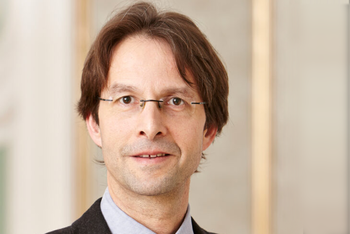
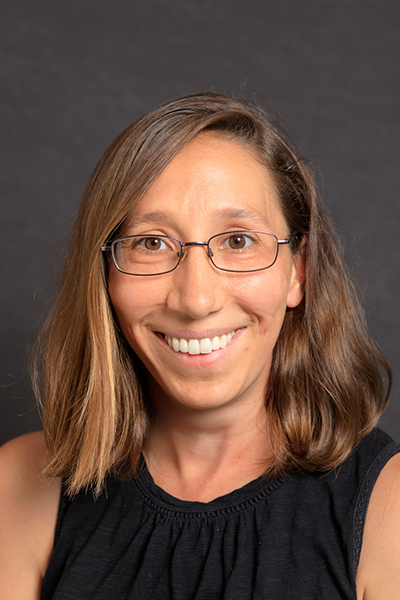
Professor Michael Burden is a Fellow in Music at New College, University of Oxford, and Professor of Opera Studies. His research focuses on the history of the London stage (1660–1860), emphasizing opera staging techniques, dance performance, and Henry Purcell’s music. A former Duff Cooper Literary Prize judge, he has directed Oxford’s New Chamber Opera and co-founded the Oxford Dance Symposium. Education: BA/MA from University of Adelaide; PhD from University of Edinburgh. Leadership: Past President of the British Society for 18th-century Studies, Visitor of the Ashmolean Museum, and RISM Trustee. His publications include studies on Shakespearean adaptation in opera, dance iconography, and libretto interventions. He co-edits the complete Stradella and John Eccles editions and leads the ongoing London Stage Project 1800–1900 , aiming to document 19th-century theatre calendars. Collaborative work includes the Oxford-Princeton grant on historical performance practices in London and New York. Scientific awards include his role as a Duff Cooper Prize judge, though no personal honors are listed. His teaching spans music history from Medieval to 21st-century, with specializations in opera historiography and analysis.
Professor Nicola Randall is a Professor of Evidence Synthesis and Agroecology at Harper Adams University, where she leads the Centre for Evidence-Based Agriculture (CEBA) and the Agroecology for Sustainable Agri-food (AFS) research group. She holds a BSc (Hons), PhD, and a CertTHE in higher education. Her research focuses on agricultural ecology, sustainable food systems, and evidence-based decision-making in environmental and agricultural policies. She chairs the EU-NESA Network (CA23107 2024-2028) and serves on advisory boards for organizations such as the Food Standards Agency and Ceres2030. Her work emphasizes systematic reviews, evidence synthesis methodologies, and bridging gaps between research and policy. She has secured over £1 million in research funding, collaborating with bodies like BBSRC, DEFRA, and EU H2020. Education: BSc (Hons), PhD, CertTHE Teaching Roles: Course leader for Agroecology MSc, module leader for Fundamentals of Agroecology and International Agroecology Professional Memberships: British Ecological Society (Agroecology Committee), Society for Conservation Biology Her research spans topics like regenerative agriculture, pollinator ecology, and humane slaughter practices. She advises on international projects, including FAO initiatives and smallholder farming interventions in Africa. Her work bridges academic research with practical applications for sustainable agriculture and environmental governance.
Dr. Rachel Parkinson is a Research Fellow at Wolfson College, University of Oxford, and holds a Lecturer position in Biology at Keble College. She is also an Eric & Wendy Schmidt AI in Science Postdoctoral Fellow. Her research focuses on insect sensory processing, particularly how pollinators like bees perceive environmental stressors such as pesticides. She develops AI-driven tools to diagnose sublethal toxicity and leads projects using large language models for systematic reviews of pesticide risks. Her work aims to assess environmental threats to pollinators and devise mitigation strategies. Her research interests include neuroethology, pesticide impacts on insect behavior, and AI applications in ecological research. She collaborates with the Bee Lab to advance understanding of pollinator health and ecological resilience. Her interdisciplinary approach bridges biology, neuroscience, and computational methods to address global environmental challenges. Awards: Eric & Wendy Schmidt AI in Science Postdoctoral Fellow Labs/Teams: Bee Lab, University of Oxford
Irena Subotic is a Senior Lecturer in Russian Studies at the University of Novi Sad's Faculty of Philosophy, Department of Slavic Studies since 2007. She holds a Master's degree in Serbian-Russian comparative literature and is currently pursuing her Ph.D. at the University of Belgrade's Faculty of Philology. Education: Classical Gymnasium in Zagreb, Faculty of Philosophy in Novi Sad Her research focuses on Old Russian literature and culture, specializing in textology and the influence of medieval Russian cultural models on contemporary literary discourse. She teaches Russian language courses at A1-A2 levels and lectures on Old Russian literature, culture, and 18th-century Slavic studies. The extracted articles demonstrate her expertise in Aleksandar Blok's reception in Serbian criticism, Serbian poets' translation practices, and the evolution of Old Russian cultural models in modern contexts. Her work bridges historical literary analysis with contemporary intercultural dialogue. Subotic participates in international academic collaborations, notably contributing to the "Slavic Dialogues" collection and presenting at the "Interculturalism in Education" conference. She continues active research while teaching.
Dr. DeAnna E. Beasley is an Associate Professor in the Department of Biology, Geology, and Environmental Science at the University of Tennessee at Chattanooga (UTC). She holds a PhD from the University of South Carolina (2013) and specializes in integrative ecology, focusing on how environmental changes—particularly urbanization—affect insect development, behavior, and biodiversity. Her research bridges ecological and social sciences to address urban resilience and biodiversity conservation. Teaching responsibilities include courses such as Ecology, Evolution, and Ant Ecology, along with supervising thesis projects and individual studies. She actively mentors undergraduate and graduate students in field and lab research, emphasizing community engagement and citizen science. Key research interests include urban ecology, insect-fungal interactions, and the socio-ecological dynamics of urban systems. Notable projects investigate honey bee health in urban environments and biodiversity patterns in green infrastructure. Her work frequently involves interdisciplinary collaborations and public outreach, including initiatives to promote diversity in STEM. Dr. Beasley is committed to equity, diversity, and inclusion in academia, serving on UTC's DEI committee and the Africana Studies Advisory Committee. She also contributes to professional societies such as the Ecological Society of America and engages communities through science education and media outreach.
Monika Baer is a Professor at the University of Wrocław's Institute of Ethnology and Cultural Anthropology, Faculty of Historical and Pedagogical Sciences. Her work focuses on Central/Eastern Europe, post-socialist transformation, Europeanization, legal agency, and gender/sexuality studies, with emphasis on citizenship, civil society, and activism. She explores how emotions shape political fields and anthropological knowledge production, particularly in late industrial societies. Research Trends: 15 years of publications examine LGBTQ+ rights in Poland, gender dynamics in transitional communities, and anthropological theories of late industrialism. Her work bridges academic scholarship with direct engagement in policy debates and activist movements. Scientific Awards: Kosciuszko Foundation Fellowship (2004) Academic Roles: Co-editor of Agency at Work: Ethnographies in/of Late Industrialism (2021) Co-editor of Anthropology of Gender and Sexuality. Marginal Perspectives (2014) Membership: President, Network for Anthropology of Gender and Sexuality (EASA) Council for European Studies (Columbia University) European Association of Social Anthropologists Polish Ethnological Society Grants: "Protecting Victims of Anti-LGBT Hate Crimes" (2020-2021, EU Justice Programme) DIVERCITY: Combating Homo/Transphobia (2015-2017, EU ROC Programme) "Conflict, Tension, Cooperation" (2014-2017, Polish National Science Centre)
Derek D. Houston is an Assistant Professor of Biology at Western Colorado University, affiliated with the Natural & Environmental Sciences Department and the Clark Family School of Environment & Sustainability. He holds a PhD in Biology from the University of Nevada, Las Vegas (2009), an MS in Zoology from Brigham Young University (2002), and a BS in Zoology from Brigham Young University (1999). His research focuses on phylogeography , molecular ecology , and conservation of desert fishes , with fieldwork spanning western North America, British Columbia, and Baja California. Key interests include: Evolutionary adaptations of aquatic organisms using DNA sequencing Population genetics of western North American fishes Ecological impacts of parasites on mutualistic systems Climate change effects on alpine and desert species Houston teaches courses including Biogeography, Cell Biology, Conservation Genetics, Ecology, and Fisheries Biology. His publications emphasize evolutionary patterns in aquatic insects and fishes , nematode-fig wasp interactions , and conservation genetics , frequently leveraging genomic tools to explore ecological relationships. He conducts fieldwork in diverse western ecosystems and values interdisciplinary collaboration to address conservation challenges.
Mohammad Ataie is a Visiting Lecturer of History at the University of Massachusetts Amherst, affiliated with the Department of History within the College of Humanities and Fine Arts. His research focuses on the transnational dimensions of the Iranian Revolution (1978-79), exploring how revolutionary ideas spread through clerical networks and the Islamic Revolutionary Guard Corps (IRGC). He is currently completing a book manuscript titled 'Clerics In Revolt: Exporting the Iranian Revolution and the Transnationalization of the Revolutionary Guards.' Ataie holds a PhD in History from UMass Amherst, preceded by degrees in journalism (Tehran University), sociology (Allameh-Tabatabie University), and Middle Eastern Studies (American University of Beirut). His career includes diplomatic reporting at the UN and work in documentary filmmaking across Afghanistan, Pakistan, Lebanon, and Syria. His research specialties include modern Iranian and Lebanese history, transnational Islamic movements, and Muslim clerical networks. He has published extensively in journals like International Journal of Middle East Studies and Middle East Policy, focusing on topics such as Hezbollah's evolution, Iran's regional strategies, and the geopolitical impact of revolutionary ideologies. Ataie advises graduate student Eric Ross and teaches courses including 'Iran Revolution in Global Perspective' and 'Modern Middle East History.' He has received no explicitly mentioned awards but has been a postdoctoral fellow at Brandeis University's Crown Center for Middle East Studies.
Ayesha Ali is a Professor of Statistics and Director of the Master of Data Science program at the University of Guelph. She holds a PhD in Statistics from the University of Washington (2002) and has expertise in statistical methods for complex high-dimensional systems, including ecological networks, causal inference, and bioinformatics. Her research integrates graphical Markov models, machine learning, and statistical computing to address challenges in plant-pollinator networks, livestock genetics, and disease risk modeling. Education: B.Sc. Honours in Statistics and Actuarial Science, University of Western Ontario (1996) M.Sc. in Statistics, University of Toronto (1998) Ph.D. in Statistics, University of Washington (2002) Research Interests: Graphical Markov models and ecological networks Causal inference and longitudinal data analysis Machine learning and high-dimensional predictive modeling Statistical methods for livestock genetics and animal health Computational statistics and bioinformatics Articles Trends: Her recent work spans interdisciplinary applications, including veterinary oncology biomarker discovery, remote sensing for agricultural suitability, and pipeline development for cross-species transcriptomics. She emphasizes graphical structure exploitation in regression and predictive modeling, with contributions to both theoretical and applied statistical methodologies. Awards: Canadian Journal of Statistics Award (2020) for groundbreaking work on doubly sparse regression NSERC Discovery Grant (2018) NSERC Collaborative Research and Development Grant (2015) Advising & Grants: She has supervised numerous graduate and undergraduate students on projects ranging from plant-pollinator network analysis to bioinformatics. Her grants include NSERC-funded research on milk fatty acid genetics and statistical methods for clustered data. Labs/Teams: Involved in the Bioinformatics program at the University of Guelph, contributing to interdisciplinary research collaborations in ecology and animal science.
Dr Peter Long is a researcher at the University of Oxford specializing in satellite remote sensing and environmental modeling to study biodiversity, ecosystem services, and land cover dynamics. His work focuses on algorithm development for processing satellite data, high-performance computing, and GIS/RS software applications. Key projects: Biodiversity monitoring in Madagascar, Marine LEFT/LEFT tools, NaturEtrade, and Community-Based Conservation evaluation Technical expertise: Databases, R programming, web-based environmental tools, stakeholder engagement Research trends indicate interdisciplinary applications of remote sensing in conservation biology, agroforestry, and climate resilience. His publications span ecological modeling, historical land-use impacts, and wetland bird conservation. He has not been documented receiving scientific awards or mentoring students. No information is available about laboratory affiliations or team memberships.
Prof. Dr. Christian Lippert is a Professor at the University of Hohenheim's Department of Production Theory and Resource Economics. He specializes in agricultural economics, resource management, and sustainable farming systems. His research focuses on organic agriculture, risk analysis in farming, and climate change impacts on agriculture. He leads projects such as the NOcsPS and ReBioBW initiatives and collaborates with institutions in Bhutan and Colombia. Research interests include crop portfolio optimization, yield stability, organic conversion strategies, and social networks in farming communities. His work combines economic modeling with field trials to address production risks and sustainable practices. Major publications include studies on Bhutan's organic sector, pesticide use alternatives, and climate change adaptation in German agriculture. He teaches courses in farm economics, environmental resource economics, and value chain development at the M.Sc. and B.Sc. levels. His team includes researchers like Dr. Tatjana Krimly and Dr. Isabell Pergner. Advising and grants focus on organic farming transitions and resource optimization. He leads a research group exploring lignocellulosic perennials and Ricardian climate impact analyses. His office is located at Containerbau südlich des Biogebäudes in Stuttgart.
Johan Ekroos is a researcher at Lund University's Centre for Environmental and Climate Science (CEC), where he leads significant interdisciplinary work at the intersection of landscape ecology, biodiversity conservation, and sustainable land management. His research portfolio spans over 87 publications and 24 research projects, with 4 currently active initiatives addressing critical environmental challenges. Dr. Ekroos's work centers on three interconnected domains: landscape ecology, environmental science, and interdisciplinary environmental research. His landscape ecology investigations examine why certain species persist in transformed landscapes while others disappear, using trait-based approaches across taxa with contrasting ecological requirements. His environmental science research analyzes fundamental trade-offs between different ecosystem services and how to optimize land-use in production landscapes to simultaneously address food production, biodiversity protection, and climate change adaptation. His interdisciplinary work focuses on bridging scientific evidence with policy decisions, particularly regarding the efficacy of agri-environment schemes and conservation interventions. His recent publication record reveals consistent focus on agricultural landscapes as critical arenas for biodiversity conservation. Key themes include the relationship between green infrastructure and biodiversity, landscape composition effects on ecological processes, fire ecology in boreal systems, organic farming dynamics, and sustainable bioenergy production. These works collectively address the complex challenge of balancing human needs with environmental protection in rapidly changing landscapes. Dr. Ekroos actively contributes to major collaborative initiatives including LU Land (a network project), Land4biomass, BECC AG: Social and ecological context of climate change adaptation for biodiversity, and Land sparing 2.0. His collaborations span multiple disciplines, working closely with economists, sustainability scientists, and governance experts to develop evidence-based solutions for environmental challenges. He regularly participates in knowledge exchange activities, having organized and presented at numerous workshops, seminars, and public lectures on ecological farming and biodiversity conservation. His involvement in projects like the LONA Pollineringspilot on Lindängen demonstrates his commitment to practical applications of research findings. With 8 supervised works documented, he plays an active role in mentoring the next generation of environmental researchers.
Professor James Cook is a Theme Leader for Plants, Animals and Interactions at the Hawkesbury Institute for the Environment (HIE) at Western Sydney University. He holds the academic rank of Professor and leads research focused on ecology, evolution, and symbiosis, with particular emphasis on pollination systems and insect ecology. Professor Cook received his BA in Zoology from Oxford University and his PhD in Evolutionary Biology from Imperial College London. His previous academic appointments include positions at La Trobe University, Imperial College London, and the University of Reading. Professor Cook's research interests lie at the intersection of ecology, evolution, and symbiosis , with particular emphasis on pollination systems and insect-microbe interactions . His work spans multiple scales from molecular to ecosystem levels, investigating how species interactions shape biological communities. He is particularly renowned for his expertise in fig-pollinator mutualisms and stingless bee biology . His research integrates field studies, laboratory experiments, and molecular approaches to address fundamental questions in evolutionary ecology while also addressing applied challenges in agricultural pollination and conservation biology . Analysis of Professor Cook's recent publications reveals a strong focus on pollination ecology and insect-microbe symbioses . His work spans both fundamental research on evolutionary processes and applied studies addressing agricultural challenges. A significant portion of his recent work examines stingless bees as potential managed pollinators for Australian horticulture, alongside investigations into alternative pollinators beyond honey bees. His research increasingly incorporates molecular methods to understand microbial communities and their impacts on host biology. There's also a growing emphasis on climate change impacts on pollination systems and the development of resilient pollination strategies for future agricultural systems. Natural Environment Research Council (NERC, UK) College Member (2007-2010) Royal Entomological Society Symbiosis Special Interest Group Convenor (2005-2012) Editorial Board Member, Journal of Evolutionary Biology (2005-2008) NERC Advanced Research Fellow (1998-2003) SERC Research Fellow (1993-1995) Royal 1851 Commission Research Fellow (1991-1993) Australian Entomological Society Conservation Committee Member (2017-present) Invited collaboration with Professor Wan-Jin Liao's group at Beijing Normal University Professor Cook currently leads multiple significant research projects focused on pollination services for Australian horticulture. His grant portfolio includes projects on stingless bee husbandry , alternative pollinators including flies, and pollinator health . He collaborates extensively with researchers across Australia and internationally, with projects spanning from basic research on fig-wasp mutualisms to applied studies on crop pollination. Professor Cook has authored over 70 research articles and six book chapters, demonstrating sustained research productivity throughout his career. Professor Cook's research involves extensive field, laboratory, and glasshouse work, with a strong emphasis on molecular methods. His work connects with collaborators across Australia, India, China, France, the UK, and the USA, creating a robust international research network focused on pollination ecology and insect symbioses. His leadership in the Plants, Animals and Interactions research theme at HIE provides a framework for integrating fundamental ecological research with practical applications for sustainable agriculture and conservation.
Kerstin von Lingen is a Professor at the Department of Contemporary History, University of Vienna, specializing in military history, war crimes trials, and post-war justice. Her research spans WWII, Cold War politics, decolonization, and environmental history intersections. Key research areas: Military justice systems, forced migration, and transcultural legal developments Active teaching roles: Contemporary History lectures and seminars on liberation from Mauthausen, post-war justice, and migration studies Email: kerstin.von.lingen@univie.ac.at Her recent publications focus on: Refugee politics in imperial collapse (2025) Citizenship and property restitution for Holocaust victims (2025) Deserter networks in Nazi Germany (2024) Eastern Front environmental impacts (2024) UN War Crimes Commission's legal legacy (2022)
Dr. Laura Russo is an Assistant Professor in the Department of Ecology and Evolutionary Biology at the University of Tennessee, Knoxville. She joined in 2020 after completing a Marie Curie Sklodowska Fellowship at Trinity College Dublin, Ireland, and prior postdoctoral research at Cornell University, Penn State University, and the University of Queensland. Her academic journey includes a B.A. in Biology from Oberlin College and a Ph.D. in Ecology from Pennsylvania State University. Dr. Russo’s research focuses on pollination ecology, network theory, and invasion biology. Key questions in her lab explore win-win scenarios for conservation and agriculture, plant-pollinator interaction networks, and managing species interactions in complex ecosystems. She investigates how environmental factors like fertilizers, herbicides, and climate change affect pollinator behavior and community dynamics. Her work bridges theoretical and applied ecology, with studies on floral resource quality, pollinator preference, and the ecological impacts of invasive species. Notable projects include optimizing powerline vegetation management for pollinator diversity and assessing agricultural practices’ effects on pollinator health. She has published extensively in high-impact journals like PLoS ONE , Oecologia , and Agriculture, Ecosystems and Environment . Dr. Russo teaches ecological modeling and field courses, emphasizing hands-on research. Her lab collaborates internationally, with fieldwork in diverse ecosystems from Kenya to Ireland. Current opportunities are available for students and postdocs interested in pollination networks, invasion ecology, or agroecology. Her research has been supported by grants from USDA NIFA, NSF DMS, and the Marie Curie program. She advises on pollinator-friendly agricultural policies and collaborates with conservation organizations to translate ecological findings into practical solutions.