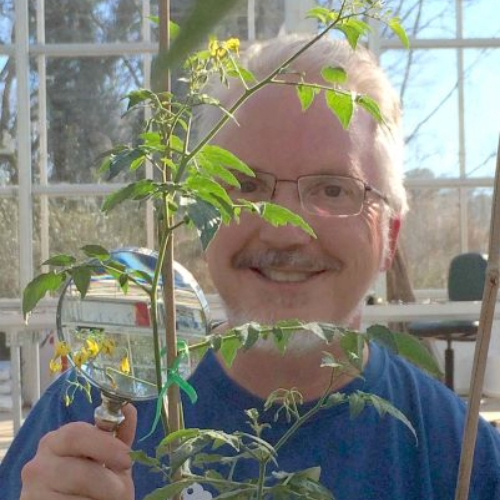
Dr. Tomokazu Kawashima (Tomo Kawashima) is an Associate Professor at the University of Kentucky's Martin-Gatton College of Agriculture, Food and Environment, Department of Plant and Soil Sciences. He earned his Ph.D. in Molecular, Cell, and Developmental Biology from the University of California (2009) and a B.S. from the University of Tsukuba (2002). His research focuses on the molecular and cellular mechanisms governing plant sexual reproduction, seed development, and cytoskeleton dynamics in flowering plants and land plant evolution. He pioneered real-time live-cell imaging methods to study fertilization processes in Arabidopsis thaliana, revealing F-actin's role in sperm nuclear migration and the evolutionary transition from microtubule to F-actin-based systems in land plants. Recent publications highlight his work on dehydrin protein interactions, peri-germ cell membranes, coenocytic endosperm dynamics, and gene silencing in pollen cells. His lab investigates how environmental factors like temperature influence seed growth and yield. Scientific awards include the National Science Foundation award for plant fertilization research and editorial board memberships at The Plant Cell Plant & Cell Physiology PLOS Genetics . He mentors graduate researchers and recruits undergraduate students for projects on plant reproduction.
Professor Sanna Toppila Salmi, MD, is a distinguished academic and researcher specializing in airway diseases. She holds dual appointments at the University of Helsinki and University of Eastern Finland (Kuopio), where she serves as Professor of Otolaryngology within the Clinical Medicine Unit, Department of Medicine, Faculty of Health Sciences. Professor Toppila-Salmi leads the Airway Research Group, which she founded in 2005, and serves as a supervisor for both the Doctoral Programme in Biomedicine and the Doctoral Programme in Population Health. She is also affiliated with the HUS Inflammation Center and has extensive collaborations across European research networks. Professor Toppila-Salmi's research program focuses on identifying clinical and molecular factors to improve prediction and treatment of inflammatory and neoplastic airway diseases. Her work spans several key areas including NSAID-exacerbated respiratory disease (N-ERD), asthma, chronic rhinosinusitis, tongue cancer, and sleep apnea. The Airway Research Group employs advanced methodologies including next-generation sequencing, metabolomics, and machine learning to analyze data from clinical cohorts and randomized trials, bridging the gap between basic science and clinical application. Her publication record demonstrates consistent productivity and impact, with numerous high-quality publications appearing in top journals. Analysis of her recent work reveals a strong focus on translational research with immediate clinical applications, particularly in personalized treatment approaches for complex airway conditions. Her studies often incorporate Finnish population data, leveraging the unique characteristics of this population for genetic and epidemiological insights. Professor Toppila-Salmi has received recognition for her contributions to the field, serving as Associate Editor of the journal Rhinology and previously as Chair of the ENT Section of the European Academy of Allergology and Clinical Immunology (EAACI). She actively participates in developing international clinical guidelines and position papers through organizations like EAACI and EUFOREA. As an educator and mentor, Professor Toppila-Salmi has supervised eight PhD theses to completion and is currently guiding ten doctoral students. She maintains an active research program with multiple ongoing projects funded by various foundations, enabling her to continue advancing our understanding of airway diseases and developing improved diagnostic and treatment approaches. The Airway Research Group maintains active collaborations with institutions across Europe, participating in multiple international research networks including the MASK-air study. These partnerships enhance the scope and impact of the group's research, allowing for larger studies and broader validation of findings across diverse populations.
Prof. Dr. Guido Grossmann serves as Head of the Institute of Cell and Interaction Biology at Heinrich Heine University Düsseldorf (HHU), joining CEPLAS (Cluster of Excellence on Plant Sciences) in October 2020. His research program investigates biological interactions from protein-level organization to organism-level symbioses, with particular focus on plant cell dynamics and root-microbe relationships. His academic journey includes: Doctoral research with Widmar Tanner at University of Regensburg studying plasma membrane organization EMBO postdoctoral fellowship at Carnegie Institution for Science in Stanford with Wolf Frommer and David Ehrhardt Independent research group leadership at Centre for Organismal Studies, Heidelberg University (2013-2020) Grossmann's laboratory specializes in developing advanced imaging technologies for plant science, most notably pioneering the RootChip microfluidic platform that enables quantitative microscopy of metabolite dynamics in living plant roots. His research explores how biological systems develop functionalities beyond the sum of their parts, from signaling clusters of membrane proteins regulating cellular growth to root-soil microbe interactions shaping diverse microenvironments. The lab develops soil-inspired cultivation devices for high-resolution imaging of root colonization processes and investigates cell polarization, growth regulation, and intercellular communication in plant roots. Analysis of his publication record reveals consistent innovation in plant imaging technologies alongside fundamental discoveries in root biology, calcium signaling, and plant stress responses. His work bridges theoretical plant biology with practical technological applications, particularly through the development of microfluidic systems that enable precise environmental control for plant studies. Key recognition: EMBO Fellow As head of his institute, Grossmann oversees research programs spanning plant metabolism, metabolomics, and advanced imaging. His mentorship philosophy emphasizes maintaining scientific curiosity while upholding rigorous research integrity. The laboratory maintains specialized facilities including the Plant Metabolism and Metabolomics Facility and Imaging Platform, supporting quantitative approaches to plant science. His current research initiatives within CEPLAS focus on optimizing plant performance through understanding development-metabolism interfaces, plant microbiota networks, and synthetic biology approaches to plant science.
Dr. Philipp Denninger serves as a Group Leader at the Chair of Plant Systems Biology within the TUM School of Life Sciences at Technical University of Munich. Appointed in July 2019, he leads an independent research group focused on plant cell polarity mechanisms under the supervision of Prof. Dr. Claus Schwechheimer. His habilitation process in Plant Cell Biology began in March 2022, marking his progression toward a professorial qualification in the German academic system. Dr. Denninger's research centers on understanding cell polarity and signal transduction in plants, particularly investigating the RhoGTPases (ROP) and their activating guanine nucleotide exchange factors (ROPGEFs). His laboratory employs model systems including Arabidopsis thaliana , Marchantia polymorpha , and Zea mays to study pollen tube growth, cell division, and other polarization events. The group utilizes advanced techniques such as confocal microscopy, image analysis, and quantitative protein-protein interaction studies (MST, FRET) to unravel the spatiotemporal composition of ROP signaling complexes during polar growth. Analysis of Dr. Denninger's publication record reveals a consistent focus on ROP signaling mechanisms across multiple plant developmental contexts. His work demonstrates how specific ROPGEFs establish polar membrane domains that drive processes like pollen germination and root hair outgrowth. The research trajectory shows progression from identifying individual ROPGEF functions to understanding the dynamic repositioning of polarity domains and the negative regulation of polar growth pathways. 2019: Otto Schmeil Award from the Schmeil Foundation Heidelberg for an excellent dissertation 2013: Master's Prize from the Biochemistry Center Regensburg 2012: DAAD scholarship for research at Carnegie Institution of Science, Stanford University Dr. Denninger's laboratory operates within the Chair of Plant Systems Biology, collaborating with international research groups across Europe and North America. His research program integrates in vivo imaging approaches with in vitro biochemical techniques to address fundamental questions about how plants establish and maintain cellular polarity during development. Current projects focus on determining how polarity domain positions are established and how uncontrolled polar growth is regulated to ensure normal plant development.
Mark D. Lazzaro serves as Associate Professor in the Department of Biology at the College of Charleston, where he teaches Cell Biology (BIOL 313), introductory cellular and molecular biology for majors (BIOL 111, HONS 151), and mentors undergraduate researchers in plant cell biology. His educational background includes: B.A. in Biology from Cornell University (1986) M.S. in Botany from University of California, Riverside (1988) Ph.D. in Botany from University of California, Riverside (1992) Dr. Lazzaro's research centers on plant cell structures with three primary emphases: cytoskeletal function in pollen tube development (particularly in conifers like Norway spruce), tomato fruit shape regulation, and the physiology of plant secretory structures including salt glands in marine plants and chickpea trichomes. His methodological expertise spans digital and fluorescent microscopy, with publications consistently exploring microtubule-microfilament interactions in cellular growth processes. Analysis of his 15 most recent publications reveals sustained focus on cytoskeletal dynamics in specialized plant cells, with particular attention to conifer pollen tubes (1996-2013) and secretory trichomes (1988-1996). Key recurring themes include microtubule regulation of organ shape, calcium signaling in tip growth, and solute transport mechanisms in glandular structures. Scientific awards: No awards documented in provided materials Dr. Lazzaro actively involves undergraduates in laboratory research and maintains international collaborations, including visiting appointments at Stockholm University (1994-1999, retaining Docent title), University of Sydney (2008-2010), and University of Georgia (2017-2018). His sabbatical work at multiple institutions suggests successful grant funding though specific awards aren't detailed. His laboratory is housed in Rita Hollins Science Center (Room 136) where he continues investigations into plant cell morphogenesis with undergraduate researchers.