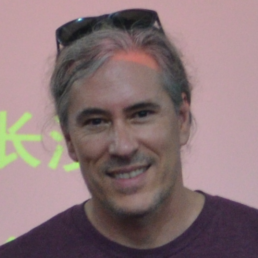
Prof. Willy Tinner is a leading academic at the University of Bern, serving as Head of the Paleoecology section and Vice Executive Director within the Institute of Plant Sciences. His research focuses on reconstructing past environmental changes through pollen analysis, vegetation dynamics, and human-ecosystem interactions. Tinner's work integrates paleoecological data with climatology, archaeology, and conservation biology to understand long-term ecological processes. His expertise spans Holocene climate impacts, Neolithic land use patterns, and biodiversity conservation challenges in alpine and Mediterranean ecosystems. Notable research includes studies on Fagus-Quercus forest coexistence in Italy, Abies alba climatic adaptations, and human-driven vegetation changes across Europe. Tinner collaborates internationally, contributing to projects in Greece, Ukraine, and the Balkans. He has published extensively on topics such as fire regimes, lake sediment archives, and the ecological consequences of ancient agricultural practices. His leadership positions reflect his role in shaping Switzerland's ecological research priorities through institutions like WSL Cadenazzo.
Dr. Yunfei Jiang is an Assistant Professor in the Department of Plant, Food, and Environmental Sciences at Dalhousie University's Faculty of Agriculture. Her research focuses on improving crop resilience to climate change and sustainable agronomic practices in Atlantic Canada, with expertise in agronomy, crop physiology, and environmental stress responses. She holds a Ph.D. in Plant Science from the University of Saskatchewan (2017), an M.Sc. from Dalhousie University (2013), and a B.Sc. in Horticulture from Fujian Agriculture and Forestry University (2010). Her research includes evaluating enhanced efficiency fertilizers, biochar, and intercropping systems to enhance soil health and crop yields. She teaches courses such as AGRN2001 (Cereal-Based Cropping Systems) and PLSC2001 (Plant Propagation Techniques). Funding and awards details, along with her graduate students' projects, are available on her lab website at jiangdal.ca . Dr. Jiang is affiliated with professional organizations including the Nova Scotia Institute of Agrologists and the American Society of Agronomy. Her lab, the Agronomy and Crop Physiology (ACP) Lab, emphasizes sustainable agriculture and crop adaptation to environmental challenges. Contact her via email at yunfei.jiang@dal.ca or visit her lab's address: PO Box 550, Truro, NS B2N 5E3.
Professor David J.A. Evans is a distinguished glacial geomorphologist at Durham University's Department of Geography. His research spans three interconnected themes at the interface of glacial geology and Quaternary science, focusing on palaeoglaciology and the reconstruction of former glaciers and ice sheets through time. With extensive field experience across the Arctic, North Atlantic, and Southern Hemisphere, he has contributed significantly to the understanding of glacial landscapes and processes globally. BA (Hons), St. David's University College, University of Wales, Lampeter, 1982 MSc, Memorial University of Newfoundland, Canada, 1984 PhD, University of Alberta, Canada, 1988 Professor Evans' research centers on glacial landsystems, glacial sedimentology, and Quaternary palaeoenvironments of glaciated basins. His work develops conceptual landsystems models for glacial process-form relationships, with field sites ranging from the Canadian High Arctic to mid-latitude mountains. He has pioneered research connecting subglacial process-form relationships to landform development models, particularly through his studies of active temperate glacier margins in Iceland. His sedimentological work has established a genetically framed classification scheme for tills and glacitectonites. Evans has contributed to major ice sheet reconstructions worldwide, including the British and Irish Ice Sheet (through the BRITICE-CHRONO project), Laurentide Ice Sheet, and Arctic Norway. His extensive publication record demonstrates consistent research activity with 15 recent articles focusing on ice sheet dynamics, glacial landform evolution, and Quaternary environmental reconstruction across multiple continents. These works reveal a strong emphasis on methodological innovation in mapping and analyzing glacial landscapes, with increasing integration of remote sensing and quantitative approaches to understand both contemporary glacier behavior and past ice sheet dynamics. Scientific Recognition: Busk Medal (Royal Geographical Society), 2017, for excellence and originality in the study of glacial landscapes and processes and empowering the next generation Professor Evans has collaborated extensively with international research teams on major projects including BRITICE-CHRONO and has contributed to engineering geology applications through technical guides for glaciated terrains. His work bridges pure academic research with practical applications in engineering geology and environmental management. He has supervised numerous field guides and edited influential publications in glacial geomorphology. His research involves extensive fieldwork in Iceland (particularly on the Vatnajökull ice cap), the British Isles, Canadian Arctic, and other glaciated regions, often using modern glacier systems as analogues for reconstructing past ice sheets. Evans has developed significant expertise in glacial landsystem mapping and interpretation, contributing to both academic understanding and practical engineering applications in glaciated terrains.
Katrine Eldegard is a Professor at the Norwegian University of Life Sciences (NMBU), Faculty of Environmental Sciences and Natural Resource Management (MINA), Department of Ecology and Natural Resource Management (INA). She leads BatLab Norway and contributes extensively to national and international conservation science policy. Institution: Norwegian University of Life Sciences School: Faculty of Environmental Sciences and Natural Resource Management Department: Department of Ecology and Natural Resource Management Position: Professor Her research centers on understanding how human activities and land use affect natural ecosystems and species across taxa and spatial scales. She specializes in the behavioral, population, and community-level responses of mammals, birds, and insects to anthropogenic pressures such as energy infrastructure, transport networks, and forestry. A major focus is on bat ecology and conservation, pollination dynamics, and biodiversity monitoring in boreal and agricultural landscapes. Her recent publications reveal strong trends in climate change impacts on bat morphology and distribution, pollinator-plant interactions under environmental change, and the ecological consequences of infrastructure development. These works integrate field ecology with advanced modeling and policy-relevant assessments. She has played leading roles in key scientific committees: Chair, Mammal Committee, Norwegian Red List for Species (2021) Chair, Mammal Committee, Norwegian Alien Species List (2023) Member, Norwegian Scientific Committee for Food and Environment (VKM), CITES Expert Panel Norway’s representative, UNEP/Eurobats Advisory Committee Eldegard has supervised numerous research projects and collaborated with government agencies and private partners on applied ecology. She teaches courses including NATF200 Vern og forvaltning av norsk natur and the upcoming NATF300 Conservation Science. Her work is supported by extensive fieldwork, interdisciplinary collaboration, and integration of ecological theory with practical conservation. She leads BatLab Norway, a research group dedicated to advancing knowledge on bat ecology, behavior, and conservation through innovative methods including telemetry, acoustic monitoring, and landscape analysis.
Gregory Michael Peck is an Associate Professor and Director of Undergraduate Studies for the Plant Sciences Major at Cornell University's School of Integrative Plant Science, Horticulture Section. His research focuses on sustainable tree-fruit production, particularly in organic apple systems , cider apple germplasm evaluation , and crop-load management through pollen tube growth modeling . Award-winning educator (2021 Cornell Teaching, Advising & Mentoring Award) 2018 Grower Advocate of the Year (American Cider Association) Active in outreach through field days, extension publications, and social media Peck's work spans tree-fruit physiology , soil health , and mechanization of orchard practices . He co-teaches Cornell's popular cider appreciation course with microbiologist Kathy Arnink, combining apple production science with fermentation expertise. His research explores phenolic development , nitrogen management , and yeast interactions in cider production systems. Recent publications highlight collaborations in rootstock effects , compost applications , and fermentation chemistry . Peck's career has included work in California, Washington, New York, and Virginia, with training spanning horticulture, plant physiology, soil science, and agricultural economics.
Ueli Grossniklaus is an Ordinary Professor at the University of Zurich within the Faculty of Mathematical and Natural Sciences , affiliated with the Department of Plant and Microbiology . His work focuses on plant developmental biology, particularly epigenetic and genetic mechanisms governing reproduction and adaptation. Key Courses: Epigenetics, Plant Biology Workshop, Group Seminars on Current Research Laboratory Techniques: Advanced methods in plant cell mechanics, transcriptomics, and genome editing Research Interests span plant epigenetics, reproductive biology, and the interplay between environmental stress and genetic regulation. He investigates: Mechanistic control of gametogenesis and fertilization Epigenetic contributions to plant adaptation Evolutionary implications of asexual reproduction Biophysical forces in plant cell growth Publication Trends (2025–2018) reveal expertise in: Arabidopsis and fern model systems Epigenetic regulation (DNA methylation, histone dynamics) Apomixis and hybrid seed failure mechanisms Biomechanics of pollen tubes and carnivorous plants Genome editing tools (CRISPR) and long-read sequencing Scientific Collaborations include interdisciplinary projects on: Microfluidic devices for plant cell analysis Gene drive ecology and ethics 3D imaging of plant reproductive structures Advising and Grants focus on mentoring through research internships in developmental biology, genetics, and systems biology. His lab engages in: Epigenetic response to environmental stress Cell wall mechanics in reproduction Computational modeling of plant growth Laboratory Teams integrate plant biologists, bioengineers, and computational scientists to study: Mechanistic gene regulation Evolutionary developmental biology Microrobotics for cellular force measurement
Dr Farhad Masoomi-Aladizgeh is a Research Fellow in the School of Life and Environmental Sciences at the University of Sydney. His work focuses on understanding how environmental stresses like heat and drought impact crop fertility, particularly in cereal crops. He holds a BSc, MSc, and PhD in Plant Biology. His research emphasizes male reproductive systems in plants and seeks to identify molecular mechanisms underlying abiotic stress susceptibility to enhance climate resilience in crops. Education includes advanced training in plant sciences, with a focus on molecular biology and stress physiology. Current research projects explore transcriptome responses to stress, stress tolerance gene identification in crop relatives, and ABA-mediated stress protection in rice. His publications span plant proteomics, stress physiology, and molecular protocols, with a strong emphasis on drought and heat tolerance mechanisms. Notable work includes developing universal nucleic acid isolation protocols and analyzing stress responses in rice and cotton. No scientific awards are listed, but his contributions to crop resilience research are significant. He advises no current students but collaborates on interdisciplinary projects involving genomic and proteomic approaches to agricultural challenges. Research is centered at the University of Sydney with potential collaborations in plant science labs focused on environmental stress mitigation strategies.
Lailiang Cheng is a Professor in the Horticulture Section of Cornell University's School of Integrative Plant Science, specializing in the physiological processes of deciduous fruit crops (particularly apple). His research focuses on sugar/malate metabolism, mineral nutrition, and environmental stress responses to improve orchard productivity and fruit quality. He integrates physiological, biochemical, and molecular approaches to study sorbitol signaling and nutrient management in high-density orchards. Education: Doctorate, Oregon State University (1999) Master of Science, Shandong Agricultural University (1989) Bachelor of Science, Shandong Agricultural University (1984) Research Focus: Cheng's work investigates carbon partitioning, malate accumulation, and nutrient transport dynamics in apple trees under abiotic stresses. His extension program delivers nutrient management strategies to the apple industry, while his teaching emphasizes analytical techniques (PLSCI 6170) and crop nutrition principles (PLSCI 4551/6551). Publication Analysis: Recent articles (2021-2025) reveal dominant themes in molecular regulation of fruit acidity, transporter biology, stress-responsive transcription factors, and omics-assisted breeding. Over 70% of publications involve collaborative work on apple genomics, with consistent emphasis on translating basic research into orchard management solutions. Awards & Recognition: No scientific awards mentioned in source materials. Academic Contributions: Advises graduate students in Horticulture; research supported by Cornell University Agricultural Experiment Station. Collaborates extensively with pomology breeders, extension specialists, and molecular biologists globally.
Dr. Ben Mills is a Principal Research Fellow at the University of Southampton. His research focuses on the integration of deep learning with laser technologies, including applications in environmental monitoring, materials science, and biomedical imaging. He is a core member of the Smart Lasers and Special Fibres research group and leads projects such as Hearing Light and Lasers that Learn , funded by the EPSRC. His work spans laser beam shaping, material transfer, and diagnostic techniques using AI-driven photonics. Research Interests: Laser-material interactions Deep learning for optical systems Environmental sensing via lasers Biophotonics applications Additive/subtractive manufacturing Publications (2023–2025) highlight innovations in laser cleaning, beam optimization, and pollen imaging using low-cost hardware. His work bridges fundamental optics with applied machine learning solutions. External Contributions: Speaker at international conferences on AI in photonics (2019–2021) Keynote on predictive laser materials processing (2019) Presenter at invited sessions on particle sensing via deep learning (2020) Current Supervision: PhD students Luke Burke (Physics), Fedor Chernikov (ORC), and Yuchen Liu (ORC) work on laser beam control and environmental applications.
Marcel Dorken is a Professor in the Department of Biology at Trent University. He holds a B.Sc. from the University of Guelph, M.Sc. from Queen's University, Ph.D. from the University of Toronto, and postdoctoral training at Oxford University. His research focuses on the evolution and ecology of plant reproduction, particularly transitions from hermaphroditism to dioecy, clonality, and plant-pollinator interactions. He investigates these topics through field experiments, genetic analysis, and modeling. Current projects include studying the ecological impacts of invasive hybrid cattails and the role of spatial structure in plant fitness. Teaching responsibilities include BIOL 1020H (Foundations of Biodiversity), BIOL 3170H (Plants and their Ancestors), BIOL 3190H (Wild Plants of Ontario), and BIOL 4610H (Evolutionary Ecology). His lab actively mentors graduate and undergraduate students in field and lab-based research. Contact: marceldorken@trentu.ca, Office DNA C250.
Jessica Forrest is an Associate Professor in the Department of Biology at the University of Ottawa, affiliated with the Faculty of Science. Her research focuses on evolutionary ecology, particularly plant-pollinator interactions, climate change impacts on pollinators, and the ecological consequences of phenological shifts. She studies native bees, their interactions with plants, and how agricultural practices can benefit from native bee ecology. Her work spans field studies in natural and agricultural landscapes, emphasizing pollinator conservation and climate adaptation. Notable projects include investigations into bee nesting habitat enhancement in orchards, the effects of drought on alpine bees, and the role of floral traits in pollinator attraction. Research Themes: Pollination ecology, climate change biology, bee behavior, and agricultural sustainability. Labs/Teams: Leads the Forrest Lab at the University of Ottawa, involving graduate and undergraduate students in field and lab-based studies. Her recent work highlights the importance of Asteraceae pollen in protecting mason bees from brood parasites and the complex effects of temperature on bee reproductive success in high-elevation habitats. Students advised include Lydia, Michelle, Natasha, Roisin, Tovah, and others, with projects ranging from bee cognition to agricultural pollination systems. The Forrest Lab collaborates widely, addressing applied and theoretical questions in pollinator ecology.
Peter Long is a Senior Lecturer in Ecology and Conservation at the University of Oxford Brookes, School of Biological and Medical Sciences . His research integrates satellite remote sensing, environmental modeling, and biodiversity assessment to address ecological and conservation challenges at landscape and global scales. Key research themes include: Developing algorithms for satellite data analysis Quantifying biodiversity and ecosystem services Building web-based ecological assessment tools Studying climate-agriculture interactions Assessing deforestation drivers in Madagascar Recent publications (2023–2025) focus on regenerative agriculture carbon impacts , Madagascar deforestation policy , and climate-induced habitat changes . He specializes in GIS, high-performance computing, and stakeholder engagement for environmental monitoring. Collaborations span Guatemala , Madagascar , and Europe , with tools like LEFT (web-based ecological value estimator) and BioTIME 2.0 (biodiversity time series database).
Wiebke Kirleis is Professor for Environmental Archaeology and Archaeobotany at the Institute for Pre- and Protohistory, Faculty of Arts and Humanities, Christian-Albrechts-Universität zu Kiel (CAU). She has held this position since May 2014 and was previously a junior professor at the same university from 2008 to 2014. She is actively involved in major interdisciplinary research projects, including the Cluster of Excellence ROOTS and the Collaborative Research Centre 1266 'Scales of Transformation', where she serves as co-speaker and technical platform speaker. PhD in Natural Sciences, University of Göttingen (2002) Diploma in Biology, University of Göttingen (1998) Studies in Botany, Anthropology, and Environmental History, University of Göttingen (1990–1998) Wiebke Kirleis' research centers on the interaction between humans and plants during the late Pleistocene and Holocene, with a focus on plant economy, domestication, agricultural development, and landscape transformation. Her work explores how wild and cultivated plants were used for nutrition, ritual, and technical purposes, and how agricultural innovations such as ploughing and manuring impacted Central European landscapes. She has a strong geographical focus on Northern and Central Germany, Southeastern Europe, the Near and Middle East, and Southeast and East Asia, particularly Indonesia. Her methodological expertise includes archaeobotany (analysis of charred and waterlogged plant remains), palynology (pollen and spore analysis from sediment cores), and anthracology (study of charcoal remains). Her recent research includes studies on broomcorn millet diffusion, early farming in Scandinavia and Russia, and plant use in Bronze Age settlements across Europe and Turkey. She leads and collaborates on numerous interdisciplinary projects, emphasizing the integration of botanical data into broader archaeological narratives. Her publications reflect a consistent trend in environmental archaeology, focusing on plant domestication, agricultural transitions, and human-induced landscape change. Keywords across her recent work include archaeobotany, palynology, Neolithic and Bronze Age subsistence, and environmental reconstruction. Her research spans subfields such as food security, cultural transmission of plant use, early monumentality, and socio-economic aspects of prehistoric agriculture. Board member, Cluster of Excellence ROOTS Co-speaker, CRC 1266 'Scales of Transformation' Speaker, ROOTS Technical Platform Board member, Johanna-Mestorf-Akademie Chair, Scientific Advisory Board, Dithmarschen Stone Age Park (since 2023) Full member, German Archaeological Institute (DAI) Elected member, Commission for Archaeology of Non-European Cultures (KAAK) Wiebke Kirleis has supervised numerous research projects funded by the DFG and other agencies, including the Graduate School 'Human Development in Landscapes'. She has advised students and collaborated internationally with institutions in Italy, Norway, Indonesia, and Australia. Her leadership roles in academic self-administration include serving on planning, budget, and equality committees at CAU Kiel. She is committed to science communication, having launched the digital exhibition 'Alles bleibt anders' and produced educational films on archaeobotany. She is also involved in mentoring female postdocs through the via:mento program. She leads the archaeobotanical component in the 'Superfood' module of the SFB 1266 digital exhibition and is actively involved in the ROOTS Cluster’s Subcluster 'Dietary ROOTS'. Her lab and research team operate within the Institute for Pre- and Protohistory, contributing to the university’s strong focus on interdisciplinary landscape archaeology.
Nicholas J. Provart is a Professor and Chair of the Department of Cell & Systems Biology at the University of Toronto. He is a founding member of the Centre for the Analysis of Genome Evolution and Function (CAGEF) and a key contributor to the Bio-Analytic Resource (BAR), which provides essential bioinformatics tools for plant research. His work focuses on integrating genomic and transcriptomic data to uncover mechanisms of plant stress biology, development, and evolution. Provart earned his Ph.D. from Freie Universität Berlin (1996), and his M.Sc. and B.Sc. from the University of Toronto (1993 and 1990, respectively). Research Interests: Provart’s lab employs systems biology approaches to analyze plant responses to abiotic and biotic stresses, particularly using cluster analysis of gene expression data. Key areas include plant stress signaling, seed development, and the functional roles of transcription factors and cytochrome P450s. His team develops tools like the BAR platform to facilitate large-scale data integration and visualization. Recent Grant: $2.5M NSERC grant (2024) to advance plant health visualization tools. Award: Recognized with the Arabidopsis community award (2025) for decades of research and outreach. Provart also serves on the Multinational Arabidopsis Steering Committee and chairs the Bioinformatics and Computational Biology Program. His lab’s work spans diverse plant species, including Arabidopsis, maize, and wheat, with a focus on translational applications of genomic data.
Allan Rasmusson is a Professor in the Department of Biology at Lund University, Faculty of Science, specializing in Plant Biology and Molecular Biosciences. His research spans plant-fungal interactions, mitochondrial function, redox biology, and paleophysiology. He leads multiple active research projects and supervises graduate students, while also managing shared infrastructure such as the departmental greenhouses. Research Interests: Allan Rasmusson's research is highly interdisciplinary, focusing on: Plant-Trichoderma interactions for biocontrol and biostimulation in crops like sugar beet, quinoa, and cañahua. Mitochondrial function, including electron transport chain assembly and retrograde signaling in Arabidopsis thaliana and maize. Redox biology and plant metabolism under different nitrogen sources. Paleophysiology, investigating how ancient plant lineages survived mass extinctions through studies of fossil pollen and plant physiology under paleomimetic conditions. Recent Research Trends: His recent publications (2022–2024) reflect a strong focus on both molecular plant biology and paleobotany. Key themes include mitochondrial translation initiation, cytochrome c oxidase assembly, plant defense against pathogens like Peronospora , and the role of abnormal pollen in end-Triassic extinction events. These works appear in high-impact journals such as Science , Plant Physiology , and Palaeogeography, Palaeoclimatology, Palaeoecology . Scientific Awards and Funding: Funded by the Knut and Alice Wallenberg Foundation for research on ancient and modern plant comparisons. Advising and Grants: Allan Rasmusson actively supervises doctoral students and serves as Principal Investigator (PI) on multiple research projects. He is currently supervising V. D. Palma Encinas and co-supervising H. C. Tran. His projects include biocontrol using Trichoderma , mitochondrial retrograde signaling, and paleophysiogenomics. He also contributes to educational grants through textbook development and curriculum design. Labs and Teams: He is a co-manager of the Department of Biology’s greenhouse infrastructure at Lund University, supporting experimental plant growth. He collaborates with researchers from SLU, DLF Research AB, UMSA-La Paz (Bolivia), Naturhistoriska Riksmuseet, Linnaeus University, Copenhagen University, CSU-San Marcos, and Warsaw University.