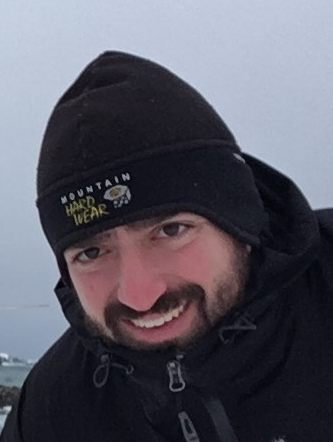
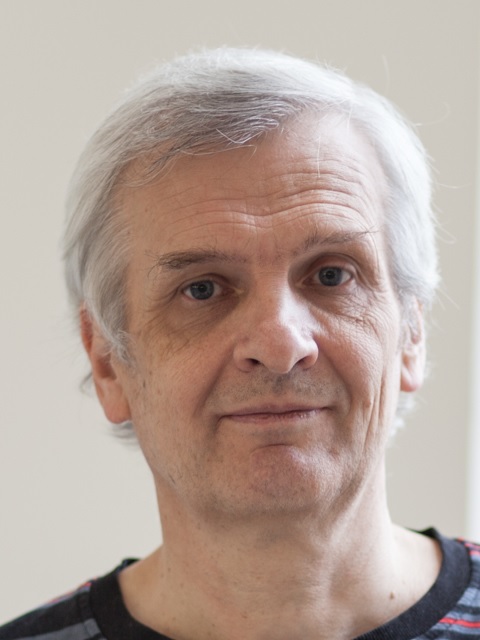
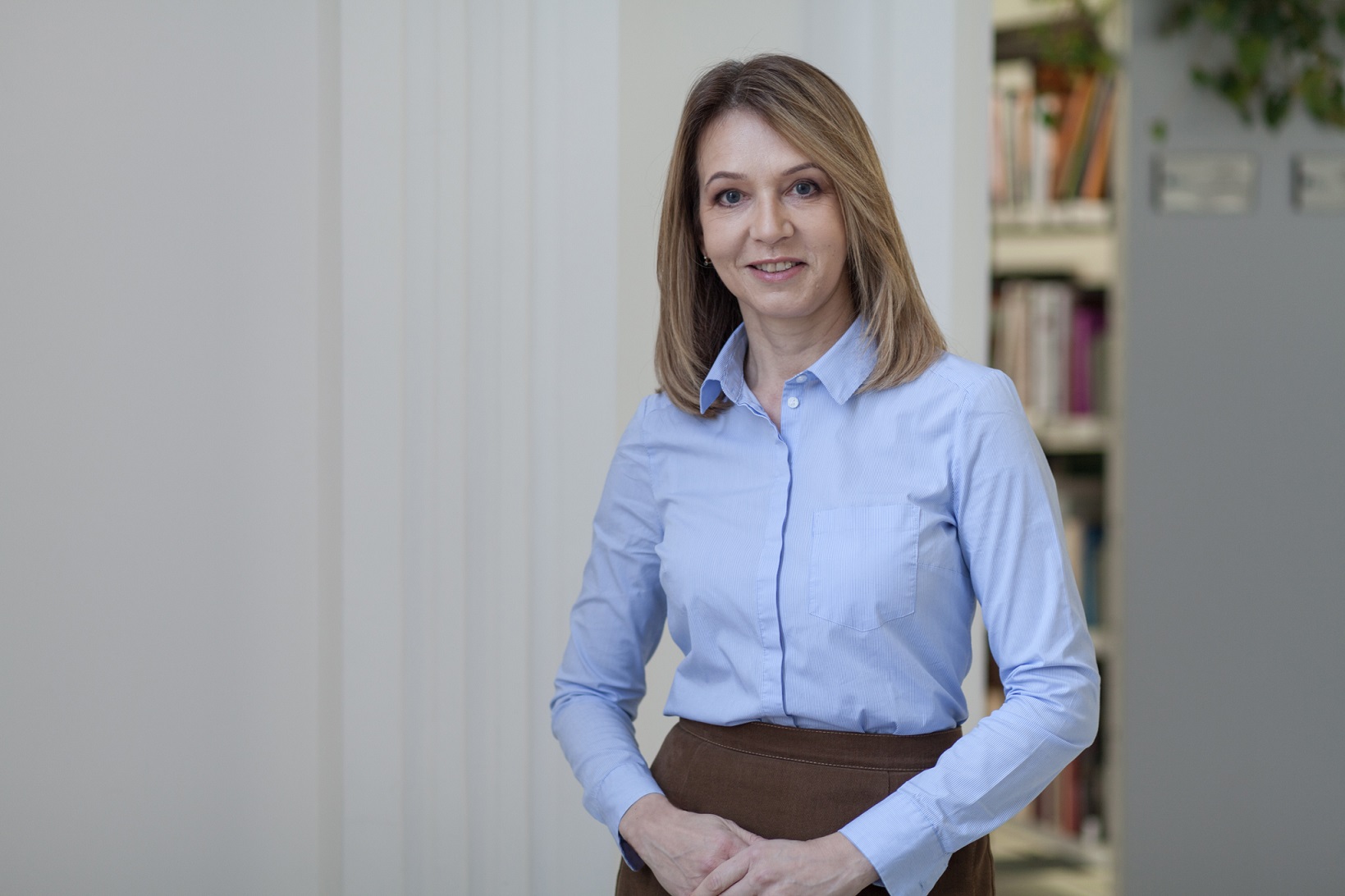
Dr. Matthew Craven is the Associate Head for Undergraduate Education and Lecturer in Applied Mathematics at the School of Engineering, Computing and Mathematics, University of Plymouth. He leads the Plymouth Optimisation Group and Big Data research group, with a focus on interdisciplinary AI and Data Science applications in Offshore Renewable Energy (ORE) and Cyber Security. His research includes quantum computing for ORE layout optimization, digital twins for floating wind turbines, and AI-driven cyber security protocol analysis. He has secured over £1.2M in grants, including EPSRC ORE DTP and Royal Academy of Engineering projects, and supervised numerous PhD students in these areas. Craven is a member of the University Senate and co-organizes the Applied Mathematics seminar series. He has been recognized with the University’s 'Inspirational Teacher of the Year' award and has developed courses across undergraduate and postgraduate levels, including MATH051 and GS19 R for research. His teaching focuses on optimization, networks, and foundational mathematics, emphasizing inclusive education post-COVID-19. His scientific awards include the 2021 SSTAR Award and multiple nominations, alongside contributions to global education through collaborations like the British Council’s Pakistan STEM initiative. His work aligns with UN SDG7 (Affordable and Clean Energy) and integrates ethical, technical, and educational dimensions across multiple disciplines.
Matthew C. Ricker is an Associate Professor in the Department of Crop and Soil Sciences at North Carolina State University, affiliated with the College of Agriculture and Life Sciences. His research focuses on pedology, soil carbon dynamics, and the impacts of climate change and land use alterations on soils. He specializes in coastal zone soils, anthropogenic soils in Mesoamerica, and soil functions in riparian zones. Dr. Ricker teaches courses in Soil Classification (SSC 452/551) and Soil Judging for Land Evaluation (SSC 410). He leads the Pedology/Land Use Lab, overseeing projects on coastal Histosols, Maya archaeological soils, and soil health under organic farming. His work integrates field studies, GIS, and multi-proxy analyses, with recent grants including USDA-NRCS funding for coastal blue carbon quantification and National Geographic support for Maya water management research. His advising includes graduate students like Shannon Bradley (M.S. 2020) and Curtis Murphy, who have excelled in national competitions. He has secured over $25,000 in research grants and published extensively on topics ranging from soil carbon sequestration to ancient land use patterns. His lab collaborates with organizations like USDA-NRCS and EPA, emphasizing practical applications of soil science in environmental management. Labs/Teams: Pedology/Land Use Lab, NC State Soil Judging Team, El Perú-Waka' Archaeological Project. Research emphasizes interdisciplinary approaches to address contemporary environmental challenges, including sea level rise mitigation and sustainable land use practices.
Larry Ward is an Associate Research Professor at the Center for Coastal and Ocean Mapping and the Department of Earth Sciences at the University of New Hampshire, with affiliations to the Jackson Estuarine Laboratory . He holds a Ph.D. in Marine Technology (1978) from the University of South Carolina and a B.A. in Earth Sciences from the University of New Hampshire. Teaching: Geological oceanography, seafloor characterization, and coastal sedimentology Research: Coastal and inner shelf sedimentology, sea level change impacts, lidar-based seafloor mapping Grants: 26 funded projects from 1991-2024, including NOAA and US DOI collaborations His publications focus on coastal geomorphology , lidar applications , and sediment dynamics , with work spanning from storm sediment transport to delta system sustainability . Collaborators include John Hughes Clarke and Yuri Rzhanov.
Robert Oscar David is a Researcher at the Section for Meteorology and Oceanography, University of Oslo, Norway, where he has served as a Postdoctoral Fellow since 2019 after completing his Doctorate (Dr. Sc.) at ETH Zurich, Switzerland. His role focuses on advancing cloud microphysics and atmospheric science through experimental and observational methodologies. His academic background includes: Doctorate (Dr. Sc.) from ETH Zurich, Switzerland (2015-2019) David specializes in mixed-phase clouds (MPCs) and ice nucleating particles (INPs) , conducting in situ measurements to analyze cloud particle distribution, the Wegener-Bergeron-Findeisen process efficiency, and MPC glaciation dynamics. His INP research encompasses field/lab measurements of ice formation mechanisms, physio-chemical properties, and parametrization development. He innovatively applies holography and machine learning for phase discrimination and ice crystal classification, bridging meteorology with computational techniques to address climate-relevant questions in atmospheric physics. Analysis of his 15 most recent publications (2019-2022) reveals a dominant focus on mixed-phase cloud microphysics, ice nucleation mechanisms, and aerosol-cloud interactions. Key trends include spatial/temporal characterization of cloud particles, secondary ice effects, INP source identification (e.g., pollen, soot, snowmelt), and development of novel instrumentation like DRINCZ and FINC. His work frequently employs Alpine field campaigns, satellite remote sensing, and laboratory experiments to quantify cloud phase transitions and their climate impacts, with strong emphasis on high-latitude and mountainous regions. David actively contributes to major research initiatives: BRACE-MY – Boosting ReseArch CapabilitiEs of Romanian Cloud MicrophYsics Centre ERC Consolidator Grant 'STate-dEPendent Cloud feedbacks: enHANcing understanding and assessing Global Effects' ERC Start-up grant 'Mixed-phase clouds and climate (MC2)' IceSAFARI – Safer flights for drones through icing condition analysis As a core member of the University of Oslo's Meteorology research group, he collaborates on cloud microphysics projects involving holographic particle sensors, INP characterization, and climate model parametrization. His work integrates observational data with theoretical frameworks to improve understanding of cloud processes in weather and climate systems.
Dr. Ian Boomer is an Honorary Associate Professor in Micropalaeontology at the University of Birmingham, affiliated with the School of Geography, Earth and Environmental Sciences. His work focuses on using microfossils like ostracods and benthic foraminifera to reconstruct past environmental conditions. He holds a PhD from University College London (1989), an MSc from University College London (1985), and a BSc from the University of Leicester (1984). Dr. Boomer teaches modules in Palaeoecology, Sedimentology, and Basin Analysis, including leading field courses in Spain. His research spans Cretaceous to Holocene periods, with a focus on micropaleontology, stable isotope analysis, and paleoenvironmental reconstruction. His recent publications address topics such as the Wessex Formation’s dinosaur taphonomy, Indian Ocean isotopic records, and Ethiopian stalagmite hydroclimate studies. He contributes to research groups like Earth Sciences and collaborates with institutions worldwide. His work integrates field studies, lab analyses, and interdisciplinary approaches to understand Earth’s environmental history.
M.Sc. Femke van Geffen is a researcher at the Alfred Wegener Institute , affiliated with the Polar Terrestrial Environmental Systems department. Her work focuses on geosciences and polar ecosystems, particularly in Siberia, utilizing remote sensing and drone-based technologies. Key research interests include forest type classification, boreal ecosystems, climate change impacts, and environmental monitoring via satellite data (e.g., Sentinel-2). She contributes to projects like SiDroForest , combining drone and machine learning methods for forest inventory. Her publications emphasize developing benchmark datasets and methodologies for ecological analysis in boreal environments. Education: Master of Science (M.Sc.) Affiliations: Polar Terrestrial Environmental Systems (PTES) research group Techniques: Remote sensing, machine learning, drone-based point cloud analysis Her research bridges geospatial data analysis with ecological applications, addressing questions about vegetation dynamics and climate change in Siberian regions.
Stefan Andersson is a Professor of Plant Biology and Principal Investigator at Lund University, affiliated with the BECC (Biodiversity and Ecosystem services in a Changing Climate) initiative. He holds academic appointments in the Faculty of Science, Department of Plant Biology and Biodiversity and Evolution. His teaching focuses on botany, floristics, plant evolution, and conservation biology. Research Interests: Dr. Andersson’s work centers on plant evolutionary biology, particularly natural selection, ecotypic variation, floral diversification, and the evolutionary impacts of inbreeding. Key areas include: Local adaptation and ecotype formation in plants like Rhinanthus serotinus and Crepis tectorum . Floral reduction mechanisms in selfing plant lineages, linking resource allocation costs and inbreeding effects. Maintenance of floral color polymorphisms in Nigella degenii , involving genetic and environmental interactions. Quantitative genetics of threatened plant populations, with a focus on genetic erosion and landscape fragmentation impacts. Climate change effects analyzed via herbarium data, tracking flowering phenology shifts over centuries. Grants & Activities: He leads the Lund University Plant Sciences network and supervises doctoral research (e.g., on Scorzoneroides autumnalis ). Collaborations span Sweden and international partners like the University of East Anglia. Media engagements include public talks and interviews on urban flora conservation and agricultural landscape changes. Labs/Teams: Active in interdisciplinary groups like BECC and LUPS, focusing on biodiversity, ecosystem resilience, and evolutionary genetics.
Roles & Affiliation: Professor at the Regional Development Institute of Šiauliai Academy (Vilnius University). Previously served as Professor and Head of the Department of Electronics at Šiauliai University. Specializes in Computer Science, Environmental Science, and Biometrics, with a focus on airborne pollen recognition, deep neural networks, and bioaerosol monitoring. Doctorate in Electrical and Electronic Engineering from Kaunas University of Technology (1999). Research Interests: Combines computer vision and machine learning to advance automated pollen classification, allergen forecasting, and health impact analysis. Explores applications of AI in environmental monitoring, biometrics, and medical diagnostics. Publications: Over 50 peer-reviewed articles, with recent work emphasizing real-time pollen detection systems, health correlations of airborne allergens, and automated bioaerosol monitoring. Key projects include EU-funded initiatives on synergistic effects of pollen and air quality, and real-time pollen forecasting. Grants & Projects: Led EU FP6 projects (COGAIN, MICOLE) on eye-tracking technology for disabled users. Active in Lithuania’s Research Council and EU Structural Funds projects focusing on pollen and environmental health. Labs & Teams: Collaborates with interdisciplinary teams in Šiauliai Academy’s Department of Electronics and bioaerosol research groups. Part of international networks like ISCA and IEEE, contributing to standards in eye-tracking and environmental monitoring.
Professor Šaulienė Ingrida serves as a Professor and Chief Researcher at Vilnius University Šiauliai Academy, specializing in aerobiology and environmental science. Her work focuses on pollen properties, allergen mitigation, and public health impacts. She has held leadership roles, including Vice-Rector for Science and Art, and directs the University Research Institute. Education: Doctor of Biomedical Sciences (Botany). Research Interests: Aerobiology, pollen dispersion dynamics, allergenic potential of urban flora, and development of monitoring technologies. Her projects include automated pollen detection systems and EU-funded initiatives like EO4EU and REALTIME. Key Projects: Leading initiatives such as AI-augmented Earth Observation (EO4EU), allergen forecasting (PASYFO), and standardized bioaerosol monitoring guidelines. She also chairs COST Action ADOPT and serves in international aerobiology organizations. Awards: Doctor Honoris Causa from Daugavpils University (2016), multiple ministerial commendations, and researcher accolades. Active in editorial roles for journals like Frontiers in Allergy and Zemdirbyste-Agriculture . Grants & Labs: Over 20 funded projects since 2005, focusing on ragweed management, pollen forecasting, and urban green space policies. Collaborates with institutions across Europe on environmental and health initiatives.
Dr. Rebecca Hamilton is a Visiting Lecturer at the Australian National University (ANU) within the School of Culture, History & Language. She currently holds a Lecturer position at the University of Sydney's School of Geosciences (since 2023) and has been a visiting scholar at ANU. Previously, she conducted research at the Max Planck Institute of Geoanthropology (2020–2023) and ANU (2017–2019). Her research bridges physical and social sciences, focusing on long-term environmental data to understand human-landscape-climate interactions and inform decision-making amid global change. **Education**: PhD in Geosciences from the University of Sydney (2017).** Research Interests**: Paleoecology (climate, fire, human impacts on landscapes), historical ecology (socio-ecological data mapping), and planetary habitability.** Key Projects**: Includes studies on tropical forests, Southeast Asian environmental histories, and policy-relevant research on Asia's poultry industry and river basin pollution. **Publications**: Over 25 peer-reviewed articles, including high-impact works on the Anthropocene, tropical forest dynamics, and sedimentary DNA analyses.** Awards**: Not explicitly listed but recognized for contributions to environmental and anthropological research. **Grants & Collaborations**: Involved in projects like 'Planet Chicken' (agriculture policy) and 'Pantropocene' (geomorphic responses). Active in interdisciplinary initiatives such as the ANU Institute for Climate, Energy & Disaster Solutions. **Labs/Teams**: Collaborates with global networks in paleoecology and historical ecology, contributing to the Resilience Initiative for Food and Agriculture (RIFA) and Zero Carbon Energy for the Asia-Pacific (ZCEAP).
Mateus Pepinelli serves as an Assistant Professor in the School of Natural Sciences at Laurentian University. His academic career bridges traditional entomological methods with cutting-edge molecular techniques, creating an interdisciplinary approach to understanding insect ecology and systematics. With extensive field experience across diverse ecosystems and countries, Dr. Pepinelli brings global perspective to his Canadian research initiatives. Dr. Pepinelli's research interests center on entomology with specialized focus on aquatic insects, honey bee ecology, and environmental DNA applications. His work investigates the systematics, biology, and ecology of insects, particularly examining how climate change affects plant flowering patterns and subsequent impacts on plant-pollinator interactions. He employs both traditional taxonomic approaches and modern eDNA techniques to document species interactions and biodiversity changes across latitudinal gradients from Southern to Northern Ontario. His expertise spans black flies (Simuliidae), Chironomidae, and other aquatic insect groups, with growing emphasis on honey bee health challenges. The analysis of Dr. Pepinelli's recent publications reveals a clear trajectory from traditional taxonomic work toward integrative approaches combining molecular methods with ecological questions. His research shows increasing focus on honey bee health, environmental DNA applications, and climate change impacts on pollinator systems. While maintaining strong foundations in insect systematics (particularly Diptera), his recent work demonstrates sophisticated integration of metabarcoding, metagenetics, and systems biology approaches to address complex questions in pollinator ecology and health. Dr. Pepinelli previously managed the BeeCSI project (2019-2023), a Genome Canada Large-Scale Applied Research initiative focused on identifying stressor-specific biomarkers in honey bees across Canada. At Laurentian University, he continues developing collaborative research with beekeepers, students, and community partners. His current work includes establishing a long-term eDNA survey project to document changes in plant-pollinator networks across Ontario and investigating biting flies using eDNA techniques to monitor range shifts and potential vector species. His research bridges fundamental taxonomy with applied environmental monitoring, creating valuable tools for understanding species interactions in rapidly changing ecosystems.
Dr. Richard Tennant is a researcher in the Department of Geography at the University of Exeter, specializing in microbial diversity across natural and industrial environments. His work integrates advanced techniques like Illumina and Oxford Nanopore sequencing to analyze microbial communities in contexts ranging from paleoenvironmental lake sediments to agricultural soils and anaerobic digestion systems. Dr. Tennant holds a Ph.D. in Biological Sciences (2015) and M.Sc. in Biocatalysis (2008) from the University of Exeter, alongside a B.Sc. in Forensic Science from Nottingham Trent University (2007). He contributes to research networks including Microbes and Society @Exeter and Heritage @Exeter . His research interests span microbial interactions, environmental genomics, and the application of sequencing technologies to ecological and industrial challenges. Work focuses on topics like soil metagenomics, pollutant degradation, and the impact of urbanization on air quality using sediment archives. Notable projects include investigations into bacterial dormancy mechanisms, antibiotic-resistant persister cells, and palaeogenomic analysis of microalgae for biofuel potential. His work bridges environmental science, microbiology, and computational biology to address both fundamental and applied questions.
Dr. Natalia Yurievna Zharinova is an Associate Professor at the Department of Geography, Siberian Federal University, and heads the Laboratory of Modern Methods of Geography. With a Candidate of Biological Sciences (2011) and a Master's in Information Systems and Technologies (2015), her research focuses on soil geography, alluvial soil formation, and soil micromorphology. Education: Candidate of Biological Sciences (2011) Master's in Information Systems and Technologies (2015) Her research interests span soil-ecosystem interactions, Holocene environmental changes, and digital tools for geographical studies. Recent publications analyze snow cover pollution in industrial regions, paleogeographical reconstructions, and sedimentological characteristics of Siberian floodplains. Notable scientific contributions: 2022 - 2025: Published 6 key papers on snow pollution, mollusk-based paleoenvironmental studies, and molten salt electrochemistry 2019: Developed teaching aids on soil micromorphology and technogenic landscape formation 2016: Authored comprehensive studies on alluvial soil degradation in Siberia Awarded recognition for environmental research excellence, including a 2019 Governor's Commendation and multiple university-level awards (2015). She actively participates in international scientific collaborations and educational innovation projects.
Ruslan Aglyamovich Sharafutdinov is a distinguished academic and researcher serving as Director of the Institute of Ecology and Geography at Siberian Federal University (SFU) in Krasnoyarsk, Russia. Holding the Candidate of Geographical Sciences degree (equivalent to PhD), he has established himself as a leading expert in environmental geochemistry and urban ecology within Siberian academic circles. His work bridges theoretical research with practical environmental management solutions for the Krasnoyarsk region and broader Siberian territory. His educational background includes graduation from Krasnoyarsk State University as a bioecologist in 2002, followed by his Candidate of Geographical Sciences degree in 2007. His dissertation focused on Geochemical properties and mineral composition of peat deposits of the southern forest-steppe of the Minusinsk Basin and mountain taiga of the central part of the Western Sayan . He has completed extensive advanced training in environmental safety, radiation safety, radioecology, educational presentation, quality assessment of educational programs, strategic management, project management, and anti-corruption in education. Sharafutdinov's research primarily centers on geochemistry of floodplain ecosystems and ecology of urbanized areas, with particular emphasis on elemental distribution in trees, pollution assessment of urban floodplain soils, and paleoenvironmental reconstruction. His work demonstrates how dendrochemical analysis can serve as a proxy for environmental changes, with significant implications for understanding climate change impacts on Siberian ecosystems. His studies often focus on the Krasnoyarsk region, examining how urban development affects floodplain ecosystems along the Yenisei River. His recent publications reveal a consistent focus on dendrochemistry as an environmental indicator, with particular attention to Scots pine as a bioindicator species. The research shows how elemental distribution in tree rings correlates with environmental conditions, providing valuable insights into historical pollution patterns and climate variations. His work bridges fundamental ecological research with practical environmental monitoring applications. Member of the V. V. Dokuchaev Soil Science Society Letter of thanks from the Governor of Krasnoyarsk Krai Certificate of honor from the Governor of Krasnoyarsk Krai Sharafutdinov has secured substantial research funding from multiple sources including the Krasnoyarsk Regional Science Foundation, Russian Foundation for Basic Research (RFBR), Russian Science Foundation (RSF), and the Ministry of Natural Resources and Forestry of Krasnoyarsk Krai. His grants have supported research on floodplain soil dynamics, carbon sequestration in boreal forests, late Holocene environmental changes, and sustainable development of Siberian monocities. He has served as principal investigator for projects examining biogeochemical cycling in Siberian ecosystems and the environmental impacts of urbanization. As Director of the Institute of Ecology and Geography, Sharafutdinov oversees research programs that integrate field studies with laboratory analysis, particularly focusing on the unique ecosystems of the Sayan Mountains and Yenisei River floodplains. His leadership has positioned the institute as a key center for environmental research in Siberia, with particular expertise in dendrochemistry, soil science, and urban ecology. The institute maintains strong connections with regional environmental agencies and participates in international research collaborations focused on boreal forest ecosystems.
Professor Helen Bostock serves as Professor and Deputy Head of School at the University of Queensland's School of the Environment. Her research reconstructs past ocean conditions using geochemical and micropaleontological proxies to understand climate change impacts on marine systems. She leads research voyages in the Southern Ocean and Southwest Pacific investigating ocean circulation, carbon cycling, and polar climate dynamics. Her research examines: Paleoceanographic reconstruction using microfossils and isotopes Southern Ocean circulation and Antarctic ice sheet interactions Anthropogenic impacts on marine ecosystems including plastic pollution Deglacial climate transitions and carbon cycle feedbacks Development of novel paleoclimate proxies Recent publications demonstrate methodological innovations in reconstructing sea ice extent, ocean productivity, and water mass changes over glacial-interglacial cycles. Her work combines sediment core analysis with modern oceanographic observations to constrain climate models. Professor Bostock coordinates interdisciplinary projects linking oceanography, marine geology, and climate science while training students in field sampling and analytical techniques.