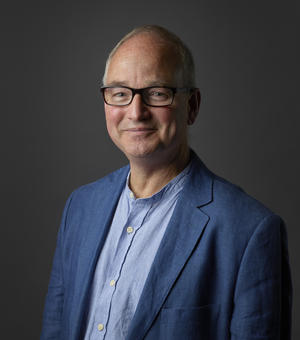
Professor Christopher Howgego is a Research Keeper at the Heberden Coin Room of the Ashmolean Museum and a faculty member at Wolfson College, University of Oxford. He holds degrees MA and DPhil (Oxon) and has been affiliated with the Ashmolean since 1988, serving in roles like Acting Keeper and Keeper before his current position. Academic Background: Joined Ashmolean in 1988; extensive curatorial and leadership roles in numismatic projects. Research Keywords: Roman Numismatics, Coin Hoards, Roman Provincial Coinage, Roman History. His research explores how ancient coinage illuminates historical, economic, and cultural dynamics. He has authored seminal works like Ancient History from Coins and co-edited Coinage and Identity in the Roman Provinces . He focuses on Antonine coinage in Roman Egypt and hoarding patterns, contributing to the Roman Provincial Coinage series and digital initiatives like Roman Provincial Coinage Online . Scientific Awards: Bronze Medal of the Norwegian Numismatic Society Silver Medal of the Norwegian Numismatic Society As a teacher, he lectured on Roman Numismatics until 2022 and supervised 19 doctoral and 10 master’s students. He currently welcomes graduate research on Roman hoards. His roles include directing major numismatic projects and serving on the Scientific Advisory Board of the Austrian Archaeological Institute. Labs/Teams: Leads the Roman Provincial Coinage Online and Coin Hoards of the Roman Empire projects, co-founded with Andrew Wilson. Also contributes to Iron Age Coins in Britain and Celtic Coin Index Digital initiatives.
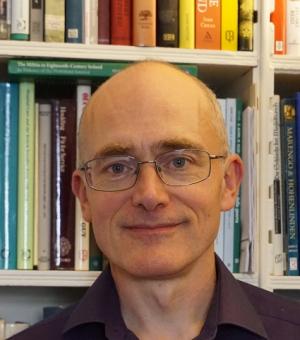
Professor Peter H Wilson is the Chichele Professor of the History of War at the University of Oxford, based at All Souls College. His research focuses on the impact of war on European and global development, alongside the history of the Holy Roman Empire. He has won the 2023 Duke of Wellington Medal for Military History for his book Iron and Blood . Wilson currently supervises DPhil students in areas including European military history (1500–1900) and German-speaking Europe's socio-political dynamics. Teaching responsibilities include Prelims courses on military history and the Thirty Years War, as well as graduate seminars on War in the Modern World . He contributes to research initiatives like the European Fiscal-Military System (1530–1870) project. Media engagements include podcast discussions on German military history and BBC analyses of the Thirty Years War. Current doctoral advisees include John Allin, Alan Hawley, Bethany McNamara-Dale (part-time), Jay Mens, and Christian Stecher. Wilson's work bridges military strategy, political structures, and cultural identity, with a particular emphasis on Central Europe's historical role in shaping modern conflicts.
Patrick Präg serves as an Associate Professor of Sociology at CREST/ENSAE (part of the Institut Polytechnique de Paris) and holds an associate faculty position at Oxford University’s Nuffield College. His research integrates quantitative methods and survey data to address social stratification, demography, health, and work-family dynamics. He earned his PhD in Sociology from the ICS/University of Groningen in 2015. His work has been recognized with the Aage B. Sørensen Award (2014). Education: PhD in Sociology, ICS/University of Groningen (2015) Master’s Thesis: Nonresponse to Items on Self-Reported Delinquency, University of Hamburg Research Interests: Patrick’s work explores the interplay between social structure and individual wellbeing. Key topics include: Intergenerational mobility and health outcomes Work-life balance and gender inequalities Pandemic-driven societal changes Algorithmic bias in social science Subjective socioeconomic status measurement Grants & Collaborations: He contributed to the EU-funded ‘Families and Societies’ project, producing deliverables on assisted reproduction and demographic consequences. His research often involves cross-national datasets and methodological innovation, with replication materials shared via Open Science Framework (OSF). Labs & Teams: He is affiliated with CREST (Center for Research in Economics and Statistics) and collaborates with institutions like the Max Planck Institute for Demographic Research (MPIDR) and the Nuffield College. His work frequently intersects with interdisciplinary teams addressing health, education, and labor market policies.
Jean-Luc Bonniol is a Professor of Anthropology at Paul-Cézanne University (Aix-Marseille III) affiliated with UMR 6591 (IDEMEC) and the Mediterranean House of Human Sciences. His work focuses on postcolonial societies, race, and Caribbean cultural dynamics. Key affiliations: University of Aix-Marseille, IDEMEC research unit, Mediterranean anthropological networks. Doctoral research included studies on population genetics in Caribbean island communities. Research emphasizes colonial legacies, memory of slavery, and creolization processes. He has curated major collections like the 'Creole Societies' series. Publications span anthropology, sociology, and history, addressing topics like racialization, postcolonial identity, and Guadeloupean social movements. His 2009 analysis of labor strikes in Guadeloupe remains seminal. Received formal permissions to distribute works openly via Les Classiques des sciences sociales. Active in interdisciplinary dialogue blending anthropology with historical and political analysis.
Professor David Nichols is a faculty member in the Melbourne School of Design at The University of Melbourne, holding the position of Professor in Urban Planning. His research focuses on urban planning history, theory, and socio-cultural planning with particular attention to 20th century Australian contexts. He has authored/co-authored significant works including Urban Australia and Post-Punk: Exploring Dogs in Space and The Alert Grey Twinkling Eyes of C. J. DeGaris . His research interests span urban and cultural heritage, architectural history, and the socio-cultural dimensions of urban development. Notable projects include the 'PastPort' mobile app for citizen heritage engagement and studies on community activism in public space conservation. Nichols teaches courses on urban planning history and has contributed to debates on postwar planning education and regional development strategies. His academic output reflects interdisciplinary engagement with topics ranging from suburban morphology to audiovisual technology in education. Current work includes exploring the legacy of Walter Burley Griffin’s urban designs and reinterpreting Australian country town dynamics. He maintains active collaborations in cultural heritage preservation and community-driven urban initiatives.
Om Narasimhan is Professor of Marketing at the London School of Economics and Political Science. His research focuses on entrepreneurship in emerging markets, innovation, pricing, and distribution channels. He earned his Ph.D. from the University of Southern California and previously held the Board of Overseers Chaired Professorship at the University of Minnesota's Carlson School of Management. Education: Ph.D. in Business Administration (Marketing), University of Southern California M.S. in Physics, University of Virginia B.S. in Physics, University of Delhi His work explores how microentrepreneurs navigate informal economies and how marketing strategies adapt to emerging market constraints. Research integrates behavioral economics, supply chain dynamics, and consumer psychology to address real-world business challenges. Publications emphasize empirical analyses of market mechanisms, with recurring themes in retail strategy, compensation models, and global business development. Article keywords frequently include entrepreneurship, consumer behavior, and emerging economies. Awards: SIG Best Paper awards (American Marketing Association) John D. Little award finalist Marketing Science Institute Young Scholar Outstanding Researcher Award (Carlson School) Best MBA Professor Award (Carlson School) He teaches in the Masters in Management and Global Executive programs, with executive education engagements at companies including 3M, Samsung, and Target. Leads the Marketing Faculty Research Group at LSE.
Briana Last is an Assistant Professor in the Department of Psychology at Stony Brook University, specializing in Clinical Psychology. She holds a PhD from the University of Pennsylvania (2022) and focuses on improving mental health service accessibility and quality through interdisciplinary research. Her research emphasizes three core domains: social determinants of mental health, implementation strategies for service improvement, and structural factors influencing clinician decision-making. She employs mixed methods and community-based participatory approaches, prioritizing marginalized populations affected by systemic inequities. Key interests include behavioral health workforce development, policy analysis, and dismantling barriers to equitable mental healthcare. Her lab, the Mental Healthcare for All Lab, collaborates with governments, agencies, and clinicians to translate research into actionable policies. Notable projects address clinician burnout interventions, public mental health system gaps, and anti-transgender policy impacts. Recent work critiques scientifically unfounded bans on gender-affirming care and evaluates federal loan repayment programs for mental health workforce retention. Publications span topics like AI chatbots in mental health, state policy effects on LGBTQ+ populations, and trauma therapy implementation. Her work highlights how clinician work conditions directly shape patient care quality, advocating for systemic changes to enhance both provider well-being and patient outcomes.
Thomas Richter is a leading academic and Professor at the German Institute for Global and Area Studies (GIGA) , where he serves as Lead Research Fellow and Head of the Research Programme "Accountability and Participation" . His work focuses on the institutional and material determinants of authoritarian rule , executive personalization , and global political economy , particularly in the Middle East and North Africa region. Education: PhD in Political Science (summa cum laude) at the University of Bremen (2008); studies at Eberhard-Karls University Tuebingen and University of Michigan, Ann Arbor. His research explores the interplay of rentier statehood and economic reforms , civil society under authoritarian regimes , and shrinking civic spaces . Recent projects include the Merian Center for Advanced Studies in the Maghreb (MECAM) and the Monitoring System and Transfer Platform Radicalisation (MOTRA) , funded by BMBF and DFG. Richter has published extensively on topics such as anti-Semitism , executive power dynamics , and public opinion on military service in Germany. He has received notable awards, including the Lijphart/Przeworski/Verba Data Set Award (2017) and the Gero Erdmann-Preis für vergleichende Area-Forschung (2022) . His collaborative work spans institutions like the WZB Berlin and Université de Tunis . Richter is also a co-editor of the Perspectives on the Maghreb series with Amsterdam University Press.
Anna Maria Rapetti is an Associate Professor of Medieval History at Ca' Foscari University of Venice's Department of Humanities. She holds a PhD from the Catholic University of the Sacred Heart (Milan, 1996) and has been affiliated with Ca' Foscari since 2002. Her research focuses on medieval monasticism, ecclesiastical institutions, and rural history in Northern Italy. She is co-director of the Studi di storia book series and a member of several research centers including the Inter-University Centre for Early Medieval History and Archaeology (SAAME). Educations: PhD in Medieval History (1996), Postdoctoral studies at Universities of Genoa and Milan Research Interests: Monastic dynamics, church-state relations, agricultural history, and Venetian territorial expansion Teaching: Medieval History courses across multiple degree programs, including 'History of the Medieval Church' and 'Environmental History' Grants: Principal Investigator for EU-funded projects (e.g., 'Tarvisium GIS'), PRIN 2020 national research initiatives Labs/Teams: Director of AGeS Research Centre, member of the Centre for Historical Studies on Christianity Her work bridges institutional analysis with environmental and social history, emphasizing monastic communities' roles in shaping medieval landscapes and power structures.
Julie Yujie Chen is an Assistant Professor at the Institute of Communication, Culture, Information, and Technology (ICCIT) at the University of Toronto Mississauga, with a graduate appointment at the Faculty of Information. She holds a PhD in American Studies from the University of Maryland, College Park, and previously served as a Lecturer at the University of Leicester's School of Media, Communication, and Sociology. Her research focuses on the intersection of culture, digital technologies, and economic structures in shaping work experiences, particularly in China's platform economy. Key areas include ride-hailing and food-delivery sectors, worker resistance in digital capitalism, and the sociocultural impacts of platforms like WeChat. She is the lead author of *Super-sticky WeChat and Chinese Society* (2018), the first academic work analyzing WeChat's societal and political influence. Research interests: Digital labour, platform capitalism, AI-driven work, global labour patterns, and socio-technological change. Current supervision: Hiu-Fung Chung and Mathew Iantorno. Her recent work examines platform labour dynamics, national employment policies in China, and comparative studies of global digital economies. Articles often explore themes like worker agency, algorithmic management, and socio-technical resistance strategies.
Dale Copeland is a Professor of International Affairs at the Frank Batten School of Leadership and Public Policy, University of Virginia. He holds a Ph.D. from the University of Chicago and is a leading scholar in international relations, specializing in security studies and international political economy. His research explores the interplay between economic interdependence, reputation, and state behavior, particularly in great power relations. Ph.D., University of Chicago His research focuses on security studies , international political economy , and IR theory , with particular emphasis on the causes of war, economic interdependence, bargaining and coercion, and the impact of rising and declining power. He investigates how trade, finance, and military behavior are interconnected and how states build reputations in international politics. His recent and past publications reveal a consistent focus on the conditions under which economic interdependence leads to peace or conflict. His work combines historical case studies with theoretical rigor, often engaging with realism, liberalism, and constructivism. Key themes include preventive war, reputation dynamics, trade expectations, and the strategic use of economic tools in foreign policy. His scientific awards include: International Studies Association Best Book Award (2017) MacArthur Fellowship Mellon Fellowship Post-doctoral Fellowship at the Belfer Center for Science and International Affairs, Harvard University Professor Copeland has advised numerous students and contributed to major scholarly debates through symposia on his work in International Security Studies Forum and Qualitative and Mixed Methods Research . He has received significant research support through prestigious fellowships and grants, enabling his influential publications. He is currently working on a book about commerce and American foreign policy and a new project on coercion without war. He is affiliated with the Frank Batten School and contributes to its mission of training future leaders in public policy and international affairs. His research informs both academic discourse and policy-relevant understanding of international conflict and cooperation.
Prof. Dr. Lisa Schipper is Professor of Development Geography at the University of Bonn since 2023. Her research focuses on understanding vulnerability to climate change in the Global South and the barriers and enablers for adaptation. She has extensive experience working across Central and South America, East Africa, and South and Southeast Asia. Her educational background includes: BSc in Environmental Science (1997) from Brown University MSc in Environment and Development (2000) from the University of East Anglia PhD in Development Studies (2004) from the University of East Anglia Post-Doctoral Fellowship at the International Water Management Institute in Colombo, Sri Lanka (2005-2007) Post-Graduate Certificate in Teaching and Learning in Higher Education (Oxford, 2021) Prof. Schipper's research centers on socio-cultural dimensions of vulnerability to climate change, including gender, culture, and religion, as well as structural issues related to power, justice, and equity. Her work has demonstrated how understanding underlying development factors driving vulnerability is vital for identifying effective adaptation strategies, yet this knowledge is often absent in adaptation planning. She has made significant contributions to understanding maladaptation - when adaptation efforts inadvertently increase vulnerability rather than reduce it. Her research also explores how religious beliefs influence hazard perceptions and adaptation actions. As Co-ordinating Lead Author of Chapter 18 ("Climate Resilient Development Pathways") for the IPCC Working Group II Sixth Assessment Report, she has helped shape global understanding of how adaptation and mitigation must be integrated with sustainable development efforts. Prof. Schipper's scientific contributions have been recognized with several honors, including: Winner of Emerald Literati Network Award for Outstanding Paper (2017) Selected as one of Climate Policy's "Top 20 Papers" Ida Pfeiffer Visiting Professor appointment (2022/23, declined) She is actively engaged in mentoring and welcomes students interested in supervision, particularly those with research questions related to climate change adaptation and development. Prof. Schipper serves on the editorial boards of Climate and Development (where she is Co-Editor), World Development Perspectives, and Global Transitions - Health. She also participates in several advisory roles including the Science Committee of the Adaptation Futures Conference 2023 and the CLARE Advisors Group. Prof. Schipper leads the AG Schipper research group at the University of Bonn, which focuses on three main areas: Adaptation and Development (examining how development projects can best promote transformative climate change adaptation), Equity and the Politics of Knowledge (understanding how knowledge informs climate resilient development decisions), and Culture and Risk (exploring how clashing worldviews create barriers for policy making and knowledge sharing).
Gaura Narayan is an Associate Professor of Literature at Purchase College SUNY , specializing in British Romanticism , postcolonial literature and culture , gender studies , and narrative theory . She received her PhD from Columbia University in 1998 and has taught at Purchase College since 1996. Education : BA (Honors), University of Delhi MA, MPhil, PhD, Columbia University Research explores intersections between Romantic-era British literature and colonial/postcolonial South Asian narratives, with a focus on gendered power dynamics and imperial historiography. Her 2010 monograph, Real and Imagined Women in British Romanticism , examines gender’s role in Romantic texts, while her 2025 article in Comparative Literature analyzes imperial discourses around the Black Hole of Calcutta. Publications span critical analyses of Rudyard Kipling, Phoolan Devi, and Virginia Woolf, alongside contributions to anthologies like Narrative Beginnings (2008) and 100 Years of A Passage to India (2024). Current projects investigate British imperial imagination in 1757-1857 India. Awards include the Chancellor’s Award for Excellence in Teaching (2022-2023) and multiple Columbia/Delhi University fellowships. Teaching includes courses on Romanticism, Victorian poetry, postcolonial South Asian literature, and narrative theory. She emphasizes connections between Britain’s imperial legacy and contemporary global power structures.
Aideen Quilty is Associate Professor of Gender Studies and Social Justice at University College Dublin (UCD), where she also serves as Head of School for the School of Social Policy, Social Work and Social Justice and as Associate Dean of Social Sciences. With academic responsibility for all social science undergraduate degrees and programs at UCD, she plays a significant leadership role in one of the university's largest academic units. Her educational background includes a BEd, M Equality Studies, and PhD from Maynooth University, along with a Diploma in Public Relations from the Public Relations Institute of Ireland. Her academic journey reflects a deep commitment to social justice, equality, and community engagement. Professor Quilty's research is profoundly interdisciplinary, weaving together gender studies, queer theory, human geography, and adult education. Her work centers on two major strands: LGBTQI+ experiences in higher education and society, and widening participation in higher education through spatial theory and critical pedagogies. She approaches her scholarship as a form of critical civic practice, seeking to challenge normative structures and promote social change through education. Her research consistently addresses issues of intersectionality, particularly how gender, sexuality, and spatial positioning affect educational access and outcomes. Her publication record demonstrates a consistent focus on LGBTQI+ issues, particularly youth homelessness and educational inclusion. The most recent articles show an increasing emphasis on spatial justice and the intersections of gender, sexuality, and place. Her work consistently applies queer and feminist theoretical frameworks to practical educational and social contexts, with a strong focus on Irish society while maintaining a European perspective through transnational collaborations. Professor Quilty has received numerous prestigious awards recognizing her excellence in teaching and commitment to student learning: University teaching excellence award (2022) Research Fellowship in teaching and learning from UCD (2019-2021) University Award for Outstanding Contribution to Student Learning (2017) College Teaching and Learning excellence award (2017) UCD Values in Action (VIA) award for her work on the Active Bystander Programme As an advisor, Professor Quilty supervises PhD students working in LGBQI+ and transgender scholarship and EDI in higher education. Her grant activity includes significant projects such as the first nationally funded qualitative research investigation into LGBTQI+ Youth Homelessness in Ireland (2018-2020) and a transnational ERASMUS+ research project developing an LGBTQI+ Inclusion Index for Higher Education Institutions in Europe (2020-2023), which she leads as Principal Investigator. She was also Co-PI on the EU-funded DAPHNE programme (2013-15) exploring LGBTQ youth empowerment. Professor Quilty co-directs the innovative research centre for Gender, Feminisms and Sexualities (CGFS) and works closely with community outreach partners, particularly the Women's Collective Ireland (WCI), as a trusted 'critical friend.' Her work bridges academic research with practical community engagement, creating meaningful connections between university resources and social justice initiatives. She is currently conducting a cross-university impact evaluation research project on the Bystander Programme (2021-22) and serves on the Royal Irish Academy's interdisciplinary committee of social sciences.
Lisa Heldke is a Professor in the Department of Philosophy at Gustavus Adolphus College and an affiliated faculty member in Gender, Women and Sexuality Studies. She has been a longstanding contributor to the academic community, teaching courses such as Modern Philosophy, American Philosophy, Feminist Philosophy, Critical Race Theory, and specialized seminars on food and eating. Her interdisciplinary work bridges philosophy with social justice, education, and culinary ethics. B.A. in Music and Philosophy from Gustavus Adolphus College M.A. and Ph.D. in Philosophy from Northwestern University Her research centers on American Philosophy , Feminist Philosophy , Critical Race Theory , and most notably, the Philosophy of Food . She critically examines food adventuring, colonialist attitudes in cuisine, and the ethical dimensions of eating. Her work explores how food shapes identity, community, and moral responsibility. Her recent and forthcoming publications reveal a deepening inquiry into biological interdependence—particularly parasitism and mutualism—suggesting a novel ontological framework rooted in eating relationships. This innovative direction reflects her ability to connect everyday practices with profound philosophical questions. Lisa Heldke’s scholarly contributions include influential books such as Exotic Appetites: Ruminations of a Food Adventurer and Philosophers at Table: On Food and Being Human , as well as co-editing Oppression, Privilege and Resistance . She is also on the editorial board of The Encyclopedia of Food and Agriculture Ethics (Springer). While specific details about student advising are not listed, her long-standing teaching career and mentorship through seminars suggest active engagement with students. She has no listed scientific awards in the provided texts, but her sustained publication record and editorial roles indicate significant recognition in her field. She is deeply involved in experiential learning, combining her philosophical inquiries with hands-on activities like baking bread in a backyard mud oven and studying sustainable agriculture. Her current research promises to expand the boundaries of philosophical thought by integrating ecological and biological realities into metaphysical and ethical frameworks.