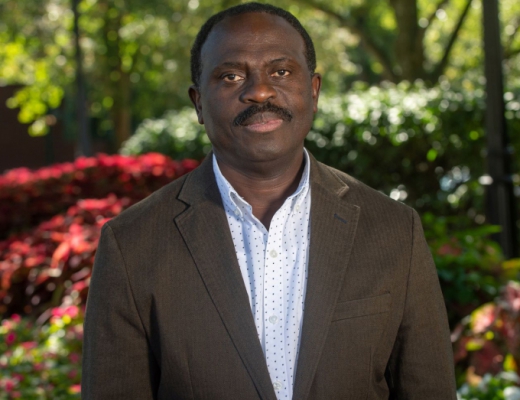
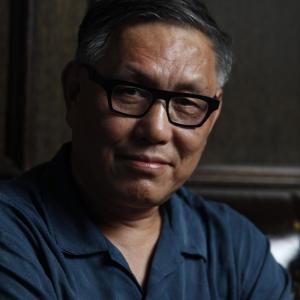
Eric Beeko is a Teaching Assistant Professor in the Department of Africana Studies at the University of Pittsburgh, affiliated with the Kenneth P. Dietrich School of Arts and Sciences. His teaching focuses on African studies, including courses like African Civilization, Liberation Movements, and Music in Africa. He holds a Ph.D. in Ethnomusicology from the University of Pittsburgh (2005), alongside advanced degrees from institutions in Ghana. His research explores African musical traditions, cultural practices, and performance aesthetics. Current projects include studies on Neo-Pentecostal/Charismatic church music in Ghana and the interplay between tradition and modernity. Future research plans involve multi-volume studies on African linguistic-cultural distribution and Black performance practices globally. Publications include analyses of Akan music rights, Ghanaian choral innovations, and African cultural heritage. He is developing works on Neo-Pentecostal worship aesthetics and the role of music in identity expression across the African diaspora. Advising and grants are not explicitly listed, but his scholarly activities emphasize collaborative research in ethnomusicology and cultural studies. He is based in Posvar Hall, Office #4152.
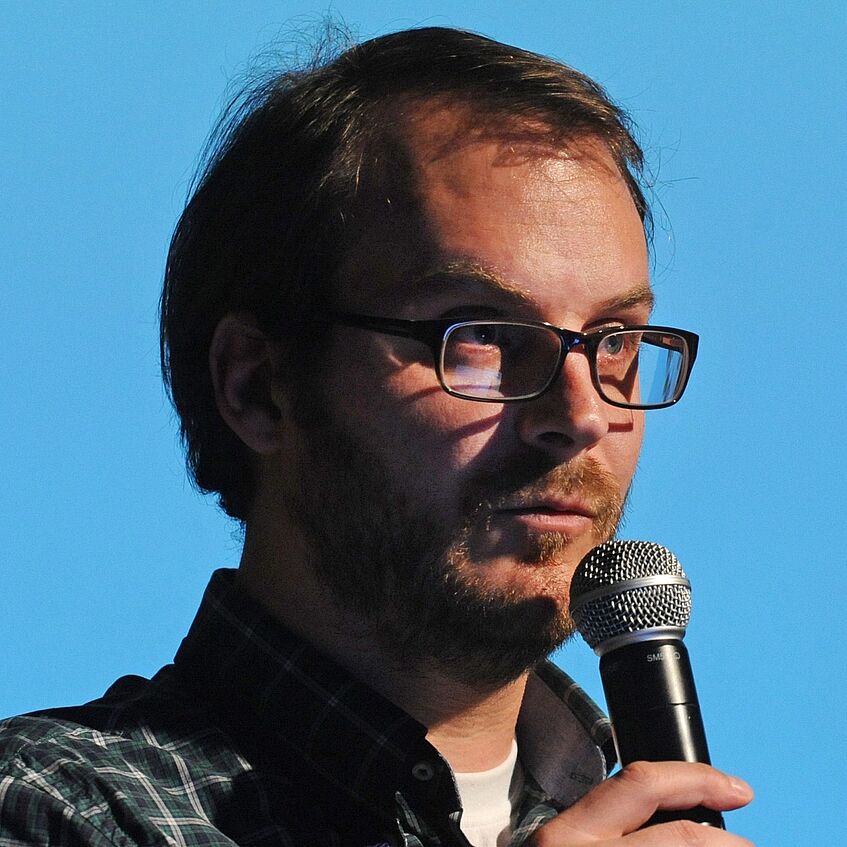
Philipp Budka is a Researcher (PostDoc) and Lecturer at the Department of Social and Cultural Anthropology, University of Vienna. He leads the North American research region for the ERC Advanced Grant project 'InfraNorth' and investigates transport infrastructures in northern Canada. Budka co-founded the Digital Ethnography Initiative and is a member of the Austrian Polar Research Institute (APRI). He holds a Mag.phil. in Cultural Anthropology and Communication Studies from the University of Vienna and Utrecht. His doctoral research focused on Indigenous digital infrastructures in northwestern Ontario, Canada. Education: Mag.phil. (2003), PhD in Cultural Anthropology (2017) Research Interests: Digital Anthropology, Infrastructure Studies, Media Anthropology, Indigenous Technologies His research explores sociotechnical systems, digital ethnography, and infrastructure sustainability in remote regions. Budka has co-edited volumes on media and conflict and ritualization, and is currently working on monographs about Indigenous online platforms and transport infrastructures in Canada. Grants: ERC Advanced Grant (InfraNorth), various teaching and research roles at FU Berlin and HMKW Berlin. He was co-leader of the Media Anthropology Network (EASA) from 2017–2024. Labs/Teams: Team of the Lehrendenvertretung (Teaching Representatives), Digital Ethnography Initiative, InfraNorth Project.
Dr. Julia Costa López is an Assistant Professor (tenured) in History and Theory of International Relations at the Department of International Relations and International Organisation, Faculty of Arts, University of Groningen. Her work bridges international relations, history, and political thought, focusing on how historical frameworks shape modern disciplinary concepts. PhD from University of Oxford Lecturer at St Hilda's College Fulbright scholar at University of Denver's Josef Korbel School Graduate studies at University of Cambridge Research spans medieval political authority, sovereignty emergence, racialized medievalisms in extremism, and translation politics in global scholarship. Key projects include Routledge Handbook of Historical International Relations (2021) and the Oxford Handbook of History and International Relations (2023). Publications address Eurocentrism, conspiratorial ideology, and ritual's role in authority production. Scientific contributions appear in Cambridge Review of International Affairs , International Organization , and European Journal of International Law . Awards include the Fulbright scholarship. Recent work explores terraqueous relations and premodern world conceptualizations, challenging simplistic land-sea dichotomies in IR.
Timo Kaartinen serves as Professor of Social and Cultural Anthropology and Vice Dean for Research and Doctoral Education at the University of Helsinki 's Faculty of Political Science . Since 1992, he has conducted extensive research in Southeast Asia with a focus on Indonesia, exploring communicative practices, narratives, and cultural responses to uncertainty. His teaching spans social change in bachelor's, master's, and doctoral programs, covering environmental anthropology, political anthropology, cosmologies, religions, and linguistic anthropology. PhD in Anthropology, University of Chicago (2001) Docent (Adjunct Professor), University of Helsinki (2011) Research interests center on ethical discourse in Indonesian Islamic universities, resource politics in oil palm estates, and linguistic anthropology with emphasis on storytelling, folk poetry, and minority language revitalization. His work combines ethnographic focus on Southeast Asia with theoretical contributions to frontier studies and postcolonial anthropology. Recent publications examine frontier temporalities (2020-2025), Islamic transformations (2019), and oral narrative structures (2017-2013). Key projects include ARCTIC Research Centre (2025-2029), Diversity in Society and Life (DIVSOL) (2025-2030), and Religious Movements in Ethical Life (2019-2023). Grants from the Academy of Finland and University Profiling Funding support these initiatives. Academic activities include keynote speeches at international conferences (e.g., Empowering Local Wisdom 2014, Labor Migration in Asia-Pacific 2013) and editorial roles. He has conducted fieldwork in Indonesia since 1992, focusing on Bandanese cultural heritage and Maluku religious dynamics . His methodological approach combines ethnographic fieldwork with historical document analysis .
Prof. Dr. Asghar Seyed-Gohrab is a leading scholar in Persian and Iranian Studies at Utrecht University’s Department of Philosophy and Religious Studies. His academic career spans over two decades, including roles as Chairman of Persian Studies at Leiden University and Principal Investigator of the ERC-funded 'Beyond Sharia' project examining Sufism’s role in Islamic intellectual history. He holds a PhD from Leiden University and has authored over 50 monographs and edited volumes on Persian poetry, Sufism, and Iranian cultural history. Education: B.A. in English (Vrije Universiteit), M.A. in Persian Studies (Leiden University), PhD (Leiden University) Research Focus: Medieval Persian poetry’s modern political and cultural relevance, Sufi movements, and the interplay between mysticism and state power in Iran. Grants: ERC Advanced Grant (2021), NWO VIDI/VENI (2009-2014), KNAW Fellow (2023). His research highlights how classical Persian poetry shapes modern Iranian identity, including its use in the 1979 Revolution and Iran-Iraq War. He has supervised 43+ students and edited journals like Iranian Studies and Persica .
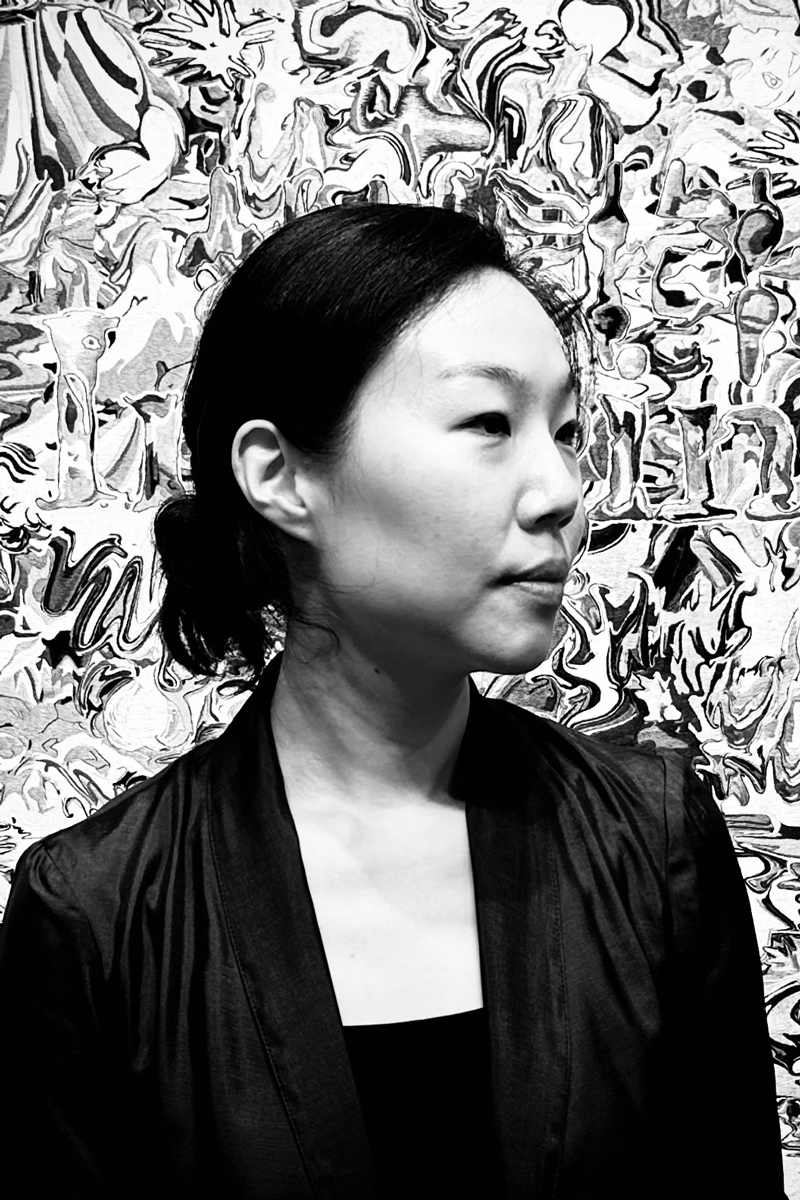
Sohl Lee serves as Associate Professor in the Department of Art History and Criticism at Stony Brook University, specializing in Contemporary East Asian Art and Visual Culture, Critical Theory and Globalization, and Curatorial Studies. Holding a Ph.D. from the University of Rochester since 2014, she contributes significantly to the academic community through teaching and research. Her educational background features: Ph.D. in Visual and Cultural Studies from the University of Rochester (2014) Professor Lee's research explores modern and contemporary East Asian art through interdisciplinary lenses including aesthetics of politics, activist art, vernacular modernism, postcolonial theory, and historiography. Her scholarship appears in prominent journals such as Yishu: Journal for Contemporary Chinese Art , Art Journal , and InVisible Culture , establishing her as a leading voice in global art discourse. Her publication trajectory reveals consistent engagement with democracy, ecological consciousness, and Cold War legacies across East Asian contexts. Key thematic threads include the intersection of art and political movements, ecological thinking in Korean contemporary art, and visual representations of national division—demonstrating how artistic practices navigate complex socio-political landscapes. Dr. Lee's scholarly contributions have been recognized through competitive fellowships: Social Sciences Research Council Fellowship Korea Foundation Fellowship Susan B. Anthony Institute of Gender and Women Studies Fellowship She actively shapes student learning through undergraduate courses including 'Art and the City,' 'Modern and Contemporary Korean Art,' and 'Social Engagement and Publicness in East Asia.' Her curatorial practice extends academic work into public spheres through exhibitions mounted in both the United States and South Korea, bridging theoretical frameworks with tangible cultural production.
Professor Catherine Allerton is a faculty member in the Department of Anthropology at the London School of Economics and Political Science (LSE). She specializes in the materialities and mobilities of everyday life, with a focus on place, kinship, childhood, migration, and temporalities in island Southeast Asia. Her fieldwork spans a two-placed village in Flores, Indonesia, and Kota Kinabalu, Sabah, East Malaysia. Her research emphasizes interdisciplinary ethnographic methods, particularly involving child participants to challenge adult-centric approaches. She launched the 'Childhood in the Migrant City' exhibition using child-taken photographs from her ESRC-sponsored research. Current projects include exploring discordant temporalities between migration systems and childhood development, as well as completing a book manuscript on moral economies of belonging. Key research interests include the social and political dimensions of landscapes, the anthropology of children, and the impacts of legal status on marginalized youth. She teaches an LSE course on 'Children and Youth in Contemporary Ethnography' and actively supervises PhD students focusing on childhood, migration, citizenship, and Southeast Asian studies. Her work addresses exclusionary practices tied to race, religion, and legal frameworks in Malaysia and Indonesia. Languages spoken include Bahasa Manggarai, English, Indonesian, and Malay. No part-time status is mentioned, indicating full-time faculty commitment.
Alexander Tulin is an Associate Professor in the Department of English at Howard University, within the College of Arts & Sciences. He has been a faculty member at Howard since 1990, originally in the Department of Classics, which he chaired from 2017 to 2021 before its closure led to his transition to the English Department. Institution: Howard University School: College of Arts & Sciences Department: Department of English Academic Rank: Associate Professor Email: atulin@Howard.edu Education: PhD in Classics, Columbia University, 1990 Dr. Tulin's research and teaching span classical antiquity and modern literature. His primary scholarly interests include Ancient Greek Philosophy, Plato, Ancient Law, and Rhetoric, with a current focus on the interstices between Antiquity and Modernity. In the English Department, his teaching centers on Modernism, modern art from 1870–1950, and the 20th-century novel in Europe and America. His publications reflect a deep engagement with classical philosophy and textual analysis. The most recent works show a sustained interest in Platonic dialogues, Socratic method, philosophical rhetoric, and the interpretation of ancient legal and literary texts. He has also contributed numerous scholarly reviews, demonstrating active participation in the academic discourse of classical studies. Scientific Awards: No specific awards or honors are mentioned in the provided text. Advising and Grants: There is no information available regarding students advised, research grants, or funding received. Labs and Research Teams: No information is provided about laboratories, research groups, or collaborative teams associated with Dr. Tulin.
Dr David Pratt is a Fellow in History at Downing College, University of Cambridge , where he also serves as Archivist and Keeper of Art and Artefacts. His academic career focuses on early medieval political thought and court culture, particularly in Anglo-Saxon England and the Carolingian world. Academic Rank: Research Fellow Honors: FRHistS (Fellow of the Royal Historical Society) Research Interests center on the political ideology of King Alfred the Great, the origins of English coronation rituals, and broader themes of kingship, law, and social order in the later Anglo-Saxon period. His comparative approach highlights interactions between Anglo-Saxon and European medieval traditions. Recent Publications include English Coronation Ordines in the Ninth and Early Tenth Centuries (2023) and studies on Alfredian texts, taxation systems, and monastic reform. These works emphasize textual analysis, royal authority, and cross-cultural influences. Scientific Awards: FRHistS
Simon O'Sullivan is a Professor of Art Theory and Practice and Programme Leader for the MA in Contemporary Art Theory at Goldsmiths, University of London. He is affiliated with the Department of Visual Cultures, focusing on interdisciplinary research at the intersection of art, performance, and continental philosophy. His work explores themes such as mythopoesis, fictioning, and the production of subjectivity, with a particular interest in Deleuze and Guattari's theories. O’Sullivan collaborates under the name Plastique Fantastique, a performance fiction collective that interrogates aesthetics, subjectivity, and cultural politics through interdisciplinary practices. His research interests span aesthetics, continental philosophy, and modern/contemporary art, including ritual/performance, psycho/schizo-analysis, and non-philosophy. He has published extensively, including monographs like From Magic and Myth-Work to Care and Repair (2024) and Fictioning: The Myth-Functions of Contemporary Art and Philosophy (2019 with David Burrows). O’Sullivan’s work bridges theory and practice, emphasizing hybrid writing and speculative approaches to art and culture. He teaches on the MA Contemporary Art Theory and contributes to BA and MPhil/PhD programs, mentoring students in areas like theory-fiction, occulture, and care and repair. His collaborative art projects have been exhibited globally, and he frequently presents at international conferences on topics such as myth-science and speculative methodologies.
Professor Ruth Holliday holds the position of Professor of Gender and Culture at the University of Leeds since 2006, where she has also served as Director of Studies for the Centre for Interdisciplinary Gender Studies, Director of Research and Innovation, and Director of Recruitment and Admissions for the School of Sociology and Social Policy. Previously, she worked at Staffordshire University and Birmingham City University, and served as a Visiting Professor at the University of Technology Sydney (UTS). Her research expertise spans cultural sociology, body studies, material culture, medical tourism, and gender relations, with a focus on low fertility and East Asian cultural contexts. Her academic qualifications include a PhD in Sociology and a BA in Electronics and Management Science. She has contributed to over 50 articles and 7 books, including the award-winning Beautyscapes (2019), which explored global cosmetic surgery tourism and won the Foundation for the Sociology of Health and Illness Book Prize in 2020. Her work on kitsch aesthetics and visual methodologies has also been influential, particularly in understanding class, gender, and race through taste politics. Ruth’s current research projects include studying low fertility cultures’ impacts on gender identities and a project on the cultural meaning of the penis in gender construction. She teaches modules such as Theorizing Gender and Contested Bodies at the MA level, emphasizing critical approaches to gender and embodiment. Key Projects: ESRC-funded 'Building Capacity in Visual Research' and collaborative work on medical tourism in East Asia and Europe. Awards: 2020 Foundation for the Sociology of Health and Illness Book Prize. Supervision: Active in mentoring PhD students researching the body, intimacy, and low fertility in China and Korea. Her interdisciplinary approach bridges sociology, cultural studies, and visual methodologies, with a commitment to ethnographic fieldwork and global comparative analysis.
Karoline Noack is a full Professor of Ancient American Studies and Ethnology at the Institute of Archaeology and Cultural Anthropology , University of Bonn, where she also directs the BASA Museum (Bonn Collection of the Americas). She has held this position since 2009 and is a leading scholar in Andean studies, museum ethnology, and colonial Latin American history. Her research interests are deeply interdisciplinary, focusing on: The Inca state and early colonial Andes, particularly in Peru, Bolivia, and Mexico Transculturation and gender in colonial contexts The history of ethnological knowledge, especially in the GDR Museum studies, collection ethics, and the decolonization of ethnographic museums Material culture and provenance research Her recent scholarly output centers on dependency and mobilization in the Inca Empire, the global history of resources (like cotton and coca), and the role of museums in knowledge production. She has led major projects such as 'Balancing the Center and the Local' in Cochabamba and the KOSMOS collaborative project on object-based knowledge. Her publications span museum ethics, colonial legal history, and transcultural exchange. Karoline Noack has received significant recognition, including: Membership in the German Archaeological Institute Fellowships from the Volkswagen and Gerda Henkel Foundations Membership in the DFG Review Board Leadership roles as Spokesperson for the Transdisciplinary Research Area 'Present Pasts' and Chair of BASS e.V. She advises and mentors students in ethnology and archaeology, and her work involves extensive collaboration with international scholars and institutions. Her research is supported by major German funding bodies and is published in leading academic venues. She is also deeply involved in public engagement through museum curation and exhibitions.
Rachel Fell McDermott is Professor of Asian and Middle Eastern Cultures at Barnard College, Columbia University, specializing in South Asian religions, particularly the Hindu goddess traditions of Bengal in India and Bangladesh. Her work bridges religious studies, human rights, and comparative religion, with a strong focus on Kali, Durga Puja, and the literary legacy of Kazi Nazrul Islam. Education: A.B., Religious Studies, University of Pennsylvania, 1981 M.Div., Harvard Divinity School, 1984 A.M., Study of Religion, Harvard University, 1986 Ph.D., Study of Religion, Harvard University, 1993 Her research centers on the religious and cultural dynamics of Bengal, exploring themes such as goddess worship, ritual practices, religious poetry, and the intersection of religion with politics and identity. She is deeply engaged in comparative religion, examining how religious themes like suffering, sacrifice, and divine femininity manifest across traditions. Her scholarship also addresses diasporic religious experiences, digital religion, and interfaith dialogue, particularly between Hindu and Christian communities. The 15 most recent publications reflect a sustained scholarly engagement with goddess traditions, especially Kali and Durga, as well as broader themes in South Asian religion, including Tantric symbolism, festival culture, and the reception of Hindu deities in the West. Her work spans ethnographic, historical, and textual analysis, often highlighting the contested and evolving nature of religious canons. She frequently contributes to major academic anthologies and journals in religious studies, South Asian studies, and comparative theology. Scientific Awards: No specific awards listed in the provided text. As a senior professor and managing editor of major academic volumes, she has likely advised numerous graduate students and secured research funding, though specific names and grants are not mentioned. She teaches courses such as “Why Do Bad Things Happen to Good People?” that explore theodicy across religions. She is currently on leave for the 2024–2025 academic year, indicating ongoing active involvement in academic life. She is involved in significant editorial projects, including the third edition of The Sources of Indian Traditions , and is working on translations and a monograph on Kazi Nazrul Islam. Her scholarly presence includes invited lectures at institutions such as Princeton, the University of Connecticut, and the Bangla Academy in Dhaka, reflecting her international recognition in the field of South Asian religious studies.
Charles D. Piot is a Professor and Bass Fellow in the Department of Cultural Anthropology at Duke University's Arts & Sciences. His work spans contemporary culture and politics, histories of slavery and colonialism, and transnational African diasporic studies. Ph.D., University of Virginia (1986) M.A., University of Virginia (1982) B.A., Princeton University (1973) Research focuses on francophone West Africa , particularly Togo, with theoretical contributions to modernity , biopolitics , postcolonialism , and transnational migration . He explores how globalization, NGOs, and religious movements reshape sovereignty and social structures. Recent work examines urban informality and economic resilience in African microenterprises. His publications include award-winning books Nostalgia For the Future (2010) and Remotely Global (1999), alongside peer-reviewed articles on topics ranging from visa lottery systems to ethnographic theory. As co-editor of Cultural Anthropology (2011-2015), he advanced open-access publishing initiatives. Scientific awards include the African Politics Conference Group Award for Best Book on African Politics (2010) Royal Anthropological Institute's Amaury Talbot Prize (1999) African Studies Association's Herskovits Prize finalist (1999)
Wu Hung is the Harrie A. Vanderstappen Distinguished Service Professor at the University of Chicago, affiliated with The College , the Department of Art History , and the Department of East Asian Languages and Civilizations . He serves as Director of the Center for the Art of East Asia and Consulting Curator at the Smart Museum of Art .