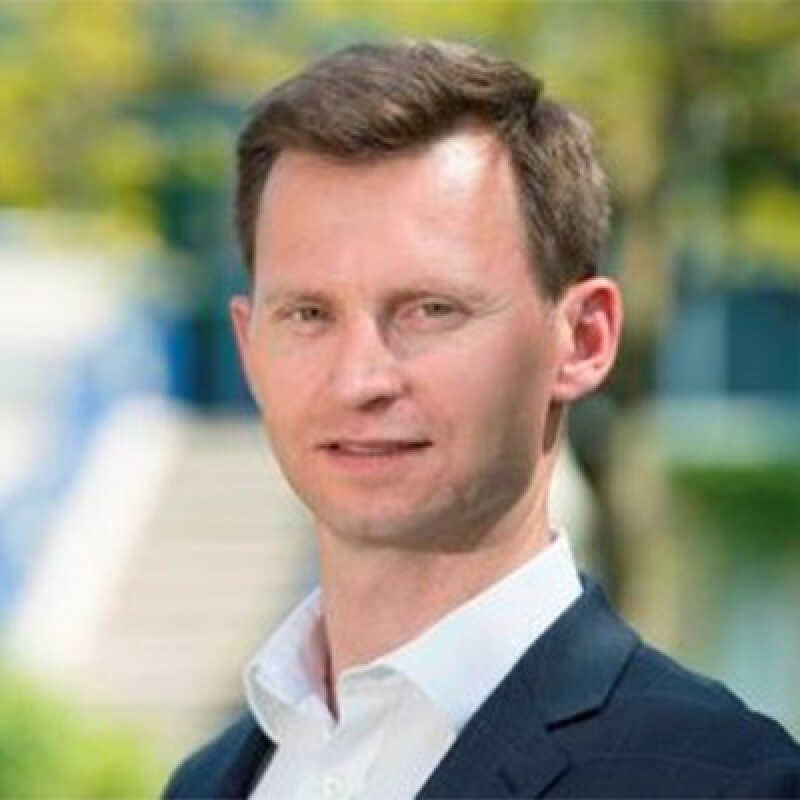
Stefano Braghiroli is an Associate Professor of European Studies at the University of Tartu's Johan Skytte Institute of Political Studies (since 2021). He holds a PhD in Comparative and European Politics from the University of Siena (2010). His career includes roles as Programme Director for European Union-Russia Studies and European Studies (since 2016), and prior academic positions across institutions in Estonia, Turkey, Norway, and Italy. His research focuses on EU-Russia relations, Baltic regionalism, populism, and democratic governance. Notable awards include the prestigious Order of the Star of Italy (2025) and University of Tartu’s Badge of Distinction (2021). He has led projects on EU neighborhood policies and authored over 60 publications, including articles on disinformation, Nordic-Baltic crisis narratives, and pandemic governance. Braghiroli’s administrative roles include membership in the Johan Skytte Institute’s Council and advisory roles for EU programs. His work bridges academic research with policy impact, emphasizing transnational cooperation and democratic resilience.
Dr Vivienne Xiangwei Guo is a Senior Lecturer in Modern Chinese History at King’s College London, specializing in intellectual, political, and cultural history of modern China. She holds a PhD from King’s College London, following her master's at LSE and bachelor’s at Peking University. Her work explores the interplay between Chinese intellectual elites, warlords, and transnational influences. 2014–2016: Research Associate, University of Cologne 2016–2021: Lecturer, University of Exeter 2021–present: Senior Lecturer, King’s College London Research interests include the history of Chinese intellectual elites, gender roles during wartime, and the transnational impact of foreign language acquisition. Her current BA/Leverhulme-funded project, 'New Self, New World,' investigates French language learning among modern Chinese intellectuals. Recent publications span topics like francophone influences on Chinese intellectual identity, federalist experiments in early 20th-century China, and wartime women’s networks. Her work combines sociolinguistic and cultural analysis with traditional historical methods. Scientific achievements: Fellow of the Royal Historical Society Co-editor, Cambridge Elements series Dr Guo teaches undergraduate and postgraduate modules covering China’s transformation from imperial to modern state. She has contributed to public engagement via documentaries for Arte and WildBear Entertainment.
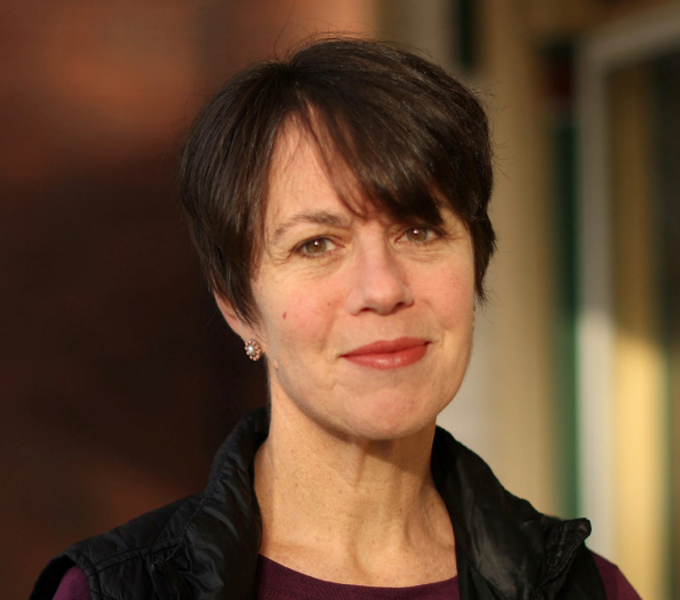
Nelson Lichtenstein is a Research Professor in the Department of History at the University of California, Santa Barbara (UCSB). He directs the Center for the Study of Work, Labor, and Democracy. With a Ph.D. from UC Berkeley (1974), he has held academic positions at Catholic University of America, University of Virginia, and joined UCSB in 2001. His research focuses on U.S. labor history, 20th-century social thought, and political economy. Education: B.A., Dartmouth College (1966); Ph.D., UC Berkeley (1974) His work examines labor movements, corporate power, and the intersection of labor rights with democratic institutions. Recent projects include analyzing contemporary labor struggles at Starbucks, Amazon, and the UAW, emphasizing how historical precedents inform modern organizing strategies. He is completing a book arguing for labor's vital role in democracy's preservation. Publications span over 18 authored/edited books including State of the Union and A Fabulous Failure: The Clinton Presidency . His writing appears in New York Times , Jacobin , and academic journals. Awards include the Sidney Hillman Foundation's Sol Stetin Award (2012) for lifetime achievement in labor history. Awards: Society of American Historians membership (2008), Fulbright Fellowship, Guggenheim Fellowship Lichtenstein advises 9 graduate students and teaches courses on labor history, the New Deal, and contemporary capitalism. He frequently engages media for commentary on strikes, union strategies, and labor policy.
Dr. Salma Shaheen is a Teaching Professor at King’s College London, affiliated with the School of Security Studies and the Department of War Studies. She holds a PhD in War Studies from King’s College (2018) and has extensive experience in strategic studies, nuclear command and control, and South Asian security. Prior to academia, she worked on arms control and disarmament at Pakistan’s Strategic Plans Division. Her research focuses on nuclear norms, deterrence, and the impact of emerging technologies on security landscapes. She regularly contributes to media outlets and publishes on topics ranging from drone warfare to climate resilience, emphasizing interdisciplinary approaches to global challenges. Education: PhD in War Studies, King’s College London (2018) MPhil and MSc in Defence and Strategic Studies, Quaid-i-Azam University (2008, 2005) BA in Economics and Statistics, University of Punjab (2002) Research Interests: Nuclear command and control, deterrence theory, South Asian strategic stability, cyber warfare, climate adaptation, and international security dynamics. Recent Work Trends: Dr. Shaheen’s recent publications analyze the evolving strategic cultures in conflicts like Russia-Ukraine, the role of drones in South Asian battlescapes, and the ethical implications of AI in military applications. She also advocates for Pakistan’s climate justice efforts and critiques its cybersecurity policies. Grants/Advising: No specific grants or student advisees listed in the provided text. Labs/Teams: Engaged with the School of Security Studies and collaborates on projects related to nuclear security and crisis communication.
Nawaf Obaid is a prominent political scientist and Visiting Senior Research Fellow at King's College London's Department of War Studies. He concurrently serves as CEO of the Essam & Dalal Obaid Foundation and Commissioner at the Commission for International Justice and Accountability (CIJA). His career spans diplomatic roles in the Saudi Royal Court, advisory positions to senior Saudi officials, and academic appointments at Harvard University's Belfer Center and King Faisal Center for Research and Islamic Studies. Obaid holds a PhD in War Studies from King's College London (2013), MA in War Studies (2011), plus degrees from Georgetown, Harvard, and MIT. His research focuses on intelligence studies, nuclear doctrine, Middle Eastern geopolitics, and Saudi foreign policy evolution. Notable contributions include analyzing Iranian nuclear ambitions, Saudi defense modernization, and the Arab Spring's impact on regional stability. His work highlights themes like Saudi-Iranian rivalry, energy weaponization, and countering terrorism through strategic partnerships. Current research emphasizes Saudi Arabia's role in shaping regional security frameworks and ethical intelligence practices. He has advised on cybersecurity, counterterrorism financing, and military doctrine reforms across Gulf Cooperation Council states.
Alica Kizekova is a Lecturer at Curtin University’s School of Media, Creative Arts and Social Inquiry, part of the Faculty of Humanities. She concurrently serves in the Office of the Provost. Her research focuses on international relations, Chinese foreign policy, and regional security dynamics in Asia-Pacific and Central Europe. Key interests include the Belt and Road Initiative, Australia-China relations, Czech foreign policy, and multilateral diplomacy in resolving territorial disputes. Her work examines geopolitical strategies of major powers, soft balancing mechanisms, and the evolving Indo-Pacific order. Notable publications include analyses of China’s engagement with Central and Eastern Europe, Australia’s asymmetrical relations with China, and the role of ASEAN in regional security architecture. She has edited volumes on Czech interests, the post-Trump Indo-Pacific, and the implications of US-China competition in Central Asia. Her contributions span edited books, peer-reviewed journal articles, and research chapters addressing topics such as the Shanghai Cooperation Organisation, soft balancing in Indo-Asia-Pacific, and Australian national identity in the Asian Century. Her research bridges diplomatic theory with contemporary geopolitical realities, emphasizing strategic depth in understanding power dynamics across regions.
Robert J. Antonio serves as the Chancellor's Club Teaching Professor in the Department of Sociology at the University of Kansas, specializing in social theory, macroscopic sociology, and the interplay between economy and society. His academic profile reflects deep engagement with classical and continental theoretical traditions. Education: PhD in Sociology from the University of Notre Dame Research Focus: Professor Antonio critically examines the sustainability of modernization and globalization through lenses of social theory, political economy, and environmental sociology. His work interrogates whether liberal democracy and capitalism can endure amid resource depletion, global warming, anti-capitalist movements, and geopolitical realignments, emphasizing the historical debates around modernity's viability. Publication Trends: His research trajectory reveals consistent analysis of social theory's evolution from classical frameworks through postmodern critiques toward contemporary globalization debates. Key themes include the transformation of capitalism, cultural fragmentation, and environmental limits, demonstrating how anti-modern critiques have intensified political conflicts over the past two centuries. Scientific Recognition: Chancellor's Club Teaching Professor Academic Contributions: While specific advising details are unreported, his teaching portfolio spans core sociology domains including Social Theory, Globalization-Economy and Society, Macroscopic/Historical Sociology, and American Society. His scholarship bridges theoretical rigor with urgent contemporary crises, particularly environmental challenges and geopolitical instability. Research Infrastructure: The available documentation does not specify dedicated laboratories or formal research teams, though his work inherently connects to broader theoretical and interdisciplinary networks within sociology.
Todd Eberly is a Professor of Political Science and Public Policy and Coordinator of the Public Policy Program at St. Mary's College of Maryland . His expertise lies in American health and welfare policy, political legacies of the Great Society, and contemporary political polarization. Education: B.A. in Political Science from Clarion University (1996) Ph.D. in Public Policy from the University of Maryland (2006) Research Interests: American Government and Politics American Public Policy Political Polarization Health and Welfare Policy Political Legacies of the Great Society Federalism Publications explore systemic stability in American politics, including critiques of professional governance and polarization trends. His 2013 book American Government and Popular Discontent examines historical transformations from the 1950s-1980s, while his 2015 book The Rise of Ideology in America analyzes ideological shifts in public policy. Scientific Awards: Named one of the most influential voices in Maryland politics by Campaigns and Elections magazine Faculty Student Life Award (2010) from St. Mary's College Student Government Association Advising and Media Engagement: Eberly advises Project Vote Smart and has provided commentary for the Washington Post, Baltimore Sun, and Public Radio/Television. He served as an expert witness in gerrymandering cases and consulted with the centrist organization Third Way.
Adrian Pabst is Professor of Politics at the University of Kent , School of Politics and International Relations. Since 2009 he has progressed from Lecturer to Senior Lecturer (2013), Reader (2016) and Professor (2019). He is also Director of Kent’s Centre for Federal Studies , a Fellow of the National Institute of Economic and Social Research , and holds editorial and trustee roles with Telos , the Foundation Centesimus Annus Pro Pontifice , and the James Madison Charitable Trust . Education PhD in Political Thought and Philosophy of Religion, University of Cambridge (2002–2006) Leverhulme Early Career Fellowship, University of Nottingham (2007–2009) Research Interests Adrian’s work integrates political theory, political economy and international politics . He interrogates liberalism and its critics—especially Burke, Tocqueville, and the conservative, socialist and Catholic traditions—while advancing post-liberal alternatives rooted in Catholic Social Teaching , civil economy and guild socialism . Key themes include: Post-liberalism beyond the left–right, state–market binaries The English School of International Relations and the primacy of association Christian social thought and economic anthropology (Polanyi, Mauss) Federalism and the future of Europe Blue Labour, UKIP and the renewal of British politics Research Outputs & Trends Across more than 70 publications, Adrian has developed a distinctive interdisciplinary research programme . Recent articles (2016–2024) reveal a focus on post-liberal responses to technocracy and populism , climate-sustainability policy , Brexit and Trump , and renewing Western universalism . His monographs and edited collections—such as The Politics of Virtue (2016), The Demons of Liberal Democracy (2019) and Postliberal Politics (2021)—have become touchstones for scholars rethinking liberal order. Scientific Awards & Fellowships Leverhulme Early Career Fellowship, University of Nottingham (2007–2009) Fellow, National Institute of Economic and Social Research (2017–present) Sir Peter Lawler Visiting Fellow, PM Glynn Institute, Australian Catholic University (2018) Doctoral Supervision & Grants Adrian welcomes PhD and MPhil supervision in political and social theory, political economy, politics and religion, and European politics . Current and recent supervisees are exploring topics such as EU–Russia discursive interaction, grand theory in IR, French revolutionary change, post-Cold War Russia, Uzbekistan’s IPE, and EU religious-freedom enlargement policy. Grant-funded projects include: Nuffield Foundation project on British fiscal policy (NIESR) Regional microsimulation modelling (NiReMS) Compass reports on global social democracy Laboratories, Centres & Teams As Director of the Centre for Federal Studies , Adrian leads an interdisciplinary team examining federal and multi-level governance. He collaborates with the National Institute of Economic and Social Research on fiscal policy research and with the PM Glynn Institute on Catholic social thought and labour traditions.
Shuichiro Nishioka is an Associate Professor in the Department of Economics at West Virginia University's College of Business and Economics. His research focuses on International Trade and Economic Development, with particular emphasis on China's economic dynamics, labor shares in manufacturing, and historical trade patterns between Japan and the United States. Education: Ph.D. in Economics from the University of Colorado at Boulder. His expertise spans political economy, corporate decision-making, and global trade dynamics. Recent work investigates how capital-labor substitution affects income distribution, market competition in China, and the role of soft infrastructure in multinational firm location choices. Analysis of his publications reveals consistent themes: trade frictions, productivity growth, political regimes, and the interplay between institutions and economic outcomes. Key trends include evaluating trade policies' impact on labor markets and analyzing historical trade patterns during the Reagan era. Scientific Awards: WVU Faculty Senate Research Grant (2013) Dean's Scholar (2012) JSPS Grant-in-Aid collaborator (2012) Kennedy-Vanscoy Summer Research Fund (2009/2010) Irving Fisher Article Award (2006) World Bank scholarship (2003-2005) His grants and fellowships highlight support for trade policy research and empirical analysis, particularly focusing on Japan and China's economic interactions with the United States. While student advising details are not explicitly mentioned, his academic contributions include mentoring through research collaborations and publications.
Sofie Blombäck serves as a Senior Lecturer in Political Science at Mid Sweden University, where she is affiliated with the Department of Humanities and Social Sciences (HSV). She holds a Doctor of Philosophy degree and conducts research within the DEMICOM research center, which focuses on democracy and communication. Her office is located in room M321 in Sundsvall. Dr. Blombäck's research primarily focuses on political parties and party systems, with specific expertise in new parties that challenge established party systems in Western Europe. She has published extensively on European Parliament elections, social media use by political parties, and democratic innovations at the local level. Her current research is centered around the project "Reduced Ideological Polarization and Conflict in Western Europe?" examining evolving political dynamics in contemporary European democracies. Analysis of her recent publications reveals a clear trajectory in her scholarly work. Her research demonstrates increasing focus on radical right politics and its effects on voter behavior, particularly examining the stigmatization effect of radical right parties on policy preferences. She also maintains a strong interest in democratic innovations, particularly at the local level, as evidenced by her 2023-2025 work on elite deliberation in Swedish municipalities. Her scholarship consistently bridges theoretical political science with empirical analysis of Scandinavian and broader Western European contexts. As an active researcher, Blombäck has contributed to numerous collaborative projects examining party system dynamics, including the DIPAC project on party conflict in Western European parliaments. Her work spans multiple publication formats including journal articles, book chapters, conference presentations, and research reports for Swedish municipalities. Within the DEMICOM research environment, Dr. Blombäck contributes to advancing understanding of democratic processes in the digital age, particularly examining how new political actors navigate electoral systems and how social media has become an integral part of political communication strategies. Her work provides valuable insights into the evolving nature of political representation in contemporary democracies.
Shigeki Uno is a Professor at the Institute of Social Science, University of Tokyo , specializing in Political Philosophy and History of Political Thought . His career spans over three decades with key appointments including Visiting Professor at Free University of Berlin (2018) and École des Hautes Etudes en Sciences Sociales (2000–2002). Ph.D. in Law from University of Tokyo Editorial roles in academic journals and symposiums Director of multiple academic societies including Japan Political Science Association Research focuses on democracy and religion , labor and local governance , and comparative political philosophy across America, France, and Japan. His work examines the history of French political thought and contemporary challenges to democratic systems , particularly in post-crisis contexts like Fukushima and the pandemic. Key publications include monographs on Tocqueville, democracy in Japan, and edited volumes on governance. Recent articles analyze secularization , post-crisis societal transformation , and authoritarian legitimacy . Awards include the Ishibashi Tanzan Award (2021) and Suntory Prize (2007). Principal investigator for 19 competitive research grants from JSPS (2004–present) Current project: The Changing Face of Liberalism (2024–2027)
Mehmet Nur Çelikaslan serves as a Lecturer at Gaziantep University's Vocational School of Social Sciences within the Department of Finance, Banking and Insurance since 1997. His academic profile bridges finance education with specialized research in international relations, particularly focusing on geopolitical dynamics between Türkiye and Western powers. His educational trajectory includes: Doctorate in Political Science and International Relations (2021) from Hasan Kalyoncu University Master's in Personnel Management (1997) from Istanbul University Institute of Social Sciences Licence in Public Administration (1992) from Istanbul University Faculty of Political Sciences Research centers on Turkish-American relations across multiple crisis points including military cooperation disputes (S-400/F-35), Syria policy divergences, historical tensions (March 1st Bill), and diplomatic friction (visa restrictions). His work extends to broader European security analysis covering Ukraine war implications, German leadership roles, and diaspora influences on Türkiye-Armenia normalization. This scholarship consistently examines how geopolitical ruptures impact institutional frameworks and bilateral trust. Publication trends from 2020-2024 reveal methodical progression from bilateral Turkey-US analysis toward wider European security architecture studies. While maintaining Turkish-American relations as the core focus, recent work incorporates Ukraine war repercussions and diaspora politics, demonstrating expanding analytical scope. All publications appear in internationally indexed journals with dual-language output (English/Turkish), reflecting targeted scholarly communication strategies for both global and domestic academic audiences.
Lara Putnam is a Research Professor at the Department of History, University of Pittsburgh. Her work focuses on race, gender, migration, and grassroots social movements in the modern Americas, with special attention to transnational approaches and digital humanities. Research Interests: She explores the information ecosystems shaping historical research, emphasizing how data creation and absence influence knowledge production. Her projects bridge Caribbean studies, labor history, and Atlantic world analysis, examining intersections of race, capitalism, and anti-racism. Scientific Awards Andrés Ramos Mattei-Neville Hall Article Prize (2014–2015) Elsa Goveia Memorial Lecturer (2016) ACLS/SSRC/NEH Fellowship (2006) Recent Publications reflect trends in political activism, suburban/rural organizing, and methodological critiques of data in the digital age. Grants include the Andrew W. Mellon Foundation-funded Sawyer Seminar on information supply and power dynamics.
David Damore is a Professor of Political Science at the University of Nevada, Las Vegas (UNLV) and serves as Executive Director of The Lincy Institute and Brookings Mountain West, two prominent public policy research centers. His work bridges academic scholarship with practical policy analysis focused on Nevada and the Mountain West region. His educational background includes: Ph.D. in Political Science from the University of California, Davis M.A. in Political Science from the University of Georgia B.A. in Political Science from the University of California, San Diego Professor Damore's research centers on American electoral politics, public policy at state and national levels, and Latino politics. He has pioneered analysis of the urban-rural political divide through works like "Blue Metros, Red States," examining how metropolitan areas in swing states influence national elections. His scholarship consistently connects Nevada's political dynamics to broader national trends in voter behavior and demographic shifts. Analysis of his recent publications reveals persistent focus on Nevada's political landscape, election outcomes, and demographic impacts. Key recurring themes include redistricting controversies, Latino political participation, metropolitan voting patterns, and the evolving role of swing states in presidential elections. His work demonstrates how state-level policy decisions reflect and influence national political realignments. While Professor Damore's contributions to political science are substantial, the available information does not list specific scientific awards or honors. He teaches graduate and undergraduate courses in American politics and research methods at UNLV, mentoring students in electoral analysis and policy research. His leadership of The Lincy Institute and Brookings Mountain West involves directing externally funded research projects addressing Nevada's most pressing policy challenges, though specific grant details are not provided in the source material. Under his direction, The Lincy Institute and Brookings Mountain West coordinate interdisciplinary research teams comprising UNLV faculty, Brookings Institution scholars, and policy practitioners. These centers serve as critical hubs for evidence-based policy analysis, regularly engaging with state legislators, community organizations, and federal agencies on issues ranging from education reform to workforce development.