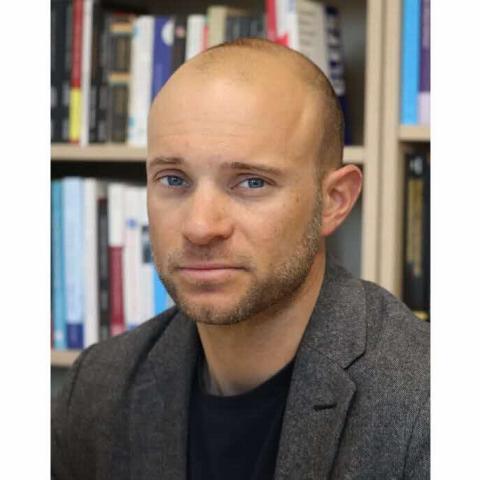
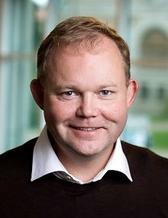
Marc Kruman is a Professor of History at Wayne State University and the founding Director of the Center for the Study of Citizenship . He has been teaching at Wayne State since 1975, with a focus on American history, particularly the Civil War era and the evolving concept of citizenship. Education : Ph.D., Yale University (1978) M.Phil., Yale University (1973) M.A., Yale University (1973) B.S., Cornell University (1968) Dr. Kruman's research centers on American Civil War and Reconstruction and the history of citizenship , including the interdisciplinary development of citizenship studies. His work spans constitutional history, party politics, and social rights. His most recent publications include the co-edited book The Meaning of Citizenship (2015) and the paperback edition of Between Authority and Liberty (1999). Earlier works explore topics like the Second American Party System, suffrage, and dissent in the Confederacy. Notable scientific awards include the Andrew W. Mellon Faculty Fellowship , a National Endowment for the Humanities Research Fellowship , and the Fulbright Senior Lecturer appointment. He has also received multiple university-level awards for teaching and faculty recognition.
Prof. Dr. Sitki Ulu(er)ler is a faculty member at Bingöl University's History Department within the Faculty of Arts and Sciences. He holds the rank of Professor and currently serves as the Chair of the Atatürk Principles and Revolutionary History Department. His expertise centers on Modern Ottoman Political History and Ottoman-Iranian relations, with a focus on 19th-century diplomatic and territorial issues. Education: B.A. in History, Fırat University (1993–1997) M.A. in Modern History, Fırat University Institute of Social Sciences (1997–2000) PhD in Modern History, Fırat University Institute of Social Sciences (2003–2009) Research Interests: Prof. Ulu(er)ler’s work examines Ottoman-Iranian political interactions, border disputes, and the impact of external conflicts (e.g., Crimean War, Anglo-Persian Wars) on the Ottoman Empire. He has extensively studied archival sources like Sharia registries and diplomatic correspondence to analyze territorial negotiations and tribal dynamics in border regions. Publications & Grants: He has authored 9 peer-reviewed journal articles (2009–2018), two books on Ottoman-Iranian border conflicts and Near Eastern history, and presented at international conferences. His 2015 book Osmanlı-İran Sınır ve Aşiret is a seminal work on tribal influences in border governance. Awards: No specific awards mentioned, though his prolific publication record indicates scholarly recognition. Labs/Teams: Oversees research projects on Ottoman archival studies and regional diplomatic history within his department at Bingöl University.
Prof. Dr. Ahmet Sözen serves as Chair of the Department of Political Science and International Relations at Eastern Mediterranean University (EMU), located in Cyprus. His academic career includes leadership roles in Cyprus's academic community and extensive contributions to conflict resolution studies. Affiliations: EMU Faculty of Arts and Sciences, Cyprus Policy Center Educational Background: PhD in Political Science from University of Missouri (1999), MA in International Relations from Syracuse University (1993), BA in English Teaching from Boğaziçi University (1991) His research focuses on Cyprus Conflict Resolution , Turkish Foreign Policy Evolution , and US-Turkey Relations . Key themes include post-truth politics, energy diplomacy in conflict zones, and regional security dynamics in the Eastern Mediterranean. Recent publications analyze 2023 Turkish elections' post-truth rhetoric, 2024 Cyprus maritime boundaries, and energy-driven peace opportunities. He has supervised 12+ theses on topics ranging from Turkish foreign policy shifts to Russian-Turkish cooperation. Awards/Achievements: Recognized for academic leadership in Cyprus studies and conflict resolution pedagogy. Grants/Advising: Active in mentoring PhD candidates on WANA region geopolitics, Russian-Turkish relations, and post-truth politics. Coordinates international research collaborations on Mediterranean energy security.
Lukas Haffert is an Associate Professor of Comparative Politics and Political Economy at the University of Geneva since 2023. His academic journey spans multiple prestigious institutions including the University of Zurich, the European University Institute, Harvard University, and the Max Planck Institute for the Study of Societies where he received his PhD in 2014. Dr. Haffert's educational background includes studying economics in Münster and St. Gallen before pursuing his doctorate in Cologne. His career trajectory shows a progression from doctoral studies to becoming a recognized scholar in comparative political economy, with notable recognition through membership in the Junge Akademie (German national academy for young academics) from 2018 to 2023. Haffert's research focuses on the intersection of political economy and comparative politics, with particular emphasis on urban-rural divides, fiscal policy, and political representation. His work examines how social identities shape voting behavior, the political economy of debt and taxation, and the historical roots of contemporary political attitudes. A significant portion of his research investigates the growing political divide between urban and rural areas in Germany, analyzing how place, age, and social identity influence political preferences and electoral outcomes. His recent publications reveal a clear trend toward examining the political implications of social-ecological transformation, fiscal policy responses to crises like the pandemic, and the evolving nature of political cleavages in 21st century democracies. Haffert's work combines historical institutional analysis with contemporary political sociology to understand how past economic experiences shape current political attitudes, particularly regarding issues like inflation, debt, and fiscal responsibility. Member of Junge Akademie (German national academy for young academics) 2018-2023 As an advisor, Haffert currently supervises doctoral students Wing Dominik and Fleiner Katharina, with previous students having completed their degrees under his guidance. His research has been supported through various institutional affiliations including Harvard University's Center for European Studies and the University of Zurich. Haffert maintains an active media presence, contributing to major German outlets like ZEIT ONLINE and Deutschlandfunk, where he provides expert commentary on political trends, particularly regarding urban-rural political divides in Germany.
PD Dr. Yaman Kouli is a faculty-ranked researcher at the University of Bonn's Department of Modern History, currently serving as Managing Director of the 2025 German Historians' Day. Previously, he led a DFG-funded project at Heinrich Heine University Düsseldorf (HHU) analyzing European economic relations during 1870-1914 and holds venia legendi in Modern and Contemporary History. His career includes academic coordination of the pioneering German-Polish history double-degree program at Chemnitz University and Wrocław University. His research explores the intersections of economic history and European integration with specific focus on: Transnational economic networks in 19th-20th century Europe Knowledge economy evolution and digitalization's historical roots Polish industrial transformation and post-war reconstruction Patent systems as instruments of European policy Social dimensions of globalization in pre-WWI era Publications since 2017 predominantly investigate historical responses to economic globalization, including World War I's impact on integration, Polish territorial-economic realignments, and knowledge-based industrialization. His methodological approach combines macroeconomic analysis with institutional history. Awards and fellowships: Alexander von Humboldt Foundation Fellowships (Feodor Lynen Program) A.SK Fellowship at Berlin Social Science Research Center DFG Research Grant for 'Europe in the Face of Globalization' project He maintains active membership in academic societies including the Franco-German Historical Commission and Polish Economic History Society, reflecting his transnational research orientation.
Dr. Simon Bornschier is a faculty member at the Department of Political Science (IPZ), University of Zurich, and Head of the Research Area Political Sociology. His work bridges comparative politics, political sociology, and polarization studies, focusing on party system dynamics and the role of social identities in electoral realignment. Education: PhD in Political Science His research explores how ideological polarization shapes substantive representation, with regional expertise in Latin America and Western Europe. He investigates historical legacies, extractivism, and institutional responsiveness to social resistance. Recent publications emphasize cleavage formation, identity dynamics, and protest politics. Key themes include the universalism-particularism divide, electoral behavior, and the interplay between new social movements and traditional party systems. Simon Bornschier teaches courses on Political Behavior , Democratization , and Party Systems at both undergraduate and graduate levels.
Marshall Toplansky serves as an Associate Professor at Chapman University's George L. Argyros College of Business and Economics. Holding a Master of Business Administration from Harvard University and a Bachelor of Arts from SUNY Albany, he focuses on urban economics, policy analysis, and regional development. As co-author with Joel Kotkin on numerous reports and podcasts, his work examines California's economic trajectory, housing affordability, demographic shifts, and technological impacts on society. California's Middle Class Decline Urban Development Strategies Technological Disruption Analysis Regional Economic Policy His recent publications address topics ranging from the future of office real estate markets to critiques of green energy policies. The Feudal Future podcast series, co-hosted with Kotkin, explores contemporary issues including AI's societal implications, European political transformations, and the creator economy. Despite extensive publication output, specific student advisement details and formal awards remain undocumented in available sources.
Fred Smoller is an Associate Professor of Political Science at Chapman University's Wilkinson College of Arts, Humanities, and Social Sciences, where he has been on faculty since 1983. His academic home is within the Political Science department, focusing on the intersection of politics, governance, and environmental policy. Dr. Smoller received his academic training from State University of New York, College of Fredonia (B.A.), The University of Texas at Austin (M.A.), and Indiana University Bloomington (Ph.D.). His educational background established the foundation for his expertise in American politics with particular emphasis on institutional structures and political behavior. Smoller's research interests center on media and politics, local government operations, and public administration, with recent work increasingly focused on climate change policy and sustainability governance. His scholarship demonstrates a clear trajectory toward addressing Orange County's evolving political landscape and environmental challenges, particularly examining how local governments can respond to climate change. He has become a prominent voice on political realignment in Orange County, documenting its shift from a Republican stronghold to a more politically competitive region. His recent publications reveal a strong emphasis on practical applications of political science to contemporary environmental challenges, with numerous articles addressing climate change policy, sustainable energy solutions, and local government responses to environmental crises. The publications demonstrate consistent engagement with both academic and public discourse through outlets ranging from Capitol Weekly to Voice of OC and the Los Angeles Times. President and CEO of the Orange County Sustainability Decathlon (2023) Co-director of the Orange County Annual Survey (with Michael A. Moodian) Hosted conference on the Bell corruption scandal at Chapman University Instrumental in bringing the U.S. Department of Energy Solar Decathlon to the Orange County Great Park in 2013 and 2015 Smoller leads the Orange County Sustainability Decathlon initiative, which aims to position Orange County as a leader in sustainable housing and climate action. His work bridges academic research with community engagement, particularly through the Orange County Annual Survey which tracks local political attitudes and policy preferences. His research on the Bell corruption scandal demonstrates his commitment to understanding and improving local governance practices in the region.
Adam Hilton is an Associate Professor of Politics at Mount Holyoke College, specializing in American political development through the lens of parties, movements, and political entrepreneurs. He holds a PhD and MA from York University and a BA from Evergreen State College. Research Focus: Interactions between social movements and political parties as co-evolutionary forces Current Projects: Parties, Power, and Change (co-edited book, 2025); Explaining the Great Divergence (monograph in progress) His 2021 book True Blues redefines party dynamics as "contentious institutions" shaped by conflicts between reformers and elites. Recent publications examine post-election analyses (2020-2021), polarization origins (2019), and party democratization efforts (2017-2018). Scientific Award: 2022 Centennial Grant from American Political Science Association Teaching: Courses on American Political Development, Inequality, and Election Systems
Jasper Roctus is a PhD researcher at Ghent University, supervised by Prof. Dr. Bart Dessein. Holding a FWO fundamental research endowment, his work focuses on modern Chinese political philosophy, cross-Strait relations, and EU engagement with China. PhD topic: Narrating Sun Yat-sen through lenses of Leninism, Christianity, and Democracy Recipient of BOF and FWO grants Former internship at Egmont Institute Active contributor to security policy briefs and external publications His research spans political science, international relations, and comparative politics, with particular emphasis on Taiwan’s party dynamics, EU-China strategic interactions, and Chinese institutional behavior. Recent publications analyze BRICS alliances, Vietnamese diplomacy, and electoral shifts in Taiwan. Scientific recognitions include: Ghent University’s Special Research Fund (BOF) grant Research Foundation – Flanders (FWO) fundamental PhD endowment
Russell A. Berman is the Walter A. Haas Professor in the Humanities at Stanford University and a Senior Fellow at the Hoover Institution. He holds dual appointments in the Department of German Studies and the Department of Comparative Literature. Berman is also the co-chair of the Working Group on the Middle East and the Islamic World at Hoover and has served in significant administrative roles at Stanford, including chair of the Senate of the Academic Council. He previously served as a Senior Advisor on the Policy Planning Staff of the State Department during the Trump administration. Walter A. Haas Professor in the Humanities, Stanford University Senior Fellow, Hoover Institution Co-Chair, Working Group on the Middle East and the Islamic World Member, Department of German Studies, Stanford Member, Department of Comparative Literature, Stanford Senior Advisor, Policy Planning Staff, US State Department (Trump Administration) Member, National Humanities Council Berman's research interests center on international affairs, US foreign policy, security and defense, terrorism, and cultural politics, with deep expertise in European (especially German) history and the Middle East. His scholarly work bridges literary and cultural analysis with geopolitical commentary, focusing on the intersections of ideology, identity, and power. He has written extensively on German literature, the Frankfurt School, and the cultural dimensions of modernity. His recent publications reveal a strong focus on contemporary Middle East conflicts, particularly the Israel-Hamas war following the October 7 attacks, US policy toward Ukraine, great power competition involving Russia and China, and the ideological challenges facing liberal democracies. He frequently analyzes the strategic implications of American foreign policy decisions, critiques perceived weaknesses in the Biden administration’s approach, and advocates for a more assertive stance in support of traditional allies and democratic values. Outstanding Book Award of the German Studies Association (1987, 2000) Mellon Faculty Fellowship, Harvard University (1982–83) Alexander von Humboldt Fellowship (1988–89) Bundesverdienstkreuz, Federal Republic of Germany (1997) Berman has advised on national policy and is actively engaged in public discourse through numerous articles, podcasts, and videos. He has not received major research grants explicitly mentioned in the text, but his influence is evident through his leadership in research teams at Hoover, including the Middle East and the Islamic World Working Group, the Military History in Contemporary Conflict Working Group, and the Global Policy and Strategy Initiative. He does not appear to lead a formal laboratory but shapes intellectual communities through his co-chair roles and publications.
Florent Gougou is a Lecturer in Political Science at Sciences Po Grenoble (Université Grenoble Alpes, UGA) and a researcher in the Governance team at Pact Laboratory. He co-founded and co-directs the Ecological Transitions Master's program and serves as vice-president of Ecological Transformation. His academic career includes postdoctoral research at the University of Oxford (2013-2014) and research fellowships at Université libre de Bruxelles (2014-2016). Current Position: Lecturer at Sciences Po Grenoble Previous Roles: Postdoctoral Research Fellow (Oxford), FRS-FNRS Research Fellow (Brussels) Research Focus: Electoral dynamics, democratic functioning, ecological transitions His research examines electoral realignments in Western Europe, with publications in journals like West European Politics and Revue française de science politique . He leads the French Election Results Database (FERD) project, emphasizing empirical data quality in electoral studies. Scientific Awards Franco-German University Best Thesis Award (2013) Florent combines academic research with practical engagement, including a CNRS delegation to Progedo for the 2025-2026 academic year. His work bridges democratic processes, electoral transformations, and ecological policy challenges.
William Hitchcock is the James Madison Professor of History at the University of Virginia, where he has been a faculty member since 2010. He is also the Director of the 'Governing America in a Global Era' (GAGE) initiative. Previously, he taught at Yale University, Wellesley College, and Temple University, where he served as both professor and dean. His academic work focuses on 20th-century international history, particularly the world wars and the Cold War. B.A., Kenyon College, 1986 Ph.D., Yale University, 1994 His research spans 20th-century global history , emphasizing war and society, U.S. foreign policy, Cold War diplomacy, and the international dimensions of human rights. He explores how global conflicts shaped political orders and societal transformations, particularly in Europe and the United States. His work combines diplomatic, political, and social history to understand the interplay between statecraft and popular experience. The most recent publications reflect a deep engagement with American leadership during the Cold War , the moral and strategic dimensions of liberation after WWII, and the evolution of human rights as a global framework. His books analyze pivotal decades like the 1950s and the immediate postwar era, tracing how global crises reshaped international systems and national identities. Scientific Awards: George Louis Beer Prize (2009) Pulitzer Prize Finalist (2009) Mark Lynton History Prize Finalist (2009) Choice Outstanding Academic Title (1999) Yale Sarai Ribicoff Teaching Award (1999) Hitchcock has advised numerous Ph.D. students whose dissertations cover topics such as counterterrorism, veterans' politics, nuclear disarmament, and U.S.-China relations. He has received research support through academic appointments and publishing advances, though specific grants are not detailed. His public engagement includes appearances on C-SPAN and contributions to podcasts like Democracy in Danger . He is affiliated with research communities in international history and global studies, and his leadership in projects like GAGE suggests involvement in interdisciplinary teams focused on American governance and global affairs.
Carole Emberton is a Professor of History at the University at Buffalo, part of the College of Arts and Sciences. She specializes in 19th-century U.S. history, with a focus on the Civil War, Reconstruction, African American experiences, and historical memory. Emberton holds a PhD from Northwestern University (2006), an MA from Loyola University Chicago (1999), and a BA from the University of Chicago (1997). Her research explores the intersections of race, violence, and citizenship in the post-Civil War South. Her award-winning book *Beyond Redemption* (2013) examines how violence shaped Southern identity during Reconstruction. Her latest work, *To Walk About in Freedom* (2022), traces the life of formerly enslaved Priscilla Joyner, illustrating emancipation as an ongoing process. Current projects include a study of the 1908 Russellville, Kentucky lynching and its legacy. Emberton’s scholarly contributions span law reviews, historical journals, and public-facing platforms like the *New York Times Disunion* series. She has received prestigious awards such as the NEH Public Scholar designation, Willie Lee Rose Prize, and George and Ann Richards Prize. Her grants include support from the Mellon Foundation, Smithsonian Institution, and the Huntington Library. Her research emphasizes marginalized voices, particularly African Americans’ agency during emancipation. She has collaborated with historical institutions and engaged in public history initiatives to contextualize the South’s violent past and its modern reverberations.
Henrik Ekengren Oscarsson is a Professor of Political Science at the University of Gothenburg’s Department of Political Science. He leads the Swedish Election Research Programme, a long-standing initiative since the 1950s focused on electoral research, public opinion, and democracy. His roles include directing the programme and chairing Statistics Sweden’s democracy statistics user council. He is also involved with the Swedish Democracy Foundation, promoting democratic rule of law education and research. His research interests span electoral behavior, party systems, political psychology, and media influence on politics. Notably, he explores voter decision-making processes, internet-based surveys, and historical surveillance practices by Swedish authorities during the Cold War. Teaching focuses on political methodology, voter behavior, and comparative politics. Recent publications analyze 2022 Swedish election dynamics, electoral integrity concerns, and climate skepticism. His work often addresses contemporary challenges in democratic governance, such as trust in electoral systems and media roles in combating corruption. Key academic contributions include leadership of the Swedish Election Research Programme, co-authorship of major electoral studies, and advisory roles in national democracy initiatives. His research bridges empirical analysis with practical implications for democratic institutions and policy.