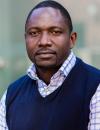
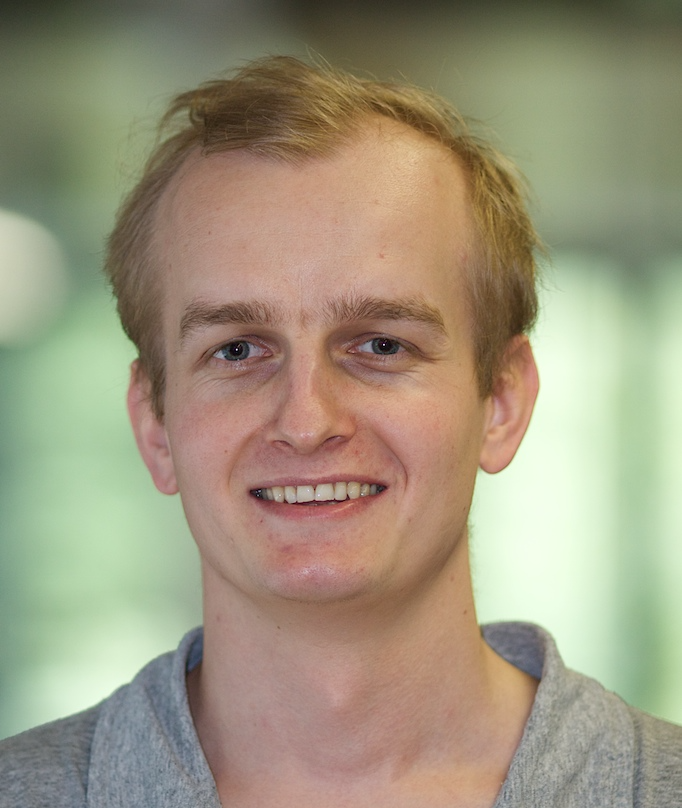
Dr. Davies Banda is a Lecturer in Sport Policy and Deputy Director of the Academy of Sport at the Moray House School of Education and Sport, University of Edinburgh. He holds a PhD in Sport Policy and Political Science Analysis from Loughborough University, alongside certifications in academic practice and teaching methodologies. His research focuses on sport-for-development interventions, youth social inclusion, and legacy strategies from sport mega-events. Notable projects include his role as Academic Advisor to FIFA's Generation Amazing Foundation during the 2022 World Cup and leadership in curriculum development partnerships with Zambian universities. He has secured significant grants, including £298,000 from Comic Relief for child miner education projects in Burkina Faso and £60,000 via the British Council's DelPHE initiative. Banda supervises PhD students exploring topics such as SDP in South Africa, Paralympic governance, and sport policy in Indonesia. His teaching spans sport management, policy analysis, and advanced research methods at both undergraduate and postgraduate levels.
John Kelly is a Lecturer in the Sociology of Sport at the Moray House School of Education and Sport, University of Edinburgh. He is part of the Institute for Sport, Physical Education & Health Sciences (ISPEHS) and a joint convenor of the Edinburgh Critical Studies in Sport (ECSS) research group. His research focuses on intersections between sport, society, and power dynamics, including topics like militarism, sectarianism, ethnicity, and gender. He has advised governmental bodies in Europe and media organizations globally, and his work spans international journals and book publications. John holds a PhD in Sociology of Sport from Loughborough University (2003–2007), following MA (University of Brighton) and BA (University of Wales Institute, Cardiff) degrees. His teaching includes undergraduate and postgraduate courses on sport sociology, media, and research methods. He actively supervises PhD students exploring topics like sport and social integration, national identity, and body image in China. His research interests emphasize sociological theory, civil-military relations, and the role of sport in shaping identities. Current projects include studies on power in sport research, commemorations in sport, and Irish diaspora communities. John is also a joint editor of the Asia Pacific Journal of Sport and Social Science , reflecting his commitment to advancing critical academic discourse in sport studies.
Irene Pañeda Fernández is a Research Fellow at the Department of Migration, Integration, and Transnationalization at the WZB Berlin Social Science Center. She coordinates the TRANSMIT project, investigating migration aspirations and decisions in West Africa. Her research focuses on inequality and migration, exploring factors influencing migration decisions and attitudes toward immigrants/refugees. She holds a Ph.D. in Social and Political Sciences from the European University Institute (2022). Her research areas include migration studies, social inequality, climate change impacts on migration, welfare state analysis, and social science methodologies. Her recent work examines how climate disasters affect migration intentions in West Africa and the role of teacher bias in education systems. Her studies combine mixed-methods approaches, including factorial experiments and large-scale surveys. Key contributions include analyzing climate-induced migration patterns, educational discrimination mechanisms, and disaster-driven redistributive preferences. Current projects aim to bridge migration theory with policy-relevant insights, particularly in transnational contexts. She collaborates closely with international teams and institutions focused on migration and climate change intersections. Her work is methodologically rigorous, emphasizing policy-oriented outcomes.
Colin Smith is a Visiting Assistant Professor in the Department of Philosophy at Ohio State University (2024–present). He previously held positions at Penn State and the University of Colorado Boulder. His research focuses on ancient Greek philosophy, particularly metaphysical questions in Plato, the Presocratics, and Aristotle. He explores how ancient concepts of being and reality inform contemporary ethical and existential frameworks. Education: PhD (2019) in Philosophy from University of Kentucky, MA (2013) from Boston College, BA (2011) in Philosophy and Classics from Temple University (summa cum laude). Research emphasizes Plato's theory of forms as metaphysical ground, Parmenides' Fragment 2, and dialectical methods in dialogues like Sophist and Meno . Current projects include a monograph on Meno 's distinction between 'being' and 'having,' and studies on Aristotle's theory of recollection and Democritus' understanding of the soul. He also examines the reception of Plato's 'unwritten teachings' in modern philosophy. Published in Ancient Philosophy , Review of Metaphysics , and edited volumes like Inquiring into Being: Essays on Parmenides (SUNY Press, 2025). Guest edited a special issue on Presocratic metaphysics ( Dialogoi 3:1, 2021). Teaching and research interests extend to medieval philosophy, German idealism, phenomenology, ethics, and philosophy of race. Committed to inclusive pedagogy and advocacy, he co-founded Penn State's Coalition for a Just University and organized free philosophy programs for underprivileged students.
Kurt Sengul is a Macquarie University Research Fellow (MQRF) in the School of Communication, Society and Culture. He holds a PhD in Media and Communications from the University of Newcastle (2022). His research focuses on media populism, far-right movements, and critical discourse analysis, with projects exploring the nexus between media and far-right politics in Australia. He has taught at the University of Sydney and University of Newcastle, specializing in political communication, social media, and digital cultures. Research interests include far-right communication strategies, media populism's impact on democracy, critical discourse studies, and anti-gender movements. His work examines topics like far-right humor, online radicalization via platforms like X/Twitter Spaces, and the discursive construction of victimhood. He has published in journals such as Critical Discourse Studies , Television & New Media , and Communication Research and Practice . Professional roles include serving as NSW Representative for ANZCA and secretary of APSA’s Queer Caucus. Media engagements include commentary for The New York Times , The Guardian Australia , and The Sydney Morning Herald . His forthcoming monograph Far-Right Populism in Australia (Bloomsbury) explores communication and discourse strategies of Australian far-right groups.
Roxane Caron is an Associate Professor at the École de travail social (School of Social Work) within the Faculty of Arts and Sciences at the Université de Montréal. She holds affiliations with the Centre d'études et de recherches internationales (CÉRIUM) and the CIUSSS du Nord-de-l'Île-de-Montréal – Hôpital du Sacré-Cœur. Her research focuses on refugee women's experiences, transnational social work, and decolonial methodologies. She teaches courses such as SVS-6425 (International Social Work) and supervises graduate students in social work and international studies. Her research expertise includes refugee camp dynamics, gendered migration, and intersectional theory. Key projects include the Clinic Mauve initiative addressing LGBTQI+ migrant health and the Transnationalism and Psycho-Social Well-Being project. She has led or co-led over 20 research grants funded by agencies like the CRSH and FRQSC, emphasizing community partnerships and equity. Award-winning educator, Caron's work bridges academic research, clinical practice, and activism. Her recent publications explore ethical frameworks in social work education and refugee integration challenges. She collaborates internationally on migration studies, particularly in the Middle East and Quebec.
Andrew Bennett is Professor and Associate Chair & Director of Graduate Studies in Georgetown University's Department of Government, with secondary appointment in the School of Foreign Service. His scholarship advances qualitative methodology and foreign policy analysis. Education: PhD, Public Policy, Harvard University Research develops case study methods, causal inference techniques, and foreign policy process models. He co-authored the Giovanni Sartori Prize-winning book 'Case Studies and Theory Development' and founded the Consortium on Qualitative Research Methods. Publications focus on Bayesian process tracing, mechanism-based theories, and foreign policy decision-making, particularly regarding military interventionism and alliance dynamics.
Dr. Timothy Fraser is a Computational Social Scientist serving as Ezra Systems Research Associate in Cornell University's Systems Engineering Program and Coordinator for the Center for Transportation, Environment, & Community Health (CTECH). Holding a PhD in Political Science from Northeastern University (2022), he focuses on climate change adaptation, disaster resilience, and energy policy using big data analytics, GIS, and AI. His work bridges computational methods with societal challenges, emphasizing community engagement and policy impact. Education: PhD in Political Science, Northeastern University (2022) MA in Political Science, Northeastern University BA in International and Global Studies, Middlebury College Research Interests: Fraser’s research integrates computational social science with environmental policy, exploring how social networks and governance structures influence cities' climate adaptation strategies. Key areas include renewable energy adoption, disaster evacuation dynamics, and pandemic response mechanisms. He employs mixed methods such as network analysis, statistical modeling, and fieldwork. Grants & Awards: Fulbright Fellowship (2016), Kyushu University Japan Foundation Doctoral Fellowship (2020) USDOT Multimillion Grant Administrator (2022-2023) Teaching & Mentorship: Fraser teaches statistical methods and research design at Cornell, advising over 30+ students in projects published in leading journals. He coordinates capstone teams and mentors researchers in data science and policy analysis. Labs & Projects: Leads the Climate Action in Transportation dashboard initiative (Gao Labs), developing tools for emissions visualization. Collaborates on UNDP social capital mapping projects in Mexico and Paraguay, applying spatial analysis techniques for vulnerable communities.
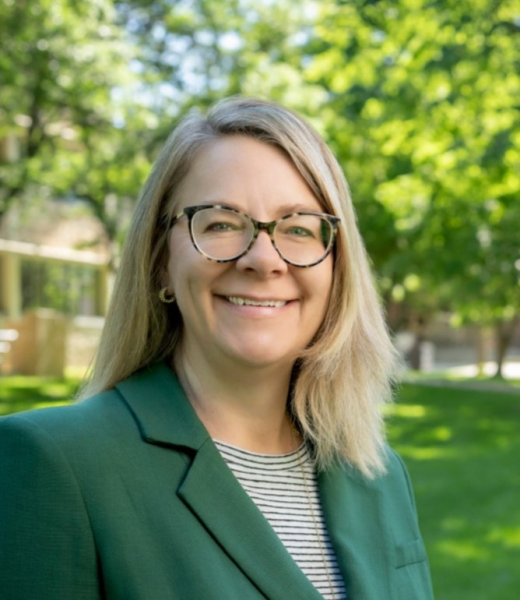
Kjerstin Thorson serves as the Dean of the College of Liberal Arts at Colorado State University, a position she assumed on August 1, 2024. Previously, she was the Brandt Endowed Professor of Political Communication and Associate Dean for Strategic Initiatives at Michigan State University’s College of Communication Arts & Sciences. An internationally recognized scholar, her research centers on digital platforms and their impact on civic life and culture. Her educational background includes: BA in English from Macalester College MA in Journalism from the University of Missouri-Columbia PhD in Mass Communication from the University of Wisconsin-Madison Thorson's research explores the intersection of digital media, political communication, and civic engagement. She investigates how social media platforms shape political participation, news consumption, and civic discourse, with a particular focus on young adults and historically marginalized communities. Her work addresses critical issues such as equity in digital civic infrastructure, the role of algorithms in political exposure, and the dynamics of online moderation and community governance. She examines both the empowering potentials and the challenges of digital media for democratic participation. Her recent publications (2023-2025) reveal a sustained investigation into platform governance, volunteer moderation, and the urban-rural divide in digital civic engagement. She also delves into Gen Z's civic behaviors, the spread of misinformation, and the evolving landscape of political learning on social media. Her work often employs mixed-methods approaches, combining digital trace data with surveys to understand complex media effects. Thorson has received notable recognition for her contributions: Michigan State University’s Teacher-Scholar Award 2022-2023 Fellow of the Big 10 Academic Alliance Leadership Program Her research has been supported by prestigious organizations including the National Science Foundation (NSF), the Social Science Research Council, and the Spencer Foundation. In her administrative roles, she has prioritized student success through initiatives like the Ignite the Future program, which supports first-generation and marginalized students, and has championed faculty development through the creation of a Center for Teaching and Learning. While specific advisees are not listed, her leadership in student success programs underscores her commitment to mentoring. Under her leadership at Michigan State University, the College of Communication Arts & Sciences expanded its revenue-generating partnerships, created a college-wide Center for Teaching and Learning, launched the Ignite the Future family of programs, and grew the esports initiative. She has also focused on improving culture and climate through promotion pathways for non-tenure track faculty, climate surveys, and community-building events.
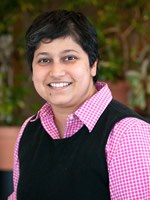
Minita Sanghvi is an Associate Professor of Marketing at the Department of Management and Business, Skidmore College. Her research focuses on political marketing, transformative consumer research, and gender/race discrimination in marketing contexts. She holds a PhD from the University of North Carolina Greensboro, a Graduate Certificate in Feminist Studies from Duke University, and advanced degrees in retailing, management, and commerce from institutions in the US and India. Her teaching portfolio includes courses such as MB 107 Business and Organization Management, MB 214 Foundations of Marketing, and SSP 100 Sexing Politics. Her work bridges academic scholarship and real-world applications, emphasizing intersectional frameworks in business and consumer behavior analysis. Key research themes include gender dynamics in political campaigns, the role of appearance in political branding, and the impact of intersectionality on marketing strategies. Sanghvi’s publications span monographs like Gender and Political Marketing in the United States and the 2016 Presidential Election and peer-reviewed articles in Journal of Business Research and Journal of Marketing Management .
Professor Alistair Duff is a faculty member in the School of Arts and Creative Industries at Edinburgh Napier University , specializing in information policy and its societal implications. His research spans the intersection of technology, ethics, and public governance. Key Research Themes: Information society theory, digital ethics, privacy in the age of surveillance, and the role of public institutions like libraries in fostering citizenship. Notable Projects: Informing the Good Society (AHRC-funded), analysis of census data in policy-making, and studies on ePunditry. Media Engagement: Regularly contributes to public discourse through interviews (e.g., Radio Sputnik, Sunday Express) and expert testimony to the Scottish Parliament Justice Committee . Students Supervised: Nicole van Deursen (HI-Risk method), Aonghus Ferguson (Tony Blair interviews), Hayes Mabweazara (Zimbabwe journalism). Scientific Contributions: Published extensively on topics like Silicon Valley’s societal impact, Bentham’s panopticon in modern surveillance, and the normative theory of information society.
Ross Haenfler is Professor of Sociology at Grinnell College, teaching courses on Social Movements, Deviance and Social Control, Sociological Theory, Men and Masculinities, and introductory sociology. His work bridges subcultures, music scenes, and social change, with a focus on lifestyle movements. Books: Subcultures: The Basics , Goths, Gamers, and Grrrls , Straight Edge , and The Better World Handbook Research trends show sustained engagement with subcultural theory, lifestyle movements, and intersections of music, gender, and activism. Articles span 2006-2025, covering topics from hardcore punk to digital subcultures and aging in youth scenes. Ross actively mentors students in qualitative methods, social movements, and youth subcultures. He chairs Mid-Iowa Community Action (MICA) and has been featured in documentaries on online misogyny and straight edge culture.
Przemyslaw Grabowicz is an Assistant Professor of Computer Science at University College Dublin and an Adjunct Professor at the University of Massachusetts Amherst. He leads the SIMS (Socially Intelligent Media and Systems) Lab and the EQUATE initiative, and is actively involved in the Knowledge Discovery Lab (KDL). His work bridges computer science, social science, and public policy, focusing on responsible AI and digital society. Research Interests: Fair and Explainable Machine Learning Computational Social Science Social Media and Network Science Public Opinion Modeling Algorithmic Bias and Discrimination Prevention Open-World Learning His research develops statistical and machine learning methods to understand and augment public opinion in digital environments, ensuring fairness, transparency, and societal benefit. He emphasizes legal compliance and ethical design in AI systems. Recent Research Trends: His recent publications focus on social media polls, political bias, misinformation, and fairness in machine learning. He investigates how algorithmic systems shape public discourse, especially during elections and global crises, and develops methods to detect and mitigate bias in data and models. Scientific Awards and Recognition: Best Paper Honorable Mention, ICWSM’25 WICI Data Challenge Main Prize (2013) Arnold O. Beckman Research Award Multiple UMass Amherst Interdisciplinary Research Grants Volkswagen Foundation Grants (over €900k total) Advising and Grants: Dr. Grabowicz supervises several PhD students in the SIMS and KDL labs and collaborates with MS students. He has secured significant funding from the Volkswagen Foundation, UMass Amherst, and the University of Illinois, supporting research on political misinformation, media bias, and global agenda setting. He is currently recruiting a postdoc at UCD. Labs and Initiatives: He heads the SIMS Lab and the EQUATE initiative, and contributes to the KDL. His project socialpolls.org explores public opinion through social media, and he maintains an active presence through the Uncommon Good blog on responsible AI.
Britta Timm Knudsen is a Professor at Aarhus University, affiliated with the School of Communication and Culture, where she contributes to both the Experience Economy and Scandinavian Studies programs. Her research spans critical cultural theory, decolonial practices, digital media, and affective experimentation. University: Aarhus University School: School of Communication and Culture Position: Professor Email: norbtk@cc.au.dk Location: Jens Chr. Skous Vej 2, 8000 Aarhus C, Denmark Her research interests focus on cultural heritage, film and video, aesthetics, colonial legacies, and affective ambivalence. She explores how media and artistic practices engage with decolonial resistance, emotional geographies, and urban cultural memory. Her work often intersects with Indigenous perspectives, digital activism, and experimental methodologies. The recent articles reflect a strong engagement with decolonial visualities, translocal media events (such as the George Floyd video in Denmark), and playful resistance through internet memes. Her scholarship combines critical heritage studies with affect theory, digital culture, and postcolonial critique, forming a cohesive trajectory around memory, power, and representation. Britta Timm Knudsen has been involved in significant research projects such as Playing with Ghosts and ECHOES: European Colonial Heritage Modalities in Entangled Cities . She has supervised visiting PhD students, including Shama Patel, and secured external research funding. Her editorial roles in journals like International Journal of Heritage Studies and Nordicom Review demonstrate her academic leadership. Playing with Ghosts - Affective ambivalence in decolonial art practices (2023–2025) ECHOES: European Colonial Heritage Modalities in Entangled Cities (2018–2021) Emotionel geografi netværk (2008–ongoing) She is actively engaged in public discourse, having contributed to Danish media outlets such as DR P1 and various radio programs, discussing topics ranging from nostalgia in film to existential themes. Her work bridges academic research and public engagement, particularly in the context of colonial heritage and cultural memory.
Assoc Prof Siok Kuan Tambyah is an Associate Professor at the National University of Singapore (NUS) Business School and a Fellow at The College of Alice & Peter Tan, NUS. She holds a PhD in Business from the University of Wisconsin-Madison. Her research focuses on consumer behavior, consumer culture theory, services marketing, and happiness/quality-of-life studies. She has authored/co-authored five books and numerous articles in leading journals such as the Journal of Consumer Research and Journal of Service Research . Her teaching spans undergraduate and graduate levels, including courses on Principles of Marketing, Consumer Behavior, and The Pursuit of Happiness. She has supervised over 60 undergraduate research projects and advised two PhD students. Her pedagogical research emphasizes interdisciplinary learning and residential college environments, highlighted in works like Student Growth and Development in New Higher Education Learning Spaces . A/P Tambyah’s work on Singapore’s quality of life and well-being has positioned her as a leading expert. Key publications include Happiness and Wellbeing in Singapore: Beyond Economic Prosperity (2023) and Drivers of Sustainability and Consumer Well-Being (2022). Her research often bridges consumer behavior with societal issues, such as immigrant inclusion and economic hardship impacts. She is an award-winning educator, recognized for innovative teaching methods in residential colleges and executive education programs. Her contributions to interdisciplinary learning and community engagement are further detailed in her writings on reflective practices and community-based research models.