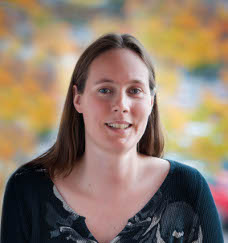
Martin T. Wells is the Charles A. Alexander Professor of Statistical Sciences at Cornell University, with joint appointments in the Department of Statistical Science, Department of Biological Statistics and Computational Biology, Department of Social Statistics, and as Professor of Clinical Epidemiology and Health Services Research at Weill Medical School. He serves as Editor-in-Chief of the ASA-SIAM Book Series and Co-Editor of the Journal of Empirical Legal Studies. Cornell University, Ithaca, NY Weill Cornell Medical College Research Interests span applied and theoretical statistics, Bayesian methods, biostatistics, clinical epidemiology, and computational biology. His work bridges disciplines like finance, legal studies, and health services research. Article Trends highlight advancements in Bayesian modeling, quantum cognition machine learning, tensor analysis, and misclassification correction, with applications in genomics, finance, and public health. Fellow of the American Statistical Association Fellow of the Royal Statistical Society Contributions include developing statistical software (e.g., rTensor), methodological innovations in clinical trials, and empirical legal studies on civil rights and the death penalty.
Amy Bruckman is a Regents’ Professor and Senior Associate Chair in the School of Interactive Computing at Georgia Institute of Technology. As a Fellow of The ACM and member of the SIGCHI Academy , she contributes to social computing research focusing on online collaboration, cross-cultural understanding, and content moderation. Her 2022 book "Should You Believe Wikipedia? Online Communities and the Construction of Knowledge" explores digital knowledge creation. Education: Ph.D. from MIT Media Lab (1997), B.A. in Physics from Harvard (1987) Research Affiliations: GVU Center, IRI People and Technology Her work addresses social computing challenges including: AI ethics in human-AI interaction Algorithmic bias in content moderation Epistemic justice in online communities Comparative platform analysis (Reddit, Discord, TikTok) Grassroots technology movements Recent publications examine: AI support tools for online counseling Community-driven research frameworks Racial bias mitigation in toxic language detection Designing teachable social media experiences Human trafficking intervention ethics Scientific recognition includes: ACM Fellowship SIGCHI Academy membership She has contributed to: Georgia Tech's Computing Education initiatives Research ethics frameworks for Human-Computer Interaction
David B. MacDonald is a full Professor of Political Science at the University of Guelph's Department of Political Science, housed within the College of Social & Applied Human Sciences. He holds an honorary academic position at the University of Auckland and previously taught at the University of Otago and ESCP Business School in Paris. His research focuses on Indigenous-settler relations, genocide studies, decolonization, and comparative politics in Canada, New Zealand, Australia, and the U.S. He has held significant grants from the Social Sciences and Humanities Research Council (SSHRC), including principal investigator roles on projects like 'Complex Sovereignties' and 'Bi-Nationalism as Reconciliation.' Education: PhD in International Relations from the London School of Economics (2001). Key publications include The Sleeping Giant Awakens (2019) and co-authored textbooks like Comparative Politics (2020). He is North American series editor for Palgrave Macmillan's Global Political Sociology. Research interests emphasize settler colonialism, Indigenous sovereignty, and truth and reconciliation processes. He has contributed to policy discussions, including advising the Canadian Senate on the National Council for Reconciliation. His work bridges academic scholarship with activism, aiming to address systemic inequalities and promote Indigenous rights. SSHRC Grants: Over $200k in grants since 2008, focusing on Indigenous self-determination and colonialism. Publications: 4 sole-authored books; 31 refereed articles; numerous edited volumes. Awards: Shortlisted for the John McMenemy Prize (2013, 2017).
Todd Sorensen is an Associate Teaching Professor at the University of California, Merced (UC Merced), affiliated with the School of Social Sciences, Humanities & Arts and the Economics and Business Management department. He holds fellowships at IZA (Institute of Labor Economics) and GLO (Global Labor Organization). Prior to UC Merced, he served as an Associate Professor at the University of Nevada, Reno (2014–2023) and an Assistant Professor at UC Riverside (2007–2014). His professional journey includes a visiting role as Visiting Associate Professor at UC Merced before his current appointment in 2022. Education: PhD in Economics, University of Arizona, 2007 Research Interests: Todd's work focuses on labor market structures , exploring topics like monopsony power and wage-setting dynamics; immigration , including its demographic and policy implications; and discrimination , particularly in criminal sentencing and labor markets. His research has been published in journals like ILR Review , Labour Economics , and the Journal of Population Economics , with findings cited in the U.S. Economic Report of the President. Scientific Awards: Fellow at IZA (2022–present) Fellow at GLO (2022–present) Advising & Grants: Todd has advised students across various levels but no specific advisees are listed. His grants and funding sources are not detailed in the provided text. He collaborates with interdisciplinary teams and maintains affiliations across UC campuses through his and his spouse’s academic careers. Labs/Teams: Engaged with research networks at IZA and GLO, focusing on labor market policies and migration studies. Active in collaborative projects analyzing immigration trends, labor market competition, and discrimination metrics.
Professor Janet B. Pierrehumbert is a leading academic in computational linguistics and natural language processing, holding the position of Professor of Language Modelling at the Oxford e-Research Centre, University of Oxford. She is also a Senior Research Fellow at Trinity College and affiliated with the Faculty of Linguistics, Philology and Phonetics. Her work bridges interdisciplinary research in phonology, sociolinguistics, and computational models of language dynamics. Education: PhD in Linguistics from MIT (1980), A.B. in Linguistics from Harvard University (1975). Research Interests: Focuses on computational linguistics, dialect variation, language dynamics, and the societal impacts of NLP. Her group develops algorithms for analyzing social media discourse, forecasting trends, and modeling language evolution. Recent work includes studies on dialect fairness in LLMs and semantic shifts in political discourse. Key Projects: EPSRC-funded research on online forum dynamics, the Wordovators project on lexical innovation, and collaborations with institutions like the Oxford Man Institute. Her work emphasizes robust NLP systems and theoretical linguistics. Awards: ISCA Medal (2020), National Academy of Sciences membership (2019), Fellowships from the American Academy of Arts and Sciences and Cognitive Science Society. Grants & Advising: Over £6M in research funding, including EPSRC and Templeton grants. Supervised over 30 PhD students and postdocs, many now leading academics and industry researchers in NLP and linguistics. Labs/Teams: Leads the Pierrehumbert Language Modelling Group, collaborating with the Oxford e-Research Centre and international partners like Stanford and the University of Canterbury.
Katherine V. Gough is Professor of Human Geography at Lund University, Sweden, with a 30-year research focus on housing/home, work/entrepreneurship, youth/elderly geographies, mobility, urbanisation, and climate change across Africa, Latin America, and Asia-Pacific. She collaborates with Loughborough University's Clear Climate team on extreme heat mitigation in Ghana and leads the 'Trocha de Paz' project for Colombia's 'Total Peace' agenda. Research Themes Extreme Heat in Ghana Peacebuilding in Colombia Rural-Urban Dynamics Her multidisciplinary approach bridges academia, policy, and communities through projects like VEWEC, REFIT, and Paz Alto Cauca. Current work emphasizes: Climate-resilient housing design Post-conflict governance Informal sector innovation Scientific Engagement: British Academy funded VEWEC and REFIT projects Principal Investigator for Trocha de Paz (Colombia) Her collaborative research strengthens stakeholder networks in: West African urban livelihoods Colombian territorial peacebuilding Tropical climate adaptation
Blair Hoxby is Professor of English at Stanford University's School of Humanities and Sciences, where he has taught since 2007. Previously, he served as Associate Professor of History and Literature at Harvard University (2005-2007) and Associate Professor of English at Yale University (2003-2005), where he began as Assistant Professor in 1998. His academic journey includes a Ph.D. in English from Yale University (1998), an M.Phil. in English Studies from the University of Oxford (1990), and an A.B. in English and American Literature and Language from Harvard University (1988). Hoxby's research focuses on literature and culture from 1500 to 1800, with particular emphasis on tragedy theory, Milton studies, and the intersection of literature and economics. His notable works include What Was Tragedy? Theory and the Early Modern Canon (2015) and Mammon's Music: Literature and Economics in the Age of Milton (2002). He argues that early modern tragedy differed significantly from contemporary understandings of the genre, with passions rather than deeds or character serving as the keys to early modern tragic performance. Hoxby's recent scholarly output reveals a consistent engagement with early modern theatrical practices, particularly tragedy and opera. His work demonstrates sophisticated interdisciplinary approaches, connecting literary analysis with historical context, economic theory, and performance studies. He has made significant contributions to understanding how commercial culture shaped literary production and how theatrical conventions evolved across national boundaries in Europe. Scientific Awards and Honors Internal Fellow, Stanford Humanities Center (2009-2010) Morse Fellowship, Juilliard School (2001-2002) Samuel and Ronnie Heyman Prize, Yale University (2001) John Addison Porter Prize, Yale University (1999) Rhodes Scholarship, University of Oxford (1988-1990) Hoxby has supervised numerous doctoral students and served in various administrative roles at Stanford, including Director of Undergraduate Studies (2011-2014) and Director of Graduate Admissions (2008-2011). His teaching portfolio includes courses on English poetry from the Renaissance to Romanticism, tragedy and tragic theory from Aristotle to the present, theater history, and performance theory. Currently, he teaches courses such as Court Theater from Shakespeare to Mozart and Introduction to English II: From Milton to the Romantics . Hoxby maintains active scholarly engagement through committee memberships, including the Executive Committee of the Milton Society of America (2009-2013) and service as a referee for major academic presses including Oxford University Press and the University of Pennsylvania Press.
Matt King is an Associate Professor and Graduate Director in the Department of History at the University of South Florida (USF), within the College of Arts and Sciences. He specializes in medieval Mediterranean history, digital humanities, and the Crusades era, particularly focusing on Norman-Sicily and Zirid-Ifriqiya relations. King holds a Ph.D. from the University of Minnesota (2018) and teaches courses on medieval history, digital methods, and historical pedagogy. His research explores the interconnectedness of medieval Mediterranean polities, leveraging Arabic and Latin sources alongside digital tools like the Old World Drought Atlas. His first book, Dynasties Intertwined (2022), examines Zirid-Norman relations. He has co-authored translations of al-Idrisi’s geography and is currently researching the historical perception of goblins. Education: Ph.D., University of Minnesota (2018); M.A. (2014), B.A. (2012) in History and Latin. King’s teaching emphasizes active learning and digital humanities, including workshops for K-12 educators. He has received grants totaling over $40,000 for research and community projects. Awards include the Outstanding Graduate Instructor Award (UMN, 2018) and the Subvention Award (USF, 2022). His publications span peer-reviewed journals (e.g., Journal of North African Studies , The History Teacher ) and edited volumes, with a focus on medieval Mediterranean dynamics, digital pedagogy, and environmental history. King advises graduate students in medieval Mediterranean history, emphasizing research in Arabic, Latin, or Greek. He is involved in digital initiatives, including departmental websites and archaeological 3D modeling projects.
Andrew Postlewaite is the Harry P. Kamen Professor of Economics and Professor of Finance at the University of Pennsylvania's School of Arts and Sciences. He holds dual roles in the Department of Economics and the Ronald O. Perelman Center for Political Science and Economics. As a distinguished academic, he is a member of the American Academy of Arts and Sciences and serves as a director at the National Bureau of Economic Research (NBER). Additionally, he is the founding editor of the American Economic Journal: Microeconomics and a research associate at Penn's Population Studies Center and Institute for Law and Economics. Postlewaite's research focuses on game theory, behavioral economics, and social norms, with contributions to mechanism design, repeated games, and intergenerational transmission of preferences. His work bridges theoretical foundations with applied economic analysis, particularly in areas like consumer behavior, decision-making, and institutional design. He has held visiting positions at institutions including Caltech, Harvard, and Stanford, reflecting his academic prominence. His scholarly contributions include pioneering studies on future-oriented decision-making, interdependent valuations in markets, and equilibrium concepts in repeated games. Recent publications explore topics such as the impact of local media accessibility in the digital age and the welfare implications of consumption fluctuations. His editorial leadership at journals like Econometrica and International Economic Review underscores his influence in shaping economic discourse. Awarded prestigious fellowships and editorial roles, Postlewaite's career exemplifies a blend of rigorous theoretical research and practical applications in economics. His current research trends emphasize behavioral insights and the methodological underpinnings of economic models, reflecting a commitment to advancing both theory and real-world relevance.
Ji Zhu is the Susan A. Murphy Collegiate Professor of Statistics at the University of Michigan, Department of Statistics. He holds affiliations with the Michigan Institute for Data Science (MIDAS) and the Michigan Integrated Center for Health Analytics and Medical Prediction (MiCHAMP). His research focuses on statistical machine learning, network analysis, and health science applications. Education: B.Sc. in Physics (Peking University, 1996), M.Sc. and Ph.D. in Statistics (Stanford University, 2000 and 2003). Notable awards include the NSF CAREER Award (2008), Fellowships from the ASA (2013) and IMS (2015), and recognition as a Web of Science Highly Cited Researcher (2014–2020). Research interests span statistical methodologies for networks, survival analysis, and high-dimensional data. He co-authored influential papers on community detection, network cross-validation, and latent space models. Current editorial roles include Editor-in-Chief of the Annals of Applied Statistics and Action Editor for the Journal of Machine Learning Research. Advising: Supervised over 50 students and postdocs, many now in academia and industry. Notable former advisees include Tianxi Li (University of Minnesota), Yuan Zhang (Ohio State University), and Weijing Tang (Carnegie Mellon University). Labs/Teams: Active in interdisciplinary projects at MIDAS and MiCHAMP, focusing on healthcare analytics and predictive modeling for diseases like hepatitis and cardiovascular outcomes.
Leigh Oakes is Professor of French and Linguistics in the Department of Modern Languages and Cultures within the School of Languages, Linguistics and Film at Queen Mary University of London. He has held progressive academic positions at the institution since 2000, advancing from Lecturer to his current professorship. His international academic background includes a PhD from the University of Melbourne and research at Stockholm University's Centre for Research on Bilingualism. His educational qualifications include a PhD (2001) and BA (Hons) (1996), both from the University of Melbourne. Oakes specializes in language policy and planning, with particular focus on language and national identity in France, Quebec, and Sweden. His research has expanded into linguistic justice debates in political theory, advocating for normative and interdisciplinary approaches to language policy. Oakes' publication trends reveal a consistent focus on ethical dimensions of language policy, with increasing emphasis on pluricentric justice and linguistic integration since 2016. His work bridges sociolinguistics and political philosophy, demonstrating strong interdisciplinary connections between language attitudes, national identity construction, and policy implementation across Francophone contexts. The 2018 co-authored monograph 'Normative Language Policy' represents a significant theoretical contribution to the field. 2008 Pierre Savard Prize for 'Language, Citizenship and Identity in Quebec' Leverhulme Trust Research Project Grant for 'The Ethics of Linguistic Integration' project Co-editor-in-chief of Sociolinguistica: European Journal of Sociolinguistics Co-editor of Multilingual Matters book series Member of editorial boards for Language Policy and Modern Languages Open Oakes actively supervises PhD candidates in sociolinguistic topics, with current research focusing on linguistic integration in Quebec and adaptation among mobile French speakers. His major Leverhulme-funded project 'The Ethics of Linguistic Integration' examines moral implications of language requirements for immigrants across England, Quebec, and Wales. He serves on several international academic committees including the Association internationale des études québécoises and the British Association of Canadian Studies. He leads the interdisciplinary 'Ethics of Linguistic Integration' research team, which combines expertise from applied linguistics, sociolinguistics, and political theory to investigate language integration policies. His work connects with broader university initiatives through Queen Mary's research highways in social justice and global challenges.
Loreta Vilkienė is a Professor at the Department of Lithuanian Studies, Vilnius University, since October 2020, and served as its Head from 2018–2023. She has been affiliated with Vilnius University since 2007, initially as an Associate Professor, and has lectured since 2001. Her academic background includes a PhD in Humanities (2000) and a qualification as a philologist and teacher of Lithuanian (1986), both from Vilnius University. Education: PhD in Humanities, Vilnius University (2000) Philologist and Teacher of Lithuanian, Vilnius University (1986) Research Interests: Applied linguistics (foreign language teaching/assessment, language attrition, partial acquisition) and sociolinguistics (linguistic attitudes, diaspora language dynamics, language-identity links). Her work focuses on multilingualism, heritage language maintenance, and sociolinguistic transitions in post-Soviet contexts. Article Trends: Recent publications analyze language attitudes in Lithuania, lexical proficiency in native speakers, diaspora language policies in Kazakhstan and Russia, and sociolinguistic impacts on identity. Her studies integrate quantitative methods (e.g., vocabulary size estimation) and qualitative discourse analysis. Scientific Awards: Recipient of the 2006 Lietuvos Science Award (applied sciences) for collaborative work on Lithuanian language pedagogy. Grants & Projects: Managed EU-funded projects like ARQUS (2020) and international diaspora language studies (2020–2022). Active in UNESCO-related language preservation initiatives and digital outreach platforms. Outreach: Delivered public lectures on diaspora identity, contributed to podcasts, and authored 15+ peer-reviewed articles. Co-developed teaching tools like the Po truputį Lithuanian language series.
Jose Apesteguia is an ICREA Research Professor at the Department of Economics and Business, Universitat Pompeu Fabra, Barcelona, Spain. His research focuses on behavioral economics, decision theory, experimental economics, and game theory, with particular emphasis on topics such as behavioral heterogeneity, rationality measures, stochastic choice models, and social preferences. Apesteguia has collaborated extensively with scholars like Miguel A. Ballester and Jörg Oechssler, producing influential work on topics ranging from imitation dynamics to the impact of language on moral decisions. His research integrates theoretical frameworks with experimental methods, exploring how individuals make decisions under uncertainty, time preferences, and social contexts. Key contributions include the development of measures of rationality and welfare, as well as analyses of behavioral adaptation and the role of information in competitive environments. His work frequently bridges economic theory with empirical validation, addressing real-world issues such as rule compliance in public institutions and team performance in organizations. Apesteguia’s publications span top journals including the American Economic Journal: Microeconomics , Journal of Economic Theory , and Econometrica . He teaches advanced courses on bounded rationality and behavioral decision theory at the undergraduate and graduate levels. His research has been applied to fields like finance (e.g., copy trading behavior) and public policy (e.g., promoting compliance in libraries).
Lucie DE CARVALHO is a Lecturer in British Civilization at the University of Lille, Faculty of Languages, Culture and Societies, Department of English Studies. She is affiliated with ULR 4074 - Center for Studies in Civilizations, Languages and Foreign Literature. Graduated from ENS Cachan Specializes in British Civilization Based at University of Lille (BO.529) Dr. DE CARVALHO's research focuses on contemporary British politics, political discourse studies, British energy policies (particularly nuclear and renewable energy), neoliberalism, historiography of science, and climate governance. Her work demonstrates a consistent engagement with the intersection of political power, energy policy, and media representation in the British context. She has developed a particular expertise in analyzing how the UK state manages controversial technologies like nuclear power within neoliberal frameworks. Her publication record shows a consistent output spanning from 2014 to 2024, with recent work examining twenty-first century UK broadcasting ecology, teaching British history to French students, and contemporary nuclear power policies. The analysis of her articles reveals a strong thematic continuity centered on British governance, energy policy, and the complexities of neoliberal state intervention. Her research employs interdisciplinary approaches drawing from political science, media studies, and science and technology studies. Member of the SAES (Society of Anglicists in Higher Education) Member of CRECIB (Centre for Research on British Civilization) Associate member of the Research Center in British Civilization (CREC) Institute of the Anglophone World, Sorbonne Nouvelle University – Paris 3 Member of the UK Political Studies Association Member of the European Association for the Study of Science and Technology (EASST) Member of UACES Dr. DE CARVALHO has demonstrated sustained research activity across multiple domains related to British studies, with particular emphasis on energy policy and political discourse. Her work bridges academic research with pedagogical practice, as evidenced by publications on teaching British history to French undergraduate students and language learning through television series.
Sara Stymne is a Senior Lecturer in Computational Linguistics at the Department of Linguistics and Philology, Uppsala University, where she has been working since 2012. She initially joined as a post-doc (2012-2015), then worked as a researcher (2015-2017), and served as an assistant professor (2017-2023) before her current position as Senior Lecturer. Prior to Uppsala, she was a researcher at Linköping University's Department of Computer and Information Science. Dr. Stymne earned her PhD in Computational Linguistics from Linköping University in 2012 with the thesis 'Text Harmonization Strategies for Phrase-Based Statistical Machine Translation,' following a Licentiate degree in Computational Linguistics (2009) and a Master's degree in Cognitive Science (2006), both also from Linköping University. During her doctoral studies, she spent the autumn of 2010 and spring of 2009 at Xerox Research Centre Europe in Grenoble, France. Her primary research interests focus on cross-lingual natural language processing and digital humanities, with particular emphasis on multilingual dependency parsing. Dr. Stymne is passionate about applying computational linguistics to solve research questions in other fields, including language history, literary analysis, and political science. Her earlier work concentrated on machine translation, with specific interests in discourse-aware translation, compound processing, and error analysis. She has made significant contributions to the development of language technology tools for analyzing dialogue, narrative, and stylistic features in literature. Analysis of Dr. Stymne's recent publications reveals a strong focus on cross-lingual and cross-domain natural language processing. Her work spans multiple subfields including dependency parsing across genres and topics, discourse relation analysis in low-resource languages like Egyptian Arabic, direct speech identification in Swedish literature, and causality detection in governmental documents. A notable trend is her application of NLP techniques to digital humanities problems, particularly in analyzing literary texts and historical language change. Her research often involves creating and utilizing specialized datasets for specific linguistic phenomena across multiple languages. Dr. Stymne actively supervises graduate students, having guided numerous master's and bachelor's theses on topics ranging from speech recognition to multilingual parsing and causality detection. She leads or participates in several research projects including 'Fictional prose and language change' (funded by VR, 2021-2023) and 'Enabling climate-resilient development' (funded by Marianne and Marcus Wallenberg Foundation, 2023-2027), demonstrating her commitment to interdisciplinary research with practical applications. Her work has resulted in several notable software resources including uuPronPred for cross-lingual pronoun prediction, uuparser for dependency parsing, and Docent for document-level machine translation. Within the Computational Linguistics and Language Technology group at Uppsala University, Dr. Stymne contributes to multiple research initiatives focused on developing language technology tools for digital humanities applications. Her team works closely with literary scholars and historians to create computational methods for analyzing large corpora of literary texts, particularly focusing on Swedish literature across different historical periods. Her research bridges the gap between theoretical computational linguistics and practical applications in the humanities, creating new methodologies for quantitative analysis of literary and historical texts.