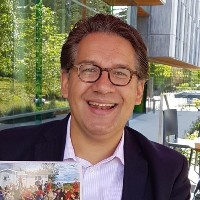
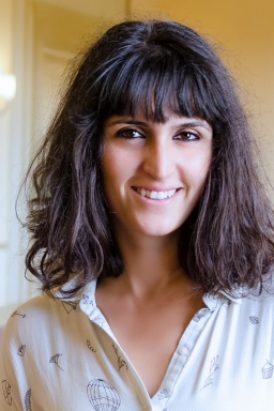
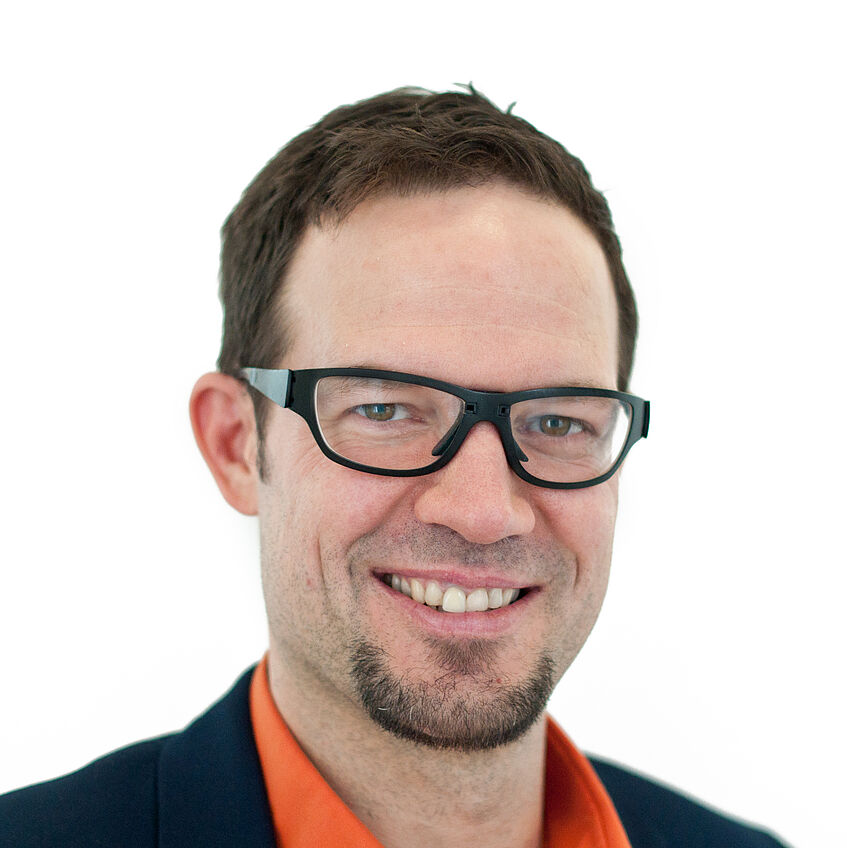
Emma Trentman is an Associate Professor of Arabic at the University of New Mexico (UNM) and Director of the Language Learning Center. Her research focuses on Applied Linguistics, particularly on language learning during study abroad programs, virtual exchange, and the impact of language ideologies on multilingual approaches. Research Interests: Multilingualism, Language Ideologies, Study Abroad Programs, Intercultural Communication, Arabic Language Education, and Curriculum Development. Key Publications: Co-editor of Language Learning in Study Abroad: The Multilingual Turn (2021), with works featured in The Modern Language Journal , Foreign Language Annals , and Critical Multilingualism Studies . Teaching: Offers Arabic language courses and the Languages Capstone class, integrating critical perspectives into language pedagogy. Editorial Work: Co-editor for Critical Multilingualism Studies Journal , advocating for plurilingual practices in education. Publications: Explores topics such as translanguaging, sociolinguistic competence, and decolonizing language learning frameworks across diverse contexts (Egypt, Tanzania, China). Advocacy: Engages in critical discussions on equity, identity, and sociocultural dimensions in language education.
Prof. Dr. Frank Ulbrich is a Lecturer and Programme Director for the BSc Business Administration at the Lucerne School of Business (HSLU). He holds a PhD in Business Administration from the Stockholm School of Economics. His academic career spans roles at universities in Sweden, the UK, Canada, and Switzerland, alongside IT & Management consulting experience. Research focuses on management education, project management, information management, and organizational change. He has published extensively in areas like shared services, digital transformation, and curriculum development. Notable awards include multiple Emerald Literati Awards and a Fellowship from the Higher Education Academy. Education: PhD in Business Administration (Stockholm School of Economics) Affiliations: Institute of Business and Regional Economics at HSLU Teaching Subjects: Academic Methods, Higher Education Management, Project Management, Digital Transformation Recent presentations include discussions on bridging academia-industry gaps, curriculum integration of SDGs, and data-driven learning strategies. His work emphasizes aligning education with labor market needs and advancing evidence-based teaching practices.
Amy Bruckman is a Regents’ Professor and Senior Associate Chair in the School of Interactive Computing at Georgia Institute of Technology. As a Fellow of The ACM and member of the SIGCHI Academy , she contributes to social computing research focusing on online collaboration, cross-cultural understanding, and content moderation. Her 2022 book "Should You Believe Wikipedia? Online Communities and the Construction of Knowledge" explores digital knowledge creation. Education: Ph.D. from MIT Media Lab (1997), B.A. in Physics from Harvard (1987) Research Affiliations: GVU Center, IRI People and Technology Her work addresses social computing challenges including: AI ethics in human-AI interaction Algorithmic bias in content moderation Epistemic justice in online communities Comparative platform analysis (Reddit, Discord, TikTok) Grassroots technology movements Recent publications examine: AI support tools for online counseling Community-driven research frameworks Racial bias mitigation in toxic language detection Designing teachable social media experiences Human trafficking intervention ethics Scientific recognition includes: ACM Fellowship SIGCHI Academy membership She has contributed to: Georgia Tech's Computing Education initiatives Research ethics frameworks for Human-Computer Interaction
David B. MacDonald is a full Professor of Political Science at the University of Guelph's Department of Political Science, housed within the College of Social & Applied Human Sciences. He holds an honorary academic position at the University of Auckland and previously taught at the University of Otago and ESCP Business School in Paris. His research focuses on Indigenous-settler relations, genocide studies, decolonization, and comparative politics in Canada, New Zealand, Australia, and the U.S. He has held significant grants from the Social Sciences and Humanities Research Council (SSHRC), including principal investigator roles on projects like 'Complex Sovereignties' and 'Bi-Nationalism as Reconciliation.' Education: PhD in International Relations from the London School of Economics (2001). Key publications include The Sleeping Giant Awakens (2019) and co-authored textbooks like Comparative Politics (2020). He is North American series editor for Palgrave Macmillan's Global Political Sociology. Research interests emphasize settler colonialism, Indigenous sovereignty, and truth and reconciliation processes. He has contributed to policy discussions, including advising the Canadian Senate on the National Council for Reconciliation. His work bridges academic scholarship with activism, aiming to address systemic inequalities and promote Indigenous rights. SSHRC Grants: Over $200k in grants since 2008, focusing on Indigenous self-determination and colonialism. Publications: 4 sole-authored books; 31 refereed articles; numerous edited volumes. Awards: Shortlisted for the John McMenemy Prize (2013, 2017).
Ceren Budak is an Associate Professor at the University of Michigan School of Information and holds a joint appointment as Associate Professor of Electrical Engineering and Computer Science in the College of Engineering. Her work bridges computer science, statistics, and social sciences through computational social science approaches. Her educational background includes a PhD in Computer Science from the University of California, Santa Barbara (2012) and a Bachelors degree in Computer Science from Bilkent University in Turkey (2007). Prior to joining the University of Michigan faculty, she was a Postdoctoral Researcher at Microsoft Research New York. Professor Budak's research centers on computational social science, with particular emphasis on analyzing large-scale datasets to address questions with social, political, and policy implications. Her work spans several interconnected domains: News Media Production & Consumption (examining bias in news outlets and reader preferences), Social Movements & Media (using social media data to study collective action), Social Networks (understanding information diffusion processes), and Measuring and Promoting the Quality of Online Discussions (developing tools to improve online conversations). She teaches SI 608 (Networks) and SI 618 (Data Manipulation and Analysis) at the School of Information. Her publication record demonstrates consistent contributions to understanding how online information ecosystems operate, with recent work focusing on AI-human collaboration, misinformation dynamics, social movement framing, and the application of computational methods to political communication. Her research shows a clear trajectory from foundational work on social network diffusion to increasingly sophisticated analyses of contemporary information challenges. Among her service activities, she has served as Registration chair for COSN (ACM Conference on Online Social Networks) 2015 and as Program Committee Member for numerous prestigious conferences including WWW, ICWSM, WebSci, AAAI, and others. She has also been involved in organizing the MSR NYC Data Science Seminar Series and instructing the Microsoft Research Data Science Summer School.
Anna Lukina is a Research Fellow in Law at the London School of Economics and Political Science and a PhD candidate at the University of Cambridge's Faculty of Law. Her research focuses on jurisprudence, legal history, and public law, with a specialization in Soviet legal systems, Nazi legal frameworks, and the philosophical underpinnings of 'evil law.' She holds a B.A. (Jurisprudence) and B.C.L. from the University of Oxford, and an LL.M. from Harvard Law School. Her doctoral work, Towards a Jurisprudence of Evil Law , examines the relationship between law and immorality in authoritarian regimes, funded by the Institute for Humane Studies, Modern Law Review, and Cambridge Law Journal. Key research areas include: Legal justifications for totalitarian regimes Resistance to morally corrupt legal systems Historical analysis of Soviet, Nazi, and antebellum U.S. legal structures Publications span legal-historical analyses of Soviet legal education, Schmittian dictatorship theory, and Kelsen's critiques of communist jurisprudence. She actively engages with legal theory through blogs like Legal Form and academic networks such as the Cambridge Legal Theory Discussion Group. Her work bridges theoretical jurisprudence and historical case studies, offering critical perspectives on law's role in enabling or resisting evil. Grants and fellowships support her exploration of legal systems' moral boundaries and their societal impacts.
James Briscoe is a Senior Group Leader at The Francis Crick Institute in London, where he leads a research group focused on developmental biology and morphogen signaling. He previously held positions at the Medical Research Council's National Institute for Medical Research, which later became part of the Francis Crick Institute. Education: BSc in Microbiology and Virology from the University of Warwick, UK PhD from Imperial Cancer Research Fund/King's College London Postdoctoral training at Columbia University with Thomas Jessell Dr. Briscoe's research focuses on the molecular and cellular mechanisms of graded signaling by morphogens and the role of transcriptional networks in cell fate specification. His laboratory employs a range of experimental and computational techniques using model systems including mouse and chick embryos and embryonic stem cells. His work has significant implications for understanding developmental processes and their relationship to disease. His recent publications demonstrate a continued focus on morphogen gradients, neural tube development, and computational approaches to understanding cell fate decisions. His research increasingly integrates single-cell technologies and computational modeling to unravel the complexities of developmental patterning. Scientific Awards and Honors: EMBO Young Investigator (2001) EMBO Gold Medal (2008) Elected to EMBO (2009) Fellow of the Academy of Medical Sciences (2019) Fellow of the Royal Society (2019) As Editor-in-Chief of the journal Development since 2018, Dr. Briscoe plays a significant role in shaping the field of developmental biology. His leadership extends to mentoring researchers and contributing to scientific policy discussions, as evidenced by his recent publication 'Science under siege: protecting scientific progress in turbulent times.' Dr. Briscoe's laboratory at the Crick Institute is well-equipped with access to advanced facilities including light microscopy, flow cytometry, genomics, and computational resources, enabling a multidisciplinary approach to developmental biology questions.
Claus Lamm is a Full Professor of Biological Psychology at the University of Vienna , where he leads the Social, Cognitive and Affective Neuroscience Unit (SCAN-Unit) . He serves as Vice Dean for Research and Advancement of Early Career Researchers at the Faculty of Psychology and holds affiliations with the Vienna Cognitive Science Hub , Environment & Climate Change Hub , and Austrian Academy of Sciences . His academic career spans international collaborations and formative research experience abroad. Scientific Focus: Lamm investigates the neural underpinnings of empathy and prosocial behavior , employing multi-modal approaches combining neuroimaging, psychopharmacology, and psychoneuroendocrinology . His work extends to comparative studies with ravens and dogs, and explores environmental social neuroscience through climate change decision-making research. Recent publications show trends in cross-cultural psychology , machine learning applications , and neurobiological pathways related to social behavior. Awards & Grants: Recipient of the APS Mentor Award for his support of early career researchers. Funded by European Research Council , Austrian Science Fund , Vienna Science and Technology Fund , and intramural grants exceeding €10 million. Key projects include "Unravelling the opioid system in empathy" and "Comparative dog-human fMRI" . Media Engagement: A prominent public science communicator, Lamm has appeared in Nature , Science Magazine , and Austrian media outlets like Ö1 Mittagsjournal and ORF2 , discussing topics from pandemic psychology to social media effects . He maintains active outreach through Science TV and educational programs .
Paschal Anosike is a Professor of Entrepreneurship and Innovation at the University of the West of England's Faculty of Business and Law. He serves as Director of the Centre for African Social and Economic Transformation (CASET) and Chair in African Research and Partnerships. Previously, he founded and directed the Centre for African Entrepreneurship and Leadership (CAEL) at Wolverhampton Business School. Education BA (Hons) MA PGCHE PhD Paschal's research focuses on advancing entrepreneurship ecosystems in Africa, with emphasis on innovation management, education, and sustainable development. His work bridges academic theory with practical solutions for African socioeconomic challenges. His publications highlight trends in entrepreneurial ecosystems, gender equality, religiosity, and institutional impacts on entrepreneurship. He has contributed to global policy discussions via the Africa Prosperity Index and co-created the Micro-Venture Accelerator Programme (m-VAP) for African universities. Scientific Awards Award-winning book: Entrepreneurship and Sustainable Development in Africa Paschal has received advisory and consultancy grants from the African Union Commission, European Commission, UNDP, GIZ, and the Legatum Institute. He founded the Forum for Innovation in African Universities (FIAU), a non-profit promoting university-industry collaboration.
Dr. Marina Miron is a post-doctoral researcher at King’s College London’s Department of War Studies and Honorary Research Fellow at the Centre for Military Ethics. Her work focuses on military strategy, cybersecurity, and ethical education in conflict contexts. She holds a PhD from the University of New South Wales (Australian Defence Force Academy) and has taught at institutions like the NATO School and Colombian War College. Current projects include analyzing Russia/China’s information warfare strategies and developing country-specific military ethics programs for Colombia’s armed forces. She also advises on cyber defense, AI in military contexts, and drone technology impacts. Research interests span counterinsurgency, hybrid warfare, cyber operations, and ethical dilemmas in modern conflict. She co-leads a British Academy-funded project on Western countermeasures against information warfare and contributed to NATO’s counterterrorism training programs. Her work bridges technological advancements with ethical considerations, particularly in unmanned systems and medical ethics. Publications analyze Russian cyber capabilities, drone public perception, and historical conflict resolution cases like Peru. She frequently appears in media discussions on Ukraine and cybersecurity threats. Professional networks include King’s Cybersecurity Centre and Freeman Air & Space Institute.
Professor Shani Orgad is a leading academic in the Department of Media and Communications at the London School of Economics (LSE), where she holds the rank of Professor. Her research focuses on gender, feminism, media representations, and globalization, with notable works exploring motherhood, work-life balance, and the intersection of media with contemporary cultural narratives. Education: Orgad earned a bachelor’s degree in Media and Communications from The Hebrew University in Jerusalem, followed by a Master's and PhD in Media and Communications at LSE. She is renowned for her interdisciplinary approach, blending media studies with ethnographic research and sociocultural analysis. Research Interests: Her work critically examines media discourses around gender, motherhood, and inequality. Key themes include the 'confidence culture' critique, menopause visibility, and the role of media in shaping public perceptions of marginalized groups. She has also explored humanitarian communication and the challenges faced by NGOs in engaging the public. Awards: Orgad has been recognized for her teaching excellence, including the 2019 LSE Teaching Excellence Prize and the 2018 LSE Excellence in Education Award. Her book Confidence Culture (2022), co-authored with Rosalind Gill, challenges neoliberal individualism in modern feminist discourse. Public Engagement: She frequently contributes to public discussions on media and gender through blogs, podcasts, and media commentaries. Her work bridges academic rigor with societal relevance, addressing issues like pandemic resilience, menopause discourse, and the impact of social media on self-perception. Current Projects: During the 2024/25 academic year, Orgad is on research leave, focusing on new projects that continue her exploration of media, gender, and cultural dynamics.
Brita Wårvik is a Professor in the Department of Languages at Åbo Akademi University, affiliated with the Faculty of Humanities, Psychology and Theology. She holds a Doctor of Philosophy (Phil. Dr.) from the same institution, awarded in 2013, and has been actively contributing to linguistic research for decades. Doctor of Philosophy (Phil. Dr.), Åbo Akademi University, 2013 Her research centers on discourse analysis, pragmatics, and historical English linguistics, with a particular focus on Early Modern and Medieval English texts. She investigates discourse interaction, textual structures, and pragmatic conservatism in religious prose, often employing corpus-based and textual analysis methods. Her work bridges micro and macro perspectives in discourse, exploring how semantic units contribute to broader text worlds. Analysis of her recent publications reveals a consistent trajectory in historical discourse studies, with increasing emphasis on corpus linguistics, manuscript variation, and the evolution of discourse markers. Her editorial work, such as the 2024 volume Structures in Discourse , highlights her leadership in synthesizing interdisciplinary perspectives on language use. Scientific Awards: Teacher of the Year (2001) ÅAU Student Union's Rose (2007) Brita Wårvik actively supervises and mentors academic visitors and collaborators, as seen in her hosting of scholars like Carmen Lee and Lieselotte Anderwald. She is the coordinator of the ongoing Project ICLE (International Corpus of Learner English) , securing research continuity and international collaboration. Her involvement in organizing workshops, such as the ICLE+30 FI-subcorpus Workshop in 2024, underscores her role in fostering academic exchange. In terms of research infrastructure, she is deeply embedded in the ICLE network, contributing to the development of learner language corpora. Her activities reflect strong international collaborations, particularly in the fields of historical linguistics and discourse studies, with a visible presence in both research and academic community-building.
Professor Richard Powell is a Cultural, Political, and Historical Geographer with expertise in the Polar Regions. He is currently the Professor of Arctic Studies and Director of the Scott Polar Research Institute at the University of Cambridge, while also serving as a Fellow of Fitzwilliam College. His career spans roles at the University of Oxford and the University of Liverpool, with a focus on the Arctic and its geopolitical, cultural, and environmental complexities. BA Geography, St. John's College, University of Oxford (Double First Class Honours) MA Geography, University of British Columbia (Distinction) PhD Geography, Emmanuel College, University of Cambridge PG Cert. Learning and Teaching in Higher Education, University of Liverpool Richard's research explores historical and cultural geographies, the geopolitics of the Arctic, geographies of science, and the interplay between environment and politics in the Circumpolar Region. His ERC-funded project ARCTIC CULT investigates colonial representations in Arctic studies, while prior work includes ethnographic studies of Arctic scientific practices and the political implications of resource extraction. He has authored a monograph, Studying Arctic Fields , and edited volumes on polar geopolitics. His recent publications emphasize the intersection of Arctic governance, colonial histories, and environmental science. Notable awards include the ERC Consolidator Grant and the Gill Memorial Award , alongside teaching accolades like the Teaching Excellence Award at the University of Oxford. He has supervised over 30 postgraduate students and leads interdisciplinary teams in projects funded by the Leverhulme Trust, AHRC, and ESRC. ERC Consolidator Grant (2016) Gill Memorial Award (2013) Teaching Excellence Award (2012) Environment and Planning A Ashby Prize (2007) RGS-IBG Area Prize (2002) H.O. Beckit Memorial Prize (1998) Gibbs Book Prize (1998) Richard collaborates with institutions like the Royal Society, Royal Geographical Society, and National Museum of Denmark, and has hosted seminars and workshops on Arctic geopolitics. He is a member of the UK Arctic and Antarctic Partnership Steering Committee and contributes to policy discussions on polar governance.
Professor Phil Clark is a Professor of International Politics at SOAS University of London, specializing in conflict and post-conflict issues with a focus on transitional justice, peacebuilding, and reconciliation after mass atrocity in Rwanda, Uganda, the Democratic Republic of Congo, and Burundi. He holds a DPhil in Politics from the University of Oxford, where he studied as a Rhodes Scholar, and a Bachelor of International Studies from Flinders University. His research focuses on international, national, and community-based responses to mass violence in Central Africa, particularly examining the gacaca community courts in post-genocide Rwanda and the International Criminal Court (ICC). Professor Clark has advised multiple governments (Danish, Sudanese, Swedish, Ugandan, and UK), international organizations (ICC, International Criminal Tribunal for Rwanda), and NGOs (Human Rights Watch, Crisis Group) on conflict issues in Africa. Professor Clark's work spans several key areas including the History, Politics and Law of the African Great Lakes; Transitional Justice Theory and Practice; the Politics of Violence; Community-Based and Customary Law; Conflict Resolution and Reconciliation; the Politics of International Criminal Justice; Peacebuilding, Security and Post-Conflict Reconstruction; and Moral and Political Philosophy. His approach often combines theoretical analysis with practical fieldwork in post-conflict societies. His publications reveal a consistent focus on the tension between international legal frameworks and local justice mechanisms, particularly examining how post-genocide societies navigate complex reconciliation processes. Over time, his work has evolved from documenting specific cases (like the gacaca courts) to analyzing broader patterns of transitional justice and international criminal law across the African continent. Shortlisted for the Raphael Lemkin Award for best book on genocide and mass violence (for "Distant Justice: The Impact of the International Criminal Court on African Politics") Regular contributor to major media outlets including The New York Times, Foreign Affairs, Washington Post, The Guardian, and BBC Frequent media commentator on international news networks including BBC, France 24, Al Jazeera, CNN, and Deutsche Welle Professor Clark has supervised multiple PhD students working on topics related to conflict analysis, women's access to transitional justice, China-Africa relations, and conflict transformation. His current research includes "Intergenerational Justice in Eastern Africa" and "Reframing Justice after Atrocity," which examines justice interactions beyond the linear international-to-national transmission of norms and practices. He has led significant research projects, including serving as technical advisor and co-author of a 2007 UN Office of the High Commissioner for Human Rights project surveying popular perceptions of transitional justice and peacebuilding in northern Uganda. His ongoing work continues to shape academic and policy discussions about justice mechanisms in post-conflict societies.
Raymond Boyle is a Professor of Communications (Theatre, Film & Television Studies) at the University of Glasgow, where he directs the Centre for Cultural Policy Research (CCPR). He holds a BA in Media Studies and History from the University of Ulster and an MA in Communications from Dublin City University. Previously, he taught at Glasgow Caledonian University and Stirling University before joining CCPR in 2007. His research focuses on media policy, cultural policy, and sports media, with particular attention to digital media's impact on television, sports journalism, and cultural intermediaries. Notable projects include studies of the UK Film Council, the Commonwealth Games 2014, and UEFA's Football Management programs. He has authored/co-authored books such as The Talent Industry: Television, Cultural Intermediaries and New Digital Pathways (2018) and edited volumes like Changing Sports Journalism Practice in the Age of Digital Media (2019). Boyle serves on the editorial boards of Media, Culture and Society and collaborates with institutions like UEFA. His work bridges academic research with consultancy, addressing media rights, sport governance, and public policy. Grants include AHRC-funded projects on UK film policy transitions and copyright issues in European football media rights. Teaching includes the MSc Media Management program. He has delivered keynote addresses on media digitization, sport and identity, and participated in public discussions on topics like FC Barcelona's cultural impact and Scottish media engagement.