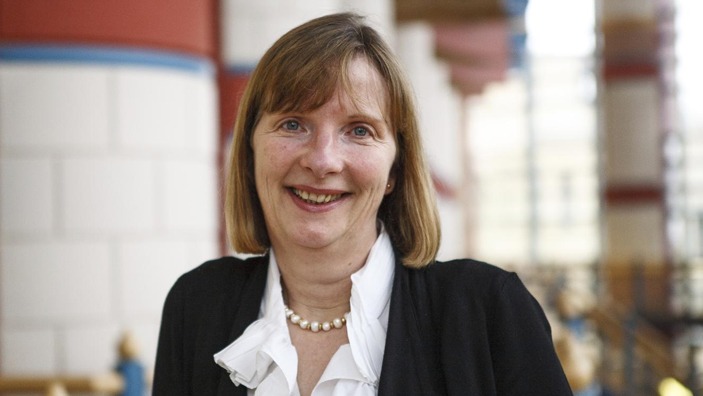
Maricela De la Torre Castro is a Professor of Natural Resource Management at Stockholm University , affiliated with the Department of Physical Geography . Her research focuses on coastal and ocean governance through a social-ecological systems lens, emphasizing gender dynamics , seagrass conservation , and climate change adaptation in tropical coastal communities. BSc in Oceanology (Universidad Autonoma de Baja California) MSc, PhD, and Docent in Natural Resource Management (Stockholm University) Her work examines seagrass ecosystem services , small-scale fisheries governance , and gendered impacts of marine protected areas . Recent studies analyze: 2025: Habitat loss risks from seaweed cultivation 2024: Gender-poverty dynamics in Zanzibar MPAs 2022: Adaptive capacity differences between genders 2021: Blue Justice frameworks for fisheries governance Active projects include SEAgender (Swedish Research Council) analyzing gendered effects of MPAs . She supervises PhD candidates in tropical marine systems and has extensive experience with EU Erasmus programs and UNDP collaborations . Research emphasizes hybrid methods , cultural value mapping , and interdisciplinary monitoring of coastal initiatives.
Ross Koppel is an Adjunct Professor of Sociology with expertise in healthcare information technology, medication errors, and ethics in social research. His work explores the intersection of technology and societal impacts, focusing on data governance, clinical workflows, and human factors in health IT systems. Research Interests Context-sensitive understanding of medication errors Societal implications of clinical data sharing Ethical challenges in AI and informatics Healthcare cost analysis Scientific Awards Fellow of the American College of Medical Informatics (FACMI)
Anne-Marie Oswald is an Associate Professor in the Department of Neurobiology within the Biological Sciences Division at the University of Chicago. Her research profile indicates active engagement in neuroscience research with a particular focus on cortical circuits, neural coding, and sensory processing systems. She maintains an active research program with publications spanning from 2011 to the present. Dr. Oswald's research interests span multiple areas of neuroscience, with particular emphasis on cortical circuit function, neural coding mechanisms, and sensory processing. Her work investigates how inhibitory interneurons shape cortical dynamics, how neural assemblies form during learning, and how sensory information is processed across different brain regions. Notably, she has also contributed to discussions on diversity in science through her publication "Curating more diverse scientific conferences" in Nature Reviews Neuroscience (2020). Her research employs a combination of electrophysiological, computational, and behavioral approaches to understand neural circuit function. Analysis of her publication record reveals a strong focus on cortical circuit mechanisms, particularly in the olfactory system. Her work demonstrates expertise in understanding how different interneuron subtypes (particularly parvalbumin and somatostatin-positive cells) regulate cortical dynamics, assembly formation, and sensory processing. Over time, her research has evolved from examining basic circuit mechanisms to investigating how these circuits support complex cognitive functions like odor discrimination and associative learning. The consistent presence of computational and systems neuroscience approaches throughout her publication history indicates a rigorous quantitative approach to understanding neural function. Dr. Oswald appears to be actively mentoring students and postdoctoral researchers, as evidenced by her consistent publication record with multiple collaborators. While specific grant information isn't provided in the available data, her sustained publication output suggests successful funding of her research program. Her work bridges cellular and systems neuroscience, contributing to our understanding of how microcircuit properties shape sensory processing and behavior.
Carsten Greve serves as Professor of Public Management and Governance and Head of the Department of Organization at Copenhagen Business School (CBS), where he maintains an office in room KIL/14.A-4.75 with contact number +4538153598. His academic leadership extends to directing departmental operations while maintaining an active research profile focused on the intersection of public sector management and private sector collaboration. At CBS, he teaches core courses including Leading Reform and Change for the Master of Public Governance program and Strategic Public Management Across the Public Sector , shaping the next generation of public sector leaders. Greve's research program centers on four interconnected domains: public management and governance systems, public management reform trajectories, public-private partnership frameworks, and market-based governance mechanisms. His work critically examines how privatization processes transform public service delivery, particularly in Nordic contexts where traditional welfare state models confront market-oriented reforms. Through comparative analyses of infrastructure projects and elderly care systems, he investigates the tension between efficiency-driven market mechanisms and democratic accountability requirements in public administration. His scholarship consistently bridges theoretical frameworks with Danish policy implementation challenges, especially in healthcare and transportation sectors. Recent publications reveal evolving research trajectories toward regulatory capitalism frameworks and agile governance models, with the 2025 Research Handbook on Privatisation synthesizing global privatization debates while the 2023 Handbook on Strategic Public Management advances collaborative governance approaches. His article corpus demonstrates increasing focus on temporal dimensions of reform implementation, risk allocation in complex partnerships, and the adaptation of public management practices in digitally transforming administrations. The recurrent Nordic case studies highlight distinctive administrative traditions navigating privatization pressures while maintaining public value commitments. No scientific awards or formal honors are documented in the available materials. Greve's supervisory record includes 10 successfully completed PhD dissertations at CBS, though specific student names and dissertation topics remain unlisted. His research activities generate substantial external engagement through presentations at national institutions including Rigsrevisionen (National Audit Office), Aalborg University, and Danske Professionshøjskoler, alongside international contributions to European Union policy reports. While grant funding details are unspecified, his prolific publication output across edited volumes, book chapters, and peer-reviewed journals indicates sustained research productivity.
Ciara Atkinson serves as an Assistant Professor of Practice in the Department of Psychology at the University of Arizona, where she teaches foundational and specialized undergraduate courses including Introduction to Psychology (PSY 101), Social Psychology (PSY 360), and Research Methods (PSY 290A). Her pedagogical philosophy centers on making psychological science accessible through real-world applications, hands-on activities, and critical thinking development that connects theory to students' everyday experiences. Her academic credentials include: B.S. in Psychology from Otterbein University (2017) M.A. in Psychology from the University of Arizona (2019) Ph.D. in Social & Personality Psychology from the University of Arizona (2022) Dr. Atkinson's research investigates how societal expectations and gender stereotypes shape roles and identities, with particular focus on inequalities in helping-oriented occupations. Her work examines the gender roles inhibiting prosociality (GRIP) model, masculinity threats as barriers to communal engagement, and cross-national analyses of gender norms in caregiving. She employs experimental and survey methodologies to explore how traditional gender expectations constrain prosocial behavior, especially among men in communal roles. Analysis of her 15 most recent publications (2017-2025) reveals a cohesive research trajectory centered on gender dynamics in social psychology. The majority examine how traditional gender roles inhibit prosocial behavior through mechanisms like perceived backlash, masculinity threats, and policy influences, with strong methodological emphasis on cross-national comparisons (across 37-48 countries) and controlled experiments. Key thematic threads include pandemic impacts on domestic equality, AI-generated gender bias, and interventions promoting men's emotional flexibility for gender equity. Prior to her faculty appointment, she worked as a research analyst and program evaluator with the Community Research, Evaluation and Development (CRED) Team in the Norton School of Family and Consumer Sciences, Student Affairs, and the UA Cancer Center. These collaborations demonstrate her applied approach to program evaluation and community-focused research on gender dynamics in institutional settings.
Katia Furlotti is a Full Professor at the Department of Economics and Business Sciences, University of Parma, with a career spanning over 15 years in academia. Her research focuses on Corporate Social Responsibility (CSR), Business Ethics, Corporate Governance, Stakeholder Engagement, and the History of Accounting, particularly in Italian contexts. She has led numerous empirical studies on CSR disclosure practices, gender diversity in governance, and ethical code development for SMEs and non-profits. Education: PhD in 'Determination and Communication of Value in Companies' (2010), Master's in Business Administration (2006), and Degree in Business Economics (2003) from University of Parma. Her research explores CSR disclosure mechanisms, ethical governance structures, and historical accounting practices in institutions like Parma's Teatro Regio and Consorzio del Prosciutto di Parma. Recent studies analyze mandatory gender quotas, CSR vs. business ethics, and board evaluation processes. Key scientific awards include the 2006/2007 ASCAI Award and the Mirella Valentini Scholarship for her Master's thesis. She has served as Vice Direttore of her department and as Quality Assurance Officer for undergraduate programs.
Helen Haugh is Associate Professor in Community Enterprise at Cambridge Judge Business School, University of Cambridge, and serves as Research Director for the Cambridge Centre for Social Innovation. Her work bridges organizational theory, social entrepreneurship, and community asset development, with significant impact on policy and practice. Her academic credentials include a BSc from UMIST, MA from Brunel University, and PhD from Aberdeen University. These foundations underpin her empirical approach to studying community-driven enterprise models. Professor Haugh's research centers on organizational theory , institutional dynamics , and community asset ownership , with pioneering work on necessity entrepreneurship in Africa and the reimagining of religious buildings as community hubs. She employs ethnographic methods to explore how place-based contexts shape social innovation, emphasizing ethics of care and resilience in marginalized communities. Her scholarship consistently challenges conventional entrepreneurship frameworks by centering community agency and hybrid organizational forms. Analysis of her recent publications reveals three dominant trajectories: (1) transformational hybridity for societal challenges (2025), (2) decolonizing entrepreneurship research through Global South perspectives (2023), and (3) place-based community asset strategies (2022-2023). Her work increasingly examines institutional voids in refugee contexts and the moral economies of fair trade. Helen has directed the MSt in Community Enterprise (2001-2008), Tata Social Internship Scheme (2008-2011), and Arianne de Rothschild Fellowship (2010-2016). Current projects include the REACH Ely initiative reimagining churches as community assets (featured in Sky News 2022-2023) and historical analyses of community enterprise evolution. Her research is funded through partnerships with the Diocese of Ely and international development agencies. As Research Director of the Cambridge Centre for Social Innovation, she leads a multidisciplinary team investigating social enterprise ecosystems, with recent focus on the generative potential of community embeddedness and strategies for sustaining community assets amid financial constraints.
Cynthia D. Rudin is the Gilbert, Louis, and Edward Lehrman Distinguished Professor of Computer Science at Duke University, with joint appointments in the Departments of Electrical and Computer Engineering, Statistical Science, Mathematics, and Biostatistics & Bioinformatics. She directs the Interpretable Machine Learning Lab and has held previous positions at MIT, Columbia, and NYU. Her educational background includes: Undergraduate degree from the University at Buffalo PhD from Princeton University (2004) Research Interests: Dr. Rudin's research focuses on interpretable machine learning and its applications across multiple domains. Her work emphasizes creating machine learning models whose reasoning processes people can understand, which includes algorithms for extremely sparse models, interpretable neural networks, interpretable matching methods for causal inference, and dimension reduction for data visualization. She applies these techniques to critical societal problems in healthcare, criminal justice, materials science, and other domains. Her lab has developed practical code for sparse models such as decision lists, decision trees, and additive models that provably optimize accuracy and sparsity. Dr. Rudin's recent publications (2024-2025) demonstrate a strong focus on interpretable AI applications across diverse fields including healthcare (mortality risk scores, breast cancer prediction), materials science (metamaterials design), and environmental justice (location-based health analysis). Her work consistently emphasizes practical implementations with real-world impact, particularly in high-stakes decision-making domains where model transparency is critical. Scientific Awards: Squirrel AI Award for Artificial Intelligence for the Benefit of Humanity (2022) - often described as the "Nobel Prize of AI" INFORMS Society on Data Mining Prize (2024) Guggenheim Fellowship (2022) Three-time winner of the INFORMS Innovative Applications in Analytics Award (2013, 2016, 2019) Winner of the 2023 John M. Chambers Statistical Software Award for PaCMAP Winner of the 2024 Award for Innovation in Statistical Programming and Analytics Dr. Rudin has advised numerous PhD students and postdocs who have co-authored significant publications with her. Her lab has received substantial funding for projects applying interpretable machine learning to healthcare (seizure prediction in ICU patients), criminal justice (crime series analysis), and energy infrastructure (underground electrical distribution networks). Her work on the Series Finder algorithm has been adapted by the NYPD and has been running live in NYC since 2016. She directs the Interpretable Machine Learning Lab at Duke, which includes the Almost-Matching-Exactly Lab focused on interpretable causal inference. Her team develops practical code implementations for all their research, emphasizing usability and real-world application in critical domains.
Dr. Alastair Stark serves as Associate Professor at the School of Political Science and International Studies, Faculty of Humanities, Arts and Social Sciences at The University of Queensland (UQ). As Director of the Graduate Centre in Governance and International Affairs, he combines academic leadership with public policy scholarship. Current research focuses on institutional amnesia in governance, policy learning mechanisms, and deliberative democracy applications to environmental policy Recipient of Mayer Prize (Australian Journal of Political Science) and Lasswell Prize (Policy Sciences) Principal investigator for Australian Research Council Discovery projects (2021-2025, 2018-2022) Active supervisor with current PhD projects on disaster recovery, institutional memory, and rapid evidence application Research Interests His work addresses three core areas: institutional memory in governance, crisis management through public inquiries, and deliberative democratic practices in policy-making. Recent articles explore Australian royal commissions, policy inaction dynamics, and post-pandemic governance responses. Scientific Contributions Authored/edited 4 books including Risk and Crisis Management in the Public Sector (3rd ed, 2024) and Public Inquiries and Policy Design (2024) Published 27 journal articles across Public Administration , Policy Sciences , and Governance Developed analytical frameworks for policy adoption, crisis dramaturgy, and deliberative governance Awards & Grants 2021-2025: ARC Discovery Project - Institutional Memory and Policy Processes 2018-2022: ARC Discovery Grant - Public Inquiries Implementation 2016-2019: ARC Discovery Grant - Social-Urban Planning Integration 2015: UQ Early Career Researcher Grant - Post-Crisis Policy Learning Professional Involvement Contributes to multiple research centers including the Graduate Centre in Governance and International Affairs. Participates in the Visual Politics Research Program and Visiting Researcher Program. Maintains active roles in policy evaluation and crisis management analysis.
Amelie Schiprowski serves as an Assistant Professor of Economics at the University of Bonn and is a faculty member of ECONtribute, the Cluster of Excellence "Markets & Public Policy". She concurrently holds a Research Fellow position at the Max Planck Institute for Research on Collective Goods and maintains affiliations with CEPR, IZA, and CESifo, demonstrating deep integration within international economic research networks. Her research centers on Labor Economics and Public Economics, with rigorous empirical investigations into unemployment insurance systems, job search behavior, and caseworker-citizen interactions. She employs high-frequency survey data combined with administrative records to isolate causal mechanisms, recently expanding into gender differences in committee deliberation and bias mitigation in interviewing processes through experimental approaches. Analysis of her 2019-2025 publications reveals a cohesive focus on micro-level labor market dynamics, particularly how policy design and frontline implementation shape individual behavior. A dominant trend examines the nuanced effects of caseworker interventions on search effort and employment outcomes, while newer work explores gender disparities in decision-making and the efficacy of bias-awareness training. Her scientific recognition includes: Joachim Herz Award in Economics (2020) Dr. Schiprowski maintains extensive collaborative networks across institutions as evidenced by co-authored publications with researchers from multiple German universities. Her affiliations with major research centers indicate substantial ongoing grant support, though specific funding details are not disclosed in available materials. She actively contributes to policy-relevant economics through publications in premier journals and media coverage in outlets like Frankfurter Allgemeine Zeitung.
Stathis Kalyvas is the Gladstone Professor of Government at the University of Oxford, specializing in conflict studies, civil wars, and political violence. He holds a BA, MA, and PhD, and is a Fellow of the British Academy. Current Affiliation: University of Oxford, Politics and International Relations Past Roles: Arnold Wolfers Professor at Yale University (2003–2017), University Academic Fellow (2018–present) Visiting Appointments: Universidade de São Paulo (2014), Lingnan University (2014), Columbia University (2009), Northwestern University (2009), European University Institute (1997–1998) His research focuses on the dynamics of civil wars, insurgencies, and the formation of political cleavages and collective identities. He has directed the Program on Order, Conflict and Violence at Yale and co-directed the Hellenic Studies Program there. Recent publications include analyses of the Greek Civil War, Islamist conflict, and the 'Marxist Paradox,' emphasizing micro-level violence patterns and ideological influences. His work bridges historical case studies with broader theoretical frameworks. Scientific Recognition: Fellow of the British Academy (FBA) Kalyvas has advised numerous PhD students and collaborated on interdisciplinary projects examining state failure, insurgency, and post-conflict governance.
Kai Wegrich serves as Professor of Public Administration and Public Policy and Dean at the Hertie School in Berlin. His academic career spans prestigious institutions including Humboldt University, Potsdam University, RAND Corporation, and London School of Economics. As one of the appointed Deans, he plays a key leadership role at the institution alongside Thurid Hustedt. Wegrich earned his PhD from Potsdam University in 2003 following studies at the Free University of Berlin. His academic journey reflects deep engagement with governance structures across European contexts, with particular expertise in German administrative systems. His research spans executive politics, regulation, public sector reform, and policy innovation. Wegrich critically examines how governments navigate digital transformation, regulate platform economies, and implement effective public sector innovations. His work bridges theoretical frameworks with practical applications, often focusing on urban governance challenges in Berlin. Recent scholarship increasingly addresses collaborative governance models and the intersection of digital transformation with traditional administrative structures. Analysis of his publication record reveals evolving research trajectories: early work focused on executive politics and regulatory theory, while recent publications emphasize digital governance challenges and public sector innovation. His influential 2022 book 'How to do public policy' has become a key reference in policy analysis education, complementing his extensive journal publications on regulatory agencies, urban mobility, and administrative reform. Wegrich serves as co-editor of the Palgrave book series on Executive Politics and Governance. His policy engagement includes media contributions such as a Tagesspiegel op-ed advocating for adaptive administrative reform in Berlin. As an educator, Wegrich teaches graduate courses including 'Innovation in Government: Finding Out What Works & Why?', 'The Policy Process: Urban Policy', 'The Roadmap to the Green Transition', and 'Making Change Feasible: Institutional Change & Reform'. His teaching emphasizes practical applications of public administration theory through contemporary policy challenges. His research connects with multiple Hertie School centers, particularly the Centre for Digital Governance and Centre for Sustainability, where his work on digital transformation and governance innovation finds natural alignment. Current projects examine urban mobility policies and the governance challenges of the green transition.
Professor Kiyotaka Iwasaki at Waseda University's Faculty of Science and Engineering is a leading figure in biomedical engineering with a focus on cardiovascular device development , tissue engineering , and regulatory science . His career spans over two decades at Waseda University, including roles as Associate Professor (2006-2014) and positions at Harvard Medical School's Laboratory for Tissue Engineering. Holding a Doctor of Engineering from Waseda, he serves on numerous international regulatory committees and has contributed to ISO/TC194 standards for medical devices. 1993-2002: Waseda University Education in Mechanical Engineering 2001-2004: Research Associate at Waseda University 2004: Research Scientist at Harvard Medical School 2018-Present: Professor at Waseda University His research interests include Non-clinical testing methodologies for medical devices Regulatory science frameworks Tissue engineering for ligament and cardiac applications Cardiovascular biomedical engineering His scientific contributions reveal through Development of decellularized tissue grafts for orthopaedic surgery Innovations in 3D cardiac tissue engineering using fibrin-based cell sheet stacking Pioneering bioresorbable stent technology with magnesium alloys Creation of biomechanical simulators for valvular disease modeling His awards span from the 2021 Japanese Ministerial Science Commendation 2020 JSME Standards Award 2018 ARIA Innovation Award 2001 ASAIO Fellowship While his publications demonstrate expertise in Vascular and cardiac device testing Bioresorbable stent evaluation Machine learning in medical device regulation Decellularized tissue applications
Professor Clinton Fookes is a faculty member at the Queensland University of Technology (QUT) within the School of Electrical Engineering & Robotics . His research focuses on leveraging computer vision and artificial intelligence to develop automated systems that understand, anticipate, and interact with human behaviors, with applications in medical diagnostics, autonomous vehicles, defense, and industrial efficiency . Research areas include AI adaptability, multimodal biosignal analysis, and human-machine interaction Collaborates with CSIRO Data61, Defence Science and Technology Group, Orica, Airbus, and Sentient Vision Systems Develops systems for human action detection, infrastructure monitoring, and stress response prediction His work addresses critical challenges in AI deployment, such as environmental adaptability and reducing diagnostic errors in medical and autonomous systems. Recent publications highlight trends in self-supervised learning, zero-shot knowledge transfer, multimodal integration , and 3D reconstruction for healthcare , while exploring ethical AI use in sectors like mining and defense . Professor Fookes emphasizes interdisciplinary collaboration, bridging engineering, medicine, and social sciences to advance AI systems capable of real-world impact. His research agenda includes improving AI memory capabilities and explainability for safer, more reliable automation.
David Fulton serves as a Professor and Assistant Unit Leader at the Minnesota Cooperative Fish and Wildlife Research Unit, University of Minnesota, based in Hodson Hall. His research and teaching focus on human dimensions of fish and wildlife management, with a Ph.D. from Colorado State University forming his academic foundation. His educational background includes: Ph.D. from Colorado State University Professor Fulton's research program investigates social, political, and cultural factors influencing conservation decision-making, emphasizing human values and attitudes through interdisciplinary methodologies. He integrates theories from sociology and psychology while advocating for combined qualitative and quantitative social research approaches to address complex wildlife management challenges. His work consistently bridges theoretical frameworks with practical conservation applications. Analysis of his 2020-2023 publications reveals persistent themes in trust dynamics with government agencies, landowner disease management preferences, community stewardship identity, and socioecological conflict resolution. His scholarship frequently applies social identity theory and self-determination theory to examine human behavior in natural resource contexts, demonstrating strong alignment with evolving sociocultural conservation paradigms. David Fulton operates within the Minnesota Cooperative Fish and Wildlife Research Unit, a collaborative entity involving the University of Minnesota, U.S. Geological Survey, and state/federal natural resource agencies. This unit specializes in generating actionable research that integrates social science with ecological data to directly inform fish and wildlife management policies and practices.