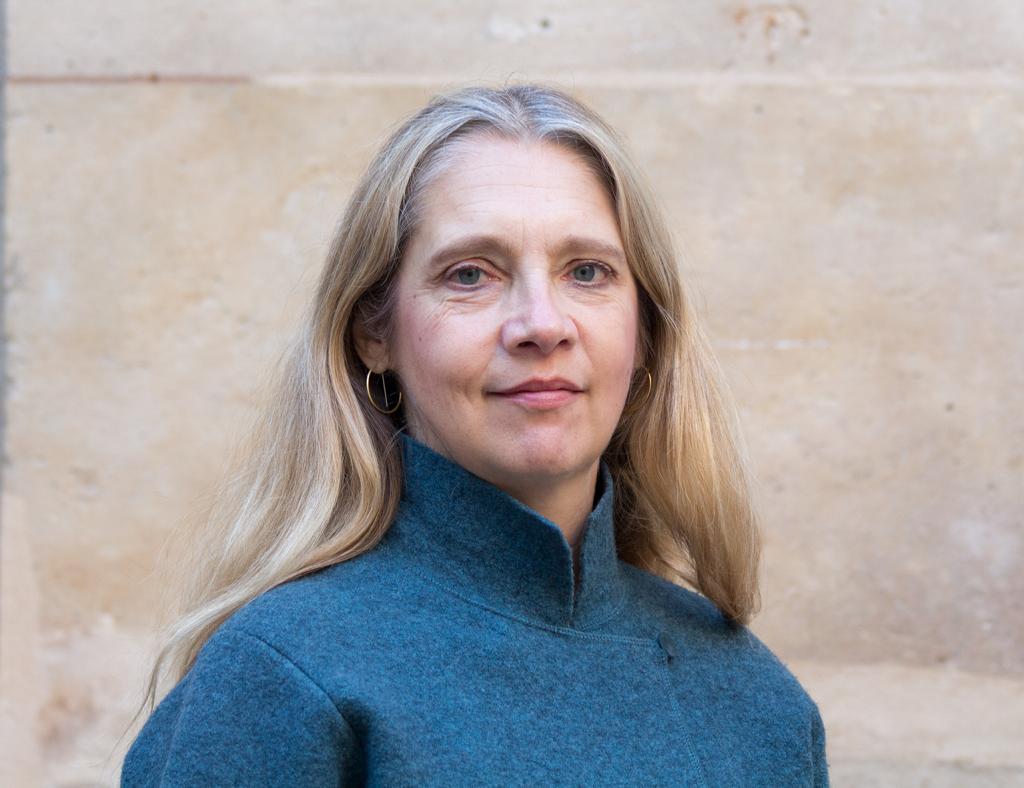
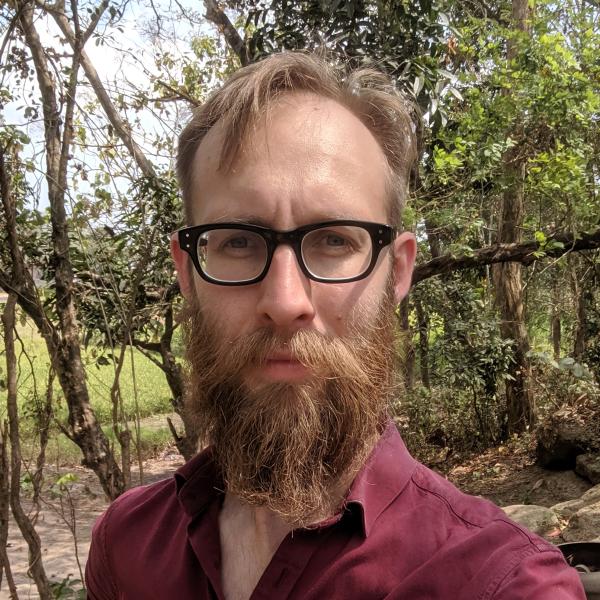
Jill Newton is a Professor in the Department of Curriculum and Instruction at Purdue University’s College of Education. Her work focuses on mathematics education curriculum development, teacher training, and equity in education, with additional contributions to international and study abroad programs. Ph.D. in Curriculum, Teaching, and Educational Policy (Mathematics Education), Michigan State University (2008) M.A. in International Education, George Washington University (1995) B.S. in Mathematics and Secondary Teaching Certification, Michigan State University (1987) Newton’s research spans algebra teaching, curriculum coherence, and social justice in education. She has led national studies on mathematics teacher preparation and explored how teachers use curricular resources post-COVID. Her work also emphasizes international education, including virtual communities of practice for global social justice. Recent publications highlight her focus on algebraic reasoning, curricular alignment, and equity. She has co-authored studies on elementary teachers’ curriculum use, preservice teacher development, and virtual intercultural collaborations. Terry L. Wood Mathematics Teacher Educator Award (2024-25) Book of Great Teachers Inductee (2023) Outstanding Leadership in Globalization Award (2022-23) Charles B. Murphy Outstanding Undergraduate Teaching Award (2017) Newton has coordinated undergraduate research at Purdue since 2018 and has taught mathematics education courses since 2004. Her teaching experience spans secondary schools in Venezuela, Tanzania, Bulgaria, and Papua New Guinea, enriching her global perspective.
Professor Tomo Suzuki (Waseda University, Faculty of Commerce) holds a D.Phil. from Oxford University and has held academic positions at Oxford, London School of Economics, and Meiji University. His research spans Institutional Mechanism Design , Sustainability Management , and Mature Socio-Economy across Japan, India, and China. Former Oxford Professor with top academic awards (2008-2012) Advisor to Japanese Cabinet (2020-2023) and LDP Policy Committee Developed "One Additional Line" $2B/year system in India Lead author on 9 Scopus publications with 212 citations Research Focus : • Applied Institutional Design for mature economies • Distribution Statement (DS) for fair value allocation • Critique of shareholder-first capitalism Scientific Awards : Cosmo Awards for Research Excellence (1996, 2015) UK Research Assessment Exercise Top Score (2008) Oxford Executive MBA Outstanding Professor
Professor Mark Scott is a Full Professor of Planning and Dean of the School of Architecture, Planning and Environmental Policy at University College Dublin (UCD), where he has served since 2002. He is a leading scholar in rural planning and environmental policy with over 25 years of academic experience. His leadership roles include Dean (2020-2025), Head of School, and various subject leadership positions within UCD. Mark Scott earned his BSc, Diploma in Town Planning, and PhD in Environmental Planning from Queen's University Belfast. Prior to joining UCD, he worked at the University of Ulster and Queen's University Belfast, and also had planning practice experience. He has held visiting appointments at the University of Pisa and the University of New South Wales. His research focuses on the environmental and sustainability dimensions of spatial planning theory and practice, with specific expertise in rural planning, land-use governance, climate action, green infrastructure, and natural and built heritage. Professor Scott has published extensively in these areas with over 150 journal articles and book chapters, and has authored several influential books including 'Rural Planning Futures' (2025) and 'Postcapitalist Countrysides' (2025). His work demonstrates a strong focus on contemporary challenges in rural planning, climate adaptation, and sustainable development, bridging theoretical frameworks with practical policy applications. Professor Scott has received significant recognition for his contributions to the field: Elected Fellow of the Academy of Social Sciences (2024) Fellow of the Regional Studies Association Shortlisted for the Patsy Healey Award for Academic Excellence (2025) With research funding totaling approximately €6 million from various national and international sources, Professor Scott actively engages with policy and practice. He serves on the Board of the Heritage Council (2023-present), chairs the Historic Monuments Council in Northern Ireland (2025-30), and has advised numerous governmental bodies including Oireachtas Committees, the UK House of Lords, and the OECD. His leadership extends to editorial roles, having served as editor of Planning Theory & Practice (2008-2015 & 2018-2024) and currently on the editorial board of Town Planning Review. Professor Scott leads several significant research initiatives including the Wildfire Resilient Cultural Heritage project (funded by JPI Climate and JPI Cultural Heritage), CO-Bioecon (funded by Department of Agriculture, Food & Marine), and the Rural Planning in the 2020s project (funded by the Royal Town Planning Institute).
Thomas Chaney is a Professor of Economics at the University of Southern California (USC), holding the John Elliott Chair in Economics. He is affiliated with Sciences Po’s Department of Economics and leads the ERC Project HTMG. His research focuses on International Trade, Networks, and Finance, with notable contributions to historical trade dynamics and modern financial constraints. Chaney is a CEPR and CESifo Research Fellow, reflecting his academic standing. Research Interests: Chaney’s work bridges historical and contemporary economic phenomena, analyzing trade networks, collateral constraints in corporate finance, and the impact of migration on innovation and urban development. His research often employs innovative methodologies, such as combining archaeological data with economic models to study ancient trade systems. Articles Trends: Recent work examines Bronze Age trade networks, modern corporate investment dynamics, and the role of real estate collateral. His 2024 articles explore ancient trade’s end and contemporary empathy’s economic implications, showcasing interdisciplinary approaches. Earlier papers like Trade, Merchants, and the Lost Cities of the Bronze Age (2019) exemplify his historical focus. Grants & Awards: Chaney leads the ERC-funded HTMG project and holds prestigious fellowships. His work has been published in top journals and spans empirical trade analysis, financial economics, and historical methods. Labs/Teams: Active in USC’s Economics Department and collaborates with global institutions like Sciences Po and the Bank for International Settlements (BIS). His research group integrates economists, historians, and data scientists for interdisciplinary projects.
Dr. Deborah J. Johnson is a researcher in the Department of Human Development and Family Studies at Michigan State University, affiliated with the College of Social Sciences. She holds a Ph.D. from Northwestern University, an M.A. from Cornell University, and a B.A. from the University of Chicago. Her work focuses on racial-ethnic socialization, cultural adjustment of immigrant/refugee groups, and resilience among marginalized populations, with particular attention to South Sudanese refugees, Indigenous Australians, and Roma youth. She explores how cultural identity intersects with global contexts, gender, and education to shape developmental outcomes. Key research areas include: Racial-identity development in African American and Latina college women Cultural adaptation of Sudanese refugees and its tridimensional aspects of identity alignment Positive youth development in Indigenous Australian communities through virtual reality initiatives Policy impacts on oppressed ethnic groups' identity reformation Her work has been published in over 50 peer-reviewed articles and books, including Identity Re/Formation among Immigrant Youth and Families (upcoming) and Children and Prejudice (2018). She leads interdisciplinary projects at the intersection of education, mental health, and public policy, emphasizing equity and culturally responsive practices. Dr. Johnson collaborates with institutions like the Child Development Laboratory and Couple & Family Therapy Clinic to translate research into community-focused interventions. Her global projects span North America, Australia, and Eastern Europe, addressing systemic barriers faced by vulnerable populations.
Georgia Zellou is an Associate Professor in the Department of Linguistics at the University of California, Davis, where she co-directs the Phonetics Lab and conducts award-winning research at the intersection of phonetics, speech perception, and human-AI interaction. Her work investigates how phonetic detail is cognitively represented through variations in speech production, with significant contributions to understanding speech alignment with voice assistants, face-masked speech intelligibility, and cross-linguistic perception of synthetic voices. Her academic credentials include a Ph.D. in Linguistics from the University of Colorado at Boulder (2012), an M.A. in Linguistics from Stony Brook University (2007), and a B.A. in Linguistics & Anthropology from the University of Florida (2005, Cum Laude, Phi Beta Kappa). Ph.D., Linguistics, University of Colorado at Boulder (2012) M.A., Linguistics, Stony Brook University (2007) B.A., Linguistics & Anthropology, University of Florida (2005) Professor Zellou's research program centers on laboratory phonology approaches to real-world communication challenges, examining how acoustic-phonetic details influence speech perception across contexts. Her studies span speech alignment with voice-AI systems (e.g., Amazon Alexa), sociophonetic variation in bilingual speech, and the cognitive mechanisms underlying perceptual compensation for coarticulation. She employs experimental methods including eye-tracking, acoustic analysis, and perceptual testing to uncover how phonetic variation functions pragmatically in human communication and human-machine interaction. Analysis of her 15 most recent publications (2023-2025) reveals three dominant research trajectories: (1) human-AI voice interaction dynamics, including prosodic alignment and social evaluation of TTS voices; (2) intelligibility optimization in challenging contexts (face masks, clear speech for diverse listeners); and (3) cross-linguistic phonetic variation in vowelless words and consonant clusters. These works consistently bridge theoretical phonology with applied speech technology, demonstrating how fine-grained phonetic detail influences communication effectiveness in both human-human and human-machine contexts. Her scientific recognition includes: Fulbright Scholar (2022) for research in France Chancellor’s Award for Excellence in Undergraduate Mentoring (2019) Fellow of the Linguistic Society of America (2020) Amazon Faculty Research Award (2019) for Alexa-related speech studies Dean’s Fellow designation at UC Davis (2020-2023) Professor Zellou maintains an active mentoring practice recognized with the Chancellor’s Award, supervising undergraduate researchers in the Phonetics Lab while teaching core linguistics courses from introductory to advanced graduate levels. Her research program is supported by competitive grants including NSF funding, Amazon Research Awards, and UC Davis internal grants (Hellman Foundation, ISS Junior Faculty Grant), reflecting the translational value of her work for speech technology development. She has co-directed major initiatives including the 2019 LSA Linguistic Institute. The Phonetics Lab she co-leads serves as a hub for experimental phonetics research, focusing on speech production-perception relationships through projects investigating vocal accommodation to voice assistants, nasal coarticulation dynamics, and cross-linguistic prosody. Current collaborations with industry partners aim to implement human speech adaptation principles into voice assistant design to enhance naturalness and engagement.
Joemon M Jose is Professor of Information Retrieval at the University of Glasgow's School of Computing Science. His research develops adaptive information retrieval systems, multimodal interaction techniques, and machine learning approaches for recommender systems and social media analysis. Current work explores reinforcement learning frameworks combined with large language models for recommendation, neural approaches to multimodal representation learning, and affective computing for engagement prediction. Recent innovations include LLM-driven policy optimization and transformer-based sequential recommendations. Contributions span personalized search, diversity-aware retrieval, and evaluation methodologies. Collaborative projects investigate cross-modal alignment, temporal query modeling, and fairness in information access systems.
Dr. Pavlos Tafidis is a Lecturer in Transport (Systems) Engineering at the School of Engineering, University of Edinburgh. His work integrates interdisciplinary approaches to advance transport planning and engineering, with a focus on smart and sustainable mobility solutions. PhD in Transport Engineering, Hasselt University (2022) M.Sc in Transport Planning, Aristotle University of Thessaloniki (2015) M.Eng in Transportation, Aristotle University of Thessaloniki (2013) He leads projects like "BikeHood" (Science Foundation of Ireland), developing Ireland’s first cycling neighborhood, and contributes to initiatives such as "REALLOCATE" (Horizon 2020) and "CISMOB" (Interreg Europe). His research emphasizes accessible mobility solutions, equity in transport infrastructure, and urban livability. Recent publications analyze cyclist crash hotspots using machine learning, electric bike route preferences via GPS data, and traffic-emission correlations in Dublin. His expertise spans digital twins, virtual reality, and geospatial analysis. Dr. Tafidis teaches courses including Transport Engineering 3, Transport and Society, and Multi-Scale Energy Demand, affiliated with the School of Engineering and Edinburgh Future Institute.
Hazel Rose Markus is the Davis-Brack Professor in the Behavioral Sciences at Stanford University's Department of Psychology within the School of Humanities and Sciences. With a distinguished career spanning decades, she has made significant contributions to cultural psychology and the understanding of how social contexts shape self and behavior. Her work bridges academic research and practical application through her role as Faculty Director of Stanford SPARQ. Markus received her B.A. from California State University at San Diego and her Ph.D. from the University of Michigan in Psychology. Her educational background laid the foundation for her groundbreaking work in cultural psychology. Her research focuses on the role of self in regulating behavior and how the social world shapes the self. She investigates people as culturally-shaped shapers of their cultures, examining how nation or region of origin, gender, social class, race, ethnicity, religion, and occupation shape thought, feeling, and action. Her work spans multiple domains including education, healthcare, workplace environments, and social policy. Analysis of her recent publications reveals a consistent focus on cultural frameworks, particularly examining independence-interdependence cultural models. Her research increasingly addresses social inequality, educational disparities, and systemic bias through empirical studies and intervention development. She has pioneered the Culture Cycle Framework for understanding and changing cultural patterns that perpetuate inequality. Member of the National Academy of Sciences Member of the British Academy Fellow of the American Academy of Arts and Sciences American Psychological Association's Distinguished Scientific Contribution Award Donald T. Campbell Award from SPSP APS William James Award for lifetime achievement Markus actively mentors doctoral students and postdoctoral scholars, with current advisees including Leslie Remache, Enna Chen, Ayo Dada, and Efrain Garcia Sanchez. She teaches courses including Graduate Seminar in Social Psychology Research, Intergroup Communication Facilitation, and Mind, Culture, and Society. As Faculty Director of Stanford SPARQ, she leads initiatives that partner with industry leaders to tackle disparities and inspire culture change in criminal justice, economic mobility, education, and health. Her laboratory work focuses on cultural psychology, examining how cultural contexts shape cognition, emotion, and behavior across diverse populations. Through SPARQ, she connects academic research with real-world applications to address societal challenges.
Heather A. Haveman is a Professor of Sociology and Business at the University of California, Berkeley. She holds a B.A. in History (University of Toronto, 1982), an M.B.A. (University of Toronto, 1985), and a Ph.D. in Organizational Behavior and Industrial Relations (University of California, Berkeley, 1990). She has served at Duke University's Fuqua School of Business (1990-1994), Cornell University's Johnson Graduate School of Management (1994-1999), and Columbia University's Graduate School of Business (1998-2007) before joining UC Berkeley in 2006. Her research explores organizational evolution, industry dynamics, and career mobility. Key projects include studies of American tech firms, Chinese listed firms, and historical analyses of U.S. collegiate women's sports and 19th-century American magazines. She employs mixed methods, including NLP for literature reviews and corporate culture mapping. Recent publications span topics like organizational change and economic inequality (2025) computational literature reviews (2024) gender equality in corporate practices (2023) institutional logics in organizational behavior (2023) coevolution of capitalism and enterprise (2022) She has received prestigious awards including the 2016 ASA Best Book Award for Magazines and the Making of America 2017 Barrington Moore Book Award Her teaching portfolio includes graduate courses in organizational sociology and undergraduate classes on entrepreneurship and evidence evaluation. She actively mentors PhD students and provides detailed research design guidance via her personal website.
Andrew Ollett is an Associate Professor and Director of Graduate Studies in the Department of South Asian Languages and Civilizations at the University of Chicago , where he has taught since 2019. His research focuses on the literary and intellectual traditions of South and Southeast Asia, particularly through works in Sanskrit, Prakrit, Apabhramsha, and Kannada from the first millennium CE. Co-founder and editor of NESAR (New Explorations in South Asia Research) Director of NEH-funded edition/translation of the Kavirājamārga (earliest Kannada literary manual) Expert in Prakrit and Kannada literary traditions His work explores the 'question of language'—examining how language choice shaped cultural production and change in premodern India. Current projects include a monograph on context-sensitivity in Indian language theories and a study of manuscript technology's impact on early South Asian knowledge communities. He has authored The Mirror of Ornaments (Naples: Unior Press, 2025) and Language of the Snakes (UC Press, 2017), and co-authored Lilavai (Harvard, 2021). Recent publications include interdisciplinary studies on: Sanskrit-Prakrit campū genre reevaluation Pragmatics in Mīmāṁsā interpretive concepts Manuscript literacy's influence on literary forms Historical linguistics of Middle Indic syllable reduction Philosophy of language in Śālikanātha and Kumārila Bhaṭṭa Awarded the NEH 'Scholarly Editions and Translations' grant , he teaches classical South Asian literature courses covering Sanskrit, Prakrit, and Tamil traditions. He maintains digital resources including a Prakrit Digital Texts Project and Mīmāṁsādigdarśinī digital text repository, and actively contributes to open-access scholarship.
Joakim Westerlund is a Professor at the Department of Economics at Lund University, Sweden. His research focuses on econometrics, especially panel data econometrics, with expertise in estimation theory, unit root testing, and structural breaks. He teaches econometrics at all academic levels and has supervised numerous bachelor, master, and PhD theses. His work contributes to UN Sustainable Development Goals through methodological advancements in economic analysis. Westerlund has held a Wallenberg Academy Fellowship (2019–2028) and received the Journal of Applied Econometrics Distinguished Author Award in 2018. He collaborates internationally and actively contributes to academic conferences. His research spans theoretical econometrics, empirical applications, and econometric software development. Current PhD supervision includes students working on topics like robustness to structural breaks and human capital analysis. Key research interests include panel unit root tests, interactive effects models, and methodological innovations for handling cross-sectional dependence. His recent work addresses structural breaks in panel data and the New Keynesian Phillips Curve in European economies. He has published widely in top journals such as the Journal of Applied Econometrics and the Oxford Bulletin of Economics and Statistics.
Zaire Dinzey-Flores is an Associate Professor in the Department of Sociology at Rutgers University. Her work examines how urban spaces shape community life and inequality through interdisciplinary frameworks in sociology, urban planning, and public policy, often comparing Caribbean and U.S. contexts. Education: PhD, University of Michigan (2005) Her research focuses on housing design, racial and class segregation, and the role of the built environment in perpetuating inequality. She explores topics such as real estate practices in Brooklyn, transatlantic housing policy, and mobile data analysis of racial segregation. Her publications span urban sociology, criminology, and postcolonial studies, highlighting intersections of race, housing, and policy. Recent work includes a 2023 study on Latina/o/x criminologies and a 2021 photographic exploration of American inequality. Scientific Awards: 2014 Robert E. Park Award (American Sociological Association) 2014 Honorable Mention, Frank Bonilla Book Award (Puerto Rican Studies Association) She serves as Vice Dean of Diversity, Equity, and Inclusion, actively mentoring students and collaborating on interdisciplinary projects related to urban inequality.
Dean B. Carson is a researcher at Umeå University , affiliated with the Faculty of Medicine, Department of Epidemiology and Global Health , and the Arctic Research Centre . His work focuses on rural health systems, social care workforce challenges, sustainable rural development, and community-based approaches to healthcare and food security. Rural Health : Explores capacity-building in rural health research and medical education reform. Public Health : Analyzes service delivery models and co-creation frameworks for elderly care. Geography : Investigates spatial dynamics in northern peripheries, including food production networks and micro-urbanization. Recent publications (2024-2025) examine topics such as rural health research capacity frameworks , hospital-to-home transfer systems , and non-commercial food distribution networks . His studies often integrate theoretical models like Rural Nursing Theory and Beyond Periphery while emphasizing stakeholder engagement and policy translation. Grants and Collaborations : Funded by the Swedish Research Council Formas, American National Science Foundation (NSF), and Riksbankens Jubileumsfond. Collaborates with Arctic-FROST networks and Lifestyle Migration Hub researchers.
Chris Millora is a Lecturer in the Department of Educational Studies at Goldsmiths, University of London. He serves as Head of Programme for the MA Social Justice in Education and leads critical modules such as Introduction to Social Justice in Education and Global Education: Power, Practice and Policy . His work bridges youth learning, social justice, and international development, with a focus on grassroots activism. Education: PhD in Education and Development (2021), MA in Lifelong Learning Policy and Management (2016) Research Focus: Youth activism, volunteerism, and educational equity in Global South contexts Key Research Areas: Millora investigates youth-led social movements as informal learning spaces, employing ethnographic and participatory methods. His work examines how volunteering, activism, and dissent intersect with development agendas, SDGs, and systemic inequalities. Article Trends: Recent publications analyze bureaucratic literacies in Philippine volunteering, pandemic-era youth organizing, and criminalization of dissent in Southeast Asia. These works emphasize power structures, policy implications, and transformative learning. Scientific Awards: Leverhulme Trust Early Career Fellowship Grants & Collaborations: He has secured funding from UKRI/GCRF and collaborated with organizations like UN Volunteers, International Association for Volunteer Effort, and Global Campaign for Education. His research engages with UNESCO Chairs and BALID associations.