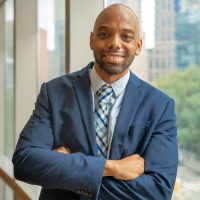
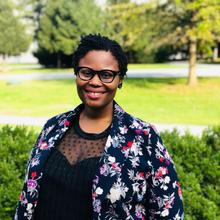
Jared M. Trujillo is an Associate Professor of Law at the CUNY School of Law. He teaches Constitutional Law, legal writing, and courses focused on the criminal and juvenile legal systems. Previously, he served as Senior Policy Counsel at the New York Civil Liberties Union, President of the Association of Legal Aid Attorneys, and as a criminal defense attorney at the Legal Aid Society NYC. He also taught as an adjunct professor at Hofstra University School of Law from 2016 through 2021. CUNY School of Law - Associate Professor New York Civil Liberties Union - Senior Policy Counsel Legal Aid Society NYC - Juvenile Defense Attorney Hofstra University School of Law - Adjunct Professor His research and advocacy focus on sentencing reform , bail policy , solitary confinement , policing of LGBTQ+ communities , Communications Decency Act Section 230 , foster care , and decriminalization of sex work . His publications analyze legislative impacts, systemic inequalities, and policy advocacy within criminal and juvenile legal systems. Jared's recent law review article on sentencing reform (2023) explores multigenerational poverty reduction through legal system changes. His 2022-2023 essays address solitary confinement ethics, policing reform, and bail system critiques, reflecting ongoing engagement with media and policy debates.
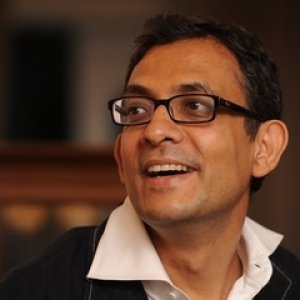
Abhijit Banerjee is the Ford Foundation International Professor of Economics at MIT and Director of the Abdul Latif Jameel Poverty Action Lab (J-PAL). A 2019 Nobel laureate in Economic Sciences, his research focuses on development economics, political economy, and poverty alleviation. He co-authored influential books like Poor Economics and Good Economics for Hard Times , emphasizing evidence-based policies and randomized controlled trials. Banerjee’s work addresses global challenges such as education, health, and social welfare, with notable contributions to microfinance, public health interventions, and anti-poverty programs. He holds leadership roles in global initiatives like the Global Education Evidence Advisory Panel and has advised governments worldwide. His research spans topics from police resource allocation in India to the impact of information during crises like demonetization and the pandemic. Education: Bachelor’s in Statistics, Presidency College, Kolkata M.A. in Economics, Jawaharlal Nehru University PhD in Economics, Harvard University Key Contributions: Co-founder of J-PAL, promoting evidence-based poverty reduction strategies. Pioneer in using randomized controlled trials (RCTs) for policy evaluation. Research on microfinance, education reforms, and health interventions in developing countries. Awards: Nobel Prize in Economics (2019), Infosys Prize in Social Sciences (2009), Member of the National Academy of Sciences (2020). Grants/Advisory Roles: Collaborations with institutions like the World Bank, UN, and governments on poverty, health, and education policies. Labs/Teams: J-PAL global network, Abdul Latif Jameel Poverty Action Lab.
Adam Soliman is an Assistant Professor in the John E. Walker Department of Economics at Clemson University's College of Business. His research focuses on the intersection of economics, crime, and public policy, with particular expertise in drug policy, policing behavior, and enforcement strategies. Dr. Soliman's research interests center on understanding the economic incentives behind criminal behavior and law enforcement responses. His work examines how changes in punishment severity affect police behavior, with a particular focus on drug policy reforms. He investigates whether police treat enforcement effort and punishment severity as complements or substitutes, challenging conventional 'War on Drugs' approaches. His research combines economic theory with empirical analysis of geocoded crime data to provide evidence-based insights into criminal justice policy. His publication record demonstrates significant contributions to understanding drug markets, opioid epidemics, and policing strategies. His work shows that weakening drug sale penalties leads to decreased drug arrests without displacement to non-drug offenses, suggesting police treat enforcement and punishment as complements. His research indicates that certain enforcement reductions may not incur large public safety costs, challenging traditional deterrence models. As an active researcher in criminology and public policy, Dr. Soliman collaborates with scholars from various institutions including University of Colorado, University of Pittsburgh, and Duke University. His work appears in working paper series such as the Economic Research Initiatives at Duke (ERID) and has been cited in related fields including public economics, criminology, and urban studies.
Dr Haitao Shi is a Researcher affiliated with the School of Social and Political Science at the University of Edinburgh. His research focuses on criminal justice systems, drug policing in China, and the intersection of technology with crime. He employs advanced research methods including quantitative tools (R, Python, SPSS), qualitative software (Nvivo, MAXQDA), and data visualization techniques (Gephi, QGIS). His current projects include studying Chinese students' experiences at the University of Edinburgh and analyzing rhizomatic networks in online drug trade funded by the Polish Ministry of Science. Haitao's work emphasizes cross-cultural comparisons, particularly in drug trade dynamics across Finnish, Polish, and English-speaking contexts. He explores topics like police professionalization in China, guanxi networks, and quota-driven policing strategies. His methodologies span cloud computing (Azure, AWS), database systems (MySQL), and version control (Git), reflecting a technologically adept approach to criminology research. Notable research themes include the role of marketing in darknet drug trade, generational conflicts in police culture, and community-based drug rehabilitation policies. He collaborates with international teams and utilizes platforms like Microsoft Azure for large-scale data analysis.
Stephen Billings is an Associate Professor of Finance at the Leeds School of Business, University of Colorado Boulder, where he holds the Global Real Estate Capital Markets Chair position. He serves as the faculty director of the MS in Real Estate program and research director for the CU Real Estate Center. His work spans multiple research centers including the Center for Research on Consumer Financial Decision Making and the Michael A. Klump Center for Real Estate. Billings received his PhD in Economics from the University of Colorado, a MS in urban planning from the University of North Carolina, and a BS in economics from Georgetown University. Prior to joining CU Boulder in 2016, he was faculty at the University of North Carolina Charlotte with appointments in both economics and public policy, where he also served as faculty director for the real estate center. His research focuses on the intersection of housing, schools, neighborhoods and crime, addressing critical policy issues including the impact of public investment in light-rail transit on neighborhoods, school segregation's influence on academic achievement and crime, neighborhood gentrification causes, lead-based paint in low-income housing, and the effects of sea level rise and natural disasters on neighborhood sorting and household finances. Billings employs sophisticated analysis of large micro-datasets with studies based on data and policies in Charlotte, NC and Denver, CO. His work connects urban economics with public policy, demonstrating how neighborhood environments shape individual outcomes across multiple dimensions. Billings' recent publication record demonstrates a consistent focus on neighborhood effects, school choice impacts, crime economics, and housing market dynamics. His work frequently examines the intersection of race, housing, and economic outcomes, with particular attention to policy implications. He has developed innovative methodological approaches to studying residential amenities and neighborhood spillovers, with increasing attention to climate change impacts on housing markets. His research appears in top journals including The Quarterly Journal of Economics, American Economic Review: Insights, and Journal of Urban Economics. As an educator, Billings teaches undergraduate and masters classes in real estate finance and economics, as well as doctoral and masters level courses on cost-benefit analysis and statistical methods. He has extensive consulting experience conducting economic impact studies, including assessments of North Carolina's public higher education system, affordable housing needs in Colorado communities, and the economic effects of marijuana legalization on property markets. His practical policy work complements his academic research, creating a bridge between theoretical insights and real-world applications. Billings leads significant research initiatives through the CU Real Estate Center, where he directs studies examining the impact of business improvement districts and other urban development policies. His work bridges academic research with practical policy applications, making substantial contributions to our understanding of how housing, education, and neighborhood environments shape individual outcomes and community development. His December 2023 memo on the HUD Officer Next Door Program exemplifies his engagement with current housing policy issues.
Danielle T. Cooper is an Associate Professor at the University of New Haven , affiliated with the Henry C. Lee College of Criminal Justice and Forensic Sciences and the Criminal Justice Department . She also serves as the Director of Research for the Tow Youth Justice Institute and Chair of the Criminal Justice Undergraduate Committee . Education Ph.D. in Criminology, Law, & Society, University of Florida, 2015 M.A. in Criminology, Law, & Society, University of Florida, 2011 B.S. in Justice Systems, Truman State University, 2009 Dr. Cooper’s research focuses on youths and young adults , juvenile justice policy reform , sex offender registration policies , and police-community dynamics . Her work emphasizes restorative justice , systemic equity , and prevention strategies for marginalized communities. Recent publications explore diversion programs , economic impacts of sex offender registries , and media narratives in criminal justice . Her awards highlight contributions to diversity, equity, and inclusion , as well as leadership development . Scientific Awards 2019 Faculty of the Year Award 2021 MO-KAN-NE TRIO Achiever Alumni Award 2021 Faculty Excellence in DEI 2022 Martin Luther King, Jr. Vision Faculty Award 2024 RAND Pardee Fellowship She has secured grants for diversionary services and youth-police relations , and her media commentary addresses youth violence , census participation , and social justice .
Dr. Auzeen Shariati is an Associate Professor and Director of Undergraduate Programs in the Department of Criminology, Law and Society at George Mason University. She holds a Ph.D. in Public Affairs and Criminal Justice from Florida International University (2017), an M.A. in Criminal Law and Criminology from Allameh Tabataba’I University (2010), and a B.A. in Judicial Law from the University of Tehran (2006). Prior to academia, she practiced as a defense attorney at the Iranian Bar Association. Her research focuses on environmental criminology, crime prevention, victimization, policing strategies, and comparative criminal justice systems. Key areas include pandemic impacts on domestic violence, school safety through Crime Prevention Through Environmental Design (CPTED), and policy evaluation in criminal justice. She has published extensively in journals like American Journal of Criminal Justice , Journal of Family Violence , and Security Journal . Recent work examines how the Covid-19 pandemic and social upheavals like the murder of George Floyd influenced domestic violence reporting and victim experiences. Her studies combine quantitative and qualitative methods, emphasizing real-world policy implications. Dr. Shariati teaches courses such as Introduction to Criminology , Law and Justice Around the World , and Evaluation of Crime and Justice Policies . She actively presents at conferences like the American Society of Criminology and has contributed to public discourse on campus safety and criminal justice reform through media engagements.
Mahzarin R. Banaji is the Richard Clarke Cabot Professor of Social Ethics at Harvard University and a Harvard College Professor. She is affiliated with the Department of Psychology and is a key figure in the Mind, Brain, and Behavior (MBB) Interfaculty Initiative. Her research is centered at the intersection of social cognition, implicit bias, and ethical behavior. Institution: Harvard University School: Harvard College Department: Psychology Email: banaji@fas.harvard.edu Dr. Banaji earned her Ph.D. from Ohio State University and has been a leading scholar in the study of unconscious bias. Her work explores how implicit attitudes shape perception, judgment, and behavior outside conscious awareness. She co-developed the Implicit Association Test (IAT) , a groundbreaking tool for measuring unconscious biases related to race, gender, age, and other social categories. Her research spans social cognition, prejudice, stereotyping, moral psychology, and the neuroscience of social behavior . More recently, she has extended her work into the domain of artificial intelligence, investigating how human-like biases emerge in large language models. The 15 most recent publications reflect a strong trend toward computational social science , combining psychological theory with natural language processing and AI. Her team analyzes bias in digital corpora, studies the transmission of stereotypes in AI systems, and develops tools to measure intersectional and implicit attitudes at scale. These works bridge psychology, ethics, and technology, highlighting the societal implications of implicit cognition. Among her notable scientific honors are: Fellow of the American Academy of Arts and Sciences William James Fellow Guggenheim Fellowship Kurt Lewin Award (SPSSI) Harvard College Professorship Dr. Banaji has advised numerous graduate students, including Tessa Charlesworth and Kerry Morehouse, many of whom are now active researchers in social and cognitive psychology. She has secured major grants through the Mind, Brain, and Behavior Initiative and has led interdisciplinary teams exploring bias in education, law, and technology. She is also the co-creator of OutsmartingHumanMinds.org , a public education platform on implicit bias. Her lab serves as a hub for collaborative research on implicit social cognition, bringing together psychologists, neuroscientists, and computer scientists to understand and mitigate unconscious bias in human and artificial systems.
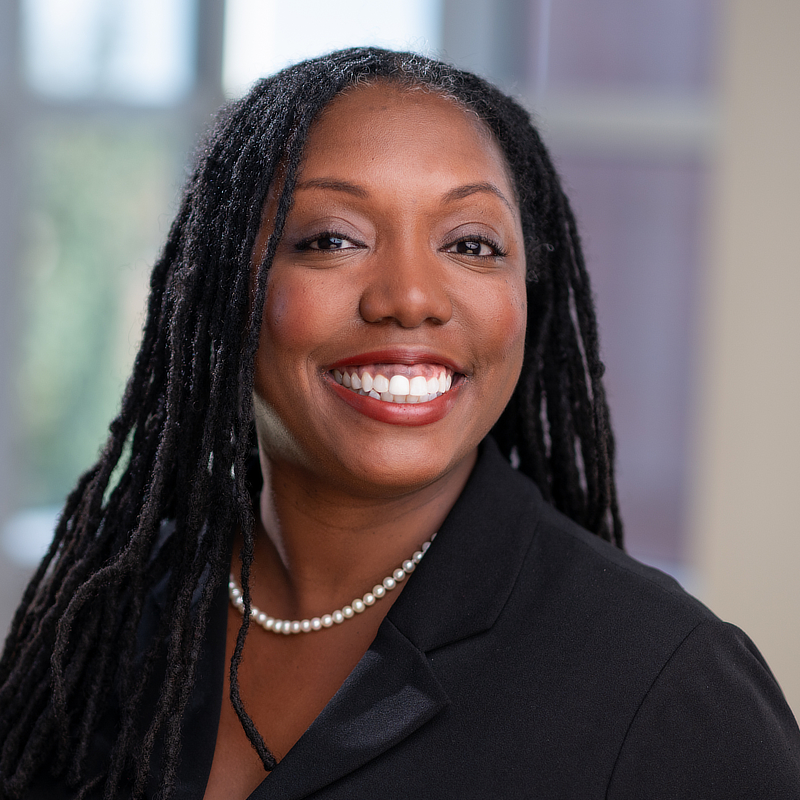
Monica Bell is a tenured Professor of Law and Associate Professor of Sociology at Yale University, holding joint appointments across Yale Law School and the Department of Sociology. Her office is located at 127 Wall Street, New Haven, CT. As the first Black woman to serve as a junior faculty member and the second Black woman to receive tenure at Yale Law School, she is deeply committed to advancing diversity in academia. Education: B.A. in Political Science and Sociology, Furman University (Truman Scholar) M.Sc. in Equality Studies, University College Dublin (Mitchell Scholar) J.D., Yale Law School Ph.D. in Sociology and Social Policy, Harvard University Bell's research examines structural inequality through interdisciplinary lenses, focusing on policing, legal estrangement, housing segregation, welfare policy, and racial-spatial dynamics. She employs qualitative methodologies to analyze how marginalized communities experience legal institutions, with emphasis on urban poverty and systemic exclusion. Her conceptual framework of 'legal estrangement' redefines understandings of community-law enforcement relationships. Her publications consistently engage with themes of racial justice, institutional reform, and community agency. Recent work demonstrates a strong focus on reimagining policing systems, analyzing residential segregation patterns, and developing democratic approaches to poverty governance. Articles frequently intersect law, sociology, and urban studies while incorporating critical race theory. Awards and Honors: Jane Addams Article Award (American Sociological Association) Derrick A. Bell, Jr. Award (AALS) Yale Law Women Faculty Excellence Award Russell Sage Foundation Visiting Scholar Fellowship Truman Scholarship & Mitchell Scholarship Bell teaches Constitutional Law and Law & Sociology, exploring governmental power structures and sociological applications to legal analysis. She previously clerked for Judge Cameron McGowan Currie (U.S. District Court) and served as an Arthur Liman Fellow at Legal Aid Society of D.C., focusing on TANF policy. No current grants, labs, or student advisees are detailed in available materials.
Joshua B. Guild is an Associate Professor in the Department of African American Studies at Princeton University. He is also an Associated Faculty member in the Program in Urban Studies and has been involved with the Center for Digital Humanities. His scholarly work bridges historical research with public engagement and digital innovation. His education includes a PhD in History and African American Studies from Yale University and an undergraduate degree from Wesleyan University, where he was a Mellon Mays Undergraduate Fellow. Professor Guild's research centers on 20th- and 21st-century African American social and cultural history, urban history, and the modern African diaspora. His interests include migration, black internationalism, black popular music, and the black radical tradition. He is deeply engaged in the digital humanities and public scholarship, organizing seminars and contributing to podcasts and public exhibitions. The recent publications and projects reflect a strong focus on urban Black communities, transnational migration, and cultural politics. Themes include the Great Migration, postwar New York and London, New Orleans after Katrina, and the Black 1980s. His work combines historical analysis with cultural critique and social justice advocacy. Scientific Awards and Fellowships: Mellon Mays Undergraduate Fellowship Andrew W. Mellon Foundation Fellowship Ford Foundation Fellowship Woodrow Wilson National Fellowship Foundation Award Charles Warren Center Fellowship (Harvard University) W.E.B. Du Bois Institute Fellow (Harvard University) Professor Guild has advised graduate students through seminars and collaborative projects, though no individual students are named. He has led initiatives supported by institutional grants, particularly in digital humanities and public engagement. His leadership in the 'Black Studies in the Digital Age' seminar and editorial work on the 'Black 1980s' special issue demonstrates his commitment to advancing the field through interdisciplinary collaboration. He is affiliated with the Program in Urban Studies and the Center for Digital Humanities at Princeton, where he contributes to shaping curricula and research directions in African American Studies and digital scholarship.
Dr. Steven Kemp is a Senior Lecturer in the Department of Public Law at the University of Girona, Spain. His research focuses on the intersection of criminal law, cybercrime, and criminological analysis, with affiliations to institutions like UNICRI, Open University of Catalonia, and the Institute of Public Security of Catalonia. His work spans digital security, fraud victimization, and sentencing disparities. Current roles: Serra Hunter Fellow, University of Girona (2023–present); Collaborating Teacher, UNICRI (2024–present) Previous roles: Associate Professor, University of Girona (2015–2021); Postdoctoral Researcher, Pompeu Fabra University (2021–2023) and University of Manchester (2021) His research interests include: Cybercrime dynamics during global crises (e.g., pandemic-related fraud trends) Victimization patterns in digital societies, particularly among older adults Legal implications of smart technologies and cybersecurity frameworks Comparative criminal justice systems, especially plea bargaining and sentencing disparities Key trends in his recent publications (2025–2019) highlight: Rising cyberfraud incidents and their societal impacts Interdisciplinary approaches to digital security and legal systems Statistical modeling of crime trends post-COVID-19 Behavioral responses to cybercrime risks Scientific recognition includes: Serra Hunter Fellow He actively collaborates with research groups like the Research Group in the Seminar of Criminal and Criminological Sciences and contributes to public policy initiatives in cybersecurity and fraud prevention.
Don John Omale serves as a Senior Lecturer in Criminology within the College of Business, Law and Social Sciences, focusing on critical issues in Nigerian and African criminal justice systems. His work bridges theoretical frameworks with practical field applications across diverse security and justice contexts. Dr. Omale's research centers on restorative justice mechanisms, police ethics, and conflict resolution in Africa. He extensively examines traditional African dispute resolution models alongside modern criminal justice challenges, with particular emphasis on Nigeria. His studies address farmer-herder conflicts, prison conditions, terrorism countermeasures, and domestic violence in semi-urban settings, consistently advocating for culturally grounded solutions that enhance community trust and institutional accountability. Analysis of his 15 most recent publications (2010-2025) reveals a dominant focus on restorative justice implementation and police accountability in Nigeria. His work demonstrates a methodological shift from theoretical discourse (2005-2011) toward empirical field studies examining practitioner perspectives and community-level impacts, particularly in conflict-affected regions like the Niger Delta and North Central Nigeria. The research consistently connects indigenous African conflict resolution traditions with contemporary security challenges. No scientific awards were documented in available sources Professional activities show no recorded student advising or grant funding in the provided materials, though his extensive publication record suggests active research supervision. His work frequently engages criminal justice professionals and community stakeholders, indicating collaborative field-based approaches to justice reform.
Jennifer D. Oliva is a Professor of Law at Indiana University Maurer School of Law where she holds the Val Nolan Faculty Fellow position. She maintains significant interdisciplinary affiliations as a Research Scholar at Georgetown University Law Center's O'Neill Institute for National & Global Health Law and as a Senior Scholar with the UCSF/UC Law Consortium on Law, Science & Health Policy. Her academic work bridges legal scholarship with practical health policy development, focusing on the intersection of constitutional protections, public health needs, and modern surveillance technologies. Professor Oliva's research interests center on health law, privacy law, and drug policy with particular expertise in prescription drug monitoring programs (PDMPs), health information privacy, and the legal dimensions of the opioid crisis. Her scholarship critically examines how law enforcement surveillance of prescription data impacts patient privacy rights, particularly for vulnerable populations including those with substance use disorders. She has developed significant expertise in how constitutional privacy protections apply to health data in the digital age, especially following the Supreme Court's decision in Carpenter v. United States. Her recent publications reveal a growing focus on algorithmic regulation in healthcare, examining how risk scoring systems and coverage algorithms can perpetuate health disparities. She has published extensively on the intersection of reproductive rights and health data privacy in the post-Dobbs landscape, analyzing how prescription monitoring systems could be weaponized against individuals seeking reproductive healthcare. Her work consistently connects doctrinal legal analysis with public health realities, advocating for evidence-based policy approaches that prioritize patient privacy and health equity over punitive enforcement. Dosing Discrimination: Regulating PDMP Risk Scores (2022) The "New" Drug War (2024) Prescription Drug Policing: The Right to Health Information Privacy Pre- and Post-Carpenter (2020) Opioid Multidistrict Litigation Secrecy (2019) Surveillance, Privacy, and App Tracking (2020) Professor Oliva actively engages with policymakers and has contributed to amicus briefs in significant cases including Ruan v. United States. Her scholarship has been cited in legal proceedings and she regularly presents at major academic conferences including the Association of American Law Schools Annual Meeting. She has collaborated with scholars across disciplines including public health researchers, medical ethicists, and data scientists to address complex challenges at the intersection of law, technology, and healthcare.
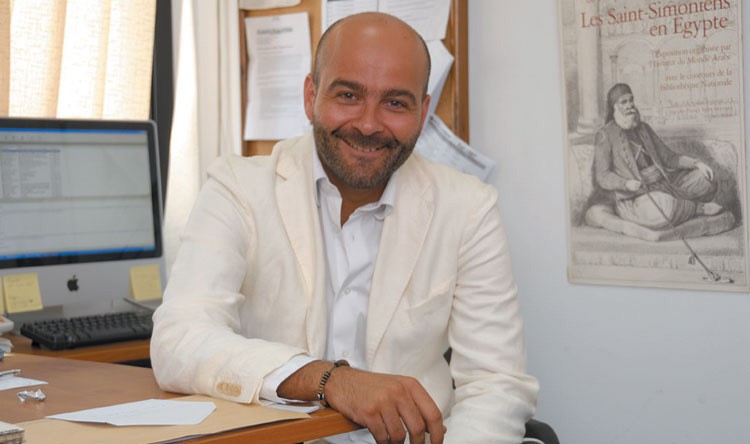
Amr Shalakany serves as Associate Professor of Law at The American University in Cairo (AUC), where he founded and directs the Law and Society Research Unit. Previously, he established AUC's International and Comparative Law (LLM) degree program and held a joint appointment at Cairo University's Faculty of Law. His distinguished visiting professorships include positions at the London School of Economics, Brown University, and Harvard Law School. Education: Licence en droit, Cairo University LLM, Cairo University Doctor of Juridical Science (SJD), Harvard Law School Research Focus: Shalakany's scholarly work centers on Comparative Law and Islamic Law, with deep engagement in Legal History and Socio-Legal Studies. His research examines law's role in Egyptian society, Islamic law reform, and the intersection of legal frameworks with media and artistic expression. He investigates how revolutionary periods reshape legal-media-art dynamics and analyzes contract/tort systems within Middle Eastern contexts. Honors: Associate Member, International Academy for Comparative Law Academic Board Member, Harvard Institute of Global Law and Policy International Board Member, Journal of Comparative Legal History Professional Impact: Former securities lawyer at Baker & McKenzie (London), Shalakany now consults on Egyptian law reform initiatives in Police Sector modernization, Consumer Protection frameworks, and Media/Art Governance systems. He founded AUC's Law and Society Research Collective, driving collaborative scholarship on Middle Eastern legal evolution.
Kevin O'Brien is the Jack M. Forcey Professor of Political Science at the University of California, Berkeley. He specializes in Chinese politics, particularly focusing on contentious politics, protest dynamics, and state-society relations in rural China. His research examines mechanisms of protest control, authoritarian governance, and institutional reforms. O'Brien holds a B.A. from Grinnell College (1979) and a Ph.D. from Yale University (1987). Education: B.A., Grinnell College; Ph.D., Yale University Affiliations: Institute of East Asian Studies, UC Berkeley Research interests include rightful resistance, relational repression, and adaptation strategies under autocratic regimes. He has authored/co-authored influential books such as Rightful Resistance in Rural China and edited volumes on popular protest and grassroots elections in China. Books: Reform Without Liberalization , Popular Protest in China , Grassroots Elections in China Awards include the Sage Award for Best Paper in Comparative Politics (2004). His work integrates fieldwork insights with theoretical frameworks, addressing topics like land expropriation, migrant worker rights, and NGO operational challenges in China's evolving political landscape.