Juan Wang is an Associate Professor at McGill University, specializing in the study of the Chinese state, its institutional dynamics, and interactions between state and non-state actors. His research focuses on China's political economy of development, legal systems, and authoritarian governance. He holds a PhD from Johns Hopkins University and teaches courses on Chinese politics, contentious politics, and judicial systems. Research interests emphasize the construction of bureaucracy, local governance patterns, and epistemology of state power. Methodologically, he uses qualitative and historical approaches to explore topics like judicial corruption, police evolution, and cadre discipline. Recent work examines authoritarian cue effects and comparative citizen categorization systems in China and North Korea. His publications span journals such as American Journal of Political Science and China Law and Society Review , analyzing themes like state repression mechanisms, legal mediation practices, and subnational court empowerment. He has contributed a seminal book The Sinews of State Power (2017) on rural governance dynamics. Advising and grants information is not explicitly detailed in the provided text.
Dr. Nikolas Roberts serves as an Assistant Professor in the Department of Criminal Justice at Pennsylvania Western University, tenured since 2022. He holds appointments in the College of Education, Arts, and Humanities. His roles include teaching courses on correctional systems, criminological theory, research methods, and international conflict resolution. He previously worked with the Pennsylvania Department of Corrections, focusing on inmate education and solitary confinement reform. Dr. Roberts is AccessData-certified in digital forensics and authored the 2024 anthology The Law Behind the Wall . Education: B.A., B.S., and M.S. from Pennsylvania Western University M.A. from Indiana University of Pennsylvania Ph.D. from Saybrook University Research Interests: Dr. Roberts specializes in corrections policy, criminological theory, and conflict resolution. He emphasizes practical applications of research, such as re-entry training and policing strategies. His upcoming work Research Methods for Qualitative Justice Studies (co-edited) underscores his commitment to methodological rigor. Service & Leadership: Elected Co-Chair of the University-wide Tenure Committee (2024–) Title IX Student Advisor and Hearing Board Member (2023–2024) Member of numerous committees, including curriculum development, faculty professional development, and policy review Community Engagement: Dr. Roberts serves as an official prison monitor with the Pennsylvania Prison Society and contributed to the Donora Smog Museum’s historical preservation efforts. His consultancy work with legal institutions includes mediation for federal litigation cases.
Matthew Lassiter is the Louis Evans Professor of History and Arthur F. Thurnau Professor at the University of Michigan. Affiliated with Urban Planning and American Culture, he specializes in twentieth-century U.S. political history, urban/suburban studies, racial inequality, and policing/carcereral state history. His recent works include The Suburban Crisis (2023) and Detroit Under Fire (2021). He co-directs the Carceral State Project and leads the Policing and Social Justice HistoryLab, engaging student researchers in public history initiatives. Lassiter holds a Ph.D. from the University of Virginia (1999) and edits the “Politics and Culture in Modern America” series for University of Pennsylvania Press. Education: Ph.D., University of Virginia, 1999 Research Focus: Explores suburban political dynamics, drug policy, racial justice, and carceral systems through interdisciplinary projects. Recent publications analyze postwar urban development, police violence, and the War on Drugs’s sociopolitical impacts. Awards & Grants: Not explicitly listed, but his endowed chairs and project leadership indicate significant recognition. Collaborative initiatives like the HistoryLab highlight his commitment to public engagement and student mentorship. Labs/Teams: Leads the Policing and Social Justice HistoryLab, fostering collaborations between academic research and public-facing projects on social justice issues.
Rana Jaleel is an Associate Professor in the Department of Gender, Sexuality, and Women's Studies at the University of California, Davis, within the College of Arts & Sciences. She holds multiple leadership roles, including Chair of the Cultural Studies Graduate Group, Chair of the Designated Emphasis in Feminist Theory and Research, Faculty Advisor for the Sexuality Studies Minor, and Co-Director of HATCH: The Feminist Arts & Sciences Initiative. She is also a 2021–2024 College of Arts & Sciences Dean's Faculty Fellow. Education: Ph.D. in American Studies, New York University J.D., Yale Law School MFA in Poetry, University of Michigan, Ann Arbor Rana Jaleel’s research centers on the politics of evidence, examining how harm is recognized or erased in legal, cultural, and political contexts. Her work critically engages with reproductive labor, race, gender, sexuality, property, and international law. She draws from feminist theory, critical ethnic studies, legal studies, and decolonial thought to interrogate the intersections of power, knowledge, and violence. Her interdisciplinary approach is reflected in her contributions across law, cultural studies, and creative writing. Her publications and editorial projects reveal a strong focus on racial capitalism, settler colonialism, queer/trans of color critique, and feminist legal theory. She explores how international legal frameworks for sexual violence are shaped by imperial and racial power. Her work frequently appears in journals such as Critical Ethnic Studies Journal , Cultural Studies , and Brooklyn Law Review . She has co-edited special issues on democracy, gendered citizenship, and racial capitalism, demonstrating a commitment to collective scholarly work. Scientific Awards: Author of Color First Book Award from Duke University Press for The Work of Rape Rana Jaleel is actively involved in academic service and mentorship. As Co-Director of HATCH and leader of the Write the Future! Lab, she fosters creative and critical scholarship among undergraduate students, particularly from women/queer/trans of color and transnational feminist perspectives. She serves on the Editorial Collective and Board of The Critical Ethnic Studies Journal and is a member of the American Association of University Professors’ Committee A on Academic Freedom and Tenure. Her leadership extends to admissions and curriculum development in interdisciplinary programs. She is co-editing a forthcoming issue of South Atlantic Quarterly on 'Queer/Trans of Color Transits and the Global Imaginaries of Racial Capitalism' and continues to develop projects that bridge creative practice, legal critique, and feminist theory.
Dr. Martha Sidury Christiansen is a Professor of Applied Linguistics/TESOL at the University of Texas at San Antonio , where she serves in the College of Education and Human Development . She is the Principal Investigator of Project RESPETO , a NSF-funded initiative exploring racial equity in engineering education. Her work spans sociolinguistics, digital literacies, and raciolinguistic analysis, with a focus on transnational multilingual communities. Born in Veracruz, Mexico Ph.D. in Foreign/Second Language Education (Ohio State University, 2013) M.A. in English Composition (Indiana University, 2007) B.A. in English Language Teaching (Universidad Veracruzana, 2002) Her research examines how transnational youth navigate digital spaces through multiliteracies , challenges Western academic writing norms via Mexican decolonial methodologies , and investigates raciolinguistic intersections in identity formation. The 15 most recent publications reveal a strong focus on digital communication , transnationalism , and critical pedagogy across journals like TESOL Quarterly and Language@Internet . 2023-2025: Expanding raciolinguistic frameworks in digital contexts 2021-2022: Analyzing multimodal identity construction 2019-2020: Exploring Mexican bilinguals' online language use She has received multiple honors including ACUE Fellow (2023), Fulbright Scholar (2017), and Faculty Leadership Fellow (2021-2022). Her presentations at conferences like ICOLLITE and DDVM Lab highlight her expertise in critical sociolinguistic awareness and digital discourse analysis . Dr. Christiansen actively consults for nonprofits on linguistic equity and multilingual education .
LaRonda M. Lockhart-Keene is an Assistant Professor of Occupational Therapy at Widener University. She holds dual roles in clinical practice and academia, specializing in dementia care and occupational justice. With over 20 years of clinical experience across diverse settings including NICU, geriatric care, and HIV/addiction services, she actively mentors students in community-based practice. Bachelor of Science in Occupational Therapy (1997), Temple University Postprofessional Doctorate in Occupational Therapy (OTD, 2017), Philadelphia University (now Thomas Jefferson University) Her research focuses on teaching pedagogy, clinical reasoning, and bridging police-community relations through healthcare. She previously served as Program Director at Thomas Jefferson University’s OTA program and held adjunct roles at Penn State Berks and Philadelphia University. Professional leadership includes chairing POTA’s Commission on Justice, Equity, Diversity, and Inclusion. Her work emphasizes occupational justice and trauma-informed approaches, with publications exploring adjunct faculty readiness and student clinical reasoning development.
Dr. Matthew Jones is a Senior Lecturer in Criminology at Swinburne University of Technology’s School of Social Sciences, Media, Film and Education. With a career spanning institutions in the UK and Australia, Matthew’s research bridges interdisciplinary domains including policing, sociology, law, and organizational studies. He is a Senior Fellow of the Higher Education Academy, emphasizing evidence-informed pedagogy and curriculum innovation. Affiliation: Swinburne University of Technology (2022–Present) Previous Roles: The Open University (2017–2022), Northumbria University (2014–2017), Cardiff Metropolitan University (2013–2014). Research Themes: Matthew’s work focuses on three core areas: Policing: Police visibility, digital strategies, occupational culture, diversity, and leadership. LGBTQI+ Criminology: Workplace discrimination, hate crimes, community-police relations, and victimology. Digital Criminology: Technology’s role in policing, crime prevention, and digital victim support systems. Publications: His 15 most recent articles highlight evolving trends in digital policing, police visibility, academic standards in policing education, and LGBTQI+ workplace experiences. These works span qualitative studies, policy analysis, and interdisciplinary collaborations, reflecting his commitment to visual criminology and semiotics. Scientific Awards: Senior Fellow of the Higher Education Academy (2022) Fellow of the Higher Education Academy (2013) Professional Activities: Matthew served as Chair (2019–2022) and Board Member (2013–2019) of the British Society of Criminology’s Policing Network. He led curriculum development for police apprenticeships (2017–2019) and contributed to the first UK Subject Benchmark Statement for Policing (2022). He supervises PhD students on topics like community policing, child maltreatment resilience, and crime drama narratives. Education: He holds an LLB in Law, an MSc in Social Science Research Methods, a PhD in Socio-Legal Studies, a PGCert in Higher Education pedagogy, and an MBA in Leadership Practice.
Scott Wolfe is a Professor, Associate Director, and Director of the PhD Program at the School of Criminal Justice, Michigan State University. He also serves as Director of the Michigan Justice Statistics Center and has secured funding from the National Science Foundation, National Institute of Justice, and Bureau of Justice Statistics. PhD in Criminology and Criminal Justice, Arizona State University (2012) MA in Criminal Justice, University of Louisville (2008) BA in Criminal Justice, Ohio Northern University (2006) Scott's research focuses on policing, organizational justice, and criminological theory. He evaluates police training programs for mental health crisis response, disabilities, and driver training, while also studying police supervisor-employee relations, use of force predictors, procedural justice, and the Ferguson Effect. His recent publications address racial disparities in traffic stops, police training effectiveness, de-policing impacts on crime, and procedural justice mechanisms. These works span criminology, public policy, and data analytics, with awards from the American Society of Criminology and Justice Information Resource Network. American Society of Criminology Division of Policing Outstanding Student Article Award (2024) Justice Information Resource Network’s Douglas Yearwood Publication Award (2025, Small SAC division) Scott leads funded projects such as the evaluation of police training programs in Southeast Michigan ($125,000) and the Michigan State Justice Statistics Program ($224,997). His team partners with agencies like the Michigan State Police to analyze disparities and develop training solutions.
Dr. Kandi J. Wiens is a Senior Fellow and Co-Director of the Penn Master’s in Medical Education Program and the Penn Health Professions Education Certificate Program at the University of Pennsylvania’s Graduate School of Education. She also serves as Academic Director of the PennCLO Executive Doctoral Program. Her expertise spans burnout prevention, emotional intelligence, and organizational development, with a focus on helping leaders and professionals build resilience through EI-based strategies. Wiens holds an EdD from the University of Pennsylvania, an MBA from the University of Oregon, and a B.S. in Business Administration from Montana State University. Her research includes longitudinal studies on burnout among police leaders and healthcare professionals, as well as interventions to mitigate stress through emotional intelligence training. Wiens is a nationally recognized speaker and author of the USA Today bestseller Burnout Immunity , which explores how EI skills can protect individuals from burnout. She has designed over 2,000 leadership development programs and contributed to prominent publications like the Harvard Business Review. Education: EdD (University of Pennsylvania), MBA (University of Oregon), B.S. (Montana State University) Awards: Thinkers50 Radar 2024, Triple Distinctions from UPenn Key Projects: Leadership coaching for Police Executive Leadership Institute (since 2017), LA Police Department burnout study Wiens’ work bridges academic research and practical application, aiming to transform organizational cultures and individual resilience through evidence-based strategies.
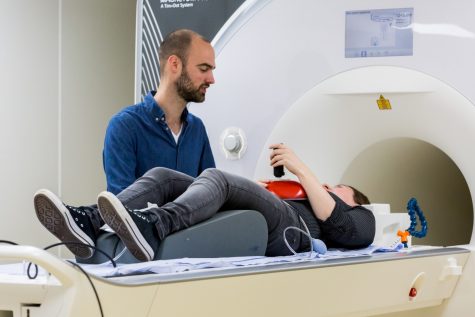
Karin Roelofs is Professor of Experimental Psychopathology at the Behavioural Science Institute (BSI) and Principal Investigator at the Donders Centre for Cognitive Neuroimaging and Donders Institute for Brain, Cognition and Behaviour at Radboud University Nijmegen. She chairs the PI-group "Affective Neuroscience" and holds the chair in Experimental Psychopathology. Her research focuses on psychological and neuroendocrine mechanisms underlying social-motivational behavior in both healthy individuals and patients with stress-related and social-motivational disorders such as social anxiety and aggression. She employs various brain imaging techniques (fMRI, MEG) combined with neural stimulation (TUS, tACS) or pharmacological interventions during emotion control and decision making tasks. Her work investigates how stress influences the neural development of emotion control through longitudinal studies including the Nijmegen Longitudinal Study (NLS), BIBO, and the Police In-Action (PIA) cohort. Her key research questions address how people regulate emotional actions, whether emotion control can be improved by influencing brain activity or through real-time biofeedback, and whether psychopathology can be predicted based on acute stress reactions and recovery patterns. Her publications span high-impact journals including Nature Communications, Nature Human Behaviour, and Nature Reviews Neuroscience, demonstrating her leadership in understanding the neural basis of emotion regulation and stress responses. ERC Advanced Grant (2025) ERC Consolidator Grant (2017) ERC Starting Grant (2012) NWO VICI, VIDI, and VENI grants Elected Member of Royal Netherlands Academy of Arts and Sciences Elected Member of Academia Europaea Professor Roelofs has secured numerous significant grants including the HEART2ADAPT project (2019-2025, ERC-AdG), PIA: Police In-action longitudinal study (2015-2021), and DYNAMORE: Dynamic modelling of resilience (2017-2025). She serves on multiple boards including ALLEA (All European Academies), the Selection committee for the ERC Advanced Grant, and as Board Member of INTRESA (International Resilience Research Alliance). She is also a registered GZ psychologist (BIG) and cognitive behavioral therapist (VCGT), bridging clinical practice with cutting-edge neuroscience research.
Benjamin Justice is Distinguished Professor of Education at the Rutgers Graduate School of Education and an associate member of the History Department at Rutgers–New Brunswick. He holds a courtesy appointment as Senior Research Scholar at Yale Law School and serves as series editor for New Directions in History of Education at Rutgers University Press. His interdisciplinary work bridges education, history, law, and philosophy. Ph.D. in Education, Stanford University M.A. in History, Stanford University B.A. in History, Yale University Dr. Justice's research focuses on the history of education , civic education , religion in public schools , and the intersection of criminal justice and curriculum theory . He explores how experiences with police, courts, and detention shape civic identity, drawing on legitimacy and curriculum theories. His work spans educational policy, democratic ideals, race, and philosophical inquiry. His recent publications reflect a strong trend in interdisciplinary scholarship, combining historical analysis with contemporary policy critique. Key themes include school choice, settler colonialism in education, democratic civility, and the role of religion in public life. His articles appear in top journals across education, history, and social science, as well as in public forums like The Atlantic and theHumanist.com . Dr. Justice has received numerous honors, including: AESA Critics Choice Book Award AERA Outstanding Scholarly Publication on Justice in Education Award (2025) National Academy of Education/Spencer Post-Doctoral Fellowship Russell Sage Foundation Visiting Scholar (2023–24) CASE Circle of Excellence Gold Award He has held leadership roles as President of the History of Education Society (2021–2022) and member of the NAEP U.S. History Standing Committee (2011–2019). He has received multiple awards for teaching, research, and service at Rutgers. While no formal list of students is available, his collaborative works suggest mentorship and academic advising. He has led research projects supported by major foundations and institutions. Dr. Justice is affiliated with several scholarly organizations, including the History of Education Society, American Educational Research Association, American Educational Studies Association, Legal Studies Association, and Organization of American Historians. His work continues to influence both academic and public discourse on education and democracy.
Fred R. Volkmar, M.D., is the Irving B. Harris Professor of Child Psychiatry, Pediatrics, and Psychology at Yale University, and Director of the Yale Child Study Center. He also serves as Chief of Child Psychiatry at Yale-New Haven Hospital. His academic affiliations include the Yale School of Medicine and leadership roles in multiple clinical and research programs. Dr. Volkmar holds an M.D. from Stanford University (1976) and a psychology master’s degree from the same institution, alongside an undergraduate psychology degree from the University of Illinois (1972). He is renowned for authoring the DSM-IV autism and pervasive developmental disorders section and has authored hundreds of publications and several influential books, including Asperger’s Syndrome and Handbook of Autism . His research focuses on autism spectrum disorders (ASD), including diagnosis, treatment, comorbidities, and transition to adulthood. His publications emphasize evidence-based practices, neurodevelopmental mechanisms, and clinical guidelines. He leads initiatives in medical care for ASD populations and advocates for improved community support systems. Notable contributions include co-developing the M-CHAT screening tool and advancing interdisciplinary approaches to ASD management. His work intersects clinical practice, policy, and education, prioritizing patient-centered care and reducing stigma.
Professor Louise Amoore holds a faculty position at Durham University's Department of Geography, where she serves as Professor of Political Geography and Deputy Head of Department. Her work explores intersections of geopolitics, technology, and security, with a focus on algorithmic governance and data-driven practices. Co-editor of Progress in Human Geography Appointed to UK ethics body on biometric technologies Recipient of RCUK Global Uncertainties leadership fellowship Her research examines how data and algorithms reshape security paradigms, democracy, and societal norms. Recent projects analyze generative AI, cloud computing, and machine learning's political implications. She has secured funding from Leverhulme Trust, ESRC, EPSRC, AHRC, and NWO. Key article trends reveal expertise in algorithmic sovereignty (2024), border governance (2024), predictive security models (2023), data reuse ethics (2022), and post-9/11 surveillance practices (2021). Her work critically interrogates machine learning's epistemological foundations (2019) and data sovereignty implications (2018). RCUK Global Uncertainties leadership fellowship (2012-2015) Leverhulme Trust funding ESRC, EPSRC, AHRC, NWO grants Current PhD supervisees include Anna Okada and Charlotte Lock. She co-developed the Algorithmic Life book (2015) and serves as editor for Progress in Human Geography , maintaining active research collaborations in Europe.
Ashley J Thomas is an Assistant Professor at Harvard University, specializing in infant and child social cognition. Her research explores how young humans develop naive sociology, focusing on social hierarchy, intimacy perception, and moral judgments of parenting decisions. Education: PhD in Psychology (2018), MA in Psychology (2015) from UC Irvine, BA in Architecture (2008) from UC Berkeley. Her work reveals infants use caregiver interactions to evaluate social partners and demonstrates that saliva sharing serves as a key cue for relationship recognition. She examines how implicit theories of intelligence correlate with brain plasticity beliefs, showing that malleable intelligence theories align with environmental influence acceptance. Scientific awards include the NIH National Research Service Award and multiple fellowships. She has organized symposia on social cognition at the Cognitive Development Society and Society for Research on Child Development conferences.
A.J. Bellido de Luna is the Assistant Dean for Advocacy and Conflict Resolution Programs, Hardy Law Professor, and Professor of Practice of Law at St. Mary’s University School of Law. He oversees the Advocacy Program National Team, including Moot Court and Trial Teams, and teaches Trial Advocacy and Arbitration. Previously, he served as Managing Director of the Clinical Law Program at the University of Maryland School of Law and held leadership roles in Baltimore City governance and law enforcement. Education: J.D., University of Maryland School of Law (2004) B.S., Johns Hopkins University (2000, with Honors) His expertise spans legal advocacy, dispute resolution, and clinical legal education. He has directed nationally competitive trial teams and developed innovative curricula in remote advocacy techniques. Key research interests include cross-examination strategies, arbitration frameworks, and the integration of technology in legal practice. Awards: 2014 Staff Member of the Year (University of Maryland School of Law) 2013 Faculty of the Year Community Award (Homeless Person’s Representation Project) 2010 Impact Award (Black Law Students Association) 2004 Order of the Barrister His career combines academic leadership with practical experience in criminal justice, having served as a retired police lieutenant and Marine. He currently advises the Board of Advocates and oversees intergovernmental affairs at St. Mary’s University.