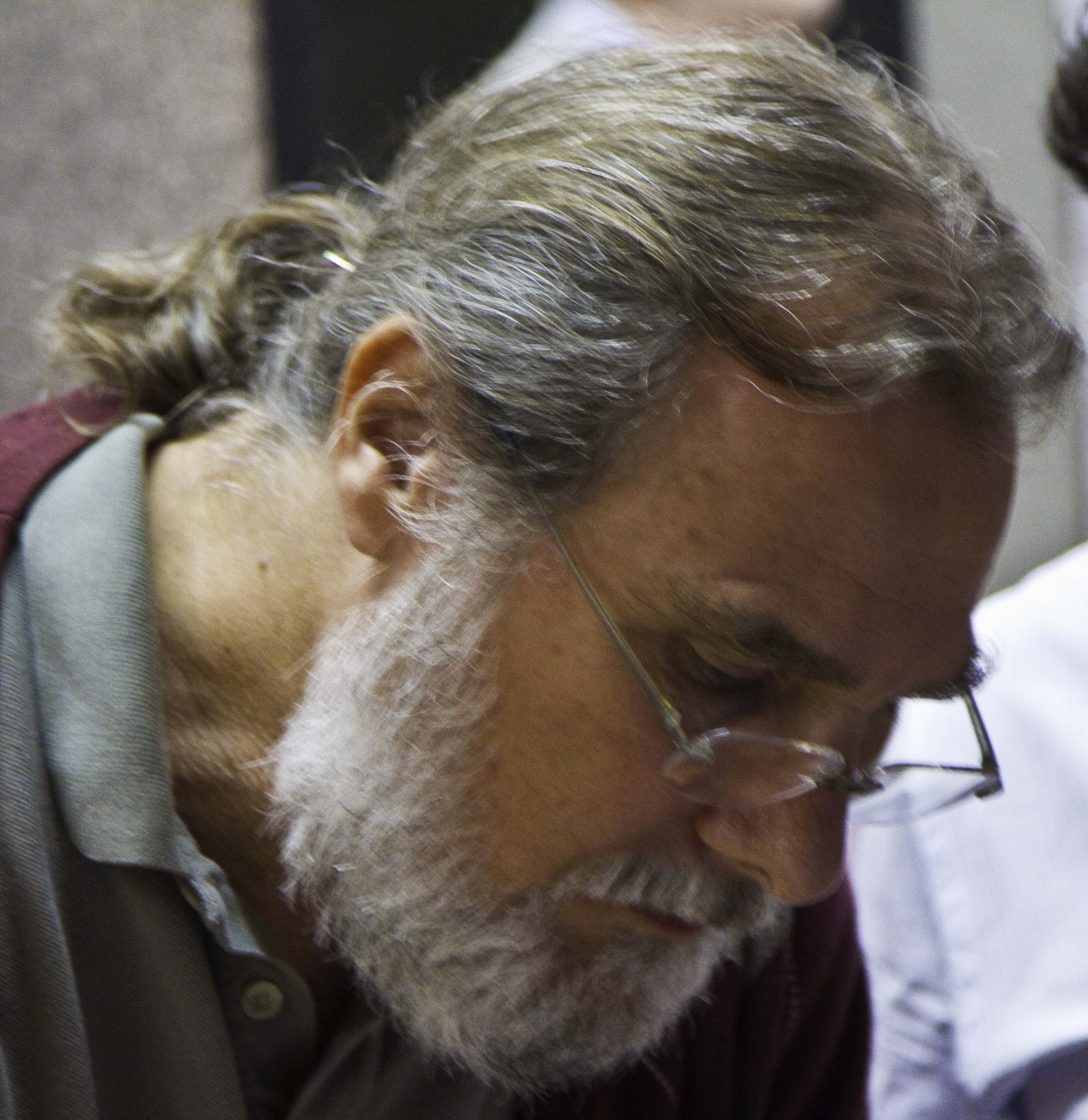
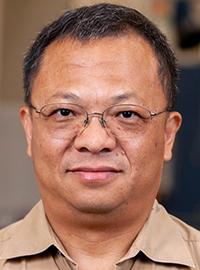
Khanh Duy Trinh is a Professor (non-tenure-track) at Waseda University's Global Center for Science and Engineering, specializing in probability theory and its applications to random matrix theory and stochastic topology. He holds a PhD from Osaka University (2012) and has held academic positions at Tohoku University and Kyushu University. Current affiliation: Waseda University (2025-present) Past roles: Associate Professor at Waseda (2019-2025), Tohoku University, Kyushu University Research areas: Beta ensembles, Random topology, Spectral measures, Stochastic geometry His work demonstrates universal behavior in random matrix models through spectral analysis and topological persistence. Key contributions include central limit theorems for eigenvalue statistics, Poisson approximations in high-temperature regimes, and geometric interpretations of persistence diagrams. His recent papers focus on generalized beta processes and higher-dimensional complex structures. Current projects include: JSPS Grant 2024-2029: Universal approaches in random matrix theory Past JSPS Grant 2019-2023: Multi-aspects of beta ensembles Teaching activities at Waseda include: Introduction to Probability and Statistics Advanced Probability and Statistics Master's Thesis advising in Pure and Applied Mathematics
Yasutaka Shimizu is a Professor at the Department of Applied Mathematics , Waseda University , with prior positions at Osaka University and as Visiting Professor at the Institute of Statistical Mathematics. His work bridges mathematical statistics , stochastic processes , and actuarial science . Education : Ph.D. in Mathematical Science (University of Tokyo, 2007) Key Research : Survival energy models for mortality prediction, threshold estimation for jump-diffusions, ruin theory, fractional Brownian motion inference Recent Publications focus on high-frequency data analysis, survival energy hypothesis applications, and statistical methods for financial/actuarial risks. His 2023 work includes threshold estimation under small noise and survival energy models with functional data analysis. Scientific Awards include the Research Achievement Award (Japan Statistical Society), Ogawa Research Encouragement Award , and Competition Outstanding Report Award . Grants from Japan Society for the Promotion of Science cover topics like statistical modeling of stochastic processes, mortality prediction, and financial risk measurement. He maintains professional memberships in the Japan Statistical Society, Mathematical Society of Japan, and Institute of Actuaries of Japan.
Ferenc Márkus serves as an Associate Professor in the Department of Physics at the Faculty of Science, Budapest University of Technology and Economics. His office is located in room F III. 2F 22, and he is contactable via email at markus.ferenc@ttk.bme.hu and telephone +36 1 463 4182. His academic focus centers on theoretical physics with emphasis on thermodynamic systems and quantum phenomena. His research spans critical areas including: Non-equilibrium thermodynamics of dissipative systems Quantization procedures for damped oscillators and mechanical waves Lagrangian and Hamiltonian formulations in thermal processes Symmetry breaking in Klein-Gordon equations Nanoscale heat transport dynamics Dissipative electrodynamics with thermal coupling Analysis of his 2019-2024 publications reveals a cohesive research trajectory exploring quantum-thermodynamic interfaces, particularly in confined systems. Key thematic threads include dynamical phase transitions between diffusive and ballistic regimes, quantization of thermal absorption/emission processes, and repulsive interactions in electrodynamics. His work consistently bridges classical mechanics with quantum frameworks through innovative Lagrangian approaches. No scientific awards were documented in the source materials. While student advising relationships and grant funding details remain unspecified in available records, his publication record indicates active mentorship through co-authored research. The absence of explicit grant mentions suggests potential institutional or national funding sources typical for Hungarian academic research. No dedicated laboratories or formal research teams were referenced, though his theoretical work implies collaboration within the Department of Physics community.
Philip J. Morrison is a distinguished Professor of Physics at The University of Texas at Austin, holding the Texas Atomic Energy Research Foundation Professorship. He maintains dual research appointments as a Research Scientist at the Institute for Fusion Studies and Affiliated Faculty at the Oden Institute for Computational Engineering and Sciences. His career spans over four decades with continuous service at UT Austin since 1981, progressing from Assistant to full Professor. Dr. Morrison earned his B.A. (1972), M.S. (1974), and Ph.D. (1979) in Physics from the University of California San Diego. His academic journey includes postdoctoral work at Princeton University's Plasma Physics Lab and teaching positions at UCSD prior to joining UT Austin. A mathematical and theoretical physicist by training, Morrison's research centers on the intersection of plasma physics, nonlinear dynamics, and computational mathematics. His primary interests include: Computational statistical mechanics and Hamiltonian dynamics Nonlinear chaos theory in finite and infinite degree-of-freedom systems Metriplectic systems for thermodynamically consistent modeling Structure-preserving algorithms for plasma simulations Geophysical fluid dynamics applications His recent publications (2024-2025) demonstrate continued leadership in developing mathematically rigorous frameworks for plasma physics and computational methods. Dr. Morrison's exceptional contributions have been recognized with numerous prestigious awards: 2024 John Dawson Award for Excellence in Plasma Physics (APS) 2016 Alexander von Humboldt Research Award 2013 Agostinelli International Prize (Accademia Nazionale dei Lincei) 1992 Fellow of the American Physical Society Multiple teaching awards including the 2013 College of Natural Sciences Teaching Excellence Award As an educator and researcher, Morrison maintains active collaborations across disciplines through the Institute for Fusion Studies and Oden Institute. His work bridges theoretical physics with practical computational applications, particularly in fusion energy research. The Geophysical Fluid Dynamics Program has benefited from his expertise for over twenty-five years, demonstrating his commitment to interdisciplinary science. His laboratory resources are enhanced through UT Austin's advanced computational infrastructure and partnerships with national laboratories. The metriplectic frameworks he develops provide foundational tools for next-generation plasma simulation codes used in fusion research worldwide.
Rami Vainio is a Professor of Space Physics at the University of Turku's Department of Physics and Astronomy, where he serves as head of the Space Research Laboratory (SRL). SRL conducts experimental, theoretical, and computational research on high-energy space phenomena, with focus areas including solar energetic particles (SEPs) and collisionless shocks. The laboratory maintains active collaborations with international research groups. Professor Vainio's research examines: SEP physics : Acceleration mechanisms during solar eruptions and transport through interplanetary space Collisionless shocks : Energy dissipation and particle acceleration in space plasmas Space weather impacts : Radiation risks to technology and humans in space He leads curriculum development for Space Physics and teaches courses including: Mathematical Methods in Physics II (BSc) Space Physics (BSc) Hydrodynamics and Hydromagnetics (MSc) Plasma Astrophysics (MSc) Under his direction, SRL develops particle detection instrumentation and simulation codes. Recent publications focus on SEP forecasting, shock wave analysis using Solar Orbiter data, and radio burst observations with LOFAR.
Christophe Garban is a Professor at Université Lyon 1 and Visiting Professor at the Courant Institute, NYU (2025–2026). He obtained his PhD from Université Paris-Sud (2008) and his Habilitation (HDR) in 2013. His research focuses on probability theory, statistical mechanics, conformal invariance, and critical phenomena, including SLE processes, percolation, Liouville quantum gravity, and lattice gauge theories. His work bridges mathematical rigor with physical intuition, exploring phase transitions, Gaussian fields, and disordered systems. Key themes include scaling limits of random processes, noise sensitivity, and geometric aspects of statistical physics. Recent projects analyze turbulence models, branching Brownian motion, and symmetry breaking in spin systems. Garban has received numerous awards, including the ERC Consolidator Grant (2021), Prix Marc Yor (2018), and Rollo-Davidson Prize (2011). He serves as editor for journals like Annals of Probability and Probability and Mathematical Physics . He mentors doctoral and postdoctoral researchers, with alumni at institutions like EPFL, CNRS, and TIFR.
Stefano Markidis is a Professor of Computer Science specializing in high-performance computing systems at KTH Royal Institute of Technology in Sweden. He works in the Division of Computational Science and Technology, focusing on supercomputers, quantum computers, and computational methods for scientific simulations. His research spans multiple domains including plasma physics, computational fluid dynamics, and quantum computing. Markidis holds an MS degree from Politecnico di Torino and a PhD in Nuclear Engineering from the University of Illinois at Urbana-Champaign. Prior to joining KTH, he was a graduate research assistant at Los Alamos National Laboratory and Lawrence Berkeley National Laboratory, followed by a postdoc at KU Leuven. His academic journey reflects a strong foundation in both engineering and computational science. His primary research interests include High-Performance Computing , Heterogeneous Systems , and Quantum Computing . Markidis develops computational methods for plasma physics, particle-in-cell simulations, and fluid dynamics. His work bridges theoretical physics and practical computing, with applications in space physics, fusion energy, and materials science. He is particularly known for contributions to parallel computing, GPU acceleration, and the development of scalable simulation frameworks like Neko for computational fluid dynamics. His research increasingly integrates machine learning techniques with traditional numerical methods. Analysis of Markidis' recent publications reveals a strong focus on quantum-classical hybrid computing, advanced particle-in-cell methods, and high-fidelity computational fluid dynamics. His work demonstrates expertise in programming models for heterogeneous architectures including GPUs and quantum processors, with growing emphasis on AI-enhanced scientific computing. R&D100 award (2005) for the CartaBlanca project R&D100 award (2017) for the SHIELDS project Markidis teaches multiple courses at KTH including Applied GPU Programming, Quantum Computing for Computer Scientists, and High-performance Computing for Computational Scientists. He has supervised numerous degree projects across various specializations in computer science and electrical engineering. His research has been supported by various grants related to high-performance computing and quantum technologies, with applications spanning from space physics to medical treatments. Markidis leads research in computational science with a focus on developing frameworks like Neko for extreme-scale computational fluid dynamics. His team works on integrating traditional HPC methods with emerging technologies including quantum computing and AI, contributing to advancements in scientific simulation across multiple disciplines.
Renaud Raquépas is a Phillip Griffiths Assistant Research Professor in the Department of Mathematics at Duke University, where he has been working since 2025 under the mentorship of Professor Jonathan C. Mattingly. Prior to his position at Duke, he was a Courant Instructor in the Mathematics Department of the Courant Institute at New York University (2022-2025), hosted by Professor Lai-Sang Young, and a postdoctoral researcher at CY Cergy Paris Université (2021-2022), working with Professor Armen Shirikyan. His educational background includes a PhD in Mathematics from McGill University and Université Grenoble Alpes (2017-2020), where he was jointly supervised by Professors Vojkan Jakšić and Alain Joye. His doctoral thesis focused on "Tools and results in the study of entropy production." He also earned an MSc in Mathematics and Statistics from McGill University (2016-2017) under the supervision of Professor Vojkan Jakšić, with a thesis on "Heat full statistics and regularity of perturbations in quantum statistical mechanics." His undergraduate studies were completed at McGill University, where he also earned his Master's degree over a period of approximately five years. Raquépas's research primarily focuses on mathematical physics, with particular emphasis on time-dependent aspects of statistical mechanics and entropy production in both quantum and classical systems. His work bridges several mathematical disciplines including probability theory (particularly large deviations and stochastic differential equations), dynamical systems and ergodic theory (covering recurrence, mixing, theory of C*-algebras, and random dynamical systems), and operator theory (focusing on spectra, resolvents, perturbation theory, and one-parameter semigroups). His research addresses fundamental questions about nonequilibrium statistical mechanics, quantum information, and the mathematical foundations of thermodynamics. The most recent publications by Raquépas demonstrate a consistent focus on entropy production, large deviation principles, and the mathematical structure of statistical mechanical systems. His work spans both classical and quantum domains, with particular attention to the connections between information theory, probability, and physics. A significant portion of his research examines return times, waiting times, and their relationship to entropy estimators, while other papers explore quantum measurement processes, fermionic systems, and diffusions with various types of noise. His publications appear in prestigious journals including Communications in Mathematical Physics, Annales Henri Poincaré, and Journal of Mathematical Physics. Raquépas has presented his research at numerous international conferences and seminars, including the IEEE International Symposium on Information Theory, the International Congress of Mathematical Physics, and various departmental seminars at institutions worldwide. His work has been featured at specialized workshops on entropy, dynamical systems, and mathematical physics. As an educator, Raquépas has taught a variety of undergraduate mathematics courses at multiple institutions. At Duke University, he is scheduled to teach Probability in the Fall 2025 semester. Previously at NYU, he taught courses including Ordinary Differential Equations, Introduction to Mathematical Modeling, Linear Algebra, and Applied Complex Variables. He has also taught mathematics courses in French at CY Cergy Paris Université and Université Grenoble Alpes, demonstrating his bilingual capabilities (French is his first language, with fluency in English). Raquépas was born in the 1990s in the Province of Québec and has been involved in mathematical outreach activities, including service on the committee of the Seminars in Undergraduate Mathematics in Montréal and work on the website of the French-language mathematics magazine Accromath.
Zhiyong Liang serves as Professor, Director of the High-Performance Materials Institute (HPMI), and Associate Dean for Research at Florida State University's College of Engineering. He holds dual appointments in the Industrial and Manufacturing Engineering and Materials Science & Engineering departments. His research drives innovation in advanced composite materials and nanotechnology through leadership in multiple centers including the Florida Center of Excellence in Advanced Materials (CEAM). His educational background includes a Ph.D. (2000), M.Sc. (1990), and B.Sc. (1987) in Materials Science and Engineering from Beijing University of Aeronautics & Astronautics. His research focuses on carbon nanotube buckypaper materials, multifunctional composites, and nanoscale manufacturing processes. Key achievements include developing roll-to-roll manufacturing techniques for aligned carbon nanotubes and creating novel nanocomposite structures with enhanced thermal/electrical properties. Liang's publication portfolio demonstrates consistent innovation in nanomaterials science, with emphasis on carbon nanotube alignment mechanisms, buckypaper composite fabrication, and energy storage applications. His work bridges fundamental nanoscale characterization with practical manufacturing solutions, particularly in aerospace and energy sectors. Recent publications highlight advancements in atomic-resolution interface analysis, flexible sensor design, and sustainable composite recycling methods. As principal investigator, Liang has secured over 50 research grants from NSF, AFOSR, ONR, and industry partners like Cytec Engineering Materials. His leadership has generated significant intellectual property including 25 US patents related to carbon nanotube processing and composite manufacturing. The Florida Center of Excellence under his direction represents major state investment in advanced materials research. Liang has mentored 36 graduate students (10 Ph.D. and 26 Master's graduates) and 22 postdoctoral researchers. His former students hold prominent positions in academia (including two U.S. professors), national laboratories, and industry leaders like Honeywell and M.C. Gill Corp. His research group maintains strong industry partnerships through sponsored projects and technology transfer initiatives.
Soudabeh Shemehsavar serves as a Lecturer in the College of Science, Technology, Engineering and Mathematics at Murdoch University, Australia, where she contributes to statistical and data science education. Her academic foundation includes: Bachelor of Science in Statistics from Shiraz University (1993-1997) Master Degree in Statistics from Amirkabir University of Technology (1998-2000) Doctor of Science in Applied Mathematics from Amirkabir University of Technology (2001-2007) Her research integrates theoretical and applied statistics across diverse domains: Development of stochastic degradation models for mechanical systems to optimize maintenance and reliability Advanced survival analysis techniques including cure models for biomedical lifetime data Random polynomial applications in civil infrastructure design, traffic pattern prediction, and economic modeling Theoretical extensions of Poisson-Dirichlet processes Current focus on ensemble learning methods for high-dimensional classification problems Her work demonstrates strong interdisciplinary connections between statistical theory and practical implementations in engineering, medical research, and economic systems.
Steven Blurton is an Associate Professor in the Department of Psychology at the University of Copenhagen's Faculty of Social Sciences, specializing in cognitive psychology with a focus on mathematical modeling of perceptual and decision processes. His research integrates computational approaches with experimental paradigms to investigate fundamental cognitive mechanisms. Research Interests: Visual perception and attention dynamics Multisensory integration across auditory and visual domains Mathematical modeling of response times and decision-making Theory of Visual Attention (TVA) frameworks Sequential sampling models for cognitive processes His recent publications demonstrate an evolving trajectory from foundational work on Wiener diffusion models (2012) toward increasingly sophisticated integrations of response time modeling with multisensory processing and executive function interventions, with significant contributions appearing in Psychological Review , Journal of Mathematical Psychology , and Vision Research . Current research within the KU 2016 "Dynamical Systems" program focuses on unifying accuracy and response time predictions through sequential sampling models. Key Activities: Principal Investigator in the DFF 8018-00014B project "Foundations of Response Time Measurement" (2019-2020) Active member of the Center for Visual Cognition research group His methodological expertise spans computational modeling, experimental design for perceptual tasks, and advanced statistical analysis of cognitive data, with applications spanning basic research and educational interventions.
Mostapha Diss is a University Professor and Director of CRESE (Research Center on Economic Strategies) at the University of Franche-Comté since January 2022. His primary institutional affiliation is with the Research Center on Economic Strategies (UR 3190), and he also maintains significant connections with the Africa Institute for Research in Economics and Social Sciences (AIRESS), Group for Analysis and Economic Theory Lyon - Saint-Etienne, and the Research Center in Economics and Management. His research focuses on social choice theory, game theory, and political economy, with particular emphasis on voting systems, committee selection, and diversity constraints. His work bridges theoretical foundations with practical applications in electoral systems and decision-making processes, demonstrating how mathematical approaches can address complex social problems. Professor Diss has published extensively in top journals including Journal of Mathematical Economics, International Journal of Game Theory, Review of Political Economy, and Social Choice and Welfare. His recent work (2024-2025) shows a strong trend toward integrating diversity constraints into cooperative game theory and voting systems, with significant contributions to understanding the impact of election closeness on voting paradoxes and developing new axiomatizations for diversity-aware game-theoretic solutions. His notable scientific contributions include: New axiomatizations of the Diversity Owen and Shapley values Analysis of the effect of close elections on voting paradoxes Development of multiwinner election models with diversity constraints Studies on committee selection rules and their properties Applications of game theory to healthcare resource allocation As Director of CRESE, Professor Diss has secured research funding that supports his work on voting theory and game theory applications. His leadership has strengthened the center's focus on mathematical approaches to social sciences, providing a collaborative environment for doctoral students and postdoctoral researchers working on theoretical and applied problems in economics and political science. He leads the CRESE research center, which brings together researchers from various disciplines to address complex economic and social problems through quantitative methods and theoretical modeling. The center serves as a hub for innovative research at the intersection of mathematics, economics, and political science, with Professor Diss at the forefront of advancing theoretical foundations while maintaining relevance to real-world decision-making challenges.
Romain Biard is a Senior Lecturer in Mathematics at the University of Franche-Comté, holding dual research affiliations with the Besançon Mathematics Laboratory (UMR 6623, LMB) and the Research Center on Economic Strategies (UR 3190, CRESE). His career bridges theoretical mathematics with practical applications in economics and healthcare systems. His primary research interests span Markov processes, Ruin theory, Extreme value theory, Optimal allocations, and Game theory. These areas converge in his work on modeling complex systems with random elements, particularly focusing on risk assessment and resource allocation problems. His research demonstrates how mathematical frameworks can address real-world challenges in healthcare management and economic competition. Analysis of his recent publications reveals a strong trend toward applied research with immediate societal relevance. His 2023-2024 work on healthcare resource allocation (nursing shortages, ventilator availability) applies sophisticated Markov process modeling to critical hospital management problems. Earlier work on economic competition models demonstrates how random entry of firms affects market equilibrium, with specific applications to the taxi industry facing competition from ride-hailing services. Active researcher with publications spanning 2008-2024 Primary collaborator network includes Marc Deschamps, Mostapha Diss, Alexis Roussel, and Stéphane Loisel Publications appear in high-quality journals across mathematics, statistics, economics, and actuarial science Biard's research approach consistently combines rigorous mathematical theory with practical applications, making significant contributions to both theoretical developments and real-world problem solving. His current work suggests continued focus on applying stochastic modeling to healthcare resource challenges and economic competition dynamics.
Hiroaki Mohri is a Professor at Waseda University's School of Commerce, where he has been serving since 2023 after previously holding positions as Associate Professor (2001-2022) and Assistant Professor (1999-2001). He earned both his Master of Science and Doctor of Engineering degrees from Tokyo Institute of Technology. His academic career includes visiting professorships at the University of Bonn Research Institute for Discrete Mathematics (2005-2007). Waseda University, Professor (2023-present) Waseda University, Associate Professor (2001-2022) Waseda University, Assistant Professor (1999-2001) University of Bonn, Visiting Professor (2005-2007) Mohri's research spans applied mathematics with a focus on stochastic processes, optimization, and operations research. His work demonstrates strong interdisciplinary connections between mathematical theory and practical applications in network reliability, financial securities, and infrastructure management. He has made significant contributions to cooperative game theory applications in network design problems and reliability engineering. His publication record shows a consistent research trajectory with recent work focusing on catastrophic failure models, network reliability evaluation, and damage analysis from multiple shock types. Mohri has successfully bridged theoretical mathematics with practical applications in infrastructure management, political conflict analysis, and financial systems. His research demonstrates how mathematical modeling can address complex real-world problems across diverse domains. Mohri is an active member of several professional organizations including the Mathematical Association of America, Game Theory Society, Japan Society for Industrial and Applied Mathematics, and the Operations Research Society of Japan. He has led numerous research projects including 'An Interdisciplinary Study on the Effect of Non-Military Engagement in Preventing Escalation of Conflicts' and 'International involvement in escalating conflicts: Mediation theory and the case of the former Soviet Union.' Additionally, he has organized international student exchange programs to former Soviet Union countries, focusing on international relations, logistics, and multicultural societies.