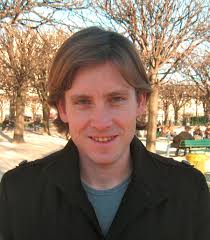
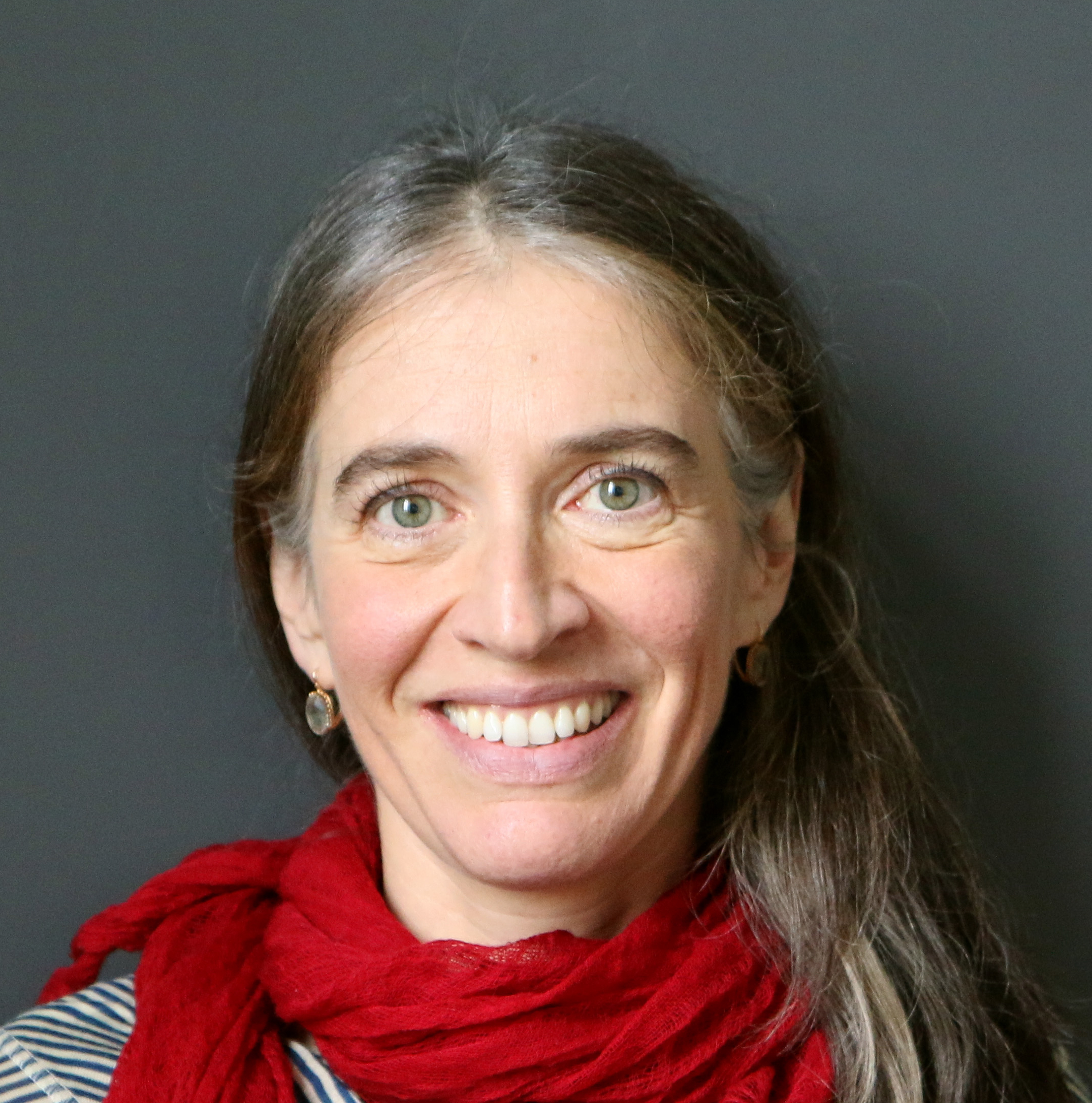
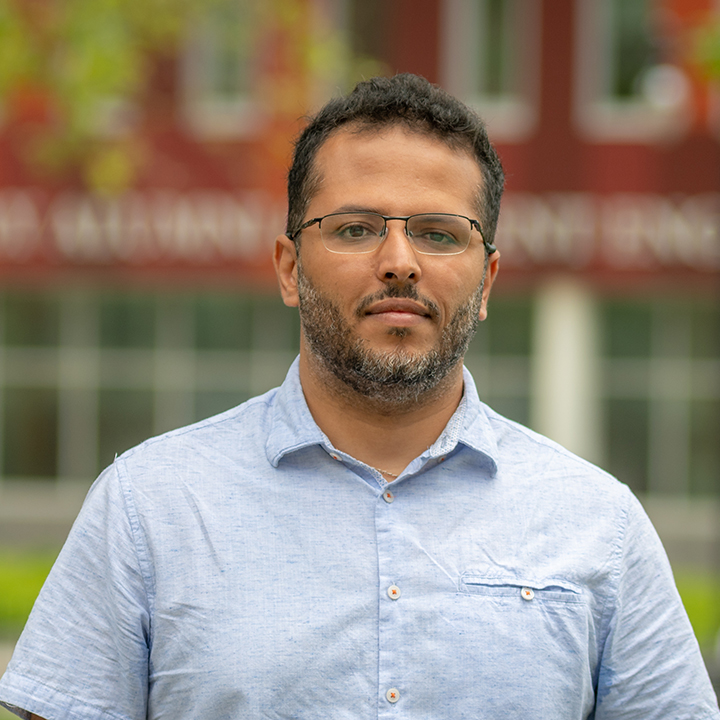
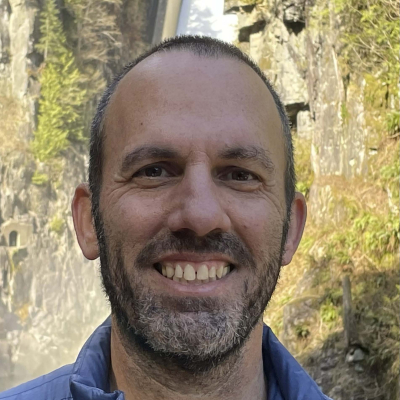
Florian Naef is an Assistant Professor in the School of Mathematics at Trinity College Dublin. His research spans topological and algebraic structures with applications to mathematical physics, including string topology, Poisson geometry, and homotopy theory. Publications emphasize formality theorems, torsion invariants, and quantization methods. Recurring themes include loop spaces, deformation quantization, and connections between differential geometry and algebraic topology.
Scott Armstrong is a Professor of Mathematics at the Courant Institute of Mathematical Sciences, New York University. His research focuses on partial differential equations, calculus of variations, and probability theory, with a specialization in stochastic homogenization of PDEs in random media and related statistical mechanical systems. He holds a Ph.D. from UC Berkeley (2009) and a B.S. from Texas A&M University (2002). Education: Ph.D. in Mathematics, University of California, Berkeley, USA (2009) B.S. in Mathematics, Texas A&M University, USA (2002) Research Interests: Scott's work addresses fundamental questions in homogenization theory, including quantitative estimates for elliptic and parabolic equations in random media, renormalization group methods, and applications to statistical mechanics. His contributions bridge analysis, probability, and mathematical physics, with a focus on rigorous mathematical frameworks for understanding macroscopic behavior from microscopic models. Publications: His recent work includes studies on anomalous diffusion, renormalization group techniques, and quantitative homogenization in high-contrast media. Over 50 peer-reviewed articles highlight his expertise in stochastic PDEs, elliptic regularity, and variational methods. Awards: No specific awards listed in the provided text. Advising & Grants: No student advisees or grant details explicitly mentioned in the text. Labs/Teams: No dedicated labs or collaborative teams explicitly noted, though his research likely involves interdisciplinary collaborations within the Courant Institute.
Ana Cannas da Silva is a Lecturer in the Department of Mathematics at ETH Zurich (Switzerland). She specializes in Symplectic Geometry , Geometric Topology , and Geometric Analysis . Her academic work includes research on symplectic toric manifolds, folded symplectic structures, and geometric quantization, with notable publications in journals like Pure and Applied Mathematics Quarterly and Mathematical Research Letters . Research Interests Symplectic Geometry Geometric Topology Geometric Analysis Hamiltonian Group Actions Toric Manifolds Recent Academic Activities Co-organized Symplectic Geometry Seminar (2021-2023) Supervised student theses on topics like contact toric manifolds, Hamiltonian actions, and symplectic linear algebra Authored research on Dedekind sums via Atiyah-Bott-Lefschetz theory (2023) and symplectic origami (2011) Teaching Lecturer for Mathematics I (2024), covering differential calculus and linear algebra Lecturer for Mathematics II (2024), focusing on multivariable calculus and partial differential equations Co-taught seminars on symplectic/contact geometry with Bahar Acu Academic Contributions Advised 20+ MSc/BSc theses at ETH Zurich since 2012 Co-organized conferences like D-Days (2013) and LP-60 (2023) Authored outreach book: Step by Step Symmetry (2016)
Ali Maalaoui is a Professor of Mathematics at Clark University, specializing in geometric analysis and calculus of variations, with a focus on conformal and CR geometries. He holds a Ph.D. from Rutgers University (2013) and a prior Ph.D. from the University of Tunis (2010). Before Clark, he was an Associate Professor at the American University of Ras Al Khaimah in the UAE and a postdoctoral fellow at the University of Basel, Switzerland. His research explores critical geometric partial differential equations (PDEs) involving energy concentration and bubbling phenomena, particularly in contexts like Dirac-Einstein equations, fractional Yamabe problems, and CR manifolds. Key contributions include studies on Q’-curvature flows, singular solutions in geometric PDEs, and functional inequalities in non-Euclidean settings. Maalaoui’s work combines analytical techniques from functional analysis, geometric measure theory, and Morse-Floer homology. Recent trends in his publications focus on fractional operators, spin geometry, and applications of conformal invariance principles. His articles span high-impact journals such as Mathematische Nachrichten , Journal of Differential Equations , and Calculus of Variations and Partial Differential Equations . No scientific awards or grants are explicitly listed in the provided information. He has advised no listed students but has contributed to collaborative projects with institutions worldwide. His research often involves international co-authors, reflecting a global network in geometric analysis.
Chen Greif is a Professor in the Department of Computer Science at the University of British Columbia (UBC). His research focuses on numerical linear algebra, iterative solvers, preconditioning techniques, and scientific computing. He has held editorial roles in SIAM journals and book series, and served as Head of the Department of Computer Science from 2016 to 2020. Greif co-authored the SIAM bestselling textbook A First Course in Numerical Methods and has published extensively in top journals. Education: Ph.D., Mathematics, University of British Columbia, 1998 M.Sc., Mathematics, Tel Aviv University, 1994 B.Sc., Mathematics, Tel Aviv University, 1991 Research Interests: Scientific computing, numerical linear algebra, iterative methods for sparse linear systems, saddle-point systems, and elliptic PDEs. His work emphasizes preconditioning techniques and numerical stability. Publications Trends: Recent work includes multigrid methods for complex systems, preconditioners for saddle-point matrices, and eigenvalue bounds analysis. His contributions bridge theory and applications in computational science and engineering. Awards: SIAM Fellow (2022) CAIMS Research Prize (2023) Multiple teaching awards (2025, 2024, 2017, 2006, 2004) Advising & Grants: Greif has advised numerous students and contributed to grants in numerical methods and computational science. He has led major conferences (e.g., International Conference on Preconditioning Techniques, 2017) and served on SIAM committees. Labs/Teams: Engaged in interdisciplinary research groups at UBC, focusing on numerical algorithms and their applications in fluid dynamics, image processing, and computational geometry.
Chris Rogers is a Professor of Statistical Science within the Department of Pure Mathematics and Mathematical Statistics (DPMMS) at the University of Cambridge, actively contributing to research at the intersection of probability theory, stochastic analysis, and financial applications. His academic profile reflects deep engagement with mathematical finance and theoretical probability through publications and departmental affiliations. His research spans financial mathematics, probability theory, stochastic analysis, statistics, and mathematical economics, with emphasis on rigorous mathematical frameworks for financial markets. Key themes include option pricing mechanisms, stochastic process modeling, and geometric probability applications, often addressing real-world financial instruments like Asian options and S&P500 index behaviors through advanced probabilistic techniques. Analysis of his 15 most recent publications (2016-2018) reveals consistent focus on stochastic calculus applications in finance, particularly Lévy processes, diffusion models, and optimal stopping problems. His work bridges theoretical probability with quantitative finance, demonstrating expertise in translating complex stochastic phenomena into financial modeling solutions across asset pricing, risk assessment, and market analysis domains. No scientific awards were documented in the provided source material. Information regarding PhD/Master's student supervision, research grants, or collaborative teams was not specified in the available texts, indicating absence of such details in the source documentation.
Alexandros Kontogiannis is a research fellow at the University of Cambridge, Department of Engineering, specializing in fluid dynamics and applied mathematics. His work combines Bayesian inference, machine learning, and physics-informed algorithms to solve inverse problems in magnetic resonance velocimetry (MRV) and fluid-structure interaction. EPSRC National Fellow in Fluid Dynamics Member of Energy, Fluids and Turbomachinery Division Research Focus: Development of digital twin frameworks that integrate MRV data with Navier-Stokes equations to reconstruct flowfields, infer rheological parameters in non-Newtonian fluids, and estimate hidden quantities like pressure and wall shear stress. Key innovations include: Physics-informed compressed sensing for sparse MRV data Simultaneous boundary shape and flowfield estimation Bayesian turbulence model parameter learning Scientific Awards: ASME Fluids Engineering Division Graduate Student Scholar (2021) Technical Chamber of Greece (TEE) Award (2018) Limmat Foundation Academic Excellence (2017) Mentzelopoulos Scholarship for international studies (2017) Greek State Scholarships Foundation Award (2012) Key Contributions: Algorithms for 3D flow reconstruction with adaptive discretization, viscous signed distance field regularization, and multi-objective aerodynamic shape optimization. His methodologies enable 27x reductions in MRI scanning time while maintaining diagnostic accuracy.
Shayan Aziznejad is a Senior ML Scientist at Distran, working on the intersection of machine learning and acoustic imaging. He was previously an ML researcher at Daedalean AI (October 2022–December 2024) and a Ph.D. candidate at Ecole Polytechnique Fédérale de Lausanne (EPFL) , where he focused on mathematical optimization and signal processing under Prof. Michael Unser. His academic background includes dual B.Sc. degrees in Electrical Engineering and Pure Mathematics from Sharif University of Technology . Research Focus: Machine learning, neural network certification, wavelet analysis, Hessian-Schatten regularization, and sparse modeling. Scientific Recognition: Swiss National Science Foundation Postdoc Fellowship (2021) Best Student Paper Award at ICASSP (2019) Gold Medalist at Iranian National Mathematics Olympiad (2011) Academic Contributions: Authored 15+ publications in top-tier journals (SIAM, IEEE, etc.) and conferences (ICASSP, EUSIPCO), with a focus on Lipschitz-regularized models, spline-based optimization, and inverse problems. Advising Experience: Supervised 11+ students across master's theses, summer internships, and semester projects, including Eliana Renzo, Joaquim Campos, and Haojun Zhu. Email: shayan.aziznejad@gmail.com
Professor Oliver Johnson is a faculty member at the School of Mathematics, University of Bristol, UK, where he serves as Head of School and holds the Professor of Information Theory position. His research bridges information theory, probability, and statistics, focusing on entropy convergence, group testing, and fundamental limits in data analysis. Current PhD students: Kieran Morris, Conor Crilly Ex-PhD students: Matt Aldridge, Leonardo Baldassini, Dan Cowley, Vaia Kalokidou, Tom Kealy, Jennifer Chakravarty, Zichen Gui, Chrys Paschou Ex-postdoc: Erwan Hillion His work includes ORCiD profile and collaborations across information theory, cybersecurity, and ecological modeling.
James Martin is a Lecturer at the Department of Statistics, University of Oxford . He is affiliated with St Hugh's College and has been actively involved in organizing probability seminars since 2018. Research Interests Probability theory Random graphs and percolation Interacting particle systems Models of random growth and coagulation-fragmentation Queueing networks Combinatorial games Teaching Courses: Prelims Probability , Part A Probability , Part B Statistical Lifetime Models , Part C Probabilistic Combinatorics His publications focus on probability theory , statistical physics , and combinatorial structures . Recent work includes studies on last-passage percolation, multispecies exclusion processes, and integrable probability models. James Martin collaborates with researchers from institutions such as Uppsala University, University of Cambridge, Imperial College London, and Kyoto University. He has been a key organizer for the Oxford Probability Seminar since 2018.
Christian Hirsch is an Associate Professor for Data Science and Statistics at Aarhus University, where he studies random networks motivated from biology and health sciences through techniques from topological data analysis and stochastic geometry. He is a member of the Stochastics group at the Department of Mathematics and holds additional affiliations as an Associate Fellow of the Aarhus Institute for Advanced Studies, and with the AU DIGIT Centre and the AU Quantum Campus. Current Position: Associate Professor for Data Science and Statistics, Aarhus University Previous Positions: Assistant Professor at University of Groningen and University of Mannheim Postdoctoral Experience: Aalborg University, LMU Munich, WIAS Berlin Education: PhD from Ulm University Christian Hirsch's research focuses on the statistical foundations of topological data analysis, large deviations theory in stochastic geometry, and percolation theory of spatial random networks. His work bridges theoretical mathematics with practical applications in data science, particularly in analyzing complex structures through topological methods. He investigates how topological features form and disappear in growing data structures, developing statistical tests to determine whether observed patterns are significant or merely random occurrences. His recent publications reveal a strong trend toward applying topological data analysis to increasingly complex structures, with significant focus on statistical validation of topological features. Hirsch has made substantial contributions to understanding the probabilistic behavior of persistent homology, developing functional central limit theorems and large deviation principles for topological functionals. His work spans theoretical foundations in stochastic geometry while finding applications in materials science, neural networks, and wireless communication systems. As an educator, Hirsch teaches graduate courses including Topological Data Analysis, Stochastic Geometry, Monte Carlo Simulation, Markov Decision Processes, Probability Theory, and Stochastic Processes. He has supervised numerous PhD, MSc, and BSc students, with several of his former students securing academic positions at institutions like University of Leiden, Tokyo Institute of Technology, and Budapest University of Technology. Hirsch leads a research group within the Stochastics group at Aarhus University, collaborating extensively with researchers across Europe and North America. His work demonstrates how topological methods can provide rigorous statistical insights into complex data structures, making significant contributions to both theoretical mathematics and practical data analysis techniques.
Eckhard Meinrenken is a Professor in the Department of Mathematics at the University of Toronto , specializing in Symplectic Geometry , Mathematical Physics , Lie Theory , and Differential Geometry . His research spans geometric structures in infinite-dimensional settings, including Hamiltonian loop group spaces, Dirac geometry, and applications of equivariant cohomology. Fellow of the Royal Society of Canada (FRSC) Author of influential monographs such as Clifford Algebras and Lie Theory (Springer, 2013) and Manifolds, Vector Fields and Differential Forms (Springer, 2023) Research Trends: Recent work focuses on moduli spaces, singular weightings, Manin pairs, and Verlinde formulas, bridging symplectic geometry with algebraic and topological invariants. His publications emphasize geometric quantization, Poisson structures, and infinite-dimensional Lie theory. Scientific Awards: Fellow of the Royal Society of Canada (FRSC) Collaborations: Frequent collaborations with researchers like Anton Alekseev, Yiannis Loizides, and David Li-Bland on problems in symplectic topology, loop groups, and Dirac geometry.
Konstantin Wernli is an Assistant Professor in the Department of Mathematics and Computer Science at the University of Southern Denmark, affiliated with the Quantum Mathematics research group. His research focuses on quantum field theory, geometric quantization, and mathematical physics, with a particular emphasis on topological field theories and perturbative methods. He has contributed to foundational work in Chern-Simons theories, BV-BFV formalisms, and geometric analysis. His research interests include quantum field theories, algebraic geometry, and the intersection of topology with physics. Notably, he explores combinatorial approaches to quantum field theory, geometric quantization frameworks, and the application of advanced mathematical tools to solve problems in theoretical physics. Recent work includes studies on partition functions, constrained dynamical systems, and the globalization of sigma models. His articles often bridge abstract mathematics with physical applications, such as analyzing heat kernels, theta invariants, and entanglement polytopes. Wernli is a project participant in the Sapere Aude grant 'FROM PERTURBATIVE TO NON-PERTURBATIVE QUANTUM FIELD THEORY BY CUTTING AND GLUING' (2024–2028), which aims to advance non-perturbative QFT techniques. He has advised on research projects involving heat kernel analysis and geometric quantization, though no formal student advisees are listed.
Nick Russoniello is a Teaching Professor in the Department of Mathematics at Lehigh University. He holds a Ph.D. from Lehigh University (2022) and a B.S. from the University of Scranton (2017). Prior to his current role, he served as a Visiting Assistant Professor at the College of William & Mary (2022–2024). His research focuses on algebraic combinatorics and Lie theory, particularly exploring combinatorial tools to study algebraic and geometric structures of Lie algebras. He has collaborated on projects involving Kohnert polynomials and Lie poset algebras with contact structures. Education: Ph.D. in Mathematics, Lehigh University, 2022 B.S. in Mathematics, University of Scranton, 2017 Research Interests: Professor Russoniello investigates Lie algebras through combinatorial methods, with emphasis on: - Algebraic combinatorics and its applications to representation theory - Structure and classification of Lie poset algebras with contact structures - Combinatorial constructions related to Kohnert polynomials and posets - Spectral properties and indices of seaweed algebras and nilpotent Lie algebras Publications Trends: His work bridges algebraic structures and combinatorial frameworks, with recent emphasis on seaweed algebras, contact Lie poset algebras, and Kohnert polynomial posets. Collaborations include undergraduate researchers and focus on extending combinatorial techniques to solve algebraic problems. Scientific Awards: Elizabeth V. Stout Dissertation Award (2022) Teaching & Advising: At Lehigh, he teaches Probability/Statistics and preparatory calculus courses. Previously at William & Mary, he instructed courses in calculus, linear algebra, and analysis. Though no formal advisees are listed, he has collaborated with undergraduates on research projects. Labs/Teams: Affiliated with Lehigh’s Mathematics Department, contributing to the Journal of Differential Geometry and organizing seminars. Collaborates actively with researchers like V. Coll, N. Mayers, and others on algebraic and combinatorial projects.
Gilles Bonnet is an Assistant Professor at the Bernoulli Institute for Mathematics, Computer Science and Artificial Intelligence within the University of Groningen , Netherlands. He is also affiliated with the Groningen Cognitive Systems and Materials Center (CogniGron) . His academic journey includes a PhD from University of Osnabrück (2016) under Prof. Matthias Reitzner, followed by a postdoc at Ruhr University Bochum (2016-2021) . Research Interests: His work bridges Probability Theory and Convex Geometry , focusing on high-dimensional stochastic structures. Key areas include random polytopes , Poisson hyperplane tessellations , and geometric inequalities . He has explored phase transitions in random polytopes and combinatorial diameter bounds. Scientific Contributions: Co-organized the Workshop On Randomness and Discrete Structures (2025) and the Spring School and Workshop on Polytopes (2019). His 2016 paper on Poisson tessellation earned a best poster award at the 18th Stochastic Geometry workshop. Awards: Best poster award (2016) Teaching: Delivers courses on Probability and Measure , Random Geometry , and Stochastic Processes at the University of Groningen and Ruhr University Bochum.