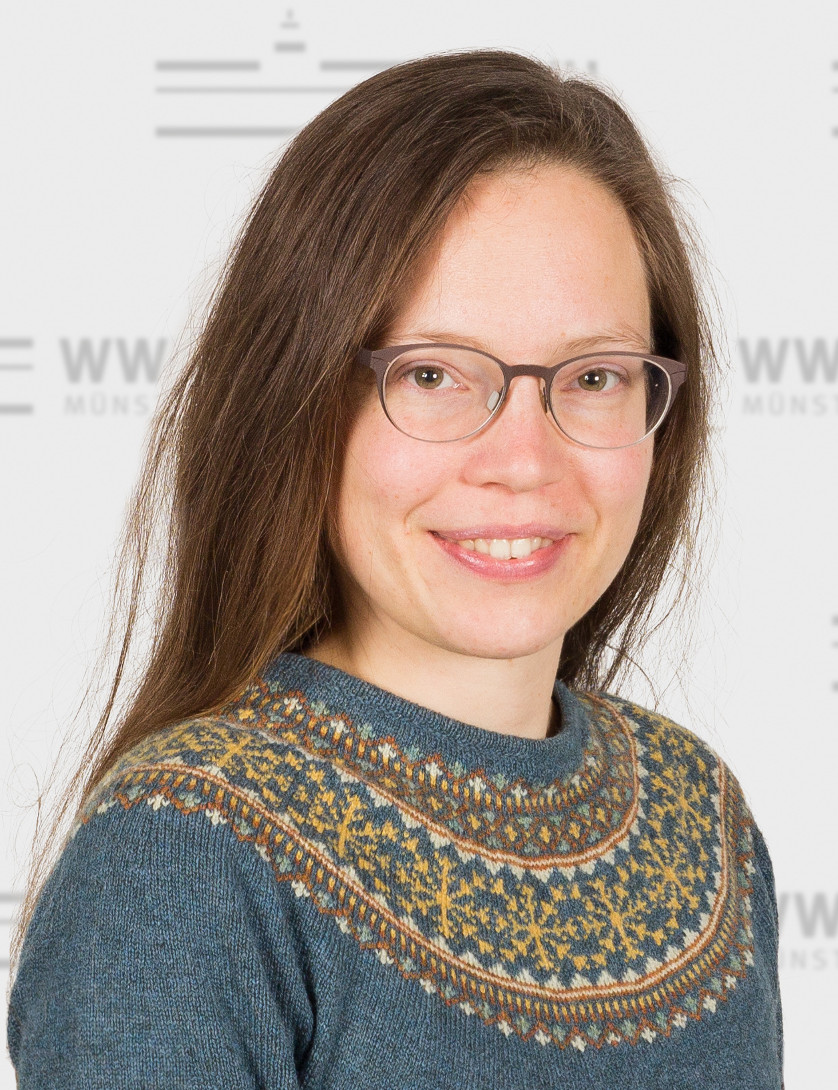
JProf. Dr. Mira Schedensack is a faculty member at the Institute for Analysis and Numerics within the Department of Mathematics and Computer Science , University of Münster. Her expertise lies in Numerical Analysis, Machine Learning, and Scientific Computing , with a focus on finite element methods and numerical solutions for partial differential equations. Research Interests: Numerical methods for PDEs, mixed finite element formulations, adaptive algorithms, and thermo-optical interactions in computational physics. Teaching: Offers courses in Numerical Partial Differential Equations and Adaptive Finite Element Methods. Students: Mentors doctoral student Jonas Ketteler . Publications: Key contributions to non-conforming FEM, Stokes equations, and gradient elasticity.
Prof. Mihai Nica is an Assistant Professor in the Department of Mathematics and Statistics at the University of Guelph, affiliated with the CARE-AI institute and Vector Institute. His research focuses on probability theory, stochastic processes, and their applications to machine learning, particularly deep neural networks (DNNs). He explores scaling limits of DNNs, numerical methods using neural networks, and phase transitions in high-dimensional learning problems. Education: B.Math in Pure & Applied Math with Physics Option, University of Waterloo PhD in Mathematics, Courant Institute of Mathematical Sciences, New York University Postdoctoral Fellow at University of Toronto (supervised by Jeremy Quastel) Research Interests: His work bridges mathematical theory and practical AI applications, emphasizing topics like the neural tangent kernel, KPZ universality class, and stochastic processes in machine learning. Notable contributions include studies on neural network dynamics, random matrices, and directed polymers. Publications: Over 15 peer-reviewed articles in journals like Communications in Pure and Applied Mathematics and Electronic Journal of Probability , with a focus on theoretical foundations of AI and stochastic systems. Recent work explores infinite-width limits of neural networks and their connections to differential equations. Labs/Teams: Affiliated with CARE-AI (bridging mathematics, engineering, and philosophy) and the Vector Institute, fostering interdisciplinary collaborations.
Sheldon Howard Jacobson is a Founder Professor at the Siebel School of Computing and Data Science, University of Illinois at Urbana-Champaign. He holds cross-appointments in Electrical and Computer Engineering, Industrial and Enterprise Systems Engineering, Biomedical and Translational Sciences, Mathematics, and Statistics. His research focuses on operations research, optimization, and security systems, with notable contributions to aviation security, pediatric vaccines, and homeland security. Jacobson has been recognized with prestigious awards including the AAAS Fellowship (2019), George E. Kimball Medal (2020), and Guggenheim Fellowship (2003). His work bridges theoretical and applied domains, addressing real-world challenges in public health, policy, and technology. He has contributed to media discussions on topics like pandemic impacts and coronavirus safety measures. In research, Jacobson emphasizes interdisciplinary approaches, combining mathematical modeling with policy analysis. His recent work includes optimizing political redistricting and analyzing viral transmission risks in aviation. Collaborations span multiple disciplines, reflecting his role as a bridge between academia and practical problem-solving.
Eliza O'Reilly is an Assistant Professor in the Department of Applied Mathematics & Statistics at Johns Hopkins University. Her research focuses on the intersections of stochastic geometry , convex geometry , high-dimensional probability , and statistical learning theory . Her work explores: Nonconvex and convex regularizers in inverse problems Random tessellations and their machine learning applications Spectrahedral regression for convex function approximation Determinantal point processes for modeling repulsive interactions High-dimensional random convex sets and their asymptotic geometry Her research is supported by the National Science Foundation . Recent publications investigate gradient-based dimension reduction, oblique decision trees, and geometric properties of regularizers. She has received her PhD from the University of Texas at Austin and was a postdoctoral scholar at Caltech.
Yihong Wu is the James A. Attwood Professor of Statistics and Data Science at Yale University, where he also serves as Chair of the Department of Statistics and Data Science. His academic career spans prestigious institutions with a focus on theoretical and applied statistical methods. His research bridges information theory and statistics, with applications across multiple domains of data science. Professor Wu's research focuses on the theoretical foundations of high-dimensional statistics, information theory, and optimization. His work explores dimensionality reduction through both intrinsic low-dimensionality (sparsity, smoothness) and extrinsic low-dimensionality (functional estimation). He has made significant contributions to understanding statistical-computational tradeoffs in problems involving random graphs and combinatorial structures. His research has important applications in machine learning, network analysis, and signal processing. His recent publications reveal a strong focus on information-theoretic approaches to statistical problems, with particular emphasis on graph matching, empirical Bayes methods, and high-dimensional inference. Wu's work consistently addresses fundamental questions about the limits of statistical estimation and the computational feasibility of achieving those limits. His research spans theoretical foundations while maintaining relevance to practical data analysis challenges. Professor Wu actively contributes to academic education through multiple graduate-level courses including Information Theory, Statistical Inference on Graphs, and Topics in High-Dimensional Statistics and Information Theory. His teaching reflects his research interests, emphasizing mathematical rigor and theoretical foundations.
Luke Olson is a Professor in the Department of Computer Science at the University of Illinois at Urbana-Champaign (UIUC), part of the College of Engineering. He holds an affiliate appointment in the Department of Mechanical Science and Engineering. His research focuses on numerical methods, high-performance computing, and parallel algorithms, particularly algebraic multigrid (AMG) solvers and sparse matrix computations. He leads the development of open-source libraries like PyAMG and RAPtor, advancing computational tools for scientific and engineering applications. Education: Ph.D. in Applied Mathematics from the University of Colorado Boulder (2003), M.S. in Mathematics from the University of Iowa (1999), and B.A. in Mathematics and Physics from Luther College (1997). Research Interests: Algebraic multigrid methods and preconditioners High-performance computing and parallel algorithms Numerical solutions to partial differential equations Scientific computing and software development Machine learning integration in numerical simulations Recent Articles Trends: Recent work merges machine learning with traditional numerical methods, such as neural network closures for turbulent combustion and reduced basis approximations using neural networks. Ongoing contributions include optimizing multigrid methods for exascale architectures and enhancing communication efficiency in distributed systems. Awards: Recognized with the NSF CAREER Award (2007), UIUC Campus Award for Excellence in Teaching (2024), and the Donald Biggar Willett Faculty Scholar distinction (2016). Active in conference organization, including the Copper Mountain Conference on Multigrid Methods. Teaching & Grants: Teaches courses like Numerical Methods for PDEs and Scientific Machine Learning. Leads projects funded by NSF and industry collaborations, emphasizing education innovation through the AE3 fellowship (2014–2016). Labs/Teams: Directs the Scientific Computing Group at UIUC and contributes to interdisciplinary initiatives like the Center for Exascale-enabled Scramjet Design (CEESD).
Leslie Greengard is a Silver Professor of Mathematics and Computer Science at New York University's Courant Institute, part of the Faculty of Arts and Science. His research focuses on integral equation methods for electromagnetics, acoustics, plasma physics, and fluid dynamics, with recent work extending to kernel-based methods in statistical inference. He leads the Courant Mathematics and Computing Laboratory and contributes to novel electromagnetic simulation techniques. Education: Ph.D. and M.D. in Computer Science and Medicine from Yale University (1987) B.A. in Mathematics from Wesleyan University (1979) Research Interests: Greengard's group develops fast solvers for complex geometries in electromagnetics and fluid dynamics. Notable contributions include the Fast Multipole Method (FMM) for particle simulations and Quadrature by Expansion (QBX) for layer potential evaluations. His work bridges computational mathematics and applications in physics, engineering, and biomedicine. Recent Article Trends: Recent publications emphasize fast algorithms (e.g., FMM, adaptive Gauss transforms), biomedical applications (e.g., deep brain stimulation modeling), and cosmological simulations. His methods address challenges in high-dimensional data, multiscale problems, and real-time computation. Awards & Recognition: While no specific prizes are listed, his foundational work on FMM has had a transformative impact on computational science. Advising & Collaborations: Collaborations span academia and industry, with co-authors including V. Rokhlin, M. O’Neil, and others. No formal advisees are listed here, though his research involves postdoctoral fellows and graduate students. Labs & Teams: Active in the Courant Mathematics and Computing Laboratory, focusing on electromagnetic simulation and design methodologies.
Petros Dellaportas holds dual appointments as a Professor of Statistical Science at University College London (UCL) and a Professor of Statistics at the Athens University of Economics and Business (AUEB). His research focuses on Bayesian statistics, machine learning, financial econometrics, and dynamic pricing. He leads projects on topics such as Poisson processes for cybersecurity, reservoir computing for macroeconomic forecasting, and probabilistic fault detection in wind parks. His recent publications emphasize advancements in Bayesian methods, variational autoencoders, and spatio-temporal point processes. Dellaportas has supervised over 20 PhD students, contributing to areas like stochastic volatility models and inverse reinforcement learning. He co-founded Thales and Friends, an organization bridging mathematics and cultural activities, and organizes the Greek Stochastics workshop series on topics ranging from causal learning to computational statistics. Key projects include anomaly detection in VAT networks and scalable Gaussian process models. His work often integrates statistical theory with applications in finance, sports analytics, and environmental science. Dellaportas maintains active collaborations with institutions globally, advancing interdisciplinary research and methodological innovations in statistical science.
Joseph Glaz is a Professor in the Department of Statistics at the University of Connecticut. His work focuses on applied probability and statistical methodology, particularly in scan statistics and related inference techniques. Contact: joseph.glaz@uconn.edu Phone: (860) 486-4193 (Storrs Campus) Research highlights: Develops scan statistics for discrete , continuous , and conditional data frameworks Specializes in change-point detection for normal data mean/variance Innovates robust methods for outlier-prone datasets Extends scan statistics to network and graph structures Contributed to foundational texts like the Handbook of Scan Statistics Publication trends include: Scan statistics for genomic data (Hi-C translocation detection) Nonparametric and Bayesian extensions of scan methods Approximations and inequalities for sequential testing Applications in quality control , medical imaging , and sensor networks
David M. Blei is the William B. Ransford Professor of Statistics and Computer Science at Columbia University. He is a leading researcher in machine learning, with a focus on probabilistic modeling and Bayesian statistics. His work bridges theoretical foundations with practical applications across various domains. Professor Blei's research spans several key areas in modern machine learning: Development and analysis of probabilistic models for complex data Bayesian inference methods, particularly variational inference Topic modeling and mixed-membership models Causal inference and model criticism Deep generative models and representation learning Applications in natural language processing and recommendation systems His recent publications demonstrate continued advancement in variational inference theory while exploring applications in deep learning and causality. Blei's work on posterior collapse in variational autoencoders, black box variational inference, and scalable recommendation systems has been particularly influential in the machine learning community. Professor Blei mentors PhD students and postdoctoral researchers, fostering the next generation of machine learning researchers. He actively teaches graduate courses on probabilistic models, machine learning, and causal inference at Columbia University, including STCS 6701: Probabilistic Models and Machine Learning (scheduled for Fall 2025). He leads a research group focused on probabilistic modeling, contributing significantly to both theoretical advancements and practical applications of statistical methods in artificial intelligence. The group is part of Columbia's thriving machine learning community, which spans multiple departments and research centers.
Giovanni PECCATI is a Full Professor in Mathematics and Head of the Department of Mathematics (DMATH) at the University of Luxembourg’s Faculty of Science, Technology and Medicine. He leads the research group 'Revealing order in randomness' and serves as President of the Luxembourg Mathematical Society. Previously, he held positions at Sorbonne Université (1999–2008) as Assistant Professor and at Université Paris-Nanterre (2008–2010) as Full Professor before joining Luxembourg in 2010. His research focuses on probability theory, stochastic analysis, and mathematical finance, with particular expertise in Malliavin calculus, limit theorems, and random fields. Key contributions include studies on nodal sets of random waves, Poisson functionals, and Stein’s method applications. Prof. Peccati’s awards include the 2018 IMS Fellowship and the 2015 FNR Award for Outstanding Scientific Publication. His work bridges pure mathematics with applications in statistical mechanics and mathematical physics, emphasizing probabilistic structures in geometric and physical systems. He has authored over 100 publications, including the influential book *Wiener Chaos: Moments, Cumulants and Diagrams* (2011), and co-founded the *Stochastic Analysis for Poisson Point Processes* research program. His current projects explore phase transitions in stochastic systems and geometric properties of random fields.
Professor Dennis Kristensen is a faculty member at the Department of Economics, University College London (UCL). He holds affiliations with prominent institutions including CeMMAP, the Institute for Fiscal Studies, Aarhus Center for Econometrics (ACE), and the Centre for Macro and Financial Econometrics at Essex University. His research focuses on econometric theory, applied microeconomics, and quantitative finance. Key areas include structural dynamic models, nonlinear econometrics, and financial econometrics. His work integrates advanced computational methods and nonparametric techniques to address complex economic problems. Research interests span stochastic volatility models, demand inversion in consumer behavior, and indirect estimation methods. He has contributed to methodologies for handling unobserved heterogeneity and time-varying parameters in economic models. Prof. Kristensen's publications emphasize methodological innovation, with recent work addressing continuous-time Markov models, diffusion copulas, and dynamic discrete choice frameworks. His articles often bridge theoretical econometrics with applied contexts, such as corporate defaults and financial market analysis. He is actively engaged in the academic community, contributing to journal editorials and interdisciplinary collaborations. His affiliations reflect a commitment to advancing econometric theory and its applications in policy and finance.
Prof. Lukas Einkemmer is a faculty member at the University of Innsbruck, holding a position in the Institute of Mathematics. He specializes in numerical analysis, plasma physics, and high-performance computing. His work focuses on developing advanced numerical methods for solving complex kinetic equations and PDEs, with applications in plasma simulation and computational fluid dynamics. Education: He earned a PhD in applied mathematics (2014) and MSc in physics (2013) from the University of Innsbruck, alongside BSc in applied mathematics (2010). He completed research stays at UC Merced and holds notable academic awards, including the SciCADE New Talent Award (2015) and participation in the Heidelberg Laureate Forum (2013). Research & Teaching: His research includes exponential integrators, dynamical low-rank methods, and semi-Lagrangian discontinuous Galerkin schemes. He teaches numerical methods, PDEs, and computational courses at both undergraduate and graduate levels. He also leads training programs in parallel computing (OpenMP/MPI) at the University’s Research Center for High-Performance Computing. Publications & Grants: Over 70 peer-reviewed articles in journals like J. Comput. Phys. and SIAM J. Sci. Comput. , focusing on numerical algorithms and their applications. He has secured grants from FWF and other agencies, advancing methods for plasma physics and kinetic theory. Awards & Recognition: Multiple honors, including the Oberwolfach Leibniz Graduate Student award (2014) and sustained scholarship support for academic excellence.
Meng Wu is a professor at the Department of Mathematical Sciences, University of Oulu, Finland. Previously, he held postdoctoral positions at the Einstein Institute of Mathematics, Hebrew University of Jerusalem (2017), and at the University of Oulu (2013-2016), followed by a University Researcher role there (2017-2018). His work bridges ergodic theory, dynamical systems, and fractal geometry. Research interests include multifractal analysis, self-similar sets, and geometric measure theory. Recent work explores Furstenberg-type slicing theorems, scaling limits of self-conformal measures, and projection theorems with applications to exact overlaps conjectures. His publications often employ ergodic theory and dynamical systems to analyze fractal dimensions and geometric properties of sets. Trends in his articles highlight connections between number theory, probability, and fractal geometry, focusing on Hausdorff and Assouad dimensions, oriented random walks, and renormalization techniques. Collaborations include A.H. Fan, J. Schmeling, L.M. Liao, and A. Algom.
Virginie Ehrlacher is a Professor at CERMICS, École des Ponts ParisTech (ENPC), France. She specializes in applied mathematics with a focus on high-dimensional problems, numerical analysis, and computational modeling. Her work bridges quantum chemistry, materials science, and machine learning through innovative mathematical frameworks. Education includes: PhD in Mathematics (2012) from ENPC: Mathematical models in quantum chemistry and uncertainty quantification Habilitation (2020) from Université Paris-Dauphine: Mathematical and numerical analysis of high-dimensional and multiscale problems in materials science Research spans multiscale modeling, tensor decompositions for high-dimensional systems, cross-diffusion equations, and scientific machine learning. Her work frequently addresses challenges in quantum mechanics, materials science, and computational physics using advanced numerical techniques. Publications emphasize: Algorithms for high-dimensional PDEs and eigenvalue problems Model reduction techniques (tensor networks, reduced basis methods) Cross-diffusion systems with biological/physical applications Neural networks for scientific computing Awards and distinctions: Irène Joliot-Curie Prize (2023) Chevalier de l’Ordre National du Mérite (2025) Leadership includes: ERC Starting Grant HighLEAP (2023–2028) ERC Synergy project EMC2 (2020–2026) ANR JCJC project COMODO (2019–2023) She co-leads the EMS Topical Activity Group on Scientific Machine Learning. Affiliated with the CERMICS laboratory, she collaborates on interdisciplinary teams tackling multiscale and data-driven modeling challenges.