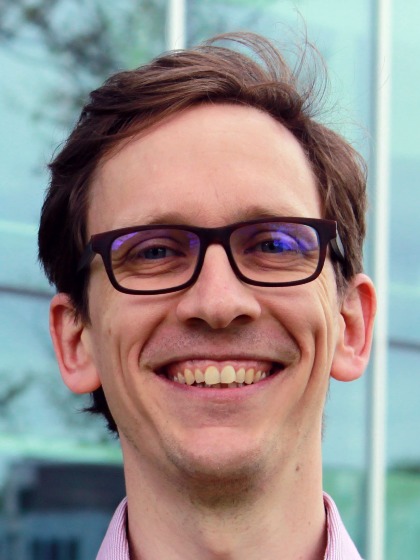
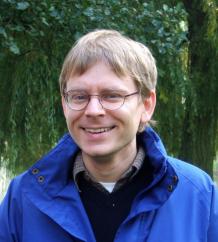
Professor Wang Li-Lian is a faculty member in the Division of Mathematical Sciences at Nanyang Technological University (NTU), Singapore. He holds the rank of Professor of Applied Mathematics and has been affiliated with NTU since 2006, progressing through roles including Assistant and Associate Professor before his current position. His research focuses on spectral methods, computational acoustics/electromagnetics, and PDE-based image processing. He has supervised multiple PhD and Master's students, including Zhang Jing, Gu Ying, Yang Zhiguo, and others. Education and career highlights include a Postdoctoral Research Associate at Purdue University (2002-2003), followed by a Visiting Assistant Professorship (2003-2005). His academic work spans spectral element methods, fractional differential equations, and high-order numerical techniques for wave scattering problems. Notable contributions include advancements in spectral-Galerkin methods for nonlocal operators and exact nonreflecting boundary conditions for Maxwell's equations. Research interests emphasize high-accuracy numerical schemes, with applications to fractional PDEs, metamaterial simulations, and image processing. His publications (over 100+ articles) reflect expertise in spectral methods, computational physics, and mathematical modeling. Teaching responsibilities include courses on partial differential equations, numerical analysis, and scientific computing.
Naratip Santitissadeekorn is a Senior Lecturer in Data Assimilation at the School of Mathematics and Physics, University of Surrey, where he is affiliated with the Mathematics at the Interface Group. His work bridges mathematics, data science, and real-world applications in urban planning, crime analysis, and geophysical fluid dynamics. Dr. Santitissadeekorn received his PhD from Clarkson University in 2008, with a dissertation titled "Transport Analysis and Motion Estimation of Dynamical Systems of Time-Series data." His doctoral research was supervised by Professor Erik Bollt. Following his PhD, he completed two significant postdoctoral positions: from 2008-2011 at the University of New South Wales, Sydney, Australia, working with Professor Gary Froyland on numerical techniques for finite-time Lagrangian coherent set identification, with applications to delimiting the polar vortex and Agulhas rings; and from 2011-2014 at the University of North Carolina-Chapel Hill, working with Professor Chris Jones on data assimilation projects. Dr. Santitissadeekorn's research focuses on inverse problems and data assimilation in geophysical fluid dynamics, the applications of Lagrangian Coherent Structures (LCS), and computational ergodic theory. His work combines theoretical mathematics with practical applications, particularly in urban growth modeling and crime analysis. He has developed innovative methods for identifying coherent structures in fluid flows, estimating transition probabilities from spatiotemporal data, and creating data-driven frameworks for urban expansion scenarios. His research demonstrates how mathematical techniques can be applied to solve real-world problems in environmental science, urban planning, and public safety. An analysis of Dr. Santitissadeekorn's recent publications (2020-2023) reveals a strong focus on urban expansion modeling and network analysis. His work on urban growth has evolved from basic cellular automata models to sophisticated frameworks that manage uncertainty through parameter clustering and growth mode identification. His research on Hawkes processes has advanced ensemble-based filtering techniques for analyzing count data in large networks. These publications demonstrate a consistent pattern of applying mathematical rigor to complex spatiotemporal phenomena, with increasing emphasis on data-driven approaches and practical applications. Dr. Santitissadeekorn has made significant contributions to data assimilation methods, particularly through the development of the extended Poisson-Kalman filter (ExPKF) for urban crime modeling. His teaching includes courses in Algebra and Bayesian Statistics, reflecting his expertise in both theoretical and applied mathematics. While specific awards are not mentioned in the available information, his extensive publication record in high-impact journals demonstrates recognition within his field. Dr. Santitissadeekorn's research has practical implications for urban planning and law enforcement. His work on urban expansion models helps planners understand different growth trajectories, while his crime modeling research contributes to improved police patrolling strategies. His interdisciplinary approach, combining mathematics, computer science, and domain-specific knowledge, positions him at the forefront of applying data science to societal challenges.
Shayan Aziznejad is a Senior ML Scientist at Distran, working on the intersection of machine learning and acoustic imaging. He was previously an ML researcher at Daedalean AI (October 2022–December 2024) and a Ph.D. candidate at Ecole Polytechnique Fédérale de Lausanne (EPFL) , where he focused on mathematical optimization and signal processing under Prof. Michael Unser. His academic background includes dual B.Sc. degrees in Electrical Engineering and Pure Mathematics from Sharif University of Technology . Research Focus: Machine learning, neural network certification, wavelet analysis, Hessian-Schatten regularization, and sparse modeling. Scientific Recognition: Swiss National Science Foundation Postdoc Fellowship (2021) Best Student Paper Award at ICASSP (2019) Gold Medalist at Iranian National Mathematics Olympiad (2011) Academic Contributions: Authored 15+ publications in top-tier journals (SIAM, IEEE, etc.) and conferences (ICASSP, EUSIPCO), with a focus on Lipschitz-regularized models, spline-based optimization, and inverse problems. Advising Experience: Supervised 11+ students across master's theses, summer internships, and semester projects, including Eliana Renzo, Joaquim Campos, and Haojun Zhu. Email: shayan.aziznejad@gmail.com
Basile de Loynes is a Lecturer at the French National School of Statistics and Information Analysis (ENSAI), holding a permanent academic position since at least 2016. He maintains a dual affiliation as a CREST (Center for Research in Economics and Statistics) Affiliated Member, contributing to interdisciplinary economic-statistical research. His academic trajectory includes a postdoctoral position at the University of Neuchâtel (2012), followed by temporary lecturer roles at the University of Burgundy (2013-2014) and University of Strasbourg (2014-2016). His research centers on advanced probability theory with specific expertise in stochastic processes on non-Euclidean structures. Key areas include: Random walks on algebraic structures (groups, groupoids, tilings, graphs) Poisson-Martin boundary theory and potential analysis Long memory processes and invariance principles Graph signal processing with Fourier/wavelet methods His publication record shows consistent output in top-tier journals since 2012, with recent work (2021-2023) focusing on graph-based signal denoising and differential privacy applications. Analysis of his 10 most recent publications reveals a strong methodological thread connecting classical probability theory with modern graph-based signal processing. Approximately 60% of his work since 2016 involves graph-structured stochastic models, demonstrating an evolving research trajectory from theoretical random walk properties toward applied graph signal analysis. The recurring subfields across publications include Markov additive processes, spectral graph theory, and wavelet transforms on non-Euclidean domains. His academic service includes developing comprehensive teaching materials for core probability and measure theory courses at ENSAI, with publicly available lecture notes and examinations dating back to 2016.
Professor Oliver Johnson is a faculty member at the School of Mathematics, University of Bristol, UK, where he serves as Head of School and holds the Professor of Information Theory position. His research bridges information theory, probability, and statistics, focusing on entropy convergence, group testing, and fundamental limits in data analysis. Current PhD students: Kieran Morris, Conor Crilly Ex-PhD students: Matt Aldridge, Leonardo Baldassini, Dan Cowley, Vaia Kalokidou, Tom Kealy, Jennifer Chakravarty, Zichen Gui, Chrys Paschou Ex-postdoc: Erwan Hillion His work includes ORCiD profile and collaborations across information theory, cybersecurity, and ecological modeling.
David F. Anderson is the Vilas Distinguished Achievement Professor of Mathematics at the Department of Mathematics, University of Wisconsin-Madison. He has maintained an active research and teaching career spanning over two decades with significant contributions to mathematical biology and stochastic modeling. Dr. Anderson's research focuses on the interface of mathematics and biology, specifically in mathematical systems biology and algorithm design for stochastic models in biological systems. His work has fundamentally advanced chemical reaction network theory, stochastic processes in biochemical systems, and computational methods for analyzing complex biological phenomena. He has developed numerous numerical techniques for simulating and analyzing reaction networks with applications across systems biology. An analysis of his recent publications reveals a sustained focus on mathematical properties of stochastic reaction networks, with increasing emphasis on connections between chemical systems and computational frameworks. His later work explores reaction networks as computing devices, implementing arithmetic operations and neural network functionalities through biochemical processes, while maintaining rigorous mathematical analysis of network properties like ergodicity, mixing times, and solution structures. Simons Fellow (2022) Vilas Associates Award (2016) IMA Prize in Mathematics (2014) Dr. Anderson has successfully guided nine PhD students to completion, with recent graduates including Aidan Howells (2024), Tung Nguyen (2021), Chaojie Yuan (2020), Kurt Ehlert (2019), and Jinsu Kim (2018). His current graduate student is Jingyi Ma. His research has been supported by prestigious fellowships including the Simons Fellowship, indicating substantial research funding, though specific grant details aren't provided in the source material. While specific laboratory facilities aren't described in the text, Dr. Anderson maintains an active research group evidenced by continuous publications, regular PhD student completions, and collaborations with numerous researchers including Daniele Cappelletti, Jinsu Kim, and Tung Nguyen. His research program demonstrates sustained productivity with publications spanning from 2005 to the present.
Christian Hirsch is an Associate Professor for Data Science and Statistics at Aarhus University, where he studies random networks motivated from biology and health sciences through techniques from topological data analysis and stochastic geometry. He is a member of the Stochastics group at the Department of Mathematics and holds additional affiliations as an Associate Fellow of the Aarhus Institute for Advanced Studies, and with the AU DIGIT Centre and the AU Quantum Campus. Current Position: Associate Professor for Data Science and Statistics, Aarhus University Previous Positions: Assistant Professor at University of Groningen and University of Mannheim Postdoctoral Experience: Aalborg University, LMU Munich, WIAS Berlin Education: PhD from Ulm University Christian Hirsch's research focuses on the statistical foundations of topological data analysis, large deviations theory in stochastic geometry, and percolation theory of spatial random networks. His work bridges theoretical mathematics with practical applications in data science, particularly in analyzing complex structures through topological methods. He investigates how topological features form and disappear in growing data structures, developing statistical tests to determine whether observed patterns are significant or merely random occurrences. His recent publications reveal a strong trend toward applying topological data analysis to increasingly complex structures, with significant focus on statistical validation of topological features. Hirsch has made substantial contributions to understanding the probabilistic behavior of persistent homology, developing functional central limit theorems and large deviation principles for topological functionals. His work spans theoretical foundations in stochastic geometry while finding applications in materials science, neural networks, and wireless communication systems. As an educator, Hirsch teaches graduate courses including Topological Data Analysis, Stochastic Geometry, Monte Carlo Simulation, Markov Decision Processes, Probability Theory, and Stochastic Processes. He has supervised numerous PhD, MSc, and BSc students, with several of his former students securing academic positions at institutions like University of Leiden, Tokyo Institute of Technology, and Budapest University of Technology. Hirsch leads a research group within the Stochastics group at Aarhus University, collaborating extensively with researchers across Europe and North America. His work demonstrates how topological methods can provide rigorous statistical insights into complex data structures, making significant contributions to both theoretical mathematics and practical data analysis techniques.
Lina von Sydow is a Professor in Computational Science at Uppsala University's Department of Information Technology. She serves as Section Dean for the Mathematical-Computer Science Section since July 2023. Her academic journey includes becoming an Associate Professor in 2000, Senior Lecturer since 1997, and leading the Department of Information Technology from 2018 to 2023. PhD in Domain Decomposition Methods (1995, Uppsala University) Postdoctoral Fellow at Oxford University (1996-1997) Her research spans computational science with dual focuses on Computational Finance and Ice Sheet Modeling . In finance, she develops numerical methods for option pricing using PDEs, radial basis functions, and stochastic volatility models. In climate science, she contributes to ice sheet dynamics through full Stokes models and adaptive time-stepping approaches, particularly in simulating grounding line migration. Recent publications (2025) address gender disparities in IT education, including comparative analysis of admission trends and intervention studies to boost female enrollment. Earlier works (2020-2015) focus on high-order finite difference methods for financial derivatives, BENCHOP benchmarking projects, and preconditioning techniques for PDEs. Scientific awards include Excellent Teacher (2013) She actively collaborates on educational reforms, co-authoring studies like Gender-aware course reform in Scientific Computing (2013). Her leadership roles include Head of Department (2018-2023) and Section Dean (2023-present), influencing academic governance and interdisciplinary research. Labs and teams: Works with Uppsala University's Computational Science group, Elmer/ICE project collaborators (e.g., Per Lötstedt, Gong Cheng), and international partners in numerical finance and climate modeling.
Gilles Bonnet is an Assistant Professor at the Bernoulli Institute for Mathematics, Computer Science and Artificial Intelligence within the University of Groningen , Netherlands. He is also affiliated with the Groningen Cognitive Systems and Materials Center (CogniGron) . His academic journey includes a PhD from University of Osnabrück (2016) under Prof. Matthias Reitzner, followed by a postdoc at Ruhr University Bochum (2016-2021) . Research Interests: His work bridges Probability Theory and Convex Geometry , focusing on high-dimensional stochastic structures. Key areas include random polytopes , Poisson hyperplane tessellations , and geometric inequalities . He has explored phase transitions in random polytopes and combinatorial diameter bounds. Scientific Contributions: Co-organized the Workshop On Randomness and Discrete Structures (2025) and the Spring School and Workshop on Polytopes (2019). His 2016 paper on Poisson tessellation earned a best poster award at the 18th Stochastic Geometry workshop. Awards: Best poster award (2016) Teaching: Delivers courses on Probability and Measure , Random Geometry , and Stochastic Processes at the University of Groningen and Ruhr University Bochum.
Dr. Eli Hawkins is a Senior Lecturer in the Department of Mathematics at the University of York. His work bridges geometry and noncommutative algebras, with a focus on quantization, noncommutative geometry, and quantum gravity. Education: PhD in Physics and Mathematics from Penn State University Research Interests: His research integrates advanced mathematical frameworks like C*-algebras, Poisson geometry, and Lie groupoids to explore quantization and quantum gravity, with applications in quantum field theory and differential geometry. Recent Publications: His recent work includes studies on Hochschild cohomology, deformation quantization, and noncommutative regularization, reflecting his expertise in algebraic and geometric methods.
Christian Pascal Hirsch is an Associate Professor for Data Science and Statistics at the Department of Mathematics, Aarhus University. His research focuses on random networks inspired by biology and health sciences, utilizing techniques from topological data analysis and stochastic geometry. He is affiliated with the Stochastics group, AU DIGIT Centre, and AU Quantum Campus. Research Interests: Topological data analysis, large deviations theory, spatial random networks, and stochastic geometry. His work includes studies on percolation theory, Gibbs measures, and applications to neural networks and geometric functionals. Publications span journals such as the Journal of Applied and Computational Topology, Journal of Statistical Physics, and Stochastic Processes and Their Applications, covering topics from network topology to Poisson approximation.
Dudley Stark is a Reader in Mathematics and Probability at the School of Mathematical Sciences, Queen Mary University of London. He holds a BA in Mathematics and BS in Physics from the University of Rochester, an MA in Mathematics from UCLA, and a PhD in Mathematics from the University of Southern California. Prior to his current role, he held postdoctoral positions at the University of Zurich, University of Melbourne, and Hewlett Packard Laboratories in Bristol, and was a visiting scholar at Green-Templeton College (University of Oxford) and on secondment to the University of Bristol. His research focuses on probabilistic and enumerative combinatorics, random combinatorial objects (e.g., permutations and graphs), Poisson approximation, generating functions, and asymptotic expansions. He teaches courses such as Bayesian Statistical Methods and Advanced Derivatives Pricing and Risk Management. His work spans over 30 years, with contributions to stochastic processes, graph theory, and combinatorial probability. His research has been published in top journals like Stochastic Processes and Their Applications , Discrete Mathematics , and Advances in Applied Mathematics . Stark collaborates with institutions globally and contributes to the Centre for Combinatorics, Algebra and Number Theory. His expertise includes random graph theory, asymptotic enumeration, and applications of probabilistic methods in combinatorial structures.
Eric C.K. Cheung is an Associate Professor in the Department of Statistics and Actuarial Science at the University of New South Wales (UNSW), where he has worked since July 2017. Previously, he held positions at the University of Hong Kong (HKU) from 2010 to 2017, including Assistant Professor (2010–2016) and Associate Professor (2016–2017). He earned his BSc (Actuarial Science) from the University of Hong Kong and MMath and PhD in Actuarial Science from the University of Waterloo. His research focuses on insurance risk theory, ruin theory, stochastic processes, and financial mathematics. He has secured multiple grants, including from the Australian Research Council and the Society of Actuaries. Currently, he supervises PhD and Honours students in areas like risk analysis and financial modeling. Cheung teaches actuarial science courses at UNSW, HKU, and the University of Waterloo. His work appears in top journals like Insurance: Mathematics and Economics , and he is an Associate Editor of this journal. He has advised over 10 students at HKU and UNSW.
Mattias Villani is Professor of Statistics at Stockholm University, specializing in Bayesian statistics and machine learning. He obtained his PhD in Statistics from Stockholm University in 2000 and has held positions at Sveriges Riksbank and Linköping University. Villani develops computationally efficient Bayesian methods for inference, prediction and decision-making with flexible probabilistic models. Research Interests: His work spans Bayesian computation (MCMC, HMC, variational inference), machine learning (Gaussian processes, mixture models), and applications in neuroimaging, transportation, and econometrics. Research focuses on scalable Bayesian methods for large datasets and complex models. Publication Focus: Recent articles concentrate on Bayesian neuroimaging analysis, transportation network modeling, and efficient MCMC algorithms. Methodological innovations in subsampling techniques for large-scale Bayesian computation represent a significant research trend. Student Advising: Supervises PhD students in statistical methodology development and applications. Current research groups focus on spatiotemporal modeling, locally stationary processes, and neuroimaging statistics.
Anna-Lena Sachs is a Senior Lecturer in Predictive Analytics at Lancaster University's Management Science department. Her research bridges inventory management, behavioural operations, and forecasting, with applications in retail, healthcare, automotive, and logistics sectors. She develops quantitative models and leverages industry datasets to solve practical supply chain challenges. Research Interests : Inventory management for spare parts, data-driven decision support systems, multi-echelon optimization, markdown pricing strategies, and human decision behavior in operational contexts. She emphasizes translating academic insights into industry practice through field experiments and lab studies. Scientific Recognition : Dean’s Award for Academic Excellence Fellow of the Higher Education Academy (ATLAS) Research Impact Award for Centre for Marketing Analytics and Forecasting PhD Supervision : Actively mentors students in Operations Research, Management Science, and supply chain analytics. Current PhD candidates include Ritika Arora, Benjamin Lowery, Adam Page, Carlos Rodriguez Calderon, and Joe Rutherford. Collaborative Networks : Affiliated with Lancaster’s STOR-i Centre for Doctoral Training, Centre for Marketing Analytics & Forecasting, and Data Science Institute. She has led projects with Royal Mail, Jaguar Land Rover, and GlaxoSmithKline.