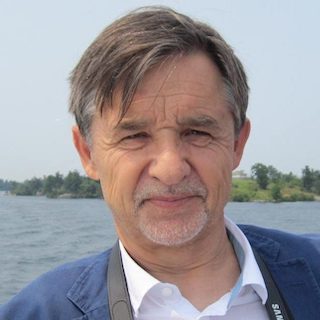
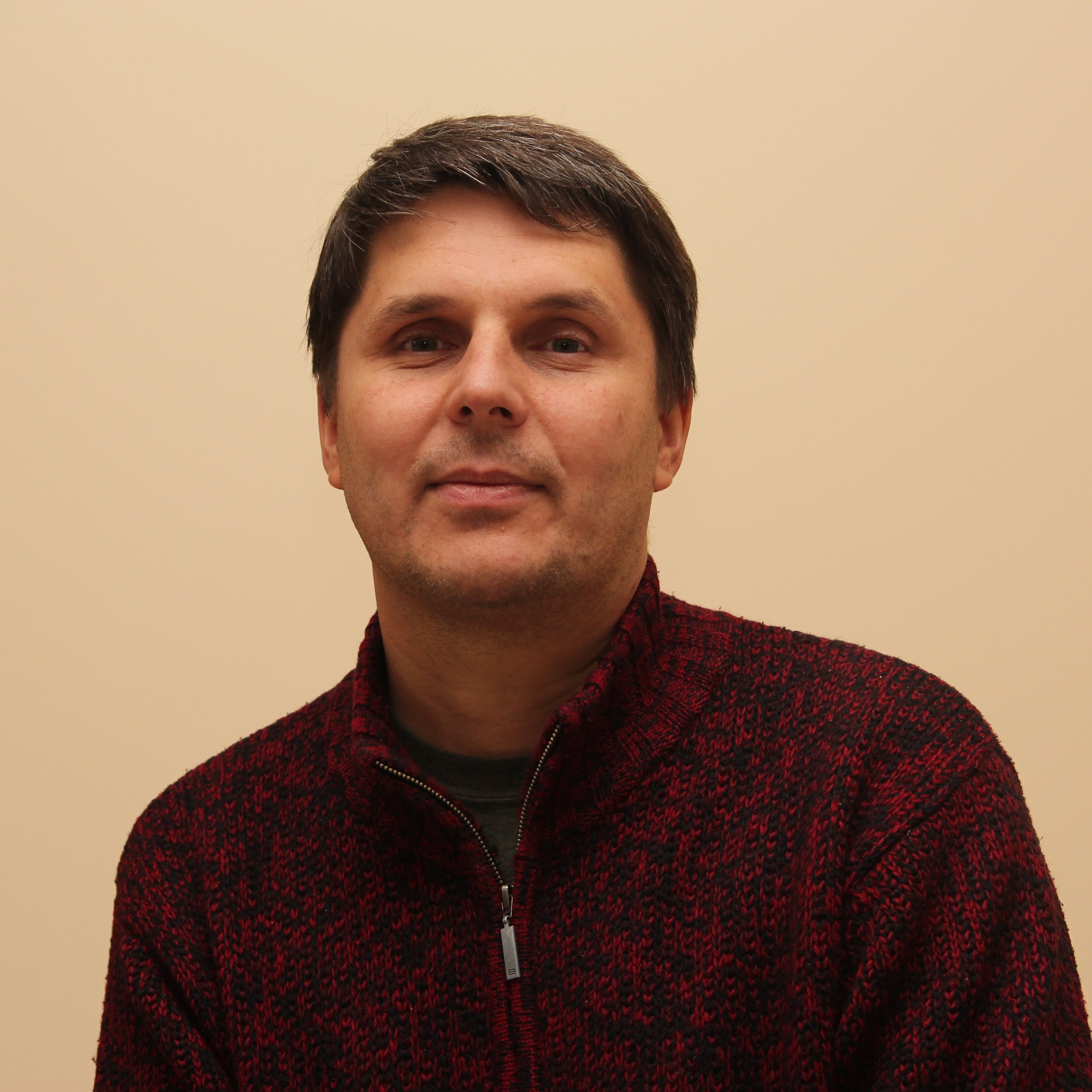
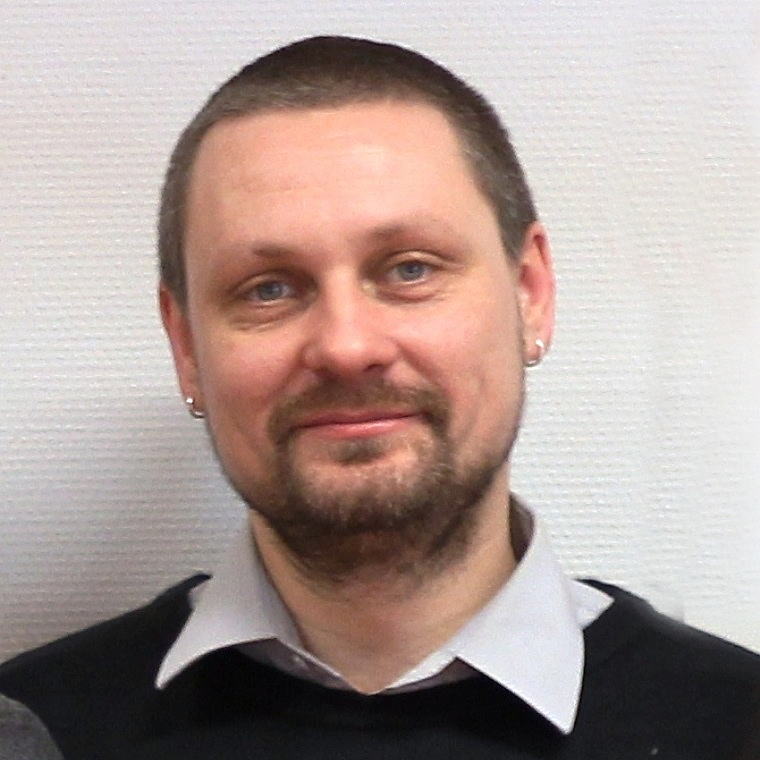
Vaidotas Kanišauskas is an Assistant Professor at Vilnius University Šiauliai Academy , where he has served as a Lecturer since January 2, 2021. Previously, he held academic roles at Šiauliai University from 1989 to 2020, including Head of the Department of Mathematics (2002–2008), Associated Professor (2001–2019), and Senior Assistant (1994–1999). His research focuses on the asymptotic theory of estimators for random processes , hypothesis testing, prediction, point processes, and large deviations. He also explores interdisciplinary applications of mathematics in history, archaeology , and internal migration . He teaches courses in Probability theory , Mathematical statistics , Theory of Processes , Reliability analysis , and Optimization methods . He holds a Doctor’s Degree in Physical Sciences (Mathematics) from the Institute of Mathematics and Informatics and Vytautas Magnus University, along with a Master’s and Bachelor’s in History from Šiauliai University.
Aleksejus Kononovičius is a Senior Researcher at Vilnius University's Institute of Theoretical Physics and Astronomy within the Faculty of Physics. His research spans interdisciplinary applications of physics principles to complex social and financial systems, with particular expertise in modeling collective behavior through statistical and computational approaches. Dr. Kononovičius's primary research interests focus on sociophysics, econophysics, and the physics of complex systems. His work explores opinion dynamics through various voter models (noisy voter model, compartmental voter model, scaled voter model), long-range memory phenomena in both physical and social contexts, and agent-based modeling of social and financial systems. He investigates how nonlinear stochastic dynamics can explain patterns in parliamentary elections, financial markets, and semiconductor physics. His research demonstrates how fundamental physical principles can elucidate complex phenomena across diverse domains. Analysis of his publication record reveals a consistent focus on developing and applying mathematical models to understand complex systems. His recent work (2023-2024) examines delayed interactions in voter models and 1/f noise in semiconductors, while maintaining his longstanding interest in long-range memory phenomena. The interdisciplinary nature of his research bridges statistical physics, social sciences, and finance, with applications ranging from understanding political behavior to financial market dynamics and physical material properties. 2020 Young scientist scholarship 'Effect of non-linearity on long-range memory properties of fractional Gaussian noise' awarded by Lithuanian Academy of Sciences Promotional scholarships for doctoral candidates (2013-2015) granted by Research Council of Lithuania IARIA Best Paper Award (2011) Dr. Kononovičius has supervised 3 bachelor degree theses, 1 master degree thesis, and 4 internship projects, demonstrating his commitment to mentoring the next generation of researchers. His research has been supported by multiple grants and scholarships from the Research Council of Lithuania. He actively contributes to the scientific community through his participation in the Complex Physical and Social Systems Group at Vilnius University. He maintains an active presence in the scientific community through the 'Physics of Risk' science blog (https://rf.mokslasplius.lt/), which serves as a platform for science popularization and educational activities related to his research interests. His work exemplifies the growing field of applying physics methodologies to understand complex social and economic phenomena.
Dr. Asta Meškuotienė serves as Director of the Institute of Metrology at the Faculty of Electrical and Electronics, Kaunas University of Technology (KTU). She also holds dual positions as Senior Researcher and Project SV3/83 Senior Researcher within the same institute, demonstrating her significant leadership and research contributions to metrology and measurement technologies. Dr. Meškuotienė's research spans multiple domains within technological sciences, with particular focus on: Electrical and electronic engineering (T001) Measurement engineering (T010) Metrology and measurement systems development Ultrasonic Lamb wave applications in non-destructive testing Petroleum logistics measurement integrity Legal and industrial metrology standards Her extensive publication record demonstrates expertise in developing and validating measurement systems across diverse applications. Recent work shows a strong focus on ultrasonic Lamb wave analysis for structural health monitoring, precision measurement in petroleum logistics, and advanced signal processing techniques for improving measurement accuracy. Her research bridges theoretical metrology with practical industrial applications, particularly in energy systems and manufacturing quality control. Dr. Meškuotienė leads the Metrology and Measurement Technologies research group at KTU, overseeing critical work in measurement standardization and validation. Her team develops methodologies for fuel tank calibration, vehicle speed meter verification, and textile deformation analysis, contributing significantly to both legal metrology frameworks and industrial quality assurance systems.
Vygintas Gontis is a Research Professor at Vilnius University's Faculty of Physics, working at the Experimental nuclear and particle physics center. His research spans statistical physics, dynamically chaotic systems, econophysics, and agent-based stochastic modeling with significant contributions to financial market analysis. Professor Gontis has developed influential theoretical frameworks applying physics principles to financial phenomena, creating stochastic models that explain volatility patterns, return intervals, and long-range memory effects in markets. His interdisciplinary work bridges statistical physics and economic theory, revealing universal patterns in complex market behaviors. Stochastic modeling of financial markets Long-range memory phenomena Agent-based computational finance 1/f noise analysis Complex systems dynamics Econophysics applications His publication record shows consistent scholarly output from 1987 through 2016, with recent work focusing on financial applications while maintaining connections to fundamental physics concepts. The research demonstrates evolution from quantum physics topics toward interdisciplinary financial modeling. Professor Gontis has supervised doctoral student Aleksejus Kononovičius (2011-2015) and postdoctoral researcher Rytis Kazakevičius (2020-2022). He leads the Group of Complex Physical and Social Systems and has held significant international roles including national representative for COST projects on Physics of Risk (2003-2008) and Physics of Competition and Conflicts (2008-2012).
Dr. Kęstutis Ikamas is a Senior Researcher at the Institute of Applied Electrodynamics and Telecommunications (IAET), Faculty of Physics, Vilnius University. His work focuses on terahertz technology and semiconductor physics, with significant contributions to CMOS-based terahertz detectors and sources, THz imaging systems, and nanostructures engineering for high-frequency applications. Dr. Ikamas specializes in CMOS THz detectors and sources, THz imaging, nanostructures engineering for THz applications, cybersecurity, and ITT technologies. His research bridges fundamental semiconductor physics with practical applications in the terahertz frequency range, which has growing importance in security imaging, non-destructive testing, and high-bandwidth communications. He has developed innovative approaches to terahertz detection using silicon CMOS technology, enabling more accessible and cost-effective terahertz systems. His publication record shows a consistent focus on advancing silicon-based terahertz technology, with particular expertise in field-effect transistor implementations for detection and emission across the 0.1-3 THz frequency range. His work often involves international collaborations with research groups from Germany, France, and other European countries. Scientific awards: 2022 Lithuanian Academy of Sciences, Kazimieras Baršauskas Prize in electronics and electrical engineering for scientific work 'Terahertz electronics: application of plasma waves to the operation of semiconductor devices above the cutoff frequencies' (with Prof. A. Lisauskas) 2021 Best Paper Award of the IEEE Microwave Theory and Techniques Society for 'A High-Sensitivity AlGaN/GaN HEMT Terahertz Detector With Integrated Broadband Bow-Tie Antenna' Dr. Ikamas has supervised student research including Domantas Vizbaras' 2022 thesis on graphene field effect transistor terahertz detector characterization. He led the Agency for Science, Innovation and Technology national research project No. TPP-03-045 'Point-to-point all-electronic 250 GHz source' (2019-2020, 82,000 EUR budget). He served on the NATO Science & Technology Organization Terahertz-band Communications and Networking IST-181 panel from 2019-2022, contributing to international standards development in this emerging field. As part of the Institute of Applied Electrodynamics and Telecommunications, Dr. Ikamas works within a team focused on advancing high-frequency electronics and electromagnetic applications, with strong connections to both academic and industrial partners in Lithuania and across Europe.
Professor Povilas Treigys is a Senior Researcher and Group Leader at the Image and Signal Analysis Group within the Institute of Data Science and Digital Technologies at Vilnius University's Faculty of Mathematics and Informatics. With extensive experience in digital signal processing and machine learning applications, he leads research efforts in medical image analysis, speech processing, and maritime traffic modeling. Dr. Treigys earned his Doctor of Science in Computer Science Engineering in 2010 with a dissertation on "Development and application of graphical methods for analyzing ophthalmological and thermovision data." His academic journey has been marked by significant contributions to interdisciplinary research connecting computer science with medical applications. His research primarily focuses on digital signal processing across multiple domains including medical imaging (MRI, eye fundus), audio signals, and maritime traffic data. A key emphasis of his work is the development and application of deep learning methods to solve real-world problems in healthcare diagnostics, retail automation, and transportation safety. His recent work demonstrates a strong trend toward explainable AI in medical applications and sophisticated time series analysis for prediction tasks. Professor Treigys serves in numerous leadership roles including as a EuroHPC JU Board Member representing Lithuania, VU MIF representative on the Lithuanian Quantum Technology Association board, and as a delegate to multiple professional committees. He is an active reviewer for several prestigious journals including Computer Science, Nonlinear Analysis, Baltic Journal of Modern Computing, MDPI Sensors, and MDPI Electronics. His laboratory focuses on bridging theoretical machine learning advancements with practical applications, particularly in medical diagnostics where his team has made significant contributions to prostate cancer detection, arrhythmia classification, and ophthalmological image analysis. The group maintains strong international collaborations and regularly presents findings at major conferences in computer vision, medical imaging, and artificial intelligence.
Dr. Rytis Kazakevičius is a Researcher at Vilnius University's Institute of Theoretical Physics and Astronomy (ITPA), focusing on statistical physics, anomalous diffusion, and 1/f noise in physical and socio-economic systems. He has published extensively on nonlinear stochastic differential equations and agent-based modeling. His work includes collaborations with colleagues like J. Ruseckas and A. Kononovicius, funded by the European Union (project No 09.3.3-LMT-K-712-19-0017). He also teaches undergraduate seminars on laboratory work preparation using software tools. Publications reveal expertise in Lévy flights, time-subordinated Langevin equations, and power-law statistics in nonhomogeneous environments. He serves as a reviewer for journals like Europhysics Letters and Physica A: Statistical Mechanics and its Applications.
Dr. Mažena Mackoit-Sinkevičienė is a postdoctoral fellow and researcher at the Institute of Theoretical Physics and Astronomy (ITPA) and Institute of Photonics and Nanotechnology (IPN) at Vilnius University. She serves as an Assistant Professor and leads the Cold Atoms and Condensed Molecular Structures Group , while also holding a junior researcher role at the Optoelectronics Department of the Center for Physical Sciences and Technology. Her work bridges quantum technologies and condensed matter physics. Education: Ph.D. in Physics (Vilnius University, 2018) Her research focuses on non-classical spin states in ultra-cold atomic gases , quantum technologies , and single-photon sources in solids , supported by grants from the European Social Fund and Horizon 2020. Recent publications highlight advancements in quantum squeezing and defect engineering in 2D materials for quantum applications. Scientific awards include the 2021 Government of Lithuania Award for leading the IPhO team, the 2018 Young Scientist’s Award from the Lithuanian Academy of Sciences, and the 2017 International Dr Karl Mey Scholarship . She actively engages in science popularization as the TV host of Physics with Coffee and a leader in World Quantum Day initiatives.
Dr. Mindaugas Viliūnas serves as an Associate Professor at the Institute of Chemical Physics within the Faculty of Physics at Vilnius University. His academic career spans multiple decades with continuous research contributions in the field of charge transport phenomena in disordered materials and electronics. Dr. Viliūnas specializes in charge transport mechanisms , bimolecular recombination processes , and advanced measurement techniques including CELIV (Charge Extraction by Linearly Increasing Voltage) and SCLC (Space-Charge-Limited Current). His research portfolio extends to photovoltaic technologies , MPPT (Maximum Power Point Tracking) systems, and photoemission studies of organic semiconducting materials. His work bridges fundamental physics with practical applications in electronic device development. Analysis of Dr. Viliūnas' publication record reveals a consistent trajectory of innovation in charge carrier dynamics research, with particular emphasis on transient measurement methodologies. His work demonstrates evolving sophistication from early studies of basic charge transport phenomena to more recent investigations of complex organic semiconductor systems and advanced photovoltaic applications. The interdisciplinary nature of his research connects physics, materials science, and electronic engineering. Dr. Viliūnas has supervised over 58 student theses throughout his career, reflecting his substantial commitment to academic mentorship. His teaching portfolio includes advanced courses in Computerized physical and technological measurements , Radio-electronic systems , and Digital signal processors , demonstrating his expertise across theoretical concepts and practical electronic implementations. As an active researcher at Vilnius University's Institute of Chemical Physics, Dr. Viliūnas contributes to Lithuania's scientific community through both fundamental research and practical applications of semiconductor physics, with potential implications for next-generation electronic and energy conversion technologies.
Šubonienė Aušra is a junior researcher and PhD student at the Cognitive Computing Group of Vilnius University's Institute of Data Science and Digital Technologies. She works on applying machine learning techniques to medical imaging, particularly for pancreatic cancer detection using CT scans. Field: Computer Science Supervisor: Prof. Dr. Olga Kurasova Study Period: 2023–2027 Research Focus : Her work centers on semi-supervised learning and pseudo-labelling methods for improving diagnostic accuracy in medical imaging. She has contributed to developing deep learning models that identify cut-off points for pancreatic cancer detection, with applications in CT scan analysis. Publication Trends : Recent articles demonstrate expertise in medical image segmentation , neural network optimization , and clinical decision support systems , primarily focused on oncology and radiology.