Conghui HU is a Lecturer (Educator Track) at the School of Computing, National University of Singapore. Currently teaching courses such as CS1010A Programming Methodology and CS2109S Introduction to AI and Machine Learning. Research Interests Artificial Intelligence and Machine Learning Computer Vision with focus on sketch-based methods Cross-domain Image Retrieval Video Processing and Segmentation Point Cloud Analysis and 3D Vision Publications Trends Recent research outputs emphasize sketch-based video segmentation, cross-modal audio-visual analysis, and domain-generalized image retrieval. Key methodologies include deep learning, unsupervised feature representation, and differentiable particle filters, with applications in video object segmentation, point cloud segmentation, and audio-visual conditioned prediction.
Dr. Umer Izhar is a Senior Lecturer in Mechatronics Engineering at the University of the Sunshine Coast (UniSC), Queensland, Australia. He holds a Ph.D. in Electrical Engineering from Lehigh University (USA) on a Fulbright Scholarship. Previously, he worked as an Assistant Professor at NUST, Pakistan, and contributed to developing the Mechatronics curriculum at Central Queensland University (CQU). His research focuses on MEMS sensors/actuators, robotics, and automation, with applications in environmental monitoring, medical imaging, and assistive technologies. Dr. Izhar teaches courses like Engineering Statics and IoT, and coordinates the Bachelor of Engineering (Mechatronic) (Honours) program. His work includes patents in powerline communication and IoT-based compliance systems. Education: Ph.D. (ElecCompEng, Lehigh University), MSc (ElecCompEng, LU), MSc (MechatronicsEng, UET Pakistan), BE (MechatronicsEng, NUST, Pakistan). Research Interests: Design/fabrication of MEMS-based sensors, robotics automation, micro mechatronics, and brain temperature monitoring sensors. He has published widely in journals and conferences, with notable works on robotic systems for environmental monitoring and electrothermally actuated MEMS braille dots. Awards: Recipient of the Fulbright Scholarship Award. His research has led to patents like the 'Powerline Communication Impedance Conditioning Circuit' and IoT solutions for pandemic compliance. Advising & Grants: Coordinates the Mechatronics Honours program and oversees research projects in MEMS and robotics. Collaborates on grants focused on embedded systems education and renewable energy integration. Labs/Teams: Engages in multidisciplinary projects at the School of Science, Technology and Engineering, focusing on applications in healthcare, environmental monitoring, and assistive technologies.
Bo Wang is an Assistant Professor of Computer and Information Science at The University of Mississippi. He holds a Ph.D. in Computer Science from the University of Utah (2015). His research focuses on computer vision, medical imaging, and machine learning, with particular emphasis on 3D modeling, human pose estimation, and image processing. He currently works in Weir Hall and can be reached at bwang3@olemiss.edu. Research interests include developing algorithms for occlusion-robust human pose estimation, hierarchical 3D modeling using octree structures, and medical imaging applications such as tumor localization and ultrasound tracking. His work integrates techniques like deep learning, domain adaptation, and contrastive learning to address challenges in computer vision and biomedical engineering. Recent publications highlight advancements in zero-shot human-object interaction detection, low-light pose estimation, and personalized 3D head modeling. His research trends emphasize interdisciplinary approaches combining computer vision with medical applications, particularly in radiotherapy guidance and anatomical modeling. Bo Wang has not listed any awards or grants in the provided materials. His academic contributions span over 30 publications since 2005, reflecting a sustained focus on advancing computational methods for medical imaging and 3D reconstruction.
Mohammed Al-Khalidi is a Senior Lecturer (Associate Professor) in Cyber Security at Manchester Metropolitan University and serves as the MSc Cyber Security Course Leader. He has secured over £500,000 in research funding from UKRI’s Global Challenges Research Fund and other bodies for projects in AI Security and Network Security. His research spans AI security, IoT security, Mobile Computing, Cloud Computing, Ad-Hoc Networks, and Information Centric Networks. He has contributed to EU projects including POINT (iP Over IcN - the betTer IP). He currently supervises PhD students working on Intelligent Mobility Management in 6G, Zero Trust Security for Internet of Drones, UAV Security using AI/Blockchain, and Cybersecurity Frameworks for Intelligent Transport Systems.
Dr. Rishe Naphtali is a distinguished Professor in the Knight Foundation School of Computing and Information Sciences at Florida International University (FIU), holding the Eminent Chair Professorship in Computer Science. He leads the High Performance Database Research Center (HPDRC) and the NSF I/UCRC for Advanced Knowledge Enablement. His expertise spans Geographic Information Systems, database management, and health informatics, with notable projects like TerraFly (a 100 TB aerial imagery database) and Medical Informatics. Education: PhD in Computer Science from Tel Aviv University (1984). Research grants exceeding $55M from NSF, NASA, IBM, and others. Holder of 8 U.S. patents and over 300 publications, including 6 authored/edited books. Awards include the Inaugural FIU Outstanding University Professor designation. Research focuses on geospatial data analytics, AI-driven medical diagnostics, and high-performance computing. His TerraFly project gained global media attention. Current work emphasizes Alzheimer’s disease prediction via multimodal data and maritime threat detection using neural networks. Awards: Inaugural FIU Outstanding University Professor Eminent Chair Professor in Computer Science Advising and grants: Over $55M in funded research, leading collaborative industry-university initiatives. Active in patent development (8 U.S. patents) and international conferences. Directs TerraFly and Medical Informatics programs. Labs/Teams: HPDRC (database research), I/UCRC (advanced knowledge enablement), and TerraFly team. Engages in cross-disciplinary projects combining GIS, AI, and healthcare.
Dr. Jee Ra is a researcher affiliated with the School of Mathematics, Physics and Computing at the University of Southern Queensland. Their work focuses on integrating advanced technologies like UAV systems, machine learning, and remote sensing to address challenges in mining geotechnics, environmental monitoring, and precision agriculture. Key research areas include coal spoil characterization, vegetation resilience modeling, and automated geospatial analysis. Education: Bachelor of Science in Physics, Seoul Women's University Graduate Diploma in Education, University of Technology Sydney Master of Science, University of Southern Queensland Doctor of Philosophy, University of Southern Queensland Research interests span geomatics, environmental impact assessment, and high-throughput plant phenotyping. Their recent work emphasizes fusion of spectral data with structural analysis for applications in mine rehabilitation and crop disease forecasting. Over 20+ peer-reviewed publications since 2013 demonstrate expertise in multidisciplinary approaches combining AI, IoT, and geospatial technologies. Key Trends in Publications: A growing focus on UAV-based solutions for spoil pile mapping and vegetation analysis, with increasing emphasis on transfer learning algorithms and automated hyperspectral index derivation. Work also bridges engineering and environmental sciences through 3D point cloud analysis and LiDAR applications in mining and agriculture. Collaborative Work: Active in developing open-source tools for thermal/multispectral image analysis and IoT-enabled sensors for in-field crop measurements. Contributions to sustainable mining practices include remote sensing-based wetland assessment and geotechnical stability analysis of mine dumps.
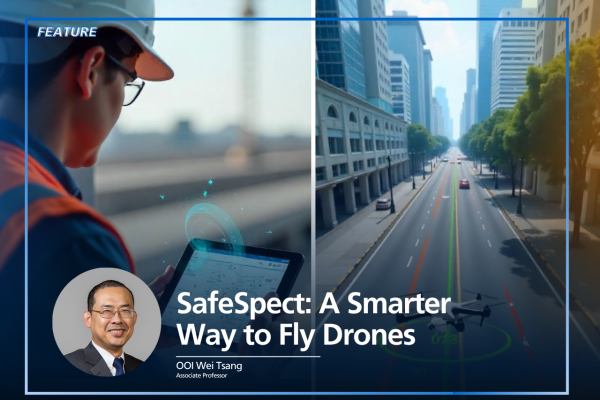
Associate Professor OOI Wei Tsang is affiliated with the National University of Singapore's School of Computing, Department of Computer Science. He co-directs the Image & Pervasive Access Lab (IPAL) and holds a PhD in Computer Science from Cornell University (2001) and a B.Sc. in Computer & Information Sciences from NUS (1996). Current Positions: Associate Professor at NUS School of Computing Education: PhD (Cornell), B.Sc. (NUS) Labs: Co-director, IPAL Lab His research focuses on interactive multimedia systems, particularly volumetric video streaming, cloud gaming, augmented reality, and human-AI collaboration. He has pioneered queuing theory-based approaches for DASH rate adaptation and developed assistive drone technologies for visually impaired individuals through the DroneBuddy project. Recent publications demonstrate expertise in streaming optimization, wearable health monitoring, and conversational AI. His work has been recognized with multiple teaching awards and competitive research accolades including the DASH-IF Excellence in DASH Award (Runner Up). He teaches CS2030S Programming Methodology II and has supervised students contributing to video streaming startups like Atlastream.
Mac Schwager is an Associate Professor in the Department of Aeronautics and Astronautics at Stanford University, with a courtesy appointment in Computer Science. He leads the Multi-robot Systems Lab (MSL), focusing on distributed algorithms for coordination, estimation, and learning in autonomous systems. His research spans multi-robot control, swarm intelligence, and perception-driven robotics. Schwager holds a PhD (2009) from MIT in Mechanical Engineering, following an MS (2005) and BS (2000) from MIT and Stanford, respectively. His academic career includes positions at Boston University and postdoctoral work at UPenn/MIT. Research interests emphasize distributed algorithms for autonomous teams, including aerial camera networks, quadrotor swarms, environmental monitoring, and human-swarm interfaces. Key projects include trustworthiness in multi-robot systems and autonomous drone racing. His lab develops tools like Gaussian Splatting for navigation and manipulation, integrating computer vision and reinforcement learning. Teaching includes advanced courses on state estimation, multi-robot control, and feedback systems. His work bridges robotics, control theory, and AI, addressing challenges in scalability, safety, and adaptability in complex robotic systems.
Lian Xu is a Research Fellow in the Department of Computer Science and Software Engineering at the University of Western Australia (UWA). She holds a PhD from UWA (2021) and specializes in computer vision, deep learning, and annotation-efficient methodologies. Her work focuses on weakly supervised learning, multi-modal data fusion, and applications in healthcare, agriculture, and maritime surveillance. Education: PhD in Computer Science, University of Western Australia (2021) Research Interests: Weakly supervised semantic segmentation Multi-modal learning with vision and language Computer vision applications in healthcare and agriculture Efficient learning strategies for limited labeled data Her research output emphasizes techniques such as auxiliary task integration, token-based transformers, and spectral analysis for hyperspectral imaging. Recent work includes advancements in small object detection for maritime surveillance and crop stress classification using hyperspectral data. Awards: Recipient of the Award for Growth in Innovation and Entrepreneurship (2021) for contributions to applied research. Teaching & Engagement: Facilitated courses on computer vision (CITS4402) and visualization (CITS2401). Co-organizer of workshops at DICTA 2024, ACCV 2022, and VCIP 2021 on small object detection and deep learning limits. Grants: Co-investigator on the Empowering Robots with 3D Vision and Reasoning for Enhanced Home Assistance project (2024–2025).
Yuhao Zhu is an Associate Professor at the University of Rochester, holding joint appointments in the Department of Computer Science and the Department of Brain and Cognitive Sciences. He is affiliated with the Center for Visual Science and the Goergen Institute for Data Science. His research focuses on visual computing, spanning imaging (optics, image sensors), human perception/cognition, and computer systems (architecture, programming models). He earned his Ph.D. from The University of Texas at Austin and has held visiting positions at Harvard University and Arm Research. Education: Ph.D. in Electrical and Computer Engineering, The University of Texas at Austin, 2017 M.S.E. in Electrical and Computer Engineering, The University of Texas at Austin, 2015 B.S. in Computer Science and Engineering, Beihang University, 2010 Research Interests: Dr. Zhu explores interdisciplinary areas such as computational imaging, human visual perception modeling, and energy-efficient computing systems. His work bridges optics, cognition, and computer architecture, with applications in AR/VR, autonomous systems, and neural rendering. Key themes include optimizing systems using biological principles and developing tools for efficient visual computing. Awards: NSF CAREER Award (2020) University Research Award (2023, 2019) ISCA Hall of Fame (2023) ACM SIGARCH Dissertation Award (2018, Honorable Mention) Teaching and Service: He teaches courses on computer imaging, graphics, and systems architecture. He serves on program committees for top conferences (ISCA, ASPLOS, MICRO) and chairs university-wide committees on AI ethics and international collaborations. His lab, Horizon Lab, actively mentors students and fosters interdisciplinary research. Labs/Teams: The Horizon Lab at URCS focuses on visual computing, with projects in computational art, AR/VR optimization, and robotic computing systems. Collaborations span academia and industry (e.g., Meta, Arm).
Pedro Porto Buarque de Gusmão is a Lecturer in Computer Science at the University of Surrey, affiliated with the Computer Science Research Centre within the School of Computer Science and Electronic Engineering. His research focuses on Computer Vision, Navigation under adverse conditions, Sensor Fusion, and Distributed Machine Learning. He leads projects in federated learning, autonomous systems, and robotic navigation, contributing to frameworks like Flower, a widely used federated learning library. His work emphasizes advancing federated learning techniques for privacy-preserving distributed systems, with notable achievements including winning the First Prize in the NIST Privacy-Enhancing Technologies Prize Challenge (2023). His publications span conferences like ICCV, USENIX Security, and IEEE Transactions, addressing topics such as federated learning optimization, 3D lane detection, and thermal-inertial SLAM. Key contributions include developing methods like L-DAWA for federated visual learning and FedVal for federated model validation. His research also integrates multimodal sensor data for autonomous navigation systems, leveraging mmWave radar and thermal-inertial fusion. He actively contributes to open-source projects and collaborates with industry on privacy-aware machine learning solutions.
Yu Zhang is a Lecturer in Computing (IoT/Networking) at the School of Computing, Macquarie University, Australia. He holds a PhD in Computer Science from RMIT University, an M.Eng in Distributed Computing from the University of Melbourne, and a B.Eng in Software Engineering from Southwest University for Nationalities. His research focuses on mobile computing, wireless sensor networks, embedded systems, on-device machine learning, and IoT, with emphasis on security, edge computing, and privacy preservation. He is affiliated with the Future Communications Research Centre and Smart Green Cities Research Centre. Dr. Zhang’s work integrates theoretical advancements with practical applications in IoT and edge computing. His research outputs span secure device communication, energy-efficient networking protocols, and anomaly detection frameworks. Collaborations include projects like the CSIRO Data61 PhD Scholarship. He actively contributes to IEEE and ACM, addressing challenges in privacy-aware systems and federated learning.
Dr. Ruwan Tennakoon is a Senior Lecturer in Artificial Intelligence at RMIT University's School of Computing Technologies in Melbourne, Australia. He holds a BSc (Hons) in Electrical and Electronics Engineering from the University of Peradeniya and a PhD in Computer Vision from Swinburne University of Technology (2015). Prior to his current role, he held post-doctoral positions at RMIT School of Engineering and IBM Research. His research focuses on robust computer vision, particularly in medical imaging and industrial automation. Key areas include distribution shift challenges, large vision foundation models, and robust algorithms for low-level vision tasks. His work spans applications like medical image analysis, autonomous systems, and defect detection in manufacturing. Ruwan has supervised numerous research projects, including those on threat detection, medical imaging AI, and industrial automation. He teaches courses in computer vision and machine learning, emphasizing practical applications. His research has been published in top-tier venues such as ACM Transactions on Intelligent Systems and Technology and Medical Image Analysis .
Matthew Kutugata is a Researcher in the Department of Soil and Crop Sciences at Texas A&M University's College of Agriculture & Life Sciences. He holds a PhD in Agronomy and focuses on advancing precision agriculture through innovative applications of computer vision, remote sensing, and robotic systems. His work emphasizes weed science, particularly in developing automated solutions for weed detection, biomass estimation, and site-specific crop management. Education: B.S. Geography, University of Texas, 2012 M.S. Agricultural Sciences, University of Texas - Rio Grande Valley, 2020 Research Interests: Development of machine learning models for weed species identification Integration of drone technology for precision agriculture Automated data annotation systems for agricultural imaging 3D point cloud analysis for biomass quantification His recent publications highlight advancements in automated weed management systems, including the use of unmanned aerial vehicles for targeted treatments and high-throughput robotic platforms for crop monitoring. These innovations aim to enhance agricultural efficiency through real-time data-driven decision-making. Matthew collaborates closely with industry partners and academic institutions to translate cutting-edge technologies into practical solutions for modern farming challenges. His work is supported by grants focused on sustainable agriculture and agroecosystem management. Laboratory Affiliations include the Texas A&M AgriLife Research Program, where he contributes to multidisciplinary teams developing next-generation agricultural tools.
Dr Yagna Jadeja is a Research Fellow at City St George's, University of London, currently leading AI integration in an Innovate UK-funded Knowledge Transfer Partnership with Airborne Composites Ltd. Their work pioneers machine learning applications for smart manufacturing automation within Industry 4.0 frameworks. Academic credentials include: PhD in Robotics and Imitation Learning, University of Derby (2020-2024) MSc in Control and Instrumentation, University of Derby (2018-2019) BEng in Electronics and Communications, Gujarat Technological University (2012-2015) Diploma in Electronics and Communications Engineering, Gujarat Technological University (2009-2012) Specializing in robotics and AI, Dr Jadeja develops multimodal simulations using AnyLogic while advancing deep imitation learning techniques. Technical expertise spans ROS frameworks, point cloud processing, MATLAB, Python, TensorFlow, and embedded systems optimization for Linux environments. Recipient of the Exceptional Global Talent Award from UK Research and Innovation, current research focuses on translating theoretical AI models into production-ready automation solutions through the KTP project. This initiative targets enhanced manufacturing efficiency via adaptive robotics systems.