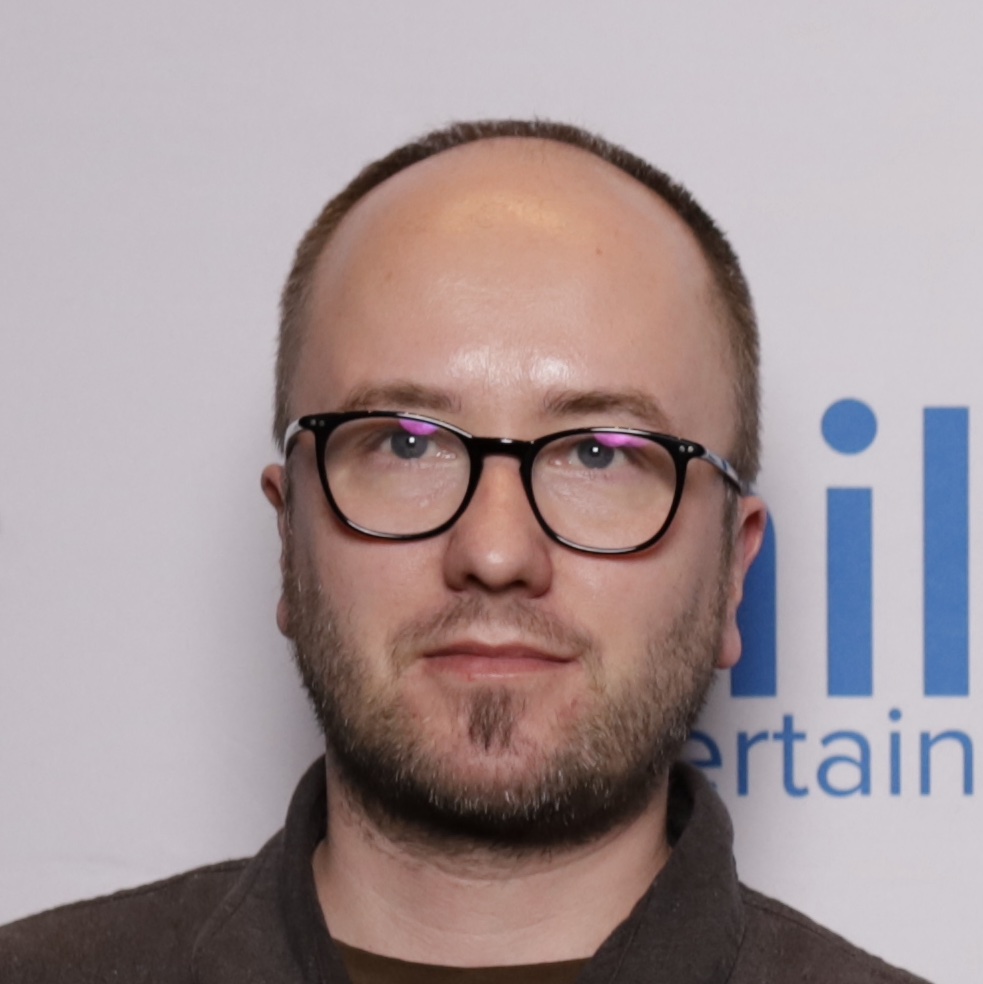
Dr. Molnár Bence is an Associate Professor at the Department of Photogrammetry and Geoinformatics, Faculty of Civil Engineering, Budapest University of Technology and Economics. His research focuses on AI-supported point cloud processing, accuracy analysis of medical imaging techniques, engineering geodesy, deformation analysis, and web-based photogrammetric applications. Courses taught: Civil Engineering Informatics (BMEEOFTAT42), Database Systems (BMEEOFTMI51), Field Course of Structural Geodesy (BMEEOAFAS42), Information Technologies (BMEEOFTMF-1) Research areas: Laser scanner data acquisition and point cloud processing, MS Kinect-based positioning and modeling, web applications for engineering tasks Contact: Room K. ép / I. em. 31/7; Consultation hours: Wednesday 13:00-14:00
Heikki Kauhanen is a researcher at Aalto University's Department of Built Environment. His work focuses on photogrammetry, remote sensing, and 3D modeling applications in urban environments. Collaborates on projects involving UAV photogrammetry and LiDAR Develops 3D visualization tools for environmental analysis Specializes in integrating geospatial datasets for urban vegetation monitoring Recent projects include biomass estimation for urban trees in Helsinki, multitemporal change detection in built environments, and cost-efficient survey drone development. His research bridges computational methods with practical urban planning challenges.
Erdal Aksoy is an Associate Professor at Halmstad University 's School of Information Technology , with visiting scholar roles at Volvo Group Trucks Technology and Zenseact AB . His work focuses on semantic scene perception , action semantics , and environment understanding for autonomous systems including robots and unmanned vehicles. Education : PhD from University of Göttingen, postdoctoral research at Karlsruhe Institute of Technology (KIT) and University of Göttingen Research Interests : Semantic scene perception, action semantics, autonomous systems, human-robot interaction, LiDAR processing, and deep learning applications His recent publications demonstrate expertise in LiDAR data processing (SalsaNet, SalsaNext), semantic state estimation for robotic cloth manipulation, and multimodal failure detection systems. He has coordinated the HORIZON Europe ROADVIEW consortium with 15 partners. Scientific recognition includes Best Student Paper Award at IJCAI 2021 AI4AD workshop Best AI Master’s Thesis Award from Swedish AI Society (SAIS) Wimanska Prize for best bachelor thesis Distinguished Service Award as IEEE Robotics and Automation Letters Associate Editor His advising track record shows mentorship of award-winning students across bachelor, master, and PhD levels. Erdal Aksoy maintains active collaborations between academia and industry, particularly with automotive technology companies.
Benny Thörnberg is an Associate Professor (Docent) at Mid Sweden University, working in the Department of Computer and Electrical Engineering (DET). He is employed in the Electronics subject area and is affiliated with the STC Research Centre. His office is located in room L204b in Sundsvall, and he can be contacted at benny.thornberg@miun.se. Dr. Thörnberg completed his Licentiate thesis in 2004 and his Doctoral thesis in 2006, both from Mid Sweden University, focusing on "Memory modeling and synthesis for real-time video processing systems." His academic journey has centered around hardware and software solutions for imaging and sensor systems. Thörnberg's primary research interests span hyperspectral imaging , computer vision , sensor technology , and FPGA-based real-time processing systems . His work bridges theoretical development with practical applications, particularly in material analysis, environmental monitoring, and transportation safety. He has made significant contributions to short-wave infrared imaging, 3D reconstruction techniques, and specialized instrumentation for challenging environments like icing conditions on wind turbines and roads. His recent publications demonstrate a clear trend toward practical applications of advanced imaging technologies, with focus areas including material classification, atmospheric icing measurement, anti-icing agent detection, and autonomous systems. Thörnberg has developed innovative solutions such as the Material Imaging Analyzer (MIA) and cost-optimized multi-camera dome systems for volumetric surveillance, showing his ability to translate theoretical concepts into deployable technologies. Thörnberg leads or contributes to several research projects including MEQAL (Detect methane leaks with new technology) and SENAVIS (Sensor technology for smart de-icing). His completed projects span diverse areas from autonomous friction measurement and airport monitoring to wood disintegration processes and rail pollution detection. These projects highlight his interdisciplinary approach and ability to address real-world challenges through advanced engineering solutions. As part of the STC Research Centre, Thörnberg collaborates with a multidisciplinary team focused on sensor technology and imaging systems. His work often involves partnerships across different sectors, including transportation, energy, and materials science, demonstrating the broad applicability of his research. His recent patent for an "Imaging Material Analyzer" underscores his commitment to developing practical tools that bridge laboratory research and field applications.
Prof. Turan SÖNMEZ serves as a faculty member in the Department of Forest Engineering within the Faculty of Forestry at Bursa Technical University. His expertise spans Geographic Information Systems in Forestry, Forest Growth Models, Forest Yield, and Dendrometry, with active contributions to forest management practices in Türkiye's Mediterranean and Marmara regions. His research focuses on developing advanced forest growth and yield models for species like Calabrian pine and Turkey oak, integrating Geographic Information Systems (GIS) and remote sensing technologies for precision forest monitoring. Key areas include UAV-based inventory systems, land-cover change analysis using elevation and settlement proximity metrics, and honey forest potential mapping. His methodological innovations in competition index development and single/double-entry volume equations have enhanced forest management planning accuracy. Prof. SÖNMEZ's publication record shows consistent output over 15+ years, with 31 articles accumulating 242 citations and an H-index of 8. Recent work demonstrates increasing integration of deep learning (e.g., U-Net architectures) with traditional forestry techniques, particularly in Istanbul and Bursa forest directorates. His research bridges theoretical modeling and practical forest management applications across Mediterranean ecosystems. His academic service includes developing spatial databases for forest management plans and contributing to national standards for forest inventory methodologies in Türkiye.
Fatemeh Alidoost is a Lecturer at the Department of Photogrammetry and Geoinformatics at HFT Stuttgart. Her teaching areas include Photogrammetry, Remote Sensing, Measurement Data Analysis, Computer Vision, and Deep Learning. Her research focuses on 3D reconstruction techniques, deep learning applications in geospatial data analysis, and UAV-based photogrammetry for infrastructure and urban mapping. She has contributed to advancements in automated building detection, bridge modeling, and tunnel inspection systems. Her recent publications emphasize integrating convolutional neural networks with photogrammetric data for damage detection, semantic segmentation of point clouds, and multiscale analysis of remote sensing imagery.
Dr. Maik Stille is a Research Associate at the Fraunhofer Research Institution for Individualized and Cell-Based Medical Technology (IMTE) in Lübeck, Germany, with strong affiliations to the University of Lübeck's Institute of Medical Engineering. His work focuses on advanced medical imaging techniques, particularly in computed tomography and artifact reduction methodologies. His research interests center on Computed Tomography , Metal Artifact Reduction , Image Registration , and Neuroimaging . Dr. Stille has developed innovative approaches for metal artifact correction using deep learning techniques and non-local prior image integration, significantly advancing the field of medical image reconstruction. His work bridges clinical applications with computational methodologies, particularly in addressing challenges posed by metal implants in CT imaging. Analysis of his recent publications reveals a strong trend toward deep learning applications in medical imaging, particularly using generative adversarial networks for metal artifact reduction. His research spans both clinical CT applications and industrial computed tomography, demonstrating versatility across medical and engineering domains. Key focus areas include dual-energy CT calibration, virtual monoenergetic imaging enhancement, and magnetic particle imaging techniques. Dr. Stille collaborates extensively with researchers at the University of Lübeck and participates in the Graduate School for Computing in Medicine and Life Sciences. His work has significant implications for radiation therapy planning, diagnostic imaging quality improvement, and industrial non-destructive testing applications.
Tuomas Eerola is an Associate Professor in Computational Engineering at Lappeenranta-Lahti University of Technology's School of Engineering Sciences. Previously, he served as a Postdoctoral Researcher at the same institution's Machine Vision and Pattern Recognition Laboratory from 2010 to 2020. He also holds the Title of Docent (Adjunct Professor) from 2015 to present. Dr. Eerola received both his M.Sc. and Ph.D. degrees in Information Technology from Lappeenranta University of Technology in 2006 and 2010, respectively. His research spans computer vision, machine vision, pattern recognition, and image processing, with particular focus on wildlife monitoring, plankton recognition, and industrial applications. His publication record shows consistent research output with over 50 publications, primarily focusing on animal re-identification (particularly ringed seals), plankton recognition systems, and wood processing applications. Recent work demonstrates increasing focus on deep learning approaches, multimodal systems, and practical applications in both ecological monitoring and industrial settings. Dr. Eerola actively serves as a peer reviewer for numerous prestigious journals including Ecological Informatics, Expert Systems with Applications, GigaScience, International Journal of Computer Vision, Mammalian Biology, and Measurement. His research has established him as a specialist in applying computer vision techniques to ecological monitoring problems, particularly in developing systems for identifying individual animals based on their natural patterns, which has significant implications for wildlife conservation efforts.
Dr.-Ing. Alexander Braun serves as Senior Vice President Digitalization and IT Systems and Chief Information Officer (CIO) at the Technical University of Munich (TUM), while also leading the Digital Twinning in the Built Environment research group. He is affiliated with the Chair of Computing in Civil and Building Engineering within the Department of Civil, Geo and Environmental Engineering at TUM's School of Engineering. Dr. Braun's research focuses on the intersection of construction engineering, digital technologies, and artificial intelligence. His primary areas of expertise include Digital Twinning, Building Information Modeling (BIM), construction progress monitoring, point cloud processing, and computer vision applications in construction. His work bridges the gap between theoretical research and practical implementation in the construction industry, with a strong emphasis on automation and data-driven approaches. His extensive publication record demonstrates a consistent focus on advancing digital construction technologies. Recent research has centered on AI-enhanced digital twinning, semantic modeling from point clouds, construction process analysis through computer vision, and knowledge representation for construction sites. These efforts have resulted in numerous high-impact publications in top journals including Automation in Construction and Advanced Engineering Informatics . As an educator, Dr. Braun has taught courses such as "Bau- und Umweltinformatik 1" and "Bau- und Umweltinformatik Ergänzungsmodul" at TUM, contributing to the development of future construction informatics professionals. His supervisory role extends to numerous Bachelor's and Master's theses, reflecting his commitment to academic mentorship. Senior Vice President Digitalization and IT Systems at TUM Chief Information Officer (CIO) at TUM Group Lead for Digital Twinning in the Built Environment Researcher in Construction Informatics since 2013 Dr. Braun actively contributes to the academic community as a reviewer for prestigious journals including Automation in Construction , Advanced Engineering Informatics , and Visualization in Engineering . His international research collaborations include a visiting researcher position at CyberBuild (University of Edinburgh) with Dr. Frédéric Bosché in May 2019.
Thomas Wiemann is a temporary Professor for Autonomous Robotics at Osnabrück University and a researcher at the German Research Center for Artificial Intelligence (DFKI) , group Kooperative und Autonome Systeme . He has been active since 2007, focusing on 3D mapping, SLAM, and semantic interpretation of sensor data for robotics. He received his Dr. rer. nat. in 2013 and his habilitation in 2020. His work is widely recognized, with awards such as the Karman Innovation Award (2007) and the Intevation Free Software Award (2014). Education: Habilitation in Computer Science, Osnabrück University (2020) Doctorate (Dr. rer. nat.) in Computer Science, Osnabrück University (2013) M.Sc. in Physics and Computer Science, Osnabrück University (2007) B.Sc. in Physics and Computer Science, Osnabrück University (2005) Research Focus: Thomas Wiemann's research is centered on autonomous robotics , particularly in 3D mapping , SLAM , and semantic environment understanding . His work includes the automatic generation of polygonal maps from point cloud data, large-scale 3D reconstruction, hyperspectral data integration, and hardware-accelerated SLAM systems using FPGAs and GPUs. He has developed open-source tools like the Las Vegas Reconstruction Toolkit (LVR) and contributed to ROS packages for 3D mapping and navigation. Scientific Awards: Karman Innovation Award (2007) for his master’s thesis Intevation Free Software Award (2014) for his contributions to open-source software Advising & Grants: He has supervised over 60 bachelor’s and master’s theses, primarily in the areas of 3D mapping, SLAM, and robotics systems. His projects include SOILAssist (2019–2021), focusing on sustainable agriculture using robotics, and 3DinOS (2016–2017) for 3D documentation of historical buildings. He has also worked on DFG-funded projects like RoboRithmics . Labs & Teams: He is part of the Knowledge Based Systems Group at Osnabrück University and collaborates with the DFKI Robotics Innovation Center . His lab focuses on advanced 3D perception, semantic mapping, and energy-efficient robotic systems.
Iro Armeni is an Assistant Professor in the Civil and Environmental Engineering Department at Stanford University's School of Engineering. She leads the Gradient Spaces research group, focusing on the intersection of civil engineering, architecture, and machine perception to design and construct data-driven environments across physical and digital space. Her educational background is highly interdisciplinary: PhD in Civil and Environmental Engineering with Minor in Computer Science from Stanford University (2020), Postdoctoral Researcher at ETH Zurich (2023), MSc in Computer Science from Ionian University (2013), MEng in Architectural Engineering from University of Tokyo (2011), and Diploma in Architectural Engineering from National Technical University of Athens (2009). Before academia, she worked as an architect and consultant for both private and public sectors. Dr. Armeni's research focuses on developing quantitative and data-driven methods that learn from real-world visual data to generate, predict, and simulate new or renewed built environments with humans at the center. She is particularly interested in creating gradient spaces that blend 100% physical (real reality) to 100% digital (virtual reality) using Mixed Reality. Her work spans computer vision, 3D scene understanding, semantic mapping, and their applications in the built environment. Her recent publications demonstrate significant contributions across multiple venues including CVPR, ECCV, SIGGRAPH, and ISPRS Journal, with research themes centered around 3D scene understanding, appearance transfer, scene synthesis, SLAM in dynamic environments, and semantic mapping. Her work shows a consistent trajectory toward creating sustainable, inclusive, and adaptive built environments that support current and future physical and digital needs. She has received prestigious awards including the ETH Zurich Postdoctoral Fellowship, Google PhD Fellowship, and MEXT Scholarship. Her teaching includes graduate courses such as Designing for Gradient Spaces (CEE342), Computer Vision for the Built Environment (CEE247C), and AI Applications in AEC (CEE329), reflecting her interdisciplinary approach to integrating machine perception with civil engineering applications.
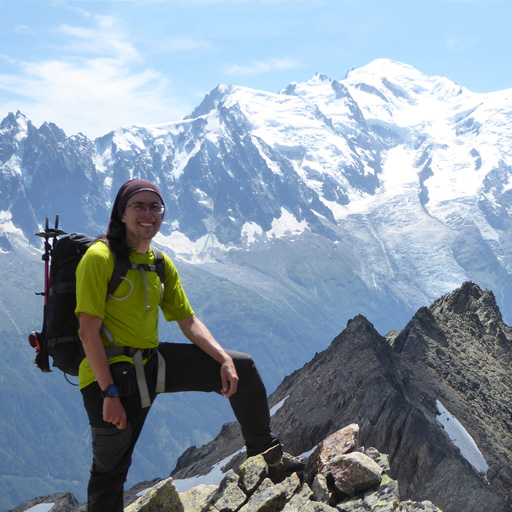
Oscar Argudo serves as Assistant Professor in the Department of Computer Science at the Barcelona School of Informatics, Universitat Politecnica de Catalunya (UPC), focusing on computer graphics and virtual reality applications for environmental simulation. His expertise bridges computational techniques with real-world ecological concerns, particularly human impact on natural landscapes through recreational activities like hiking. Education: PhD in Computer Science, Universitat Politecnica de Catalunya (2018). Thesis: "Realistic reconstruction and rendering of detailed 3D scenarios from multiple data sources". Advisors: Carlos Andujar and Antoni Chica. His research pioneers terrain modeling methodologies that simulate erosion, vegetation decay, and trail formation through procedural algorithms and crowd behavior modeling. Current work integrates pathfinding optimization for uneven terrains with anthropogenic degradation effects, creating immersive VR experiences that visualize environmental consequences of human activity. This approach uniquely combines his mountaineering passion with computational rigor to address ecological awareness through technology. Recent publications demonstrate consistent innovation in terrain analysis, digital nature rendering, and environmental simulation across top venues like SIGGRAPH and Eurographics, with emerging focus on open-sourcing tools for broader scientific impact. Scientific Awards: Maria Zambrano research fellowship (2022) R3 accreditation by Agencia Estatal de Investigación (2025) Accreditation of research by AQU (2025) He actively supervises students evidenced by the 2025 Eurographics Spanish Chapter Best BSc Thesis award for "Interactive viewer of natural scenes with hiking trails in Unity" and multiple master's theses converted to conference papers. As co-Principal Investigator of the SENDA project (funded by Ministerio de Ciencia e Innovación), he leads a team developing novel algorithms for virtual human simulation and terrain degradation modeling, with two postdoc positions recently advertised to expand this research. His work operates within UPC's Barcelona School of Informatics research ecosystem and the SENDA project team, which develops both VR applications for immersive environmental education and web-based tools for public engagement with terrain degradation phenomena.
Prof. Dr. Ralf Keidel is a faculty member at the Chair for Scientific Computing , Rhineland-Palatinate University of Technology Kaiserslautern-Landau (RPTU), since 2022. His academic career spans roles at Worms University of Applied Sciences , where he has served as Professor of Computer Science since 1993, Scientific Director of the Center for Technology and Transfer (ZTT) since 2000, and Head of the Technology Transfer Office since 1996. He is a key figure in international collaborations, including the ALICE Collaboration Board at CERN (2003–2023), Bergen pCT Collaboration (since 2018), and the MODE Collaboration (since 2022). His research merges Computer Science with High-Energy Physics , focusing on machine learning , secure heterogeneous distributed systems , and optimization of detectors in particle physics . Projects like SIVERT (2020–2024) aim to enhance Proton Computed Tomography (pCT) for clinical radiation therapy using AI-driven visualization and real-time reconstruction. He also contributes to serious games for financial education and mobile applications for musical training. Key publications highlight his work on differentiable programming for detector optimization, deep reinforcement learning in particle tracking, and convolutional neural networks for radiation topology analysis. His projects often involve interdisciplinary teams from institutions like the University of Bergen , DKFZ Heidelberg , and Western Norway University of Applied Sciences .
Mario Montagud Climent is a researcher at Centrum Wiskunde & Informatica (CWI) , focusing on virtual reality (VR), extended reality (XR), and multimedia systems. His work bridges network protocols, human-computer interaction, and immersive technologies. Key contributions: Multi-party holographic meetings, Edge rendering architectures, and XR quality of experience (QoE) optimization Collaborations: Sergi Fernández, Pablo César, Gianluca Cernigliaro, and other international experts in VR/XR Research spans network programmability for adaptive XR, holographic communications , and explainable AI for spatial audio analysis. Publications highlight QoE assessment and low-cost immersive solutions . Recent articles address real-time multiuser systems, neural 3D reconstruction for UAVs, and 6G federation concepts. His work integrates 5G/6G technologies with applications in cultural heritage and social VR.
Prof Ingo Waldmann is a Professor of Astrophysics at the Department of Physics & Astronomy, University College London (UCL). His research focuses on exoplanetary atmospheres, atmospheric retrieval methods, and the application of machine learning in astrophysics. He is a Turing Fellow at the Alan Turing Institute and has ongoing appointments at UCL since 2018, including roles as Lecturer, Associate Professor, and Professor. His research interests include: Exoplanet atmosphere modeling Disequilibrium chemistry Multidisciplinary applications of machine learning JWST data analysis Spectroscopy of planetary systems Climate modeling of exoplanets Recent publications highlight his work on neural networks for exoplanet chemistry, JWST transmission spectra retrieval, surrogate radiative transfer models, and instrument design for the EXCITE telescope. His work spans instrumental development, data analysis, and theoretical modeling. Scientific contributions include: 2025 : CHEXANET for exoplanet chemistry 2024 : EXCITE telescope design, JWST retrieval algorithms 2023 : Detection of SO2 and NH3 in planetary atmospheres Scientific awards: Turing Fellow, Alan Turing Institute (2021–present)