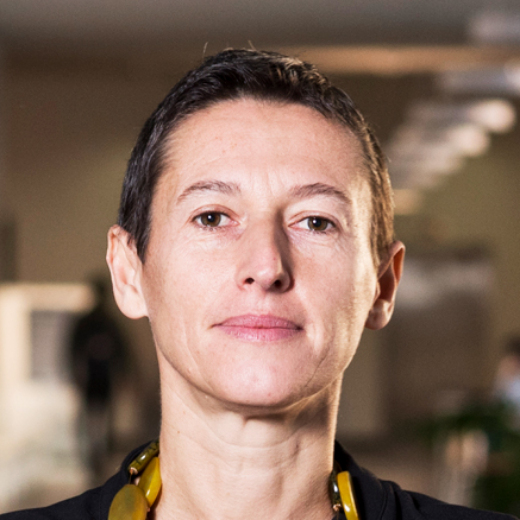
Chris Atkeson is a Professor at the Robotics Institute of Carnegie Mellon University. His research focuses on achieving human-level competence in machines through humanoid robotics and human-aware environments. He explores machine learning techniques such as reinforcement learning, nonparametric methods, and memory-based learning to develop robots capable of complex tasks like manipulation, locomotion, and perception. His work emphasizes bridging the gap between simulation and real-world applications (sim2real transfer), with contributions to tactile sensing (e.g., FingerVision), dynamic walking control, and human-robot collaboration. Notable projects include participation in the DARPA Robotics Challenge with Team WPI-CMU, where his team developed reliable humanoid behavior for disaster response scenarios. Atkeson’s research spans robotics, computer vision, and control systems, with a focus on enabling robots to perceive, learn, and act in unstructured environments. His recent work includes advancements in 3D scene capture, soft robotics, and energy-based planning for compositional tasks.
Professor Sara Baker is a Professor of Developmental Psychology and Education at the University of Cambridge's Faculty of Education and a Fellow at Darwin College, where she served as Vice Master from 2021-2024. She is also a 2022 Senior Fellow in the Science of Learning with UNESCO-IBE/IBRO. Her work bridges cognitive science and educational practice, focusing on how children develop executive functions and self-regulation skills. Baker leads the Early Years Library project, co-founded the Research Centre for Play in Education, Development and Learning (PEDAL), and is a founding member of the Global Executive Functions Initiative. Sara Baker specializes in the science of learning, with research aimed at improving children's lives by identifying factors at home and school that support their agency over learning. Her work emphasizes developing executive functions and self-regulation through playful learning approaches. She uses lab-based experiments and collaborates with educators to translate cognitive science research into educational contexts. Her research spans multiple countries including the UK, USA, Mexico, Denmark, Slovakia, South Korea, Ghana, Rwanda, Nigeria, Kenya, South Africa, and more, reflecting a strong commitment to culturally relevant and globally applicable educational practices. Analysis of Professor Baker's recent publications reveals a strong focus on executive functions, self-regulation, and playful learning across diverse cultural contexts. Her work increasingly addresses cultural adaptation of assessment tools and educational practices, particularly for Global Majority countries. There's a clear trajectory from basic cognitive research toward practical applications in educational settings, with growing emphasis on teacher training, culturally relevant assessment, and the role of play in early childhood development. Her interdisciplinary approach connects developmental psychology, educational theory, and practical classroom applications. 2022 Senior Fellow in the Science of Learning with UNESCO-IBE/IBRO Professor Baker leads the doctoral program in the Faculty of Education and serves as an Academic Project Director in the School of Humanities and Social Sciences. She is the Cambridge academic lead on the Close the Gap partnership between Cambridge and Oxford, focused on postgraduate widening participation. Her research has been funded by prestigious organizations including the Newton Trust, Cambridge Humanities Research Grant, Economic and Social Research Council, LEGO Foundation, Nuffield Foundation, and Office for Students/Research England. She actively supervises doctoral students and seeks highly motivated candidates for October 2026 entry whose research aligns with her focus areas. Professor Baker co-founded and is actively involved with the Research Centre for Play in Education, Development and Learning (PEDAL), which investigates how children's play affects their development. She leads the Early Years Library project, a curated collection of evidence-based practices for early years educators, and is a founding member of the Global Executive Functions Initiative. Her work with the Connections international professional learning network focuses on self-regulation, while the Close the Gap project addresses widening participation in postgraduate education between Oxford and Cambridge.
Michael S. Horn is a Professor of Learning Sciences and Computer Science at Northwestern University, serving as Program Coordinator for Learning Sciences. He holds a PhD in Computer Science from Tufts University and a ScB in Computer Science from Brown University. His research focuses on the intersection of human-computer interaction and learning, emphasizing the use of emerging technologies in museums, classrooms, and informal settings. Notable projects include multi-touch tabletops in natural history museums, tangible programming languages for early education, and the TIDAL Lab’s innovative exhibits like Build-a-Tree and DeepTree. Education background includes: PhD in Computer Science (Tufts University, 2009) MS in Computer Science (Tufts University, 2006) ScB in Computer Science (Brown University, 1997) Research interests span tangible interaction design, computational literacy, and museum-based learning. He has led projects such as the ‘Energy Monsters’ board game and the TunePad music-coding platform. His work integrates technology with pedagogical practices to foster collaborative and exploratory learning environments. Active collaborations include the Computer History Museum and the California Academy of Sciences. Advising contributions include mentoring doctoral students like Dr. Mmachi Obiorah and Pei-Yi. His lab, TIDAL, explores interactive technologies for education, with grants from NSF and industry partnerships. Recent articles highlight innovations in computational thinking integration, music-coding hybrid practices, and AI-driven qualitative analysis.
Jay Henderson is an Assistant Professor in the Department of Computer Science at Memorial University of Newfoundland, leading the Human-Computer Interaction (HCI) Lab. His research focuses on quantitative HCI, measuring human performance with emerging technologies such as mixed reality and generative AI. He holds a PhD from the University of Waterloo and has held roles including Postdoctoral Fellow at Carleton University and Senior Research Scientist at Huawei Technologies Canada. Education: PhD in Computer Science, University of Waterloo (2021) BSc Hons in Computer Science (minors in Mathematics and Psychology), Mount Allison University (2016) Research Interests: Henderson’s work bridges computer science with psychology and mathematics, emphasizing objective measurement of user interactions. Key areas include mixed reality productivity, generative AI interfaces, gesture-based input, and multimodal feedback systems. His quantitative approach ensures practical insights for technology design. Key Grants & Awards: NSERC Discovery Grant ($155,000 over 5 years) NSERC Discovery Launch Supplement ($12,500) David R. Cheriton Graduate Scholarship ($20,000 over 2 years) Teaching & Supervision: Teaches courses like COMP 4303 (AI for Games) and supervises multiple graduate and undergraduate researchers. Notable supervisees include Daniel Jo (MSc) and Arunav Saha (BSc Honours). Service Contributions: Served on ACM committees including Graphics Interface and CHI Late Breaking Work. Acted as Virtual Chair for ACM ASSETS 2024 and contributed to ACM’s name change policy as a transgender advocate.
Mathias Funk is an Associate Professor in the Industrial Design department at Eindhoven University of Technology (TU/e), leading the Things Ecology lab. His research focuses on designing with data and systems behavior, particularly in IoT and medical technology contexts. He co-founded UXsuite GmbH and developed the OOCSI communication framework. With a PhD in Electrical Engineering from TU/e (2011), Funk has held academic roles since 2013, including postdoctoral positions in Electrical Engineering and Industrial Design. He teaches courses like 'Data-enabled design' and supervises projects on AI, data foundry, and OOCSI applications. His work bridges engineering and design, addressing sustainability and human values through systemic design approaches. Education: PhD in Electrical Engineering, TU/e (2011) Computer Science background from RWTH Aachen Postdoc at TU/e's Electrical Engineering and Industrial Design departments Research Interests: Data-driven design methodologies, IoT systems, medical technology innovation, sustainable design practices, and interactive systems for musical expression. Recent work emphasizes telemonitoring efficacy in heart failure care and federated learning applications. Awards: Best Paper Award (2014) Honorable Mention (2021) Grants/Projects: Leading initiatives like MEDICAID (medtech solutions), ACACIA (interpretable AI), and Data-Driven Servitizing in Professional Printing. Active in clinical workflow prototyping and cardiovascular disease detection projects. Lab Activities: Manages the Things Ecology lab, focusing on systemic design challenges in smart ecosystems. Collaborates internationally through spin-offs and visiting lectureships.
Professor Susannah Quinsee is the Vice President (Digital and Student Experience) and Senior Diversity Ambassador for Race Equality at City, University of London. She leads on digital transformation, student experience, post-pandemic educational strategies, curriculum design, and staff development. Her team oversees Library Services, Learning Enhancement, Digital Education, and collaborations across academic divisions. She is a Lego Serious Play facilitator, integrating creative methods into leadership and change management. Previously, she served as Director of Learning Development and Chair in Learning and Teaching Development. Her expertise spans online learning, student support, and large-scale institutional change. Key roles include National Teaching Fellow (2011), Learning and Teaching Excellence Ambassador (2017), and Visiting Professor at the University of Northampton. She has advised national agencies like AdvanceHE and authored widely on educational leadership, playful pedagogy, and digital strategies. Her research focuses on playful leadership and change management, addressing how institutions adapt to evolving educational landscapes. Awards include the National Teaching Fellowship and HEA Principal Fellowship, reflecting her contributions to teaching excellence and professional development.
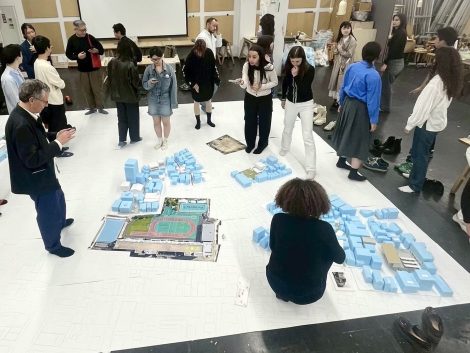
Keigo Kobayashi is an Associate Professor at Waseda University's Faculty of Science and Engineering, School of Creative Science and Engineering, Department of Architecture. He has served in this position since 2016, previously holding the rank of Assistant Professor from 2012 to 2016. His professional journey includes significant experience at the Office for Metropolitan Architecture (OMA) in Rotterdam, where he worked as a Senior Architect and Project Architect from 2007 to 2012. His educational background includes a Master of Architecture II from Harvard University's Graduate School of Design (2005), a Master of Architecture from Waseda University's Graduate School of Science and Engineering (2003), and a Bachelor's degree in Architecture from Waseda University's School of Science and Engineering (2002). Kobayashi's research focuses on architectural planning and city planning, with particular interests in food-related architecture, spatial behavior, and sustainable design. His work explores the intersection of architecture with everyday life, examining how spatial configurations influence human behavior and community formation. Recent research has investigated food systems in urban contexts, playful approaches to spatial design, and the relationship between architectural form and environmental performance. His publications demonstrate a strong focus on practical applications of architectural theory, with projects spanning from food truck design in Shodoshima to zero-energy housing solutions and innovative approaches to architectural education. His work shows a consistent interest in how architecture can respond to contemporary social challenges while maintaining theoretical rigor. Excellence in Concrete Construction Award 2019, American Concrete Institute (ACI), Qatar National Library / OMA Kobayashi actively contributes to architectural education through various committee memberships, including serving as Chief of the Subcommittee on Strategies for International Compatibility in Architectural Education at the Architectural Institute of Japan and leading the Caberra Accord Correspondence Subcommittee at the Japan Accreditation Board for Engineering Education. His teaching portfolio at Waseda University is extensive, covering architectural design studios from undergraduate to doctoral levels. He leads several research initiatives, including the Wakusei Project in Tosa, Kochi, NPO PLAT (Platform for Architectural Thinking), and the European Thinkbelt/McDonald's Radio University project which represents an innovative approach to architectural education and community engagement, particularly in contexts of migration and cultural exchange.
Andy Hargreaves is an internationally recognized scholar and advisor in education, holding dual roles as Adjunct Professor at Boston College and Visiting Professor at the University of Ottawa. He advises governments including Ontario, Scotland, and New Brunswick on educational policy and system reform. His work focuses on leadership, well-being, student engagement, and systemic educational change. Hargreaves co-leads the ARC Education Project and founded CHENINE, a Canadian research initiative advancing pedagogical innovation. Research Interests: Leadership from the Middle Teacher Well-Being and Professional Capital Identity Development in Schools Play-Based Learning Crisis Management in Education Awards: 2023 Canadian EdTech Awards Educator of the Year 2023 RHSU Edu-Scholar #16 2022 National Academy of Education Member 2015 Grawemeyer Award Key Projects: ARC Education Project (7 nations collaboration) CHENINE (Canadian educational innovation hub) Canadian Playful Schools Network Labs/Teams: Directs CHENINE, collaborates through ARC networks, and leads research on global educational transformation.
Viktoriya Olari is a researcher at the Didactics of Computer Science department, Freie Universität Berlin. Her work focuses on artificial intelligence literacy, data literacy, and digital education frameworks for K-12 and teacher training programs. She contributes to projects like ENKIS, DigiProMIN, and TrainDL, emphasizing interdisciplinary approaches to computer science education. Key Projects: ENKIS, AMI, Digi4All, siMINT, AI@IT2School Her recent publications address pedagogical methods for AI/data literacy integration, teacher professional development, and physical computing in education. She holds weekly consultation hours for students and maintains research partnerships across Germany. Research Themes: AI education in schools, data-driven pedagogy, digital transformation of teacher training
Dr Justine Howard is an Associate Professor in Education and Childhood Studies at Swansea University's Faculty of Humanities and Social Sciences. She holds Chartered Psychologist status and is an Associate Fellow of the British Psychological Society. Her research focuses on developmental psychology, educational psychology, and the role of play in early childhood development. With over 15 years of experience in higher education, she teaches and supervises PhD students in education-related topics. Her work emphasizes play-based learning, therapeutic play, and inclusive education. Notable contributions include publications on play's developmental benefits, teacher perspectives, and the implementation of play curricula. She has presented globally on topics like play advocacy and child well-being in crisis contexts. Awards include recognition from the British Psychological Society. Current PhD supervision includes projects on social justice in Bangladesh, music education impacts, and therapeutic play in healthcare settings. Howard's research spans international collaborations and policy engagement, such as advising on Welsh educational initiatives.
Dr. Marguerite Muller is a Lecturer in Education and Society at King's College London, leading the MA Education Management program. She holds degrees including a PhD in Higher Education Studies (University of the Free State, 2016) and a BA in Fine Arts (University of Pretoria, 2004). Her research focuses on arts-based methodologies, educator subjectivity, and social justice in education, employing post-qualitative, narrative, and participatory approaches. Teaching Responsibilities include modules on Education Leadership, Gender, Power, and Inequality in Education Leadership (MA level), and 'Education for the 21st Century: A Global Perspective' (BA level). She actively supervises PhD students exploring arts-based research, decolonial education, and social justice. Key affiliations include the Centre for Public Policy Research at King's College London and prior roles at the University of the Free State (South Africa). Her work emphasizes interdisciplinary collaboration, global South perspectives, and accessible, socially engaged scholarship. Notable recognitions include the NRF South Africa Y Rating (2023). Current research projects explore educator identity, participatory arts-based inquiry, and decolonization in higher education.
Britta Timm Knudsen is a Professor at Aarhus University, affiliated with the School of Communication and Culture, where she contributes to both the Experience Economy and Scandinavian Studies programs. Her research spans critical cultural theory, decolonial practices, digital media, and affective experimentation. University: Aarhus University School: School of Communication and Culture Position: Professor Email: norbtk@cc.au.dk Location: Jens Chr. Skous Vej 2, 8000 Aarhus C, Denmark Her research interests focus on cultural heritage, film and video, aesthetics, colonial legacies, and affective ambivalence. She explores how media and artistic practices engage with decolonial resistance, emotional geographies, and urban cultural memory. Her work often intersects with Indigenous perspectives, digital activism, and experimental methodologies. The recent articles reflect a strong engagement with decolonial visualities, translocal media events (such as the George Floyd video in Denmark), and playful resistance through internet memes. Her scholarship combines critical heritage studies with affect theory, digital culture, and postcolonial critique, forming a cohesive trajectory around memory, power, and representation. Britta Timm Knudsen has been involved in significant research projects such as Playing with Ghosts and ECHOES: European Colonial Heritage Modalities in Entangled Cities . She has supervised visiting PhD students, including Shama Patel, and secured external research funding. Her editorial roles in journals like International Journal of Heritage Studies and Nordicom Review demonstrate her academic leadership. Playing with Ghosts - Affective ambivalence in decolonial art practices (2023–2025) ECHOES: European Colonial Heritage Modalities in Entangled Cities (2018–2021) Emotionel geografi netværk (2008–ongoing) She is actively engaged in public discourse, having contributed to Danish media outlets such as DR P1 and various radio programs, discussing topics ranging from nostalgia in film to existential themes. Her work bridges academic research and public engagement, particularly in the context of colonial heritage and cultural memory.
Secil Ugur Yavuz is a Professor at the Faculty of Design and Arts, Department of Design, at Free University of Bozen-Bolzano. Her academic work spans eco-social design, research through design, and tangible human-technology interactions, with a particular focus on sustainable materials and collective making practices. She teaches courses including Design 3 for the Master in Eco-social Design and doctoral programs in Experimental Research through Design, Art and Technologies. Professor Yavuz's research explores the intersection of analog and digital through tangible human-technology interactions, with significant contributions to sustainable material systems. Her FERAL WOOL project investigates ecological and cultural dimensions of wool, while her work with biomaterials like microbial cellulose and open-source bioreactors addresses circular production systems. She employs embodied and speculative approaches to examine microplastic emissions, children's nature engagement through tools like TREESENSE, and social play with interactive toys. Her recent publications reveal a strong thematic focus on material culture, sustainability, and human-centered design across multiple scales. The research demonstrates consistent exploration of how digital and physical realms interact to create meaningful user experiences while addressing ecological challenges. Key trends include the use of embodied interaction methods, speculative design for cultural critique, and co-creative processes that bridge technological innovation with social and environmental responsibility. Yavuz leads the Design Friction Lab, which investigates the philosophical foundations of design through customizable interfaces and DIY approaches. Her work with doctoral students in Experimental Research through Design emphasizes reshaping technologies through collective making processes. The FERAL WOOL research project represents a significant current initiative exploring sustainable textile futures through both ecological and cultural lenses.
Rosella Gennari is an Associate Professor in Computer Science at the Faculty of Engineering, Free University of Bozen-Bolzano, where she conducts research and teaches in Human-Computer Interaction (HCI). Her work is centered on designing interactive technologies for children, focusing on physical-digital (phygital) artefacts, Technology-Enhanced Learning (TEL), and inclusive design. She leads the Research Unit Human-Centred Intelligent Systems and is actively involved in institutional leadership, including serving on the Third-Mission Board. Ph.D. : Computer Science, Amsterdam University (2002) Postdoctoral Experience : CWI, Amsterdam (ERCIM Alain Bensoussan Fellow); FBK-irst, Trento Leadership : Scientific & Technological Coordinator of the FP7-EU TERENCE project Her research explores how children interact with and design smart technologies, including IoT and AI, through playful and tangible interfaces. She investigates socio-emotional learning, digital well-being, and responsible design, often employing participatory and action research methods. Her work bridges computer science, education, and social impact, aiming to empower young learners as co-creators of technology. The analysis of her recent publications reveals a strong trend in developing and evaluating toolkits and frameworks for children and pre-teens to engage in designing smart things, IoT systems, and sustainable cities. Her work consistently emphasizes inclusivity, reflection, and responsible design, often in collaboration with teachers and learners. The publications span top HCI venues and journals, demonstrating a focus on practical applications in educational settings and the impact of technology on young users. Scientific Awards and Recognition ERCIM Alain Bensoussan Fellowship for talented young researchers Editorial Board Member, Journal of Child Computer Interaction (Elsevier, Q1) Regular reviewer for top HCI conferences and journals Advising and Grants : While specific advisees are not listed, her leadership role in the FP7-EU TERENCE project and numerous other research initiatives indicates extensive experience in securing and managing competitive grants. She mentors students through her research group and teaching, fostering the next generation of HCI researchers. Her collaborative network is extensive, with frequent co-authorship with researchers such as Alessandra Melonio, Maristella Matera, and Mehdi Rizvi. Labs and Teams : She leads the Human-Centred Intelligent Systems research unit, which serves as her primary lab and team. This group focuses on placing humans at the center of computer science and information engineering research. She is also a core member of the organizing committee for the MIS4TEL international conference series, highlighting her role in building and sustaining a global research community in Technology-Enhanced Learning.
Kristiina Kumpulainen is a Professor at the University of Helsinki's Faculty of Educational Sciences, leading the Learning, Culture & Interventions (LECI) research group. Currently on leave but actively engaged in research, she supervises doctoral students in both the Doctoral Program in Cognition, Learning, Teaching and Communication and the Doctoral Program in School, Education, Society and Culture. Her scholarly contributions include 270 research outputs and leadership of 27 research projects, with recent work focusing on children's digital experiences and early childhood education systems. Her research interests center on educational sciences with emphasis on early childhood education, digital literacy development, learning environments, and educational change processes. She examines how children interact with technology, develop ecological imagination, and build multiliteracy skills across different contexts. Her work bridges theoretical frameworks with practical educational interventions, particularly examining agency-structure dynamics in educational settings and the implementation of child-centric educational systems. Analysis of her recent publications reveals consistent focus on digital childhoods, educational interventions, and comparative early childhood education systems. Her work spans multiple methodologies including qualitative case studies, comparative analyses, and theoretical explorations of learning across contexts. The research demonstrates strong international collaboration, particularly within Nordic countries and global comparative studies. Member of the Finnish Academy of Science and Letters (2019) 2020 Editor's Choice Award from British Educational Research Association (2021) Nomination for Outstanding Publication Award from EARLI (2002) Nomination for best paper award at THE POWER OF MEDIA IN EDUCATION Conference (2007) Professor Kumpulainen has supervised numerous doctoral students and served on dissertation committees. Her research has been supported by significant grants including the Australian Research Council, Finnish Academy of Science, and Nordic research networks. She actively participates in academic service through editorial boards, peer review activities (over 90 manuscript reviews), and professional committees. She directs the Playful Learning Center research laboratory, which focuses on innovative approaches to children's learning through play and technology integration.