Hugo Gimbert is a Researcher at the LaBRI (Laboratoire Bordelais de Recherche en Informatique) within the Méthodes Formelles Team . His work bridges computational theory and practical applications, focusing on algorithmic game theory, stochastic processes, and formal methods in computer science. Research interests include: Decidability problems in distributed and stochastic games Partial observation in multi-player systems Cooperation and competition in bridging scenarios Social choice theory implementation Precision farming automation Probabilistic logics and humanoid robot control via MDPs Advising roles: PhD advisor for Soumyajit Paul, Edon Kelmendi, Quentin Rouxel, and Ludovic Hofer PhD co-advisor for Simon Mauras Former advisor for Youssouf Oualhadj Key projects: Stamina - Stabilisation monoids and regular language analysis Marmotte - CNRS committee digitalization platform Rhoban System - Real-time robotics for agriculture and soccer Parcoursup - Algorithmic college admission system for French government
Gilles Brassard is a Professor at the Department of Computer Science and Operations Research , Université de Montréal. His research spans the interdisciplinary field of Quantum Information Science , integrating computer science and quantum theory. PhD in Theoretical Computer Science, Cornell University MSc in Computer Science, Université de Montréal Brassard's research interests include: Quantum Cryptography Quantum Teleportation Quantum Entanglement Simulation Quantum Algorithms Local-Realistic Interpretations Quantum Communication Complexity The articles reflect his expertise in quantum information, with recent trends focusing on: Quantum key distribution in adversarial settings Classical simulation of quantum phenomena Quantum-enhanced cryptographic protocols Nonlocality and foundational quantum theory Privacy-preserving systems Experimental quantum implementations Scientific accolades include: Micius Quantum Prize (2019) Wolf Prize in Physics (2018) Officier, Ordre national du Québec (2017) Officer, Order of Canada (2014) Fellow of the Royal Society (2013) Killam Prize (2011) Gerhard Herzberg Canada Gold Medal (2009) Brassard has supervised numerous PhD and postdoctoral researchers, many of whom hold prominent positions globally, and his work has been commercialized in quantum cryptography.
Michael Trotter is a Senior Lecturer at the School of Health and Welfare , Halmstad University , Sweden. His current role centres on research and teaching at the intersection of health, psychology, and competitive gaming. Research interests span three core areas: Performance & Health in Esports: investigating caffeine, micro-breaks, and reaction-time optimisation among esports players and coaches; Psychological Determinants of Success: examining stress, coping, self-regulation, and mental toughness across amateur to elite levels; Development & Education: exploring youth development through school esports programmes and evidence-based coaching frameworks. Across more than twenty-five peer-reviewed publications (2020-2025), Trotter’s work reveals a clear trajectory: early focus on defining the esports athlete and mapping stress-coping patterns evolved into intervention studies on caffeine and micro-breaks, followed by applied coaching frameworks and mental-health promotion initiatives. Scientific awards & distinctions: No awards are listed in the provided material. Advising & grants: No specific doctoral students, master’s advisees, or grant details are disclosed in the supplied text. Laboratories & teams: While no dedicated laboratory name is mentioned, his affiliation with the School of Health and Welfare suggests collaborative access to the university’s Health Innovation and interdisciplinary Smart Cities research environments.
Johan Ekengren is an Associate Professor and Senior Lecturer in Applied Sport Psychology at Halmstad University's School of Health and Welfare. His academic work focuses on the psychological aspects of sports performance, particularly within handball and ice hockey contexts in Sweden. His research interests include: Sport Psychology and Mental Performance Career Development and Transitions in Professional Sports Mental Health and Well-being of Athletes Applied Interventions in Elite Sports Settings Handball Psychology and Performance Enhancement Injury Prevention and Psychological Aspects of Rehabilitation Dr. Ekengren's scholarly trajectory shows progression from foundational work on career models for handball players to more recent investigations of mental health in women's ice hockey and cocreation of injury prevention programs. His publications reveal a consistent focus on practical applications of sport psychology in elite handball environments, including work with the Swedish men's handball team across three consecutive Olympic Games. His doctoral thesis "Careers of Swedish Professional Handball Players: From an Empirical Model to Career-Long Psychological Support Services" (2020) established an empirical career model that informs his development of comprehensive psychological support services throughout athletes' careers. Dr. Ekengren actively collaborates with elite sports organizations in Sweden, particularly in handball, providing psychological support services and developing training programs for athletes at various career stages. His work bridges theoretical sport psychology with practical applications in high-performance environments.
Marion Berdal is a Researcher in the Supporting clinical sciences department at an institution in Brussels, Belgium. Her work focuses on molecular imaging and targeted therapies for oncological applications, particularly in the context of tumour models and fibroblast activation protein (FAP) targeting. Research Interests: Berdal’s research spans molecular imaging, nuclear medicine, and single-domain antibody development for cancer therapy. She specializes in leveraging radionuclide-based approaches to target FAP, a key player in tumour microenvironment dynamics. Publications: Her recent work includes studies on radiotheranostic single-domain antibodies and their efficacy in aggressive preclinical tumour models. These contributions highlight advancements in molecular imaging and dual-targeted radionuclide therapy.
Heliodoro Moya is a researcher affiliated with University Pablo de Olavide , focusing on sports nutrition, body composition analysis, and bioimpedance. He earned his doctoral degree in 2022 with a thesis titled Protocolo integral de estimación de la composición corporal en jugadores de fútbol profesional , supervised by Dr. Francisco José Berral de la Rosa. His work centers on developing and validating bioimpedance equations for skeletal muscle and fat mass estimation in Caucasian populations. Research Group: ESAR Ejercicio, Salud y Alto Rendimiento Áreas PAIDI: Ciencia y Técnicas de la Salud Recent publications highlight his contributions to understanding phase angle correlations with body composition, optimizing recovery protocols for athletes, and evaluating hydration strategies. His studies employ systematic reviews, device validation, and population-specific modeling to advance sports science and clinical nutrition. Key research trends include: Development of bioimpedance equations for muscle and fat mass Analysis of phase angle as a health biomarker Antioxidant supplementation for exercise recovery Dietary patterns in youth athletes
Adam Philip Sharples is a Professor at the Department of Physical Performance of the Norwegian School of Sport Sciences. His research focuses on epigenetic regulation of skeletal muscle in response to exercise and aging, including the discovery of epigenetic memory in muscle cells. He teaches Cell Biology , Molecular Physiology , and Epigenetics courses. Background: Former professional rugby player (UK), PhD in skeletal muscle aging, postdoc in 3D muscle cultures. Previous Positions: Lecturer/Senior Lecturer/Reader at Liverpool John Moores University, Director of MSc in Cell & Tissue Biology at Keele University. Funding: 10 million NOK from the Research Council of Norway to study muscle memory of aging and atrophy. Research Interests center on: Epigenetic memory of muscle growth/wasting Proteomic and epigenomic responses to exercise Molecular mechanisms of muscle adaptation Role of novel molecules in muscle dynamics Recent publications (2025-2023) highlight his work on DNA methylation , proteomic signatures , and epigenetic imprints in skeletal muscle, with studies on resistance training , HIIT , and endurance exercise across diverse populations. His group combines multi-omics integration and cellular models to unravel mechanisms of muscle memory and aging. Labs & Teams: Leads a research group at NIH investigating skeletal muscle epigenetics, collaborating with institutions like Liverpool John Moores and Keele University.
Professor Vanessa Cesário is a leading academic in Digital Media and Human-Computer Interaction (HCI) , currently affiliated with the Faculty of Arts and Humanities at the University of Madeira . She is an active researcher at the Interactive Technologies Institute (ITI) , focusing on Cultural Heritage, Participatory Design , and Interactive Storytelling across international collaborations. Ph.D. in Digital Media (Communication Sciences and Technology) Master’s in Cultural Management Bachelor’s in Communication Her research integrates technology-mediated cultural preservation through methodologies like collaborative autoethnography and inclusive design . She develops gamified museum experiences and serious games for educational purposes, notably creating the OWL CLUB application for student engagement. Recent publications emphasize AR for marine conservation , LLM-driven sustainability games , and empathic design for marginalized communities . Her work addresses ethical AI implementation and emotional dynamics in gaming , with practical applications in no-code exhibition tools and retro-inspired interactive systems . Key projects include eGames Lab and MEMEX , with fieldwork spanning teenager engagement in museums , elderly participatory design , and migrant community integration . She advocates for cross-disciplinary research and modular communication frameworks to enhance cultural and educational technologies.
Dr Tony Westbury is an Associate Professor at the School of Applied Sciences , Edinburgh Napier University. His academic work focuses on sports psychology , athlete resilience , physical activity interventions , and talent development in diverse sports contexts. Specializes in athlete well-being and psychological resilience Supervises PhD and Master's students in sports science Contributes to research on rugby, triathlon, and cycling Active in evaluating behavioral change programs for mental health His research spans from high-performance environments to community-based physical activity interventions . Key areas include understanding psychosocial hazards , junior-to-elite transitions , and stress management in sports. Articles highlight work on triathlon coaching , rugby culture transitions , and mental health benefits of cycling . Tony serves as a supervisor for several doctoral projects, particularly in rugby coaching , soccer performance , and environmental factors in sports . He has secured grants for initiatives like the Scottish Cycling mountain biking trail therapy and the ALBA behavior change program .
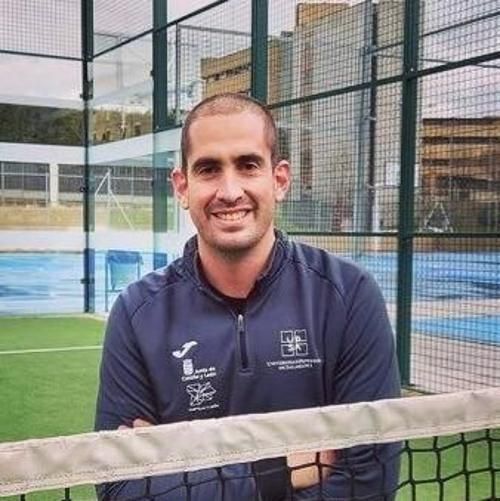
Alberto Rodríguez Cayetano is a contracted-doctor faculty member at the Faculty of Education of the Pontifical University of Salamanca , where he serves as Professor of the Degree in Physical Activity and Sports Sciences and Director of the Sports Service . He is also a member of the Technical Committee of the Spanish Committee for University Sports and the High-Level Athletes Commission of the Regional Government of Castilla y León. Education PhD, Pontifical University of Salamanca (2017) Thesis: “Pre-competitive anxiety in junior, children's and cadet padel players from Castilla y León” – supervised by Dr. Salvador Pérez Muñoz Graduate in Physical Activity and Sports Sciences, Pontifical University of Salamanca Diploma in Teaching with Specialization in Physical Education, Pontifical University of Salamanca National Tennis Director and National Paddle Tennis Instructor Research Interests Dr Rodríguez Cayetano investigates a broad spectrum of topics in sport pedagogy , physical activity inclusion , and innovative teaching methodologies . His work delves into gamification for enhancing motivation and motor engagement, emotional states during sport practice, tactical analysis in football, and adapted physical activity for people with disabilities. He is particularly interested in how small-sided games and alternative sports can foster cooperative learning and co-education, while also examining gender stereotypes and intrinsic satisfaction among youth athletes. Publication Trends Since 2020 he has authored or co-authored more than 50 peer-reviewed works. The most recent articles (2024-2025) reveal a clear trajectory toward technology-enhanced inclusive training , systematic reviews of sport-education models , and interdisciplinary studies linking psychology, pedagogy, and performance analysis . Gamification appears as a recurring theme, applied to university students, secondary-school pupils, and special populations. Football (both male and female, youth and professional) dominates the performance-analysis corpus, with detailed examinations of goalkeeper tactics, conditional training effects, and reduced-space games. Scientific & Professional Recognition Accredited as Contracted Professor and Professor at a Private University by the Quality Agency of the University System of Castilla y León (2019) Member, Technical Committee of the Spanish Committee for University Sports Member, High-Level Athletes Commission of the Regional Government of Castilla y León Teaching & Service With over 15 years of experience in sports education, he has directed multiple sports schools and currently leads the university’s Sports Service. His teaching spans undergraduate courses in physical activity and sports sciences, where he integrates evidence-based pedagogical models and supervises student research projects. Laboratory & Research Group He is an active member of the EGIIOFYD research group ( Teaching, management, intervention, inclusion, and guidance in physical activity and sport ), which serves as the primary vehicle for his funded projects and collaborative publications.
Wilbert van den Eijnde is an Associate Professor at NHL Stenden University of Applied Sciences , leading the Smart Sustainable Manufacturing research group. His work bridges technical innovation (industrial automation, 3D printing, model-based engineering) with social innovation in lifelong learning. Research Interests include: Circular plastics for advanced manufacturing Hybrid education frameworks Player-surface interaction biomechanics Smart systems in industrial control Reliability engineering for sustainable solutions Scientific Awards highlight his impact: 2024: Polymers Young Investigator Award 2024: Netherlands Academy of Engineering Fellow 2023: New Scientist Science Talent Nominee 2022: ACS Materials Rising Star 2021: KIJK Best Tech Idea 2017: NWO Team Science Award for HyBRIt group
Alberto Sánchez Sixto is an Associate Professor at Universidad Pablo de Olavide, affiliated with the Department of Sports and Information Technology. His research focuses on biomechanics, sports performance, and physical education within the AFSD (Physical Activity, Health and Sport) research group. He earned his PhD in 2018 with the thesis 'The relevance of countermovement depth in vertical jump performance' under Dr. Pablo Floría. Born: February 1, 1989, in Cádiz, Spain Academic Rank: Associate Professor Research Areas: Biomechanics, Sports Performance, Physical Education Email: asansix@upo.es His research spans biomechanics, sports physiology, and training methodologies. Recent publications examine flywheel training validation, muscle oxygenation in squats, joint movement patterns in runners, and the impact of verbal instructions on basketball players' reactive strength. He also explores social media applications (e.g., Instagram) in university education. As a professional basketball referee in Spain's ACB League since 2017, his work uniquely bridges academic research and practical sports officiating. His studies on physical activity monitoring, velocity-based resistance training, and gait coordination variability contribute to both athletic performance optimization and referee workload analysis.
Alicia Jessop is an Associate Professor of Sport Administration in the Communication Division at Seaver College, Pepperdine University, serving as Academic Director for the Institute for Entertainment, Media, and Sports. A licensed attorney in California and Colorado, she is a leading expert in sports law and business with extensive journalism experience as a contributor to The Athletic, The Washington Post, Forbes, and SI.com, and founder of RulingSports.com. Education: B.S. in Economics, Colorado School of Mines (2006) Juris Doctor, Chapman University School of Law (2009, Cum Laude) Professor Jessop's research centers on athlete, creator, and consumer well-being, women's leadership, and legal frameworks in sports. Her work addresses critical issues including Name, Image, and Likeness (NIL) rights, biometric data privacy, gender equity under Title IX, and labor relations in college athletics, bridging scholarly analysis with industry applications through consulting and policy development. Her 2018-2023 publications reveal a dominant focus on evolving NCAA regulations, particularly NIL commercialization and athlete rights. These works demonstrate interdisciplinary connections between sports law, privacy concerns, gender equity, and labor economics, frequently appearing in top-tier journals like the Journal of Sport Management and Harvard Journal of Sports and Entertainment Law. Grants and Professional Service: Women in Film grant (2020) for research on funding barriers for women entrepreneurs in screen industries President of the Sport and Recreation Law Association Editorial Board member, Journal for Legal Aspects of Sport Advisory Board member, Openly HQ Professor Jessop has developed athlete transition programs for the National Basketball Players Association and career models for the Alliance of American Football. Her community engagement includes long-term work with Haiti's KORE Foundation for economic development and empowerment, alongside service at Bel Air Church and the Junior League of Los Angeles.
Francisco Tomás González Fernández is a Professor at the Department of Physical Education and Sports within the Faculty of Education and Sports Sciences Melilla. He coordinates the Double Degree in Primary Education and Physical Activity and Sports Sciences. His academic responsibilities include regular tutoring sessions held in Office 007 during both semesters. His research focuses on sports science, exercise physiology, and physical education pedagogy, with emphasis on: Effects of physical activity on cognitive function across age groups Performance analysis and injury prevention in soccer Youth athlete development and training methodologies Environmental impacts on sports performance Educational models for physical literacy development Analysis of his recent publications shows consistent investigation into athletic performance metrics, particularly in soccer contexts, with methodologies spanning experimental interventions, systematic reviews, and cross-cultural studies. Research frequently examines physiological responses to training loads, cognitive impacts of exercise, and pedagogical approaches in physical education. No scientific awards, grants, research labs, or supervised student information is documented in available sources.
Dra. Inmaculada Rodríguez Santiago is an Associate Professor at the University of Barcelona, affiliated with the Faculty of Mathematics and Computer Science. Her research focuses on Human-Computer Interaction (HCI) and Artificial Intelligence (AI), particularly in 3D virtual environments, gamification, and intelligent agents. Education: PhD in Informática from Universidad de Alcalá de Henares (2004), Diploma in Informática from Universidad de Granada (1991), Degree in Informática from Universidad de Granada (1993). Her work spans gamification frameworks, VR applications for education, and ethical conversational agents. She has published nearly 100 conference papers, 19 journal articles, and supervised two doctoral theses. Recent publications highlight adaptive gamification, hate speech visualization, and AI-driven educational tools. She collaborates with the CLIC and WAI research groups and has secured funding for projects like Collectiveware and The Digital Reconstruction of the Prehistoric Past . Scientific Awards: Three six-year research periods recognized by the Spanish government. She has taught courses in programming, operating systems, and human-computer interaction since 1995 and served as Vice Dean of Research at her faculty from 2016–2021.