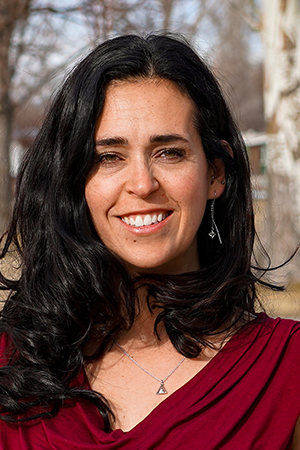
Andy Hargreaves is an internationally recognized scholar and advisor in education, holding dual roles as Adjunct Professor at Boston College and Visiting Professor at the University of Ottawa. He advises governments including Ontario, Scotland, and New Brunswick on educational policy and system reform. His work focuses on leadership, well-being, student engagement, and systemic educational change. Hargreaves co-leads the ARC Education Project and founded CHENINE, a Canadian research initiative advancing pedagogical innovation. Research Interests: Leadership from the Middle Teacher Well-Being and Professional Capital Identity Development in Schools Play-Based Learning Crisis Management in Education Awards: 2023 Canadian EdTech Awards Educator of the Year 2023 RHSU Edu-Scholar #16 2022 National Academy of Education Member 2015 Grawemeyer Award Key Projects: ARC Education Project (7 nations collaboration) CHENINE (Canadian educational innovation hub) Canadian Playful Schools Network Labs/Teams: Directs CHENINE, collaborates through ARC networks, and leads research on global educational transformation.
Dino Pedreschi is a Full Professor of Computer Science at the University of Pisa, affiliated with the Department of Computer Science (DI-UNIPI). He co-leads the Pisa KDD Lab, a joint research initiative between the University of Pisa and the Italian National Research Council’s Institute of Information Science and Technology, one of the earliest labs focused on data mining and knowledge discovery. His research spans Big Data Analytics , Social Network Analysis , Human Mobility Analysis , Privacy-by-Design , Explainable AI (XAI) , and ethical data mining . He is a pioneer in privacy-preserving data mining and has contributed significantly to understanding societal impacts of AI and big data. Recent publications highlight trends in explainable AI , fairness-aware data mining , urban mobility modeling , and socio-economic nowcasting , reflecting a strong interdisciplinary focus combining computer science, social science, and policy. Notable scientific awards include: Google Research Award on Privacy (2009) University of Pisa Ordine del Cherubino (2017) Pedreschi has played leadership roles in major conferences such as ECML/PKDD (Co-Chair 2004), ICDM (Vice-Chair 2005), and ICDE (Vice-Chair 2014). He founded the Business Informatics MSc program at the University of Pisa to train interdisciplinary data scientists. He has been a visiting scientist at the University of Texas at Austin, CWI Amsterdam, UCLA, and the Barabási Lab at Northeastern University. He actively contributes to European research initiatives including SoBigData++, FAIR, and TAILOR, and has advised on AI policy, including testimony before the Italian Parliament on AI and labor markets. He is a key member of the Pisa KDD Lab, a leading research group in data science and AI ethics, fostering collaboration between academia and public institutions.
Carrie Hempel is a Distinguished Clinical Professor of Law at the University of California, Irvine School of Law, where she serves as Co-Director of the Community and Economic Development Clinic. She was UCI Law's founding Associate Dean for Clinical Education and Service Learning, playing a key role in establishing the school's clinical programs. Prior to joining UCI, she taught at the University of Southern California School of Law, where she directed the Post-Conviction Justice Project, providing legal assistance to indigent prisoners. Professor Hempel's research focuses on clinical legal education, post-conviction practice, criminal law, gender and the law, and transactional law with emphasis on community economic development and affordable housing. Her work bridges theoretical legal education with practical community impact, particularly through clinic-based teaching models that address systemic issues in housing and economic justice. Her publications reveal a consistent trajectory of innovation in legal education, with particular emphasis on experiential learning models. Hempel's scholarship demonstrates how law clinics can serve as both educational platforms for students and meaningful service providers addressing community needs, especially in the areas of immigrant worker cooperatives, affordable housing preservation, and post-conviction relief mechanisms. As Co-Director of the Community and Economic Development Clinic, Hempel oversees student attorneys who work on real cases involving community development, small business formation, nonprofit organizations, and housing issues. Her leadership in clinical legal education has positioned UCI Law as an innovator in practice-based legal training that connects students with underserved communities.
Elizabeth Davis is an Extension Associate Professor at Utah State University (USU) and serves as the Kane County Director. She works in the Home and Community Department, focusing on youth development, STEM education, and family engagement activities. Education: MS in Family Consumer and Human Development (Adolescent Focus), Utah State University (2010) Research Interests: Social-emotional learning for youth Integrating STEM into family and community settings Improving college and career readiness Enhancing relationships through educational programs Publications: Her work includes peer-reviewed articles on behavioral medicine, STEM curriculum development, and technical reports on relationship-building initiatives. Key themes span youth development, educational outreach, and health interventions. Scientific Awards: 2nd Place Marketing Public Relations (2021) Excellence in 4-H STEM Programming (2021) Extension Innovator Award (2021) 1st Place Innovative Program (2021) Marketing/Public Relations Award (2020) Achievement of Service Award (2020) Innovative Program Award (TEAM) (2020) Grants & Teams: She contributes to Utah State University Extension projects, including the Hidden Gems adventure guides and 4-H STEM programming. Her work emphasizes community-based learning and health outcomes.
Joachim Weickert is a Professor of Mathematics and Computer Science at Saarland University where he heads the Mathematical Image Analysis Group since 2001. He received his diploma and Ph.D. in mathematics from the University of Kaiserslautern (1991, 1996), and a habilitation degree in computer science from the University of Mannheim (2001). Prior to his current position, he worked as a research assistant at the University of Kaiserslautern, as a post-doctoral researcher at the universities of Utrecht and Copenhagen, and as an assistant professor at the University of Mannheim. His research focuses on image processing, computer vision, and scientific computing, with special emphasis on techniques based on partial differential equations, variational principles, wavelets, morphological and nonlocal methods, as well as neuroexplicit approaches. He has developed mathematical models and efficient numerical algorithms for image restoration, enhancement, segmentation, compression, optic flow computation, stereo reconstruction, shape from shading, and signal processing methods for tensor fields. These ideas have been successfully applied in industry, biomedical image analysis, and other fields. Analysis of his recent publications reveals a strong trend toward combining traditional PDE-based methods with modern deep learning approaches, particularly in the areas of image inpainting and compression. His work increasingly explores the connections between numerical algorithms for partial differential equations and neural network architectures, demonstrating how mathematical foundations can inform cutting-edge AI techniques while maintaining strong theoretical guarantees. Gottfried Wilhelm Leibniz Prize (2010), considered the most important research award in Germany ERC Advanced Grant (2017) for "Inpainting-based Compression of Visual Data" Elected member of Academia Europaea - The Academy of Europe Jan Koenderink Prize for Fundamental Contributions in Computer Vision (2014) Multiple DAGM Prizes and Best Paper Awards throughout his career AAIA Fellow (2021) and Highly Ranked Scholar (2024) distinctions Professor Weickert has supervised over 250 bachelor's and master's theses and initiated the Master Programme in Visual Computing at Saarland University, the first of its kind in Germany taught in English. He has established numerous interdisciplinary collaborations with colleagues from medicine, bioinformatics, pharmacy, physics, mechatronics, and mechanical engineering. As Principal Investigator for Visual Computing within the Multimodal Computing and Interaction Cluster of Excellence, and former dean of the Faculty of Mathematics and Computer Science (2008-2010), he has played a significant leadership role in advancing visual computing research and education. He heads the Mathematical Image Analysis Group, which has been at the forefront of developing mathematical methods for image analysis. The group maintains strong connections with both theoretical mathematics and practical applications, bridging the gap between fundamental research and real-world implementation across various domains including medical imaging, industrial inspection, and multimedia processing.
Laura Ascenzi-Moreno serves as Professor of Bilingual Education and Bilingual Program Coordinator in the Childhood, Bilingual and Special Education Department at Brooklyn College, City University of New York (CUNY), School of Education. Her academic leadership focuses on developing educators capable of serving linguistically diverse student populations through equity-centered pedagogical frameworks. Her educational foundation includes a B.A. in Anthropology and Education from Swarthmore College (1994), an M.A. in Individualized Studies in Education from Harvard Graduate School of Education (1999), New York State Permanent Certification for PreK-6 (2002), a Bilingual ESL and Teacher Leadership Program from Bank Street College (2004), and a Ph.D. in Urban Education from CUNY Graduate Center (2012). Dr. Ascenzi-Moreno's research pioneers translanguaging applications across literacy instruction, assessment, and computational learning environments. She investigates how emergent bilinguals' linguistic repertoires can transform reading development, teacher knowledge construction, and multimodal assessment practices. Her work consistently centers equity through frameworks like syncretic reasoning and accompáñamiento, challenging deficit ideologies while promoting asset-based approaches to multilingual education. Analysis of her 2020-2024 publications reveals an accelerating interdisciplinary trajectory where translanguaging principles increasingly intersect with computer science education. This evolution demonstrates strategic expansion from foundational literacy research into computational literacies, with growing emphasis on co-design methodologies and teacher agency in developing multilingual CS curricula. Her scientific recognition includes the 2024 NCTE Outstanding Elementary Educator Award, Language Arts Distinguished Article Award, and major NSF grants totaling $1.3 million for computational literacy projects. Additional honors encompass Fulbright Scholarship work in Colombia, PSC-CUNY research awards, and Westinghouse Science Talent Search distinction. As Principal Investigator of NSF-funded PiLa-CS and former CUNY-NYSIEB Associate Investigator, she secures substantial grant support while mentoring teacher candidates. Her service includes NCTE Elementary Steering Committee leadership (2022-2026), journal reviewing, and Brooklyn's New York Teacher Table participation addressing educator recruitment/retention. Dr. Ascenzi-Moreno co-directs the Participating in Literacies in Computer Science project and maintains active collaboration with NYC schools through translanguaging professional development initiatives. Her work with the CUNY-NYSIEB project established foundational frameworks now implemented across New York bilingual programs.
Jeff Shamma is the Department Head and Professor of Industrial and Enterprise Systems Engineering (ISE) at the University of Illinois at Urbana-Champaign, holding the Jerry S. Dobrovolny Chair. He is also courtesy Professor in Aerospace Engineering and Mechanical Science and Engineering. Formerly, he held the Julian T. Hightower Chair at Georgia Institute of Technology and faculty positions at KAUST. Dr. Shamma earned his PhD in Systems Science and Engineering from MIT (1988) and a BS in Mechanical Engineering from Georgia Tech (1983). He is a Fellow of IEEE and IFAC, recipient of the IFAC High Impact Paper Award, AACC Donald P. Eckman Award, and NSF Young Investigator Award. His research spans Decision and Control , Game Theory , and Multi-Agent Systems , focusing on human-machine networks, distributed autonomy, and adaptive robotic systems. Recent work examines crowd dynamics, risk-sensitive control, and feedback linearization for constrained optimization. Jeff has served as Editor-in-Chief of IEEE Transactions on Control of Network Systems (2020–2024) and held editorial roles in journals like Annual Reviews in Control and IEEE Transactions on Robotics . His 15 most recent publications (2024–2025) analyze learning dynamics, multi-agent optimization, and UAV-crawler systems, reflecting trends in autonomous systems, game-theoretic modeling, and industrial inspection technologies. Scientific distinctions include: Fellow of IEEE and IFAC IFAC High Impact Paper Award (2020) AACC Donald P. Eckman Award (1996) NSF Young Investigator Award (1992) Mohammed Dahleh Distinguished Lecture Award (2013) Dr. Shamma advises current PhD students Hassan Abdelraouf, Aya Hamed, and Nawaf Otaibi, with former advisees including Sarah Toonsi (2025) and Fat-hy Rajab (2025). His lab integrates theoretical research with applied projects like FalconScan, a UAV-crawler system for industrial inspection, and develops magnetic legs for curved surface UAV landing.
Morgan G. Ames is an Assistant Adjunct Professor at the UC Berkeley School of Information and serves as Associate Director of Research for the Center for Science, Technology, Medicine & Society. She chairs the Designated Emphasis in Science and Technology Studies and is affiliated with multiple research centers including the Algorithmic Fairness and Opacity Working Group, the Center for Science, Technology, Society and Policy, and the Berkeley Institute of Data Science. Her educational background includes a Ph.D. in Communication with a minor in Anthropology from Stanford University (2013), an M.S. in Information Management and Systems from UC Berkeley (2006), and a B.A. in Computer Science from UC Berkeley (2004). Prior to her academic career, she worked as a researcher at Google, Yahoo!, Nokia, and Intel. Ames researches the ideological origins of inequality in the technology world, with a focus on utopianism, childhood, and learning. Her work critically examines how technology design practices shape identities and social structures. Current projects include 'Seeing Like a Valley: the Moral Visions of Silicon Valley,' 'Algorithms in Culture,' and 'Countercultures of Technology Use.' She has published extensively on One Laptop per Child, Minecraft, and the social implications of algorithmic systems. Her publication record shows a consistent focus on the cultural dimensions of technology, particularly examining how utopian visions shape technology design and implementation. Recent work increasingly addresses algorithmic systems and their cultural impacts, while maintaining her longstanding interest in educational technology and youth technology practices. Ames has received significant recognition for her scholarship, including: 2020 Best Information Science Book Award 2020 Sally Hacker Prize 2021 Computer History Museum Prize She advises students on interpretive research methods, particularly ethnography, and serves on doctoral committees though cannot be a primary advisor for PhD students. Her research has been supported by multiple interdisciplinary collaborations, including the 'Algorithms in Culture' conference series she co-organized through the Center for Science, Technology, Medicine & Society. Ames leads the 'Seeing Like a Valley' research collective that brings together scholars from across UC Berkeley and Silicon Valley to examine how the region's industrial practices shape moral visions that influence global technological development and social values.
Julia Kurz is a Researcher at TU Dortmund University's Department of Sociology of Science and Technology, Faculty of Social Sciences. She leads the 'Visually Integrated Clinical Collaboration' project within the Collaborative Research Center (SFB) Media of Cooperation. Her work spans healthcare informatics, educational research, and disability studies. Education: M.A. in Sociology from the University of Siegen (2011), with prior studies at Philipps-University Marburg. Professional experience includes research roles at the University of Siegen (2012–2023) and support work with disabled populations (since 2001). Research focuses on information workflows in hospitals, collaborative data practices, and participatory technology design. Recent talks address topics like disempowerment in participation frameworks and challenges in transdisciplinary research. Her publications explore medical visualization tools, mentoring impacts, and role-playing pedagogy. Award recognition details are not explicitly listed, but her grants include SFB funding for the Media of Cooperation project. Advising activity is not documented here. She contributes to seminars on competence, knowledge theory, and educational innovation.
Nancy Kass is a Professor in the Department of Health Policy and Management at the Johns Hopkins Bloomberg School of Public Health, where she also holds the Phoebe R. Berman Professorship in Bioethics and Public Health. She serves as Vice Provost for Graduate and Professional Education at Johns Hopkins University and is the Interim Chair of the Department of Health Policy and Management. Additionally, she is Deputy Director for Public Health at the Johns Hopkins Berman Institute of Bioethics and co-directs the Johns Hopkins Fogarty African Bioethics Training Program. ScD, Johns Hopkins University, 1989 BA, Stanford University Postdoctoral Fellowship, Kennedy Institute of Ethics, Georgetown University Dr. Kass’s research focuses on the ethical dimensions of public health policy and research, with particular expertise in bioethics, research ethics, public health ethics, informed consent, learning health systems, and global health ethics . Her work addresses ethical challenges in HIV/AIDS, obesity prevention, genetics, and international research. She has developed influential frameworks for ethical oversight in public health and clinical research. Her recent publications (2024–2025) reflect a strong focus on modernizing clinical research ethics, including optimizing informed consent, integrating clinical trials with medical practice, and enhancing data infrastructure. These works emphasize ethical governance, patient-centered decision-making, and the alignment of research with real-world healthcare delivery. Her scholarship spans high-impact journals such as JAMA and Implementation Science , demonstrating sustained scholarly leadership. GBFFR Annual Award, Global Forum on Bioethics in Research, 2016 Member, National Academy of Medicine (formerly Institute of Medicine), 2008 Fellow, Hastings Center, 2007 Delta Omega Honorary Society in Public Health, 1996 AMTRA (Advising, Mentoring, and Teaching Award), Johns Hopkins, 1996 Dr. Kass has played a pivotal role in education and mentorship, having directed the PhD program in Bioethics and Health Policy for 15 years. She currently leads the Fogarty-funded African Bioethics Training Program, advancing global bioethics capacity. She has served on numerous national and international advisory bodies, including the National Cancer Institute’s central IRB, the National Academy of Medicine, and the WHO Ethics Review Committee. Her leadership extends to chairing the national Precision Medicine Initiative central IRB. She is actively involved in research projects such as the CDC Informed Consent Project, Bioethics of Quality Improvement, and Demonstrating Respect and Acceptable Consent Strategies in patient-centered outcomes research. These initiatives underscore her commitment to ethical innovation in public health and clinical practice.
Ion Stoica is a Professor in the Electrical Engineering and Computer Sciences Department at the University of California, Berkeley, where he holds the Xu Bao Chancellor Chair. He serves as Director of the Sky Computing Lab and is Executive Chairman of both Databricks and Anyscale. His research spans distributed systems, cloud computing, and AI systems, with significant contributions to large-scale data processing frameworks. Stoica's research interests focus on the intersection of AI and systems, with emphasis on developing practical implementations that bridge theoretical foundations with real-world deployability. His work addresses fundamental challenges in distributed computing, resource management, and large-scale machine learning systems. Current projects include Ray (a distributed execution framework), vLLM (a high-throughput inference engine for LLMs), Chatbot Arena (an open platform for human preference evaluations), and SkyPilot (a framework for running AI workloads across clouds). His research output demonstrates a consistent trajectory toward more efficient, scalable systems for modern AI workloads, particularly focusing on optimizing inference performance, resource utilization, and cross-cloud deployment. Recent publications reflect growing interest in large language model serving, video generation optimization, and agent-based systems. ACM Fellow SIGOPS Hall of Fame Award (2015) SIGCOMM Test of Time Award (2011) ACM Doctoral Dissertation Award (2001) Member of National Academy of Engineering Honorary Member of the Romanian Academy Stoica has advised an extensive number of doctoral students who have gone on to prominent positions in academia and industry, including assistant professorships at Stanford, MIT, Carnegie Mellon, and other top institutions. He has received significant research funding through his lab activities and startup ventures. His research group has been particularly successful in translating academic research into widely adopted open-source technologies and commercial products. Stoica leads the Sky Computing Lab at UC Berkeley, which focuses on developing systems for AI workloads across multiple clouds. His research group has produced numerous influential open-source projects including Apache Spark, Apache Mesos, and Alluxio, which have become industry standards for large-scale data processing. The lab maintains strong industry partnerships while pursuing fundamental research in distributed systems and AI infrastructure.
Alison Louise Bailey is a Professor and Division Head in Human Development & Psychology at UCLA's Graduate School of Education and Information Studies. She specializes in developmental psycholinguistics, focusing on multilingual education, academic language pedagogy, and assessment practices for English learners. Education: Ed.D. and Ed.M. from Harvard University; B.A. (Hons) in Linguistics with a minor in American Literature from The University of Hull, England Her research explores language learning progressions, equity in educational assessment, and the intersection of language with STEM disciplines. She leads two U.S. Department of Education-funded ExcEL Peer Network projects and collaborates on NSF and W.T. Grant Foundation grants. Recent publications emphasize translanguaging, automated language assessment, and bias mitigation in educational technologies. Her work integrates Bayesian modeling for dual-language immersion outcomes and examines racial injustices in assessment systems. Awards: Bobbie and Mark Greenfield Distinguished Faculty Award, Haynes Foundation Faculty Fellow, Harold and Lois Haytin Award, Ann C. Rosenfield Distinguished Community Partnership Prize She contributes to national assessment policy as a NAEP Reading Standing Committee member and NCME Classroom Assessment Task Force Co-Chair, advocating for culturally responsive assessment frameworks.
Yiming Yang is a Professor at the Language Technologies Institute and Machine Learning Department within the School of Computer Science at Carnegie Mellon University , where he has held faculty positions since 2003. His research spans foundational and applied aspects of machine learning , artificial intelligence , and scientific computing . Professor, Carnegie Mellon University (2003–Present) Associate Professor, Carnegie Mellon University (1996–2003) Yang's research focuses on LLM-based problem-solving agents , combinatorial optimization , and scalable oversight frameworks . His work explores diffusion models, Langevin dynamics, and Fourier neural operators for NP-hard problems, while advancing reinforcement learning techniques for self-play supervision and principle-driven fine-tuning of large language models. Recent publications highlight his contributions to code synthesis , PDE solving , and multi-agent reinforcement learning . Key methodologies include demonstration-guided control, retrieval-augmented reasoning, and test-time scaling laws. His team has developed frameworks like FEEDER for efficient in-context learning and μTransfer-FNO for zero-shot hyperparameter transfer in PDE solvers. Notable scientific achievements include: Best Student Paper Runner Up (2013) Best Theoretical Paper Award (1994) Best Theoretical Paper Award (1993) Yang has mentored over 20 PhD students and postdocs, including Shengyu Feng , Zhiqing Sun , and Aman Madaan , across domains like graph learning , extreme multi-label classification , and language model alignment .
Kevin Schut, a Teaching Professor at Trinity Western University's School of the Arts, Media + Culture, is a Game Studies scholar with expertise in video games, religion, ethics, and media ecology. He earned his PhD in Communication Studies (2004) and BA in Communication Arts & Sciences, History (1996), and has held leadership roles including Associate Dean and Chair of Media + Communication. His 2013 book Of Games & God explores Christian perspectives on gaming. PhD, Communication Studies, University of Iowa (2004) BA, Communication Arts & Sciences & History, Calvin College (1996) His research focuses on moral decision-making in games, media's cultural impact, and technology-religion intersections. Recent projects include analyzing procedural generation in No Man’s Sky and faith-based game design frameworks. Key awards include the 2013 Word Guild Best Book award and TWU's 2009 Provost’s Innovative Teaching Award. He teaches courses like Video Games and Culture and Media, Culture, and Criticism .
Keir Lieber is a Professor at Georgetown University, holding dual appointments in the Edmund A. Walsh School of Foreign Service and the Department of Government. His work focuses on nuclear strategy, deterrence, and international relations theory. He co-authored The Myth of the Nuclear Revolution and authored War and the Engineers . Lieber holds a Ph.D. and M.A. from the University of Chicago and a B.A. from the University of Wisconsin-Madison. He has received major fellowships from institutions like the Brookings Institution and Carnegie Corporation. His research explores how technological change and power politics shape modern conflict, particularly in the nuclear realm. Education: Ph.D. and M.A. in Political Science, University of Chicago B.A. in Political Science and International Relations, University of Wisconsin-Madison Proud alumnus of D.C. public schools Research Interests: Lieber examines nuclear weapons policy, deterrence dynamics, and the interplay of technology with conflict causation. His work critiques assumptions about nuclear stability and emphasizes the enduring role of political choices over technological determinism. Article Trends: Recent publications address nuclear tripolarity, escalation management, and the evolving role of technology in deterrence. Key themes include the fragility of strategic stability and the risks posed by modernizing arsenals. Awards: Fellowships from Brookings Institution, Carnegie Corporation, Council on Foreign Relations, and Smith Richardson Foundation Advising & Grants: While no formal advisees are listed, Lieber’s mentorship is reflected in collaborative research on nuclear strategy. His grants fund studies on U.S. nuclear modernization and arms control.