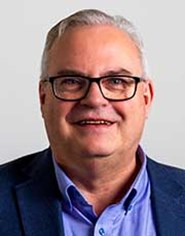
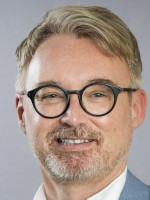
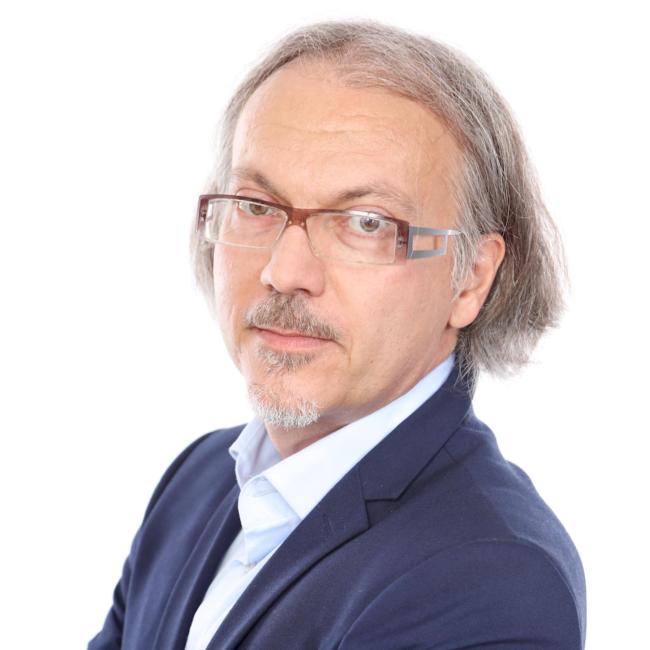
Ulf Hedestig is a Senior Lecturer at the Department of Informatics, Umeå University. Based in MIT building, Umeå, Sweden, he focuses on technology-mediated education and digital government research. Contact: ulf.hedestig@umu.se , +46 90 786 61 32. Research Themes : IoT in public spaces, user-centered design, digitalization in education and government, mobile learning environments, knowledge transfer challenges Recent Trends : 2020 work on IoT urban applications, 2018 publications on China's digital strategies and O2O business models Key Collaborations : Mikael Söderström, Daniel Forest, Victor Kaptelinin Scientific Recognition : Excellent Teacher pedagogical qualification Distinguished University Teacher educational qualification
Verena Siewers is a Research Professor at the Department of Biology and Biological Engineering, Chalmers University of Technology. Her work focuses on synthetic biology and metabolic engineering of yeast cell factories for producing biofuels, pharmaceuticals, nutraceuticals, and bioplastics, with particular emphasis on developing biosensor tools for pathway optimization. Key research themes: yeast-based biosensors, lipid metabolism engineering, CRISPRi/a applications, and dynamic gene regulation Notable projects include: Development of acetic acid tolerance mechanisms Optimization of fatty acid ethyl esters production Engineering phosphoketolase pathways for acetyl-CoA overproduction Her recent articles reveal trends in: CRISPR-mediated pathway engineering Stress response transcriptional profiling Heterologous plant gene expression in yeast Promoter and transcription factor engineering Funding sources: VINNOVA Novo Nordisk Foundation Carl Tryggers Stiftelse EU Horizon grants Swedish Research Council (VR) Formas
Anna Jon-And is a Researcher and Director of the Center for Cultural Evolution at Stockholm University , affiliated with the Department of Psychology . Her interdisciplinary work bridges linguistics , cognitive science , and cultural evolution , focusing on how sequence representation , language contact , and computational models explain the emergence of human language and its unique properties. Research Interests include: Language evolution through sequence learning and cognitive constraints Contact-induced language change in Portuguese varieties (Angola, Mozambique, Afro-Brazilian communities) Computational modeling of grammatical structure emergence Comparative analysis of pidgins, creoles, and non-contact languages Neurocognitive prerequisites for language and cultural complexity Publications highlight trends in language evolution models , compositional systems , and cross-linguistic complexity cycles . Her work demonstrates how demographic factors and learnability pressures drive linguistic innovation in multilingual settings. The Center for Cultural Evolution at Stockholm University serves as the primary platform for her interdisciplinary research initiatives.
Professor Ola Isaksson is a faculty member in Product Development at Chalmers University of Technology, where he leads the Systems Engineering Design research group. With over 40 research projects nationally and internationally, his work bridges academic research and industrial application, particularly in aviation and transport-related manufacturing sectors. His expertise spans digitalization, sustainability, and advanced manufacturing methods in product development. Ola Isaksson received his PhD in Computer Aided Machine Design from Luleå University of Technology in 1999. Prior to his academic career, he had a specialist career at GKN Aerospace Engine Systems (formerly Volvo Aero) in Trollhättan, focusing on design and product development until 2015. Professor Isaksson's research focuses on developing new product development capabilities to address societal and industrial needs through digitalization and advanced manufacturing. His primary interests include platform-based development, Set Based Engineering, multidisciplinary engineering methods, Value-driven development, and knowledge-intensive system support. He has particular expertise in additive manufacturing integration, design space exploration, and sustainability transition in product development. Analysis of Professor Isaksson's recent publications reveals a strong focus on integrating digital technologies with sustainable manufacturing practices. His work demonstrates a progression from traditional design methodologies toward AI-assisted design, digital twins, and advanced data analytics. Key thematic areas include additive manufacturing implementation, design margin management, sustainability integration, and aerospace component optimization, reflecting his commitment to bridging theoretical research with industrial applications. Professor Isaksson is one of the founders of the Swedish Product Development Academy and maintains active membership in the Design Society, ASME, and SIG PM, reflecting his significant contributions to the field of engineering design. With over 100 scientific publications and leadership in more than 40 research projects, Professor Isaksson has established himself as a leading figure in product development research. His work frequently involves close collaboration with industry partners, particularly in the aviation sector, securing substantial research funding for projects addressing digitalization, sustainability, and advanced manufacturing challenges. Professor Isaksson leads the Systems Engineering Design research group at Chalmers University of Technology. His team focuses on developing methodologies for complex product development, with particular emphasis on digital tools, sustainability integration, and manufacturing innovation. The group maintains strong industry connections, especially with aerospace manufacturers, facilitating the translation of research into practical applications.
Professor Oskar Hansson is a senior consultant neurologist at Skåne University Hospital and full professor of neurology at Lund University, Sweden. He leads the Swedish BioFINDER studies, focusing on early diagnosis of Alzheimer's and Parkinson’s diseases through biomarker development. Co-director of Lund University's neuroscience research area, he also oversees clinical research at the Memory Clinic. Lund University (2017-present): Full Professor of Neurology Skåne University Hospital (2012-present): Senior Consultant Neurologist His research emphasizes clinical and translational studies, particularly in Neurodegenerative Diseases , Biomarker Development , and Neuroimaging . Key contributions include validating Tau PET imaging and blood-based biomarkers for early Alzheimer's detection. Recent publications highlight applications in Alzheimer's disease subtyping , polygenic risk scores , and Lewy body disorder biomarkers (2025 publications in Nature Communications , The Lancet , and Alzheimer's Research and Therapy ). Current projects include active research on amyloid immunotherapies and tau pathology biomarkers. 2024 : Torsten Söderberg Professorship 2023 : De Leon Prize, ERC Advanced Grant, NIH/NIA R01 grant 2023 : Elsa and Alfred Eriksson Award Hansson leads the Clinical Memory Research platform and oversees multiple initiatives including the MultiPark Parkinson's research program and Proactive Ageing profile area at Lund University.
Nicolò Dell'Unto serves as Professor of Archaeology at Lund University's Department of Archaeology and Ancient History within the Faculty of Humanities and Theology. His research pioneers digital methodologies for archaeological analysis, specializing in 3D visualization, spatial technology, and virtual reality applications that transform how we perceive and investigate the past. Based at Helgonavägen 3 in Lund (Room LUX:A122), he directs the Digital Archaeology Laboratory (DARKLab) and oversees undergraduate/postgraduate digital archaeology programs. His educational background includes: Archaeology studies at University of Rome, La Sapienza PhD in Technology and Management of Cultural Heritage from IMT Lucca, Italy Postdoctoral fellowship at University of California Merced Dell'Unto's research focuses on how laser scanners, photogrammetry, GIS, and virtual reality technologies fundamentally reshape archaeological practice. His work bridges technical innovation with theoretical frameworks in landscape archaeology, emphasizing practical field applications while addressing methodological challenges in data interpretation. Key themes include digital documentation standards, 3D data management, and the cognitive impact of visualization tools on archaeological reasoning. His publication trends reveal a shift toward AI integration in archaeological data interpretation, infrastructure development for 3D data sharing, and cross-disciplinary collaborations examining Mediterranean connectivity. Recent works emphasize practical frameworks for implementing digital tools in fieldwork while addressing sustainability challenges in digital heritage preservation. Award highlights: Einar Hansen Prize for Humanities (2017) Royal Physiographic Society of Lund election (2024) Best Paper Award (2014) Highly Cited Research recognition (2017) Dell'Unto supervises PhD and master's students while leading major projects including RE-OSTRAKON (3D artifact scanning), TETRARCHs (data reuse), and AIR (Archaeological Interactive Report). His DARKLab serves as Sweden's national infrastructure for digital archaeology, collaborating with institutions like University of Oslo's Museum of Cultural History where he holds a visiting professorship since 2019. He actively shapes digital archaeology policy as Domain Specialist for Swedish National Data Service, Board Member for Statens historiska museer, and Open Science Champion at Lund University, driving national standards for archaeological data management and open science practices.
Damir Isovic is an Associate Professor and Vice-Chancellor for Internationalization at Mälardalen University's Academy of Innovation, Design and Technology. Previously, he served as Dean of the School of Innovation, Design and Engineering. His roles include leadership in academic administration and participation in national boards. He holds a PhD and has extensive international teaching experience. Research focuses on real-time systems, embedded systems design, and scheduling algorithms. Notable contributions include seminal work in real-time scheduling recognized by the IEEE Technical Community on Real-Time Systems. He has organized major conferences and delivered keynotes globally. His publications emphasize hybrid scheduling approaches, real-time operating systems (RTOS), media processing in resource-constrained systems, and MPEG standards. Recent work integrates memetic algorithms with fuzzy controllers and explores multi-core scheduling fairness. His research bridges theoretical scheduling models with practical embedded system implementations. No scientific awards explicitly listed in the text. Advising activities include supervising PhD students, though specific names are not provided. Lab affiliations include the Division of Networked and Embedded Systems, where he develops frameworks like GENESIS for embedded system engineering. His work emphasizes cross-disciplinary collaboration and industry partnerships in education and technology development.
Andreas J. Kassler is a Full Professor of Computer Science at Karlstad University, Sweden, where he has been since 2005. He co-chairs the Distributed Systems and Communication (DISCO) group and focuses on networking, cloud computing, and wireless networks. His research includes software-defined networking, future internet architectures, and network optimization. He has authored/co-authored over 130 peer-reviewed publications, holds 6 patents, and serves on editorial boards of journals like Journal of Internet Engineering . Education : Ph.D. in Computer Science, Universität Ulm (2002) Docent (Habilitation), Karlstad University (2007) M.Sc. in Mathematics/Computer Science, Universität Augsburg (1995) Research Interests : Software Defined Networking (SDN) Programmable Dataplanes Wireless Mesh Networks Time-Sensitive Networking (TSN) Edge Computing Machine Learning for Network Optimization Recent Directions : His work spans TSN scheduling, hybrid P4 solutions for 5G, and explainable AI in energy communities. He explores network resilience, latency optimization, and multi-objective control in microgrids. Service Contributions : Track co-chair for VTC 2015 General chair for Wired/Wireless Internet Communications (WWIC) 2013 Editor-in-Chief of IARIA Journal on Advances in Internet Technology Labs/Teams : Leads DISCO group at Karlstad University. Collaborates with global teams on projects like mmWave backhaul networks and SDN-enabled industrial control systems.
Mojtaba Moazen is a PhD student and researcher at the Division of Theoretical Computer Science , part of KTH Royal Institute of Technology in Sweden. He is actively involved in the WASP – Wallenberg AI, Autonomous Systems and Software Program and the NEST CyberSecIT project, focusing on securing IoT applications and software supply chains. His work bridges academic research with critical real-world cybersecurity challenges. Education: PhD (ongoing) in Theoretical Computer Science, KTH Royal Institute of Technology Master of Science in Information Technology, Sharif University of Technology Bachelor of Science in Computer Engineering, K. N. Toosi University of Technology Research Interests: Mojtaba specializes in software security , IoT security , and software supply chains , with a focus on developing robust security mechanisms for emerging technologies. His recent publications highlight advancements in Android malware detection and continuous integration testing. Courses Assisted: Applied Cryptography (DD2520) Computer Security (DD2395) Internet Programming (DD1386) Language-Based Security (DD2525) Programming Techniques (DD1310)
Joakim Lindblad is a Professor at the Department of Information Technology, Uppsala University , and holds affiliated roles as Senior Research Associate at the Mathematical Institute of the Serbian Academy of Sciences and Arts, and Head of Research at Topgolf Sweden AB. With over two decades of expertise in image analysis and machine learning , his work bridges computational methods with biomedical applications. Key affiliations: Uppsala University, Serbian Academy of Sciences, Topgolf Sweden Specializations: Deep Learning, Multimodal Image Registration, Quantitative Microscopy His research focuses on reliable image processing frameworks that integrate intensity and spatial information , particularly for biomedical applications . Recent publications highlight innovations in autofluorescence-based cancer detection , self-supervised one-class learning for sparse instance identification, and rotation-equivariant CNNs for robust analysis of cytology images. Recent article trends demonstrate expertise in multimodal image analysis (2024: 3 papers), oral cancer detection (2025: 2 papers), and multiscale biomedical imaging . His 2025 work on the Uppsala Storytelling Dataset introduces novel frameworks for multimodal dataset creation in AI research. While no scientific awards are explicitly mentioned, his extensive publication record (2000-2025) across top venues like Pattern Recognition , PLOS ONE , and IEEE Transactions indicates significant academic impact. His methodological contributions span stochastic distance transforms , fuzzy set defuzzification , and multimodal image registration techniques. Collaborative work with researchers like Nataša Sladoje and interdisciplinary teams has produced innovations in automated cytology analysis , TEM image enhancement , and AI-driven medical diagnostics . His 2021-2022 projects introduced contrastive learning approaches for multimodal image registration and explainable AI frameworks for infant engagement analysis.
Natasha Webster is a researcher at the Department of Human Geography, Stockholm University, specializing in gender, migration, and work-life practices. Her feminist economic geography research examines women-led entrepreneurship and gig-work in migration and integration contexts, including co-editing a special issue on transnational migrant entrepreneurs for Globalizations . She serves as Book Review Editor for Emotion, Space and Society and sits on the editorial board of Digital Geography and Society . Education : PhD in Human Geography (Stockholm University), MSc in Urban Planning (University of Toronto), BA Honours in Human Geography (Queen’s University Canada) Research Focus : Intersectionality in platform economies, rural migrant entrepreneurship, gender contracts in policy, and digital geographies of labor Her research projects include Integration Delivered? (Formas-funded), The Neighbourhood Revisited (SPaDE-affiliated), and studies on Thai women entrepreneurs in Sweden. She has supervised PhD student Emmeline Laszlo Ambjörnsson on forest governance research and contributes to debates on digital platform regulation and pandemic-era labor dynamics. Natasha actively participates in academic governance as former Chair of Stockholm University's Forum for Feminist Research and steering committee member of the Young Faculty Organization.
Heiko Gebauer is an Adjunct Professor at Linköping University's Department of Management and Engineering (IEI),隶属于 Business Administration (FEK) School. His research focuses on business innovation in technology-driven contexts, including IoT business management, data-driven strategies, and product-service systems. He has published extensively on topics such as IoT key performance indicators, service-centric business model transformations, and data privacy in product-based industries. Recent publications highlight his exploration of healthcare manufacturing innovation, electric vehicle business models, and challenges in IoT platform development. His work addresses strategic management challenges in digital transformation and technology adoption. While no formal advisees or grants are listed, his research collaborations span academic and industry partnerships, as evidenced by co-authored papers with institutions like ETH Zurich and TU Dresden. He contributes to advancing strategic frameworks for product companies navigating IoT and servitization trends.
Martin Salzmann-Erikson is an Associate Professor in Nursing Science at the University of Gävle, specializing in Caring Science. With extensive clinical experience in psychiatric intensive care, he has developed innovative models for staff-patient interactions and advanced courses like "Integrative Nursing in Psychiatric Care" and "Concept Analysis." His work bridges clinical practice, education, and research, focusing on the complexities of human interaction through chaos theory and digital transformation. Current research in the "Digital Shapeshifting" program addresses critical challenges in healthcare digitization, including reducing digital exclusion, ensuring inclusive care environments, and safeguarding nursing quality. Projects span interprofessional communication, digital inclusion for homeless women, and the ethical implications of AI in mental health. His methodological expertise includes netnography, autoethnography, and complexity science. Key article trends highlight intersections of technology and empathy, with recurring themes in psychiatric care, technostress, and digital equity. His 2023–2025 publications emphasize ethical AI integration, footwear symbolism in healthcare teams, and socio-technical approaches to continuous learning. Supervision roles include doctoral projects on intellectual disabilities, cyber nursing, and violence in intensive care. Supervised: Ingela Rudberg (Interprofessional Communication), Oskar Andersson (Staff Participation Promotion), Fredric Sjöberg (Violence Management, KI) Education: Courses on Integrative Nursing & Concept Analysis Affiliations: Strategic Research Area Health-Promoting Work, University of Gävle
Malgorzata Zboinska is an Associate Professor at Chalmers University of Technology within the Department of Architecture and Civil Engineering . She is a licensed architect and member of the Swedish Association of Architects and National Chamber of Architects of Poland . Hybrid architecture-technology-art research Focus on bio-based materials , digital fabrication , and creative robotics Development Leader of Chalmers' Robotic Fabrication Laboratory Editorial board member of TAD | Technology, Architecture + Design journal Research Themes bridge architecture , digital technology , and art , with expertise in: Sustainable and circular architectural practices 3D printing and robotic construction Material bioinnovation and upcycling Interactive and kinetic architectural solutions Her publications demonstrate strong output in digital fabrication , bio-material applications , and environmental architecture , with international exhibitions at Tempe Center for the Arts (USA) , Dutch Design Week (NL) , and Färgfabriken (Sweden) .
Patrick Prax is an Assistant Professor at the Department of Game Design, Uppsala University, specializing in participatory media and critical game studies. His research explores co-creation in digital games as alternative media, focusing on systemic sustainability, cultural heritage preservation, and social justice frameworks within gaming ecosystems. PhD in Media Studies (Uppsala University, 2016) Co-chair, Game Studies Working Group at NordMedia Board member, Cultural Heritage Incubator (Swedish National Heritage Board) Key research areas include: Political economy critiques through game mechanisms (e.g., loot boxes) Reflexive approaches to digital game preservation Esports culture and leadership dynamics Media literacy and civic engagement through gaming Recent publications examine sustainability integration in game education, systemic issues in game monetization, and community-driven adaptations of Warhammer 40k. He actively engages with public discourse through TEDx talks, national media appearances (TV4, UNT24), and policy advisory roles.